
What's in a Cap Tech-Pack: A Specification Template for Buyers - Cost & MOQ Breakdown - 2026 Buyer's Guide - 2026 Buyer's Guide
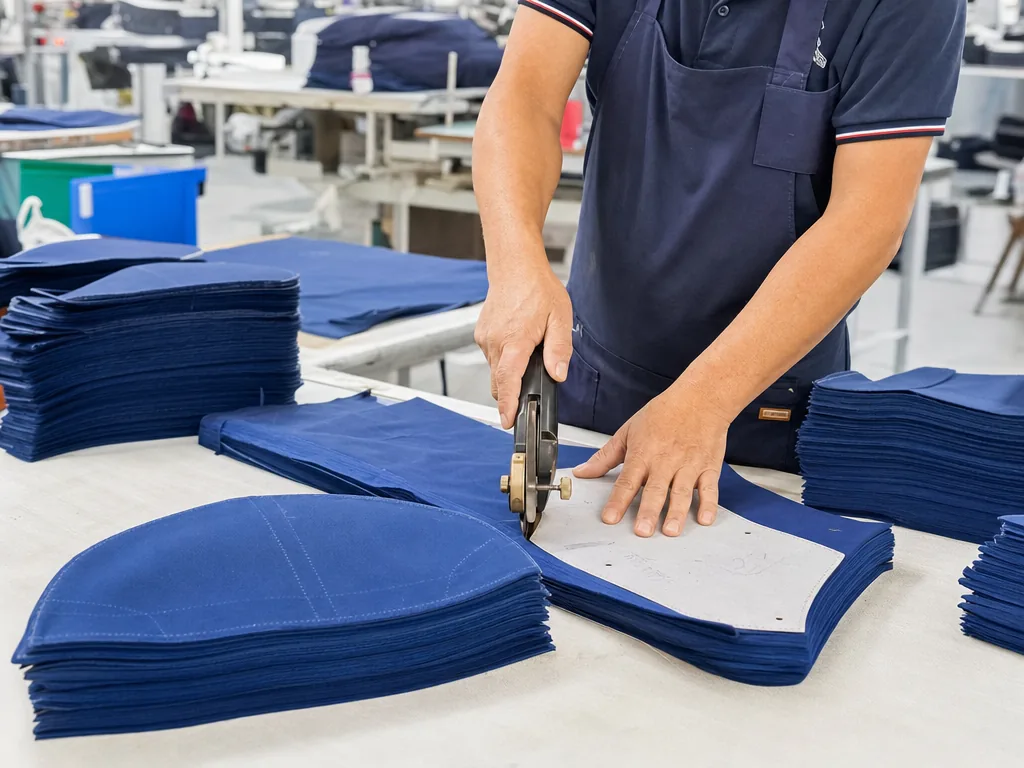
What's in a Cap Tech-Pack: A Specification Template for Buyers - Cost & MOQ Breakdown - 2026 Buyer's Guide - 2026 Buyer's Guide is one of the most-asked questions we receive from international buyers, and for good reason. With dozens of factories competing for your order and an alphabet soup of technical terms in every supplier quote, even experienced importers can feel lost. This guide consolidates what we have learned producing custom hats for clients in 40+ countries.
Why a tech-pack saves you weeks of email back-and-forth
A missing spec does not create flexibility in a cap factory; it forces the sample room to guess, and that is where a simple prototype loses 7 to 10 days. On headwear, the expensive mistakes happen before sewing: 5-panel camper block versus 6-panel baseball block, crown height 11.5 cm versus 12.5 cm, hard buckram versus unstructured front, 2.8-3.0 mm PE visor board versus recycled paperboard, 6-row visor stitch versus 8-row, or a sandwich brim that needs its own Pantone TCX callout. If a buyer writes “structured dad cap” but attaches a washed low-profile reference photo, the factory will usually default to the closest existing paper pattern, brim mold, and trim card already running on the floor. That means the silhouette is wrong before the first panel is cut. A solid cap tech pack template eliminates that translation gap by locking the block, bill shape, material spec, artwork placement, and trim selections before sampling starts.
The time savings are measurable. When the spec sheet includes panel measurements, fabric composition and gsm, Pantone TCX references, embroidery width in millimeters, target stitch count, closure hardware finish, seam tape artwork, label positions, and carton packout, first proto lead time usually drops from 12-14 calendar days to 7-9. Revision rounds also fall from three to one or two because the embroidery file can be digitized for Tajima, Barudan, or ZSK heads against a defined logo width and density target—typically 0.38-0.42 mm stitch spacing—instead of somebody’s vague request for a “premium look.” Our standard practice is not to lock a sample slot until crown profile, visor curvature, color tolerance, and trim specs are confirmed; for dyed shell fabric, Delta-E under 1.5 is realistic, while mixed trims and closures are more often controlled under 2.0.
A tight document also prevents price and MOQ disputes from showing up after the sample is approved. If the cap tech pack template specifies 260 gsm brushed cotton twill, 3 mm PE board, a 20 mm antique brass slider, a 12 mm woven main label at center back, barcode placement, polybag or bulk-pack method, master carton count, and AQL 2.5 inspection level, the factory can quote real material consumption instead of padding for risk. On a 300-piece colorway, changing plated iron hardware to brass typically adds $0.12-$0.20 per cap, and moving from stock twill to custom-dyed fabric usually adds $0.28-$0.55 depending on mill minimums and shade approval. Those are normal cost swings, but they belong in the first quote, not in the fourth email thread. Once tolerances and packout are written down, the conversation shifts from interpretation to execution.
The seven sections of a complete cap tech-pack
A usable cap tech pack template starts with two sections that control fit and quoting: visual specification and material callout. The visual page has to show front, left, right, back, top, underbill, interior, closure, and seam-line views, with finished measurements the sewing line and QC team can actually work from. If you omit those, the factory will default to its house block, and that is how a buyer expecting a high-profile 6-panel gets a mid-profile crown or a flat bill comes off the line with a retail curve pressed in finishing. Lock down panel count, crown depth, front rise, visor length and width, button size, eyelet placement, strap width, sweatband width, and finished head opening. Typical tolerances I accept are visor length 7.0 cm +/-0.3 cm, crown depth 11.5 cm +/-0.5 cm, and closure strap width 2.0 cm +/-0.2 cm. Those numbers drive pattern grading, buckram cutting, and AQL 2.5 final inspection.
The material section is where weak files usually collapse. “Cotton” or “polyester” is not a sourcing spec; it is a guess. A factory needs fiber content, construction, weight, finish, backing, and sometimes yarn count or denier to quote correctly and prevent substitutions during bulk. Useful callouts look like 10x10 cotton twill, 240 gsm, enzyme washed; 16-wale corduroy, 280 gsm, reactive dyed; or 600D rPET, PU backing, colorfastness grade 4, hydrostatic resistance 300 mm. Break mixed-material caps out by component: crown shell, visor top, underbill, sweatband, seam tape, closure strap, and lining if used. Then add shrinkage limits, usually under 3% after washing for cotton, plus compliance requirements such as REACH, CPSIA for trims, and claim support for recycled content. Our standard practice is to treat these first two sections as the foundation, because every missing detail shows up later as a revised sample, a price change, or both.
Sections three through seven are color, decoration, construction, trims/compliance, and packaging, and these are what separate a 10-day sample cycle from a month of avoidable corrections. Color should be specified by component, not by style name: shell, underbill, eyelets, button, closure, sweatband, seam tape, labels, and embroidery thread. Use Pantone TCX or FHI for dyed textiles, Pantone C only for printed references, and define the approval rule: lab dip under D65 lighting, Delta-E <=1.5 to approved master, with any intentional shade variance called out in writing. Decoration must read like production language, not marketing shorthand. “Front logo embroidery” is vague; “flat embroidery, 9,200 stitches, 120 mm W centered on front two panels, Madeira 40 wt, satin columns minimum 1.2 mm” is actionable. If you want 3D puff, specify 2 mm or 3 mm foam and avoid text below 4 mm cap height unless you accept loss of legibility on Tajima, Barudan, or ZSK heads.
Construction, trims, and packaging are where cost and MOQ move fastest. Construction should lock the cap down completely: 6-panel structured crown, 0.8 mm PE buckram, matching sewn eyelets, 8-row visor stitch, pre-curved sandwich bill, black PP snapback, 32 mm moisture-wicking polyester sweatband, seam tape printed 1C white on black, and SPI if fabric demands it; heavy twill and corduroy usually sew cleaner at 6 to 7 SPI with a heavier needle. Trims and compliance need label type, country-of-origin wording, care content, UPC position, hangtag stock, and any audit or testing requirement such as sedex-audit-cap-supplier-guide.html">BSCI 2.0, Sedex SMETA 4-Pillar, azo-free dyes, or needle policy. Packaging then defines insert shape, polybag spec with suffocation warning, carton assortment, carton dimensions, and gross weight under 16 kg. A complete cap tech pack template makes MOQ and landed cost quotable with much less guesswork: roughly 144 to 300 pieces per color for a basic custom cap, but 500-plus when you add custom woven labels, printed seam tape, FSC hangtags, or retail-ready packaging.
Tech sketches: front, side, back, optional underbrim
If your sketch is not disciplined line art, the sample room fills in the gaps, and that is where silhouette drift starts. A usable cap tech pack template needs four views as a baseline: front, left side, back, and underbrim whenever the visor underside has contrast fabric, print, embroidery, seam tape exposure, or rope interaction at the crown edge. Photos can support styling, but they do not define panel geometry, seam breaks, stitch routes, or closure placement. Draw every construction line that changes the pattern: center-front seam on a 6-panel, side-panel joins, eyelet locations, top button, sweatband seam, visor sandwich, back opening, closure anchor points, and interior crown tape path. Also state whether the visor is shipped flat, lightly curved, or blocked to a target radius. A visor specified at 70 mm can read noticeably different once formed to a 75-90 mm radius, and buyers usually catch that only when the first bulk cartons arrive.
Put key measurements on the drawing itself, not in a separate notes block. At minimum, call out crown height, visor length from crown seam to tip, visor width at the widest point, button-to-visor seam distance, back opening width, and strap length, all in millimeters. For fitted caps, list finished internal circumference by size—57 cm, 58 cm, 59 cm—with tolerance of +/-5 mm; for snapbacks, specify the target fit range and hole count. If embroidery is planned, mark a safe decoration zone so the digitizing team on Tajima, Barudan, or ZSK heads does not run satin columns across seam ridges, buckram edges, or the crown break. Separate visible detailing from hidden assembly with clear leader lines: 6-row or 8-row visor topstitching, single-needle or double-needle panel joins, folded or taped sweatband finish, rope diameter, and underbrim stitch spacing. Color should be tied to Pantone TCX or TPX with an acceptable Delta-E—typically <=1.5 for critical shades—rather than vague comments like "match sample." Our standard practice is to compare the sketch against the actual pattern before sampling, which is usually where we catch buckram show-through, seam bulk, or closure placement that will interfere with the back opening.
Fabric and color spec: GSM, weave, Pantone references
Fabric specs in a cap tech pack template should be written like a mill purchase order, not a mood-board note. “Black cotton twill” is too loose; in the market it can mean anything from 210 gsm to 300 gsm, with different yarn counts, finishes, and shrinkage behavior. A usable callout is: “100% cotton twill, 3/1 weave, 21s x 16s, 260 gsm ±5%, reactive dyed, sanforized, enzyme washed.” For a structured 6-panel cap with 0.35-0.45 mm fusible woven buckram and a standard PE visor core, 260-280 gsm shell fabric holds front-panel shape far better than 220-230 gsm stock twill, which tends to soften during steaming and visor joining. If the buyer leaves fabric open, the supplier will usually quote from available stock to protect FOB, and that is where profile drift starts between salesman sample and bulk. Do not lump the cap into one fabric line. Break out shell, underbill, mesh, sweatband, backing, and any lamination because each component changes hand feel, sewability, and cost. A proper line set might read: crown fabric 100% cotton twill 260 gsm; underbill 65/35 poly-cotton twill 180 gsm; sweatband 32 mm brushed cotton twill tape, 120-140 gsm; mesh 100% polyester 75D tricot or 100D hex mesh; front-panel backing coated woven fusible 0.35-0.45 mm. Those are not cosmetic details. They determine whether the crown can run cleanly on Tajima or Barudan cap frames without puckering, whether the visor edge tunnels after topstitching, and whether the finished cap keeps its profile after carton compression and sea transit.
Color control is where most cap programs fail, because buyers specify logo Pantone C values but never define textile standards. For fabric, use Pantone FHI/TCX references and approve against a physical chip or lab dip under D65 lighting; PDF artwork is not a color standard. A workable line in the cap tech pack template is: “Pantone 19-4006 TCX; Delta-E ≤1.0 to approved standard on crown panels, ≤1.5 on secondary components.” That gives the dye house and QC team something measurable. It also forces you to separate critical-match parts from commercial-match parts: shell fabric, top button, eyelets, seam tape, woven label ground, and embroidery thread do not absorb dye the same way, especially when you mix cotton, polyester mesh, and rayon thread. The cost and MOQ impact should be stated early, because custom color is rarely free. Moving from stock black twill to a custom Pantone dye lot typically adds about $180-$350 in mill dye charges and can push MOQ from 144 pieces to 500-1,000 pieces per color, depending on fabric type and finish. Washed black, olive, burgundy, and charcoal are the shades that miss most often if approvals are done from screens alone; pigment wash, melange, and heather effects are even less forgiving. Our standard practice is to require a physical swatch, Pantone TCX chip, or signed lab dip whenever the spec includes enzyme wash, vintage pigment wash, or cross-material shade matching. A cap can pass AQL 2.5 workmanship inspection and still fail the buyer’s color brief if the approval standard was never locked down.
Decoration spec: technique, placement, dimensions, color count
The decoration page is where cost and reject risk get fixed. “Front logo embroidery” is useless; a workable cap tech pack template has to state technique, exact placement by panel or seam, finished size in millimeters, orientation, and color count for every zone. Write instructions the way an operator or digitizer reads them: front center 3D puff embroidery, 50 mm W x 32 mm H, centered on the front seam, bottom of design 18 mm above visor stitch line; wearer-left flat embroidery, 28 mm W x 10 mm H, baseline 12 mm above eyelet; rear arch, 90 mm W x 12 mm H, centered 8 mm above back opening. If artwork spans a seam, note “seam compensation required” because a file that runs clean on a single front panel can split or distort on a structured 6-panel crown. On washed unstructured dad caps, the same digitizing often sinks into the fabric unless underlay and pull compensation are adjusted.
If the artwork is a patch, specify construction and attachment, not just the art file. “Woven patch” should become: damask woven patch, 0.5-0.7 mm body, heat-cut edge or merrow border, 301 lockstitch apply, 1.5 mm edge margin, matching Madeira thread. “PVC patch” should become: molded PVC, 1.2-1.5 mm relief depth, matte finish, molded color match to Pantone Solid Coated, hook backing or direct sew. Embroidery cost is driven more by stitch count than logo width: under 8,000 stitches is routine, while 12,000-18,000 stitches in 5-7 colors typically adds about $0.18-$0.45 per cap at 500-3,000 pieces due to machine time, trims, and thread breaks on Tajima, Barudan, or ZSK heads. For 3D puff, call out 2 mm or 3 mm EVA foam and convert lines under roughly 1.2 mm to flat embroidery to avoid foam exposure. Use Pantone TCX for dyed fabric references, Pantone Solid Coated for printed logo colors, and approve nearest Madeira or Gunold thread match; Delta-E tolerances are useful for fabric and print, not for embroidery thread. Text below 4 mm cap height should be flagged for legibility review before sampling.
Packaging and label spec: polybag, hangtag, sticker, carton
Chargebacks usually start with vague packaging, so the cap tech pack template needs exact bag, sticker, and carton specs instead of “standard packing.” For a typical adult 58 cm cap, polybag size is usually 28 x 22 cm for a low-profile shape and 30 x 25 cm when the brim is aggressively curved, the crown is tall, or the back closure is bulky. Specify film by resin and gauge: LDPE or OPP at 0.04-0.05 mm (about 1.6-2.0 mil) is the safe range for retail packing; 0.03 mm bags are cheaper by only a fraction of a cent but split more often on snapback tabs, metal clasp backs, and sandwich brims. Closure should be called out as open top, permanent tape flap, or resealable adhesive, with size tolerance at ±5 mm unless you are paying for tighter bag conversion control. For EU or UK programs, include suffocation warning languages, resin identification mark such as PE-LD 4 or PP 5, and a requirement that packaging comply with REACH limits for restricted phthalates and intentionally added heavy metals.
Hangtags should be specified like printed components, not treated as an afterthought. List finished size, board, print process, finish, hole position, and attachment method. Common formats are 50 x 90 mm or 55 x 110 mm; 350 gsm C1S is standard, while 400 gsm black-core gives a cleaner edge and stiffer hand for premium streetwear. If brand color accuracy matters, require offset CMYK plus Pantone spot colors and set print approval at Delta-E 2.0-3.0 against a signed hard proof, not a WeChat photo. Attachment matters too: a 125 mm plastic loop lock is lowest cost, but waxed cotton string with a crimp seal performs better on wool melton, suede, or heavily embroidered styles because it looks cleaner and is less likely to dent the crown. Carton specs should be just as precise: 24 pcs or 48 pcs per master carton for structured caps, gross weight capped at 12-14 kg, 5-ply or 7-ply export corrugate with ECT 44 or burst 275# for ocean freight, and carton markings on two adjacent sides. Put sticker specs in a separate line item—brim sticker diameter, barcode label size, permanent or removable adhesive, and placement from centerline—and state “no mixed colors per carton” if the goods are headed to retail replenishment or 3PL scanning.
Frequently Asked Questions
How long does production take?
Sampling takes 7 to 12 days. Bulk production runs 20 to 30 days depending on quantity, fabric availability and decoration complexity. Inspection and packing adds another 3 to 5 days before shipment.
Do you support sustainability certifications?
Yes. We work with GOTS organic cotton, GRS-certified recycled polyester, OEKO-TEX Standard 100 fabrics, and are BSCI and Sedex audited. Certification documentation can be provided per order.
What logo decoration techniques do you offer?
3D puff embroidery, flat embroidery, woven patch, leather patch, PVC patch, screen printing, sublimation, applique and laser etching, all in-house with no subcontracting.
Can I order a sample before bulk production?
Yes. We strongly recommend approving a pre-production sample before mass production. Samples are charged at 35 to 60 USD each plus express shipping, fully refundable against confirmed bulk orders over 500 pieces.
Which shipping methods do you support?
We support FOB, CIF and DDP shipping. Air express for samples and small orders, sea LCL for 100 to 500 pieces, sea FCL for 5,000+ pieces. Door-to-door DDP available for US, EU, UK, Canada and Australia.
How does ordering custom patch trucker hat work?
When evaluating custom patch trucker hat, the key considerations are construction quality, decoration capability, MOQ flexibility and lead time. Technique (3D puff / flat embroidery / patch), placement (front center, side, back), dimensions (e.g. 5cm wide × 3cm tall), stitch count if known, color count and Pantone references. Without a tech-pack, your factory invents details that contradict your assumptions. With one, sampling lead time drops from 14 days to 7 and revision rounds drop from 4 to 1.
How does ordering baseball cap custom work?
When evaluating baseball cap custom, the key considerations are construction quality, decoration capability, MOQ flexibility and lead time. Without a tech-pack, your factory invents details that contradict your assumptions. With one, sampling lead time drops from 14 days to 7 and revision rounds drop from 4 to 1. Tech sketches, fabric spec, color spec, decoration spec, construction spec (panels, closure, eyelets, sweatband), packaging spec, label/hangtag spec.
How does ordering custom baseball cap motorcycle helmet work?
When evaluating custom baseball cap motorcycle helmet, the key considerations are construction quality, decoration capability, MOQ flexibility and lead time. Without a tech-pack, your factory invents details that contradict your assumptions. With one, sampling lead time drops from 14 days to 7 and revision rounds drop from 4 to 1. Tech sketches, fabric spec, color spec, decoration spec, construction spec (panels, closure, eyelets, sweatband), packaging spec, label/hangtag spec.
How does ordering custom bucket hat embroidered work?
When evaluating custom bucket hat embroidered, the key considerations are construction quality, decoration capability, MOQ flexibility and lead time. Without a tech-pack, your factory invents details that contradict your assumptions. With one, sampling lead time drops from 14 days to 7 and revision rounds drop from 4 to 1. Tech sketches, fabric spec, color spec, decoration spec, construction spec (panels, closure, eyelets, sweatband), packaging spec, label/hangtag spec.
Looking for a reliable hat manufacturer in China?
CrownsForge has produced custom hats for 800+ brands across 40 countries. From 100-piece launches to 100,000-piece retail programs, we deliver on time and on spec.
Get in touchRelated guides
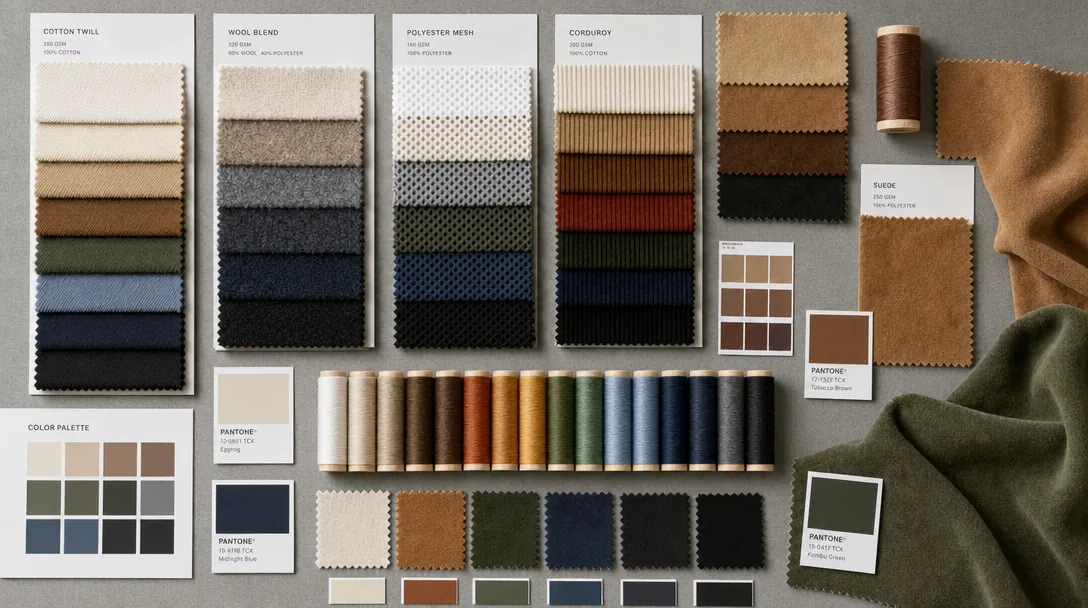
Camouflage Bucket Hat: Properties, Costs and How to Spec It Right - Cost & MOQ Breakdown - Cost & MOQ Breakdown - Cost & MOQ Breakdown
Read article →
Custom Hat Trucker: The 2026 Sourcing & Manufacturing Playbook - Cost & MOQ Breakdown
Read article →
Cap Sweatband Material Selection for Custom Headwear Buyers
Read article →We hope this guide demystifies what's in a cap tech-pack: a specification template for buyers - cost & moq breakdown - 2026 buyer's guide - 2026 buyer's guide and helps you move forward with confidence. If you have questions specific to your project, our English-speaking sales engineers are one message away.