
Camouflage Bucket Hat: Properties, Costs and How to Spec It Right - Cost & MOQ Breakdown - Cost & MOQ Breakdown - Supplier Checklist
Camouflage Bucket Hat: Properties, Costs and How to Spec It Right - Cost & MOQ Breakdown - Cost & MOQ Breakdown - Supplier Checklist is one of the most-asked questions we receive from international buyers, and for good reason. With dozens of factories competing for your order and an alphabet soup of technical terms in every supplier quote, even experienced importers can feel lost. This guide consolidates what we have learned producing custom hats for clients in 40+ countries.
Bucket Hat Women
Women's fit is usually the first place a bucket-hat program slips. A women’s block should not be a unisex pattern reduced by 1 cm; on 56-58 cm heads, the cleaner profile comes from rebalancing crown depth, brim drop, and opening shape. For a commercial camouflage bucket hat, I would sample at 57 cm, hold crown height at 8.2-8.8 cm, brim width at 6.0-6.8 cm, and specify 6-8 rows of brim topstitching with 5-6 mm spacing and no run-off at the overlap. Most factories build this in 6-panel or 8-panel construction using 200-240 gsm cotton twill, 210-230 gsm brushed twill, or a cotton-nylon blend around 180 gsm for a lighter hand. Eyelets should be called out as stitched or metal, sweatband width should sit at 25-32 mm, and seam taping should be identified as self-fabric or polyester because that decision changes both cost and inside finish. Print layout is the expensive detail buyers skip. With camouflage, the hat can pass sewing but still fail at retail if the side-panel seams and brim join look chaotic. If the fabric is reactive printed, pigment printed, or rotary screen printed, state clearly whether seam matching is required and how much mismatch is acceptable; otherwise the sewing line will optimize marker efficiency, not visual balance. A usable tech pack should also lock SPI, seam allowance, brim interlining type, top button yes/no, and branding method. Flat embroidery on Tajima or Barudan heads is standard, but dense fills on curved front panels will pucker lighter twills unless the digitizing controls underlay, pull compensation, and stitch count. For color control, use Pantone TCX references for trims and set a Delta-E tolerance of 1.5-2.0 on lab dips where applicable.
MOQ and costing on a women’s camouflage bucket hat are driven more by fabric than by sewing. A stock-fabric order is often workable at 300-500 pcs per colorway, but a custom camo usually runs into mill minimums first: 800-1,200 meters per print is common for reactive or pigment production, which often translates to roughly 1,000-1,500 hats before the numbers stabilize. In Zhejiang, a plain women’s bucket hat in stock twill is typically $1.60-$2.30 FOB at 500 pcs. Move to a custom camouflage bucket hat with custom print, small front embroidery, woven label, care label, and individual polybag, and a realistic range is $2.90-$4.30 FOB. Add garment wash, contrast lining, corduroy shell around 260 gsm, or upgraded sweatband tape, and another $0.20-$0.70 per unit disappears quickly. Inspection should target the defects that actually survive to final packing: uneven brim stitch spacing, twisted brim after wash, panel shade variation, off-center crown joins, exposed raw seams, loose eyelets, and embroidery puckering on the front arc. I would hold crown height, brim width, and head opening to ±0.5 cm and inspect to AQL 2.5 rather than accepting an informal final check. If a supplier comes in unusually cheap, ask how they control print registration, pattern grading, and wash distortion, and verify current social compliance such as sedex-audit-cap-supplier-guide.html">BSCI 2.0 or Sedex SMETA 4-Pillar. At CrownsForge, that paperwork matters because a low FOB quote tells you almost nothing about whether the factory can repeat a women’s camouflage bucket hat across multiple POs without shade drift, sizing inconsistency, or construction slippage.
Corduroy Hat Men's
Lock the corduroy spec before pattern approval, because wale count and gsm change both fit and seam bulk far more than most buyers expect. For a bucket silhouette, 11-wale cotton corduroy is the safest commercial standard: 8-wale gives a more premium rib but builds too much mass at crown joins and brim turns, while 14-wale often looks flat and loses texture once washed. The practical range is 220-280 gsm finished weight; above 300 gsm, brim seams start looking ropy unless you reduce stitch rows or simplify the brim build. A usable tech pack should state fiber content, wale count, finished gsm tolerance of plus or minus 5%, pile direction, shrinkage after wash below 3%, and color reference by Pantone TCX with panel-to-panel shade control at Delta-E under 1.5. If this style sits beside a camouflage bucket hat in the same collection, do not recycle the same pattern without a fit trial. Corduroy eats seam allowance differently than brushed twill, canvas, or poly-cotton ripstop, and a weak pattern room can shift the head opening by 0.5-1.0 cm, which is enough to create real size-claim returns.
Corduroy hats are simple on paper and slower on the factory floor because nap direction, cutting discipline, and brim support all have to be right. The pile must run one way across crown, side wall, and brim, or the shade will flip under store lighting even when the dye lot matches. Good factories relax the fabric for 12-24 hours before cutting, use a sharp straight-knife layup to avoid dragging the ribs, and add a light fusible, typically 35-45 gsm, on the brim facing so the wale line stays crisp after stitching. Your spec should also lock sweatband material, eyelet finish, brim stitch rows, top button build, seam taping, and any logo settings. On Tajima or Barudan flat-head machines, embroidery on corduroy usually needs lower density and cleaner underlay so the pile is not crushed and the artwork does not tunnel. In China, stock-color corduroy programs often start at 300-500 pieces per color, while custom dyeing normally needs 800-1,000 meters per shade. FOB pricing is usually $2.20-$3.80 for a plain hat and $4.20-$6.00 for washed, embroidered, or trim-heavy versions. Inspect at AQL 2.5, pulling samples from inner cartons, and check specifically for nap shading, twisted brims, skipped stitches at thick joins, broken wale lines from dull needles, and pressure marks caused by overpacked cartons.
Organic Cotton Newborn Hat
An organic cotton newborn hat is where weak process control shows up fast. If a supplier cannot keep certified fiber segregation, seam bulk, and post-wash sizing stable on infant knitwear, they usually will not hold panel shade, brim symmetry, or print placement on a camouflage bucket hat. Ask for the GOTS or OCS scope certificate, transaction certificate for the exact lot, yarn count, fabric weight, and finishing route before approving any proto. For commercial programs, 100% combed organic cotton single jersey at 160-190 gsm is the most workable balance of handfeel and cost; interlock at 190-230 gsm gives better recovery, lower spirality, and a cleaner cuff after washing. On the sewing line, this product should run with SES ballpoint needles, 4-thread overlock construction, and flat seam control at crown joins so ridge height stays low enough for infant wear. The measurable points matter more than the claim hangtag. A folded cuff should be left-right even within 3 mm, crown height tolerance should stay within plus or minus 5 mm, and stitch density is typically 10-12 SPI to prevent seam grin-through without making the hand harsh. For dyed solids, a realistic approval standard is Delta-E below 1.5 to the signed lab dip under D65 light, with fabric pH in the 4.0-7.5 range and full compliance with REACH Annex XVII and CPSIA requirements for children’s products. Any factory worth taking seriously should also confirm no detectable banned azo dyes, no excessive residual formaldehyde, and no silicone-heavy finishing that masks poor yarn quality in the first sample but collapses after one wash.
Spec tolerance needs to be tighter than most adult headwear because newborn sizing failures show up immediately after laundering. Lock the spec by age band, finished head circumference, body height, cuff depth, seam allowance, and wash test method, then write the shrinkage limit into the PO. Under 5% after one home-laundry cycle is acceptable; better knitting mills can usually hold interlock to 3-4% in both length and width if compaction and heat setting are controlled properly. Final inspection should be at AQL 2.5, with checkpoints for seam puckering, needle cuts, oil marks, twisted side seams, loose thread tails, and cuff roll memory. If the item is packed for export retail, metal detection after sewing is standard, not optional. In Zhejiang, certified custom-dyed fabric usually pushes MOQ to 1,000-3,000 pieces per color because the dye house wants efficient lot size and paperwork costs are fixed whether you run 800 kilos or 80. Greige stock programs can start around 500 pieces if you keep trims basic and accept fewer color options. A plain private-label organic cotton newborn hat generally lands around $0.70-$1.25 EXW, with another $0.06-$0.18 for woven labels, FSC carding, size stickers, or individual polybags. Those numbers are useful mainly as a discipline check: the same supplier who can control skew, cuff alignment, and handfeel here is far more likely to keep a camouflage bucket hat consistent in panel matching, brim edge binding, and all-over print registration.
Corduroy Hat Wholesale
For a corduroy camouflage bucket hat, fabric controls the outcome more than the pattern shape. The workable range is usually 8-wale to 14-wale corduroy at 240-300 gsm in 100% cotton; a 97/3 cotton-spandex blend is worth considering only if you need better recovery on the side wall after packing. I would avoid 16-wale for most bucket hats: it looks sharper on a clean fashion silhouette, but it shows seam impression faster, bruises more easily during pressing, and fights you on tight brim curves. The non-negotiable point is nap direction. If the crown, side band, and brim are not all locked in the tech pack, one panel turned 90 degrees can look like a shade mismatch under retail LED lighting even when it came from the same dye lot. For any camouflage bucket hat tied to a broader camo capsule, visual approval is too loose; require lab dips against the approved Pantone TCX reference and keep bulk fabric within Delta-E 1.5 if you want repeatable color approval across production lots. Corduroy is sewable, but it is unforgiving on the factory floor. Standard controls are reduced presser-foot pressure, NM 90/14 needles, careful panel nesting to minimize nap crush, and slower feeding on the brim curve to prevent seam grin and skipped stitches. A proper spec should call out wale count, gsm tolerance of +/-5%, crown depth, brim width, brim stitch rows, sweatband material, eyelet finish, and fusible interlining weight; if the brim must recover after compression packing, state that explicitly instead of assuming the line will guess right. Embroidery needs even tighter instruction. Tajima, Barudan, and ZSK heads can all run on corduroy, but without aggressive underlay and a cutaway backing, stitches sink between the ribs and 4-5 mm lettering loses edge definition fast.
The main cost driver is not the corduroy itself; it is how demanding the spec is. In Yiwu, stock-color corduroy typically supports MOQs around 300-500 pieces per colorway, while custom dyeing usually starts at 800-1,000 pieces because the mill minimum sets the floor, not the sewing line. At 500 pieces, a basic corduroy camouflage bucket hat with standard cotton twill sweatband, metal eyelets, and no decoration usually lands around $2.40-$3.90 FOB China. Add custom lining print, woven main label, branded inside taping, enzyme wash, or front embroidery, and the same hat moves into the $4.50-$6.80 range. If the camouflage is printed directly onto the corduroy rather than sourced as stock camo fabric, expect extra lead time for strike-off approval and a higher rejection risk if the print sits unevenly across the wale. Inspection should be stricter than many buyers assume because corduroy defects read loudly under store lighting. AQL 2.5 is the right baseline for bulk shipments, with checks done under D65 lighting and against sealed samples. The three defects that drive most claims are inconsistent nap direction, brim asymmetry beyond +/-3 mm, and crushed wale or oil marks on dark shades. I would also check that brim stitch rows stay parallel, eyelets are clean without burrs, and the side wall is not twisting after packing. At CrownsForge, our standard practice is to carton-test packed samples before final inspection when the spec requires shape retention, because a bucket hat that passes on the table can still arrive with a collapsed brim if the interlining and packing method were mismatched.
Wholesale Hat Manufacturers Usa
Search results for “wholesale hat manufacturers usa” are usually misleading: most are importers or decorators, not cut-and-sew mills. They may hold stock blanks and add embroidery, woven patches, or heat-transfer labels in the U.S., but the actual camouflage bucket hat is still built where the fabric is sourced and cut. That distinction matters because camo is the cost driver. First the mill prints or allocates the yardage, then the shell is cut, side wall joined, brim layers fused, eyelets set, sweatband attached, and the brim topstitched—typically 6 to 8 rows at 6 mm spacing. Unless you need Berry Amendment compliance, licensed military programs, or a domestic replenishment window under 21 days, offshore production is usually 25% to 40% cheaper on like-for-like specs. Qualifying suppliers means asking for hard numbers, not sales language: 245 gsm brushed cotton twill, 220 gsm poly-cotton ripstop, or 280 gsm enzyme-washed cotton; 5.5 to 6.0 cm brim width; 8.5 cm crown height; sweatband composition; eyelet finish; and seam-tape construction. For custom camo, lock the print against approved strike-offs, Pantone TCX references where applicable, and a shade tolerance no looser than Delta-E 1.5.
Pricing moves more on fabric, print method, and trims than on the bucket shape itself. A stock camouflage bucket hat in standard cotton twill with a woven main label and care label typically sits at 300 to 500 pieces per colorway, with FOB China pricing around $2.20 to $3.80 per piece. Add custom rotary or reactive-printed camo, branded seam tape, metal eyelets, woven size labels, enzyme wash, and retail packing, and the workable MOQ usually jumps to 600 to 1,000 pieces because the print mill and trim vendors have their own minimums. U.S. finishing still makes sense when speed matters: imported blanks can be patched or embroidered locally on Tajima or Barudan heads, cutting lead time on ornamentation without restarting fabric production. But quote comparisons have to be clean. A $2.90 FOB offer is not comparable to a $4.40 delivered price if the second quote includes duty, domestic freight, and finishing. Protect margin at inspection, because bucket hats fail in predictable ways: uneven brim rows, twisted side seams, print mismatch at crown joins, eyelet puckering, weak bartacks at the sweatband join, and shade variation between brim and crown. Use AQL 2.5, hold crown height and head opening to ±0.5 cm, and verify print placement before cartons are sealed.
Black Beanie Hat
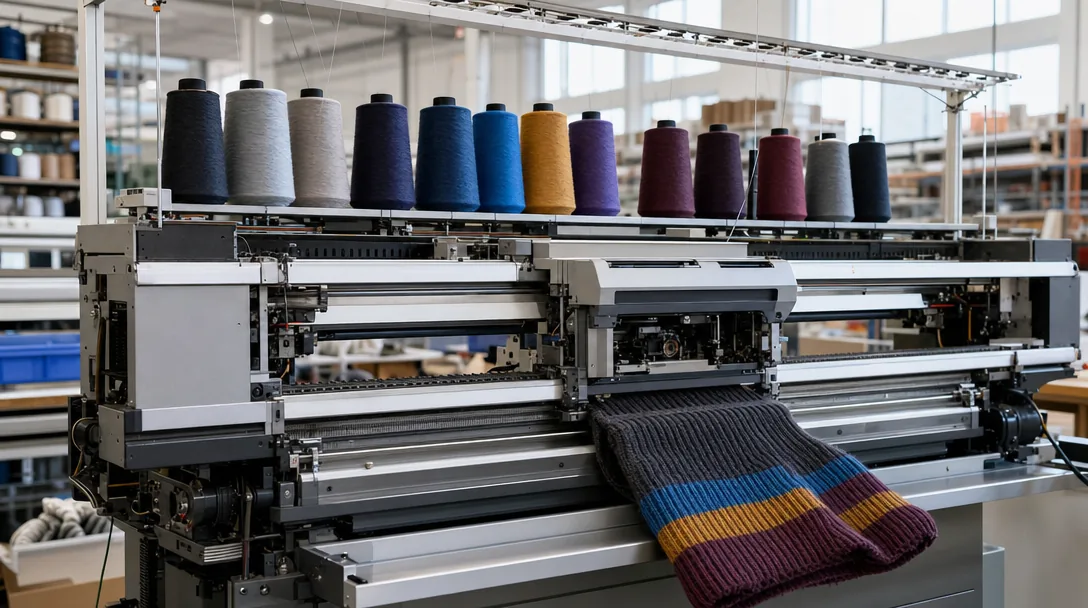
A black beanie is easy to underspec, and that is where cost and quality drift starts—especially when it has to sit beside a camouflage bucket hat in the same delivery and the blacks need to read the same across labels, eyelets, swing tags, and polybags. The standard build is flat knitting on 7G, 9G, or 12G computerized machines, followed by crown linking, loose-thread trimming, washing, board shaping, needle detection for children’s programs, and packing under a size board. Most commercial programs use 100% acrylic or acrylic/polyester yarns in 28Nm/2 to 48Nm/2, with finished weights around 65 to 95 g per piece depending on rib construction, cuff depth, and whether the hat is single layer or double layer. If you move to cotton/acrylic for a softer hand, budget for higher yarn loss and tighter wash control; I have seen finished height swing more than 10 mm between lots when post-wash relaxation is not locked down.
The spec sheet has to remove every cheap shortcut. Write down yarn composition, yarn count, gauge, stitch pattern, cuff depth, finished height, relaxed width, stretch width, crown closure method, label type and position, and tolerance by measurement point. If you leave those blanks open, the factory will usually substitute a lower bulk yarn, reduce the cuff depth, or loosen the top finish to hit target price. In Zhejiang and Guangdong, MOQ is typically 300 to 500 pcs per color per style, with FOB pricing around US$1.10 to US$1.85 for standard acrylic, US$1.80 to US$2.80 for cotton-rich blends, and US$2.60 to US$4.20 for GOTS-claimed or other certified organic blends, depending on order split and packaging complexity. Final inspection should run at AQL 2.5 and include rib recovery, skipped stitches, crown puckering, linking oil marks, seam grin, dry and wet crocking at grade 4 minimum on black shades, and shade consistency within Delta-E 1.5 to the approved Pantone reference. If a supplier cannot hold black consistency or produce current BSCI 2.0 or Sedex SMETA 4-Pillar audit records on a routine knit order, I would not trust them with a camouflage bucket hat program that has stricter trim and color control.
Working with CrownsForge for camouflage bucket hat programs
Lock the tech pack before sampling, because most camouflage bucket hat problems start upstream with vague print standards and trim notes, not sewing. A stock-fabric proto in 7 oz cotton twill or 210 gsm washed canvas is usually 5 to 7 working days; once the camo is custom printed, lead time moves to 10 to 14 working days because you need strike-offs, shade approval, and wash validation before cutting sample yardage. If the print must align to Pantone TCX references, approve against a physical strike-off under D65 lighting and set an acceptable bulk tolerance of Delta-E 1.5 to 2.0. MOQ is mainly controlled by fabric and print setup: a stock-camo bucket can start around 144 pieces per colorway, but a custom-printed ripstop or brushed canvas camouflage bucket hat with woven labels, inner seam tape, care label, hangtag, and individual polybag is more realistically 300 to 500 pieces. On clean specifications, ex-factory pricing usually lands around $2.10 to $4.80 per piece, with the real cost drivers being fabric consumption, print method, trim count, and packaging complexity rather than the sewing minutes alone.
Decoration is where a bucket hat either keeps its shape or turns into a returns problem. Sidewall embroidery on a camouflage bucket hat is unforgiving because the panel is narrow and curved; on Tajima or Barudan heads, once you push dense fill areas much beyond 10,000 to 12,000 stitches, the shell starts to torque, the brim loses drape, and puckering shows up after a wash test. Flat embroidery, woven patches, TPU badges, and heat transfers are all workable, but each one needs its own placement tolerance and backing spec on the pre-production sheet. Our standard practice is to lock BOM, panel measurements, brim width, needle count, label positions, carton assortment, and shipping marks before bulk cutting, then inspect finished goods to AQL 2.5 with special attention on brim symmetry, head circumference tolerance of plus or minus 0.5 cm, print-placement drift, and skipped stitches at seam joins. For U.S. or EU retail programs, the supplier should also have current BSCI 2.0 or Sedex SMETA 4-Pillar audit records, plus REACH or CPSIA declarations ready before booking FOB or DDP freight.
Frequently Asked Questions
How long does production take?
Sampling takes 7 to 12 days. Bulk production runs 20 to 30 days depending on quantity, fabric availability and decoration complexity. Inspection and packing adds another 3 to 5 days before shipment.
Can I order a sample before bulk production?
Yes. We strongly recommend approving a pre-production sample before mass production. Samples are charged at 35 to 60 USD each plus express shipping, fully refundable against confirmed bulk orders over 500 pieces.
What file format should I send for my logo?
Vector files (AI, EPS, PDF) are ideal. High-resolution PNG or JPG at 300 dpi on transparent background works as a fallback. Provide Pantone color references for accurate reproduction.
Do you support sustainability certifications?
Yes. We work with GOTS organic cotton, GRS-certified recycled polyester, OEKO-TEX Standard 100 fabrics, and are BSCI and Sedex audited. Certification documentation can be provided per order.
What logo decoration techniques do you offer?
3D puff embroidery, flat embroidery, woven patch, leather patch, PVC patch, screen printing, sublimation, applique and laser etching, all in-house with no subcontracting.
What should buyers know about organic cotton bucket hat?
When evaluating organic cotton bucket hat, the key considerations are construction quality, decoration capability, MOQ flexibility and lead time. Cover everything buyers ask about organic cotton newborn hat: how it's manufactured, what specs to request from a factory, typical MOQ and pricing, common quality issues to inspect for, and how this ties back to the broader camouflage bucket hat sourcing decision. Cover everything buyers ask about bucket hat women: how it's manufactured, what specs to request from a…
What should buyers know about men's corduroy bucket hat?
When evaluating men's corduroy bucket hat, the key considerations are construction quality, decoration capability, MOQ flexibility and lead time. Cover everything buyers ask about corduroy hat men's: how it's manufactured, what specs to request from a factory, typical MOQ and pricing, common quality issues to inspect for, and how this ties back to the broader camouflage bucket hat sourcing decision. Cover everything buyers ask about corduroy hat wholesale: how it's manufactured, what specs to request from a factory,…
What should buyers know about nike bucket hats for men?
When evaluating nike bucket hats for men, the key considerations are construction quality, decoration capability, MOQ flexibility and lead time. Cover everything buyers ask about corduroy hat men's: how it's manufactured, what specs to request from a factory, typical MOQ and pricing, common quality issues to inspect for, and how this ties back to the broader camouflage bucket hat sourcing decision. Cover everything buyers ask about bucket hat women: how it's manufactured, what specs to request from a factory,…
What should buyers know about cotton beanie men?
When evaluating cotton beanie men, the key considerations are construction quality, decoration capability, MOQ flexibility and lead time. Cover everything buyers ask about corduroy hat men's: how it's manufactured, what specs to request from a factory, typical MOQ and pricing, common quality issues to inspect for, and how this ties back to the broader camouflage bucket hat sourcing decision. Cover everything buyers ask about organic cotton newborn hat: how it's manufactured, what specs to request from a…
Looking for a reliable hat manufacturer in China?
CrownsForge has produced custom hats for 800+ brands across 40 countries. From 100-piece launches to 100,000-piece retail programs, we deliver on time and on spec.
Get in touchRelated guides
Compliance Documentation Checklist for First Hat Import to US/EU (2026 Update)
Read article →
Ball Caps for Men: A 2026 Sourcing Playbook for International Buyers - Cost & MOQ Breakdown
Read article →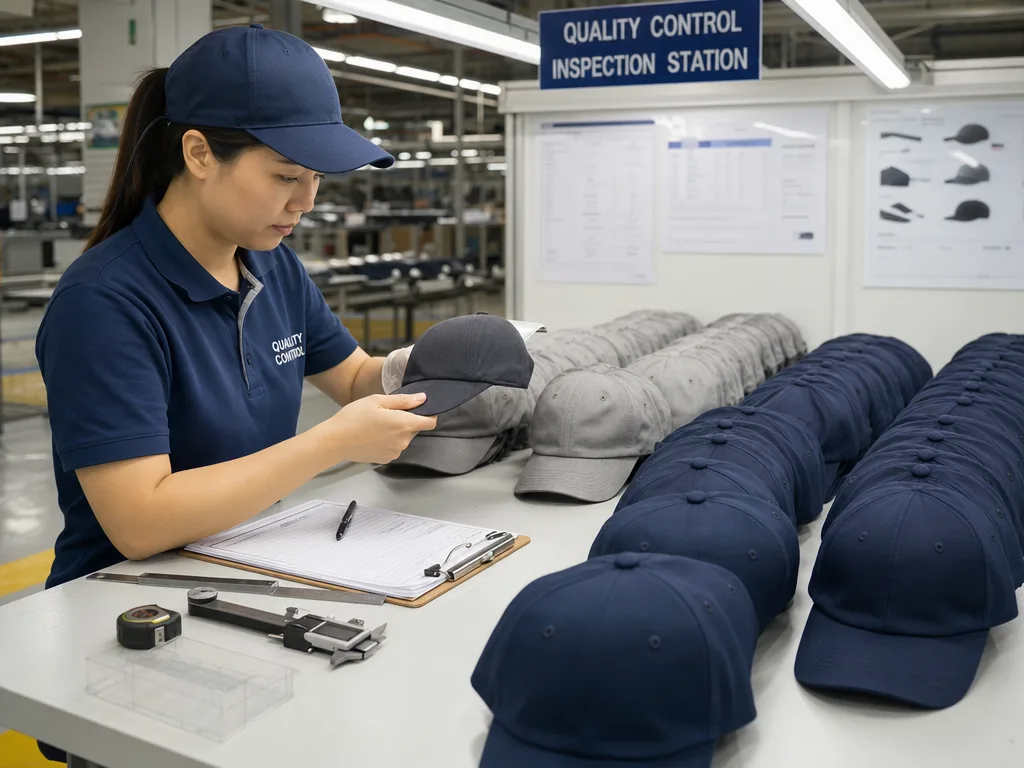
BSCI vs Sedex vs WRAP vs WCA: Compliance Audit Standards Compared (2026 Update) (2026 Update) (2026 Update)
Read article →Sourcing custom hats does not have to be complicated. With the right manufacturing partner, clear specifications and a small upfront investment in sampling, you can launch a retail-quality product in 30 to 45 days.