
Bulk Trucker Hats Export Shipping Checklist for Custom Hat Buyers - Cost & MOQ Breakdown
For brand owners, wholesalers and procurement teams entering the custom headwear category, bulk trucker hats export shipping checklist for custom hat buyers - cost & moq breakdown is one of the highest-leverage decisions you will make. Get it right and your unit economics, retail story and reorder cycle all improve. Get it wrong and you carry the cost for years.
Why bulk trucker hats export shipping checklist needs a separate sourcing plan
A separate sourcing plan matters because trucker hats do not ship like ordinary caps, and that is exactly why a bulk trucker hats export shipping checklist has to start with construction, not decoration. On the packing line, a 5-panel foam-front trucker with 2.5-3.0 mm PE foam, 75D soft poly mesh, and light flat embroidery can usually be nested at 180-220 pcs in a 60 x 45 x 58 cm master carton with less than 1.5% panel deformation after transit simulation. Change that to a high-crown 6-panel build with buckram-backed front panels, 3D puff embroidery, thicker 100D mesh, and a pre-curved PE visor, and practical loading often drops to 120-160 pcs per carton. That reduction is not cosmetic; it shifts freight density by roughly 25%, which directly changes ocean CBM charges, air volumetric weight at 6000 cm3/kg, and landed cost per cap by $0.08-$0.22 depending on lane and season.
The compliance side is just as style-sensitive. One trucker SKU can combine polyester foam, mesh, cotton twill sweatband, HDPE snap, PVC or silicone patch, and RPET labeling claims, and each material stream needs its own paperwork trail. U.S. orders may need CPSIA tracking labels and component traceability; EU shipments typically need REACH SVHC screening for inks, coatings, plasticizers, and patch compounds. If the program includes metallic thread, 3D puff, heat-transfer logos, or stitched woven patches, you should also lock pull-test standards, needle detection protocol where required, barcode placement, and carton marking before bulk starts. When buyers leave those points until after PP sample approval, ex-factory lead time commonly slips 3-5 days and split-shipment risk goes up.
MOQ and cost also move with trim complexity more than most buyers expect. A stock-color foam/mesh trucker is often workable at 144-288 pcs per colorway, but Pantone-matched mesh, branded snapbacks, woven inside taping, custom labels, and hangtag sets usually push the real MOQ to 500-1,000 pcs because trim vendors run by dye lot and molding batch, not by finished hat count. Decoration capacity is another hidden variable: a 9,000-stitch flat logo on a Tajima or Barudan head is standard output, while a 15,000-stitch 3D puff file on foam slows head speed, increases thread breaks, and can double reject risk if the digitizing underlays are wrong. At CrownsForge, we lock carton dimensions, keep gross carton weight below 15 kg, set AQL 2.5, and confirm Incoterms before booking bulk materials, because most avoidable overruns come from packing inefficiency, rework, and freight corrections rather than the hat shell itself.
Factory capability checks before quoting
The fastest way to blow up a quote is to approve decoration from a factory that brokers it out. Before you compare prices, verify what they run in-house: number of Tajima, Barudan, or ZSK cap heads, available cap frames for 5-panel foam fronts, and the stitch-count band they will approve without an upcharge. For 3D puff on trucker hats, I would expect them to speak in production terms: 2-3 mm satin columns, center-walk or edge-walk underlay, foam density, pull compensation, and how they control crown distortion after heat pressing and long-haul packing. If the answer is just “we can do puff embroidery,” assume weak digitizing and reject risk above AQL 2.5. The same check applies to patches. Woven patches usually hold cleaner detail below about 1.2 mm line width than embroidery; embroidered patches need wider merrow or heat-cut borders to avoid fray; PVC patches normally require a mold charge around US$80-US$150 per design, plus lead time to approve Shore hardness, burr, edge definition, and color layering. A serious bulk trucker hats export shipping checklist starts with decoration methods the factory actually controls, because outsourced embellishment is where lead times slip and hidden costs appear after sample approval.
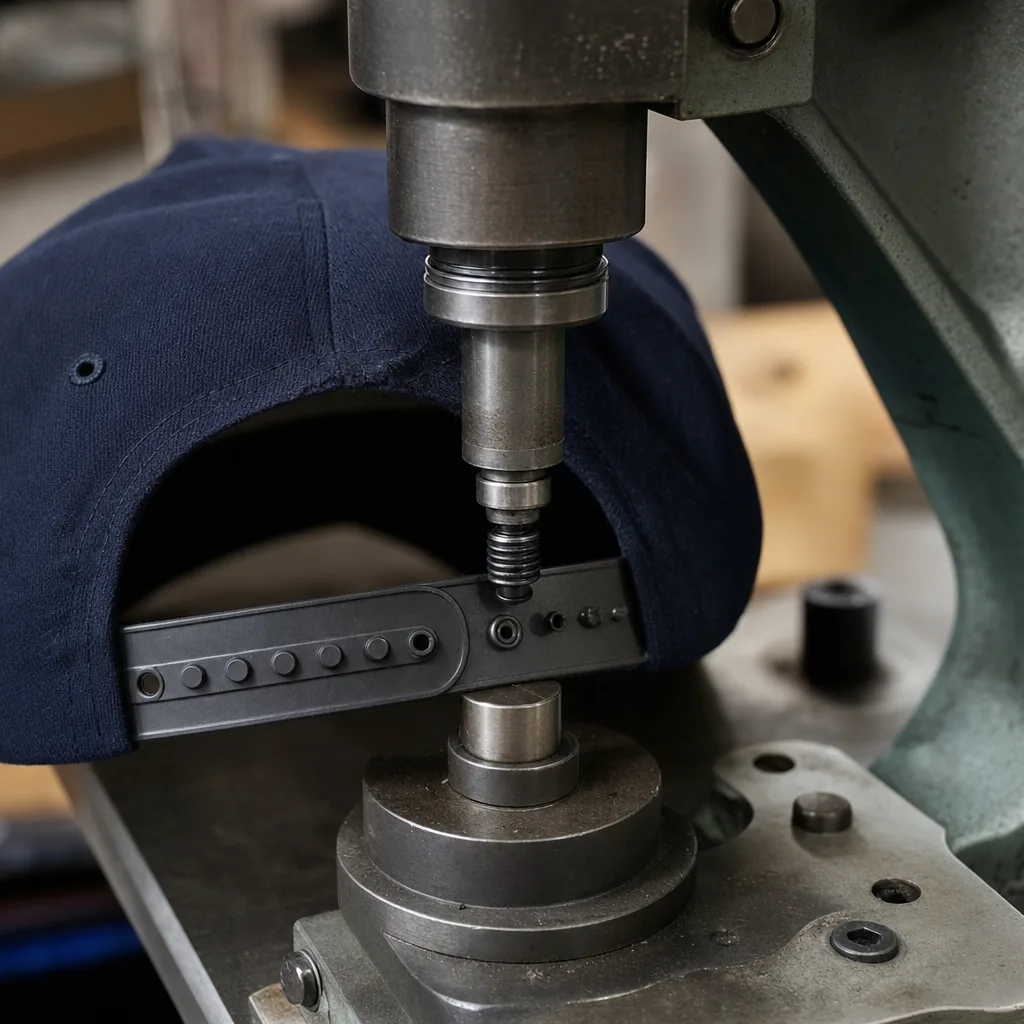
Construction capability matters more than a pretty pre-production sample. For bulk orders, ask whether they are quoting a stock shell or a custom pattern, then lock the actual build: 5-panel trucker, 3 mm EVA foam front, mesh spec by denier and gsm, buckram or no buckram, PE visor board, 6 or 8 rows on the brim, sweatband material, and button/eyelet construction. Hard polyester mesh at 140-160 gsm behaves very differently from softer athletic mesh; the soft hand feels better, but it loses crown memory faster under carton pressure and high-container humidity. Those details directly affect logo registration, front-panel collapse, and whether 3,000 pieces still look saleable after 25-35 days on the water. Closures also need to be quoted honestly: a standard plastic snapback typically adds only US$0.03-US$0.06, while metal buckle webbing, genuine leather straps, or custom injection-molded closures can add US$0.20-US$0.60 plus tooling. Before you rely on the landed price, confirm the supplier can issue a revision-controlled BOM, packing ratio, carton specification, and sample approvals within 5-7 working days, backed by export-ready documents such as sedex-audit-cap-supplier-guide.html">BSCI 2.0 or Sedex SMETA 4-Pillar audits, REACH or Prop 65 trim declarations, Pantone TCX color references, and Delta-E tolerance standards for dyed components. That paperwork is not administrative fluff; it is what keeps your quote usable when booking freight and forecasting delivery.
MOQ, pricing and sample approval
MOQ is the first real cost lever, and buyers should price trucker hats by SKU, not just by total PO. For a 5-panel foam-front trucker with a 100% polyester front, nylon mesh back, pre-curved PE brim, and PP snap closure, the useful breakpoints are usually 144, 300, 500, and 1,000 pcs per colorway. At 144 pcs, FOB China is commonly $3.20-$4.60; at 500 pcs, $2.35-$3.20; at 1,000 pcs, $1.85-$2.70, assuming standard polybag packing and one front embroidery. Below 144 pcs, the factory still absorbs fixed work: panel cutting, foam shaping, embroidery file loading, line balancing, needle-out QC, carton marking, and export paperwork. Split 500 pcs into four logos at 125 each and it is no longer a bulk run in the factory’s eyes; it is four small setups with four chances for schedule drift. A bulk trucker hats export shipping checklist should lock MOQ by color, logo, and closure before anyone starts quoting freight or Incoterms.
Decoration is where margin disappears fast. A flat embroidery file usually adds a $25-$60 digitizing charge, while 3D puff, twill applique, woven patches, TPU badges, or sublimated underbrims each carry separate setup and application cost. On Tajima, Barudan, or ZSK heads, stitch count matters more than logo size: a clean front mark may be 6,000-9,000 stitches, while a dense fill can hit 12,000-18,000 and force slower machine speed to avoid foam distortion, thread breaks, and puckering. Once fill density gets tighter than about 0.40 mm on soft EVA or foam-backed fronts, the result usually gets worse, not sharper. Color approval should be done against Pantone TCX or Pantone Coated references before PPS, but thread matching needs a realistic tolerance. Thread is not print ink; it will not hold a perfect lab match every run. A visual Delta-E target under D65 light and one signed thread card is a better control point than arguing over an exact match no mill can hold consistently.
PPS approval is the line between development spend and production liability. A pre-production sample should confirm logo placement, crown height, front foam thickness, mesh shade, brim curve, seam tape print, sweatband material, snap color, inside label content, care label wording, barcode position, and carton pack-out. Buyers often miss that trims have their own MOQs: custom woven labels, branded seam tape, molded rubber patches, private polybags, and printed inner tape often require 500-1,000 pcs per component even when the hat body itself can run at 144 or 300. Packaging moves cost faster than most people expect. An insert card, size sticker, tissue wrap, and upgraded 5-ply export carton can add roughly $0.08-$0.45 per cap depending on print coverage and drop-test spec. In practice, the bulk trucker hats export shipping checklist should treat PPS as the final gate before production, with every trim, pack method, and carton spec signed off in writing.
Quality inspection and shipping risk
Carton control matters as much as sewing quality once the shipment moves under FOB or DDP terms. Export cartons should show PO number, style number, color, quantity, carton sequence, gross and net weight, carton size in cm, country of origin, and directional marks. For shaped-brim trucker caps, specify either inner crown supports or a stack limit; in practice, “Do Not Stack Over 5 Cartons” is a reasonable ocean-freight instruction when the outer carton is standard 5-ply kraft. Ratio packs can cut warehouse touches, but they also create receiving disputes and chargebacks, so mixed-color or mixed-size cartons should never be assumed without written approval. FOB usually fits buyers who want control over consolidation, booking, and destination customs; DDP works better for smaller shipments, often under 30 to 50 cartons, when landed-cost certainty matters more than freight flexibility. At CrownsForge, the shipment file is treated as part of inspection: final AQL report, carton photos, packing list, pre-production sample approval, carton drop-test notes when requested, and any trim-change cost revision are archived together, because most reorder errors come from missing records, not from the sewing line.
Buyer checklist for the next RFQ
A usable RFQ starts with one disciplined tech pack, not a folder of screenshots. For a bulk trucker hats export shipping checklist, put every construction and commercial variable in a single file: 5-panel or 6-panel build, mid or high profile, finished crown height in cm, bill length and curve, front foam thickness, mesh denier, sweatband spec, closure type, and target Incoterm. Write materials the way a factory purchases them: 100% polyester foam front laminated at 3-5 mm, 210D or 250D polyester mesh, 8x8 cotton twill at 220-260 gsm, PE visor board, and HDPE snap closure in black or Pantone-matched color. If shade matters, give Pantone TCX for fabric and Pantone C for print, plus an acceptable Delta-E: under 1.5 is achievable on dyed twill, while foam and mesh usually sit closer to 2.0 because color uptake is less stable. Also break quantity by colorway, logo version, and closure, and state whether ±3% overrun is acceptable. Shipping cost gets distorted fast when buyers leave out delivery terms and packing rules. Do not ask for freight guidance unless you specify ship mode, final delivery point, and carton limits. A proper RFQ should list ex-factory target date, terms such as FOB Ningbo, CIF Los Angeles, or DDP to a U.S. ZIP code, and any retailer carton cap like 24 x 18 x 18 in or 15 kg gross. Packing changes landed cost more than most buyers expect: 100 pcs per carton versus 144 pcs can materially shift cubic volume and ocean freight, especially on foam-front truckers that crush if packed too tight. If you need FNSKU labels, suffocation warnings, country-of-origin marking on the sweatband, or carton marks by PO and color, say it before sampling; changing this after approval often means repacking fees of $0.08-$0.20 per cap and missed vessel cutoffs.
Artwork and approval flow are where most cap RFQs lose a week. Send vector files in AI, EPS, or layered PDF, plus a placement sheet showing logo size in millimeters for front, side, back, and underbill. If embroidery is involved, specify flat stitch or 3D puff, thread finish, fill direction, and any stitch-count ceiling if you are controlling cost; on standard trucker fronts, 3D puff usually needs stroke widths above 3 mm and enough letter spacing to avoid foam exposure and edge collapse. A T-shirt logo does not transfer cleanly to a cap frame. On Tajima, Barudan, or ZSK machines, digitizing must account for crown curvature, front seam push, foam thickness, and pull compensation, or your first sample will come back distorted. If you are matching a previous production run, send a sealed counter sample or measured specs for bill length, crown width, side depth, and snap count. State your approval path and quality bar before asking for a final number. The clean sequence is digital mockup, pre-production sample, lab dip for dyed twill when required, then top sample signoff before line start. Put inspection terms in writing: AQL 2.5 major and 4.0 minor is normal for promotional and retail-grade headwear; tighter standards increase rejection rate and usually add 3-8% to unit cost. List compliance requirements early, especially for U.S. retail: CPSIA tracking label, azo-free dyes, Proposition 65 review, and lead or nickel limits for metal trims. If the factory must operate under BSCI 2.0 or Sedex SMETA 4-Pillar constraints, approved trim sourcing and subcontract embroidery options narrow immediately. MOQ should be tied to construction, not just decoration count: a basic foam trucker often starts at 144-288 pcs per color, while woven patches, multi-location embroidery, custom inner tape, or private-label packaging can push the practical minimum to 300-500 pcs.
Working with CrownsForge
Freeze shipping variables at the PP stage, not after sewing starts. A usable bulk trucker hats export shipping checklist starts with pack-out data on the approved sample: carton dimensions, pieces per inner and master carton, net and gross weight, HS code, country-of-origin marking, FNSKU or retailer label placement, and whether the hats ship flat-packed or pre-curved. On trucker styles, small construction changes move freight math fast. Swapping 5 mm EVA or PE foam for soft buckram, adding a sandwich bill, or raising crown height by 3 to 5 mm can increase carton cube enough to push airfreight volumetric cost up 8% to 15%. On a 40HQ, the same drift can reduce load quantity by several thousand pieces when you are packing 24 or 48 caps per carton.
Our standard sequence at CrownsForge is artwork approval, material and trim swatches, PP sample, then a sealed golden sample with the final pack method attached to the file. That is where thread color, visor curve, sweatband composition, back closure, and export marks should be locked. Embroidery thread can be matched visually to Pantone TCX, but buyers should not expect the same Delta-E discipline they use for lab-dyed shell fabric; for polyester thread, approval under D65 light is the practical standard. Once those details are frozen, booking can use real carton data instead of guesses, which is the difference between making vessel cut-off and paying for a split shipment.
Decoration is where a trucker program stays profitable or starts leaking margin. A simple front logo on a 6-panel foam trucker usually runs 5,000 to 8,000 stitches; at 1,000 pieces, that often adds about $0.18 to $0.45 per cap depending on thread count and machine time. Add a side hit, back arch, bill embroidery, woven loop label, or inside seam tape print, and you can add another $0.60 to $1.20 per piece before freight. We digitize in Wilcom and test on Tajima, Barudan, or ZSK heads because 3D puff is not just artwork; underlay, satin width, foam height, and pull compensation decide whether the logo stands up cleanly or collapses after packing. Mesh matters too: 100% polyester mesh at 120 to 140 gsm handles needle penetration better than low-denier blends, which tear around side embroidery or show hoop burn.
QC and export coordination should be one workflow with one owner. Inline checks catch panel skew, puckering, and thread breaks before they multiply; final random inspection should verify packed goods against AQL 2.5 for major defects and 4.0 for minor unless the customer specifies tighter limits. On trucker hats, the claim-driving defects are predictable: crown height outside +/- 3 mm, uneven bill curve, off-center embroidery, snap closure failures, sweatband seam slippage, carton crush, and mixed size or color ratios. Export files should be complete before the goods hit the warehouse floor: packing list, commercial invoice, carton marks, needle records, metal detection logs if required by the account, audit status such as BSCI 2.0 or Sedex SMETA 4-Pillar, and booking terms for FOB Ningbo or Shanghai. If duty is quoted DDP, model it honestly by destination HTS treatment and local delivery charges; too many factories lowball DDP and try to recover the gap after cargo is already on the water.
Frequently Asked Questions
What logo decoration techniques do you offer?
3D puff embroidery, flat embroidery, woven patch, leather patch, PVC patch, screen printing, sublimation, applique and laser etching, all in-house with no subcontracting.
Which shipping methods do you support?
We support FOB, CIF and DDP shipping. Air express for samples and small orders, sea LCL for 100 to 500 pieces, sea FCL for 5,000+ pieces. Door-to-door DDP available for US, EU, UK, Canada and Australia.
Do you support sustainability certifications?
Yes. We work with GOTS organic cotton, GRS-certified recycled polyester, OEKO-TEX Standard 100 fabrics, and are BSCI and Sedex audited. Certification documentation can be provided per order.
What file format should I send for my logo?
Vector files (AI, EPS, PDF) are ideal. High-resolution PNG or JPG at 300 dpi on transparent background works as a fallback. Provide Pantone color references for accurate reproduction.
How long does production take?
Sampling takes 7 to 12 days. Bulk production runs 20 to 30 days depending on quantity, fabric availability and decoration complexity. Inspection and packing adds another 3 to 5 days before shipment.
How does ordering custom embroidered trucker hat work?
When evaluating custom embroidered trucker hat, the key considerations are construction quality, decoration capability, MOQ flexibility and lead time. Explain the buyer intent behind bulk trucker hats export shipping checklist, when it differs from generic hat sourcing, and what decisions affect cost, lead time and compliance. Describe how CrownsForge manages bulk trucker hats export shipping checklist programs with sampling, decoration, QC and export coordination.
What should I know about custom trucker hats bulk?
When evaluating custom trucker hats bulk, the key considerations are construction quality, decoration capability, MOQ flexibility and lead time. Explain the buyer intent behind bulk trucker hats export shipping checklist, when it differs from generic hat sourcing, and what decisions affect cost, lead time and compliance. Describe how CrownsForge manages bulk trucker hats export shipping checklist programs with sampling, decoration, QC and export coordination.
What's the MOQ for custom embroidered trucker hats no minimum?
When evaluating custom embroidered trucker hats no minimum, the key considerations are construction quality, decoration capability, MOQ flexibility and lead time. Explain the buyer intent behind bulk trucker hats export shipping checklist, when it differs from generic hat sourcing, and what decisions affect cost, lead time and compliance. Describe how CrownsForge manages bulk trucker hats export shipping checklist programs with sampling, decoration, QC and export coordination.
What should I know about custom rope hat wholesale bulk?
When evaluating custom rope hat wholesale bulk, the key considerations are construction quality, decoration capability, MOQ flexibility and lead time. Explain the buyer intent behind bulk trucker hats export shipping checklist, when it differs from generic hat sourcing, and what decisions affect cost, lead time and compliance. Describe how CrownsForge manages bulk trucker hats export shipping checklist programs with sampling, decoration, QC and export coordination.
What is the best shipping method for hats?
In general, you can safely package most hats inside cardboard boxes. You should wrap them in a protective layer or place enough packing material inside to protect the hat from any residue that leaks onto the box. Most hats have a hard brim, visor, bill, or crown that must retain its shape during shipping.
What size box is needed to ship a hat?
Down. So this is the 1686. All right perfect for your dozen hats dozen plus. So this one here this is the 2488. And this one here of course to ship out the higher quantity.
How much does an average hat weigh?
The typical weight of a baseball cap ranges from 3 to 4 ounces (about 85 to 113 grams). This can vary slightly depending on the materials used, the design of the cap, and any added features like embellishments or mesh backs. The weight of a baseball cap can affect your comfort and performance.
How are baseball caps shipped?
For baseball caps, a box around 8x8x4 inches usually works well. Next, use protective materials like tissue paper, bubble wrap, and packing peanuts or air cushions. If you're just starting out, dollar stores are a good place to find these items.
Need a low-MOQ test order?
We help emerging brands launch with as few as 100 pieces. Premium fabric, in-house embroidery, retail-ready packaging.
Start a small orderRelated guides
Custom Made Trucker Hat: The 2026 Sourcing & Manufacturing Playbook (2026 Update) (2026 Update) - 2026 Buyer's Guide
Read article →
Performance & Athletic Caps: Moisture-Wicking, UPF and Buyer Specs (2026 Update) - 2026 Buyer's Guide
Read article →
Corduroy Hat Men's: Properties, Costs and How to Spec It Right (2026 Update)
Read article →If you are ready to take the next step on bulk trucker hats export shipping checklist for custom hat buyers - cost & moq breakdown, our team can put a tailored quotation and digital mock-up in your inbox within 24 hours. Send the inquiry form on our contact page or message us directly on WhatsApp.