
Bucket Hat Men: A Vertical-Specific Sourcing Guide - 2026 Buyer's Guide
Bucket Hat Men: A Vertical-Specific Sourcing Guide - 2026 Buyer's Guide is one of the most-asked questions we receive from international buyers, and for good reason. With dozens of factories competing for your order and an alphabet soup of technical terms in every supplier quote, even experienced importers can feel lost. This guide consolidates what we have learned producing custom hats for clients in 40+ countries.
Baseball Hats Men's
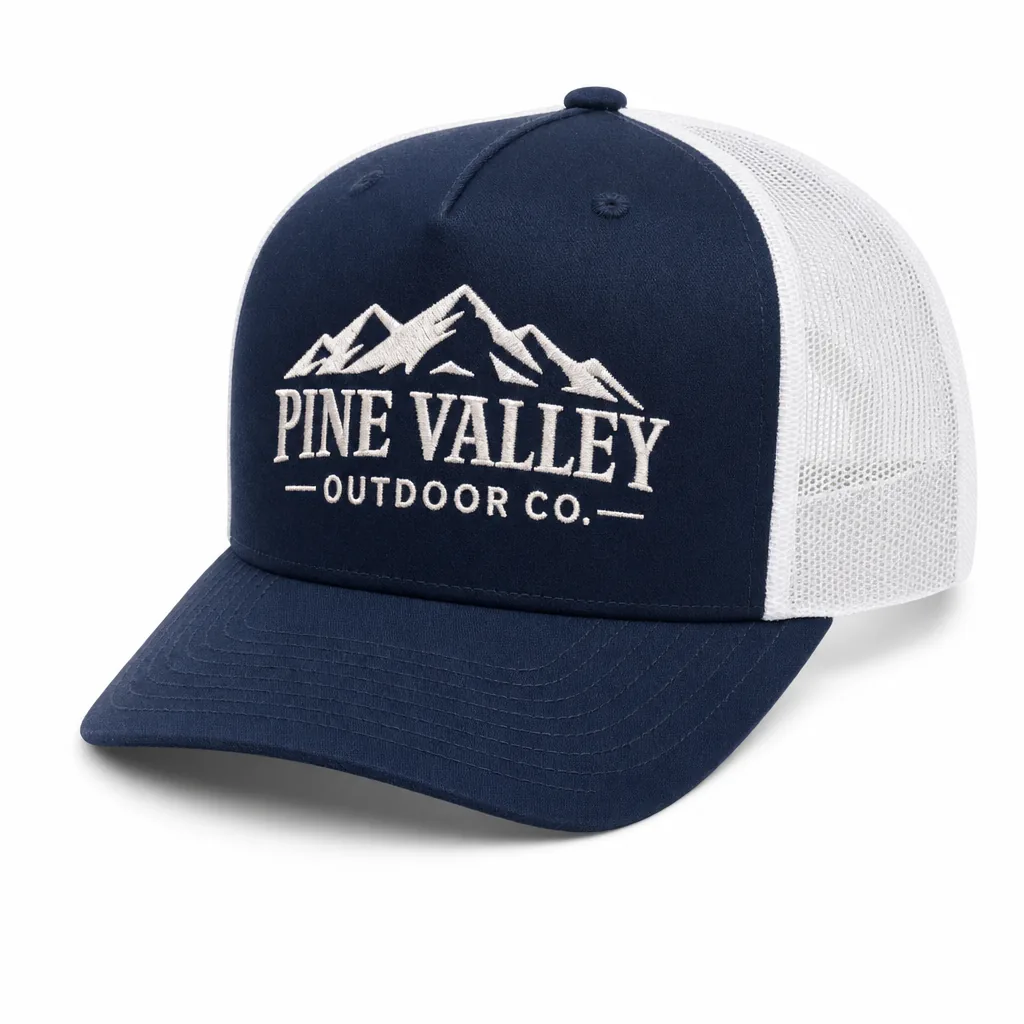
Baseball cap sourcing is a different discipline from a soft bucket hat men program because structure, not fabric weight, drives the risk. A standard 6-panel men’s cap usually starts in 108x58 cotton twill at 260-280 gsm, brushed chino at 240-250 gsm, or micropeach polyester at 145-160 gsm, but the make-or-break variables are hidden inside the front: buckram weight, visor board thickness, and blocking consistency after pressing. On fitted caps, there is no snap closure to mask grading error, so finished inner circumference needs to stay within +/-0.5 cm, especially across commercial sizes 7 1/8, 7 1/4, and 7 3/8. Front logo embroidery on Tajima or Barudan heads typically runs 8,000-12,000 stitches; once you add 3D puff, metallic thread, back arch, and side hits, thread breaks and trim marks climb fast, and reject rates follow. Most baseball cap claims start with a weak spec sheet. Lock the crown profile, visor length and curve, panel count, eyelet stitch color, seam tape color, sweatband material, closure type or fitted size split, logo method, stitch-count range, label placement, and pack ratio by size. If shade matters, specify Pantone TCX or Pantone Coated references in the PO and write the tolerance clearly: Delta-E under 1.5 for shell fabric and under 2.0 for embroidery thread under D65 lighting. Also define underbill color, visor sandwich detail, buckram stiffness, and whether the profile is high, mid, low, or fully unstructured. “Baseball cap” is not a usable production description any more than “bucket hat men” is; both leave too much room for interpretation on the sewing floor.
MOQ and FOB are usually misread because buyers focus on cloth cost instead of machine minutes and assorting loss. Basic adjustable caps in brushed twill with one flat embroidered logo generally start at 144-300 pcs per colorway, while true fitted programs usually need at least 288 pcs split across 3-4 sizes to keep cutting utilization and carton packing efficient. For 2026 Zhejiang sourcing, a realistic FOB range is $2.20-$3.40 for a simple adjustable cap, $3.10-$4.80 for a fitted cap with a woven label and 2-3 embroidery locations, and $4.80-$7.50 once you add appliqué, printed seam tape, moisture-wicking sweatbands like Coolmax-type polyester, or licensed retail packaging. Compared with bucket hat men styles, the baseball silhouette often carries similar FOB because shaping, embroidery, and grading create more reject exposure than buyers expect. QC needs to be written tighter than the average promo brief. AQL 2.5 is normal for low-risk programs, but licensed sports, department store, and team retail orders often tighten visual workmanship on logo panels to AQL 1.5. Inspect visor symmetry, top-button centering, crown collapse after shaping, skipped stitches at the sweatband join, exposed embroidery backing, thread contamination, oil marks near eyelets, and wrong size labels inside fitted runs. Our standard practice is to check fitted caps on headforms before final packing because poor shaping creates more claims than minor sewing defects. If the same factory also produces bucket hat men styles, compare how well it holds brim roundness and binding alignment; a line that cannot keep a curved visor centered usually lacks the process discipline to hold any headwear silhouette consistently.
Men's Bucket Hat
Buyers who treat bucket hat men as a basic cut-and-sew item usually get the same two failures: generic 58 cm fit and a brim with no recovery after packing. The sewing sequence is straightforward, but the spec control is not: crown panel cutting, side-wall joining, brim sandwiching, topstitch balance, sweatband setting, eyelet installation, then final pressing. Fabric has to be locked before quotation, otherwise the FOB target is meaningless. For dependable men’s programs, the safest baselines are 240-280 gsm brushed cotton twill, 210-230 gsm nylon taslon in 70D-110D, or 8-10 oz washed denim; lighter shells often collapse unless you deliberately want a soft, unstructured silhouette. Brim construction matters more than most tech packs admit. A 1.2-1.8 mm PE insert keeps the edge crisp and gives better rebound after carton compression, while fused nonwoven interlining feels flatter and cheaper, acceptable for promotional volume but weak for streetwear or licensed retail. A usable RFQ should never say only “one size.” Many cap factories still default bucket blocks to 58 cm, which is why sell-through suffers on men’s fits. Specify finished circumference by size, such as S/M 57 cm and L/XL 59 cm, with crown height at 8.5-9.0 cm, brim width at 5.0-6.0 cm, and a finished tolerance within +/-0.5 cm after pressing. Decoration also needs exact placement and method: flat embroidery on Tajima or Barudan heads, side-seam woven label, underbrim screen print, or all-over digital print controlled to Delta-E below 1.5 against the approved Pantone TCX reference. In Zhejiang, MOQ is usually 300-500 pcs per color in stock fabric, but costing becomes more stable around 1,000 pcs. A plain cotton bucket style typically runs $2.10-$3.40 FOB; embroidery adds $0.18-$0.60, metal eyelets $0.05-$0.08 each, and lining, enzyme wash, or contrast seam taping can push the style above $4.20 FOB.
Most chargebacks on bucket hat men come from shape, shade, and finishing defects rather than obvious seam failure. The repeat issues are brim waviness, twisted crown-to-brim alignment, skipped topstitch rows, puckering around embroidery, oxidized eyelets, and panel shading that only appears under proper inspection light. I would inspect at AQL 2.5 with brim symmetry checked at four points, stitch density compared panel to panel, and finished circumference measured after final pressing, because poorly controlled shaping can move size by 0.7-1.0 cm. On nylon taslon or coated shells, needle drag is another real problem; once the coating is scarred, you get line marks that buyers often misread as weaving defects. That is a production-control issue, not a fabric excuse. Color and wash approval need the same discipline as fit approval. Check dyed or printed lots under D65 light and agree the shade tolerance in advance, because bucket silhouettes expose panel mismatch more harshly than a six-panel cap. If embroidery is involved, ask for a strike-off that shows backing type, stitch count, and fill direction; a dense fill on a soft crown will telegraph puckering immediately. At CrownsForge, the safest practice is to seal a pre-production sample against the PO with actual circumference, brim hand feel, stitch-row count, eyelet finish, and decoration reference all recorded. That controls risk far better than squeezing another $0.12 off ex-factory price, especially on mixed-fabric orders or washed programs where variation compounds quickly.
Baseball Hats for Men
Baseball caps are less forgiving than a typical bucket hat men order because the risk sits in geometry and fit, not just decoration. A standard men’s baseball cap is usually a 6-panel construction in 108 x 56 cotton twill at 260-280 gsm, brushed chino around 240 gsm, or micropeach polyester at 150-180 gsm, with buckram-backed front panels, a PE visor insert at 1.8-2.2 mm, embroidered eyelets, seam taping, and a woven or moisture-wicking sweatband. If you are buying fitted caps, skip vague S/M/L grading and specify head circumference by size, commonly 6 7/8 to 7 5/8, with sweatband tolerance held within +/-3 mm and crown depth kept consistent across the full size run. Logo execution is where weak factories get exposed fast: on Tajima, Barudan, or ZSK heads, clean satin borders, stable edge-run underlay, no flagging on high-density fills, and controlled EVA foam lift on 3D puff are baseline requirements, not premium extras. Most failures start upstream in the tech pack. Lock crown height, visor curve, panel shape, stitch count per inch, tape color, sweatband fiber content, closure spec, fabric gsm, and Pantone TCX references for shell and trims before sampling starts. For custom caps, I would also freeze logo placement in millimeters, approve thread brand or equivalent, set a Delta-E target under 1.5 from lab dip to bulk, and define carton pack-out clearly, such as 25 pcs per inner and 144 pcs per master carton. MOQ usually lands at 144 pcs per color for simple washed caps, while fitted programs often need 288-576 pcs because size ratios increase cutting loss and inventory complexity. In Zhejiang, a basic embroidered cap is typically $2.20-$3.10 FOB; a structured performance style with sandwich brim, woven label, branded seam tape, and moisture-wicking sweatband is more realistically $3.80-$5.80 FOB.
Inspection on baseball caps should focus on the defects that generate chargebacks, not minor cosmetic noise. The failures that matter are visor asymmetry over 3 mm, twisted crowns, off-center top buttons, embroidery shifted more than 2 mm, skipped stitches at the sweatband join, raw-edge fray under taping, and panel shading from mixed dye lots. A competent factory should be checking visor symmetry with templates, verifying crown balance on flat tables, running crocking tests on dark colors, and pulling seam strength at stress points like back closure joins and sweatband seams. For licensed sports, retail, or team programs, AQL 2.5 is the practical baseline, with fit checks across all size breaks and carton drop review because curved brims deform quickly if master cartons are under-spec'd. That is the real sourcing tradeoff versus bucket hat men programs. Bucket hats tolerate more variation in fit, panel alignment, and even embroidery position because the silhouette is soft and the size range is simpler. Baseball caps look sharper for team, promotional, and streetwear use, but they only work commercially when the supplier can hold visor curve, crown profile, color consistency, and embroidery registration across the entire lot. If the factory cannot control buckram stiffness, brim symmetry, and size grading at the same time, the cap may pass a casual visual check but still fail at retail once units are worn, stacked, and compared side by side.
Designer Bucket Hats
Designer bucket hats fail at silhouette, not branding. In bucket hat men development, the make-or-break points are crown depth, top diameter, brim drop, and post-wash recovery; miss any one and the style reads promotional even if the embroidery is clean. A reliable men’s block is usually 6 or 8 side panels with a separate top and brim ring, stitched at 6 to 8 SPI with 4 to 8 concentric brim rows spaced evenly at 5 to 6 mm. For premium programs, I’d spec 8 to 12 oz cotton twill, 280 to 340 gsm brushed canvas, 7 to 10 oz garment-washed denim, or 120 to 160 gsm nylon taslon with a peach finish. To keep the brim from collapsing without turning it into a stiff giveaway hat, use a 40 to 60 gsm woven fusible or 0.25 to 0.35 mm nonwoven interlining in the brim only; fusing the crown usually creates an unnatural stand. Embroidery placement has to be engineered before sewing. If artwork crosses a curved panel seam, digitizing must allow for seam spread, push-pull compensation, and fabric distortion, then run flat pre-assembly on Tajima, Barudan, or ZSK heads. Once you embroider a finished bucket, seam tunneling, needle deflection, and off-center logos become common, especially on washed canvas and denim. The tech pack should lock top diameter, crown height, brim width, seam allowance, and final head circumference tolerance to ±0.5 cm, with brim width held to ±0.3 cm. Bucket geometry is less forgiving than a baseball cap block; a brim flare that opens 4 mm too much or a crown that shrinks 0.7 cm after enzyme wash is enough to change the entire profile on head.
Trim control is where designer margins disappear. Shell, sweatband, inside seam tape, woven label, eyelets, drawcord, and any contrast binding need to be approved as one color system, not as separate “close enough” lab dips. For designer-grade bucket hat men orders, I’d set Pantone TCX matching with a Delta-E target under 1.5 on critical trims and under 2.0 on washed shells where shade movement is unavoidable. Dark programs need extra discipline: black, olive, and navy sweatbands should test minimum grade 4 for crocking and laundering, or they will stain foreheads and neck tape after the first few wears. If the style uses washed denim, pigment-dyed canvas, or coated nylon, add seam slippage, shade segregation under D65 lighting, and hydrolysis or coating adhesion checks before bulk packing. Commercially, the MOQ and FOB move fast once you add fashion details. A basic twill bucket in Zhejiang usually prices around $2.20 to $3.80 FOB at 300 to 500 pieces per color, but all-over lining prints, metal eyelets, branded seam tape, woven appliqué, enzyme wash, or pre-sew embroidery push the realistic range to $4.50 to $7.50 FOB and often require 600 to 1,000 pieces to hold pricing. Sample charges of $50 to $120 are normal because wash trials, trim dye-lot matching, and revised paper patterns take real line time. Final inspection should be run at AQL 2.5, checking at least 13 pcs per lot for circumference, crown height, brim width, topstitch consistency, off-grain cutting, and asymmetrical collapse after packing. Our standard practice is to write crown stuffing, brim support, polybag venting, and carton humidity control directly into the packing spec, because unstructured buckets can oval out badly in transit if the line improvises.
Cool Bucket Hats for Guys
Streetwear credibility in bucket hat men lines comes from construction discipline, not from adding louder trims after the fact. Lock the base spec first: 240-300 gsm cotton twill is the safest everyday program because it holds embroidery cleanly, 10-12 oz brushed canvas gives a heavier vintage drape, and 120-160 gsm recycled nylon makes sense for outdoor capsules where dry time and packability matter. A reliable build is usually four panels or components—crown top, side band, brim upper, and brim under—with 0.8-1.2 mm PE brim interlining so the brim does not collapse after laundering or repeated wear. On the tech pack, specify brim width in centimeters, crown height, stitch-row count on the brim, sweatband composition, eyelet type, and body color by Pantone TCX. If the supplier cannot confirm shrinkage below 3% or lab dip approval within Delta-E 1.5-2.0, they are not managing process control tightly enough for repeat bulk production.
Repeatability is where most bucket hat men programs either make margin or lose it. A men’s one-size bucket should still be built on a real base size—58 cm is standard—with finished circumference tolerance held to +/-0.5 cm, because anything looser will create obvious fit drift across cartons. For embroidery, ask what equipment they run; Tajima, Barudan, and ZSK multi-head machines handle dense front logos with better tension control than low-end single-head setups, especially on washed cotton where puckering shows fast. In Zhejiang, MOQ is typically 144-300 pieces per colorway on stock fabric, but custom dye, AOP, or woven brand trims usually move the workable floor closer to 500 pieces. Current FOB pricing for a cotton twill style with flat embroidery and a woven label generally lands around $2.20-$3.80; add pigment wash, contrast underbrim, or metal eyelets and you are more realistically at $4.20-$6.00.
Most bulk failures on cool bucket hats are still basic factory misses: uneven brim circumference, twisted side seams, wandering topstitch, and embroidery that distorts the crown after pressing. Inspection has to be blunt. Lay the hat flat to verify brim symmetry, measure crown-to-brim seam consistency at four points, and inspect eyelets from the inside for burrs that can scratch the wearer. For washed or garment-dyed styles, test crocking, perspiration staining, and shade variance aggressively; black and dark navy expose weak dye control faster than lighter shades. AQL 2.5 is a reasonable minimum for major defects, but only if assortment checks are done at carton level and the packing list is matched against size, color, care label, and hangtag callouts. The better factories also control SPI on brim rows, keep bartacks clean at label joins, and check final pressing shape before inner packing, because even slight brim torque makes the whole hat look cheap on head.
Funny Bucket Hats
Print method is the make-or-break decision on funny bucket hats: if the artwork has photo detail, gradients, or dense novelty repeats, use panel sublimation on 120-160 gsm polyester microfiber and print before sewing. That keeps the repeat crossing side seams and brim sections with far better continuity than finished-garment printing. If the goal is a better hand feel and a more credible streetwear look for bucket hat men, 190-240 gsm cotton twill or brushed chino is usually the stronger retail choice, but buyers need to accept the tradeoff: softer fabrics print less sharply, registration drifts more, and washed shades can move 0.5-1.5 Delta-E from the approved standard, especially on pigment or reactive prints with enzyme wash. Finished-hat screen print is cheaper, but it routinely creates dead zones at panel joins, distorted graphics on the brim curve, and inconsistent ink laydown near crown seams.
The tech pack has to control fit and print behavior, not just artwork. Lock crown height, brim width, top diameter, panel shape, seam allowance, SPI, sweatband material, brim quilting rows, under-brim color, eyelet finish, and exact sizing such as S/M 58 cm and L/XL 60 cm. Also specify fabric composition, gsm tolerance within +/-5%, printable repeat size, Pantone TCX for trims, colorfastness target, and wash shrinkage after one cycle; vague specs are why funny hats pass visual approval and then fail bulk wear tests. In Zhejiang, MOQ is usually 300-500 pieces per colorway for printed cotton, while sublimated polyester can drop to 150-200 pieces if the factory gangs multiple jobs on one run. Realistic pricing at 500 pieces is about $2.10-$3.40 FOB China for printed cotton twill and $1.85-$2.80 for sublimated polyester before woven labels, inner taping, hangtags, or retail polybags. For inspection, hold novelty programs to AQL 2.5 and focus on side-seam registration, brim waviness from uneven fusing, eyelet puckering, off-grain panels, sweatband join bulk, and crocking on dark grounds; funny graphics do not compensate for poor fit in a bucket hat men order.
Working with CrownsForge for bucket hat men programs
Most bucket hat men programs fail in sampling, not production, because buyers approve aesthetics before they lock fit. A clean fit sample should take 5 to 7 working days, and a decorated prototype 7 to 10, but only if the factory gets a complete tech pack up front: vector artwork, Pantone TCX references, target fabric weight, brim construction, eyelet spec, label placement, and packing method. Add 2 to 4 days if the style includes reversible sewing, all-over print, contrast binding, or dense embroidery near the brim edge, because those details need print strike-off approval, embroidery path testing, and revised pattern nesting. On a bucket silhouette, a 3 mm deviation in brim width or crown height is enough to change how the hat sits, especially on softer 180 to 240 gsm cotton twill or washed canvas. The practical way to control this is to approve in two stages: fit first, decoration second. For bucket hat men styles, the spec sheet should call out finished circumference, crown height, top panel diameter, brim width, stitch count per inch, seam allowance, and tolerance by point of measure, not just a flat sketch and reference photos. Common adult sizes are 58 cm, 60 cm, and 62 cm, and those size breaks need to be fixed before grading, marker planning, and carton ratios are set. Our standard practice is to measure the first fit sample on the table and again after light steaming, because washed cotton and soft-brim builds can shift enough to create false approvals if the sample is judged only by appearance.
MOQ and cost have to follow process reality, not optimistic quoting. For a standard bucket hat men style in ex-stock 100% cotton twill with metal eyelets, direct embroidery, or a woven loop label, 144 to 300 pieces per color can be workable. Once you move into custom-dyed twill, enzyme wash, reversible construction, sublimated lining, or applique, the efficient MOQ usually jumps to 500 to 1,000 pieces because dye-lot control, cutting loss, extra labor minutes, and wash shading make small runs expensive. In Yiwu, a basic 210 to 240 gsm cotton twill bucket hat typically lands around $2.10 to $3.40 FOB Ningbo at 500 pieces; a reversible or pigment-washed version with chain stitch, woven patch, or binding tape is more realistically $3.80 to $6.20. Decoration capability and compliance are where margin gets protected. A supplier handling bucket hat men orders in-house should be able to run flat embroidery on Tajima or Barudan heads, woven patches, applique, heat-transfer labels, and panel screen print without farming out half the process. Each decoration affects the garment differently: high stitch density can tunnel a soft crown, plastisol on sub-200 gsm cotton can make the panel boardy, and dark pigment washes need crocking and colorfastness checks because visible panel mismatch starts to become commercial at Delta-E above roughly 1.5 to 2.0. Compliance should be tied to the actual production sites, not generic certificates, so ask early for sedex-audit-cap-supplier-guide.html">BSCI 2.0 or Sedex SMETA 4-Pillar records plus REACH or CPSIA declarations for fabric, ink, sweatband, patch backing, and any coated or printed components. Final release should be tied to inline checks and a finished-goods inspection at AQL 2.5, especially once the program moves beyond a 300-piece capsule into a 3,000-piece retail drop.
Frequently Asked Questions
Can I order a sample before bulk production?
Yes. We strongly recommend approving a pre-production sample before mass production. Samples are charged at 35 to 60 USD each plus express shipping, fully refundable against confirmed bulk orders over 500 pieces.
Do you support sustainability certifications?
Yes. We work with GOTS organic cotton, GRS-certified recycled polyester, OEKO-TEX Standard 100 fabrics, and are BSCI and Sedex audited. Certification documentation can be provided per order.
What logo decoration techniques do you offer?
3D puff embroidery, flat embroidery, woven patch, leather patch, PVC patch, screen printing, sublimation, applique and laser etching, all in-house with no subcontracting.
What file format should I send for my logo?
Vector files (AI, EPS, PDF) are ideal. High-resolution PNG or JPG at 300 dpi on transparent background works as a fallback. Provide Pantone color references for accurate reproduction.
What is the minimum order quantity (MOQ) for custom hats?
Our standard MOQ is 100 pieces per design and color, with sampling available from 1 piece. For complex multi-color logos or premium fabric upgrades, the MOQ can be lowered with a small per-piece surcharge.
How does ordering baseball cap embroidered custom work?
When evaluating baseball cap embroidered custom, the key considerations are construction quality, decoration capability, MOQ flexibility and lead time. Cover everything buyers ask about baseball hats men's: how it's manufactured, what specs to request from a factory, typical MOQ and pricing, common quality issues to inspect for, and how this ties back to the broader bucket hat men sourcing decision. Cover everything buyers ask about baseball hats for men: how it's manufactured, what specs to request from a factory, typical…
How does ordering custom embroidered hats near me work?
When evaluating custom embroidered hats near me, the key considerations are construction quality, decoration capability, MOQ flexibility and lead time. Cover everything buyers ask about baseball hats men's: how it's manufactured, what specs to request from a factory, typical MOQ and pricing, common quality issues to inspect for, and how this ties back to the broader bucket hat men sourcing decision. Cover everything buyers ask about baseball hats for men: how it's manufactured, what specs to request from a factory, typical…
How does ordering custom baseball hats with logo work?
When evaluating custom baseball hats with logo, the key considerations are construction quality, decoration capability, MOQ flexibility and lead time. Cover everything buyers ask about baseball hats men's: how it's manufactured, what specs to request from a factory, typical MOQ and pricing, common quality issues to inspect for, and how this ties back to the broader bucket hat men sourcing decision. Cover everything buyers ask about baseball hats for men: how it's manufactured, what specs to request from a factory, typical…
What's the MOQ for custom embroidered baseball caps no minimum?
When evaluating custom embroidered baseball caps no minimum, the key considerations are construction quality, decoration capability, MOQ flexibility and lead time. Cover everything buyers ask about baseball hats men's: how it's manufactured, what specs to request from a factory, typical MOQ and pricing, common quality issues to inspect for, and how this ties back to the broader bucket hat men sourcing decision. Cover everything buyers ask about baseball hats for men: how it's manufactured, what specs to request from a factory, typical…
Can a 50 year old wear a bucket hat?
Style Has No Age Limit Wearing a bucket hat at 40, 50, or 60+ isn't “trying too hard.” It's knowing what works and making it your own. The trick is to find a style that fits your vibe: Keep it classy with neutral tones or subtle embroidery. Add character with a monogram, your business logo, or a personal design.
How should a man wear a bucket hat?
You can pair a bucket hat with casual clothing such as shorts, T-shirts, and sneakers for a relaxed, laid-back look. They also look great with a pair of chinos or jeans and a button-up shirt for a more dressed-up appearance. Some men even wear them with a suit to add a playful twist to their formal attire.
What hat should a 60 year old man wear?
Q: Which iconic hat styles are perfect for the discerning senior man? A: The Fedora, Panama Hat, Trilby, Newsboy Cap, Homburg, and Bowler are all classic hat styles that offer elegance, versatility, and a touch of individuality.
What hats are Gen Z wearing?
Bucket Hats in Bold Prints : These are a hit with both Gen Z and their younger siblings.
Ready to start your custom hat project?
Send us your tech-pack, sketch or even just an inspiration photo. We will respond with a detailed quotation and digital mock-up within 24 hours.
Request a free quoteRelated guides
First Custom Hat Order: 10 Mistakes That Cost First-Time Buyers Money
Read article →
Buckram vs Foam vs Unstructured: Cap Crown Construction Compared
Read article →
Country Hats For Men Export Shipping Checklist for Custom Hat Buyers
Read article →We hope this guide demystifies bucket hat men: a vertical-specific sourcing guide - 2026 buyer's guide and helps you move forward with confidence. If you have questions specific to your project, our English-speaking sales engineers are one message away.