
Bucket Hat Corduroy Decoration QC Checklist for Custom Hat Buyers (2026 Update)
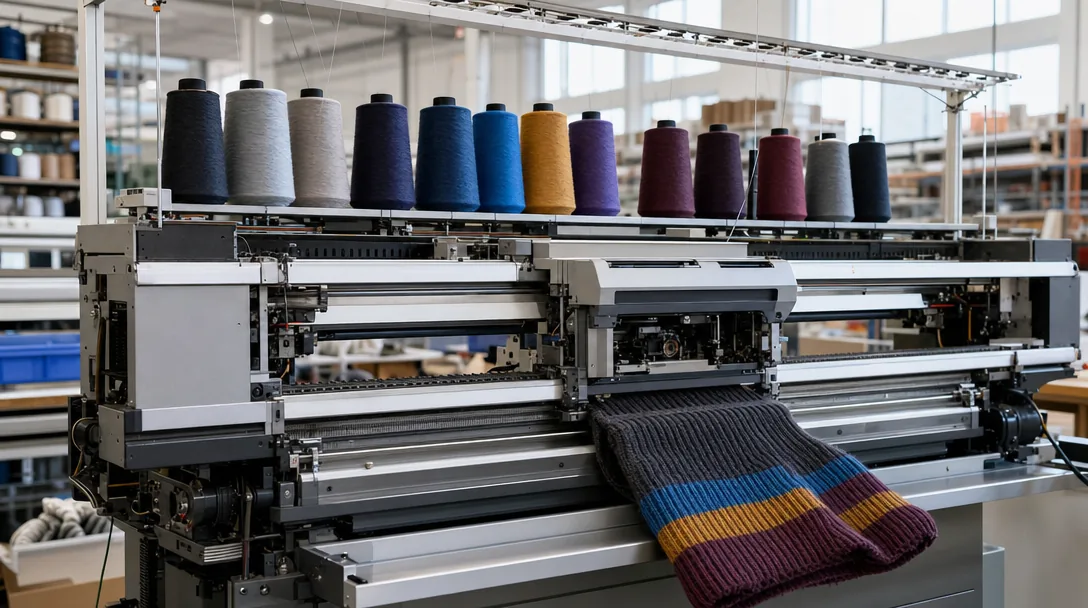
For brand owners, wholesalers and procurement teams entering the custom headwear category, bucket hat corduroy decoration qc checklist for custom hat buyers (2026 update) is one of the highest-leverage decisions you will make. Get it right and your unit economics, retail story and reorder cycle all improve. Get it wrong and you carry the cost for years.
Why bucket hat corduroy decoration qc checklist needs a separate sourcing plan
A separate sourcing plan is mandatory because the main failures on corduroy bucket hats start at fabric booking, not at final inspection. Buyers using a bucket hat corduroy decoration qc checklist are usually trying to prevent three defects that plain twill rarely exposes the same way: pile crush, logo distortion, and panel shade shift caused by mixed nap direction. An 8-wale 100% cotton corduroy around 260 gsm reacts very differently from a 14-wale cotton-spandex blend at 220 gsm once you add embroidery, fusing, or garment wash. If the mill sheet does not lock fiber content, wale count, finished weight tolerance, and pile direction, the cutting room will treat it like brushed chino and you get seam bruising, logo sink-in, and crown panels reflecting different shades under D65 even when the lab dip looked acceptable. Before artwork review, I would require confirmation of piece-dyed versus yarn-dyed construction, shrinkage after wash, and a bulk color tolerance no looser than Delta-E 1.0 to 1.5 against the approved swatch, especially on navy, olive, and dark brown where nap reflection exaggerates mismatch.
Decoration is the second reason the sourcing logic cannot be generic, because corduroy punishes unstable logo methods fast. Direct embroidery on wale fabric usually needs reduced stitch density, lighter underlay, and a machine trial on Tajima, Barudan, or ZSK heads; if you run a standard fill, the needle tunnels the pile and the edge reads jagged from one meter. On a 3,000-piece order, the cost spread between direct embroidery, woven patch, and twill applique is commonly $0.18 to $0.65 per hat, but the bigger issue is process risk: patch programs add another vendor, another color standard, and another adhesion or topstitch failure point. Once the style also includes enzyme wash, metal eyelets, or a chin cord, the bucket hat corduroy decoration qc checklist has to cover wash appearance, crocking, trim oxidation, and pull strength, not just logo appearance. Our standard practice is to freeze logo method, wash recipe, and panel nap direction before pre-production, because one late decoration change can add 7 to 12 days and create bulk-to-sample drift that no AQL 2.5 inspection can realistically sort out at the end.
Compliance is the third reason a recycled baseball-cap SOP misses the mark. Corduroy bucket hats shipping into US and EU retail need the sourcing file to verify fiber-content support, restricted-substance compliance, and subcontractor visibility for every process touching the hat, including embroidery, laundry, patch attachment, and metal trim fitting. If the supplier claims organic cotton, verbal assurance is worthless; ask for transaction-level documentation, because sewing thread, fusible backing, sweatband elastic, and patch ground fabric are common weak points. I would also lock azo dye compliance, formaldehyde limits, lead content in eyelets or cord ends, needle-control procedure, and packaging spec before bulk fabric is booked. Social compliance has the same trap: a valid sedex-audit-cap-supplier-guide.html">BSCI 2.0 or Sedex SMETA 4-Pillar audit for the sewing factory does not automatically cover the laundry or patch vendor. That gap changes landed cost, document timing, and final inspection scope, which is exactly why a bucket hat corduroy decoration qc checklist needs its own sourcing plan instead of a generic cap checklist.
Factory capability checks before quoting
Do not request a quote until the factory proves it can decorate corduroy without flattening the pile or losing registration on curved bucket panels. In a real bucket hat corduroy decoration qc checklist, machine capability comes before price: confirm the supplier runs Tajima, Barudan, or ZSK multi-head embroidery for production, plus a separate sampling setup with flat frames or cap attachments that can test small runs without tying up bulk heads. Corduroy reacts differently by wale count, so the factory should speak in specifics, not sales language. On 8-wale cotton cord, dense fills often start puckering once stitch spacing gets tighter than roughly 0.40-0.45 mm unless the digitizer reduces density, increases pull compensation, and switches to a firmer cut-away or fused backing. Ask for macro photos of direct embroidery, woven patches, laser-cut twill appliqué, microfiber suede patches, and high-frequency TPU badges on at least 8-wale, 11-wale, and fine needle cord. If they cannot explain where direct embroidery fails—especially across side seams, near brim stitch rows, or over heavy wale ridges—the quote is just a guess with margin added.
Fabric control is the second gate because two rolls labeled "100% cotton corduroy" can behave like different materials once they are fused, pressed, and washed. Before quoting, the supplier should issue actual construction data: fiber content, wale count, finished weight such as 220-280 gsm for body fabric, usable width, shrinkage after wash, and color approval against the nominated Pantone TCX with a defined Delta-E limit. For fashion programs I treat Delta-E under 1.5 as the safe target; for promotional orders, under 2.0 is usually acceptable if the customer approves lot tolerance in writing. Brown, olive, and washed black are the problem shades because brushing and shearing shift apparent depth between dye lots, so ask whether the mill can provide lot-by-lot lab dips or spectrophotometer records. Construction capability matters just as much: the factory should lock panel count, brim width, seam allowance, stitch density, and brim row count before sample cutting. Twisted brims usually come from bad pattern balance and uneven easing, not from operators suddenly sewing badly on the line.
The sample room will tell you within a week whether the supplier is disciplined or just responsive. A capable room should return a revised proto in 5-7 working days with a measured spec sheet, revision history, and numeric tolerances: typically +/-3 mm for patch placement, +/-5 mm for brim width, and a defined allowance for crown height depending on cord thickness and wash finish. Trims on bucket styles need the same scrutiny as decoration. Ask whether eyelets, chin cords, toggles, elastic adjusters, and metal hardware have already passed pull tests, abrasion checks, coating adhesion, and salt-spray or rust-resistance screening where applicable. If metal trims are used, confirm the factory has documented needle control and final metal-detection procedures when required by the program. Compliance should be checked before sampling drags on: request a current BSCI 2.0 or Sedex SMETA 4-Pillar report and ask to see the inline and final inspection criteria tied to AQL 2.5. The fastest stress test is still communication—send one complete tech pack and see whether the reply flags machine limits, seam-risk areas, likely substitutions, and decoration failure points instead of the usual "no problem."
MOQ, pricing and sample approval
MOQ is where the real cost control starts on a corduroy bucket hat, because corduroy does not cut like brushed twill. On 8-wale to 11-wale cotton or cotton-spandex corduroy at 280-320 gsm, most China factories need 144-300 pcs per shell color to keep nap direction consistent, match brim segments, and avoid excessive marker loss. Below 100 pcs per color, the order usually stops being true production and starts behaving like a paid development run: lower fabric utilization, more hand alignment during cutting, and more sorting for pile crush, shading, and wale direction. A credible 2026 FOB range for a basic bucket hat with one location flat embroidery is about USD 4.30-6.70 at 300-500 pcs; if you add enzyme wash, custom printed lining, woven sweatband, metal eyelets, and tipped drawcords, the range is more realistically USD 7.40-9.60. Any serious bucket hat corduroy decoration qc checklist should require the factory to define MOQ by Pantone-matched shell color, by logo file, and by shipment split, because dividing one PO into black, olive, and brown can move unit cost more than 10-12% before freight even enters the discussion.
Decoration cost should be broken out before sample approval, not hidden inside a blended unit price. Flat embroidery digitizing is commonly USD 25-60 per file, but chain stitch, applique, or raised effects on corduroy usually land at USD 70-120 because the digitizer has to compensate for rib height, fabric push, and stitch sink on Tajima, Barudan, or ZSK heads. If the file is not built for corduroy, fills drop between the wales, satin edges chew up the pile, and text under about 4 mm cap height loses legibility after wash. For PPS, I want embroidery comments to specify density, underlay, backing, thread, and needle: roughly 0.35-0.40 mm fill spacing is a workable starting point, paired with 40 wt polyester thread and a 75/11 or 80/12 needle depending on wale depth and backing stiffness. A usable pre-production sample also needs the actual bulk shell lot, final trims, care label, packing method, and carton spec, because corduroy shows compression damage quickly if nesting is wrong. Standard timing is usually 5-7 days for lab dips or fabric confirmation, 7-10 days for PPS, and 25-35 days for bulk after sign-off; before release, freeze packing ratio, carton marks, AQL 2.5 checkpoints, and any agreed Delta-E tolerance for shell fabric and trim in writing.
Quality inspection and shipping risk
Run final inspection on fully packed goods, not just inline sewing, because the defects that actually fail a bucket hat corduroy decoration qc checklist often show up after steaming, brim setting, loose-thread trimming, and polybagging. For shipments of 3,201 to 10,000 pieces, ANSI/ASQ Z1.4, General Inspection Level II, single sampling gives code letter L with a 200-piece sample; on custom hats, I classify broken topstitching, visible panel skew, exposed seam allowance, embroidery thread breaks, and mismatched wale direction as major defects under AQL 2.5. Keep the viewing standard fixed at 50 cm under 1000-1200 lux for exterior appearance and 30 cm for sweatband, inside binding, bartacks, and care labels, otherwise inspectors start arguing preference instead of spec. Measurement tolerances should be locked before bulk cutting: head circumference +/-0.5 cm, brim width +/-0.3 cm, crown height +/-0.5 cm, and decorative cord length +/-1.0 cm. On 8-wale to 11-wale cotton corduroy in the 220-280 gsm range, steaming and brim shaping can move size more than on brushed twill, so I want pre-shrink data by dye lot and at least one signed bulk wash-and-dry stability report before sewing starts.
Color control is where buyers lose margin fastest because corduroy pile reflects differently by nap direction; a brown, olive, or navy shell can match the lab dip flat and still look off once one panel is cut up-nap and the next down-nap. Bulk approval should record the sealed Pantone TCX reference, light source, and Delta-E tolerance, and for dark fashion shades I would hold bulk to Delta-E <=1.5 against the approved standard only if all cut parts follow the same nap direction. Do not accept greige-stage paperwork alone; require finished-fabric or finished-hat test reports showing dry crocking minimum grade 4, wet crocking 3-4, perspiration 4, and light fastness 4 for retail programs. Embroidery on corduroy needs its own defect map because the wale can hide minor misses while exaggerating registration drift, edge sink, tunneling, backing show-through, and hoop burn; anything over 1.0 mm registration drift should be rejected. Tajima and Barudan heads both run cleanly on corduroy if the digitizer reduces underlay for pile height and tests on the actual 8-wale or 11-wale shell fabric, not a flat cotton strike-off.
Most shipping losses come from packing errors and document mismatches, not ocean transit. Carton marks need to match the PO exactly: style, color name, size, quantity, carton number sequence, gross weight, net weight, country of origin, and incoterm. If the outer carton says brown and the inner sticker says khaki, the DC stops receiving and the chargeback usually comes back to the factory. For export packing, use five-ply corrugate for air shipments and seven-ply for ocean freight on heavier decorated hats, then run a post-palletization drop check when a style exceeds 20 cartons. The bucket hat corduroy decoration qc checklist should also require barcode scan verification, carton assortment audit, master-carton count confirmation, and loading photos before container handover, because mixed-color packs are still one of the most common reorder disputes. On FOB terms, buyers consolidating through Ningbo or Shanghai can often cut freight 3-8 percent; on DDP, the supplier carries the customs risk, so HTS classification, declared value, RFID-related battery-free declarations, and destination packaging compliance need to be cleared before cargo release. Our standard practice is to archive the approved tech pack, spec sheet, sealed sample photos, Pantone callout, DST file version, carton mark layout, and final AQL report together so the reorder six months later is based on records, not memory.
Buyer checklist for the next RFQ
A workable RFQ for a bucket hat corduroy decoration qc checklist starts by removing every judgment call from the pattern room and sample line. Specify silhouette, panel count, crown height, brim width, finished circumference, and tolerances at each POM; for adult bucket hats, a practical circumference tolerance is usually ±0.5 cm, with brim width held to ±0.3 cm. Corduroy also needs pattern-level instruction on wale direction for crown, sidewall, and brim pieces, because mixed nap will read as color shading even when the dye lot is correct. Do not just write “corduroy.” Call out shell construction and weight such as 100% cotton 6-wale at 280 gsm or 97/3 cotton-spandex 11-wale at 260 gsm, then define lining, sweatband, fusible, and whether the brim uses single or double interlining. If the color is brand-sensitive, give Pantone TCX references, require lab dips, and write Delta-E no greater than 1.5 under D65 light; otherwise the same “tan” can skew red or olive once pile direction changes the surface reflection.
Decoration specs need to be manufacturing data, not a mood board. Supply logos as AI, EPS, or editable PDF, and identify each application by location: flat embroidery, 3D foam, woven patch, twill appliqué, screen print, or heat transfer. On corduroy, detail loss happens fast, so lock artwork size in millimeters, minimum embroidered stroke width at 2.0 mm or above, thread type, and stitch density if you already approved a preproduction sample. If embroidery quality is critical, ask the supplier to record the sample machine platform—Tajima, Barudan, or ZSK—because pull compensation, underlay, and thread tension behave differently across heads and pile heights. Placement tolerances should be written, not assumed: ±3 mm at center front and ±5 mm at side placements is realistic for bucket hats. Also freeze the commercial details inside the same RFQ: label copy, barcode symbology, country-of-origin wording, carton marks, pack method, incoterm, destination port, compliance requirements, and inspection standard. AQL 2.5 major / 4.0 minor is common, but for corduroy you should explicitly name seam grin, pile crush, panel shading, needle cuts, skipped stitches, and embroidery sink as defect categories, because those are the failures that actually trigger claims.
Working with CrownsForge
A workable bucket hat corduroy decoration qc checklist starts at PPS, not at final random inspection, because corduroy hides problems until the hat is blocked and packed. The checkpoints that actually prevent claims are fabric geometry and decoration behavior on a ribbed surface: wale count, nap direction, pile height, steam shrinkage, bowing, and shade against the sealed Pantone TCX standard under D65 lighting. For bucket hats, 11-wale or 14-wale cotton corduroy in the 220-280 gsm range is usually the safe window. Lighter than 220 gsm, the brim softens, seam grin shows early, and embroidery telegraphs the fusing; heavier than 280 gsm, the brim starts to torque and the side seam stacks too thick after wash or steaming. We normally reject lots showing more than 2.5% residual shrinkage after steam and fusing, because that is enough to move crown height, distort brim overlap, and create visible mismatch between crown panels in bulk.
Most decoration failures come from approving artwork on the wrong substrate. Embroidery that looks clean on chino twill will often sink into corduroy channels unless the digitizing is rebuilt with proper edge-run underlay, reduced fill density, and pull compensation tested on the actual shell fabric using Tajima, Barudan, or ZSK heads. Satin columns below 0.4 mm are unreliable, and text under about 4.5-5.0 mm cap height typically plugs once the pile lifts. If the design uses screen print or heat transfer, check for ink bridging across the wales, edge fracture, cure consistency, and hand feel after rub and flex testing; visual adhesion alone is a weak standard on corduroy. Before bulk release, CrownsForge normally locks a signed PPS with stitch count, placement tolerance of +/-0.3 cm, approved thread luster, and a Delta-E tolerance around 1.0-1.5, then inspects bulk at AQL 2.5 for brim symmetry, crown height within +/-0.5 cm, topstitch SPI consistency, seam puckering, needle damage, and pile-direction mismatch, because reversed nap can make one colorway read as two shades under retail lighting.
Logistics and compliance belong on the same checklist because packing errors damage sell-through just as fast as sewing defects. Before FOB Ningbo or Shanghai booking, or DDP planning by sea or air, confirm fiber content declaration, care label language, HS code, barcode placement, carton assortment, and outer-carton compression strength. A bucket hat packed in an under-spec carton will arrive with crushed brims and pressure marks on the corduroy ribs even if factory QC passed. For compliance-sensitive buyers, the file should already tie the PO and color count to current BSCI 2.0 or Sedex SMETA 4-Pillar records, needle-control logs, inline reports, and final inspection reports. On a 3,000-piece order, one mislabeled carton batch or one missing audit document can miss vessel cutoff, trigger chargebacks, and cost more than the embroidery defects that got most of the attention on the floor.
Frequently Asked Questions
Which shipping methods do you support?
We support FOB, CIF and DDP shipping. Air express for samples and small orders, sea LCL for 100 to 500 pieces, sea FCL for 5,000+ pieces. Door-to-door DDP available for US, EU, UK, Canada and Australia.
What is the minimum order quantity (MOQ) for custom hats?
Our standard MOQ is 100 pieces per design and color, with sampling available from 1 piece. For complex multi-color logos or premium fabric upgrades, the MOQ can be lowered with a small per-piece surcharge.
Can I order a sample before bulk production?
Yes. We strongly recommend approving a pre-production sample before mass production. Samples are charged at 35 to 60 USD each plus express shipping, fully refundable against confirmed bulk orders over 500 pieces.
What logo decoration techniques do you offer?
3D puff embroidery, flat embroidery, woven patch, leather patch, PVC patch, screen printing, sublimation, applique and laser etching, all in-house with no subcontracting.
Do you support sustainability certifications?
Yes. We work with GOTS organic cotton, GRS-certified recycled polyester, OEKO-TEX Standard 100 fabrics, and are BSCI and Sedex audited. Certification documentation can be provided per order.
What should buyers know about organic cotton bucket hat?
When evaluating organic cotton bucket hat, the key considerations are construction quality, decoration capability, MOQ flexibility and lead time. Explain the buyer intent behind bucket hat corduroy decoration qc checklist, when it differs from generic hat sourcing, and what decisions affect cost, lead time and compliance. Describe how CrownsForge manages bucket hat corduroy decoration qc checklist programs with sampling, decoration, QC and export coordination.
What should buyers know about brown corduroy bucket hat?
When evaluating brown corduroy bucket hat, the key considerations are construction quality, decoration capability, MOQ flexibility and lead time. Explain the buyer intent behind bucket hat corduroy decoration qc checklist, when it differs from generic hat sourcing, and what decisions affect cost, lead time and compliance. Describe how CrownsForge manages bucket hat corduroy decoration qc checklist programs with sampling, decoration, QC and export coordination.
What should buyers know about bucket hat men nike?
When evaluating bucket hat men nike, the key considerations are construction quality, decoration capability, MOQ flexibility and lead time. Explain the buyer intent behind bucket hat corduroy decoration qc checklist, when it differs from generic hat sourcing, and what decisions affect cost, lead time and compliance. Describe how CrownsForge manages bucket hat corduroy decoration qc checklist programs with sampling, decoration, QC and export coordination.
What should buyers know about acrylic beanie hat?
When evaluating acrylic beanie hat, the key considerations are construction quality, decoration capability, MOQ flexibility and lead time. Explain the buyer intent behind bucket hat corduroy decoration qc checklist, when it differs from generic hat sourcing, and what decisions affect cost, lead time and compliance. Describe how CrownsForge manages bucket hat corduroy decoration qc checklist programs with sampling, decoration, QC and export coordination.
Ready to start your custom hat project?
Send us your tech-pack, sketch or even just an inspiration photo. We will respond with a detailed quotation and digital mock-up within 24 hours.
Request a free quoteRelated guides
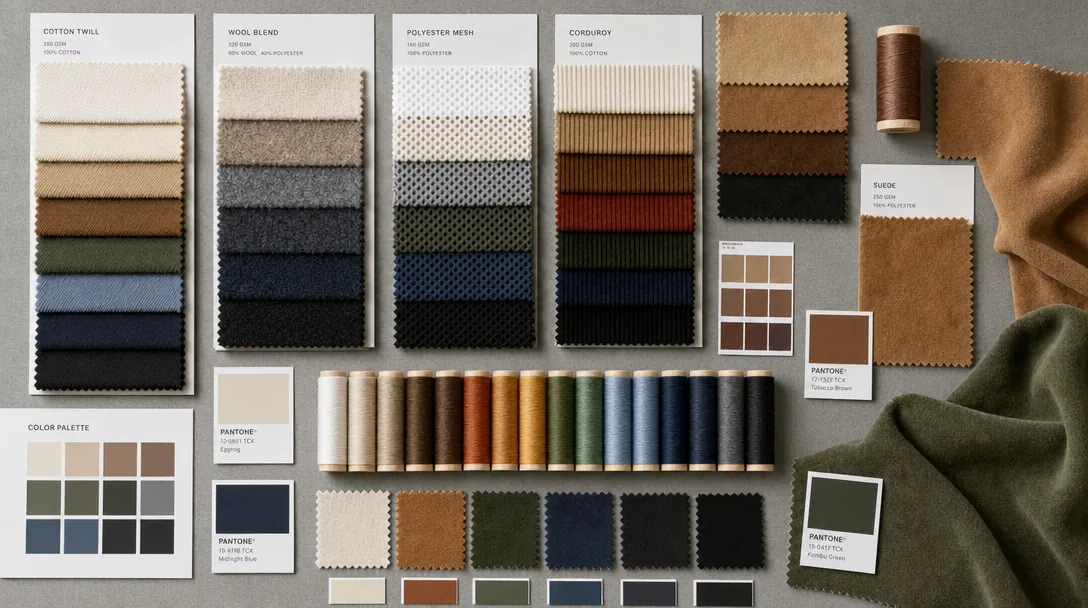
Bucket Hat Corduroy MOQ And Pricing Plan for Custom Hat Buyers
Read article →
Compliance Documentation Checklist for First Hat Import to US/EU - Cost & MOQ Breakdown
Read article →
Festival Bucket Hat: A Vertical-Specific Sourcing Guide
Read article →Sourcing custom hats does not have to be complicated. With the right manufacturing partner, clear specifications and a small upfront investment in sampling, you can launch a retail-quality product in 30 to 45 days.