
Compliance Documentation Checklist for First Hat Import to US/EU - Cost & MOQ Breakdown
For brand owners, wholesalers and procurement teams entering the custom headwear category, compliance documentation checklist for first hat import to us/eu - cost & moq breakdown is one of the highest-leverage decisions you will make. Get it right and your unit economics, retail story and reorder cycle all improve. Get it wrong and you carry the cost for years.
The 7 documents every hat import shipment needs
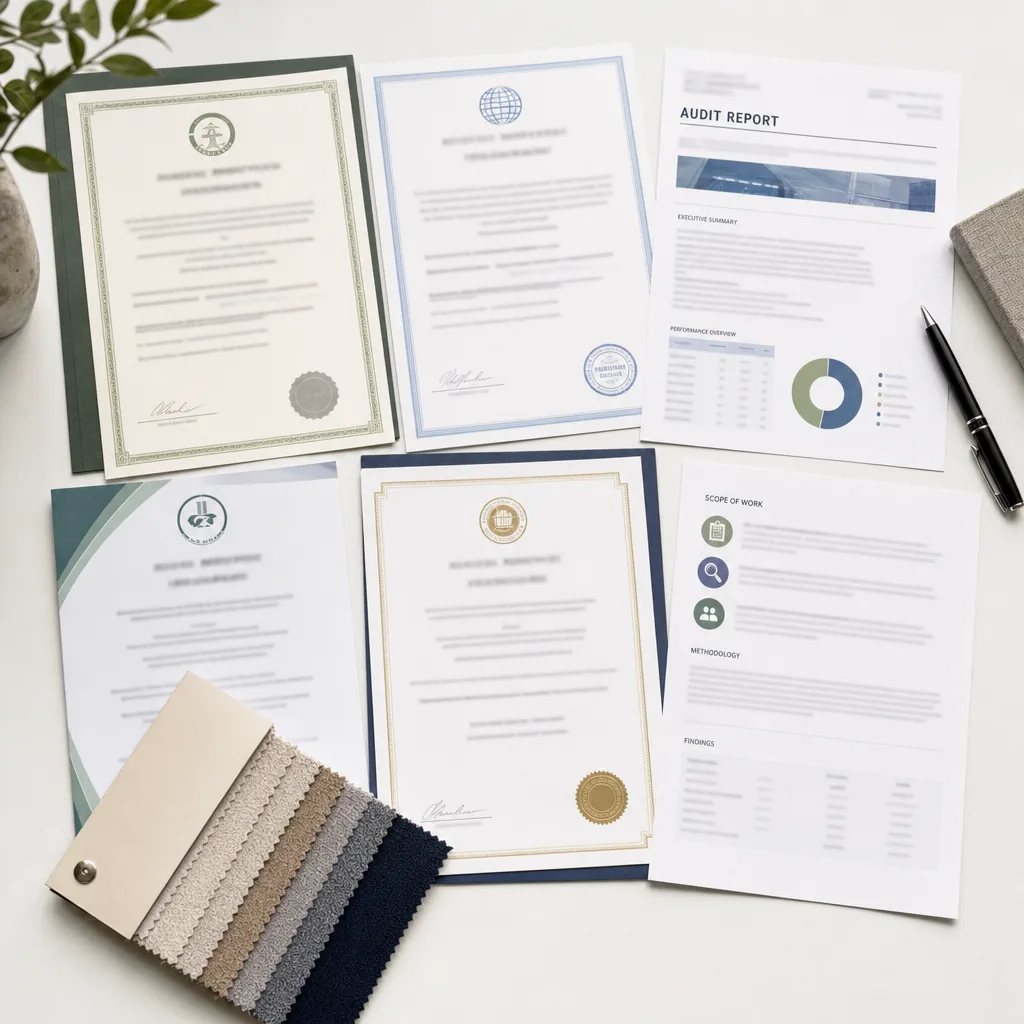
A first hat shipment usually fails on data mismatch, not on duty rate. The seven documents that matter are the commercial invoice, packing list, bill of lading or air waybill, certificate of origin, applicable compliance test reports, insurance certificate when terms are CIF or CIP, and the destination customs entry prepared by your broker. If consignee name, piece count, declared value, or country of origin does not match across those files, U.S. Customs or the broker can put the cargo into document hold immediately. On ocean freight, that can mean demurrage and storage of $150-$350 per container per day once free time expires; on air freight, one missed document cutoff can delay release 24-72 hours. For first-time importers, import documentation hats problems usually come from basic inconsistencies: invoice says 12,000 caps, packing list says 11,520, and the B/L shows a different legal consignee than the importer of record.
The commercial invoice is the document customs reads first, so vague descriptions are a mistake. Use a line like “100% cotton twill 6-panel embroidered baseball caps, adult size” with Incoterm 2020, currency, manufacturer name, country of origin, and the correct HTS/HS classification; “fashion hats” is not defensible. The packing list should show total cartons, units per carton, net weight, gross weight, and carton dimensions in cm and kg, because a receiving warehouse will flag a 48-carton delivery if your list says 46. Transport documents must mirror the broker filing exactly: ocean moves on a bill of lading, air on an AWB, and even a minor consignee typo can block release. Compliance reports are the document most first buyers underestimate. For U.S. children’s caps, expect CPSIA-related testing on accessible components such as lead in surface coatings and phthalates in PVC patches or plastic snap closures; for the EU, REACH screening is the normal baseline, with azo dyes, nickel release, and SVHC review driven by material category. If shipment terms are CIF or CIP, verify that the insurance certificate shows at least 110% of invoice value and the correct voyage details. The broker’s entry should be drafted before ETD, ideally with the full import documentation hats set submitted 3-5 days before vessel cutoff so HTS code, declared value, and manufacturer identification can be corrected while cargo is still at origin.
Commercial invoice — what customs checks
Customs treats the commercial invoice as the control document for release, valuation, and post-entry review, so for import documentation hats it needs to read like a manufacturing record, not a showroom quote. The minimum fields are non-negotiable: legal buyer and seller names, full addresses, invoice number and date, currency, payment term, Incoterm with named place such as FOB Ningbo or DDP Amsterdam, country of origin, unit price, quantity, and total line value. The goods description is where many first imports go wrong. “Caps” or “headwear” is too broad to support classification. A workable line reads more like: “Adult 6-panel baseball cap, 100% cotton brushed twill, 280 gsm, pre-curved visor, embroidered front logo, hook-and-loop closure.” Add style number, fiber breakdown, and construction details if the order mixes cotton twill, polyester microfiber, or wool-acrylic bodies, because those differences can move the HTSUS or CN code and shift duty by several points. In practice, a vague description is one of the fastest ways to invite a customs query or a broker hold.
What customs officers check next is whether the invoice is believable and consistent across the shipment file. The declared value should reconcile exactly with the purchase order, packing list, wire transfer, and any forwarder filing; if the invoice says USD 2.25 per cap and the remittance shows USD 1.68, that discrepancy will get attention immediately. U.S. CBP screens textile and headwear entries aggressively for undervaluation, especially on first imports from China. As a realistic benchmark, a plain chino twill dad cap at 3,000-5,000 pieces is commonly around USD 1.85-2.40 FOB, while a structured snapback with 3D embroidery, woven label, seam tape, and plastic snap closure is often USD 3.20-4.90 FOB. Numbers far below that can trigger a CBP Form 28, value uplift, or exam. EU customs applies the same logic and also checks origin and composition language carefully. If the hats are made in China, state “Country of Origin: China” plainly; do not muddy the record with “designed in Italy,” a Hong Kong seller address, or sample pricing that does not match bulk production. The safest control is simple: lock the final invoice before balance payment and verify style, cartons, weights, currency, and totals line by line against the packing list.
Packing list — granularity that prevents inspections
A packing list is where first-time importers either look disciplined or invite an inspection. For hats, a lazy line like “12 cartons / 1,200 pcs” is not usable on mixed-style shipments. Good import documentation hats should break the load down carton by carton: carton number, buyer PO, SKU or style code, cap construction, color, size, packed quantity, net weight, gross weight, and master carton dimensions in cm. If carton 7 holds only style CF-2418, 6-panel low-profile brushed cotton dad caps, black, 58 cm, 100 pcs, state it exactly. If carton 8 is a ratio pack, show the split clearly, such as 40 black / 30 khaki / 30 navy. Brokers and customs teams use that detail to reconcile the commercial invoice, AMS or ENS filing data, and the physical freight. When carton count, weight, and CBM match cleanly, you reduce the chance of a hold that turns into devanning, an intensive exam, or destination warehouse charges in the $180 to $450 range, plus 3 to 7 calendar days of delay.
The failures I see most often are naming mismatches between the packing list, carton marks, sewn labels, and purchase order. If the PO says navy, the sweatband label says royal, and the carton stencil says blue, you have created a discrepancy before the container even arrives. On hat programs approved to Pantone TCX or Pantone C references, the packing list should use the buyer-approved commercial color name, not the warehouse shorthand. The same discipline applies to country-of-origin marking, style numbers, and carton sequence: carton 1/48 through 48/48 must match the ex-factory carton manifest and the forwarder’s booking record exactly. The footer should total pieces, cartons, net weight, gross weight, and CBM; for example, 24 cartons at 60 x 45 x 45 cm with 100 caps per carton, net 8.5 kg and gross 10.2 kg each, gives 2.916 CBM. If one carton contains XL fitted caps and runs 11.4 kg gross, list that carton separately instead of averaging the shipment data. That level of granularity prevents unnecessary questions during X-ray review, AQL receiving checks, and customs reconciliation.
Certificate of origin — when it lowers your duty
Do not model landed cost on a certificate of origin saving duty on hats from China into the US or EU; in most cases, it will not. China’s old GSP Form A is basically irrelevant for current headwear shipments, and a non-preferential Certificate of Origin does not create a tariff concession by itself. For first-time buyers, the useful document is a standard non-preferential CO issued by CCPIT or China Customs, typically $35 to $80 per shipment through an agent and usually ready in one business day after the final commercial invoice and packing list are locked. Its job is evidentiary, not preferential: it backs up the country-of-origin claim when Customs, a broker, or a retailer compliance team checks whether the sewn label, master carton marks, exporter declaration, and invoice all consistently show China. For US entries, CBP puts more weight on the commercial invoice, packing list, HTSUS classification, and origin marking compliance under 19 CFR 134 than on the CO itself. A 6-panel 100% cotton twill cap under HS 6505, a polyester mesh trucker with foam front, and a wool-acrylic beanie can all draw questions if the factory name, exporter name, fiber content, and style numbers do not match across documents. Good import documentation hats should align line for line: consignee, shipper, manufacturer, style code, quantity, carton count, net and gross weight, and goods description. Loose wording like “caps” is where people get into trouble; “embroidered 6-panel baseball caps, 100% cotton twill” gives the broker and CBP something they can actually reconcile against the label and invoice.
In the EU, the certificate of origin is usually more about compliance control than duty reduction. Most hats from China still enter under the normal Common Customs Tariff rate attached to the declared CN code, so the presence of a CO does not by itself lower duty. Where it matters is post-entry verification, retailer onboarding, and traceability files, especially for importers supplying Germany, France, or the Netherlands. Buyers there often need a clean set of records tying the shipment to the manufacturing country: commercial invoice, packing list, bill of lading, and a non-preferential CO carrying the same quantities, weights, and product descriptions. If the invoice says 4,800 pcs, the packing list says 4,776 pcs, and the CO says “caps” with no material detail, clearance queries start immediately. The common mistake is treating the CO as a generic form and letting the exporter use vague descriptions that do not support the declared classification or origin statement. For headwear, the description should be specific enough to match the label claim and invoice without turning into a tech pack: fiber content, basic construction, and product type are usually enough. CrownsForge’s standard practice is to keep the CO description aligned with the shipping invoice and carton marks, then check names and quantities against the final booking set before release. That is the practical role of import documentation hats on a first shipment: not a 5% to 10% duty-saving shortcut, but low-cost insurance against origin disputes, broker holds, and avoidable clearance delays.
CPSIA test report (US imports for children)
If a cap is sized, labeled, or marketed for children age 12 and under, U.S. Customs and the CPSC will treat it as a children’s product under CPSIA. The key document is the Children’s Product Certificate (CPC), and it cannot sit on top of a casual mill declaration or an unchecked factory promise. It must be backed by third-party testing from a CPSC-accepted lab for total lead in substrate materials, lead in surface coatings, and phthalates if the cap has any accessible plasticized part such as PVC patches, silicone labels, rubber closure tabs, or plastisol decoration. For a basic 100% cotton twill 6-panel with embroidered logo, woven main label, and metal-free closure, labs in China typically quote about $200 to $350 per SKU. Add a PVC badge, metallic print, soft PVC back strap, or printed internal taping and the scope often climbs to $350 to $500 because each material family can require separate sample prep and test lines. In real import documentation hats work, the failure point is usually not the lab report itself but BOM drift: a passing report for black caps does not automatically cover navy if the sweatband, patch vendor, ink system, or snap supplier changed.
Small-parts and tracking-label issues delay more shipments than chemistry failures. Any youth cap with a top button, detachable pin, decorative badge, metal buckle, or plastic snapback component can trigger mechanical testing under 16 CFR rules, especially if the styling or packaging makes it suitable for younger children. Labs such as SGS, Intertek, Bureau Veritas, and TÜV commonly add tension, torque, seam strength, and attachment testing to the chemical screen, which is why a realistic first-pass budget is $250 to $450 per tested SKU with a 5 to 7 working day lab turnaround, plus courier time and document review. The tracking label is mandatory as well: the cap or its retail packaging must show the manufacturer or private-labeler, production month and year, and a batch or lot code that traces back to the exact factory run. Our standard practice is to link that code to fabric lot, trim lot, sewing line, finishing date, and carton range, because strong traceability is what makes import documentation hats defensible when a broker, Amazon compliance team, or CPSC inquiry asks you to prove exactly what was shipped.
REACH SVHC declaration (EU imports)
For EU-bound orders, the REACH SVHC declaration is the piece of import documentation hats buyers skip until a freight forwarder or broker asks for it two days before vessel cut-off. The legal threshold is 0.1% w/w per individual article under REACH Candidate List rules, not averaged across the shipment. On caps, that risk rarely sits in the 260-320 gsm cotton twill shell; it usually sits in the small parts: PVC or TPU patches, PU-coated labels, heat-transfer inks, sweatband foam, hook-and-loop tape, plated metal buckles, seam tape adhesive, and visor board glue. A standard 6-panel baseball cap can involve 8-12 separate material inputs, and any one undeclared trim can trigger clearance questions, retailer chargebacks, or a hold while your importer scrambles for backup documents. The practical move is to lock the SVHC file before bulk packing, alongside the commercial invoice, packing list, HS code confirmation, and carton breakdown. The cleanest evidence chain is component-level supplier declarations cross-checked against current OEKO-TEX Standard 100 certificates, then rolled into one PO-specific SVHC statement. That file should identify the certificate number, validity date, material name, color lot, supplier, and cap position for every risk-bearing component, not just the main fabric. One shell certificate does not cover embroidery thread, woven labels, snap closures, rubber badges, or elastic. CrownsForge typically builds a trim matrix listing composition, denier or gsm where relevant, Pantone TCX reference for dyed parts, and batch code so the declaration matches the actual production lot. If a buyer wants third-party screening, SGS, Intertek, or TÜV Rheinland usually charge about $180-$350 per component for SVHC screening; a cap with mixed trims can reach $800-$1,500 total. On a 200-piece order, that can add $4.00-$7.50 per hat fast, which is why approved trim libraries matter more than people think.
France often makes the file heavier because AGEC-related traceability requests go beyond basic customs paperwork. A commercial invoice, COO, and tariff code will not satisfy a French retailer or distributor if they also need composition by percentage, packaging-material breakdown, recycled-content support, and sorting or labeling data for downstream disclosure. For hats, that usually means stating shell fiber content, sweatband composition, visor insert material, polybag thickness, export carton spec, and whether any recycled polyester claim is backed by a valid GRS transaction certificate rather than a generic mill statement. If your program includes recycled PET fabric, ask for the transaction certificate number tied to that shipment, not just a brand-level GRS certificate from the supplier. The biggest mistake is trying to reconstruct traceability after sewing and packing are finished. Once trims have been subcontracted across multiple workshops, matching the right buckle plating cert, ink declaration, or foam statement to the shipped lot becomes slow and messy. For first-time EU imports, agree the document template at pre-production stage and tie every component to the PO, colorway, and factory lot before cutting starts. That approach keeps your import documentation hats file usable for customs, marketplace compliance teams, and private-label retail audits. It also reduces the chance of duplicate testing, because when a trim changes from nickel-free snap to zinc-alloy buckle or from woven patch to PVC badge, you can see immediately which declarations need to be refreshed instead of retesting the entire cap program.
Customs broker handoff: who does what
The broker handoff is where first-time imports usually go wrong: clearance responsibility must be assigned before vessel departure, not when the cargo is already showing “arrival notice received.” The importer of record should appoint the customs broker directly and confirm scope in writing—entry filing, classification review, PGA screening if applicable, bond check, and post-entry amendments. In the US, a licensed customs broker typically needs the commercial invoice, packing list, bill of lading or air waybill, ISF data if the shipment moved by ocean, factory MID, consignee EIN or IRS letter, and a signed POA. In the EU, the broker normally needs the importer’s EORI, VAT number where applicable, invoice, packing list, transport document, and a clear statement of origin. The document set fails most often on description quality. “Caps” or “fashion hats” is too vague to support tariff classification. A usable line reads more like: “Adult 6-panel woven baseball caps, shell 100% cotton twill 240 gsm, curved PE visor, hook-and-loop back strap, embroidered front logo, made in China.” Strong import documentation hats must also match carton marks, PO references, unit counts, and net/gross weights exactly; even a 24 pcs-per-carton declaration against 25 pcs physically packed can trigger a customs query or broker amendment.
A customs broker does not book factory pickup, negotiate freight, or manage the supplier’s production timeline; the broker’s job is classification, entry transmission, duty/tax calculation, and release coordination with customs. For US entries, that usually means validating the HTSUS logic, checking whether the goods fall under Chapter 65 headwear provisions, calculating duty, Merchandise Processing Fee at 0.3464% of entered value subject to CBP minimum and maximum thresholds, and Harbor Maintenance Fee at 0.125% on ocean imports. In the EU, the same handoff depends on CN code accuracy, customs value, origin support, and import VAT that commonly lands around 19% in Germany, 21% in the Netherlands, or 23% in Ireland. Hats are classification-sensitive products: woven versus knit construction, fiber content, visor material, lining, braid or trim, and adult versus children’s sizing can all shift duty exposure. At CrownsForge, broker-ready files go out before ETD with fiber composition, Pantone references where printed labeling is involved, closure type, factory name and address, and country-of-origin wording, because correcting bad import documentation hats after ATA often burns 1 to 3 business days and adds $75 to $150 per amendment, before you even get to storage, demurrage, or exam fees.
Frequently Asked Questions
What logo decoration techniques do you offer?
3D puff embroidery, flat embroidery, woven patch, leather patch, PVC patch, screen printing, sublimation, applique and laser etching, all in-house with no subcontracting.
Do you support sustainability certifications?
Yes. We work with GOTS organic cotton, GRS-certified recycled polyester, OEKO-TEX Standard 100 fabrics, and are BSCI and Sedex audited. Certification documentation can be provided per order.
What is the minimum order quantity (MOQ) for custom hats?
Our standard MOQ is 100 pieces per design and color, with sampling available from 1 piece. For complex multi-color logos or premium fabric upgrades, the MOQ can be lowered with a small per-piece surcharge.
How long does production take?
Sampling takes 7 to 12 days. Bulk production runs 20 to 30 days depending on quantity, fabric availability and decoration complexity. Inspection and packing adds another 3 to 5 days before shipment.
Can I order a sample before bulk production?
Yes. We strongly recommend approving a pre-production sample before mass production. Samples are charged at 35 to 60 USD each plus express shipping, fully refundable against confirmed bulk orders over 500 pieces.
What should buyers know about cotton twill army cap kangol?
When evaluating cotton twill army cap kangol, the key considerations are construction quality, decoration capability, MOQ flexibility and lead time. Per-carton breakdown: SKU, size, color, quantity per carton, gross weight, net weight, carton dimensions. The more granular the packing list, the lower the chance customs randomly inspects (saves you fees and 3-7 days hold time). Always send packing list with cap labels matching factory order. Any cap intended for children 12 and under needs: Children's Product Certificate…
How does ordering custom made trucker hat work?
When evaluating custom made trucker hat, the key considerations are construction quality, decoration capability, MOQ flexibility and lead time. Commercial invoice (CI), packing list, bill of lading (B/L) or air waybill (AWB), certificate of origin (CO or Form A), compliance test reports (CPSIA/REACH as applicable), insurance certificate (for CIF/CIP terms), customs entry summary (filed by your broker). These appear on every shipment regardless of size. Buyer, seller, INCOTERM, HTS classification, country of origin,…
What should buyers know about kangol bucket hat mens?
When evaluating kangol bucket hat mens, the key considerations are construction quality, decoration capability, MOQ flexibility and lead time. Commercial invoice (CI), packing list, bill of lading (B/L) or air waybill (AWB), certificate of origin (CO or Form A), compliance test reports (CPSIA/REACH as applicable), insurance certificate (for CIF/CIP terms), customs entry summary (filed by your broker). These appear on every shipment regardless of size. Buyer, seller, INCOTERM, HTS classification, country of origin,…
How does ordering baseball cap custom made work?
When evaluating baseball cap custom made, the key considerations are construction quality, decoration capability, MOQ flexibility and lead time. Per-carton breakdown: SKU, size, color, quantity per carton, gross weight, net weight, carton dimensions. The more granular the packing list, the lower the chance customs randomly inspects (saves you fees and 3-7 days hold time). Always send packing list with cap labels matching factory order. Any cap intended for children 12 and under needs: Children's Product Certificate…
Ready to start your custom hat project?
Send us your tech-pack, sketch or even just an inspiration photo. We will respond with a detailed quotation and digital mock-up within 24 hours.
Request a free quoteRelated guides
Sports Team Caps & Uniform Headwear: Bulk Manufacturing for Clubs and Schools
Read article →
Buckram vs Foam vs Unstructured: Cap Crown Construction Compared
Read article →Custom Trucker Hats: The 2026 Sourcing & Manufacturing Playbook
Read article →We hope this guide demystifies compliance documentation checklist for first hat import to us/eu - cost & moq breakdown and helps you move forward with confidence. If you have questions specific to your project, our English-speaking sales engineers are one message away.