
BSCI vs Sedex vs WRAP vs WCA: Compliance Audit Standards Compared (2026 Update) - Cost & MOQ Breakdown
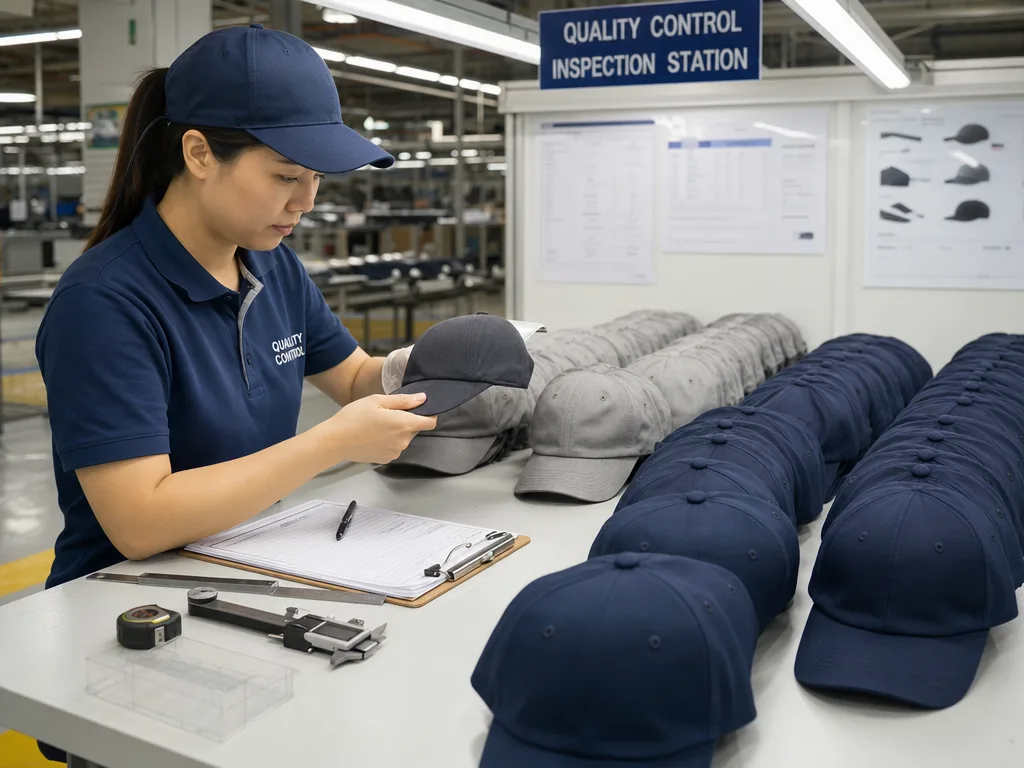
Every week, our sales team answers detailed questions about bsci vs sedex vs wrap vs wca: compliance audit standards compared (2026 update) - cost & moq breakdown. We wrote this guide so that wholesalers, streetwear brands, corporate buyers and promotional resellers can compare options with full information, and avoid the traps that show up only after production has started.
The four audits hat factories actually hold
Most cap factories in China carry one or two valid audits, not four, because each program burns management hours and disrupts production. In a real sedex-audit-cap-supplier-guide.html">BSCI vs Sedex SMETA decision, the split is usually buyer geography and reporting preference, not ethics in the abstract. BSCI 2.0 stays common for EU private-label headwear because the result is easy for sourcing teams to escalate internally: performance areas, corrective actions, closure deadlines, and an A-to-E rating buyers already recognize. At a 150- to 300-worker cap plant, an initial BSCI audit typically occupies HR, payroll, EHS, warehouse, and line leaders for 1.5 to 2.5 days, then another two to six weeks to close findings. The repeat issues are predictable on factory floors: excessive monthly overtime, incomplete probation contracts, missing machine guards on eyelet punchers, unlabeled chemical decants in washing rooms, and SDS records that do not match actual spot-cleaning chemicals. Sedex SMETA 4-Pillar is usually the first request from UK retailers because it packages labor, health and safety, environment, and business ethics in a format their compliance teams benchmark every day. In practice, SMETA feels more intrusive operationally because auditors spend more time reconciling swipe-card attendance to payroll, checking dormitories and canteens where provided, reviewing fire-drill evidence, and probing subcontracting disclosure. In hat factories running cutting, sewing, Tajima or Barudan embroidery, finishing, and packing under one roof, that means supervisors are pulled off the line repeatedly for interviews, document retrieval, and floor walks. That is why the practical difference in BSCI vs Sedex SMETA is not just the checklist; it is the reporting format, interview intensity, and how much disruption your factory can absorb without slipping shipment dates.
WRAP and WCA matter mainly in US-facing supply chains, but treating them as substitutes is a rookie mistake. WRAP is widely accepted by North American importers, promotional headwear distributors, and licensed-merchandise programs because the outcome is simple: certification status such as Silver or Gold, generally valid for 6 or 12 months depending on risk profile and findings. That clarity helps when a compliance manager needs a quick vendor gate for fitted caps, truckers, and snapbacks without explaining what a BSCI C grade means to a merchandising team. WCA shows up far more often when Walmart exposure is direct or one tier removed, and the preparation work is usually heavier on traceability and site control: payroll consistency, visitor logs, CCTV retention, dorm management, access control, and finished-goods security. What buyers miss is scope. A current report means little if it covers only sewing and packing while embroidery, heat transfer, washing, or off-site carton storage sit outside the audited perimeter. For headwear, I always check whether the audit scope includes Tajima, ZSK, or Barudan embroidery rooms, needle control records, chemical storage, metal-detection procedure if used, and packed-carton warehousing. Report age matters too; most importers want an audit completed within the last 12 months, and some large retailers tighten that to 9 months at booking. CrownsForge’s standard practice is to align the audit path before sampling starts: EU chains usually ask for BSCI, UK retail leans SMETA 4-Pillar, US licensing often accepts WRAP, and Walmart-linked programs typically require WCA or an equivalent customer-approved protocol.
BSCI 2.0 scope and audit process
BSCI 2.0 is broader and more system-driven than many buyers assume from a quick factory walkthrough. The amfori Code of Conduct covers 13 performance areas, but in a cap factory auditors usually break credibility on three pressure points: whether working hours reconcile with piece-rate output, whether wages and social insurance match PRC law plus signed contracts, and whether environmental, health, and safety controls exist on paper as well as on the floor. They will sample 12 months of payroll, attendance, labor contracts, age-verification files, disciplinary records, grievance logs, and training registers, then test those records against output from embroidery, sewing, and finishing. If a line running 18 Tajima or Barudan heads shows peak-month shipment volume that logically required 90-hour workweeks, but timecards show perfect legal compliance, that gap gets treated as possible record manipulation, not a clerical error. In real BSCI vs Sedex SMETA comparisons, this is where buyers misread the difference: BSCI pushes harder on management-system integrity and traceable consistency across records, not just visible shop-floor conditions.
On site, the audit normally takes 1 to 2 full days for a 150 to 300-worker headwear factory, and longer if printing, washing, or outsourced finishing sits inside scope. An amfori-approved auditor usually starts with management interviews, then moves through document sampling, private worker interviews, and a complete walkthrough of cutting, sewing, embroidery, finishing, packing, warehouse, canteen, and dormitory areas. In practice, auditors separate operators, supervisors, cleaners, and security guards to see whether testimony matches payroll and policy files. On the floor they look for blocked evacuation routes, expired extinguisher inspection tags, missing needle logs, absent machine guards on eyelet presses, and SDS binders that do not match the stain removers, spray adhesives, screen-print inks, or cleaning solvents actually stored at the workstation. Common findings in Zhejiang cap factories are excessive overtime before league seasons or holiday promotions, incomplete evacuation drill records, unsigned handbook acknowledgments, and weak chemical segregation around solvent-based consumables.
Commercially, BSCI results matter less as a pass-fail label than as a risk signal tied to remediation speed. Audit validity is typically 12 months, but factories with moderate nonconformities are often put on a corrective action plan with 30, 60, or 90-day closure deadlines, while zero-tolerance issues such as underage labor controls, locked exits, falsified hours, or missing machine guarding can freeze new orders until evidence is verified. In Zhejiang, a realistic audit-only budget is about US$900 to US$1,800 depending on headcount and auditor availability; if the factory needs outside help to rebuild payroll reconciliation, fire-system maintenance records, dormitory compliance, or secondary chemical containment, remediation can easily cost 1.5 to 3 times the audit fee. Our standard practice is to pre-audit payroll logic, emergency drill records, social insurance files, and EHS documentation first, because those four areas decide most BSCI outcomes long before an auditor comments on whether the workshop looks tidy.
Sedex SMETA 4-Pillar scope and process
Sedex SMETA 4-Pillar is what most buyers actually mean when they ask a China cap factory for a current ethical audit, and it is broader in practice than a document-heavy code-of-conduct check. The scope covers Labor Standards, Health and Safety, Environment, and Business Ethics, but the audit usually turns on labor evidence first: timekeeping integrity, wage calculation, rest-day compliance, social insurance enrollment, age verification, grievance handling, and whether dispatch or temporary labor is being used legally. Auditors do not accept a clean policy binder at face value. They reconcile 12 months of payroll, attendance, leave records, and production output, then walk cutting, sewing, embroidery, finishing, and packing to see if the factory story survives contact with the line. In peak season, a hat plant may claim overtime is capped at the PRC legal benchmark while Barudan or Tajima embroidery heads are still running after 10 p.m.; that gap between records and reality is exactly where findings are issued. In a serious BSCI vs Sedex SMETA comparison, this is why SMETA often feels more operational to buyers: it is designed to test whether management records, worker interviews, and shop-floor conditions match under scrutiny.
The 4-Pillar version matters because many EU retailers, licensed programs, and larger promotional importers now treat 2-Pillar as too narrow for ongoing approval, especially where subcontracting risk and environmental exposure are real. The Business Ethics pillar adds checks on anti-bribery controls, whistleblower channels, gift and hospitality rules, facilitation payments, and undeclared subcontracting; the Environment pillar extends into chemical storage, hazardous waste segregation, wastewater manifests, air-emission controls, and utility consumption tracking. For cap factories using solvent-based glue on sweatbands, plastisol or silicone heat transfers, PU-coated fabrics, screen-printing inks, or fabric washing, those checks are not theoretical. A proper SMETA 4-Pillar audit typically runs 2 on-site days for a smaller facility and 3 days once headcount reaches roughly 150 to 200 workers, multiple workshops are involved, or dormitories and canteens are in scope. Auditors from SGS, Intertek, Bureau Veritas, QIMA, or TÜV will triangulate payroll, output logs, fire drill records, machine guarding, PPE issuance, CCTV retention, and worker testimony; if even one dataset does not reconcile, the non-conformance is hard to defend.
The most common failures are still basic factory-control issues, not exotic compliance theory. I routinely see blocked fire exits, expired extinguishers, incomplete SDS files, missing secondary containment for chemicals, unsigned young-worker protections, and social insurance enrollment that covers only part of the workforce. Piece-rate factories are especially vulnerable because operators may hit legal minimum wage on paper only when excessive overtime is folded into the math, and auditors know how to back-calculate that from attendance and production records. Sedex does not itself certify a factory; the site uploads the SMETA report and CAPR into the Sedex platform, and buyers decide whether the risk level is acceptable. That distinction matters in any BSCI vs Sedex SMETA discussion: BSCI is a performance-oriented framework with its own rating logic, while SMETA is a standardized audit methodology whose value depends heavily on scope, auditor rigor, and how honestly the factory closes the corrective action plan. At CrownsForge, the sensible preparation is not cosmetic cleanup but a pre-audit record reconciliation across HR, EHS, and production before the auditor ever arrives.
WRAP scope and process
WRAP is narrower than most buyers assume and far more license-driven than the usual BSCI vs Sedex SMETA comparison. Its 12 principles cover legal compliance, prison and forced labor, child labor, harassment and abuse, compensation and benefits, hours of work, discrimination, health and safety, freedom of association, environment, customs compliance, and security. In a China cap factory producing licensed NFL, NBA, NCAA, or music merchandise, that translates into hard evidence rather than polished policy decks: ID-based age verification, signed labor contracts, 12 months of payroll and attendance records, social insurance filings, approved subcontractor lists, and carton-level shipment traceability back to purchase orders. Auditors do not stay in the meeting room. They walk cutting, sewing, embroidery, eyelet setting, brim forming, finishing, and packing, then test whether operators and line leaders can explain rules in Mandarin or the local dialect instead of simply pointing to a noticeboard.
On the floor, WRAP usually exposes control gaps faster than buyers expect. Needle control logs on Tajima or Barudan heads, broken-needle reconciliation, guarding on eyelet presses and swing-arm cutters, SDS labeling for spot-cleaning chemicals, fire-exit clearance, dormitory evacuation routes, and seal control for licensed cartons all get checked early. For hats, segregation matters: approved logo panels, hologram labels, woven loops, and retail packaging cannot be mixed with non-licensed trims or stored in an unregistered overflow room. One weak point—missing metal-detection records for decorative hardware, an overtime ledger that does not match wage calculations, or loose carton custody at final packing—can trigger both a compliance finding and a licensor chargeback. Our standard practice is to stage records by workshop and month before the audit because WRAP findings in East China are usually caused by messy reconciliation, not dramatic labor abuse.
The process itself is short, typically 1 to 2 audit days, but preparation determines whether a site lands Silver, Gold, or Platinum. Approved firms such as Intertek, Bureau Veritas, and CTI usually structure the visit around document review, management interviews, worker interviews, and a full facility tour; dorms, canteens, separate warehouses, or multiple workshops under one business license can easily add half a day because headcount and production flow must reconcile across every area. Silver is generally valid for 6 months, Gold for 12 months, and Platinum for 2 years, with Platinum requiring three consecutive certifications without major findings. In East China, direct audit fees for a small to mid-sized cap factory usually run about USD 2,000 to 4,500, with follow-up audits, dorm inspections, or multiple legal entities pushing cost higher. WRAP does not directly change MOQ, but licensed runs often carry higher quoted minimums because segregation, scanable carton traceability, approved-subcontractor control, and tighter payroll discipline add real labor cost that never appears on a standard fabric BOM.
WCA scope and process
WCA is not a broad CSR badge; it is a Walmart gatekeeping assessment, and that changes how a factory should prepare. A cap supplier can post an acceptable result in the usual BSCI vs Sedex SMETA comparison and still be blocked on WCA because Walmart’s tolerance for record inconsistency, remediation lag, or undeclared subcontracting is much tighter. The audit is normally executed by Walmart-approved firms such as Intertek, SGS, or Bureau Veritas, with a 12-month validity that matters for seasonal headwear programs where PO timing is rigid. If the approval expires in the middle of a back-to-school or MLB-style cap run, the issue is not reputational; the buyer may simply be unable to release the order. The scope overlaps with any serious social-compliance audit: management interviews, confidential worker interviews, payroll and time-record checks, production-floor inspection, and dormitory or canteen review where relevant. The difference is how aggressively WCA tests integrity. Auditors will reconcile attendance logs, payroll registers, social insurance records, production output, and shipment cadence to see whether the declared hours are even plausible. In a China cap factory, that often means checking embroidery shift logs from Tajima, Barudan, or ZSK heads against finished-panel volumes, then comparing that with needle-control logs, dispatch labor rosters, and monthly wage summaries. A factory does not usually fail because one extinguisher tag is late; it fails because the numbers do not line up within minutes.
The real work starts before the auditor reaches the gate. The factory typically completes a self-assessment and uploads the business license, floor plan, organization chart, age-verification files, 3 to 12 months of payroll and time records, fire inspection certificates, machine-maintenance logs, and dorm permits if housing is provided. On site, a small workshop may finish in one day, but a vertically integrated cap plant with cutting, sewing, eyelet punching, flat embroidery, 3D puff embroidery, heat transfer, finishing, and packing usually needs up to two auditor-days depending on headcount and whether dorms are in scope. Private worker interviews are sampled across departments and shifts, so coached answers tend to collapse fast when a night embroidery line has been running 11-hour shifts but the attendance file shows a clean 8-hour schedule. Cost is rarely the hard part. In Zhejiang or the Pearl River Delta, a routine WCA for a mid-size factory commonly lands around US$900 to US$1,800, with a follow-up verification visit adding roughly US$300 to US$800 if corrective actions are required. There is no formal MOQ attached to WCA, but buyers create an effective MOQ because they will not place Walmart-channel orders into a site carrying unresolved major findings on wages, fire safety, or environmental permits. Our standard practice is to treat WCA as an operating-discipline audit, not a paper exercise: exits stay clear, SDS sheets match chemical labels, overtime calculations reconcile to the minute, and subcontracting disclosures are accurate before peak season starts.
What overlap exists and what differs
On a cap factory floor, the overlap is bigger than most buyers assume: roughly 75% of the evidence reviewed under BSCI 2.0, Sedex SMETA 4-Pillar, WRAP, and WCA comes from the same control points. Auditors across all four will reconcile national ID copies against age-verification records, labor contracts, payroll ledgers, piece-rate sheets, attendance logs, overtime approvals, and proof of one rest day in seven. They also check the physical plant in almost the same way: blocked exits, extinguisher inspection tags, evacuation maps, machine guards on eyelet setters and button-cover machines, needle-control logs, SDS binders for spot remover, screen-print ink, and cleaning solvent, plus first-aid certificates and PPE issuance. In China, if those records are updated weekly and can reconcile employee by employee for the last 12 months, a factory is already most of the way toward passing any mainstream social audit. The practical difference in BSCI vs Sedex SMETA is not the headline code of conduct; it is the audit architecture and what buyers do with the result. BSCI usually pushes harder on management-system depth: corrective-action closure, worker grievance channels, supplier-risk mapping, and whether problems show a real root-cause analysis instead of a pre-audit cleanup. Sedex SMETA 4-Pillar covers much of the same labor and safety ground, but buyers like it because the report and CAPR sit inside the Sedex platform and the scope makes environmental and business-ethics controls more explicit, including waste manifests, discharge permits, anti-bribery policy, and training records. A factory can score acceptably in one and still struggle in the other if, for example, subcontractor approval logs are weak, payroll and attendance do not match to the hour, or wastewater documentation is incomplete.
WRAP and WCA split less on labor principles than on how tightly the evidence must hold together under pressure. WRAP follows a certification model that many apparel and promotional-product buyers know well, while WCA tends to be more granular in employee-level reconciliation and less tolerant of small record breaks. In practice, a factory can look clean on the floor walk and still get stuck in WCA because dorm occupancy exceeds the posted register, dispatch-worker agency contracts are missing, payroll names do not match ID records exactly, or one peak-season pay period breaches statutory overtime limits. WCA auditors also probe temporary labor, onboarding files, and equal-treatment evidence harder, especially where seasonal production swings from 8,000 to 30,000 caps per month. For sourcing teams, the commercial impact is usually timeline and remediation cost, not the cut-and-sew cost of the cap. In coastal China, a fresh social compliance audit commonly runs from about $1,500 to $3,800 depending on dormitory scope, city, auditor day count, and whether environmental modules are added. Corrective actions after minor findings can add another $500 to $2,000 for extinguisher replacement, emergency lighting, locker separation, permit renewals, agency-labor documentation, or payroll back-calculation, before you count lost line time. Our standard practice is monthly payroll-attendance reconciliation and quarterly dorm and egress checks because factories fail these audits more often on inconsistent records than on dramatic violations.
What the audit doesn't tell you
The biggest mistake in any BSCI vs Sedex SMETA comparison is assuming a passed audit says anything meaningful about whether 5,000 snapbacks will ship on time and match the sealed sample. It does not. BSCI, Sedex SMETA 4-Pillar, WRAP, and WCA are labor and management-system audits: payroll traceability, working-hour controls, grievance channels, fire exits, dormitories, PPE issuance, chemical storage, and machine guarding. They do not measure whether a cap plant can hold crown height within plus or minus 2 mm, keep visor curve consistent across a 3,000-piece lot, or maintain embroidery registration within 0.5 mm on a 12-head Tajima or Barudan run. They also do not score buckram stiffness consistency, front-panel fusing stability after heat pressing, carton compression strength, or the factory’s actual defect escape rate at final inspection. Real capability shows up in production data the audit never requests. On dyed cotton twill or 600D recycled polyester, good control usually means shade variation held to Delta-E 1.0 to 1.5 against the approved Pantone TCX standard, seam allowance variance under 2 mm at the sweatband join, and stitch density around 0.35 to 0.40 mm without puckering on chino or brushed twill. A factory can hold a current social audit and still run warped PE brim boards, weak top-button setting that fails pull testing below buyer spec, or embroidery backing mismatched to fabric weight, causing tunneling on front logos. Those are manufacturing failures, not audit failures, and buyers who confuse the two usually find out after goods are already on the water.
Delivery performance is another blind spot a clean audit report will never expose. Neither BSCI nor Sedex SMETA tells you whether a factory actually hits ex-factory dates during August peak season, how heavily it overbooks before Chinese New Year, or whether critical subcontractors such as visor suppliers, woven-label vendors, and carton plants are booked on the same timeline. In cap production, late shipment is usually caused by plain operational misses: greige fabric not reserved 20 to 30 days ahead, buckram or sweatband tape stock counted wrong, PP sample comments sitting 72 hours instead of 24, or planners squeezing a 3,000-piece licensed team order into the same sewing window as several 300-piece fashion drops. Social-compliance audits do not test planning discipline, line balancing, or supplier coordination. The practical use of an audit is as a market-access filter, not proof of execution. Verify report validity, legal entity, site scope, and closure of major nonconformities, then ask for operating numbers that matter: rolling 12-month on-time shipment rate, PP sample first-pass approval rate, inline DHU, final AQL 2.5 results, and bulk claim ratio by order count. Our standard practice is to check needle-control logs, metal-detection records where trims require them, and recent inline photos from cutting, embroidery, sewing, shaping, and packing. If sustainability is part of the brief, also confirm whether the mill can supply GRS-certified recycled polyester, whether lot-to-lot shade control is documented, and whether packaging has been downgauged enough to reduce freight cube without crushing crowns in master cartons.
Frequently Asked Questions
What logo decoration techniques do you offer?
3D puff embroidery, flat embroidery, woven patch, leather patch, PVC patch, screen printing, sublimation, applique and laser etching, all in-house with no subcontracting.
Can I order a sample before bulk production?
Yes. We strongly recommend approving a pre-production sample before mass production. Samples are charged at 35 to 60 USD each plus express shipping, fully refundable against confirmed bulk orders over 500 pieces.
What is the minimum order quantity (MOQ) for custom hats?
Our standard MOQ is 100 pieces per design and color, with sampling available from 1 piece. For complex multi-color logos or premium fabric upgrades, the MOQ can be lowered with a small per-piece surcharge.
How long does production take?
Sampling takes 7 to 12 days. Bulk production runs 20 to 30 days depending on quantity, fabric availability and decoration complexity. Inspection and packing adds another 3 to 5 days before shipment.
What file format should I send for my logo?
Vector files (AI, EPS, PDF) are ideal. High-resolution PNG or JPG at 300 dpi on transparent background works as a fallback. Provide Pantone color references for accurate reproduction.
How does ordering custom embroidered trucker hat work?
When evaluating custom embroidered trucker hat, the key considerations are construction quality, decoration capability, MOQ flexibility and lead time. BSCI 2.0 (Business Social Compliance Initiative by amfori) — European retailer favorite. Sedex SMETA 4-Pillar (Social, Health & Safety, Environment, Business Ethics) — used by UK and increasingly global retailers. WRAP (Worldwide Responsible Accredited Production) — US retailer favorite for licensed merchandise. WCA (Walmart Conformance Audit) — required by Walmart and…
How does ordering custom bucket hat embroidery work?
When evaluating custom bucket hat embroidery, the key considerations are construction quality, decoration capability, MOQ flexibility and lead time. BSCI 2.0 (Business Social Compliance Initiative by amfori) — European retailer favorite. Sedex SMETA 4-Pillar (Social, Health & Safety, Environment, Business Ethics) — used by UK and increasingly global retailers. WRAP (Worldwide Responsible Accredited Production) — US retailer favorite for licensed merchandise. WCA (Walmart Conformance Audit) — required by Walmart and…
What should buyers know about bucket hat men nike?
When evaluating bucket hat men nike, the key considerations are construction quality, decoration capability, MOQ flexibility and lead time. BSCI 2.0 (Business Social Compliance Initiative by amfori) — European retailer favorite. Sedex SMETA 4-Pillar (Social, Health & Safety, Environment, Business Ethics) — used by UK and increasingly global retailers. WRAP (Worldwide Responsible Accredited Production) — US retailer favorite for licensed merchandise. WCA (Walmart Conformance Audit) — required by Walmart and…
How does ordering custom made hats for men work?
When evaluating custom made hats for men, the key considerations are construction quality, decoration capability, MOQ flexibility and lead time. BSCI 2.0 (Business Social Compliance Initiative by amfori) — European retailer favorite. Sedex SMETA 4-Pillar (Social, Health & Safety, Environment, Business Ethics) — used by UK and increasingly global retailers. WRAP (Worldwide Responsible Accredited Production) — US retailer favorite for licensed merchandise. WCA (Walmart Conformance Audit) — required by Walmart and…
What is the difference between BSCI and Sedex?
BSCI audits follow a fixed framework, whereas SEDEX supports multiple audit types, including BSCI itself. BSCI membership is required for suppliers, while SEDEX enables transparency by sharing audits with multiple buyers.
Is BSCI recognized globally?
The BSCI certification is recognized globally and demonstrates a company's commitment to responsible sourcing and ethical business practices. It helps companies ensure that their supply chains meet internationally recognized social standards and supports the protection of workers' rights and welfare.
Are Sedex and Smeta the same?
SMETA audits are carried out by auditors from Sedex's named independent, third-party Affiliate Audit Companies (AACs). Sedex owns and evolves the SMETA methodology, oversees its usage and drives SMETA auditing consistency through our Audit Quality Programme.
Are Smeta and BSCI the same?
Differences in Focus and Outcomes BSCI audits primarily focus on issues such as compliance with the law, freedom of association, collective bargaining, prohibition of discrimination, compensation, and working hours. SMETA audits, therefore, fall under the category of social responsibility inspections.
Is the BSCI certification legit?
The BSCI certification is recognized globally and demonstrates a company's commitment to responsible sourcing and ethical business practices. It helps companies ensure that their supply chains meet internationally recognized social standards and supports the protection of workers' rights and welfare.
Looking for a reliable hat manufacturer in China?
CrownsForge has produced custom hats for 800+ brands across 40 countries. From 100-piece launches to 100,000-piece retail programs, we deliver on time and on spec.
Get in touchRelated guides
BSCI vs Sedex vs WRAP vs WCA: Compliance Audit Standards Compared (2026 Update) - 2026 Buyer's Guide
Read article →
Sustainable Cap Packaging: Options, Costs and Retail-Buyer Demands - 2026 Buyer's Guide
Read article →Bucket Hat Corduroy Fabric And Trim Spec Guide for Custom Hat Buyers
Read article →Sourcing custom hats does not have to be complicated. With the right manufacturing partner, clear specifications and a small upfront investment in sampling, you can launch a retail-quality product in 30 to 45 days.