
Blank Hats Sample Approval Process for Custom Hat Buyers (2026 Update)
Every week, our sales team answers detailed questions about blank hats sample approval process for custom hat buyers (2026 update). We wrote this guide so that wholesalers, streetwear brands, corporate buyers and promotional resellers can compare options with full information, and avoid the traps that show up only after production has started.
Why blank hats sample approval process needs a separate sourcing plan
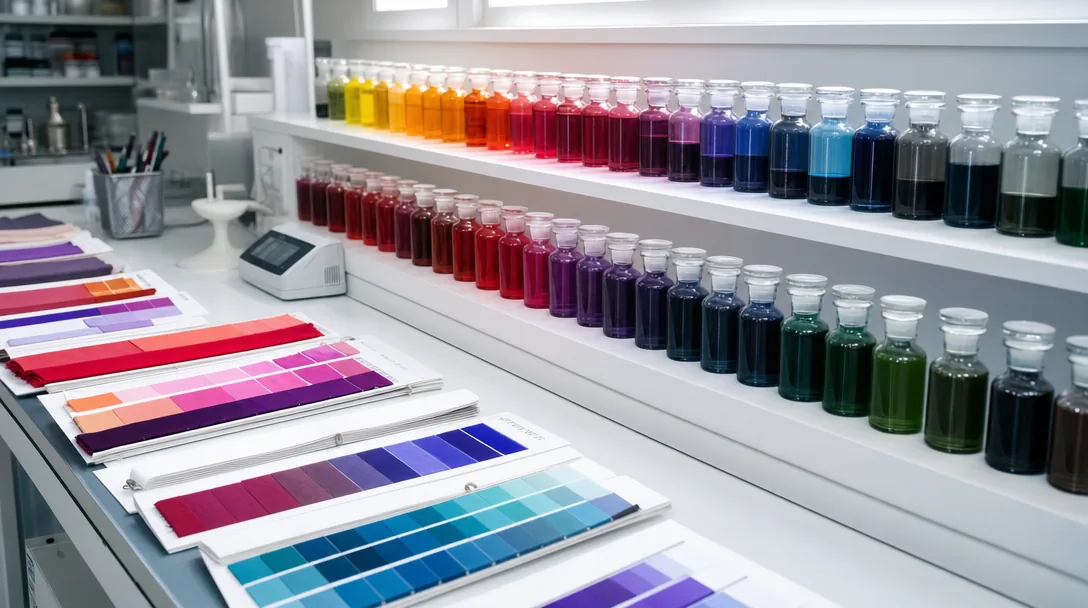
The blank hats sample approval process needs its own sourcing plan because the blank is not a cosmetic sample; it is the production chassis that controls decoration yield, fit consistency, carton cube, and claims risk. Before any logo file is digitized, buyers should lock the body spec on at least three physical pieces: crown height, front panel width, visor length and arc, seam centering, sweatband attachment, closure pull strength, and headform fit on a measured size range. I do not treat a salesman sample as evidence. A trucker that looks fine on the shelf can fail the moment you run a 5,000 to 7,000 stitch front embroidery or a 2.5 mm 3D puff because the buckram is too soft, foam density varies by panel, or the center seam drifts 2 to 3 mm off true. Once that happens, embroidery pushes, letters distort, and the return rate climbs fast. The sourcing path changes the moment a “blank” stops being a stock SKU and becomes a controlled program. A stock cap can often be sampled in 3 to 5 days, but a blank with Pantone TCX-matched underbill fabric, 10 oz cotton chino twill, 8x8 diamond mesh around 120 gsm, custom taping, or a printed sweatband needs fabric lot booking, trim approval, and packing validation before it is a real approval. On A-frame truckers, a 5 mm increase in crown height or switching to a 0.8 mm PE visor board can materially change embroidery flatness and master-carton height. Our standard practice is to freeze the blank fit sample first, then approve the decorated PPS only after body measurements hold within +/-3 mm and shade is controlled to Delta-E 1.5 or better against the approved lab dip.
Compliance and material integrity belong inside the blank hats sample approval process, not after artwork approval, because trims and substrates create test exposure long before branding starts. For U.S. retail, that can mean CPSIA screening for lead and phthalates on PVC or snap components, Proposition 65 review for metal trims, and azo or formaldehyde checks on dyed fabrics. For EU shipments, REACH SVHC is usually the gate, especially if the cap uses coated patches, printed labels, or mixed-material closures. These issues are not theoretical. A supplier can quietly swap 100% cotton twill to a cheaper CVC blend, downgrade from HDPE snap tabs to brittle recycled resin, or change the visor insert without updating the spec sheet. None of that shows up clearly in a photo approval; it shows up later as closure breakage, color migration, failed lab reports, and chargebacks after the goods are already on the water. A separate sourcing plan for blanks should therefore tie the approved sample to audit status, raw-material traceability, and QC checkpoints. Serious buyers should ask for sedex-audit-cap-supplier-guide.html">BSCI 2.0 or Sedex SMETA 4-Pillar records, fabric composition reports, color continuity by lot, and a written inspection plan with inline checks plus final AQL 2.5. If the blank is intended for embroidery, I also want a stitch-out on the approved shell itself, preferably run on Tajima, Barudan, or ZSK heads, because panel tension, buckram hardness, and foam resilience behave differently from a hand-picked showroom sample. Typical blank sample fees run about $35 to $120 per style. One failed bulk lot from shade variation, seam skew, or closure breakage can easily cost 10 to 20 times that before replacement freight and retailer penalties are counted.
Factory capability checks before quoting
The first quoting check is simple: can the factory build the hat body you are approving, or are they only decorating a stock shell from someone else. Embroidery exposes weak capability fast. A shop running Tajima, Barudan, or ZSK cap machines with 270-degree frames and in-house digitizing should give hard limits, not sales talk: 3D puff satin columns around 3.0-4.5 mm, minimum readable text roughly 2.5-3.0 mm high on curved panels, and expected pull compensation at the center seam. Ask for strike-offs on the exact crown profile, not a flat fabric swatch. A deep-crown 5-panel, a foam-front trucker, and a low-profile unstructured chino cap all distort stitches differently, especially across the front seam and upper visor break. In the blank hats sample approval process, this single check prevents the most expensive mistake: approving artwork that looks clean in PDF but collapses in production on the actual cap shape.
The second filter is how much of the sample room is truly in-house. If patches, labels, or heat-applied trims are subcontracted, sampling usually stretches by 3-7 calendar days and creates another quality variable. A competent factory should specify patch backing and attachment method before quoting: merrowed twill patch with stitch-down, TPU badge with hot-melt film, silicone transfer with combo heat press plus edge tack, or laser-cut PU leatherette with 301 lockstitch. Material specs should be equally concrete. “Premium cotton” is useless; you want 260-320 gsm cotton twill, 220-250 gsm brushed chino, recycled polyester at 150-180 gsm, nylon taslon in 70D or 100D, trucker mesh by stiffness and aperture, PE or EVA visor board, buckram grade, sweatband composition, and closure source. For branded programs, I also want Pantone TCX references and a realistic color tolerance, usually Delta-E under 1.5-2.0 on main body fabric and embroidery thread lots.
Speed and control in sampling tell you whether revisions will be manageable once the first proto fails, which it often does. I look for a dedicated development line with an experienced pattern maker, CAD pattern capability, single-needle and post-bed machines, a heat press, and at least one or two embroidery heads reserved for samples rather than bulk production. That setup usually turns a second prototype in 2-4 days; factories relying on outside workshops often need 7-10 days per revision. In the blank hats sample approval process, those lost days add up fast when the issue is structural rather than cosmetic: crown depth off by 8-12 mm, visor curve inconsistent between left and right, rope placement drifting by 5 mm, or seam tape switched on revision one. Before accepting any quote, I also expect clear answers within 24 hours on panel count, crown depth, visor length, closure spec, carton pack-out, sample lead time, and inspection standard such as AQL 2.5. Vague replies at quote stage usually become bulk problems at 3,000 pieces.
MOQ, pricing and sample approval
MOQ is the first place buyers either preserve margin or pay for a factory’s waste. In the blank hats sample approval process, separate stock blanks from true custom manufacturing. If a supplier is pulling from existing inventory, standard 6-panel brushed cotton twill caps, acrylic snapbacks, or poly-mesh truckers can often start at 48 to 144 pcs per color/style. Once you change shell fabric to a custom Pantone-dyed lot, alter crown height, add branded seam tape, woven labels, printed sweatbands, or a non-stock closure, the commercial MOQ usually jumps to 300 pcs per colorway. Real FOB economics typically start at 500 pcs and improve again at 1,000 pcs because fabric utilization, embroidery setup, and trim purchasing finally normalize. At 500 pcs, a basic 5-panel foam trucker with plastic snap and one-location flat embroidery is usually around $2.20 to $3.80 FOB China. A 260 gsm brushed cotton twill cap with sandwich visor, woven flag label, and printed inside taping is more commonly $3.60 to $5.80 FOB. Buyers should insist that setup charges stay visible instead of buried in unit price: embroidery digitizing is normally $20 to $60 per logo, woven patch loom or mold setup $45 to $120, and TPU or silicone patch tooling $80 to $150 depending on cavity size, relief depth, and whether the patch needs a separate heat-press jig. Hidden setup is how small orders become expensive without anyone noticing until reorders.
A PPS sample is where technical risk should be removed, not admired. In the blank hats sample approval process, approval needs to cover the actual production build: crown profile, visor shape, closure specification, fabric handfeel, stitch count, label placement, and final decoration generated from the production file, not a sales rendering. On embroidery, I check underlay, pull compensation, stitch density, and thread path before color comments. On Tajima or Barudan heads, dense fill areas tighter than about 0.45 mm spacing on foam-front truckers often pucker; 3D puff is cleaner when satin columns stay roughly 5 to 8 mm wide and foam thickness matches stitch travel. If the logo only looks good because the sample room slowed the machine or manually trimmed every jump stitch, bulk will not match it. Color control also needs factory-level realism. Polyester and rayon embroidery thread rarely matches Pantone TCX exactly, so exact approval should sit on dyed fabric, patch ground, and printed trims, with an agreed Delta-E tolerance of about 1.5 to 2.0 under D65 lighting for solid twill; washed cotton, heather jersey, and mélange yarns usually need a looser tolerance. Lead time usually slips on trims and packaging, not sewing: stock closures and sweatbands can support a 20 to 25 day bulk window after PPS sign-off, while custom metal buckles, printed seam tape, barcode stickers, hangtags, and retail polybags can add 5 to 12 days. Our standard practice at CrownsForge is to freeze thread color, patch size, carton pack-out, and labeling at PPS stage, because post-approval changes trigger rework charges far faster than buyers expect.
Quality inspection and shipping risk
The most expensive mistake in the blank hats sample approval process is approving appearance without freezing the bulk inspection standard. For hats, I would not accept vague language like “same as approved sample.” The workable baseline is AQL 2.5 for major defects and 4.0 for minor, backed by a signed measurement and workmanship sheet. On a 6-panel baseball cap, practical tolerances are crown height ±0.5 cm, visor length ±0.3 cm, head opening circumference ±1.0 cm, eyelet spacing symmetry within 0.3 cm, top button centering within 0.2 cm, and front panel seam alignment no more than 0.3 cm off center. Those limits should sit next to a defect matrix that defines reject points: skipped stitches, broken buckram, visor wave, raw edge exposure, sweatband twisting, and panel shading. Fabric approval also needs test data, not just a visual match. For washed cotton twill, brushed chino, or poly-foam trucker fronts, require dry crocking Grade 4 minimum, wet crocking Grade 3-4, perspiration Grade 3-4, and a practical lot-to-lot color tolerance of Delta-E 1.5-2.0 against the approved Pantone TCX or coated reference. If shell, sweatband, and underbill are not controlled separately, mixed cartons will look off under retail lighting even when each component passed on its own.
Embroidery and shipping create most post-approval claims because many factories inspect sewing defects but do not audit the approved stitch file against production output. Every logo should have a pass-fail sheet tied to the final DST, EMB, or DSB version, machine settings, thread brand, and needle spec. On Tajima, Barudan, and ZSK cap frames, the recurring failures are registration drift over the center seam, trapped trims under satin columns, bobbin loops inside the sweatband, needle cuts around text under 4 mm, and puckering from excessive fill density on buckram-backed fronts. I would hold front embroidery to outline deviation under 1.0 mm, no visible jump stitches on the face, no unrepaired thread breaks, and no thread color deviation beyond the approved shade card. On trucker caps, also test seam bite where the foam front joins the mesh and snapback pull strength, because those are the points that fail after packing and retail handling, not during inline QC. Shipping risk is usually poor carton engineering and bad paperwork, not the ocean transit itself. Use 5-ply export cartons sized to avoid visor crush, keep gross weight below about 12-14 kg for manual handling, and print carton marks with PO, style, color, carton count, N.W./G.W., dimensions in cm, COO, and destination labels such as FNSKU. The order should close with an archive set: approved sample photos, signed spec sheet, Pantone references, embroidery file version, packing method, carton spec, and final inspection report. Without that file, repeat orders drift even if the first lot passed AQL.
Buyer checklist for the next RFQ
If you want a usable quote instead of a vague $1.80-$3.60 spread, freeze the construction before pricing starts. The blank hats sample approval process usually goes off track when the RFQ says “premium dad cap” or “classic trucker” without a hard spec. Call out the exact silhouette and build: 5-panel foam trucker, 6-panel structured twill, low-profile unstructured chino, rope cap, camper, or bucket; crown height in mm; buckram yes/no; visor shape and length; closure type; eyelet style; and the quantity by colorway and size split. Fabric must be written as fiber content plus weight and, if relevant, yarn or denier: 100% cotton twill 260 gsm, brushed chino 285 gsm, 150D recycled polyester, nylon taslon 120 gsm, or acrylic-wool blend melton 320 gsm. What looks like a minor fabric swap on screen can move FOB by $0.25-$0.90 per piece, change shrinkage by 2%-4%, and affect how cleanly embroidery pulls on the front panel. Artwork is the second place accuracy collapses. Submit AI, EPS, or editable PDF for print, woven patch, TPU patch, leatherette patch, sublimated patch, or metal badge; a PNG is only a reference image. For embroidery, specify finished logo size in mm, target stitch area, estimated coverage, and color standards using Pantone Solid Coated for thread and Pantone TCX for dyed fabric. If the logo sits center front on a 6-panel cap, say whether seam crossing is allowed. That single note changes digitizing strategy on Tajima, Barudan, or ZSK heads, and it can materially change stitch count, push-pull compensation, and sample appearance. Mark every placement separately—front, side, back arch, underbill, closure tab—and attach close-up references for rope diameter, sandwich visor detail, edge binding, sweatband material, inside taping, labels, and seam sealing. Those “small” trims routinely explain a $1.20-$2.80 FOB gap between hats that look identical in listing photos.
Commercial terms belong on the same RFQ sheet as the product spec, not buried in a later email thread. State the Incoterm up front—EXW, FOB Ningbo, CIF, or DDP—the ex-factory target date, sample deadline, destination country, and packaging format. If the program requires BSCI 2.0, Sedex SMETA 4-Pillar, REACH, CPSIA tracking labels, California Prop 65, azo-free dyes, FSC paper hangtags, or barcode stickers on each polybag, list those as quote inputs from day one. Add approval tolerances while you are at it: dyed fabric Delta-E less than 1.5 against approved lab dip, embroidery placement tolerance of +/-1.5 mm, visor length tolerance of +/-3 mm, and final inspection to AQL 2.5 unless you need AQL 1.5 on majors. A supplier cannot price risk correctly if the pass-fail standard is undefined. Do not skip pack-out details. Confirm units per inner, units per export carton, carton size limit, whether brims ship flat or pre-curved, and whether size stickers, silica gel, insert cards, or individual box packing are required. On bulk hat programs, carton density can shift sea-freight cost by $0.08-$0.22 per piece and has a direct effect on visor deformation and crown crush rate during transit. Our standard practice is to ask for one-page RFQs with one BOM-style table, one artwork sheet, and one compliance line. That format usually eliminates a full sampling round, shortens pre-production by 5-7 days, and makes competing factory quotes comparable on real inputs instead of assumptions. A disciplined RFQ is the fastest way to keep the blank hats sample approval process from turning into three revisions of preventable errors.
Working with CrownsForge
Most failures in the blank hats sample approval process start before any logo is sewn: the buyer signs off decoration while the base cap is still vague. The blank must be frozen first with one sealed physical sample tied to a tech pack, BOM, and measurable tolerances. The numbers should be explicit: crown height ±3 mm, visor length and width ±2 mm, front panel width ±2 mm, sweatband width ±2 mm, closure spec by component, and fabric weight within a defined range rather than “similar quality.” For common blanks, that usually means 100% cotton twill at 260–280 gsm, brushed chino around 230–250 gsm for a softer retail hand, or a trucker build using 60/40 poly-cotton front panels with 30–35 denier polyester mesh. Color approval should reference Pantone TCX for textiles or Pantone C for trims, checked under D65 light; for premium retail programs, Delta-E under 1.5 is achievable, while 2.0 is more realistic for promotional volume. On the factory floor, geometry causes more disputes than shade: crown depth, buckram stiffness, visor curve memory, and front profile determine whether the cap wears correctly or gets rejected after landing.
Decoration needs its own approval gate because every method distorts the cap differently under production conditions. A logo that looks clean on a strike-off can sink, tunnel, or pucker once it is embroidered onto a structured front panel, especially on foam truckers or high-buckram 6-panels. The right sequence is strike-off approval, then a pre-production sample on the actual blank using the same production setup planned for bulk: Tajima, Barudan, or ZSK head, identical hooping method, 75/11 or 80/12 needle, matching backing weight, and the same thread brand and sheen level. Placement tolerance should be written, typically ±2 mm from approved artwork position, along with stitch count, underlay type, pull compensation, and thread coverage standard. If the style uses woven patches, TPU badges, leatherette labels, or sublimated appliqué, appearance alone is not enough; bond strength, edge stitch security, crocking, and heat sensitivity need to be tested on the actual cap body.
QC and shipping standards belong inside sampling, not after PO release, because the approved sample becomes both the production benchmark and the inspection reference. Our standard practice is to seal one approval sample and retain one counter-sample, then inspect bulk against AQL 2.5 for major defects and 4.0 for minor defects. Checkpoints should include panel symmetry, top button centering, seam puckering, visor alignment, embroidery placement, closure function, sweatband join quality, color shading lot-to-lot, and oxidation risk on metal trims after salt-humidity exposure. That closes the gap between a hat that is technically sewn correctly and one that still misses the buyer’s expectation because acceptable variation was never defined. Packaging should be approved with the same discipline: polybag thickness, suffocation warning print, barcode position, inner pack count, master carton dimensions, visor support, drop resistance, and carton mark format. If the order needs compliance records, current BSCI 2.0 or Sedex SMETA 4-Pillar reports should already be on file before bulk production, not requested after cartons are taped.
Frequently Asked Questions
How long does production take?
Sampling takes 7 to 12 days. Bulk production runs 20 to 30 days depending on quantity, fabric availability and decoration complexity. Inspection and packing adds another 3 to 5 days before shipment.
Do you support sustainability certifications?
Yes. We work with GOTS organic cotton, GRS-certified recycled polyester, OEKO-TEX Standard 100 fabrics, and are BSCI and Sedex audited. Certification documentation can be provided per order.
What file format should I send for my logo?
Vector files (AI, EPS, PDF) are ideal. High-resolution PNG or JPG at 300 dpi on transparent background works as a fallback. Provide Pantone color references for accurate reproduction.
What is the minimum order quantity (MOQ) for custom hats?
Our standard MOQ is 100 pieces per design and color, with sampling available from 1 piece. For complex multi-color logos or premium fabric upgrades, the MOQ can be lowered with a small per-piece surcharge.
Can I order a sample before bulk production?
Yes. We strongly recommend approving a pre-production sample before mass production. Samples are charged at 35 to 60 USD each plus express shipping, fully refundable against confirmed bulk orders over 500 pieces.
What should I know about blank trucker cap wholesale bulk?
When evaluating blank trucker cap wholesale bulk, the key considerations are construction quality, decoration capability, MOQ flexibility and lead time. Explain the buyer intent behind blank hats sample approval process, when it differs from generic hat sourcing, and what decisions affect cost, lead time and compliance. Describe how CrownsForge manages blank hats sample approval process programs with sampling, decoration, QC and export coordination.
How does ordering custom embroidered trucker hat work?
When evaluating custom embroidered trucker hat, the key considerations are construction quality, decoration capability, MOQ flexibility and lead time. Explain the buyer intent behind blank hats sample approval process, when it differs from generic hat sourcing, and what decisions affect cost, lead time and compliance. Cover embroidery, patch, fabric, panel construction, closure options, sample room capability, audit readiness and communication checks.
What should I know about custom rope hat wholesale bulk?
When evaluating custom rope hat wholesale bulk, the key considerations are construction quality, decoration capability, MOQ flexibility and lead time. Explain the buyer intent behind blank hats sample approval process, when it differs from generic hat sourcing, and what decisions affect cost, lead time and compliance. Cover embroidery, patch, fabric, panel construction, closure options, sample room capability, audit readiness and communication checks.
What should I know about custom trucker hats bulk?
When evaluating custom trucker hats bulk, the key considerations are construction quality, decoration capability, MOQ flexibility and lead time. Explain the buyer intent behind blank hats sample approval process, when it differs from generic hat sourcing, and what decisions affect cost, lead time and compliance. Describe how CrownsForge manages blank hats sample approval process programs with sampling, decoration, QC and export coordination.
How long does it take for Otto cap to ship?
Domestic blank products are typically shipped within the next business day. Domestic custom products are shipped within approximately 10 business days after final approval. Overseas custom products are shipped within approximately 65 days after final approval.
Does a hard hat have to be CE marked?
Can I use a hard hat that does not have a CE or UKCA mark? No. Hard hats used on UK construction sites must be certified to the relevant British or European standard and carry the appropriate conformity mark.
How are hat blanks made?
Felt hat materials The begin their lives as felt "bodies" or "blanks" which are very generically hood-shaped. These are made from either fur felt or wool felt, with shellac-based sizing used to stiffen and waterproof them.
How to put a logo on a blank hat?
Q. Can you put a logo on a hat? Yes, you can put a logo on a hat through different techniques — sublimation printing, heat transfer vinyl printing, and transfer paper printing. You can also put a logo on a hat through screen printing and embroidery.
Looking for a reliable hat manufacturer in China?
CrownsForge has produced custom hats for 800+ brands across 40 countries. From 100-piece launches to 100,000-piece retail programs, we deliver on time and on spec.
Get in touchRelated guides
Custom Leather Patch Hat Low Minimum: A 2026 B2B Sourcing Guide
Read article →
Mens Beanies: Properties, Costs and How to Spec It Right
Read article →
Bulk Trucker Hats Export Shipping Checklist for Custom Hat Buyers - Cost & MOQ Breakdown - Supplier Checklist
Read article →We hope this guide demystifies blank hats sample approval process for custom hat buyers (2026 update) and helps you move forward with confidence. If you have questions specific to your project, our English-speaking sales engineers are one message away.