
Blank Hats Sample Approval Process for Custom Hat Buyers - 2026 Buyer's Guide
Every week, our sales team answers detailed questions about blank hats sample approval process for custom hat buyers - 2026 buyer's guide. We wrote this guide so that wholesalers, streetwear brands, corporate buyers and promotional resellers can compare options with full information, and avoid the traps that show up only after production has started.
Why blank hats sample approval process needs a separate sourcing plan
A blank cap stops being a commodity once it becomes the production reference, so the blank hats sample approval process needs its own sourcing plan before decoration is priced. Most rejection risk is already sewn into the base cap: crown block, panel balance, visor board thickness, sweatband handfeel, closure pull strength, and fabric recovery after steaming. A 260 gsm cotton twill 6-panel will not shrink, crease, or hold embroidery tension like 180 gsm brushed cotton, and a foam-front trucker using 120D mesh will age differently from cotton-poly canvas or 150D polyester mesh. Even a basic black cap should be specified with hard numbers: 58 cm sample size, 6.5 cm front crown height, 16-row visor stitching, 3.5 mm PE visor board, 7 cm hook-and-loop overlap, and nickel-safe metal hardware. Country hats for men often need a taller crown and stronger curved-brim memory; that same structure can look bulky for a streetwear buyer after heat press or flat embroidery.
Blank sourcing should lock pattern and material before anyone argues about logo cost. If the approved shell is Pantone 19-4006 TCX black, 19-4023 TCX navy, or a custom khaki, set color tolerance before sampling: Delta-E under 1.5 for solid dark shades and usually under 2.0 for enzyme-washed or garment-dyed lots where controlled variation is expected. Timing also belongs in the sourcing plan. An in-stock blank can ship in 3-5 days, a lab dip or custom-dyed fabric usually needs 10-15 days, and a corrected pre-production sample with a revised crown block can take 18-25 days. For trucker blanks, upgrading from 120D to 150D mesh, 3 mm to 5 mm foam, or unstable front-panel lamination to a bonded, heat-resistant laminate can add $0.18-$0.45 per piece before Tajima, Barudan, or ZSK embroidery even starts. Approving the cheapest blank early is how buyers inherit scratchy mesh, warped visor boards, loose snapbacks, or a fit that misses by half a size.
Compliance has to sit inside blank sourcing because the fabric mill, trim supplier, sewing floor, and decorator are often different facilities. Before PO release, confirm fiber content, azo-free dyeing, REACH status for EU programs, CPSIA review for children’s sizes, nickel-safe eyelets and buckles, care-label wording, carton marks, and factory files aligned with sedex-audit-cap-supplier-guide.html">BSCI 2.0 or Sedex SMETA 4-Pillar where required. Final inspection should be written against the blank as well as the decorated cap: AQL 2.5 for major defects such as off-shade panels, broken stitching, crown collapse, wrong closure, sharp trim, or visor deformation; AQL 4.0 for minor defects such as light thread tails, small packing marks, or slight removable stains. Our standard practice at CrownsForge is to seal three approved blank references for merchandising, line supervision, and QC. A physical cap standard beats photos when a bulk lot is disputed for handfeel, brim curve, sweatband stiffness, or closure alignment.
Factory capability checks before quoting
A quote is not worth much until the factory proves it can build the exact cap construction from a controlled pattern, not a nearby stock blank. Before pricing, lock the panel count, crown height in cm, crown profile, buckram stiffness, visor board thickness, sweatband width, closure hardware, seam tape width, and finished circumference tolerance. For adult caps, +/-0.5 cm on circumference is workable; visor length, front panel height, and crown height should normally stay within +/-0.3 cm. A 5-panel foam trucker, 6-panel structured cotton twill cap, unstructured dad hat, rope cap, and 7-panel camper cap each carry different cutting and sewing risk. The sample room should confirm whether it can cut from your DXF/PDF pattern and graded spec, or only modify house blocks. Fabric must be quoted by composition, weave, and weight: 280 gsm brushed cotton twill, 160 gsm polyester mesh, 320 gsm wool-acrylic blend, 600D polyester, or GRS-certified RPET. Use Pantone TCX for fabric color and define Delta-E before lab dips; Delta-E 1.5-2.0 is realistic for solid-dyed cotton or polyester, while heather yarns, pigment dye, garment wash, and enzyme wash need wider shade tolerance.
Decoration capability should be cleared before the blank hats sample approval process starts, even when the first sample is physically blank. Buyers often approve silhouette first, then add embroidery, patches, hangtags, woven labels, or private-label trims; that sequence fails when the crown cannot hold the decoration cleanly. Ask the factory to confirm machine type, head count, stitch-count comfort range, thread brand, backing, needle size, topping film, and hooping method. Tajima, Barudan, and ZSK heads can all produce clean embroidery, but poor digitizing will still collapse 4 mm text, distort curves, or pull a structured crown off shape. Flat embroidery at 8,000-12,000 stitches is routine. 3D puff needs letter strokes above 12 mm, satin columns wide enough to trap foam, and clean stop points. Fine serif lettering below 5 mm, embroidery across a center seam, and side-panel logos on polyester mesh should be sampled, not approved by email. Quote patches separately: woven, rubber PVC, genuine leather, faux leather deboss, sublimated, chenille, and heat-transfer badges have different MOQs and tooling. PVC molds usually run $80-$180; leather dies are often $40-$90. Bulk patch placement on curved panels should hold +/-2 mm.
Audit readiness and response discipline are factory capability issues, not paperwork to chase after deposit. For retail, licensed sports, corporate, and promotional programs, request current BSCI 2.0, Sedex SMETA 4-Pillar, WRAP, or ISO 9001 records before sample approval; finding a compliance gap after the prototype can burn 2-3 weeks and force a supplier change. Our standard practice at CrownsForge is to pair capability review with a written sample checklist covering fabric handfeel, visor curve, logo position, closure pull strength, sweatband stitching, carton marks, polybag warning text, metal detection where required, and AQL 2.5 inspection points. One merchandiser and one sample-room technical contact should be accountable, with photo evidence from cutting, embroidery, sewing, trimming, pressing, and packing. If a supplier cannot answer within 24 hours on thread color, Pantone matching, carton dimensions, HS code, or DDP duty assumptions, it will not become faster at 5,000 pieces. The approved sample, production pattern, BOM, and inspection checklist must describe the same hat, with no salesman-only version in between.
MOQ, pricing and sample approval
MOQ and pricing should be quoted by construction, fabric source, and trim package, not as one blended cap price. For stock fabric programs, a workable factory MOQ is usually 144-300 pieces per color for cotton twill, brushed chino, polyester twill, nylon taslan, and standard trucker mesh in black, white, navy, khaki, gray, or charcoal. Dyed-to-match fabric against Pantone TCX normally starts at 500-1,000 pieces per color because the mill needs enough yardage to control Delta-E, shrinkage, and lot consistency. Custom mesh, private-mold buckles, branded seam tape, woven labels, sandwich visors, rope trims, and unusual sweatbands often move the real MOQ to 2,000 pieces or higher, especially when the supplier will not split dye lots, plating runs, or label loom setups.
A useful quote separates blank cap cost, decoration, trims, packing, sample charges, tooling, FOB freight, and DDP freight before sample approval. A basic 6-panel blank dad cap in 260-320 gsm cotton twill may land around USD 2.20-3.80 FOB, depending on wash, sweatband, closure, and panel shape. A foam trucker with standard polyester mesh and snapback is often USD 1.90-3.20 before decoration. Garment-washed caps, camo rope hats, distressed country-style caps, and pigment-dyed blanks need tighter costing because shade drift, abrasion loss, rope alignment, and post-wash shrinkage raise the reject rate. A change from bulk packing to individual polybags with UPC stickers, hangtags, or Amazon carton marks should be priced before PPS approval, not after cartons are booked.
Sample charges are the control point in the blank hats sample approval process, not a nuisance fee. A plain fit sample normally costs USD 35-80; embroidery digitizing adds USD 30-60 per logo; woven patch molds, silicone patch tooling, and laser-cut leather dies commonly add USD 50-120. On Tajima, Barudan, or ZSK heads, flat embroidery is often digitized at 0.35-0.45 mm stitch spacing, but a 55 mm front logo with 3D puff, outlines, and small lettering can exceed 12,000 stitches and still fail if the artwork is too fine. Our standard practice at CrownsForge is to approve PPS only after locking crown height, visor curve, sweatband, closure, eyelets, rope, label position, carton ply, silica gel, packing method, and inspection tolerances such as AQL 2.5 major, AQL 4.0 minor, +/- 3 mm visor width, and +/- 5 mm circumference.
Quality inspection and shipping risk
Inspection has to start while operators can still adjust the line; a final carton check is too late to fix crown shape or visor alignment. In a disciplined blank hats sample approval process, the sealed sample sits at the QC station as the physical control for crown height, panel curve, visor length, visor centerline, sweatband width, closure placement, seam tension, and hand feel. For wholesale cap runs, use ANSI/ASQ Z1.4 sampling with AQL 2.5 for major defects and AQL 4.0 for minor defects; licensed retail or team programs should tighten crown height and visor length to +/-3 mm, visor skew to 2 mm maximum, and logo placement to +/-2 mm from the approved strike-off. Shade should be checked against the approved lab dip or Pantone TCX reference in a D65 light box: Delta-E below 1.5 for solid cotton twill, and below 2.0 for washed cotton, heather polyester, or melange yarn. A 300-piece order may justify a 32-piece final sample, but a 5,000-piece run needs inline inspection after the first 300-500 pieces, especially if fabric lots, buckram gsm, visor board, sweatband, or closure suppliers change.
Shipping risk usually comes from weak packing specs, unclear Incoterms, or missing records, not from the vessel. A master carton normally holds 48-72 caps, depending on crown structure, foam thickness, visor shape, and whether each cap uses tissue, crown support, or individual polybagging. Forcing 96 caps into one carton may save $0.02-$0.04 per cap, but it often causes crushed front panels, bent flat brims, Amazon FBA receiving rejects, and retail chargebacks that cost far more than the freight saving. Carton marks must match the purchase order exactly: style number, color, size if applicable, quantity, gross weight, net weight, carton dimensions, country of origin, and barcode, UPC, or FNSKU labels. The export file should keep carton photos, packing list, commercial invoice, AQL report, fabric lot record, trim sheet, and approved sample record together. FOB Ningbo or Shanghai gives buyers cleaner control over forwarder selection, cargo insurance, AMS/ISF filing, and customs entry; DDP can work below 1,000 pieces, but it often hides duty assumptions, brokerage fees, storage risk, and last-mile delivery limits. CrownsForge archives these documents against the approval sample so reorders do not drift six months later.
Buyer checklist for the next RFQ
A usable RFQ for the blank hats sample approval process starts with a locked cap body, not reference photos. State the exact silhouette: 5-panel camper, 6-panel structured baseball cap, unstructured dad cap, high-crown snapback, rope cap, foam trucker, bucket hat, or running cap. Then give measurable specs: crown height in cm, brim length and curve radius, panel count, buckram weight, seam tape color, sweatband material, eyelet diameter, closure type, and fit range such as adult OSFM 56-60 cm. Clarify whether you are buying stock blank hats, private-label cut-and-sew blanks, or undecorated bodies engineered for later embroidery, patches, or heat transfer. Fabric lines should include fiber, weave, and weight: 260 gsm cotton twill, 320 gsm brushed canvas, 180 gsm polyester mesh, 100D nylon ripstop, or 75D recycled performance polyester. For color, use Pantone TCX or TPX numbers with Delta-E tolerance: under 1.5 for core brand colors and under 2.0 for seasonal colors. Repeat programs should require lab dips before the pre-production sample, because bulk-dyed cotton and recycled polyester rarely match screen color closely enough.
Decoration data belongs in the RFQ even if the first approval sample is blank, because fabric stiffness, front-panel height, and seam placement decide whether later branding will sit cleanly. Send AI, EPS, or PDF artwork with fonts outlined; include DST files only if embroidery has already been digitized and approved. If digitizing is still open, specify logo width in mm, placement from center seam or brim edge, stitch direction, Madeira or Gunold thread references, and whether the bulk run must be compatible with Tajima, Barudan, or ZSK embroidery heads. A normal flat front logo often lands at 6,000-9,000 stitches, while 3D puff on a foam trucker can reach 11,000-14,000 stitches and usually needs a higher crown, firmer buckram, and 2 mm EVA foam. Patch requests need material and attachment method: woven, embroidered, PVC, genuine leather, PU leather, sublimated, heat-transfer, or hook-and-loop. These choices affect MOQ, mold charge, press temperature, needle marks, wash testing, and whether the blank cap must be reinforced before decoration.
The commercial checklist should remove approval delays before sampling begins. List order quantity by color, size breakdown if not OSFM, Incoterm such as FOB Ningbo, FOB Shanghai, EXW Yiwu, or DDP destination, delivery window, packing ratio, polybag rules, barcode format, carton marks, and final inspection standard. Small blank-hat changes move cost faster than buyers expect: upgrading trucker mesh from 150D to 200D, switching to a YKK-style plastic snap, adding a heavier 5 mm rope, using recycled polyester, or changing from generic sweatband to quick-dry polyester can add about USD 0.15-0.45 per piece before freight. Define the approval route in writing: fabric swatch or lab dip, blank fit sample, pre-production sample, then sealed approval sample for bulk reference. Name the approver, allowed review time in business days, and whether photo approval is acceptable or a courier sample is mandatory. CrownsForge quotes this stage with AQL 2.5 final inspection, BSCI 2.0 or Sedex SMETA 4-Pillar documents when requested, and a written deviation list before sample making.
Working with CrownsForge
At CrownsForge, the blank hats sample approval process starts by freezing the undecorated cap body, because decoration approval is meaningless if the crown, visor, and fit are still moving. A purchase request like “black trucker cap” is not a workable spec. The sample sheet should lock panel count, crown height in millimeters, visor shape and curve depth, closure type, sweatband material, mesh denier, front foam thickness, buckram stiffness, shell fabric composition, and fabric weight in gsm. A normal approval set is 1–3 blank bodies: for example, a 5-panel foam trucker, 6-panel cotton twill cap, unstructured dad cap, or 100% polyester performance cap. Fabric color is matched to Pantone TCX where the mill has a stable reference; lab dips are usually controlled to Delta-E 1.5–2.0 under D65 light, with AATCC gray-scale checking for obvious shade drift. Before decoration, we check steam shrinkage, crown collapse after blocking, visor memory after repeated bending, seam puckering, and fit on a 58 cm head form. For western, country, and rope trucker styles, front foam height, rope diameter, mesh stiffness, and pre-curve depth often change the retail look more than the logo itself, so those elements must be approved on the blank sample first.
Decoration sampling should be run like a small production trial, not a pretty showroom mockup. Embroidery must be digitized for the actual crown structure and tested on Tajima, Barudan, or ZSK heads using the planned backing, needle size, hooping pressure, thread tension, and Madeira or Gunold thread codes. Flat embroidery, 3D puff, woven patches, leather patches, PVC patches, heat-transfer badges, and sublimated panels fail in different ways: dense fills can pull a twill front panel off grain, 3D puff lettering under 4 mm loses edge definition, light cotton may show adhesive bleed, and patches lift when press temperature, pressure, or dwell time is not controlled. The approval record should state stitch count, thread colors, patch dimensions, placement tolerance, visor-to-logo distance, and logo height from the center seam or bottom crown edge. Photos should be taken from front, side, rear, top, and 45-degree angles on a head form, not flat on a table. For structured trucker caps, we normally hold embroidery placement to ±2 mm and patch centering to ±3 mm, because even a small drift is visible against a stiff center seam and curved visor.
After the buyer signs the pre-production sample, that physical cap becomes the control standard for bulk cutting, sewing, inline QC, final inspection, and shipment release. The approved sample should be tagged with PO number, style code, colorway, size, approval date, and revision code, then stored with the production file and a sealed duplicate if the order is high value or licensed. Inspectors compare bulk hats against it for crown symmetry, visor alignment, seam tension, sweatband attachment, label position, closure function, thread trimming, stains, loose fibers, and packing accuracy. Final inspection normally follows ANSI/ASQ Z1.4 with AQL 2.5 for major defects, AQL 4.0 for minor defects, and zero tolerance for critical defects such as broken needles, mold, wrong trademark use, or unsafe metal contamination. Export details should be closed before bulk release: polybag warning text, care-label language, UPC or FNSKU barcode scan grade, carton dimensions, gross weight, drop-test requirement, and pallet plan for Amazon FBA or retailer DC delivery. For FOB Ningbo/Shanghai or DDP shipments to the U.S., EU, and Australia, the order file should also include BSCI 2.0 or Sedex SMETA 4-Pillar records, material traceability, needle-control logs, metal-detection reports, and packing-line photos.
Frequently Asked Questions
How long does production take?
Sampling takes 7 to 12 days. Bulk production runs 20 to 30 days depending on quantity, fabric availability and decoration complexity. Inspection and packing adds another 3 to 5 days before shipment.
Do you support sustainability certifications?
Yes. We work with GOTS organic cotton, GRS-certified recycled polyester, OEKO-TEX Standard 100 fabrics, and are BSCI and Sedex audited. Certification documentation can be provided per order.
What file format should I send for my logo?
Vector files (AI, EPS, PDF) are ideal. High-resolution PNG or JPG at 300 dpi on transparent background works as a fallback. Provide Pantone color references for accurate reproduction.
What is the minimum order quantity (MOQ) for custom hats?
Our standard MOQ is 100 pieces per design and color, with sampling available from 1 piece. For complex multi-color logos or premium fabric upgrades, the MOQ can be lowered with a small per-piece surcharge.
Can I order a sample before bulk production?
Yes. We strongly recommend approving a pre-production sample before mass production. Samples are charged at 35 to 60 USD each plus express shipping, fully refundable against confirmed bulk orders over 500 pieces.
What should I know about blank trucker cap wholesale bulk?
When evaluating blank trucker cap wholesale bulk, the key considerations are construction quality, decoration capability, MOQ flexibility and lead time. Explain the buyer intent behind blank hats sample approval process, when it differs from generic hat sourcing, and what decisions affect cost, lead time and compliance. Describe how CrownsForge manages blank hats sample approval process programs with sampling, decoration, QC and export coordination.
How does ordering custom embroidered trucker hat work?
When evaluating custom embroidered trucker hat, the key considerations are construction quality, decoration capability, MOQ flexibility and lead time. Explain the buyer intent behind blank hats sample approval process, when it differs from generic hat sourcing, and what decisions affect cost, lead time and compliance. Cover embroidery, patch, fabric, panel construction, closure options, sample room capability, audit readiness and communication checks.
What should I know about custom rope hat wholesale bulk?
When evaluating custom rope hat wholesale bulk, the key considerations are construction quality, decoration capability, MOQ flexibility and lead time. Explain the buyer intent behind blank hats sample approval process, when it differs from generic hat sourcing, and what decisions affect cost, lead time and compliance. Cover embroidery, patch, fabric, panel construction, closure options, sample room capability, audit readiness and communication checks.
What should I know about custom trucker hats bulk?
When evaluating custom trucker hats bulk, the key considerations are construction quality, decoration capability, MOQ flexibility and lead time. Explain the buyer intent behind blank hats sample approval process, when it differs from generic hat sourcing, and what decisions affect cost, lead time and compliance. Describe how CrownsForge manages blank hats sample approval process programs with sampling, decoration, QC and export coordination.
How long does it take for Otto cap to ship?
Domestic blank products are typically shipped within the next business day. Domestic custom products are shipped within approximately 10 business days after final approval. Overseas custom products are shipped within approximately 65 days after final approval.
Does a hard hat have to be CE marked?
Can I use a hard hat that does not have a CE or UKCA mark? No. Hard hats used on UK construction sites must be certified to the relevant British or European standard and carry the appropriate conformity mark.
How are hat blanks made?
Felt hat materials The begin their lives as felt "bodies" or "blanks" which are very generically hood-shaped. These are made from either fur felt or wool felt, with shellac-based sizing used to stiffen and waterproof them.
How to put a logo on a blank hat?
Q. Can you put a logo on a hat? Yes, you can put a logo on a hat through different techniques — sublimation printing, heat transfer vinyl printing, and transfer paper printing. You can also put a logo on a hat through screen printing and embroidery.
Looking for a reliable hat manufacturer in China?
CrownsForge has produced custom hats for 800+ brands across 40 countries. From 100-piece launches to 100,000-piece retail programs, we deliver on time and on spec.
Get in touchRelated guides
Custom Leather Patch Hat Low Minimum: A 2026 B2B Sourcing Guide
Read article →Mens Beanies: Properties, Costs and How to Spec It Right
Read article →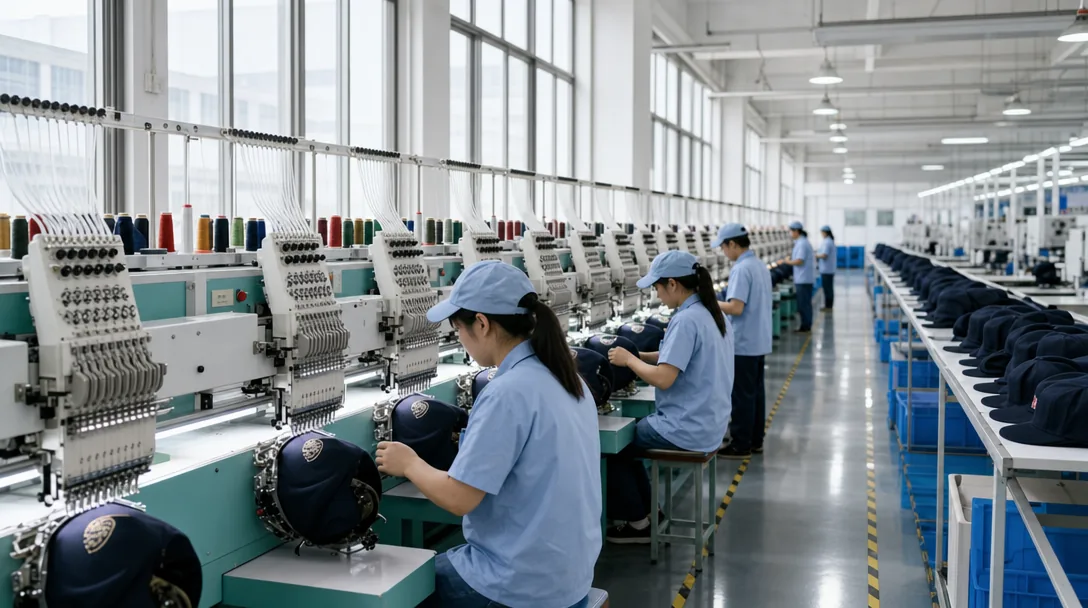
Bulk Trucker Hats Export Shipping Checklist for Custom Hat Buyers - Cost & MOQ Breakdown - Supplier Checklist
Read article →We hope this guide demystifies blank hats sample approval process for custom hat buyers - 2026 buyer's guide and helps you move forward with confidence. If you have questions specific to your project, our English-speaking sales engineers are one message away.