
Blank Hats Retail Packaging Guide for Custom Hat Buyers
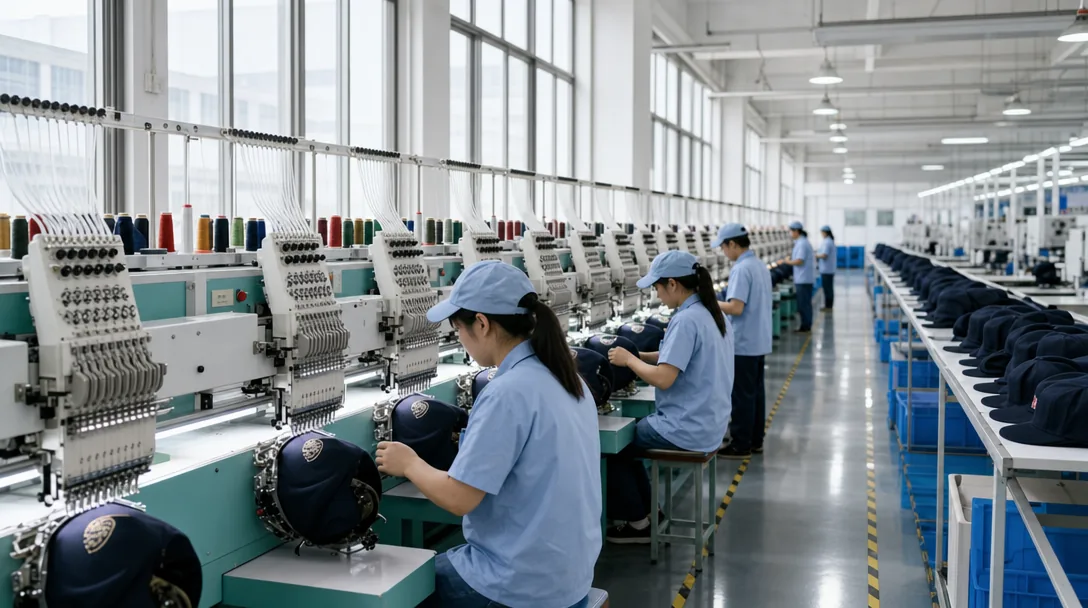
Every week, our sales team answers detailed questions about blank hats retail packaging guide for custom hat buyers. We wrote this guide so that wholesalers, streetwear brands, corporate buyers and promotional resellers can compare options with full information, and avoid the traps that show up only after production has started.
Why blank hats retail packaging guide needs a separate sourcing plan
A blank hats retail packaging guide needs a separate sourcing plan because the buyer is not only purchasing caps; they are purchasing shelf-ready inventory with barcode control, carton logic, damage protection, and channel compliance. Generic wholesale blank hats can ship nested 25 or 50 pieces per polybag with a master carton, but retail programs often need individual hang tags, UPC stickers, size or color codes, moisture-control silica gel, dust bags, peg-hole header cards, or brand-neutral packaging that will pass Amazon FBA, club retail, or boutique receiving checks. That changes the factory workflow after final inspection: hats must move through trimming, steaming, shaping, tagging, bagging, scanning, inner-carton packing, and outer-carton labeling without crushing the crown or bending the brim.
The sourcing plan differs most when the buyer has mixed SKUs, seasonal themes, or specialty silhouettes such as country hats for men, bulk custom trucker hats, or custom bulk trucker hats with foam fronts and mesh backs. A 5-panel foam trucker packed flat may tolerate 100 pieces per carton, while a structured 6-panel cotton twill cap with a pre-curved visor may need 24 or 48 pieces per carton to avoid pressure marks. Retail packaging decisions usually add $0.08–$0.35 per unit for polybags, stickers, and hang tags, while printed boxes, kraft sleeves, or clamshell protection can add $0.45–$1.20. Lead time also moves: simple barcode sticker application adds 2–4 days, but custom printed packaging normally requires 10–18 days after artwork approval and Pantone TCX or coated paper color confirmation.
The compliance risk is that packaging mistakes are often discovered after production, when rework is slow and expensive. A custom hat manufacturer should confirm packaging specs before bulk fabric cutting: barcode format, FNSKU or UPC placement, carton dimensions, gross weight limits, suffocation warnings, recycling marks, country-of-origin labels, and retailer routing requirements. For export cartons, we normally target under 15–18 kg gross weight and use 5-ply corrugated board for shaped caps; for humid routes, especially sea freight under FOB Ningbo or DDP delivery, desiccant and carton compression matter more than buyers expect. Our standard practice at CrownsForge is to include retail packaging in the pre-production sample checklist, then inspect finished goods under AQL 2.5 for workmanship and a separate packaging audit for scan accuracy, label placement, carton count, and crush damage.
Factory capability checks before quoting
Capability checking should happen before any price sheet, because a cheap quote means nothing if the factory cannot control the decoration, panel shape, and retail packing sequence together. For embroidery, ask what machines are on the floor: Tajima, Barudan, or ZSK heads are normal for serious cap work, but the key is whether they digitize in-house and can show stitch-density settings for 3D puff, flat embroidery, and small lettering under 5 mm. For patches, separate capability by process: woven patch for fine detail, embroidered patch for texture, PVC for outdoor programs, genuine or PU leather for country hats for men, and heat-transfer badges only when the crown fabric can tolerate press temperature. A custom hat manufacturer should also explain thread color matching by Pantone TCX or Madeira/Rayon charts, not just say “we match close.” For a blank hats retail packaging guide, decoration capability matters because the label, hangtag, barcode sticker, and carton assortment must not be treated as afterthoughts after production is finished.
Fabric and construction checks should be more specific than “cotton, polyester, mesh.” For wholesale blank hats, I would ask for fabric weight, shrinkage, colorfastness, and handfeel: 16x12 cotton twill around 240–280 gsm, brushed chino twill near 220 gsm, 100D polyester performance fabric, 600D Oxford for outdoor styles, and 140–160 gsm trucker mesh are all different products. Panel construction is just as important. A 5-panel camper, 6-panel structured dad cap, 7-panel trucker, and foam-front rope cap require different blocking molds, seam allowances, sweatband widths, and buckram stiffness. For bulk custom trucker hats or custom bulk trucker hats, check whether the sample room can build both high-profile and mid-profile crowns, adjust brim curve radius, and test snapback tension after washing or heat exposure. Closure options should be verified with physical samples: plastic snap, metal buckle, brass clasp, Velcro, elastic Flexfit-style band, and nylon webbing all affect landed cost and retail presentation.
Audit readiness and communication discipline are where many factories fail even when sewing quality looks acceptable. Ask for current sedex-audit-cap-supplier-guide.html">BSCI 2.0, Sedex SMETA 4-Pillar, ISO 9001, or brand audit history, then confirm the audit scope covers the actual sewing and packing site, not only a trading office. Our standard practice at CrownsForge is to quote only after checking decoration files, fabric availability, packaging BOM, sample lead time, and carton spec, because a missing barcode placement or wrong polybag warning print can delay shipment as badly as a bad crown shape. Communication checks should include who approves Pantone lab dips, who signs off embroidery sew-outs, who controls AQL 2.5 final inspection, and who sends pre-shipment carton photos. A competent factory should answer within 24 hours with measurements in inches and centimeters, MOQ by fabric color, sample cost ranges such as $50–$120 per style, and realistic lead times: 7–12 days for sampling and 25–40 days for bulk production depending on trim complexity.
MOQ, pricing and sample approval
MOQ is not one number; it changes by fabric, color, shape, and decoration risk. For wholesale blank hats in stock fabric, 144–300 pcs per color is usually workable, but a dyed-to-match cotton twill or brushed canvas program should be budgeted at 500–1,000 pcs per Pantone TCX color because the dye lot loss is real. Mesh-back bulk custom trucker hats are more flexible if we use standard 100% polyester mesh and existing foam or cotton front panels; custom bulk trucker hats with special bill sandwich colors, rope trim, or private mold buckles push MOQ higher. For niche lines like country hats for men, buyers often underestimate SKU spread: five patch styles across four crown colors can become 20 inspection lots, not one order. A custom hat manufacturer should quote by construction band, not just by quantity: 5-panel foam trucker, 6-panel unstructured dad cap, structured buckram snapback, and nylon camp cap all consume different labor minutes and rejection allowances.
Decoration setup cost is where cheap quotes hide problems. A clean flat embroidery logo on Tajima or Barudan heads normally needs a digitizing charge of USD 25–60, plus USD 0.35–1.20 per cap depending on stitch count; 8,000 stitches is very different from 18,000 stitches on a front panel that still has to curve around the wearer’s forehead. 3D puff embroidery usually adds USD 0.20–0.50 and needs wider satin columns, while woven patches, leatherette patches, PVC patches, and heat-transfer labels each require their own mold or artwork setup, commonly USD 45–150. For PPS approval, I want buyers to sign off on the actual stitch density, backing, thread sheen, patch edge, sweatband print, taping, button, eyelet color, closure, and retail packaging—not just a digital mockup. Our standard practice at CrownsForge is to keep Pantone matching within about Delta-E 1.5–2.5 for dyed fabric, but thread, rubber, paper hangtags, and polybags will never reflect light the same way.
A practical blank hats retail packaging guide must include approval timing, because packaging delays can hold finished caps in cartons for a week. Basic individual polybagging may add USD 0.03–0.08 per cap; UPC stickers, suffocation warning bags, hangtags, size strips, corrugated inserts, branded tissue, and retail-ready inner cartons can add USD 0.12–0.65 depending on material gsm and print method. For Amazon FBA or chain-store delivery, confirm carton drop test expectations, barcode grade, master carton marks, and AQL 2.5 inspection rules before production starts. Sampling usually takes 7–12 days after artwork and fabric confirmation; PPS revision adds another 4–7 days if the change affects embroidery tape, patch mold, or dyed trim. Bulk production is commonly 20–35 days for standard caps after PPS approval, 35–50 days for dyed fabric or heavy trim programs, and longer before Chinese New Year. The safest purchase order locks BOM, Pantone references, packaging layout, carton pack ratio, and approval sample photos in one file.
Quality inspection and shipping risk
The biggest shipping risk on blank hats is not a crushed carton; it is approving a bad lot because the inspection checklist was written like a showroom note instead of a factory control document. For wholesale blank hats, I normally set AQL 2.5 for major defects and AQL 4.0 for minor defects, with 80–125 pieces pulled on a mid-size order depending on lot size. Major defects include wrong crown height over tolerance, twisted visors, oil stains, broken sweatband stitching, shade mismatch over Delta-E 1.5–2.0 against the approved Pantone TCX reference, and any embroidery registration error that is visible at arm’s length. Measurement tolerance should be written before production: crown height ±3 mm, visor length ±2 mm, circumference ±5 mm, panel symmetry within 3 mm. If the buyer orders country hats for men with structured fronts, I also check buckram stiffness and front-panel bubbling after steam, because that defect often appears only after packing pressure.
Colorfastness and decoration checks must be treated as shipping gates, not cosmetic opinions. For dyed cotton twill, washed canvas, or 280–320 gsm brushed cotton, I like to see rubbing fastness at Grade 4 dry and Grade 3–4 wet; dark navy, black, and enzyme-washed colors need extra attention because they can stain white tissue paper or inner crown taping during ocean freight. Embroidery defects are easy to miss when the design looks acceptable in a photo: on Tajima, Barudan, or ZSK runs, inspectors should check thread breaks, loose bobbin nests, puckering around dense satin columns, incorrect 3D foam height, and stitch density that exceeds the fabric’s limit. For bulk custom trucker hats, the mesh panel should be checked for snagged monofilament, cracked snapbacks, and logo placement within ±2 mm from the approved counter sample. This is where a blank hats retail packaging guide should connect packaging approval with product inspection, because hangtags, barcodes, and polybag warnings can pass while the cap itself fails.
Carton markings and trade terms decide how painful a problem becomes after the goods leave the factory. Each master carton should show PO number, style code, color, size if applicable, carton quantity, gross/net weight, carton dimensions, country of origin, and scannable barcode if the retailer uses DC receiving; mixed-color cartons need a packing ratio label on at least two sides. For FOB Ningbo or Shanghai, the buyer controls freight and insurance after handover, so the factory’s job is accurate carton count, export carton strength around 5-ply K=K or K=A, and clean customs documents. For DDP, the custom hat manufacturer carries more risk: HS code accuracy, importer data, duties, final-mile delivery appointments, and chargebacks for label errors. Our standard practice at CrownsForge is to archive the approved sample photos, Pantone references, embroidery DST files, bill of materials, carton layout, AQL report, and shipping marks under the reorder number, because custom bulk trucker hats reordered six months later often fail when the old artwork or packaging revision is guessed from memory.
Buyer checklist for the next RFQ
A serious RFQ starts with a packaging map, not just a hat photo. For a blank hats retail packaging guide quote, send the cap style first: 5-panel, 6-panel, dad cap, snapback, flat bill, foam trucker, or unstructured washed cotton. Add fabric specs if known, such as 280 gsm cotton twill, 100% polyester mesh, 16-wale corduroy, or 600D polyester, plus color references in Pantone TCX or a physical swatch photo under daylight. For wholesale blank hats, also state whether the hat is truly blank, private-label only, or needs inside taping, woven labels, hangtags, UPC stickers, size strips, or retail polybags. A firm quote also needs order quantity by SKU, size breakdown if fitted, destination port or DDP address, and target delivery date. If the RFQ only says “black trucker hat, 5,000 pcs, send best price,” no factory can quote packaging, carton cube, or freight accurately.
Send files in production format, not screenshots. Vector artwork should be AI, PDF, EPS, or SVG with fonts outlined; embroidery files can be DST if already approved, but I still prefer the original vector so digitizing can be checked for stitch density, pull compensation, and thread color. For bulk custom trucker hats or custom bulk trucker hats, include front panel height, patch size, embroidery placement, closure type, visor sticker requirements, and whether the mesh must match body fabric within Delta-E 1.5 or if commercial tolerance is acceptable. Packaging photos should show front, back, barcode, hangtag attachment, inner label, polybag warning text, carton marks, and any retailer compliance page. Our standard practice at CrownsForge is to quote with AQL 2.5 final inspection, carton drop-test assumptions, and carton dimensions only after packaging is locked, because a folded hangtag versus rigid insert can change carton quantity by 10–18%.
Before asking a custom hat manufacturer for a firm price, confirm the commercial terms: EXW, FOB Ningbo/Shanghai, CIF, or DDP; payment terms; requested audit status such as BSCI 2.0 or Sedex SMETA 4-Pillar; and whether the goods ship to Amazon FBA, a sports-team warehouse, or retail DC. Country hats for men often use faux leather patches, rope trims, camo prints, or distressed washes, so send reference samples if texture matters; photos cannot show PU grain depth, enzyme-wash handfeel, or brim stiffness reliably. The RFQ should also say if the buyer will approve a pre-production sample, how many salesman samples are needed, and whether packaging must pass CPSIA tracking label rules, California Prop 65 warnings, or retailer barcode grading. A clean blank hats retail packaging guide RFQ lets the factory separate cap cost, decoration cost, packaging cost, mold/tooling cost, inland freight, export fees, and ocean or air freight instead of hiding risk in one inflated unit price.
Working with CrownsForge
Packaging has to be engineered before the first production cutting, not after the caps are finished. For a blank hats retail packaging guide program, CrownsForge normally locks three samples: the cap fit sample, the decoration approval sample, and the packed master-carton sample. That means we test the actual hangtag hole position, UPC sticker size, polybag venting, crown support, carton compression, and retailer carton marks while the buyer is still approving fabric and trims. For wholesale blank hats, the most common retail setup is one cap per 25-micron LDPE bag with suffocation warning, 24 pieces per inner carton, and 144 pieces per export carton; for structured caps, we often reduce to 72 pieces to avoid crown collapse. If the order includes country hats for men with faux leather patches or rope trims, I push buyers to approve packed samples under 45°C heat exposure for 24 hours because adhesive shift and patch edge curl show up fast in summer container conditions.
Decoration and packaging QC must be tied together because a perfect embroidery job can still fail at retail if the barcode is hidden or the brim gets crushed. For bulk custom trucker hats and custom bulk trucker hats, we run embroidery on Tajima or Barudan heads after digitizing the logo with stitch density around 0.38–0.45 mm for twill fronts, then check thread colors against Pantone TCX or Madeira references with a Delta-E target under 1.5 for key brand colors. Patch programs use heat-press dwell time testing, peel checks after 24 hours, and needle-detector screening when metal trims are involved. Final inspection usually follows AQL 2.5 for major defects and AQL 4.0 for minor defects, but packaging defects get their own checklist: wrong SKU sticker, missing hangtag, incorrect country-of-origin label, crushed crown, dirty polybag, poor carton sealing, and mixed color ratios are all counted before export release.
Export coordination is where many custom hat manufacturer quotes look cheap and then become expensive. A proper packaging plan confirms HS code, made-in-China marking, carton dimensions, gross weight, Amazon FBA or retailer routing rules, and whether the buyer needs FOB Ningbo/Shanghai, CIF, DDP, or LCL consolidation. A typical 144-piece carton for unstructured blank caps may land around 58 x 45 x 38 cm and 12–15 kg, while structured trucker caps may need larger cartons that increase volumetric freight by 18–30%. Retail packaging also changes labor cost: a simple polybag and barcode sticker may add $0.08–$0.15 per cap, while custom belly bands, insert cards, size stickers, and carton-level SKU sorting can add $0.25–$0.60. For audited retail programs, we keep BSCI 2.0 or Sedex SMETA 4-Pillar documents, packing photos, carton drop-test records, and inspection reports together so the buyer’s compliance team is not chasing paperwork after the vessel sails.
Frequently Asked Questions
How long does production take?
Sampling takes 7 to 12 days. Bulk production runs 20 to 30 days depending on quantity, fabric availability and decoration complexity. Inspection and packing adds another 3 to 5 days before shipment.
Do you support sustainability certifications?
Yes. We work with GOTS organic cotton, GRS-certified recycled polyester, OEKO-TEX Standard 100 fabrics, and are BSCI and Sedex audited. Certification documentation can be provided per order.
What file format should I send for my logo?
Vector files (AI, EPS, PDF) are ideal. High-resolution PNG or JPG at 300 dpi on transparent background works as a fallback. Provide Pantone color references for accurate reproduction.
What is the minimum order quantity (MOQ) for custom hats?
Our standard MOQ is 100 pieces per design and color, with sampling available from 1 piece. For complex multi-color logos or premium fabric upgrades, the MOQ can be lowered with a small per-piece surcharge.
Can I order a sample before bulk production?
Yes. We strongly recommend approving a pre-production sample before mass production. Samples are charged at 35 to 60 USD each plus express shipping, fully refundable against confirmed bulk orders over 500 pieces.
What should I know about blank trucker cap wholesale bulk?
When evaluating blank trucker cap wholesale bulk, the key considerations are construction quality, decoration capability, MOQ flexibility and lead time. Explain the buyer intent behind blank hats retail packaging guide, when it differs from generic hat sourcing, and what decisions affect cost, lead time and compliance. Describe how CrownsForge manages blank hats retail packaging guide programs with sampling, decoration, QC and export coordination.
How does ordering custom embroidered trucker hat work?
When evaluating custom embroidered trucker hat, the key considerations are construction quality, decoration capability, MOQ flexibility and lead time. Explain the buyer intent behind blank hats retail packaging guide, when it differs from generic hat sourcing, and what decisions affect cost, lead time and compliance. Cover embroidery, patch, fabric, panel construction, closure options, sample room capability, audit readiness and communication checks.
What should I know about custom rope hat wholesale bulk?
When evaluating custom rope hat wholesale bulk, the key considerations are construction quality, decoration capability, MOQ flexibility and lead time. Explain the buyer intent behind blank hats retail packaging guide, when it differs from generic hat sourcing, and what decisions affect cost, lead time and compliance. Cover embroidery, patch, fabric, panel construction, closure options, sample room capability, audit readiness and communication checks.
What should I know about custom trucker hats bulk?
When evaluating custom trucker hats bulk, the key considerations are construction quality, decoration capability, MOQ flexibility and lead time. Explain the buyer intent behind blank hats retail packaging guide, when it differs from generic hat sourcing, and what decisions affect cost, lead time and compliance. Describe how CrownsForge manages blank hats retail packaging guide programs with sampling, decoration, QC and export coordination.
Looking for a reliable hat manufacturer in China?
CrownsForge has produced custom hats for 800+ brands across 40 countries. From 100-piece launches to 100,000-piece retail programs, we deliver on time and on spec.
Get in touchRelated guides
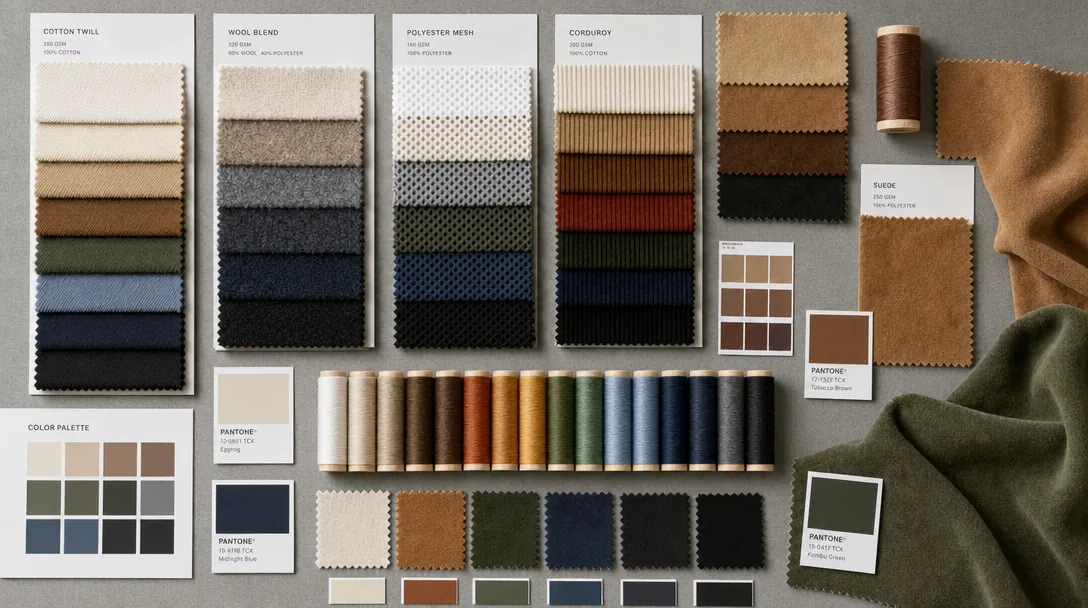
Corduroy Hat: Properties, Costs and How to Spec It Right
Read article →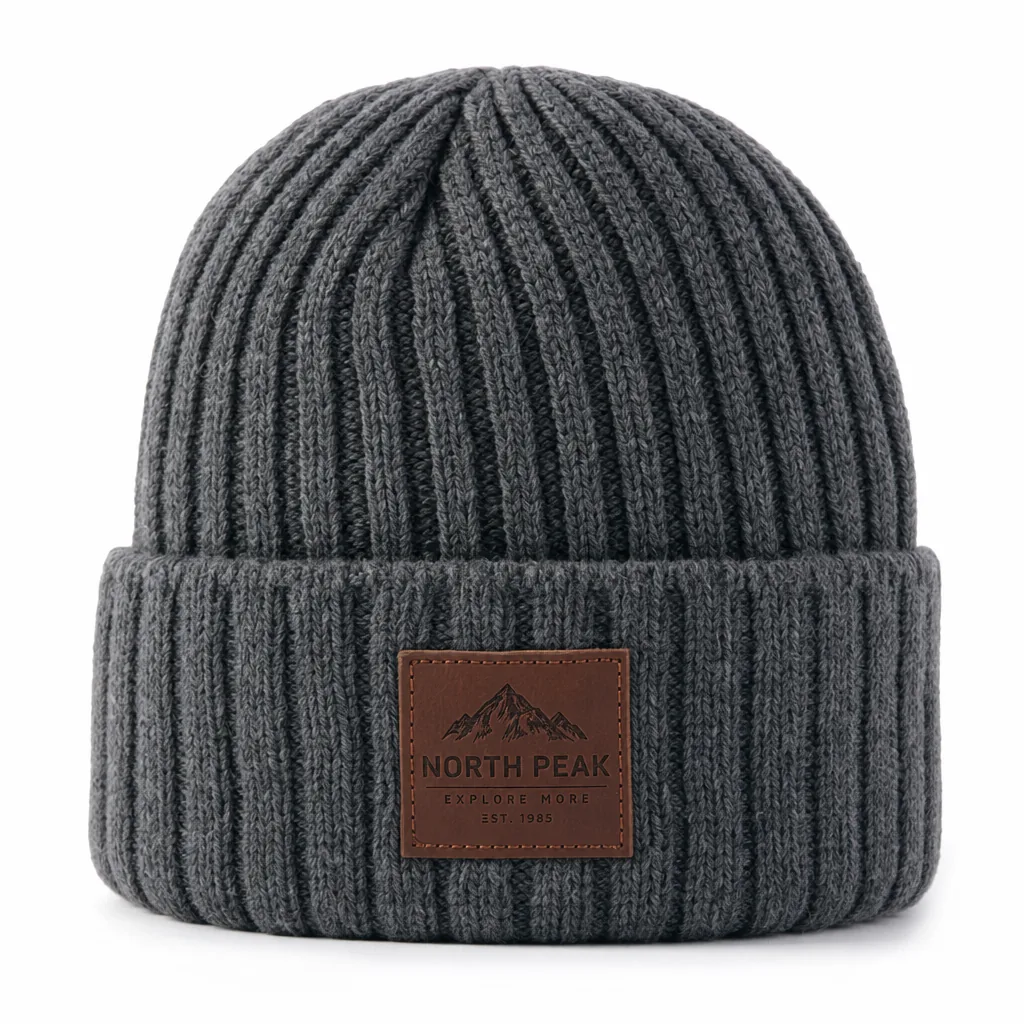
Cap Fabric Guide: Cotton Twill, Wool Blend, Polyester & Performance Materials
Read article →Country Hats For Men Sample Approval Process for Custom Hat Buyers
Read article →We hope this guide demystifies blank hats retail packaging guide for custom hat buyers and helps you move forward with confidence. If you have questions specific to your project, our English-speaking sales engineers are one message away.