
Corduroy Hat: Properties, Costs and How to Spec It Right
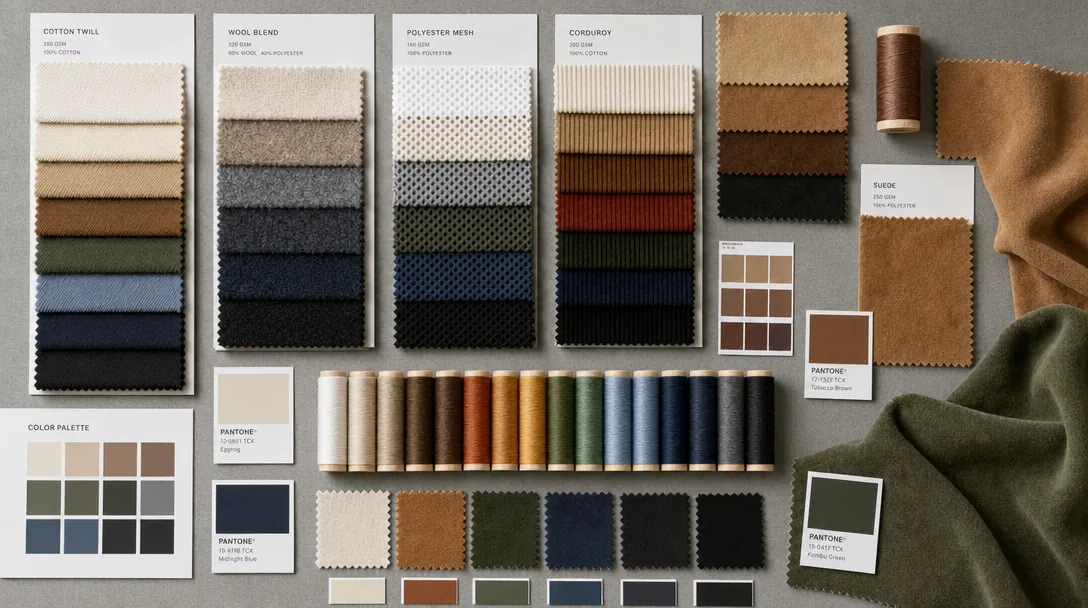
Corduroy Hat: Properties, Costs and How to Spec It Right is one of the most-asked questions we receive from international buyers, and for good reason. With dozens of factories competing for your order and an alphabet soup of technical terms in every supplier quote, even experienced importers can feel lost. This guide consolidates what we have learned producing custom hats for clients in 40+ countries.
Bucket Hat Women
A bucket hat women style in corduroy is usually cut from 100% cotton corduroy with a 6W to 11W wale count, then panel-assembled with a stitched crown and a rounded brim that may be topstitched 2 or 3 rows for shape control. The fabric weight matters more than most buyers think: 250–320 gsm is the normal band for a soft retail hat, while 330+ gsm starts to feel stiff unless the crown is heavily washed. If you want a clean handfeel and fewer dye surprises, ask for Pantone TCX matching on the fabric before cutting, plus shrinkage control under 3% after steam press. For a corduroy hat, the nap direction has to be consistent across panels or you get visible shade variation under store lighting, especially on darker colors like navy, forest, or black. When buyers ask for spec sheets, I tell them to lock down crown height, brim width, sweatband width, stitch density, and closure type before sampling. A solid bucket hat women spec usually includes crown height around 8.5–9.5 cm, brim width 5.5–7 cm, and binding tape at the inner seam if the factory wants to reduce fraying. If the hat is unlined, request clean seam finishing and a 3 mm tolerance on brim symmetry; if it is lined, specify the liner fabric, often 190T polyester or a brushed cotton blend. For MOQ, most factories will quote 300–500 pcs per color for a custom corduroy hat, with better pricing at 1,000 pcs and above. Ex-works pricing in Yiwu is often about $2.20–$4.20 for simple construction, $4.50–$6.80 with embroidery, custom labels, and garment wash, while a trucker or a cotton beanie can be cheaper because the sewing sequence is simpler.
For QC, the common failures are obvious once you know where to look: crushed wale direction, brim waviness, puckered topstitching, poor color consistency between panels, and sweatband twisting after packing. On first article inspection, I check panel alignment, seam allowance consistency, needle damage on the cord ribs, and whether the crown sits flat after a 48-hour hang test. If there is embroidery, ask for digitized files from a Tajima, Barudan, or ZSK setup and confirm stitch density does not pull the corduroy base out of shape; oversized left-chest style logos often distort on soft nap fabrics. For exports, buyers should still use AQL 2.5 for general inspection and separate checks for measurement, appearance, and carton assortment, because the hat can pass sewing inspection and still fail retail presentation. The sourcing decision is not just price: compared with an acrylic beanie or a camouflage bucket hat, corduroy gives a more premium seasonal look, but it also needs tighter fabric control and more careful pressing, so the factory capability matters more than the lowest quote.
If you are buying a corduroy hat men's version alongside bucket hat women, keep the spec family consistent so the fabric lot, wash effect, and trim package stay matched across the line. The easiest way to avoid disputes is to define the handfeel, color tolerance, and shrinkage before PP sample approval, then insist on a sealed golden sample and a pre-production lot check on the same fabric roll range. For compliance, ask whether the factory can support sedex-audit-cap-supplier-guide.html">BSCI 2.0 or Sedex SMETA 4-Pillar if the program is going into retail chains, because those audits often expose weak labor or chemical-control systems long before product defects do. In practical terms, the difference between a sellable fashion hat and a rejected one is usually one millimeter of brim inconsistency or one shade step of dye drift, not the logo. That is why corduroy is a good-looking but unforgiving material, and why the spec sheet has to be written like a production document, not a mood board.
Camouflage Bucket Hat
A camouflage bucket hat is usually built on the same cut-and-sew logic as any other bucket, but the fabric choice makes or breaks the hand feel and the price. Most factories use 100% cotton twill, 210-280 gsm, sometimes with a brushed finish to soften the print, then apply all-over camouflage through reactive or pigment printing. If the buyer wants a corduroy hat look instead of flat twill, the rib width matters: 4-wale corduroy gives a cleaner fashion look, while 8-wale feels heavier and reads more heritage. For a proper spec, ask for crown height, brim width, top-stitch density, sweatband construction, seam allowance, and shrinkage target after wash. If you want the same factory to also make an acrylic beanie or cotton beanie, confirm whether their knitting and cut-and-sew lines are separate; cap factories that only do woven hats often misquote knit headwear and vice versa.
Typical MOQ for a camouflage bucket hat is 300-500 pcs per colorway, but if you want custom camouflage artwork, many mills will push you to 1,000 pcs because print screens or digital print setup cost money. FOB China pricing is usually about $2.20-$4.80 for a basic cotton version, $3.80-$6.50 for corduroy, depending on fabric weight, lining, and trim detail. A structured corduroy hat men's style with heavier interfacing, woven label, and metal eyelets will sit above a soft unlined bucket. Buyers should specify Pantone TCX reference for trims, stitch color, and lining, then ask for Delta-E tolerance on any dyed fabric so the factory does not hide shade variation inside the camouflage pattern. If the price is suspiciously low, the factory is usually saving on fabric weight, seam finishing, or sweatband quality.
Quality control on a camouflage bucket hat starts with print registration, because camo patterns show misalignment faster than solid colors. Check crown panels for centered pattern flow, brim symmetry, stitch skipping, and puckering at the top seam; on corduroy, also inspect wale direction so left and right panels match visually. The worst recurring defects are color bleed after wash, brim warping from weak interlining, and crushed pile marks from bad packing. Under AQL 2.5, I would pay attention to measurements, major stitching defects, and color consistency under D65 light. The broader sourcing decision is simple: if your program needs a fashion-forward bucket hat women can wear with softer drape, corduroy is worth the extra fabric cost; if you need volume and fast replenishment, twill camouflage is easier and cheaper. A factory that handles both styles well usually understands fabric behavior, which is the real test, not the mockup.
Corduroy Hat Men's
A corduroy hat is usually built from 8-wale or 11-wale cotton corduroy, cut the same way as a twill cap but with more attention to pile direction because the ribs shade differently on each panel. For a corduroy hat men's program, I would spec 100 percent cotton face fabric at 250 to 320 gsm, bonded with a 100 to 120 gsm buckram or fused interfacing so the front panels do not collapse after embroidery. Most factories make it on the same six-panel crown line used for a cotton beanie or a brushed twill cap, then add structured front panels, eyelets, sweatband, and closure. If you want clean shading across the crown, ask the factory to keep all panels cut in the same nap direction and confirm the fabric lot with a Delta-E target under 2.0, because corduroy dye lots drift visibly under daylight.
The spec sheet matters more on corduroy than on a plain canvas cap. Ask for the wale count, pile height, fabric weight, crown height, brim curve, panel stitching, sweatband material, and closure type before sampling starts. A common male fit is 58 to 60 cm with a 7 cm brim and a 10 to 11 cm crown, but the front panel shape should be tuned to whether you want a low-profile streetwear look or a deeper sportswear fit. For decoration, embroidery is safest on the front; screen print tends to sink into the ribs, and patch work is cleaner if you want a more premium finish similar to a bucket hat women program or even a camouflage bucket hat where texture and surface distortion can hide defects. If the buyer is comparing fabrics, corduroy is warmer and heavier than an acrylic beanie and usually reads more seasonal, so the style decision should be tied to selling window and target retail, not just aesthetic preference.
Typical MOQ for a new corduroy hat order is 300 to 500 pieces per color per style, with sample development usually at 1 to 2 rounds if the artwork is already clean. Factory ex-works pricing in Yiwu and nearby Zhejiang mills is often around USD 2.80 to 4.50 for a simple unstructured cap, and USD 4.20 to 6.80 for a structured, embroidered version with woven label, woven sweatband print, and custom closure; add more if you want garment washing or special trims. The defects I watch first are crushed pile, panel misalignment, uneven rib direction, crooked topstitching, loose thread at the seam intersections, and color variation between panels because corduroy reflects light badly when cut off-grain. For QC, insist on AQL 2.5 for major defects and check under strong side light, not just front light. The broader sourcing decision is simple: if the buyer wants a warmer, textured cap with a more premium hand feel than a basic cotton cap, corduroy is the right lane; if they need lightweight breathability or a lower ticket price, a twill cap or cotton beanie is usually the better commercial choice.
Organic Cotton Newborn Hat
An organic cotton newborn hat is a very different buying problem from a corduroy hat, but the spec discipline is the same: fiber content, fabric weight, trim safety, and wash performance decide whether the order passes or turns into claims. For newborn use, buyers should ask for 100% organic cotton knit or rib, usually GOTS-certified yarn at 160–220 gsm for a close but not aggressive fit. The factory should provide the yarn certificate, fabric lot traceability, and a sewn-in or heat-applied label with age grade, fiber content, and care instructions. If the hat includes a knot, cuff, or decorative ear shape, every extra seam matters because newborn products are checked more strictly for loose threads, sharp trims, and skin irritation than a standard corduroy hat men's run or a seasonal bucket hat women program.
Manufacturing is straightforward if the factory actually understands babywear: fabric is knitted, relaxed, pre-shrunk, cut on low-tension lay, then sewn with covered seams or flatlock where possible to reduce abrasion. Ask for a seam strength target, colorfastness to washing at grade 4 or better, and shrinkage within 3% after a 40°C wash. For dyed shades, request Pantone TCX matching and a Delta-E target below 1.5 for repeat orders; newborn buyers hate shade drift because the product usually ships in set packs. Typical MOQ is 1,000–3,000 pieces per color and size for a competent factory, with factory price often in the $0.85–$1.80 range depending on yarn count, embroidery, packaging, and whether GOTS paperwork is included. That is much lower risk than chasing a complicated camouflage bucket hat or a fashion acrylic beanie program, but the compliance burden is higher.
The most common defects are obvious once you inspect them with the right standard: twisted crowns, uneven cuff depth, skipped stitches, visible oil stains from sewing machines, and labels that itch because the cut edge was not sealed cleanly. I would inspect under AQL 2.5 for general defects and tighten to zero tolerance on needle damage, broken snaps, and unsecured decorative elements. If you are sourcing this alongside a broader corduroy hat line, use the newborn order as a factory audit test: if they cannot control fabric lot consistency, washing shrinkage, and needle management on a simple cotton beanie style, they are not ready for a more complex cut-and-sew hat program. Our standard practice is to ask for pre-production samples, bulk fabric swatches, and a wash test before cutting the full lot, because fixing newborn defects after shipment is far more expensive than paying for the right spec up front.
Corduroy Hat Wholesale
Corduroy hat wholesale is mostly a conversation about fabric control, not just cap shape. The base cloth is usually 11-wale or 16-wale cotton corduroy at about 250 to 320 gsm, then cut on the bias or straight grain depending on the silhouette. For a structured corduroy hat, I’d specify crown height, panel count, buckram type, brim sandwiching, and stitch density up front, because corduroy can distort if the factory blocks it like an ordinary twill cap. The better factories cut the nap direction consistently across all panels so the color reads uniform under light; if they don’t, you get one side that looks darker and another that looks washed out. For a corduroy hat men's program, also ask whether the sweatband is cotton twill or polyester; a cheap poly sweatband will feel wrong against the heavier fabric and usually shrinks differently after washing.
Typical MOQ from a decent cap factory is 300 to 500 pieces per colorway for a stock corduroy base, but custom fabric dyeing, special wales, or washed finishing can push it to 1,000 pieces. Ex-works pricing usually lands around $2.40 to $4.80 per piece for a simple unstructured style with one embroidery position, and can move to $5.50 to $8.50 if you add woven labels, custom taping, or garment wash. Buyers often compare it to an acrylic beanie or cotton beanie on price, but that’s the wrong benchmark because a corduroy cap carries more cutting waste and more labor in seam alignment. If you need a bucket hat women line or a camouflage bucket hat program in the same season, consolidate trims and packaging so the factory can share procurement on thread, labels, and cartons; that usually saves 5 to 8 percent on landed cost.
The failures I inspect first are nap shading, seam puckering, misaligned center fronts, and weak crown reinforcement. Corduroy shows every mistake: if the front panels are cut off-grain by even 3 mm, the cap twists after steaming; if the topstitch tension is too tight, the ribs collapse and the surface looks glossy in patches. Ask for a pre-production sample, then a size set if you have multiple head sizes, and define acceptable tolerance on brim curve, panel symmetry, and logo placement in millimeters. For embroidery, Tajima, Barudan, or ZSK heads are fine, but the digitizing density must be reduced slightly on corduroy so stitches don’t sink into the ribs; otherwise a flat embroidery like you’d use on a dad cap will disappear. On sourcing, treat the corduroy hat as its own category decision: if you want a premium streetwear look, insist on 100 percent cotton corduroy with colorfastness at grade 4 or better; if you only need a promo item, a cotton-poly blend is cheaper but usually looks less stable after one wash.
Wholesale Hat Manufacturers Usa
A good corduroy hat starts with the fabric spec, not the logo. Buyers should ask for wale count, fiber content, face weight, and shrinkage control before talking decoration. Typical headwear corduroy is 8W to 11W; 8W gives a chunkier retail look, while 11W reads cleaner on a corduroy hat men's style. For 100% cotton corduroy, I like to see 220 to 280 gsm with a reactive-dyed face and a pre-shrunk finish, especially if the cap will be garment washed. If the factory is mixing polyester for cost or abrasion resistance, get the ratio in writing and request a shade band approved to Pantone TCX, not just a photo. The lining, sweatband, and closure matter too: 100% cotton twill tape, 3-row stitching on the sweatband, and a nickel-free metal buckle usually hold up better than cheap plastic hardware on retail orders.
Wholesale hat manufacturers usa are often used as a reference point for turnaround and compliance, but the same sourcing logic applies whether the hats are made domestically or in China. For a basic 6-panel corduroy hat, MOQ is usually 300 to 500 pcs per color per style; custom woven labels, embroidery, and washed finishes push that closer to 1,000 pcs. Factory ex-works pricing for a simple blank can land around $3.20 to $5.50 depending on fabric and construction, while a decorated retail-ready piece with flat embroidery, woven taping, and carton packing often reaches $5.80 to $8.50. Compare that to an acrylic beanie or cotton beanie, where the labor and yarn cost structure is different; corduroy is more sensitive to cutting waste and panel matching, so price jumps if you insist on stripe alignment across seams. A bucket hat women order in light cotton twill may be cheaper, while a camouflage bucket hat with printed fabric and washed finishing can get expensive fast because of print matching and colorfastness testing.
The quality issues I inspect first are pile crushing, seam slippage, color inconsistency between panels, and embroidery distortion on the wale line. Corduroy is unforgiving: if the cutter ignores nap direction, the crown will look patchy under light, and that is one of the fastest ways to turn a premium corduroy hat into a reject. Ask for a top-of-production sample, then run AQL 2.5 on critical defects: broken stitches, off-center logos, crooked brims, sweatband contamination, and visible glue. If the order is going into the U.S., I also ask for a simple pull test on the closure and a colorfastness check after wash and rub, especially for darker shades like navy, olive, and black. In practice, the sourcing decision comes down to whether the factory can control fabric direction, tolerances, and finishing consistently, because that matters more than the headline price when the product sits next to a better-made corduroy hat on a retail shelf.
Working with CrownsForge for corduroy hat programs
A corduroy hat program goes wrong when buyers treat it like a basic cotton twill cap. The wale count, pile direction, and shrink response all change how the crown sits and how the embroidery reads. Our standard sample workflow is a 7 to 10 day first prototype for a simple six-panel corduroy hat, then 3 to 5 days for revisions if the spec is clean: crown height, visor curve, seam allowance, sweatband width, and the exact cord width in millimeters. For first-time buyers, we usually push one tight reference sample before bulk, because once you lock the fabric lot, the handfeel and shade can shift if you switch mills. MOQ is flexible in practice: 100 to 300 pcs for stock fabric colorways, higher if you need custom dye, special wash, or a shaped buckle system instead of a standard back closure.
Decoration is where people make expensive mistakes. On corduroy, direct embroidery must be digitized with a lower stitch density and a heavier underlay, otherwise the needle sink distorts the ribs and the logo looks broken from 1 meter away. We use Tajima, Barudan, and ZSK heads depending on the thread path and logo size, plus 3D puff only on the cleaner, flatter panel zones. For smaller runs, woven labels and heat transfer are safer than forcing a dense fill stitch into a short-wale fabric. If the buyer is comparing a corduroy hat with an acrylic beanie or a cotton beanie, I usually tell them the cap has less tolerance for sloppy artwork because the structured front panel has to carry the whole brand story. The same logic applies when someone is trying to match a camouflage bucket hat or bucket hat women program and wants the same logo treatment across styles; each fabric behaves differently under the needle.
On compliance, we do not treat paper as a substitute for process. The factory-side baseline is BSCI 2.0 and Sedex SMETA 4-Pillar documentation, plus traceable fabric and trim records tied to each PO. For most mid-market accounts, we run AQL 2.5 for major defects and 4.0 for minor defects on final inspection, with carton counts, size breakdown verification, and color checks against Pantone TCX if the buyer has a target shade. For a corduroy hat, the color tolerances need to be stated clearly because the rib texture catches light differently than flat weave; a Delta-E under 2.0 is usually acceptable, but only if the buyer approves under daylight D65 and not just under warehouse LEDs. Order management is tracked by SKU, not by style name, so if a brand is scaling from one corduroy hat into a full line with a bucket hat women drop or a corduroy hat men's restock, the production file stays consistent across reorders. That is what keeps first-time buyers from getting surprised by lead times, shade drift, or decoration failures during bulk.
Frequently Asked Questions
What logo decoration techniques do you offer?
3D puff embroidery, flat embroidery, woven patch, leather patch, PVC patch, screen printing, sublimation, applique and laser etching, all in-house with no subcontracting.
What is the minimum order quantity (MOQ) for custom hats?
Our standard MOQ is 100 pieces per design and color, with sampling available from 1 piece. For complex multi-color logos or premium fabric upgrades, the MOQ can be lowered with a small per-piece surcharge.
How long does production take?
Sampling takes 7 to 12 days. Bulk production runs 20 to 30 days depending on quantity, fabric availability and decoration complexity. Inspection and packing adds another 3 to 5 days before shipment.
What file format should I send for my logo?
Vector files (AI, EPS, PDF) are ideal. High-resolution PNG or JPG at 300 dpi on transparent background works as a fallback. Provide Pantone color references for accurate reproduction.
Can I order a sample before bulk production?
Yes. We strongly recommend approving a pre-production sample before mass production. Samples are charged at 35 to 60 USD each plus express shipping, fully refundable against confirmed bulk orders over 500 pieces.
What should buyers know about kangol bucket hat mens?
When evaluating kangol bucket hat mens, the key considerations are construction quality, decoration capability, MOQ flexibility and lead time. Cover everything buyers ask about bucket hat women: how it's manufactured, what specs to request from a factory, typical MOQ and pricing, common quality issues to inspect for, and how this ties back to the broader corduroy hat sourcing decision. Cover everything buyers ask about camouflage bucket hat: how it's manufactured, what specs to request from a factory, typical MOQ…
What should buyers know about bucket hat men nearby?
When evaluating bucket hat men nearby, the key considerations are construction quality, decoration capability, MOQ flexibility and lead time. Cover everything buyers ask about bucket hat women: how it's manufactured, what specs to request from a factory, typical MOQ and pricing, common quality issues to inspect for, and how this ties back to the broader corduroy hat sourcing decision. Cover everything buyers ask about camouflage bucket hat: how it's manufactured, what specs to request from a factory, typical MOQ…
What should buyers know about cotton beanie men?
When evaluating cotton beanie men, the key considerations are construction quality, decoration capability, MOQ flexibility and lead time. Cover everything buyers ask about corduroy hat men's: how it's manufactured, what specs to request from a factory, typical MOQ and pricing, common quality issues to inspect for, and how this ties back to the broader corduroy hat sourcing decision. Cover everything buyers ask about organic cotton newborn hat: how it's manufactured, what specs to request from a factory,…
What should buyers know about corduroy hat womens?
When evaluating corduroy hat womens, the key considerations are construction quality, decoration capability, MOQ flexibility and lead time. Cover everything buyers ask about bucket hat women: how it's manufactured, what specs to request from a factory, typical MOQ and pricing, common quality issues to inspect for, and how this ties back to the broader corduroy hat sourcing decision. Cover everything buyers ask about camouflage bucket hat: how it's manufactured, what specs to request from a factory, typical MOQ…
Ready to start your custom hat project?
Send us your tech-pack, sketch or even just an inspiration photo. We will respond with a detailed quotation and digital mock-up within 24 hours.
Request a free quoteRelated guides
Custom Hats for Corporate, Business and Branded Merchandise Programs
Read article →
Custom Made Trucker Hat: The 2026 Sourcing & Manufacturing Playbook
Read article →
Baseball Hats Men's: A Vertical-Specific Sourcing Guide
Read article →If you are ready to take the next step on corduroy hat: properties, costs and how to spec it right, our team can put a tailored quotation and digital mock-up in your inbox within 24 hours. Send the inquiry form on our contact page or message us directly on WhatsApp.