Baseball Hats Men's: A Vertical-Specific Sourcing Guide
Every week, our sales team answers detailed questions about baseball hats men's: a vertical-specific sourcing guide. We wrote this guide so that wholesalers, streetwear brands, corporate buyers and promotional resellers can compare options with full information, and avoid the traps that show up only after production has started.
Baseball Hats
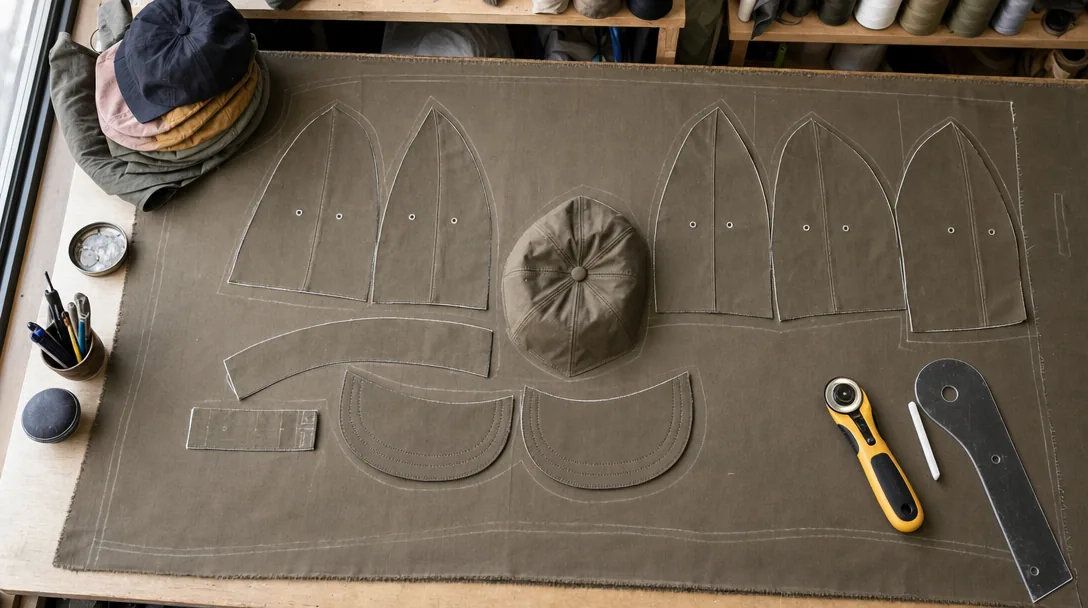
A decent baseball hat is not “just a cap”; it is a sequence of controlled operations. The bill starts with a 2 mm PE insert or cardboard core, then gets covered, stitched, sandwiched, and top-stitched on a multi-needle machine before the crown panels are closed on a pattern that must match the spec sheet exactly. For baseball hats men's, the important manufacturing details are crown height, front panel buckram stiffness, visor curve, sweatband material, and seam count. A six-panel unstructured style is cheaper and softer; a structured fit with mid or high crown, fused front panels, and a pre-curved sandwich visor costs more because the factory is paying for extra interlining, tighter sewing control, and better shape retention after packing. If you are comparing baseball hats, baseball hats fitted, and baseball hats women, you should not assume the same block or the same head circumference; a 58 cm fitted cap and a 56 cm soft cap are different SKUs, not size variants.
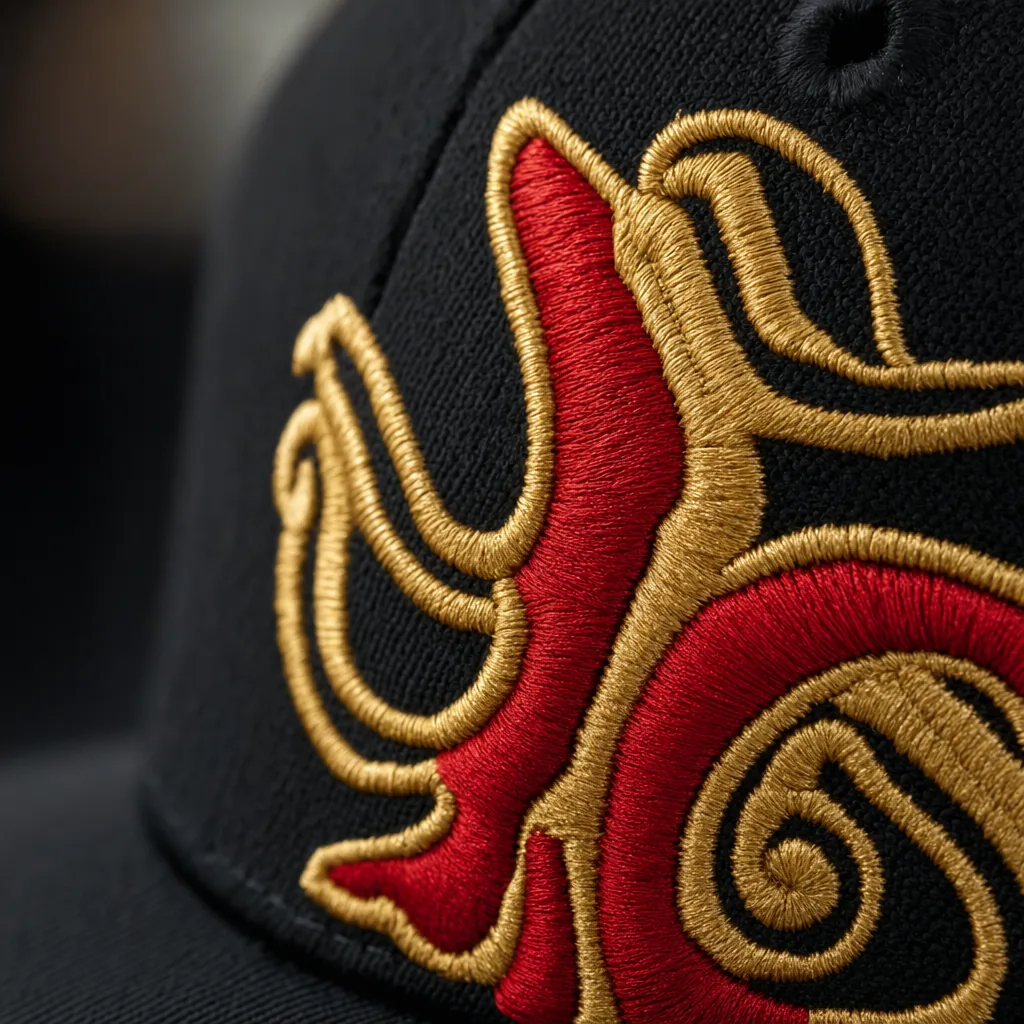
When you request a quote, do not ask only for “cotton cap” or “poly cap.” A real spec sheet should include fabric composition and weight, such as 100% cotton twill at 260 gsm, recycled polyester at 220 gsm, or brushed chino twill at 240 gsm, plus closure type, stitching gauge, eyelet type, and logo method. For embroidery, ask which machine family is used — Tajima, Barudan, or ZSK — because head count, stitch density, and registration tolerance matter when you have small lettering on a front panel. For color matching, specify Pantone TCX and ask for Delta-E under 2.0 on approved samples; otherwise, black can drift toward warm charcoal and navy can come back too purple. Typical MOQ is 300 to 500 pcs per color for standard baseball hats men’s programs, lower if the factory is using stock fabric and a standard 6-panel block. Factory pricing in Yiwu for basic cotton twill with a woven label and simple embroidery usually lands around $1.10 to $2.20 FOB at 1,000 pcs, while better fabrics, structured fronts, and custom taping push it closer to $2.50 to $4.50 FOB.
The failures I see most often are not dramatic; they are sloppy details that ruin retail acceptance. Check the brim symmetry, because a 3 mm left-right deviation is visible on the head and usually means poor pressing or bad visor insertion. Look at crown balance, seam puckering around the front panels, loose thread ends at the back seam, and inconsistent stitch density on embroidered logos. Sweatbands should be cleanly attached with no skipped stitches, no wavy edges, and no adhesive bleed-through if the cap uses glue reinforcement. For inspection, AQL 2.5 is standard for major defects, but I would also add a fit check on actual headforms, color approval against a physical master, and carton compression testing if the shipment is going DDP or long-distance sea freight. The broader sourcing decision is simple: if you are buying baseball hats men's for retail or team use, prioritize factories that can hold repeatability across baseball hats, baseball hats women, and even adjacent styles like bucket hat men and men's bucket hat, because consistent pattern control is what separates a one-off sample from a program that can be reordered without rework.
Bucket Hat Men
A bucket hat men order is built much more like a soft-cut apparel item than a structured cap, which is why buyers who normally source baseball hats men sometimes underestimate the variables. The shell is usually 100% cotton twill, washed cotton, nylon taslan, or polyester peach skin, cut in 4 to 8 panels with a round crown and 4 to 8 topstitch rows on the brim; for premium programs, I ask for 220 to 280 gsm cotton twill or 110D to 210D nylon with a clear shrinkage spec after wash. If you want repeatability, request Pantone TCX fabric matching, seam allowance at 6 to 8 mm, brim stitching pitch at 2.5 to 3.0 mm, and if the style has a sweatband, specify 35 to 45 mm woven tape or terry with a moisture absorption target. For baseball hats women and men's bucket hat programs, the sizing tolerance matters more than people expect: crown height within ±3 mm and head circumference within ±0.5 cm keeps fit from drifting across lots.
Factories will quote bucket hat men in very different ways depending on decoration, lining, and wash complexity, so ask for an itemized FOB or DDP breakdown. For a basic 100% cotton unlined bucket hat with one woven label and no wash, typical MOQ is 300 to 500 pieces per color, with FOB Yiwu or Ningbo around $1.20 to $2.20 at 1,000 to 3,000 pieces; garment wash, embroidery, sandwich brim, or printed lining can push it to $2.80 to $4.50. Compared with baseball hats fitted, the bucket silhouette is usually cheaper in hard components but more sensitive to sewing labor because the brim curve and crown alignment are easy to distort. Our standard practice is to ask for a pre-production sample, then a size set, then a top sample with final trim approval before bulk cutting; skipping that step is how you end up with one batch of baseball hats with a good hand feel and another batch that twists after the first wash.
The defects I inspect first are brim waviness, off-center top stitching, uneven panel alignment, puckering at the side seams, and shade variation between panels or between crown and brim after washing. On bucket hat men orders, also check stitch bite on the brim edge, sweatband attachment strength, and whether the crown seam allowances are pressed flat; loose pressing shows up as a lumpy silhouette in photos and gets returns from retail buyers. For bulk QC, AQL 2.5 is normal for general merchandise, but for licensed or retail-pack programs I tighten critical defects to 0 and major defects to 1.5, especially if the hat must match other baseball hats men's styles in the same drop. If you are sourcing a wider range that includes baseball hats women, men's bucket hat, and baseball hats fitted, the real decision is not style first but factory capability: can they control fabric shrinkage, maintain consistent trims, and pass repeat inspections without reshuffling labor between sewing lines.
Baseball Hats Women
For baseball hats women, the factory process is not fundamentally different from baseball hats men's, but the spec balance usually shifts toward lighter handfeel, cleaner front panel structure, and a lower crown profile. Most buyers should request 100% cotton twill at 260-300 gsm, 6-panel construction, pre-curved visor, and either self-fabric strap with tri-glide or metal buckle for retail programs. If you want true premium retail positioning, ask for a structured front with buckram, matched thread, and embroidery digitized to keep stitch density around 0.35-0.40 mm spacing; that avoids puckering on softer crowns. For color control, state Pantone TCX targets and accept Delta-E under 2.0 on bulk approvals, because women's fashion colors often fail when mills substitute off-shade stock.
Typical MOQ for baseball hats women is 300-500 pcs per color for standard stock fabric, but true custom runs with unique wash, custom labeling, or specialty closures often need 1,000 pcs per style to hit workable pricing. In Yiwu, a plain embroidered cap might land around USD 2.10-3.20 FOB depending on fabric, stitch count, and packaging, while a heavier washed twill or pigment-dyed version can move to USD 3.40-4.80 FOB. Buyers comparing baseball hats, baseball hats fitted, and even crossover styles like bucket hat men should watch the cost drivers closely: fit consistency, closure hardware, and decoration method matter more than the silhouette itself. CrownsForge’s standard practice is to quote separate pricing for blank body, embroidery, label application, and carton pack-out so you can see where margin is actually going.
The most common quality failures are uneven crown symmetry, crooked center seams, weak visor curvature, poor sweatband stitching, and embroidery tension that distorts the front panel after steaming. Inspect the seam allowance at the sweatband, the density and edge cleanliness of logos, the uniformity of panel alignment, and whether the closure holds after repeated opening and closing; for fitted styles, confirm grading on head circumferences, usually 54-56 cm for women’s and 58-60 cm for men’s standard runs. If you are sourcing baseball hats women's and baseball hats men's together, keep the body spec family aligned so you can consolidate fabric and trim procurement, then vary only crown height, closure type, and branding layout. That is usually the cleanest way to reduce MOQs without ending up with a mixed lot that behaves differently on the shelf.
Men's Bucket Hat
A men's bucket hat is built very differently from a 6-panel cap, so buyers should not assume their baseball hats men's tech pack can simply be reused. The core construction is crown, side band, and brim, usually with the brim made from 2 layers of shell fabric plus an interlining of 180 to 260 gsm nonwoven or washed cotton twill to control drape. For streetwear programs, the most common shells are 100% cotton twill at 210 to 240 gsm, brushed chino around 270 gsm, nylon taslon 110 to 140 gsm, or washed denim in the 8 to 10 oz range. If the hat needs structure closer to baseball hats fitted, specify brim width in centimeters, top crown diameter, side wall height, stitch rows on brim, and whether the brim edge is turned-and-topstitched or bound. Ventilation is another point buyers forget: metal eyelets can rust in salt-spray markets if plating is poor, while embroidered eyelets are safer but slower in sewing output.
The spec sheet should call out head sizes clearly because a bucket silhouette hides grading errors until bulk inspection. For adult men, factories usually run 58 cm as standard, with 60 cm or 62 cm for XL; if you want a unisex crossover with bucket hat men and baseball hats women assortments, ask for full size spec with tolerance of plus or minus 0.5 cm at opening circumference and plus or minus 0.3 cm on brim width. MOQ is typically 300 to 500 pcs per colorway in basic cotton twill, but 144 pcs can work if the factory is combining fabric lots and trims; cut-and-sew printed fabric, all-over embroidery, or reversible men's bucket hat styles push MOQ higher because yield loss is worse. Normal FOB China pricing is about $2.20 to $3.60 for plain twill, $3.80 to $5.80 with flat embroidery or woven patch, and $5.50 to $8.50 for reversible or water-repellent nylon versions, assuming 1,000 pcs and standard polybag packing. At CrownsForge, our standard practice is to pretest shade continuity panel to panel because washed cotton buckets show color drift faster than standard baseball hats.
The most common quality failures are wavy brim topstitching, mismatched crown seams, distorted opening circumference after washing, and embroidery puckering on soft fabric. Inspectors should check stitch density on brim rows, usually 5 to 8 rows at even spacing, confirm seam allowance is not peeking through after turning, and verify crown symmetry on a flat table instead of only on a head form. If the style uses direct embroidery, ask what machines are running it; Tajima or Barudan heads with proper backing control produce cleaner results than over-speed runs on light twill, especially when logos are dense. AQL 2.5 final inspection should include measurement, needle detection if required by retailer policy, carton drop test, and visual shade banding check under D65 light if Pantone TCX color match matters. From a sourcing standpoint, the bucket decision should sit inside the broader baseball hats men's assortment logic: buckets are easier to fit, lower in pattern complexity than structured baseball hats, and useful for summer capsules, but they expose sewing discipline and wash consistency much more than standard caps do.
Baseball Hats Fitted
Fitted caps are built differently from strapback or snapback baseball hats men’s buyers often compare against: the crown has to hold its shape without any adjuster taking up slack, so the pattern, sweatband tension, and size grading matter more than people think. A decent factory will cut the crown from 6 panels in 110–130 gsm brushed cotton twill, wool blend, or poly-twill, then build a structured front with buckram or fused canvas, insert a 3 mm to 5 mm sandwich visor, and close it on a 12-needle or 18-needle Tajima, Barudan, or ZSK embroidery line if there is front art. The inside should be clean: no loose threads at the seam tape, no puckering at the center seam, and the sweatband should sit flat with consistent stretch so the cap doesn’t choke the head in one size and spin on another.
For sourcing, request a full spec sheet, not just a photo. You want crown height in millimeters, brim curve, panel count, sweatband composition, thread count, closure-free head size range, and color control by Pantone TCX with an agreed Delta-E tolerance, ideally under 2.0 for branded programs. Ask for pre-production samples, a size set, and wash-test results if the cap uses pigment-dyed or garment-washed fabric. Typical MOQ for custom baseball hats fitted is 300 to 500 pieces per colorway if the factory is flexible, but 1,000 pieces is still the cleaner price break for embroidery or custom woven labels. Ex-factory pricing usually lands around $2.20 to $4.80 for simple cotton twill, and $4.50 to $7.50 for heavier wool-blend styles with complex embroidery, depending on order size and packing.
The quality failures I inspect first are size inconsistency, crooked visor stitching, and crown collapse after steaming or light wear. On fitted baseball hats, a 3 to 5 mm deviation in head opening is enough to create returns, so check both inside circumference and the actual wear fit, not just the labeled size. Also watch for thread burn on dark fabric, misaligned eyelets, uneven visor sandwich color, and weak adhesive on the buckram that causes bubbling in hot weather. If you are buying baseball hats men's as part of a broader line, fitted caps usually sit alongside baseball hats women’s, bucket hat men, or a men’s bucket hat program, but they should be sourced separately because the fit tolerance and size curve are stricter. For serious programs, I would ask for AQL 2.5 inspection on dimensions, stitching, and appearance, plus carton drop-test and moisture-control packing before booking freight.
Fitted Hats Sizes
Fitted hats sizes are not guessed at the end of the line; they are built into the crown pattern, sweatband spec, and blocking mold before the first panel is cut. For baseball hats men's programs, I ask buyers to lock size range first: 6 7/8 to 7 3/4 is the common U.S. run, with 1/8 size increments, and 7 1/4 still the safest core size for volume planning. A factory should quote crown depth, visor curve, front panel buckram type, and sweatband width, not just head circumference. If the cap uses structured front panels, the buckram and stitching density affect the final fit more than people expect, especially on deeper heads. Compared with baseball hats women or a men's bucket hat, fitted baseball hats need tighter tolerance control because there is no adjuster to hide dimensional drift.
When you request specs, ask for the measured internal circumference after blocking, not only the finished size label. Good factories will give you a tolerance window of plus/minus 1/8 inch on the nominal size, with sweatband stretch recovery tested after 24 hours. For baseball hats fitted, I also ask for seam allowance, panel fabric gsm, and visor insert material because a 2 mm change in visor board or a softer polyester twill can shift perceived fit. On MOQ, small custom runs usually start around 300 to 500 pieces per size/color combo, while better pricing comes at 1,000 to 3,000 units. In Yiwu, ex-factory pricing for standard cotton twill fitted caps often lands around USD 3.20 to 5.80 depending on embroidery, wash treatment, and lab dips; heavier wool blends or premium melton can run higher.
The quality problems I inspect first are uneven blocking, off-center seam junctions, and size drift between production lots. If the crown is over-pressed, the cap may measure right on the ring gauge but wear too tight after 20 minutes; if it is under-blocked, the front panels collapse and the silhouette looks cheap. Ask for AQL 2.5 inspection on critical dimensions, stitch count per inch, and sweatband attachment, plus color approval against Pantone TCX if the baseball hats men's order is branded. This matters because size complaints are usually not isolated; they show up alongside poor fit, weak structure, and inconsistent crown height. Buyers comparing baseball hats, baseball hats women, baseball hats fitted, and even crossover silhouettes like bucket hat men should treat sizing as a product architecture decision, not just a size chart issue.
Working with CrownsForge for baseball hats men's programs
For baseball hats men's programs, the biggest sourcing mistake is treating the sample stage like a formality. A proper fit sample and decoration sample usually take 5–7 working days if the spec is clean: crown height, visor curve, sweatband type, closure, and target head circumference all need to be locked before we cut. For first-time buyers, I always push for a pre-production sample on the exact blank construction, because a 6-panel structured cap with a 7 cm crown behaves very differently from a washed dad cap or baseball hats fitted style. If you want color control, we work to Pantone TCX for fabric and thread mapping, and I would expect a Delta-E under 2.0 on repeat runs if the mill lot is stable.
MOQ flexibility matters more than most importers admit, because the wrong minimum can kill a test run before the market has spoken. For custom baseball hats men's orders, a practical starting point is often 144–300 pcs per colorway when the decoration is embroidery or woven patch, while more complex trims or special washes can push that higher. We keep decoration in-house with Tajima, Barudan, and ZSK embroidery heads, so small revisions to stitch density, underlay, or thread tension do not require a new vendor chain. That is useful when buyers are comparing baseball hats, baseball hats women programs, or a men's bucket hat line and need a shared trim standard without giving up fit differences or branding consistency.
Compliance is where good suppliers separate from expensive problems. A real factory workflow should include fabric and trim traceability, needle control logs, in-line inspection, and final AQL 2.5 checks before carton release; for EU and UK buyers, you also want tested azo-free dyes and CPSIA-ready documentation if the product is going into youth channels. Our standard practice is to align factory records to sedex-audit-cap-supplier-guide.html">BSCI 2.0 or Sedex SMETA 4-Pillar expectations when a buyer needs audit-ready paperwork, and to keep a live order file with approved sample photos, size specs, carton markings, and booking milestones. That is what de-risks scale-up: the same system that handles a 500-piece test order for baseball hats men's can later support a 20,000-piece replenishment without changing the buyer’s approval chain.
Frequently Asked Questions
Do you support sustainability certifications?
Yes. We work with GOTS organic cotton, GRS-certified recycled polyester, OEKO-TEX Standard 100 fabrics, and are BSCI and Sedex audited. Certification documentation can be provided per order.
Can I order a sample before bulk production?
Yes. We strongly recommend approving a pre-production sample before mass production. Samples are charged at 35 to 60 USD each plus express shipping, fully refundable against confirmed bulk orders over 500 pieces.
What is the minimum order quantity (MOQ) for custom hats?
Our standard MOQ is 100 pieces per design and color, with sampling available from 1 piece. For complex multi-color logos or premium fabric upgrades, the MOQ can be lowered with a small per-piece surcharge.
How long does production take?
Sampling takes 7 to 12 days. Bulk production runs 20 to 30 days depending on quantity, fabric availability and decoration complexity. Inspection and packing adds another 3 to 5 days before shipment.
Which shipping methods do you support?
We support FOB, CIF and DDP shipping. Air express for samples and small orders, sea LCL for 100 to 500 pieces, sea FCL for 5,000+ pieces. Door-to-door DDP available for US, EU, UK, Canada and Australia.
What should buyers know about kangol bucket hat?
When evaluating kangol bucket hat, the key considerations are construction quality, decoration capability, MOQ flexibility and lead time. Cover everything buyers ask about bucket hat men: how it's manufactured, what specs to request from a factory, typical MOQ and pricing, common quality issues to inspect for, and how this ties back to the broader baseball hats men's sourcing decision. Cover everything buyers ask about men's bucket hat: how it's manufactured, what specs to request from a factory, typical MOQ…
What should buyers know about corduroy hat men's?
When evaluating corduroy hat men's, the key considerations are construction quality, decoration capability, MOQ flexibility and lead time. Cover everything buyers ask about bucket hat men: how it's manufactured, what specs to request from a factory, typical MOQ and pricing, common quality issues to inspect for, and how this ties back to the broader baseball hats men's sourcing decision. Cover everything buyers ask about men's bucket hat: how it's manufactured, what specs to request from a factory, typical MOQ…
How does ordering custom fitted hats for men work?
When evaluating custom fitted hats for men, the key considerations are construction quality, decoration capability, MOQ flexibility and lead time. Cover everything buyers ask about baseball hats fitted: how it's manufactured, what specs to request from a factory, typical MOQ and pricing, common quality issues to inspect for, and how this ties back to the broader baseball hats men's sourcing decision. Cover everything buyers ask about fitted hats sizes: how it's manufactured, what specs to request from a factory,…
What should buyers know about corduroy bucket hat mens?
When evaluating corduroy bucket hat mens, the key considerations are construction quality, decoration capability, MOQ flexibility and lead time. Cover everything buyers ask about bucket hat men: how it's manufactured, what specs to request from a factory, typical MOQ and pricing, common quality issues to inspect for, and how this ties back to the broader baseball hats men's sourcing decision. Cover everything buyers ask about men's bucket hat: how it's manufactured, what specs to request from a factory, typical MOQ…
Ready to start your custom hat project?
Send us your tech-pack, sketch or even just an inspiration photo. We will respond with a detailed quotation and digital mock-up within 24 hours.
Request a free quoteRelated guides
Embroidery Digitizing for Cap Logos: What Buyers Need to Know
Read article →
Acrylic Beanie: Properties, Costs and How to Spec It Right
Read article →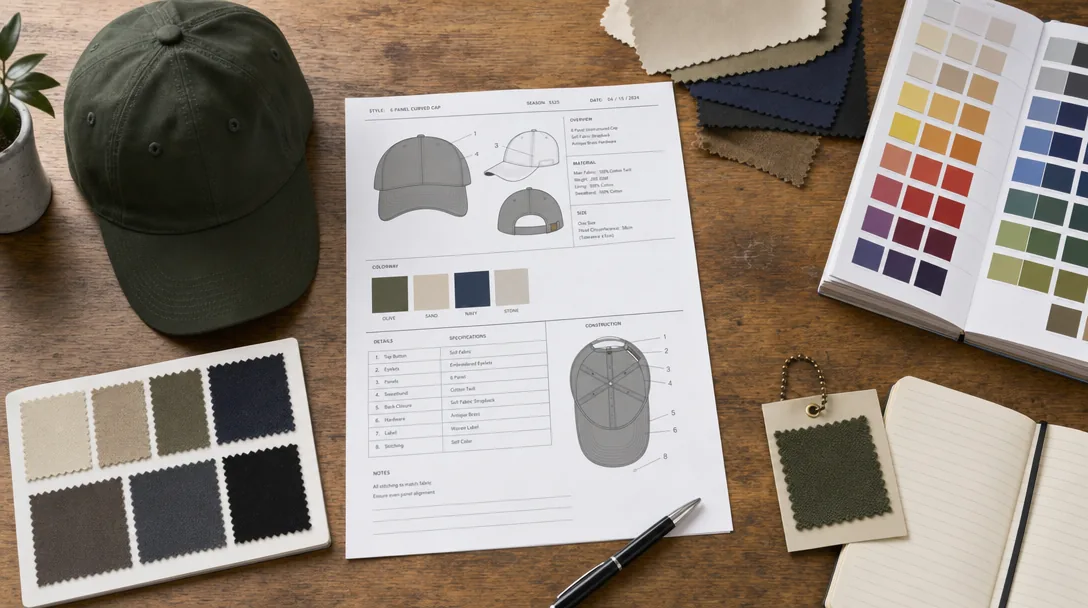
Hat Quality Inspection Checklist: 32 Points Every Importer Should Verify
Read article →We hope this guide demystifies baseball hats men's: a vertical-specific sourcing guide and helps you move forward with confidence. If you have questions specific to your project, our English-speaking sales engineers are one message away.