
Blank Hats Reorder Planning Guide for Custom Hat Buyers
Every week, our sales team answers detailed questions about blank hats reorder planning guide for custom hat buyers. We wrote this guide so that wholesalers, streetwear brands, corporate buyers and promotional resellers can compare options with full information, and avoid the traps that show up only after production has started.
Why blank hats reorder planning guide needs a separate sourcing plan
A blank hats reorder planning guide needs its own sourcing plan because a reorder is not a new-development purchase; the buyer is trying to protect continuity, margin, and color consistency across repeat drops. Generic hat sourcing starts with silhouette and decoration ideas, but reorder planning starts with what already sold: SKU velocity by color, size curve if fitted, channel lead time, and how much shade variation the customer will accept. For wholesale blank hats, the risky part is usually not sewing capability; it is keeping the same fabric lot, crown height, visor curve, sweatband handfeel, and carton labeling after the first production run has moved through retail. A black 5-panel foam trucker and a washed cotton dad cap may both be “blank,” but their reorder risks are different because foam density, enzyme wash loss, and fabric shrinkage do not behave the same under repeat production.
Cost and lead time are decided earlier than most buyers think. If the buyer waits until inventory is already under 20%, the factory has to check greige fabric availability, dye house capacity, plastic snapback stock, mesh denier, and packaging materials all at once. A stable reorder plan locks Pantone TCX targets, acceptable Delta-E tolerance, fabric gsm, button and eyelet spec, and carton marks before the sales team starts pushing the next delivery date. For country hats for men or bulk custom trucker hats, seasonal demand can spike around spring outdoor events and Q4 gift orders, so mesh colors like tan, olive, and blaze orange should be reserved earlier than basic black or navy. A custom hat manufacturer will usually price more sharply when repeat orders use the same block, same bill of materials, and same packing method, but air freight can erase that saving fast; a 12 kg carton shipped express can cost more than the sewing labor inside it.
Compliance also changes on reorders because the buyer is no longer proving only that the sample looks right; they are proving the supply chain can repeat legally and consistently. For programs going into licensed sports, outdoor retail, or promotional distributors, we normally attach the prior approved sample, shade band, AQL 2.5 inspection checklist, metal detection record when required, and current sedex-audit-cap-supplier-guide.html">BSCI 2.0 or Sedex SMETA 4-Pillar factory documentation. Custom bulk trucker hats with no decoration still need fiber content labels, CPSIA review for youth styles, REACH considerations for trims going to Europe, and packaging rules if polybags are used. The practical value of a blank hats reorder planning guide is that it separates reorder control points from creative sourcing: forecast quantity, reserve materials, confirm compliance documents, and inspect against the approved production standard instead of treating every reorder like a fresh RFQ.
Factory capability checks before quoting
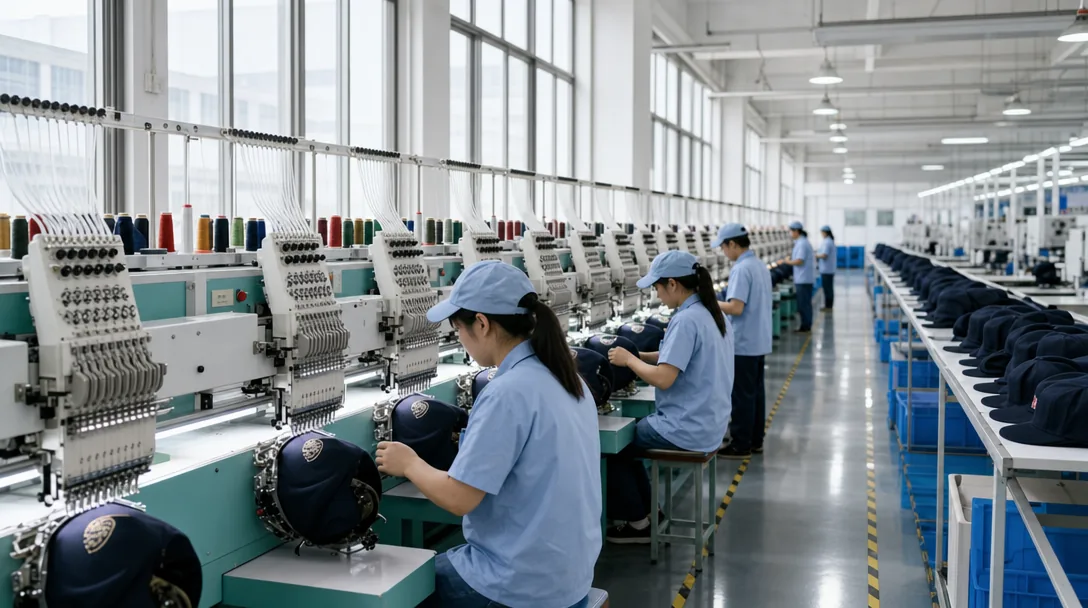
The first capability check is not price; it is whether the factory can actually build your spec without quietly changing it after deposit. For embroidery, ask what machines are on the floor: Tajima, Barudan, and ZSK heads handle dense 3D puff and small-letter flat embroidery differently, especially on 5-panel foam truckers where needle deflection is common. A serious custom hat manufacturer should review stitch count, thread type, backing, and logo height before quoting. For patches, separate woven label, embroidered patch, TPU, silicone, PVC, leatherette, and genuine leather because mold fees and MOQs move fast; PVC molds often run $80–180, while a simple woven patch setup may be under $40. If you are comparing wholesale blank hats for later decoration, still confirm crown height, front-panel stiffness, seam tape width, and sweatband quality because those details decide whether the hat survives embroidery without puckering.
Fabric and construction capacity must be checked before you lock a reorder plan, especially if your SKU mix includes country hats for men, outdoor caps, or bulk custom trucker hats with mesh backs. Cotton twill is usually 260–320 gsm, brushed chino twill around 280 gsm, performance polyester 150–220 gsm, and trucker mesh commonly 100–120 gsm polyester. Ask whether the supplier can hold Pantone TCX shade tolerance within Delta-E 1.5–2.0 for repeat lots; many mills can match the first run but drift badly on the second dye batch. Panel construction matters too: 5-panel high-profile foam, 6-panel structured, unstructured dad cap, rope cap, and flat-brim snapback each need different blocking molds and sewing fixtures. Closure options should be quoted line by line: plastic snapback, brass buckle, Velcro, elastic Flexfit-style band, metal clip, or custom webbing strap all change labor and carton cube.
Sample room capability and audit readiness are where weak suppliers expose themselves. A proper sample room should produce a pre-production sample within 7–12 days using real fabric, real mesh, actual closure hardware, and production embroidery files, not a showroom substitute. For custom bulk trucker hats, I like to see digitizing approval, thread color cards, patch strike-offs, and a fit sample checked on the same crown block planned for mass production. Our standard practice at CrownsForge is to quote only after confirming decoration method, panel pattern, closure, carton packing, and inspection standard such as AQL 2.5 major / 4.0 minor. Also ask for current BSCI 2.0 or Sedex SMETA 4-Pillar documents if your retailer or licensee requires compliance. Communication is a factory capability too: if the merchandiser cannot explain lead time, fabric MOQ, mold cost, and reorder risk clearly in writing, this blank hats reorder planning guide should tell you to slow down before issuing a PO.
MOQ, pricing and sample approval
MOQ is not just a sales number; it is where fabric cutting, dye loss, machine setup, and inspection time start to make sense. For wholesale blank hats, I usually separate pricing into three bands: 144–288 pcs for small reorder testing, 600–1,200 pcs for stable unit cost, and 3,000 pcs+ when fabric can be booked by roll instead of by mixed stock. A 6-panel cotton twill dad cap may sit around $2.10–$3.20 FOB Ningbo at 600 pcs, while foam-front mesh truckers run $2.40–$3.80 depending on mesh denier, sweatband quality, and closure. If buyers ask for country hats for men with camouflage, rope, woven patch, and private label trims, the true MOQ is often driven by camo fabric availability or patch weaving minimums, not the sewing line. This is the first checkpoint in any practical blank hats reorder planning guide: separate cap-body MOQ from decoration MOQ before you compare quotes.
Decoration setup costs should be approved before PPS, not discovered after bulk starts. Flat embroidery on Tajima or Barudan heads normally needs a $35–$80 digitizing charge per logo, with stitch count affecting both price and production speed; 8,000 stitches is very different from 18,000 stitches on a front panel. For bulk custom trucker hats, embroidered patches, PVC patches, sublimated patches, and woven labels each have separate mold or loom setup costs, often $50–$180 per item. Pantone matching should be specified as Pantone TCX for fabric and Pantone C/U for printed or PVC elements, with an agreed Delta-E tolerance, usually under 2.0 for brand-critical colors and under 3.0 for standard promotional work. Our standard practice at CrownsForge is to approve the pre-production sample only after checking crown height, seam symmetry, logo placement tolerance within ±2 mm, stitch density, thread tension, and whether trims such as snapbacks, buckles, eyelets, rope, and inside taping match the signed spec sheet.
A PPS is not a pretty sample; it is the production contract in physical form. For custom bulk trucker hats, buyers should approve the sample, photo record, size spec, carton mark, polybag method, barcode label, hangtag, and packing ratio before the factory releases cutting. Standard packaging is usually 24 pcs per inner box and 144 pcs per export carton, but structured crowns, rope styles, and high-profile foam truckers may need lower carton density to avoid crushed fronts. Realistic timing is 5–7 days for blank-stock sampling, 10–15 days for custom trims or embroidery PPS, and 25–35 days for bulk after deposit and PPS approval; peak season before U.S. summer events can push this to 40–50 days. A custom hat manufacturer should also quote inspection terms clearly: AQL 2.5 for major defects, AQL 4.0 for minor defects, with color, logo placement, broken stitches, dirty panels, and carton shortages listed as checkpoints. That discipline turns a reorder from guesswork into a controlled purchasing calendar.
Quality inspection and shipping risk
Shipping risk is mostly documentation discipline. Carton markings should show PO number, style code, color, size if applicable, quantity, gross/net weight, carton dimensions, country of origin, and consecutive carton count such as 1/120. Mixed cartons are a bad habit unless the packing list is extremely clear; they slow AQL inspection and create receiving disputes. FOB Ningbo or Shanghai gives buyers control over freight and insurance, but DDP is often cleaner for smaller custom bulk trucker hats going to U.S. or EU warehouses if duty classification, courier surcharge, and residential delivery exclusions are quoted upfront. A serious blank hats reorder planning guide should archive the approved BOM, fabric gsm, mesh specification, closure type, carton packing ratio, HS code, last freight cost, inspection report, and defect photos. A custom hat manufacturer that cannot retrieve those records will guess on the next run, and guessing is how a reorder becomes more expensive than the first order.
Buyer checklist for the next RFQ
A firm RFQ starts with a controlled spec, not a mood board. For any blank hats reorder planning guide, the buyer should send the previous PO number, approved sample photos, and a one-page tech pack showing style type, crown height, panel count, visor shape, closure, sweatband, and inside taping. If you are reordering wholesale blank hats, include the exact fabric description: 100% cotton twill at 260–300 gsm, brushed chino, polyester performance fabric, nylon taslan, corduroy wale count, or trucker mesh in 100–120 gsm polyester. For color, give Pantone TCX or TPX codes and say whether Delta-E under 1.5 is mandatory or whether commercial tolerance around 2.0 is acceptable. Buyers often write “khaki” or “navy” and expect pricing precision; that is where factories lose time because one khaki can mean 16 different lab dips.
For decoration, send the real artwork files before asking for a firm quote: vector AI, EPS, or CDR for flat embroidery, DST if you already approved a stitch file, and high-resolution JPG photos of the finished cap from front, side, back, inside, and under-visor. State the logo size in millimeters, placement from visor seam, thread colors, backing type, and whether the mark is flat embroidery, 3D puff, woven patch, leather patch, rubber patch, heat transfer, or screen print. On Tajima, Barudan, or ZSK heads, a 7,000-stitch flat logo prices very differently from a 14,000-stitch 3D puff with two trims and raised borders. If the RFQ is for bulk custom trucker hats or custom bulk trucker hats, also specify foam front thickness, mesh denier, snapback hole count, and whether the visor needs a rope, sandwich, or contrast undervisor.
Quantity and compliance details decide whether the quote is usable for purchasing or just an estimate. Give the target order quantity by color and size, carton requirements, barcode or polybag rules, hangtag artwork, inner pack ratio, delivery term, and destination address for FOB Ningbo/Shanghai, EXW Yiwu, DDP Los Angeles, or DDP Rotterdam pricing. If the caps are for licensed teams, outdoor retail, or country hats for men sold through national chains, state testing needs upfront: AQL 2.5 final inspection, nickel-free buckle, AZO-free dye, CPSIA if children’s sizing is involved, plus BSCI 2.0 or Sedex SMETA 4-Pillar audit requirements. Our standard practice at CrownsForge is to quote only after confirming material, decoration, packing, Incoterm, and inspection level, because a custom hat manufacturer cannot responsibly lock unit cost without those five inputs.
Working with CrownsForge
A reliable blank hats reorder planning guide starts with locking the physical cap before anyone argues about carton dates. At CrownsForge, we treat the approved sample as the control document: crown height in millimeters, visor curve radius, sweatband width, back-strap hardware, fabric gsm, mesh denier, and Pantone TCX references are recorded with photos under D65 light. For wholesale blank hats, I push buyers to approve one “golden sample” and two production counter-samples, because fabric hand-feel and crown recovery can drift when mills change dye lots. For country hats for men, that usually means checking structured 5-panel or 6-panel foam-front trucker bodies, 100% cotton twill, enzyme-washed canvas, or polyester mesh backs against the target fit. If a reorder needs decoration later, we also reserve panel compatibility early: embroidery-safe front panels, heat-transfer temperature limits, and seam placement for patches. That prevents a blank reorder from becoming unusable when the buyer adds a logo program six months later.
Decoration planning is where many reorder programs lose time, especially on bulk custom trucker hats. We keep digitized embroidery files separate by machine type because a Tajima setting that runs clean at 850 stitches per minute may need different pull compensation on Barudan or ZSK heads. Flat embroidery, 3D puff, woven patches, leather patches, PVC patches, and sublimated patches all have different lead-time risks; puff embroidery needs foam thickness testing, while woven patches need edge-merrow consistency and color Delta-E control, ideally under 1.5 to 2.0 for brand-critical shades. For custom bulk trucker hats, I prefer approving decoration on the same fabric and front-panel lamination as production, not on a random sample cap. Typical reorder sampling takes 5–7 days for blank bodies and 7–12 days with embroidery or patches, assuming existing trims are stocked. If new Pantone-dyed fabric or custom buckle tooling is required, add 10–18 days before production even starts.
QC and export coordination should be built into the reorder calendar, not added after packing. Our standard practice is inline inspection at cutting, sewing, blocking, decoration, and final packing, with final inspection usually set to AQL 2.5 for major defects and AQL 4.0 for minor defects unless the buyer’s manual is stricter. For a custom hat manufacturer handling repeat programs, the key metrics are shade banding, crown symmetry, visor alignment within 3 mm, embroidery registration, loose threads, carton count accuracy, and barcode placement. Export planning depends on Incoterms: FOB Ningbo or Shanghai is straightforward, while DDP to the U.S. or EU needs HS code confirmation, carton CBM, duty assumptions, and label compliance. Factories with BSCI 2.0 or Sedex SMETA 4-Pillar files can usually support licensed sports, promotional, and retail accounts more smoothly. A practical blank hats reorder planning guide should reserve 25–35 days for production after approval, plus freight time and a buffer for China holidays.
Frequently Asked Questions
What is the minimum order quantity (MOQ) for custom hats?
Our standard MOQ is 100 pieces per design and color, with sampling available from 1 piece. For complex multi-color logos or premium fabric upgrades, the MOQ can be lowered with a small per-piece surcharge.
Do you support sustainability certifications?
Yes. We work with GOTS organic cotton, GRS-certified recycled polyester, OEKO-TEX Standard 100 fabrics, and are BSCI and Sedex audited. Certification documentation can be provided per order.
How long does production take?
Sampling takes 7 to 12 days. Bulk production runs 20 to 30 days depending on quantity, fabric availability and decoration complexity. Inspection and packing adds another 3 to 5 days before shipment.
What logo decoration techniques do you offer?
3D puff embroidery, flat embroidery, woven patch, leather patch, PVC patch, screen printing, sublimation, applique and laser etching, all in-house with no subcontracting.
Can I order a sample before bulk production?
Yes. We strongly recommend approving a pre-production sample before mass production. Samples are charged at 35 to 60 USD each plus express shipping, fully refundable against confirmed bulk orders over 500 pieces.
What should I know about blank trucker cap wholesale bulk?
When evaluating blank trucker cap wholesale bulk, the key considerations are construction quality, decoration capability, MOQ flexibility and lead time. Explain the buyer intent behind blank hats reorder planning guide, when it differs from generic hat sourcing, and what decisions affect cost, lead time and compliance. Describe how CrownsForge manages blank hats reorder planning guide programs with sampling, decoration, QC and export coordination.
How does ordering custom embroidered trucker hat work?
When evaluating custom embroidered trucker hat, the key considerations are construction quality, decoration capability, MOQ flexibility and lead time. Explain the buyer intent behind blank hats reorder planning guide, when it differs from generic hat sourcing, and what decisions affect cost, lead time and compliance. Cover embroidery, patch, fabric, panel construction, closure options, sample room capability, audit readiness and communication checks.
What should I know about custom rope hat wholesale bulk?
When evaluating custom rope hat wholesale bulk, the key considerations are construction quality, decoration capability, MOQ flexibility and lead time. Explain the buyer intent behind blank hats reorder planning guide, when it differs from generic hat sourcing, and what decisions affect cost, lead time and compliance. Cover embroidery, patch, fabric, panel construction, closure options, sample room capability, audit readiness and communication checks.
What should I know about custom trucker hats bulk?
When evaluating custom trucker hats bulk, the key considerations are construction quality, decoration capability, MOQ flexibility and lead time. Explain the buyer intent behind blank hats reorder planning guide, when it differs from generic hat sourcing, and what decisions affect cost, lead time and compliance. Describe how CrownsForge manages blank hats reorder planning guide programs with sampling, decoration, QC and export coordination.
Ready to start your custom hat project?
Send us your tech-pack, sketch or even just an inspiration photo. We will respond with a detailed quotation and digital mock-up within 24 hours.
Request a free quoteRelated guides
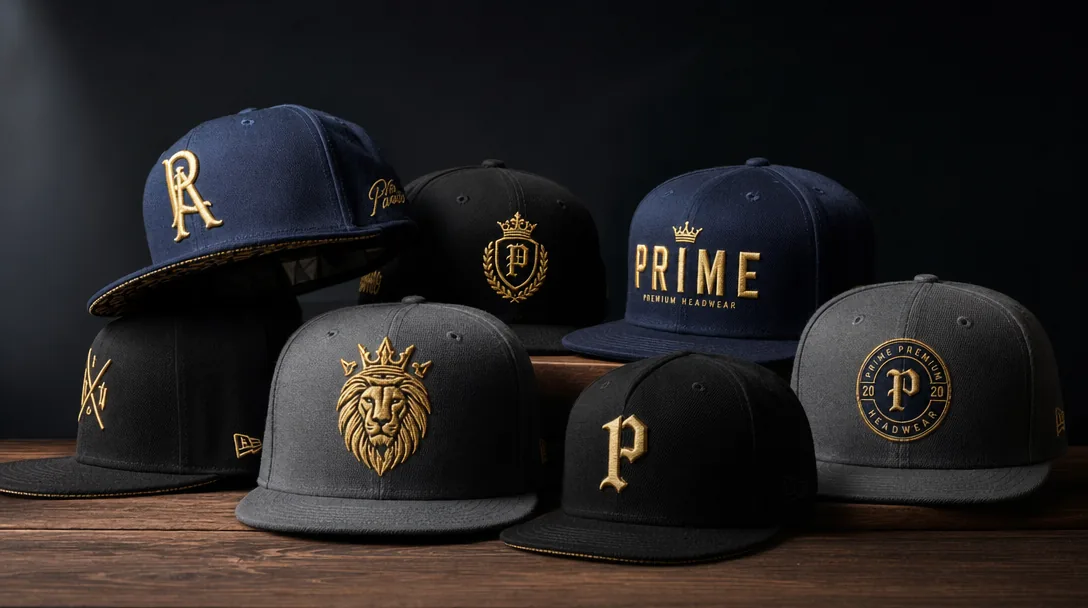
Custom Embroidered Hat: The 2026 Sourcing & Manufacturing Playbook
Read article →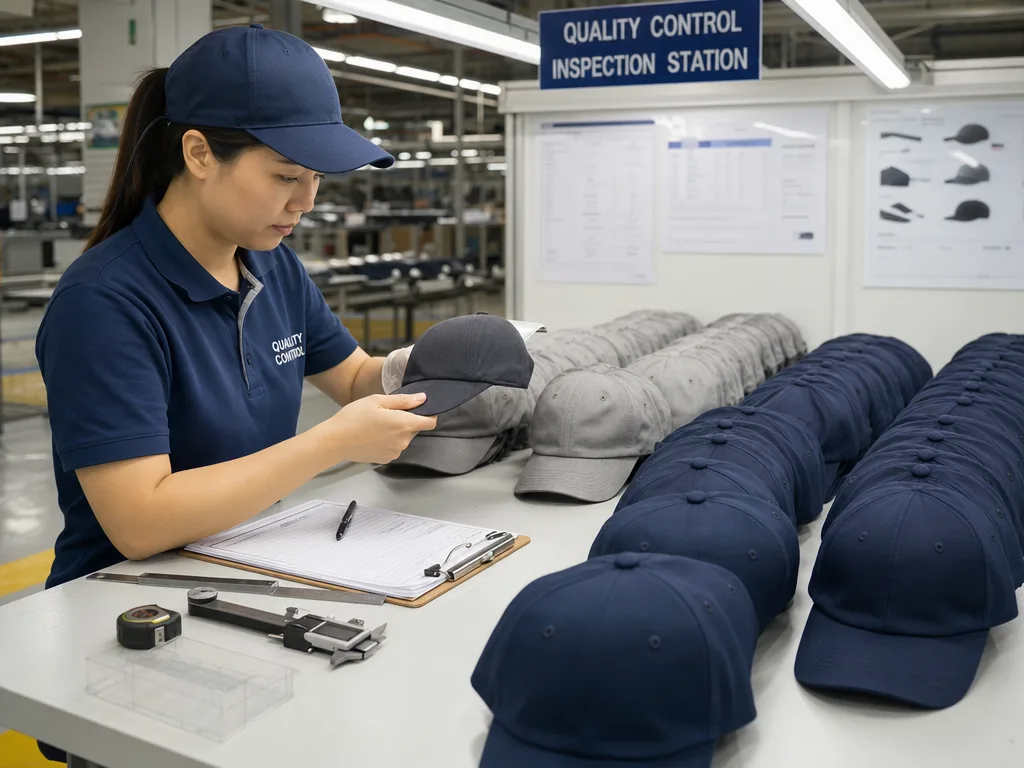
Custom Cap PP Sample Approval: What to Freeze Before Production
Read article →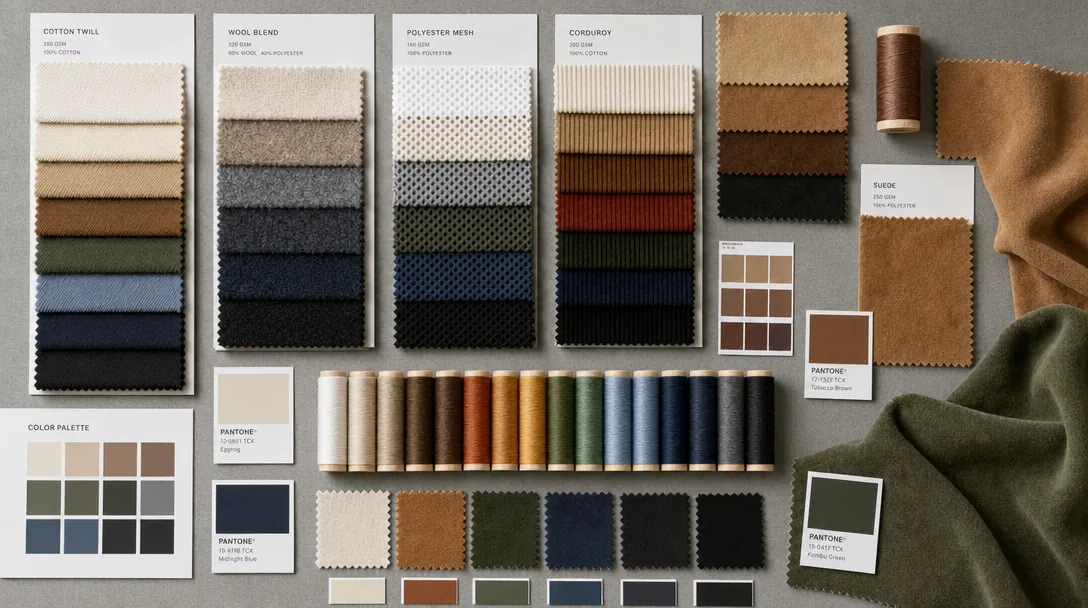
Cotton Twill Baseball Cap: Properties, Costs and How to Spec It Right
Read article →We hope this guide demystifies blank hats reorder planning guide for custom hat buyers and helps you move forward with confidence. If you have questions specific to your project, our English-speaking sales engineers are one message away.