
Blank Hats Decoration QC Checklist for Custom Hat Buyers - Cost & MOQ Breakdown - Supplier Checklist
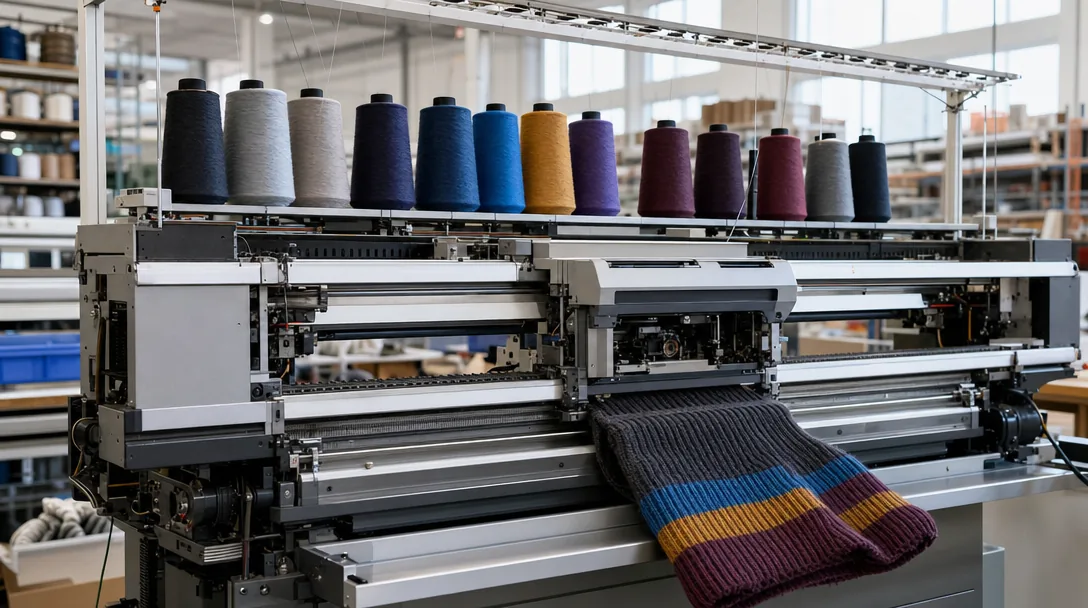
Every week, our sales team answers detailed questions about blank hats decoration qc checklist for custom hat buyers - cost & moq breakdown - supplier checklist. We wrote this guide so that wholesalers, streetwear brands, corporate buyers and promotional resellers can compare options with full information, and avoid the traps that show up only after production has started.
Why blank hats decoration qc checklist needs a separate sourcing plan
A blank hats decoration qc checklist needs a separate sourcing plan because decoration turns a wearable blank into a process-sensitive component. The cap that looks fine at carton opening can still fail as soon as you run 8,000 stitches on a Tajima TMEZ, puff a 3 mm EVA underlay on a Barudan, or heat-press a 95 mm TPU patch at 160°C for 12 seconds. What matters is not just stain-free fabric; it is center-front seam drift under 1.0 mm, button-to-seam offset under 2.0 mm, visor symmetry within 3.0 mm, and crown recovery after hoop compression. On trucker fronts, foam density variation of even 2 to 3 kg/m3 changes how the logo sits, and weak buckram causes tunneling, stitch sink, or patch tilt even when the digitized file is correct. That is why the inspection priority must be the decoration zone, not the shell of the cap. We measure usable front-panel width and height, seam allowance consistency at the center front, crown stiffness after 24-hour compression, and color migration during heat testing. For white, stone, and other light shades, a Delta-E above 1.5 between front panels is already visible under 4000K retail lighting once a tonal embroidery or patch is applied. Our standard practice is to freeze a decoration map before PO release: front-panel dimensions, visor curve spec, fabric weight such as 260-320 gsm brushed cotton twill, Pantone TCX target, and seam deviation tolerance. Without that step, buyers often approve blanks that pass a basic incoming check but are not stable enough for the intended decoration method.
Method changes the blank specification, MOQ, and true unit economics, which is why a generic cap QC sheet is not enough. Flat embroidery is more forgiving than 3D puff, but both require a front panel with enough body to resist needle deflection and logo distortion. A 280 gsm cotton twill dad cap may handle a 6,000-stitch side logo, then collapse under a large center-front leather patch because the crown cannot hold pressure at 3.5 to 4.0 bar. Trucker programs are tighter still: 75D-150D poly mesh affects crown memory, PE foam thickness affects hoop stability, and snapback alignment tolerance should stay within 2.0 mm or the finished cap will look twisted on head. Woven labels, sublimated underbrims, silicone heat transfers, and applique each need different pre-production checks and usually different MOQs from the same sewing line. The biggest costing mistake is buying the cheapest blank and treating decoration fallout as normal waste. A trading-company blank may save $0.20-$0.45 FOB per cap, but if 8%-12% are rejected after embroidery for seam drift, weak buckram, or heat-shifted color, the landed cost is worse than sourcing a tighter-controlled blank from the start. Real planning also splits the timeline: blank production often takes 18-25 days, while digitizing, Tajima or ZSK sew-outs, patch strike-offs, and wash or heat tests add 3-7 days. Compliance belongs in the same sourcing decision. PVC content in patches, azo dyes, nickel on metal closures, and formaldehyde on sweatbands can trigger failures against CPSIA, REACH, California Prop 65, or a buyer RSL. A usable blank hats decoration qc checklist has to combine fit-for-decoration standards, AQL 2.5 visual inspection, and chemical compliance before the PO is locked.
Factory capability checks before quoting
Do not ask for a decoration price until the factory proves it can run your exact cap construction. “We do embroidery” means nothing unless they can name the equipment and the process limits: Tajima, Barudan, or ZSK multi-heads for bulk runs, a single-head sample machine for strike-offs, cap frames for 5-panel and 6-panel profiles, and whether they can execute 3D puff on a structured front without foam exposure at the edge. A real blank hats decoration qc checklist starts by confirming what is in-house and what is outsourced: laser-cut twill, woven labels, TPU badges, leather patches, sublimation emblems, even simple heat-transfer namesets. Every outside handoff adds 2 to 5 days, another color-approval step, and a higher risk of shade drift or registration error. On truckers, the supplier should also define the front build clearly—buckram weight in gsm, foam thickness in mm, and whether the panel face is stable enough for dense satin columns or large fills across the center seam. If they cannot tell you what they will not decorate well, such as side-panel embroidery on a low-profile crown or heavy fills over seam tape, they are not ready to quote.
The quickest credibility test is technical language tied to material behavior. A capable factory can explain why 600D polyester, 10x10 brushed cotton twill, pigment-washed chino, and nylon taslon need different underlay, stitch density, hoop tension, and needle selection to prevent puckering, needle cuts, or crown distortion. Ask for recent production photos, digitizing screenshots showing stitch count and density, and written defect limits for thread breaks, cap-hoop marks, backing exposure, patch edge lift, and embroidery registration. If they quote a foam trucker, a structured twill cap, and an unstructured dad hat at one flat decoration rate without mentioning crown height, seam allowance, or panel stability, they are guessing. Patch programs expose weak factories even faster: a basic embroidered patch at 300 pcs may add $0.35 to $0.80 per cap, while molded PVC or custom metal badges usually require $80 to $150 in tooling before unit cost. The supplier should be able to state press temperature, dwell time, pressure range, and a pull-test method for heat-applied patches; otherwise the quote is just a placeholder.
The sample room and the compliance file tell you whether the factory can repeat a good sample at scale. A serious supplier should build a pre-production sample from a complete tech pack in 5 to 10 working days, flag artwork risks before sewing, and confirm color targets against Pantone TCX or coated references with a stated Delta-E tolerance, typically within 1.5 to 2.0 for visible trims and patch grounds. Your blank hats decoration qc checklist should also require the factory to lock measurable tolerances against the sealed sample: crown height within ±3 mm, bill curve consistency by style, top-button centering, rope diameter, closure type, sweatband spec, seam allowance, and topstitch SPI. Then verify the control system behind the sample. The factory should be able to provide an inline QC flow, AQL 2.5 final inspection standard, needle log, metal-detection procedure for children’s programs, carton pack-out spec, and current sedex-audit-cap-supplier-guide.html">BSCI 2.0 or Sedex SMETA 4-Pillar reports. If they cannot send a BOM, production timeline, and subcontractor list before deposit, expect cost revisions and avoidable defects in bulk.
MOQ, pricing and sample approval
MOQ drives unit cost harder than the logo does, and buyers who miss that usually overpay on the first PO. For decorated blanks in China, the real cost breaks are typically 144, 300, 500, and 1,000 pieces per colorway because that is where fabric yield, sweatband procurement, snapback trim buying, and sewing-line changeover stop carrying small-lot penalties. A stock 5-panel foam-front trucker with a plastic snap and one front embroidery location will usually land around $2.05-$2.75 at 144 pieces, $1.65-$2.25 at 500, and $1.40-$1.95 at 1,000, FOB Ningbo or Shanghai. If you add a faux suede visor, rope trim, enzyme wash, custom seam tape, or a metal badge, the workable MOQ often jumps to 300 or 500 because trim vendors and wash houses surcharge short runs. Any serious blank hats decoration qc checklist should separate body MOQ from process MOQ: a blank shell may be available at 48 or 72 pieces, but embroidery, patch application, private label sewing, and custom packing all have their own minimums and setup economics.
Setup charges are where margins quietly disappear. Flat embroidery digitizing usually runs $25-$60 per file; 3D puff is not the same file with foam added, it needs different underlay, pull compensation, and column width planning, so $40-$85 is standard when the artwork is not machine-ready. A 6,000-stitch front logo on Tajima or Barudan heads may add only $0.30-$0.55 per cap at 500 units, but a side hit, back arch, woven flag label, printed hangtag, and individual polybag can push decoration and packing adders to $0.95-$1.70. Woven patch dies, TPU badge molds, silicone heat-transfer screens, and debossed leatherette tools usually cost $80-$250 depending on size, edge finish, and color count. Sample approval is the control gate that prevents a bad 5,000-piece run: lock crown profile, visor curve, logo size, stitch count, thread sheen, closure spec, label placement, and carton pack-out before bulk starts. Use Pantone TCX or TPX references for textile color, review under D65 lighting, and write tolerances down—logo position ±2 mm, visor stitch count 6 or 8 rows, thread shade within commercially acceptable Delta-E—because vague comments create claims at final AQL 2.5 inspection.
Quality inspection and shipping risk
Freight claims on caps usually trace back to weak release criteria, not rough handling at the terminal. A practical blank hats decoration qc checklist should lock inspection to ANSI/ASQ Z1.4, single sampling, General Inspection Level II, with AQL 2.5 for major defects and 4.0 for minor defects; otherwise “random check” means nothing. On a 3,201-10,000 piece lot, you are typically looking at code letter L and a 200-piece sample size, which is enough to catch carton mixing, sewing instability, and decoration drift before goods are sealed. I treat logo placement more than 3 mm off center, visor topstitch breakage, exposed buckram or visor edge, closure mismatch, missing country-of-origin label, and mixed colorways in one master carton as major defects because each one creates either a compliance problem or a rework cost. Measurement tolerances also need to be written by cap construction, not guessed after the fact: crown height plus or minus 5 mm, visor length plus or minus 3 mm, and head circumference plus or minus 5 mm on fitted or strapback styles, widening to plus or minus 8 mm on plastic snapbacks because snap-hole pitch introduces real variation.
Blank caps that will be embroidered or heat decorated later need a stricter pre-decoration gate than finished promotional goods. Panel skew, seam torque, crown collapse, and asymmetrical front buckram are not cosmetic defects; they push the embroidery centerline, distort heat-transfer registration, and turn a planned 5,000-piece run into a manual sorting exercise. Our standard practice is to check front panel stiffness, seam symmetry, and sweatband color migration before approving production, because dark sweatbands bleeding into white poly/cotton fronts are claim issues, not shade tolerance. For fabric performance, I would require crocking and perspiration colorfastness at grade 3-4 minimum, then add wash or lightfastness testing if the hats are for team retail, outdoor events, or repeated laundering. Embroidery also needs numeric reject limits: thread tails over 2 mm, color registration drift over 1.5 mm, visible bobbin on the face, skipped stitches, and puckering on lightweight fronts below about 180 gsm. Tajima, Barudan, and ZSK heads can all sew clean caps, but only when the digitizing, backing weight, needle size, and cap structure match the substrate—40 wt polyester with a 75/11 needle on washed chino behaves very differently from the same file on a 3 mm EVA foam trucker front.
Shipping risk sits in the carton as much as on the vessel. Every master carton should show PO, style, color, quantity, COO, carton dimensions, gross and net weight, and carton sequence such as 1/24; if there is an inner-pack ratio, print that too. I also want a carton-drop and compression check on export packs, especially for high-profile caps, because weak outer cartons flatten front crowns during long-haul ocean transit and the damage only appears when the buyer opens stock two weeks later. Polybag suffocation warnings, desiccant where required, and scannable carton marks are small details that prevent customs delays and warehouse mis-receipts. On terms, FOB can reduce freight spend by roughly $0.10 to $0.35 per cap on larger bookings, but the buyer then owns rolled-cargo exposure, destination surcharges, and part of the claims fight. DDP is often cleaner on small and mid-size orders, provided the HTS code, duty treatment, VAT basis, and damage liability are confirmed in writing before booking.
Buyer checklist for the next RFQ
A quote is only as good as the blank spec behind it. In the RFQ, define the cap body in factory terms: 5-panel foam trucker or 6-panel structured twill, crown height, buckram or unstructured front, flat or pre-curved visor, snapback or metal buckle closure, sweatband material, and fabric construction such as 108x58 cotton twill at 260 gsm, brushed chino at 240-280 gsm, or polyester mesh at 140-160 gsm. Color needs a Pantone TPX/TCX reference or, better, a physical swatch with an agreed tolerance; if you only write “black” or “khaki,” two mills can be Delta-E 2.0-3.5 apart and both argue they are acceptable. Include units per colorway, Incoterm, ship-to country, target ex-factory date, and compliance scope like CPSIA, REACH, or California Prop 65, because labeling, testing, and carton marking can move landed cost by $0.12-$0.45 per cap before freight.
Most RFQs fall apart at decoration detail, which is why the blank hats decoration qc checklist should be written into the inquiry, not added after sampling. Send editable AI, EPS, or vector PDF files with fonts outlined, Pantone references for each thread or ink, finished logo size in millimeters, and placement callouts for front, side, back, and underbill. For embroidery, specify technique and complexity: a 9,000-stitch flat logo on a Tajima or Barudan head does not price like an 18,000-stitch 3D puff design using 2 mm EVA foam, cap backing, seam compensation, and center-front split handling. If it is a trucker, call out mesh type, foam thickness, visor sandwich color, seam tape color, and whether the front panel needs extra backing to prevent tunneling or crown collapse during sewing and embroidery.
Set the inspection standard at RFQ stage so every supplier prices the same risk. A workable baseline is AQL 2.5 for major defects and 4.0 for minor on finished hats, but serious buyers add measurable tolerances: logo placement ±3 mm, thread trims under 2 mm, no exposed bobbin on face panels, no oil marks or needle damage, and visor curve matching the approved sample within fixture tolerance. For retail programs, specify packaging and compliance rules up front: needle detection if required, barcode scan readability, FNSKU location, carton assortment by colorway, and carton gross weight capped at 15 kg for easier 3PL handling. Also ask whether decoration is in-house on Tajima, ZSK, or outsourced, plus current audit status such as BSCI 2.0 or Sedex SMETA 4-Pillar; subcontracted embroidery changes both lead time and defect accountability immediately.
Working with CrownsForge
Lot-to-lot consistency is where hat programs fail, not on the first showroom sample. A usable blank hats decoration qc checklist starts with a pre-production sample built from the exact bulk BOM: shell fabric gsm, buckram weight, sweatband spec, PE versus paper visor board, eyelet finish, closure model, and thread brand and ticket size. We lock that sample to a signed approval card and record logo placement from fixed points such as the center-front seam, crown height break, and visor edge; on a low-profile 5-panel or trucker front, even a 2 mm drift is visible at arm’s length. Embroidery files also need to be proven on the same machine family that will run bulk—Tajima, Barudan, or ZSK—because pull compensation, underlay spread, and thread tension do not translate perfectly across heads. On foam-front truckers, dense fills can collapse 3 mm EVA, and weak digitizing will print the underlay through 100% polyester mesh or 210D front panels.
Sampling is also where cost and MOQ become real instead of theoretical. A fresh development sample for a structured 6-panel usually runs $45 to $85, while a repeat body with only artwork changes is more often $25 to $40 if the pattern, visor mold, and closure stay the same. For stock mesh truckers with a standard plastic snapback, practical MOQ is usually 144 to 300 pieces per colorway; once you add pigment wash, rope trim, suede sandwich brim, woven patch, or mixed appliqué plus embroidery, factory efficiency typically starts closer to 500 pieces because setup time, material loss, and rework risk all increase. Our standard approval sheet before bulk lists stitch count, logo width and height, Madeira or Gunold thread codes, Pantone TCX references for fabric and trim, and allowable placement tolerance, then checks color under D65 lighting with Delta-E held around 1.5 to 2.0 on close tonal programs.
Final inspection should combine workmanship, packing, and freight data in one pass; splitting those checks is how buyers inherit preventable costs after the cartons leave China. AQL 2.5 for major defects and 4.0 for minor is a sensible finished-cap baseline: inspect seam puckering, visor symmetry, top-button centering, sweatband stitch security, snapback engagement, crown rebound after compression, and decoration faults such as exposed bobbin, thread breaks, poor fill coverage, registration drift, and missed stitches. The blank hats decoration qc checklist should also verify barcode scans, polybag suffocation warnings, country-of-origin labels, carton gross and net weight, and master carton dimensions, because retailer chargebacks are often triggered by packing nonconformity rather than sewing defects. Compliance matters too: confirm BSCI 2.0 or Sedex SMETA 4-Pillar status, needle control logs, metal-detection records if required, and packing lists reconciled to style-color-size counts. On DDP shipments, a wrong HS code or oversized carton can easily move landed freight cost by 8% to 15%.
Frequently Asked Questions
How long does production take?
Sampling takes 7 to 12 days. Bulk production runs 20 to 30 days depending on quantity, fabric availability and decoration complexity. Inspection and packing adds another 3 to 5 days before shipment.
Do you support sustainability certifications?
Yes. We work with GOTS organic cotton, GRS-certified recycled polyester, OEKO-TEX Standard 100 fabrics, and are BSCI and Sedex audited. Certification documentation can be provided per order.
What file format should I send for my logo?
Vector files (AI, EPS, PDF) are ideal. High-resolution PNG or JPG at 300 dpi on transparent background works as a fallback. Provide Pantone color references for accurate reproduction.
What is the minimum order quantity (MOQ) for custom hats?
Our standard MOQ is 100 pieces per design and color, with sampling available from 1 piece. For complex multi-color logos or premium fabric upgrades, the MOQ can be lowered with a small per-piece surcharge.
Can I order a sample before bulk production?
Yes. We strongly recommend approving a pre-production sample before mass production. Samples are charged at 35 to 60 USD each plus express shipping, fully refundable against confirmed bulk orders over 500 pieces.
What should I know about blank trucker cap wholesale bulk?
When evaluating blank trucker cap wholesale bulk, the key considerations are construction quality, decoration capability, MOQ flexibility and lead time. Explain the buyer intent behind blank hats decoration qc checklist, when it differs from generic hat sourcing, and what decisions affect cost, lead time and compliance. Describe how CrownsForge manages blank hats decoration qc checklist programs with sampling, decoration, QC and export coordination.
How does ordering custom embroidered trucker hat work?
When evaluating custom embroidered trucker hat, the key considerations are construction quality, decoration capability, MOQ flexibility and lead time. Explain the buyer intent behind blank hats decoration qc checklist, when it differs from generic hat sourcing, and what decisions affect cost, lead time and compliance. Cover embroidery, patch, fabric, panel construction, closure options, sample room capability, audit readiness and communication checks.
What should I know about custom rope hat wholesale bulk?
When evaluating custom rope hat wholesale bulk, the key considerations are construction quality, decoration capability, MOQ flexibility and lead time. Explain the buyer intent behind blank hats decoration qc checklist, when it differs from generic hat sourcing, and what decisions affect cost, lead time and compliance. Cover embroidery, patch, fabric, panel construction, closure options, sample room capability, audit readiness and communication checks.
What should I know about custom trucker hats bulk?
When evaluating custom trucker hats bulk, the key considerations are construction quality, decoration capability, MOQ flexibility and lead time. Explain the buyer intent behind blank hats decoration qc checklist, when it differs from generic hat sourcing, and what decisions affect cost, lead time and compliance. Describe how CrownsForge manages blank hats decoration qc checklist programs with sampling, decoration, QC and export coordination.
What makes a hat high quality?
High-quality hats start with high-quality materials. If it's wool, it should feel dense but soft, not thin or scratchy. If it's felt, it should be smooth and structured, not flimsy or rough. Cheap hats often use low-grade blends that feel stiff or papery—and those won't hold up with time, sweat, or sun.
How to put a logo on a blank hat?
Q. Can you put a logo on a hat? Yes, you can put a logo on a hat through different techniques — sublimation printing, heat transfer vinyl printing, and transfer paper printing. You can also put a logo on a hat through screen printing and embroidery.
How to put a sticker on a hat?
If it's too hot for your hands. And it's too hot for the sticker. Once it feels sticky again press it firmly back onto the hat.
How to print stuff on hats?
When it comes to printing on hats, there are two main methods: digital transfer printing with a heat press and screen printing. Both techniques offer unique advantages depending on the design and the quantity of hats you're printing. The type of hat you're working with often dictates the best printing method.
Looking for a reliable hat manufacturer in China?
CrownsForge has produced custom hats for 800+ brands across 40 countries. From 100-piece launches to 100,000-piece retail programs, we deliver on time and on spec.
Get in touchRelated guides
Custom Leather Patch Hat Low Minimum: A 2026 B2B Sourcing Guide
Read article →
Mens Beanies: Properties, Costs and How to Spec It Right
Read article →
Bulk Trucker Hats Export Shipping Checklist for Custom Hat Buyers - Cost & MOQ Breakdown - Supplier Checklist
Read article →We hope this guide demystifies blank hats decoration qc checklist for custom hat buyers - cost & moq breakdown - supplier checklist and helps you move forward with confidence. If you have questions specific to your project, our English-speaking sales engineers are one message away.