
Blank Hats Decoration QC Checklist for Custom Hat Buyers - Cost & MOQ Breakdown - 2026 Buyer's Guide
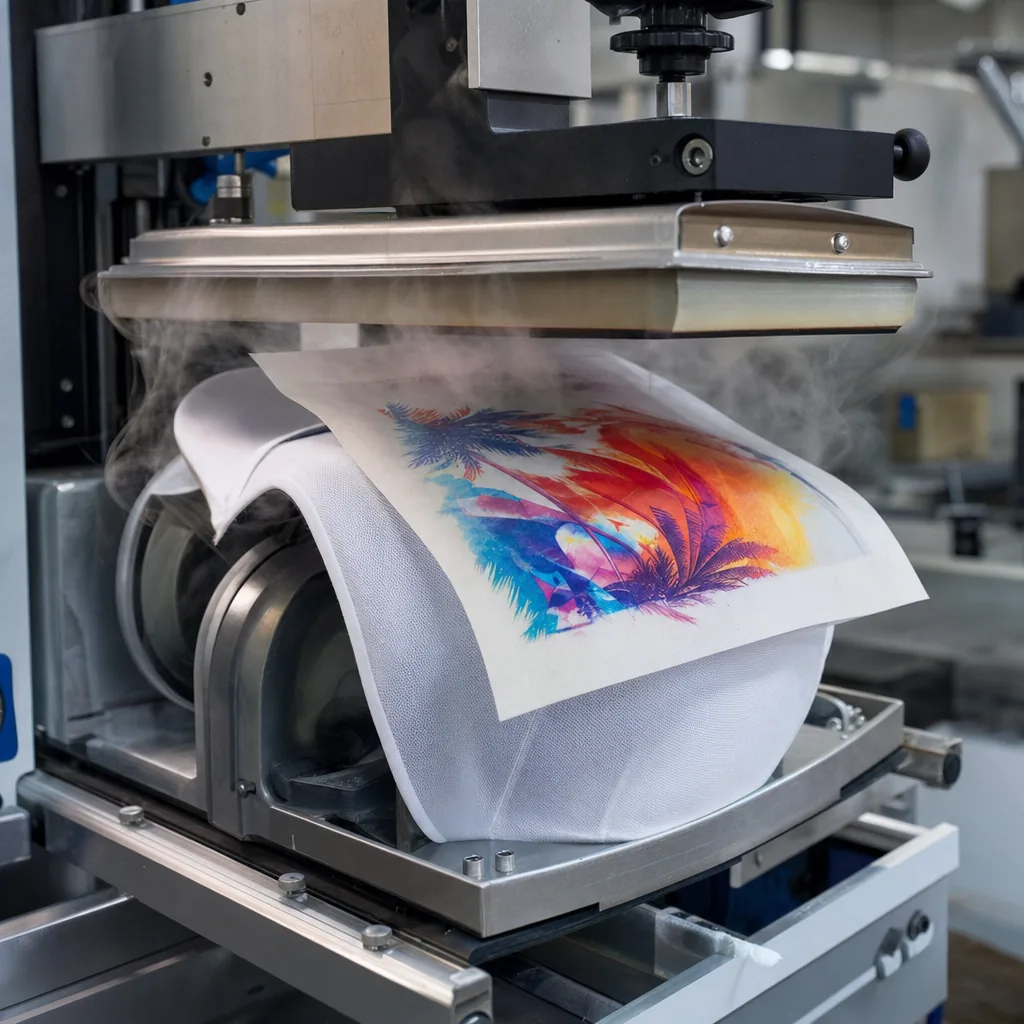
Blank Hats Decoration QC Checklist for Custom Hat Buyers - Cost & MOQ Breakdown - 2026 Buyer's Guide is one of the most-asked questions we receive from international buyers, and for good reason. With dozens of factories competing for your order and an alphabet soup of technical terms in every supplier quote, even experienced importers can feel lost. This guide consolidates what we have learned producing custom hats for clients in 40+ countries.
Why blank hats decoration qc checklist needs a separate sourcing plan
A separate sourcing plan is mandatory because a blank cap is a substrate, not a finished good. A cap can pass basic incoming checks for silhouette, carton count, and color, then still fail the first hour on a Tajima, Barudan, or ZSK embroidery line. A practical blank hats decoration qc checklist has to control the dimensions that decoration actually exposes: front-panel centerline deviation within 1.5 mm, crown height tolerance within 3 mm, visor curvature by approved mold, center-front seam bulk, buckram hardness, panel skew, and fabric moisture before embroidery or heat application. On structured 6-panels, slight front-panel torque pushes logos visibly off-axis; on foam truckers, weak lamination starts puckering once stitch density gets above about 0.40 mm. If the cap is meant for western, outdoor, or uniform use, shape-retention after decoration matters even more, because heavier patches, sweatband pressure, and repeated wear reveal weak front structure fast. Most margin loss comes from predictable failures, not random defects: decoration spoilage, machine stoppage, and claims for crooked logos, shade drift, or distorted crowns. That is why the blank spec must be written around the decoration method. For embroidery, check needle penetration on buckram-backed fronts, stitch support, and whether 10x10 cotton twill at 260-280 gsm or brushed chino at roughly 240 gsm will tunnel under dense fills. For leather, TPU, or PVC patches, surface flatness and stitch holding matter more than soft hand; for heat transfers on truckers, front-panel heat resistance, mesh shrinkage, and foam rebound are the risk points. Color control also needs tighter agreement than most buyers write on the PO: Pantone TCX or TPX reference, approved lab dip, and Delta-E typically no more than 1.5 on same-lot body panels, because embroidery thread, woven labels, and merrowed edges make even small shade differences obvious under 4000K-5000K retail lighting.
The biggest cost and lead-time decisions happen before sampling is approved, not after sewing starts. Stock blanks may start at 144-288 pieces per color, but once the buyer specifies custom fabric, mesh denier, branded seam tape, proprietary fit block, or fixed patch position, the real MOQ usually moves to 500-1,000 pieces per style-color. The inspection cost is minor by comparison: inline checks, needle policy control, carton drop testing, and AQL 2.5 final inspection typically add only $0.03-$0.08 per cap. That is cheap insurance against a ruined embroidery run or an air-freight remake that can easily cost $1.20-$2.50 extra per cap landed. A strong blank hats decoration qc checklist also has to cover compliance before logos are applied, because once decorated, every rework becomes slower and more expensive. For EU and major retail programs, that usually means confirming azo-free dyes, REACH-compliant trims, fiber-content traceability, and carton labeling accuracy at blank stage. If the program touches the U.S. promotional or youth market, buyers should also verify CPSIA labeling logic where applicable and keep component test reports tied to lot numbers. Social compliance is part of sourcing risk as well: current sedex-audit-cap-supplier-guide.html">BSCI 2.0 or Sedex SMETA 4-Pillar status should be checked before booking production, not after the blanks are on the water. That is the difference between buying a cap and buying a decoration-ready platform that will hold spec through the second factory process.
Factory capability checks before quoting
A quote is noise until the supplier proves it can run your exact cap and decoration in-house. For a usable blank hats decoration qc checklist, start with machine capability, not price: number of Tajima, Barudan, or ZSK heads in production, max embroidery field, daily output by style, and whether patch making, heat press, and sewing are internal or subcontracted. Ask for timestamped photos or short video of current runs on foam-front truckers, 6-panel twill caps, and seamed center placements. A real production team will immediately flag where artwork will fail: satin columns under 2.0 mm, small text on 3 mm EVA foam, or dense fills on high-crown fronts that cause tunneling. On foam caps, clean execution usually means lighter fill density, wider underlay spacing around 0.35 to 0.40 mm, and pull compensation tuned to panel stiffness rather than copied from flat cotton twill files. If one factory prices flat embroidery, woven patch, chenille, and leatherette at nearly the same rate, assume they are brokering and masking process risk.
Construction capability decides whether the quotation survives sampling. Ask what blank materials they actually buy every month: brushed cotton twill at 220 to 260 gsm, recycled polyester twill in 150D to 300D yarn counts, mesh specs for truckers, corduroy wale count, hard versus soft buckram, sweatband composition, and closure stock depth. A competent hat factory will quote separate MOQs by construction because the risk is different: stock blanks may work at 144 to 300 pieces per color, while custom-dyed fabric, printed seam tape, woven labels, visor sandwich piping, or proprietary metal trims usually push real MOQs to 500 to 1,000 pieces. Color control should be stated in numbers, not promises: Pantone TCX reference, lab dip approval before cutting, and shade tolerance around Delta-E 1.5 to 2.0 under D65 light box conditions.
The weak point in most quotes is the operating system behind the sample. Ask how they control patch alignment, closure cost, and inspection standards before you accept pricing. Woven and TPU patches should be quoted by attachment method—edge stitch, heat seal, or both—because durability and labor are different. On low-profile caps, woven patches typically hold better when edge-stitched at 7 to 9 SPI; on seamed trucker fronts, centering drift should stay within 2 mm, because once it passes 3 mm many retail buyers reject it. Closure pricing should also be itemized: stock plastic snapbacks often add $0.08 to $0.15, self-fabric strap with brass buckle $0.22 to $0.40, and debossed leather strap another $0.35 to $0.80 depending on hide grade and MOQ. Before confirming the quote, request the latest BSCI 2.0 or Sedex SMETA 4-Pillar report and the factory’s QC flow—incoming fabric inspection, first-piece approval, in-line embroidery checks, pull test on closures, and final AQL 2.5 by carton. If they cannot answer that in 24 to 48 hours with tolerances and separated cost lines, the price is not reliable.
MOQ, pricing and sample approval
MOQ is where most custom hat quotes go off the rails, because suppliers often price different build assumptions under the same style name. For stock blank caps with standard closures and no pattern changes, a realistic factory MOQ is usually 144 to 300 pieces per colorway. Once you move into real cut-and-sew—custom crown height, branded seam tape, woven main labels, printed internal taping, or a Pantone TCX-matched undervisor—the workable MOQ normally jumps to 500 to 1,000 pieces per style. Current FOB China pricing reflects that split: a stock-body 5-panel foam trucker with polyester front, nylon mesh back, and PP snapback closure often lands around $2.10 to $3.40 at 300 pieces, while a fully custom trucker with matching trims and branded internals is more commonly $3.80 to $6.20 at 500 to 1,000 pieces. A useful blank hats decoration qc checklist should force vendors to quote stock-body programs separately from custom-development programs; otherwise buyers compare numbers that are not built on the same BOM, sewing time, or wastage rate.
Decoration cost is what makes small runs look deceptively cheap until the first sample round starts. Flat embroidery digitizing typically costs $25 to $60 per logo, while 3D puff is usually higher because foam thickness, underlay, pull compensation, and satin column width must be tested on Tajima, Barudan, or ZSK heads to avoid edge collapse, pinching, or fill-in on small lettering. A front logo in the 9,000 to 12,000 stitch range usually adds about $0.45 to $0.95 per cap, but side embroidery, rear hits, metallic thread, applique, or frequent thread-color changes can push decoration well past $1.20 to $1.80 per unit on short runs. Separate setup charges also matter: woven patches, TPU badges, heat transfers, and leatherette patches commonly add $40 to $120 for molds, films, dies, or patch sampling. Sample approval is the point where those variables need to be frozen in writing. Ask for a PPS made from actual bulk fabric, trim, and closure components—not a sales sample built from substitute materials—and approve measurable points: logo size, stitch density around 0.38 to 0.45 mm for standard flat fill, placement tolerance within +/-3 mm, visor curve, label content, polybag spec, carton ratio, and barcode position. For dyed fabric, a Delta-E target under 2.0 is commercially realistic; for embroidery thread, approve against the closest Madeira or Gunold card, because promising a perfect Pantone match on thread is how preventable claims start. If the order will be inspected to AQL 2.5, the PPS should match the standard the factory will actually ship against.
Quality inspection and shipping risk
Most decoration failures are baked into the sampling plan long before cartons reach the loading bay. A practical blank hats decoration qc checklist should start at finished-pack stage under ISO 2859-1, General Inspection Level II, with AQL 2.5 for major defects and 4.0 for minor unless the retailer writes tighter thresholds into the vendor manual. On a 3,000-piece order, that gives code letter K and 125 packed caps for inspection; at 10,000 pieces, the sample size moves to 200. Defect grading needs to be locked before bulk sewing starts, not argued about during final inspection. Critical defects include needle contamination, sharp burrs on metal clasp hardware, wrong fiber-content labeling, or mildew and mold contamination. Major defects are logo placement off by more than 3 mm, crown collapse from weak buckram, panel shade variation outside approved standard, broken snapback parts, or carton shortages. Minor defects are loose thread tails under 5 mm, slight visor ripple, or a small top-button lean. Put tolerances in the tech pack in numbers, not adjectives: crown height ±0.5 cm, visor length ±0.3 cm, finished head circumference ±1.0 cm, embroidery placement ±0.3 cm. If the spec sheet says “check appearance only,” the line will default to judgment calls, and that is where disputes start.
Color and embroidery need their own inspection pass because they trigger more claims than seam strength on decorated caps. For cotton twill, brushed chino, and polyester trucker mesh, approve against a physical Pantone TCX standard or a lab-dipped swatch and define a measurable Delta-E limit: under 1.5 is strict, under 2.0 is realistic for repeat bulk production within the same dye lot. Ask the mill or factory for colorfastness results of at least grade 3-4 dry crocking and grade 3 wet crocking, plus perspiration and light fastness if the hats are for outdoor retail or sports programs. Check embroidery under D65 light for registration shift, birdnesting, thread breaks, fill gaps, loose bobbin pull-through, and puckering around fused front panels. Small lettering below 4 mm cap height is where poor digitizing usually fails first, even on Tajima, Barudan, or ZSK heads. Shipping risk comes after good production: master cartons should show PO, style, color, quantity, carton number, gross and net weight, dimensions in cm, country of origin, and barcode label where WMS scanning is required. Keep carton weight around 12-15 kg; once cartons get pushed heavier to save roughly $0.20-$0.35 each, crushed visors, sweatband deformation, and broken closures increase fast. FOB Ningbo or Shanghai usually gives larger buyers better routing control, while DDP only works if duty, destination VAT, and any U.S. Section 301 exposure are stated line by line.
Buyer checklist for the next RFQ
A production-ready RFQ starts with build data, not mood boards. Specify the exact blank style first: 6-panel structured snapback, 5-panel foam trucker, unstructured dad cap, rope cap, bucket, or visor, then break quantity by color and size split. Add the substrate when known—108x58 cotton twill at 260 gsm, brushed chino at 240 gsm, recycled polyester microfiber in 150D, or trucker mesh at 75-100 gsm—because fabric weight, yarn count, and panel stiffness directly affect embroidery pull, patch adhesion, and crown shape. If you are comparing wholesale blanks against full cut-and-sew caps, say that upfront; quoting, packing density, and freight cube are not interchangeable. The most useful attachment is a one-page blank hats decoration qc checklist covering logo position in millimeters, crown height, seam alignment, decoration coverage, visor curve, closure type, and carton packout by inner and master carton.
Artwork and approvals are where vague RFQs lose time and money. Send vector art in AI, EPS, or editable PDF, and list every decoration by method and finished size: flat embroidery, 3D puff, screen print, TPU patch, woven patch, leather patch, or sublimated label. Call out placement precisely—front center, wearer left, back arch, side panel, undervisor, or inside seam tape print—and use Pantone Solid Coated or Pantone TCX references instead of screenshots. For dyed fabric or patch grounds, a lab dip target of Delta-E below 2.0 is realistic; for embroidery thread on Tajima, Barudan, or ZSK heads, approval is usually visual under D65 lighting. Close the RFQ with the commercial controls that actually hold the schedule: Incoterm such as FOB Ningbo or DDP, required warehouse date, labeling and barcode requirements, compliance scope like CPSIA, REACH, AZO-free, Prop 65, BSCI 2.0, or Sedex SMETA 4-Pillar, plus approval checkpoints for strike-off, sew-out, mold proof, and PP sample. Tie bulk acceptance to AQL 2.5 on appearance, measurement tolerance at +/-3 mm, and packing accuracy; otherwise the quote is still budgetary, not production-ready.
Working with CrownsForge
A usable blank hats decoration qc checklist is locked before bulk cutting, not argued over at final packing. Freeze the control pack at PP stage: approved tech pack, Pantone TCX or Pantone Solid Coated references by component, decoration placement map with X/Y coordinates in millimeters, tolerance sheet, carton mark layout, and signed embroidery or patch artwork by style number. Three sample gates are usually enough if the factory actually enforces them: blank fit sample, decorated pre-production sample, and one sealed gold sample kept on the sewing and embroidery lines. That sequence catches the failures that get expensive fast—crown height drifting 3-5 mm, visor curl changing after heat forming, front panel bowing after fusing, or mesh shade moving past Delta-E 1.5 against the approved standard. On Tajima, Barudan, or ZSK cap frames, the file must be tested on the real substrate; a 6-panel trucker with 100% polyester foam front behaves very differently from a 10x10 brushed cotton twill dad cap, especially on 3D puff where underlay, density, and pull compensation decide whether the foam stands clean or collapses at the edges.
Good decoration QC puts a number on every defect and ties it to a checkpoint. The baseline I trust is in-line inspection at cutting, sewing, embroidery, trimming, and packing, then a final audit at AQL 2.5 for major defects and AQL 4.0 for minor defects unless the PO sets stricter limits. The defect library should be specific: sandwich bill mismatch over 2 mm, seam puckering on front panels, top button pull failure, embroidery placement drift beyond +/-2 mm, thread breaks, fill-stitch strike-through, mesh needle cuts, sweatband contamination, snapback count shortages, and loose trimming inside the crown. If the style uses woven labels, PVC patches, TPU badges, leatherette, or merrowed emblems, check stitch-down consistency, edge sealing, and adhesion after flexing and carton-pressure simulation; weak bonding often looks acceptable on the inspection table and fails after 28-35 days in ocean transit. Our standard practice is to release export only after carton QA is tied back to the blank hats decoration qc checklist: barcode scan pass, carton dimension check, random weight verification, burst-strength review, packing list match, and dated photo records before FOB or DDP shipment.
Frequently Asked Questions
What is the minimum order quantity (MOQ) for custom hats?
Our standard MOQ is 100 pieces per design and color, with sampling available from 1 piece. For complex multi-color logos or premium fabric upgrades, the MOQ can be lowered with a small per-piece surcharge.
Do you support sustainability certifications?
Yes. We work with GOTS organic cotton, GRS-certified recycled polyester, OEKO-TEX Standard 100 fabrics, and are BSCI and Sedex audited. Certification documentation can be provided per order.
Which shipping methods do you support?
We support FOB, CIF and DDP shipping. Air express for samples and small orders, sea LCL for 100 to 500 pieces, sea FCL for 5,000+ pieces. Door-to-door DDP available for US, EU, UK, Canada and Australia.
What file format should I send for my logo?
Vector files (AI, EPS, PDF) are ideal. High-resolution PNG or JPG at 300 dpi on transparent background works as a fallback. Provide Pantone color references for accurate reproduction.
How long does production take?
Sampling takes 7 to 12 days. Bulk production runs 20 to 30 days depending on quantity, fabric availability and decoration complexity. Inspection and packing adds another 3 to 5 days before shipment.
What should I know about blank trucker cap wholesale bulk?
When evaluating blank trucker cap wholesale bulk, the key considerations are construction quality, decoration capability, MOQ flexibility and lead time. Explain the buyer intent behind blank hats decoration qc checklist, when it differs from generic hat sourcing, and what decisions affect cost, lead time and compliance. Describe how CrownsForge manages blank hats decoration qc checklist programs with sampling, decoration, QC and export coordination.
How does ordering custom embroidered trucker hat work?
When evaluating custom embroidered trucker hat, the key considerations are construction quality, decoration capability, MOQ flexibility and lead time. Explain the buyer intent behind blank hats decoration qc checklist, when it differs from generic hat sourcing, and what decisions affect cost, lead time and compliance. Cover embroidery, patch, fabric, panel construction, closure options, sample room capability, audit readiness and communication checks.
What should I know about custom rope hat wholesale bulk?
When evaluating custom rope hat wholesale bulk, the key considerations are construction quality, decoration capability, MOQ flexibility and lead time. Explain the buyer intent behind blank hats decoration qc checklist, when it differs from generic hat sourcing, and what decisions affect cost, lead time and compliance. Cover embroidery, patch, fabric, panel construction, closure options, sample room capability, audit readiness and communication checks.
What should I know about custom trucker hats bulk?
When evaluating custom trucker hats bulk, the key considerations are construction quality, decoration capability, MOQ flexibility and lead time. Explain the buyer intent behind blank hats decoration qc checklist, when it differs from generic hat sourcing, and what decisions affect cost, lead time and compliance. Describe how CrownsForge manages blank hats decoration qc checklist programs with sampling, decoration, QC and export coordination.
What makes a hat high quality?
High-quality hats start with high-quality materials. If it's wool, it should feel dense but soft, not thin or scratchy. If it's felt, it should be smooth and structured, not flimsy or rough. Cheap hats often use low-grade blends that feel stiff or papery—and those won't hold up with time, sweat, or sun.
What are the 5 ways QC inspectors use checklists?
Pull a random sample. Check products against your specifications. Verify packaging requirements. Classify and report quality defects. Perform on-site product tests.
How to make a quality control checklist?
Identify the product or process to monitor. Determine critical control points and standards. Break down each inspection step. Define measurement techniques and tolerances. Include clear instructions and responsible personnel. Digitize the checklist for efficiency and tracking, if possible.
What is the quality standard checklist?
A quality control checklist is a structured document that lists the inspection criteria, acceptance standards, and verification steps required to confirm that a product, process, or deliverable meets defined quality requirements. It records who checked what, when, and whether each item passed or failed.
Looking for a reliable hat manufacturer in China?
CrownsForge has produced custom hats for 800+ brands across 40 countries. From 100-piece launches to 100,000-piece retail programs, we deliver on time and on spec.
Get in touchRelated guides
Compliance Documentation Checklist for First Hat Import to US/EU (2026 Update)
Read article →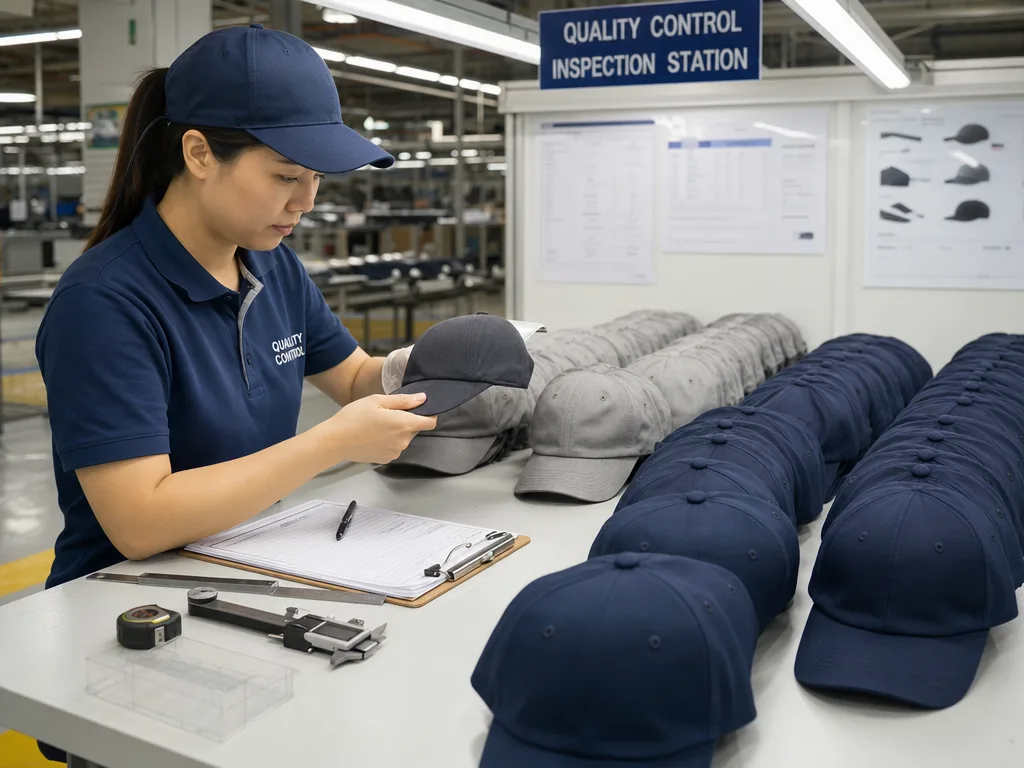
Cap Factory AQL Inspection Plan for Importers
Read article →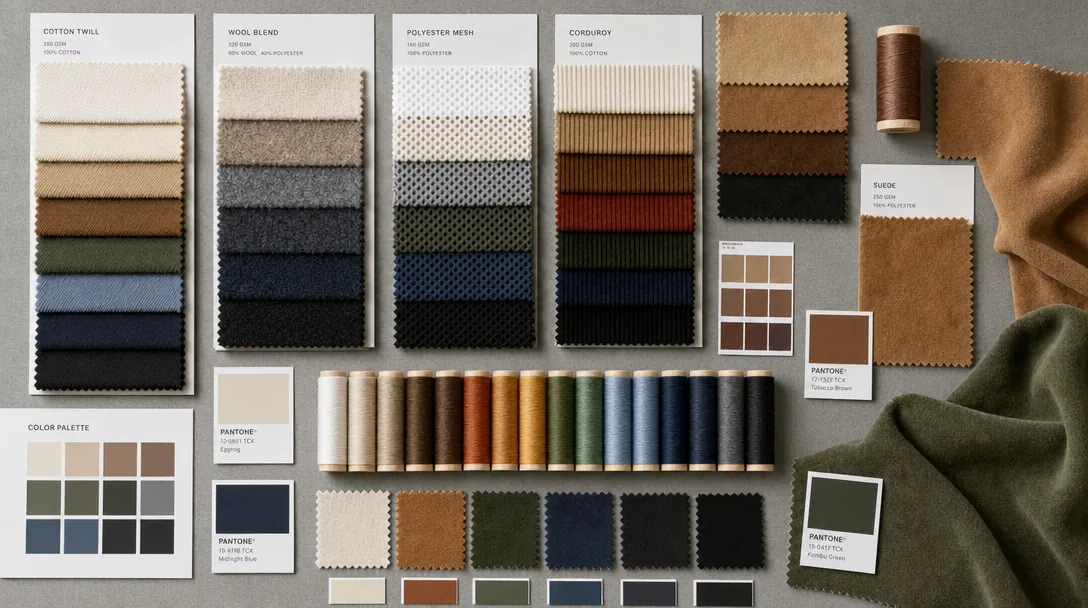
Bucket Hat Corduroy MOQ And Pricing Plan for Custom Hat Buyers
Read article →Sourcing custom hats does not have to be complicated. With the right manufacturing partner, clear specifications and a small upfront investment in sampling, you can launch a retail-quality product in 30 to 45 days.