
Blank Hats Decoration QC Checklist for Custom Hat Buyers - 2026 Buyer's Guide
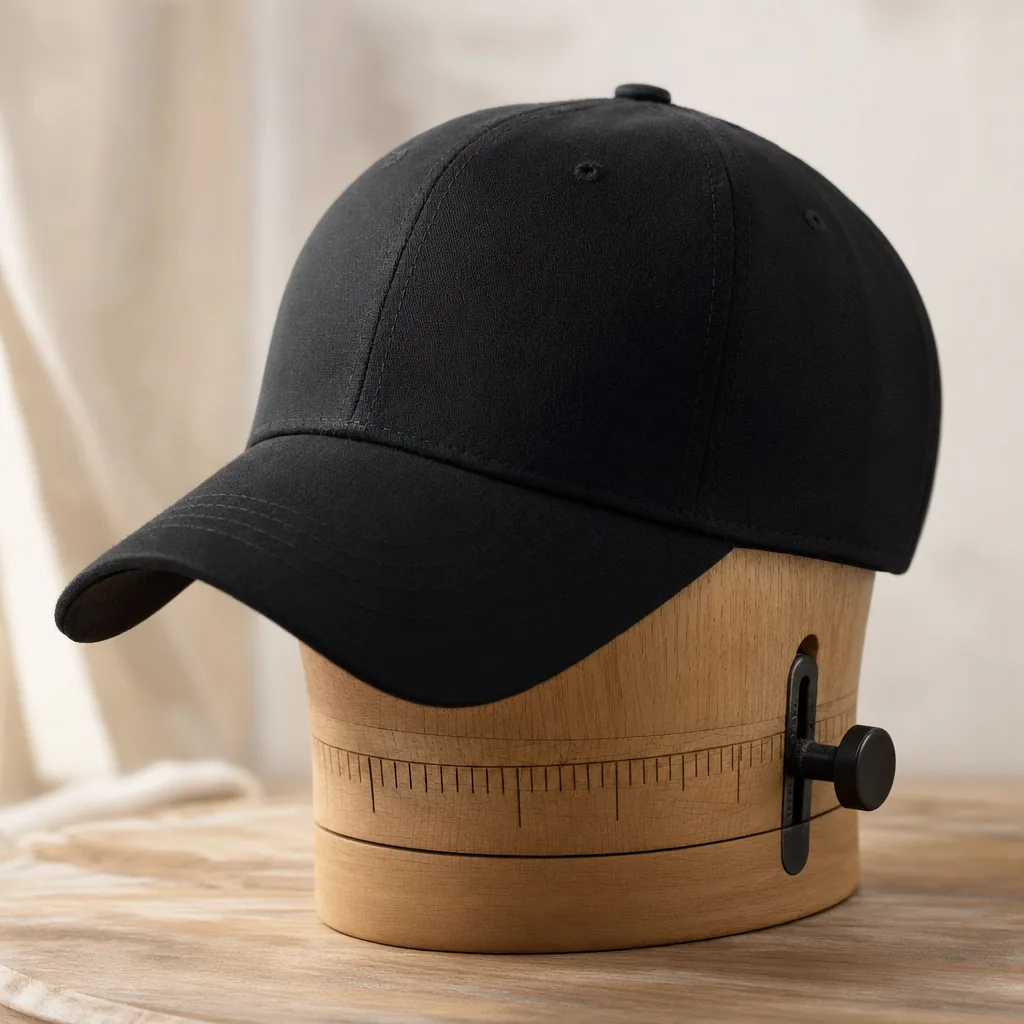
For brand owners, wholesalers and procurement teams entering the custom headwear category, blank hats decoration qc checklist for custom hat buyers - 2026 buyer's guide is one of the highest-leverage decisions you will make. Get it right and your unit economics, retail story and reorder cycle all improve. Get it wrong and you carry the cost for years.
Why blank hats decoration qc checklist needs a separate sourcing plan
Most decoration failures start with the blank cap, not the digitized file, which is exactly why a blank hats decoration qc checklist needs a separate sourcing plan. Buyers often approve silhouette, fabric hand, and FOB price, then learn in sampling that the front panel cannot physically support the approved logo. A 6-panel brushed cotton dad cap might sew a 6,500-stitch flat embroidery cleanly on a Tajima sample head, but a 5-panel foam trucker behaves differently: center-seam bulk, buckram stiffness, and 2% to 4% fabric stretch change underlay, pull compensation, and thread tension immediately. On the floor, the same artwork can drift 1.5 to 3.0 mm off center, tunnel on satin columns wider than 4 mm, or crush the crown if the blank was sourced without decoration constraints built in. The QC points also change by decoration method, so a generic cap spec is not enough. Embroidery depends on panel firmness, seam location, needle penetration, and backing choice; woven and PVC patches depend on edge thickness, stitch margin, adhesive stability, and crown curvature; heat transfers depend on coating chemistry, dwell time, and dye migration resistance at 160 to 170 C. A usable blank hats decoration qc checklist should lock crown height tolerance to +/-3 mm, visor arc consistency, buckram hardness by approved reference sample, fabric weight within +/-5% gsm, and shade continuity within Delta-E 1.5 to 2.0 before PO release. If you skip that gate, reject rates that should sit around 2% to 3% can climb past 8%, which usually erases any savings from buying the cheapest blank.
Material variation shows up brutally once decoration starts, especially on programs using washed or textured fabrics. Pigment-dyed twill, enzyme-washed canvas, suede-touch microfiber, and mesh-back workwear caps all move more from lot to lot than standard reactive-dyed polyester, both in shade and surface stability. For 3D puff embroidery, foam density, front-panel lamination strength, and mesh denier are as critical as Pantone TCX approval, because weak lamination creates ripples and low-density foam collapses after carton compression. A generic sourcing sheet will not tell you whether a 2.5 mm EVA-backed patch can sit flat on a curved crown, whether inside sublimation labels will ghost under a heat press, or whether sweatband seam placement will interfere with private-label seam tape or internal branding. Cost and lead time also change the moment decoration is treated as part of sourcing rather than post-purchase customization. A stock blank from Bangladesh or Vietnam might save $0.18 to $0.40 per cap FOB, but that advantage disappears fast if dye-lot instability exceeds Delta-E 2.0, if buckram cracks under Barudan or ZSK needles, or if panel skew pushes logos visibly off center. Our standard practice at CrownsForge is to split approvals into blank-cap QC, decoration strike-off, and post-decoration AQL 2.5 inspection, because each stage catches a different defect class. Add lab dips, embroidery sew-outs, patch molds, wash testing, and carton drop testing, and a program that looked like a 10-day replenishment can stretch to 25 to 40 days ex-factory. That is why a blank hats decoration qc checklist needs its own sourcing plan: it protects yield, compliance, and landed margin before volume starts.
Factory capability checks before quoting
A factory quote is only credible if the plant can run your decoration in-house without workarounds. On any serious blank hats decoration qc checklist, verify the machine mix first: Tajima, Barudan, or ZSK multi-head embroidery; heat-press capacity for TPU and silicone badges; and separate patch workflows for merrowed twill, laser-cut felt, woven labels, PVC, and leatherette. Ask for a recent sew-out on the same cap profile, not a flat swatch, because curved fronts expose push-pull distortion, thread spread, and buckram strike-through. A competent sample room should return a DST or EMB-based sew-out, patch strike-off, and Pantone TCX approval within 48-72 hours, with thread brand specified upfront—Madeira, Gunold, or similar—not “factory standard.” If they cannot quote by stitch count, patch size, backing type, and application method, they are guessing. That guess usually turns into 0.5-1.5% excess rejection from thread breaks, off-center placement, patch edge lift, or embroidery puckering on lightweight cotton twill.
Cap construction has to be checked before price, because decoration quality collapses fast on the wrong shell. Ask whether the factory regularly produces 5-panel foam truckers, 6-panel structured baseball caps, and unstructured washed dad hats, then request their control points: crown height tolerance within +/-2 mm, visor arc consistency, front panel stiffness, mesh alignment, and seam allowance stability. For foam-front truckers, 3-5 mm sponge density and front panel lamination matter; for brushed cotton twill, ask fabric weight in gsm and whether the buckram is woven or non-woven. A plant that mixes up snapback gauge, hook-and-loop spec, or sweatband composition will usually miss fit consistency across a 3,000-piece run. Our standard practice is to lock visor board type, closure spec, and logo placement from the sample stage because a 5 mm shift on a center-front patch is obvious the second cartons are opened.
The fastest way to screen out weak suppliers is to test process discipline, not promises. Ask for current sedex-audit-cap-supplier-guide.html">BSCI 2.0 or Sedex SMETA 4-Pillar audit reports, confirm they understand AQL 2.5 major / 4.0 minor inspection levels, and require lead times in working days with milestones for sampling, material booking, line loading, and final inspection. A reliable team should answer who owns quoting, digitizing, PP sample approval, and production follow-up, and the same contact should confirm carton marks, barcode labels, hangtags, and packing ratio in writing. Also ask how they control color: Pantone TCX reference, lab dip or trim card approval, and acceptable Delta-E tolerance if you are matching straps, patch borders, or underbrims across multiple material types. When replies drift for 48 hours, technical answers change, or sample photos avoid close-ups of stitch density and patch edges, that is not a communication issue; it is a factory control issue that will surface again at bulk production.
MOQ, pricing and sample approval
MOQ is the first real pricing control point. For stock blanks in 2026, most Chinese factories will quote 144 to 300 pcs per color/style for brushed cotton twill dad caps, 200 to 500 pcs for foam-front mesh truckers, and 300+ pcs for acrylic beanies if you want stable dye lots, closure consistency, and carton efficiency. Below that, the cap price stops reflecting sewing and starts reflecting waste: front-panel yield drops, mesh shade matching becomes messy, and mixed buckle or snapback assortments create dead stock. Once decoration is added, setup recovery matters more than shell cost. A single-location embroidery program can be workable at 300 pcs on a stock blank, but decorated truckers usually do not reach a clean FOB curve until 500 to 1,000 pcs. Real FOB China numbers for a stock 5-panel trucker are typically US$2.10 to US$3.40, then add US$0.18 to US$0.45 for flat embroidery, US$0.28 to US$0.60 for 3D puff, US$0.35 to US$0.90 for woven, TPU, or PVC patch application, and US$0.12 to US$0.40 for private-label trims such as woven labels, printed seam tape, or hangtags.
A useful blank hats decoration qc checklist must freeze all setup charges before PO release. Embroidery digitizing normally runs US$25 to US$80 per file depending on stitch count, 3D puff underlay, pull compensation, and whether the logo has fine satin borders or 3 mm text. That charge should buy a production-ready DST or EMB file proven on Tajima, Barudan, or ZSK heads, not a cosmetic art conversion. Screen print film for side-panel graphics typically adds US$20 to US$50 per color, while custom metal badge or buckle molds are more often US$80 to US$250. If the style uses rope, suede appliqué, felt patching, or fragile woven badges, get trim overage assumptions in writing; 3% to 5% extra material is normal, and without that agreement factories will either short trims or push surprise charges at packing.
PPS approval is where price, QC, and repeatability finally get locked. Do not sign off until Pantone references, logo size and placement tolerances, stitch density, patch edge finish, and packing method are all written into the approval sheet. Use Pantone Solid Coated for print and plated hardware targets, and Pantone FHI/TCX for dyed textile components. Embroidery thread can usually hold Delta-E 1.5 to 2.0 against the approved cone card; dyed cotton twill, heather jersey, or poly mesh is more realistically Delta-E 2.5 to 3.5 in bulk. For front embroidery on foam truckers, 0.35 to 0.45 mm stitch spacing is standard, but serif details, merrow-look borders, and lettering under 3 mm need separate density review or they will sink into foam and distort against the buckram. Packing approval belongs in the same checkpoint: 25 pcs per inner and 100 to 144 pcs per export carton is common, and cartons above 60 cm high materially increase crown compression. Standard timing is 3 to 7 days for blank sample pull, 7 to 12 days for decorated PPS, and 25 to 40 days for bulk after approval. Under AQL 2.5, a large share of avoidable claims still trace back to buyers who approved artwork but never approved the packing sample.
Quality inspection and shipping risk
A workable blank hats decoration qc checklist starts with defect classes and numeric tolerances, not vague language like "good workmanship." For decorated caps, I would hold major defects at AQL 2.5 but set critical defects to zero acceptance: wrong logo, wrong color, needle damage through visible panels, sharp metal burrs on buckles, mold, or mixed sizes in one carton. Put measurable limits in the PO and inspection SOP: embroidery placement within +/-2.0 mm from approved coordinates, patch skew no more than 1.5 mm, crown height within +/-3 mm, brim length within +/-2 mm, and panel symmetry checked against a hard acrylic template. Front-panel lean, uneven seam allowance, and visor twisting should be called out as majors because they ruin decoration even when the blank itself technically passes.
Color and decoration failures are where margin disappears fastest. If the cap uses washed cotton twill, pigment-dyed canvas, or heather poly, approve against a sealed pre-production sample under D65 lighting in a light box, with Pantone TCX reference only as a guide; on textured or brushed substrates, lab dips alone are not enough. A practical standard is Delta-E under 1.5 for flat dyed fabric and under 2.0 for washed lots, then confirm no obvious shade banding across one carton. For embroidery, inspect for bobbin show-through, puckering, loose jump trims, thread contamination, and registration drift over 1.5 mm on small text under 6 mm height. Tajima, Barudan, and ZSK heads can all sew clean logos, but bad digitizing, wrong backing weight, or loose top tension will still produce pull and edge wobble.
Shipping risk usually comes from carton discipline and document mismatch, not transit itself. Every master carton should match the packing list exactly for style code, color, quantity, PO number, country of origin, gross weight, and net weight; if the warehouse scans 24 cartons and the ASN says 23, the shipment can sit for days. Use carton drop and tape checks on export packs, especially for DDP shipments going through parcel injection or final-mile hubs. FOB is cleaner when the buyer controls booking and customs, while DDP only works if duty, VAT, broker fee, and delivery surcharge are fixed before bulk starts. Our standard practice is to archive the approved sample, stitch count, digitizing file version, carton marks, and defect photos under one style code, because most repeat claims trace back to the same machine head, operator, or packing station and should trigger corrective action before the vessel cutoff.
Buyer checklist for the next RFQ
The fastest way to get a quote you can actually issue a PO against is to send the full build sheet with the decoration package, not a mood board. For a usable blank hats decoration qc checklist, define the hat construction down to parts that change cost and lead time: 5-panel foam trucker or 6-panel structured twill, crown height in cm, buckram yes/no, visor pre-curve, closure type, shell fabric composition, mesh denier, foam thickness, sweatband material, seam tape color, and units per colorway and size split. On blank hats, small omissions move pricing quickly: 3 mm versus 5 mm foam, 75D versus 120D mesh, a black underbill instead of self-fabric, or cotton twill at 240 gsm instead of 280 gsm can change cost by $0.20 to $0.80 per piece and add 3 to 7 days if the factory has to re-source trims. Decoration specs should be equally exact. Call out every logo position, finished size in mm, embroidery coverage or stitch count if a file already exists, patch construction method, backing, border finish, and Pantone reference system that matches the substrate: Pantone Solid Coated for PVC or screen print, Pantone FHI/TCX for dyed textiles. If you enforce color, say so in numbers: Delta-E under 2.0 on dyed fabric and under 3.0 on printed patches is a realistic commercial target. For artwork, send AI, EPS, or layered PDF plus any native .DST, .EMB, or .OFM files. Tajima, Barudan, and ZSK heads all run differently on curved cap fronts, so a legacy digitized file still needs review for underlay, density, pull compensation, and center seam distortion.
Lock the acceptance standard before sampling starts, or your sample approval becomes a moving target. A practical blank hats decoration qc checklist should state the inspection method in one line: final random inspection to ANSI/ASQ Z1.4, General Inspection Level II, AQL 2.5 major and 4.0 minor. Then define the defects that always cause arguments on caps: logo placement tolerance of plus/minus 2 mm, visor symmetry within 3 mm, crown panel mismatch, seam slippage, exposed topstitch backtracking, thread trimming, puckering around embroidery, patch edge lifting, and carton condition. If packaging is customer-facing, specify whether crushed inserts, incorrect barcode labels, or polybag warnings count as major or minor defects; otherwise suppliers will classify them the cheapest way possible. The commercial and compliance block belongs in the RFQ, not after sample approval. State target ex-factory date, Incoterm, destination port or ZIP code, master carton limits, and whether pricing should be based on FOB Ningbo, FOB Shanghai, DDP, or air express. Carton control matters more than buyers think: a 60 x 45 x 45 cm carton at over 12 kg gross can trigger chargebacks, courier surcharges, or pallet inefficiency. If the program requires BSCI 2.0, Sedex SMETA 4-Pillar, CPSIA tracking labels, REACH, California Prop 65, azo-free dyes, nickel restrictions, or a documented needle policy, list those requirements up front because they affect factory selection, lab testing, and booking schedules from day one. At CrownsForge, we also ask buyers to define approval gates clearly: strike-off or digital sew-out, pre-production sample, top-of-production photos, in-line inspection, and final random inspection before balance payment.
Working with CrownsForge
The biggest mistake buyers make is treating decoration QC as something that starts after sewing. In a blank hats decoration qc checklist, the control point should begin at pre-production with a sealed sample, stitch map, fabric card, trim approval, and PO line item matching, not a vague “gold sample” buried in someone’s inbox. For wholesale blank hats and bulk custom trucker hats, we lock one digital spec and one physical counter-sample that fixes crown height tolerance, visor curvature, sweatband build, and logo placement to within plus or minus 2 mm from the center front seam. Embroidery files must be tested on the actual shell fabric before bulk, because 600D polyester, brushed cotton twill, and garment-washed chino behave differently under needle. On Tajima and Barudan heads, pull compensation, underlay density, and thread coverage are checked before release, especially on foam-front truckers where too much density will crush the shape. If Pantone TCX matching is required, we approve under D65 light and hold Delta-E to the contract limit on dyed lots, not by eyeing a screen mockup.
Sampling only matters if bulk production follows the same controls. Once decoration starts, operators should run first-off approval and then in-line checks every 50 to 100 pieces, depending on whether the job is flat embroidery, 3D puff, woven patch stitch-down, heat-transfer label, or direct screen print on the front panel. For custom bulk trucker hats, the usual defect stack is mesh distortion, front-panel hoop burn, crooked snapback alignment, loose thread trims, seam grin, off-center top button, visor sandwich mismatch, and carton assortment errors, so those items belong on the blank hats decoration qc checklist by name. On ZSK heads, 3D puff logos for country hats for men usually need slower speed and wider satin columns to keep the edge from collapsing. If digitizing is wrong, final inspection can only reject it, not rescue it. Our standard practice is AQL 2.5 for major defects and 4.0 for minor unless the buyer contract tightens that, with needle logs, metal-contamination checks, and rework segregation tracked by carton number.
Export coordination is where otherwise good orders get damaged or delayed. A competent custom hat manufacturer should lock QC release, packing spec, and shipping marks before booking space, because decoration-heavy caps cannot be packed like plain blanks. Carton drop and compression checks should be part of release, with moisture control set by route and season: polybag venting or desiccant for sea freight that may sit 25 to 35 days, especially when embroidered fronts and PU patches are involved. For U.S. and EU shipments, carton labels, country-of-origin marking, and fiber content declarations must match the approved pack list so the warehouse does not relabel mixed SKUs after landing. Final inspection should also verify count reconciliation, HS code consistency, and photo records of pallet condition before container loading. That handoff between factory QC and freight paperwork is what keeps decoration from failing after the hats have already cleared the sewing floor.
Frequently Asked Questions
What logo decoration techniques do you offer?
3D puff embroidery, flat embroidery, woven patch, leather patch, PVC patch, screen printing, sublimation, applique and laser etching, all in-house with no subcontracting.
Do you support sustainability certifications?
Yes. We work with GOTS organic cotton, GRS-certified recycled polyester, OEKO-TEX Standard 100 fabrics, and are BSCI and Sedex audited. Certification documentation can be provided per order.
What is the minimum order quantity (MOQ) for custom hats?
Our standard MOQ is 100 pieces per design and color, with sampling available from 1 piece. For complex multi-color logos or premium fabric upgrades, the MOQ can be lowered with a small per-piece surcharge.
How long does production take?
Sampling takes 7 to 12 days. Bulk production runs 20 to 30 days depending on quantity, fabric availability and decoration complexity. Inspection and packing adds another 3 to 5 days before shipment.
Can I order a sample before bulk production?
Yes. We strongly recommend approving a pre-production sample before mass production. Samples are charged at 35 to 60 USD each plus express shipping, fully refundable against confirmed bulk orders over 500 pieces.
What should I know about blank trucker cap wholesale bulk?
When evaluating blank trucker cap wholesale bulk, the key considerations are construction quality, decoration capability, MOQ flexibility and lead time. Explain the buyer intent behind blank hats decoration qc checklist, when it differs from generic hat sourcing, and what decisions affect cost, lead time and compliance. Describe how CrownsForge manages blank hats decoration qc checklist programs with sampling, decoration, QC and export coordination.
How does ordering custom embroidered trucker hat work?
When evaluating custom embroidered trucker hat, the key considerations are construction quality, decoration capability, MOQ flexibility and lead time. Explain the buyer intent behind blank hats decoration qc checklist, when it differs from generic hat sourcing, and what decisions affect cost, lead time and compliance. Cover embroidery, patch, fabric, panel construction, closure options, sample room capability, audit readiness and communication checks.
What should I know about custom rope hat wholesale bulk?
When evaluating custom rope hat wholesale bulk, the key considerations are construction quality, decoration capability, MOQ flexibility and lead time. Explain the buyer intent behind blank hats decoration qc checklist, when it differs from generic hat sourcing, and what decisions affect cost, lead time and compliance. Cover embroidery, patch, fabric, panel construction, closure options, sample room capability, audit readiness and communication checks.
What should I know about custom trucker hats bulk?
When evaluating custom trucker hats bulk, the key considerations are construction quality, decoration capability, MOQ flexibility and lead time. Explain the buyer intent behind blank hats decoration qc checklist, when it differs from generic hat sourcing, and what decisions affect cost, lead time and compliance. Describe how CrownsForge manages blank hats decoration qc checklist programs with sampling, decoration, QC and export coordination.
What makes a hat high quality?
High-quality hats start with high-quality materials. If it's wool, it should feel dense but soft, not thin or scratchy. If it's felt, it should be smooth and structured, not flimsy or rough. Cheap hats often use low-grade blends that feel stiff or papery—and those won't hold up with time, sweat, or sun.
Ready to start your custom hat project?
Send us your tech-pack, sketch or even just an inspiration photo. We will respond with a detailed quotation and digital mock-up within 24 hours.
Request a free quoteRelated guides
Acrylic Beanie: Properties, Costs and How to Spec It Right
Read article →
Custom Hat Design: The 2026 Sourcing & Manufacturing Playbook
Read article →
Bucket Hat Corduroy Retail Packaging Guide for Custom Hat Buyers
Read article →We hope this guide demystifies blank hats decoration qc checklist for custom hat buyers - 2026 buyer's guide and helps you move forward with confidence. If you have questions specific to your project, our English-speaking sales engineers are one message away.