
10 Questions to Ask a Cap Manufacturer on Your First Call - 2026 Buyer's Guide

10 Questions to Ask a Cap Manufacturer on Your First Call - 2026 Buyer's Guide is one of the most-asked questions we receive from international buyers, and for good reason. With dozens of factories competing for your order and an alphabet soup of technical terms in every supplier quote, even experienced importers can feel lost. This guide consolidates what we have learned producing custom hats for clients in 40+ countries.
Question 1: What's the actual lead time from artwork approval to shipment?
The quickest way to test a supplier on the first call is to ask for lead time by production stage, not a lazy “about 30 days.” A factory that really runs caps every day should answer in operational terms: 2–4 days for embroidery digitizing, paper pattern confirmation, and strike-off; 5–7 days for a pre-production sample if the fabric and trims are in stock; 15–22 days for bulk cutting, sewing, embroidery, eyelet setting, finishing, and packing; then 2–4 days for inline QC, final inspection at AQL 2.5, carton drop test, and FOB booking. For a standard 3,000-piece 6-panel baseball cap in 12 oz cotton twill, artwork-approved to FOB is usually 28–37 days. If they cannot tell you where time is spent between PO release, material booking, WIP, and ex-factory handover, you are probably hearing a sales estimate rather than a real line-loading or ERP-based production plan.
Lead time changes fast once you add complexity. A basic cap with flat embroidery on Tajima or Barudan heads is straightforward; a 5-panel rope cap in taslon or 210D nylon with 3D puff embroidery, applique, woven labels, printed seam tape, and a custom metal clasp is not. Add 3–6 days if body fabric needs a lab dip to a Pantone TCX standard within Delta-E 1.5, and another 4–7 days for molded silicone patches, sublimated underbrims, or imported buckle hardware. Timing also gets worse in predictable windows: the 6 weeks before Lunar New Year and the August through October promotional peak often stretch disciplined factories beyond 40 days because embroidery capacity, sewing lines, and finishing tables are already committed. Among the smartest questions for hat manufacturer screening, ask for the last three comparable export orders and request four dates only: sample approval, bulk start, final AQL pass, and FOB shipment. That answer usually tells you more than any promise on a sales sheet.
Question 2: Which embroidery machines do you run?
Machine transparency is one of the fastest credibility checks on a first call. A serious cap factory will name the platform and setup immediately: Tajima TMEZ-KC or TFMX-C1501, Barudan BEKY-S1501CAII, ZSK Sprint 7 for sampling, and sometimes SWF compact heads for overflow or less critical runs. The useful follow-up is not just brand, but configuration: how many cap frames, how many heads, and which machines are reserved for bulk versus development. A practical answer is 6 to 10 multi-head units, often 12-head or 15-head, for front logos and side hits, plus 1 or 2 single-head machines for samples, strike-offs, repairs, and difficult placements on structured 6-panel crowns. If the answer is “we have enough machines,” keep pushing. Among the best questions for hat manufacturer qualification, this one exposes whether embroidery is actually controlled in-house or quietly pushed to subcontractors. Once caps leave the building, you lose visibility on thread brand, cap-frame tension, sew-out approval, and rework turnaround.
Head count alone means very little if the factory cannot explain how those heads are loaded. A 15-head Tajima or Barudan line can run 500 to 5,000 caps efficiently when the logo is a standard flat front embroidery, but output drops fast when the file includes 3D puff, metallic thread, applique, or dense satin fills above roughly 10,000 to 12,000 stitches. On structured caps, puff height, underlay, pull compensation, and registration are operator-sensitive; one weak operator can turn a clean digitized file into uneven top-line coverage, crown distortion, or foam exposure. Ask what software they digitize on—Wilcom EmbroideryStudio is still the benchmark—what thread they run, typically Madeira Classic 40 or Gunold Poly 40, and how they approve strike-offs before bulk. A realistic benchmark is 120 heads total from eight 15-head machines, with actual output around 2,500 to 4,500 caps per day depending on stitch count, color changes, trims, and rehooping. If they cannot tie machine count to daily capacity, shift staffing, and ex-factory dates, the risk is not just slower lead time; it is inconsistent quality and remake exposure.
Question 3: Can I do a video factory tour right now?
Ask for a live video walk-through on the first call, not a polished showroom clip sent three days later. If a supplier can open WeChat, WhatsApp, or Zoom the same day, or at least book a slot within 24 to 48 hours, that usually means the factory is actually running and management is comfortable showing real production. Among practical questions for hat manufacturer screening, this is one of the fastest ways to separate a real workshop from a trading office. A genuine cap floor in Zhejiang or Guangdong should look active and imperfect: WIP bundles tied by PO, cut panels stacked by colorway, operators at single-needle and post-bed machines, noise from eyelet punching and visor shaping, and cartons staged near final packing. One scheduling miss proves nothing; repeated lines like “production is paused,” “the boss is away,” or “we can only send photos” should put you on alert. The strongest tour is one continuous route from incoming materials to packing, with no suspicious jump cuts. Ask to see actual bulk fabric, not a swatch card: for example, 100% cotton twill at 260 to 320 gsm, washed chino twill around 220 gsm, or brushed polyester at 180 to 220 gsm. Then follow the sequence through panel cutting, crown sewing, sweatband attaching, visor insertion, embroidery, trimming, final inspection, and carton sealing. On embroidery, have them pan across running Tajima, Barudan, or ZSK heads and show a live DST file on screen, not one idle sample machine. In QC, look for sealed approval samples, measurement boards, defect tagging, shade segregation by dye lot, and whether the team can explain AQL 2.5 without fumbling.
Use the tour to test whether capacity claims survive basic arithmetic. If a supplier says they produce 300,000 caps per month but you only see 20 sewing operators, two 6-head Tajima machines, and one compact packing line, that number is probably padded unless they openly disclose subcontracting. Ask the camera operator to zoom in on work orders, date-marked production boards, thread racks with Madeira or Gunold cones, fabric rolls carrying mill labels, and rework bins. A credible factory should also be able to show needle change logs, broken-needle control, metal detection when required by the buyer, and carton drop-test standards for export packing. Those details are hard to fake on a live call. Treat the video tour as evidence, not a sales performance. Ask for close-ups of visor molds, inside taping, sweatband stitching, seam cleanliness, and any Pantone TCX references or lab-dip approvals tied to current bulk orders. If they claim color control, they should understand Delta-E tolerance and lot-to-lot shade variation, even when dyeing is outsourced to a mill. If they claim compliance, ask which audit the site holds—sedex-audit-cap-supplier-guide.html">BSCI 2.0, Sedex SMETA 4-Pillar, or a brand social audit—and confirm the factory on camera matches the entity name on the report. That is why this remains one of the most useful questions for hat manufacturer qualification: in 15 minutes, you can usually tell whether you are looking at a real production partner, a broker, or a workshop temporarily staged for export buyers.
Question 4: Which compliance audits do you currently hold and when do they expire?
Ask for the audit framework, audit firm, audited site name, grade, report ID, and expiry date in one answer. A serious cap factory should be able to answer with specifics: “amfori BSCI 2.0, audited by Intertek at the Yiwu sewing and embroidery site, overall rating C, report valid through October 2026; Sedex SMETA 4-Pillar, audited by SGS, completed May 2026, next review due May 2027.” Anything softer—“we’re compliant,” “we passed last year,” “renewal is in process”—is not supplier data. One of the most useful questions for hat manufacturer qualification on a first call is whether they can state those details immediately or send the summary page within 24 hours. If they cannot, the usual problem is not English; it is weak document control, unclear site coverage, or a factory that hides behind a trading company instead of owning the records.
BSCI and SMETA are not interchangeable, and buyers who treat them as synonyms usually find out during onboarding. amfori BSCI 2.0 is heavily weighted toward working hours, wages, grievance channels, health and safety, and management systems. Sedex SMETA 4-Pillar covers labor and safety too, but also adds environmental performance and business ethics, which matters for retailer compliance, licensed sports programs, and corporate promotional accounts. The follow-up that actually protects you is simple: confirm the audited address is the real production site where Tajima or Barudan embroidery heads run, cut panels are stitched, eyelets are set, and export cartons are packed—not just the registered office. A valid report linked to the wrong address will not help when bulk orders are shifted to an unaudited subcontract workshop.
Treat an expired audit as an active risk, not an administrative delay. If a supplier says the certificate lapsed 90 days ago but renewal is “already booked,” that is still a compliance gap until the new report is issued and visible in the amfori or Sedex dashboard. The practical check is to match the legal entity and production address to the purchase order, then review corrective-action status if the grade was not top-tier. A BSCI C rating can still be workable; an unresolved finding on fire exits, PPE issuance, time records, or wage calculation is a much bigger warning sign. Compliance failures do not stay on paper. They surface later as failed retailer onboarding, delayed final inspections, or frozen shipments on orders worth $8,000 to $80,000 because the factory cannot clear an unannounced customer audit.
Question 5: What's your MOQ and how does it scale?
If a factory can’t explain MOQ in one sentence, expect the same fog around sampling, lead times, and final billing. On a first call, the useful answer is usually: 100 pcs per style-colorway-deco layout for bulk, with 48-50 pcs possible as a pilot run if you accept a 15% to 30% uplift. That premium covers fixed cost that does not scale down gracefully—embroidery digitizing at $25 to $60 per file, cap block or pattern setup, fabric loss during spreading, visor and sweatband trim minimums, carton purchase minimums, and line changeover on cutting, sewing, and finishing. One of the smartest questions for hat manufacturer qualification is how MOQ is defined: per SKU, per Pantone TCX colorway, per fabric, or per logo placement. A 100-piece order split into four crown colors and two embroidery files is operationally closer to several micro-runs, not one efficient production order. Push for the volume ladder immediately: 100, 300, 500, 1,000, and 5,000 pcs should come back without hesitation. For a standard 6-panel cap in 108x56 brushed cotton twill, around 260-280 gsm, with flat embroidery run on Tajima or Barudan heads, a realistic FOB China range is about $4.80-$6.20 at 100 pcs, $3.70-$4.90 at 300, and $2.80-$3.90 at 1,000, assuming one embroidery location, standard woven label, swing tag, inner tape, and export carton. The cost drop is mechanical, not magical: better marker efficiency in cutting, trims purchased against supplier minimums, less downtime per unit, and QC overhead such as AQL 2.5 spread across more pieces. If the answer is only “MOQ is flexible,” treat that as a warning sign; it often means later substitutions, subcontracting, or a quiet re-cost once artwork and timelines get tighter.
MOQs also change sharply by construction, and that is where buyers get caught. A washed dad cap in cotton twill can often run at 100 pcs, but a wool-blend snapback with 3D embroidery, rope, custom metal buckle, and printed seam tape may need 200-300 pcs per color because each added component carries its own supplier minimum. Specialty fabrics make the math stricter: 600D recycled polyester, 8 wale corduroy, nylon taslon, or camouflage yardage often must be bought by full roll, and custom-dyed fabric to a Pantone match usually needs mill minimums well above the cap factory’s sewing MOQ. If a supplier says they can do every style at the same minimum, they are either simplifying the truth or planning to absorb risk somewhere you will pay for later. Ask one more thing: whether repeat orders can use a lower MOQ if the same shell fabric, closure, and embroidery file are already approved. A well-run factory can sometimes drop a repeat to 50-75 pcs per colorway because the digitizing file, fit comments, and trim sourcing are already locked, and shade control can be checked against the previous bulk using a Delta-E tolerance rather than starting from zero. That is a far better answer than a vague promise of flexibility. CrownsForge’s standard practice is to separate MOQ by style, fabric, and decoration method, because flat embroidery, patches, sublimated panels, and silicone heat transfers each create different setup cost and different failure risk on the line.
Question 6: What's your sample fee policy?
Sample fees expose whether a factory actually knows its cap cost structure. For a standard 6-panel baseball cap made in China—240-260 gsm brushed cotton twill, buckram front, PE visor board, woven main label, standard sweatband, plastic snapback, and one front flat embroidery—a realistic development sample fee is usually $50-$80. That price should include pattern confirmation, one embroidery digitizing file, fabric and trim picking, cutting, sewing, shaping, finishing, and an internal workmanship check. Once you add 3D puff embroidery, sublimated underbill, woven patch application, metal clasp closure, contrast taping, or technical shells like recycled 70D ripstop or 8 wale washed corduroy, the sample fee typically rises to $90-$150 because setup time increases across sewing, embroidery, and trimming. Among the most practical questions for hat manufacturer vetting is this: is the sample charge refundable, and against what order volume? A credible answer is a refund or credit at 300-500 pieces per style, sometimes 1,000 pieces if the cap uses custom-molded trims or multiple decoration techniques.
Be skeptical of factories offering “free samples” on a first inquiry. A real pre-production sample consumes paid labor on the merchandiser, pattern maker, cutter, sewing line, embroidery operator, and QC side. The logo file is usually tested on Tajima, Barudan, or ZSK heads; the cap body still needs measuring for crown height, visor width, and logo placement tolerance; and the finished unit should be checked to an internal standard that aligns with bulk inspection, often AQL 2.5. If a supplier waives all sampling cost without conditions, they usually recover it through inflated FOB pricing, downgraded trims, or by sending an archive sample that only approximates your spec. The better move is to ask for a written sample policy covering lead time, revision count, courier terms, Pantone TCX or coated color reference, and remake liability if the sample misses approved specs—for example, embroidery placement drifting more than 3 mm or color variance exceeding Delta-E 1.5. If sampling terms are vague, bulk execution usually is too.
Question 7: What payment terms do you offer?
Payment terms tell you more about a factory’s financial discipline than almost any factory tour photo, so they should sit near the top of your questions for hat manufacturer screening. For most custom caps shipped FOB Ningbo or FOB Shanghai, the practical baseline is 30% deposit and 70% balance against the B/L copy. That first 30% is not arbitrary; it usually funds dyed fabric booking, Pantone-matched trims, woven labels, metal buckle hardware, sweatband tape, polybags, and embroidery digitizing before bulk sewing starts. On a 1,000-piece order, that may represent only $1,200 to $2,500 in actual cash exposure, depending on whether you are using stock 260 gsm cotton twill, 300D heather polyester, or custom yarn-dyed plaid. If a supplier asks for 50% to 70% upfront, press for a precise reason: custom fabric MOQ, licensed packaging, or a low-volume buy from a domestic wholesaler are plausible. If they want 100% prepayment for a repeat style in standard stock fabric, that is usually a cash-flow problem, not a production requirement.
The trigger points matter as much as the percentages. “70% against B/L copy” sounds standard, but you still need to confirm who gets paid, when, and against which documents: a mainland China company account, a Hong Kong trading company, or Alibaba Trade Assurance. That choice changes both risk and cost. Trade Assurance commonly adds about 2% to 4% to the landed cost, but for smaller buyers it can be worth it because the platform records approved artwork, carton count, ship date, and claim evidence if the order misses spec. A disciplined cap factory should be able to state the sequence without hesitation: deposit releases fabric and trim purchasing, PPS approval freezes the tech pack, bulk starts after logo placement and color approval, final inspection runs to AQL 2.5, then shipment books after balance clearance. Terms should improve with history. After three to five clean orders, many stable buyers can negotiate 20/80, net-15, or even net-30 on repeat programs. If the factory refuses any movement after proven volume and low claim rates, pay attention. That usually signals weak credit, thin margins, or unstable upstream financing.
Question 8: Who is my project manager and how do I reach them?
The safest time to identify your real owner is before sampling moves into bulk, because once PO details hit pattern making, digitizing, and cutting, a vague contact chain gets expensive fast. Ask for the project manager’s full name, title, direct email, WhatsApp or WeChat, and working hours in China Standard Time (GMT+8), then push past the generic “our team handles it” answer. You need to know who controls the tech pack, who updates the BOM after every comment round, who approves Pantone TCX or Pantone Solid Coated references, who signs off embroidery strike-offs, and who commits to the ex-factory date. Among the most practical questions for hat manufacturer screening, this one shows whether the supplier runs on named accountability or loose handoffs. On caps, loose ownership usually surfaces later as the wrong visor sandwich color, substituted labels, crown height drift, or a fabric handfeel that no longer matches the approved sample. Response speed is measurable, and buyers should treat it that way. For development or active production, a credible weekday reply window is usually 4 to 12 working hours; anything slower needs a backup contact and an escalation path. More important, the project manager should speak directly with sampling, pattern making, embroidery, sewing, finishing, and QC instead of relaying every question through sales. A competent manager sends factory-facing updates without being chased: revised spec sheets, WIP photos, stitch-count notes from Tajima, Barudan, or ZSK files, packing approvals, and inline or final inspection feedback against AQL 2.5. If you ask to raise crown height by 5 mm, reduce satin stitch density, and hold a sweatband color to Pantone 19-0303 TCX within Delta-E 1.5, the right manager can convert that into instructions the floor executes correctly the first time.
The worst failures happen when your contact has no authority on the workshop side. That is when revision notes get distorted: a 3D puff embroidery correction never reaches digitizing, a brim fabric change is approved verbally but not revised in the BOM, or a pattern fix is delayed until after cutting, when waste and rework spike. Ask who approves the pre-production sample, who releases the PO to production, who updates the master spec after each revision, and who can stop sewing if a mismatch is found. Those answers matter more than polished sales language because they reveal whether the factory has an actual control system. In my experience, if the same person cannot explain the handoff from sample approval to bulk cutting, they probably are not managing the order tightly enough. Backup coverage matters just as much as the primary contact, especially when approvals move across time zones and standard cap lead times are only 25 to 35 days after PP approval. A reliable factory should name one primary and one secondary owner, both with access to the same tech pack, measurement sheet, BOM, trim approvals, and shipping file. Our standard practice is exactly that, because custom headwear programs can stall over something as small as carton marks, woven label placement, or swing tag barcode confirmation. If a supplier cannot clearly name who owns communication, approval control, and escalation, keep digging. For serious buyers, that is one of the best questions for hat manufacturer qualification because it shows how the order will run under pressure, not how smooth the sales call sounds.
Question 9: What's your defect tolerance / AQL policy?
If a factory will not commit in writing to `ANSI/ASQ Z1.4` or `ISO 2859-1`, treat that as a control failure, not a translation issue. On a first call, the answer should be exact: `General Inspection Level II`, `AQL 2.5` for major defects, `AQL 4.0` for minor defects, and zero tolerance for critical defects. For a 1,200-piece cap order, that typically means a sample size of 80 units under normal inspection; if the factory cannot explain the sampling code letter, acceptance number, rejection number, and who has release authority when the lot fails, they do not have a real QC system. Among the most revealing questions for hat manufacturer screening, this one exposes very quickly whether the supplier runs to a documented standard or to whatever the merchandiser thinks is acceptable that day. Defect classes also need to match cap reality, not generic garment language. Critical defects include broken needle fragments in product, mildew, sharp burrs on metal buckles, and incorrect legal or brand labeling. Major defects are wrong fabric, off-center front embroidery, distorted crown profile, incorrect panel construction, or closure hardware that fails function tests. Minor defects are loose threads, light soiling that can be cleaned, slight visor waviness, or small stitch irregularities outside the primary logo area. A competent factory should have these definitions on its QC sheet before production starts, because once goods are packed, vague language like “looks acceptable” turns into chargebacks, rework fights, and delayed vessel bookings.
The AQL number by itself is not enough; the inspection method behind it tells you whether a factory can hold consistency on both a 1,200-piece launch and a 50,000-piece replenishment program. A solid cap factory usually runs a finished-goods checklist with 25 to 35 points: embroidery placement, stitch density on `Tajima` or `Barudan` heads, panel seam alignment, crown height, visor symmetry, top button centering, sweatband join, snapback engagement, buckle plating, carton markings, size assortment ratio, and fabric shade against approved `Pantone TCX` standards. For structured caps, practical tolerances should be written down: embroidery position within `±2 mm`, finished circumference within `±0.5 cm`, visor length within `±3 mm`, and color variation held around `Delta-E 1.5-2.0` for repeat dye lots in cotton twill or brushed polyester. If those tolerances are missing from the QC form, expect disputes later over what “within spec” was supposed to mean. Third-party inspection should be routine, not a concession. Serious exporters normally accept final random inspection by `SGS`, `Intertek`, `Bureau Veritas`, or `QIMA` once 100 percent of units are finished and at least 80 percent are packed. The buyer pays the inspection fee; the factory should provide production records, sealed cartons, and a clean sampling area without adding an access charge. Ask for a recent report showing measured points, defect photos, counts by `critical/major/minor`, and disposition notes such as rework, sort-out, or lot rejection. That report tells you more than any factory deck because it shows how the team behaves when the defect count crosses the acceptance number and the shipment is at risk.
Question 10: Can you give me 3 reference customers I can contact?
If a factory cannot produce three usable references before you wire a deposit, treat that as a cap supplier qualification problem, not a minor admin delay. A solid answer on a first call hat factory conversation is: yes, we can provide them within 24 to 48 hours after getting customer permission. That timeline is realistic because no serious supplier should hand out buyer contacts without consent, especially for private-label programs, licensed sports goods, or retailers with strict vendor compliance. What matters is whether they can match you to the right segment. If you run a streetwear label, ask for streetwear references with similar order sizes, decoration types, and launch cadence—not a random promo distributor buying 5,000 basic brushed cotton dad caps once a year.
The most useful references are operationally similar to your business, because they answer the real vetting cap supplier questions: Did bulk match the approved sample within a Delta-E tolerance the brand could accept? Were embroidery files run cleanly on Tajima or Barudan heads without excessive thread trims, puckering, or registration drift? Did the supplier hold AQL 2.5 on final inspection, communicate on late fabric arrivals, and ship against the promised FOB date? When we screen references internally, we look for overlap in product type—say 380 gsm wool-blend snapbacks, 210 gsm cotton twill 5-panels, or pigment-washed unstructured caps—because a factory that performs well on commodity promo caps can still struggle on higher-spec fashion headwear.
"Confidential" is acceptable on the very first interview hat manufacturer call, but only as a temporary answer. If that excuse is still on the table when you are reviewing quotations, tech packs, Pantone TCX matching, or pre-production samples, the risk goes up fast. A credible custom hat manufacturer should be able to resolve confidentiality by offering either approved live contacts, or at minimum anonymized case details with order volume, markets served, and scope of work, then convert that into direct references before you place a real order. One factual note from our standard practice at CrownsForge: reference approval usually moves faster when the buyer asks for comparable accounts by channel, annual volume, and decoration method instead of just saying, "Send me any three customers."
Frequently Asked Questions
Can I order a sample before bulk production?
Yes. We strongly recommend approving a pre-production sample before mass production. Samples are charged at 35 to 60 USD each plus express shipping, fully refundable against confirmed bulk orders over 500 pieces.
Do you support sustainability certifications?
Yes. We work with GOTS organic cotton, GRS-certified recycled polyester, OEKO-TEX Standard 100 fabrics, and are BSCI and Sedex audited. Certification documentation can be provided per order.
How long does production take?
Sampling takes 7 to 12 days. Bulk production runs 20 to 30 days depending on quantity, fabric availability and decoration complexity. Inspection and packing adds another 3 to 5 days before shipment.
What file format should I send for my logo?
Vector files (AI, EPS, PDF) are ideal. High-resolution PNG or JPG at 300 dpi on transparent background works as a fallback. Provide Pantone color references for accurate reproduction.
Which shipping methods do you support?
We support FOB, CIF and DDP shipping. Air express for samples and small orders, sea LCL for 100 to 500 pieces, sea FCL for 5,000+ pieces. Door-to-door DDP available for US, EU, UK, Canada and Australia.
What should buyers know about cotton twill army cap kangol?
When evaluating cotton twill army cap kangol, the key considerations are construction quality, decoration capability, MOQ flexibility and lead time. Good answer: '7-10 days sampling, 22-28 days bulk, 3-5 days inspection and packing. Total order-to-FOB 35-45 days.' Vague answer ('around a month'), or impossibly short ('2 weeks total'), means the factory either doesn't track it or is lying to win the order. Good answer names brands: Tajima, SWF, ZSK, Barudan. Number of heads (15-head machines = high-volume; single-head =…
How does ordering best custom baseball cap work?
When evaluating best custom baseball cap, the key considerations are construction quality, decoration capability, MOQ flexibility and lead time. Good answer: '7-10 days sampling, 22-28 days bulk, 3-5 days inspection and packing. Total order-to-FOB 35-45 days.' Vague answer ('around a month'), or impossibly short ('2 weeks total'), means the factory either doesn't track it or is lying to win the order. Good answer names brands: Tajima, SWF, ZSK, Barudan. Number of heads (15-head machines = high-volume; single-head =…
What should buyers know about kangol bucket hat?
When evaluating kangol bucket hat, the key considerations are construction quality, decoration capability, MOQ flexibility and lead time. Good answer: '7-10 days sampling, 22-28 days bulk, 3-5 days inspection and packing. Total order-to-FOB 35-45 days.' Vague answer ('around a month'), or impossibly short ('2 weeks total'), means the factory either doesn't track it or is lying to win the order. Good answer names brands: Tajima, SWF, ZSK, Barudan. Number of heads (15-head machines = high-volume; single-head =…
How does ordering beanie hat custom work?
When evaluating beanie hat custom, the key considerations are construction quality, decoration capability, MOQ flexibility and lead time. Good answer: '7-10 days sampling, 22-28 days bulk, 3-5 days inspection and packing. Total order-to-FOB 35-45 days.' Vague answer ('around a month'), or impossibly short ('2 weeks total'), means the factory either doesn't track it or is lying to win the order. Good answer names brands: Tajima, SWF, ZSK, Barudan. Number of heads (15-head machines = high-volume; single-head =…
Ready to start your custom hat project?
Send us your tech-pack, sketch or even just an inspiration photo. We will respond with a detailed quotation and digital mock-up within 24 hours.
Request a free quoteRelated guides
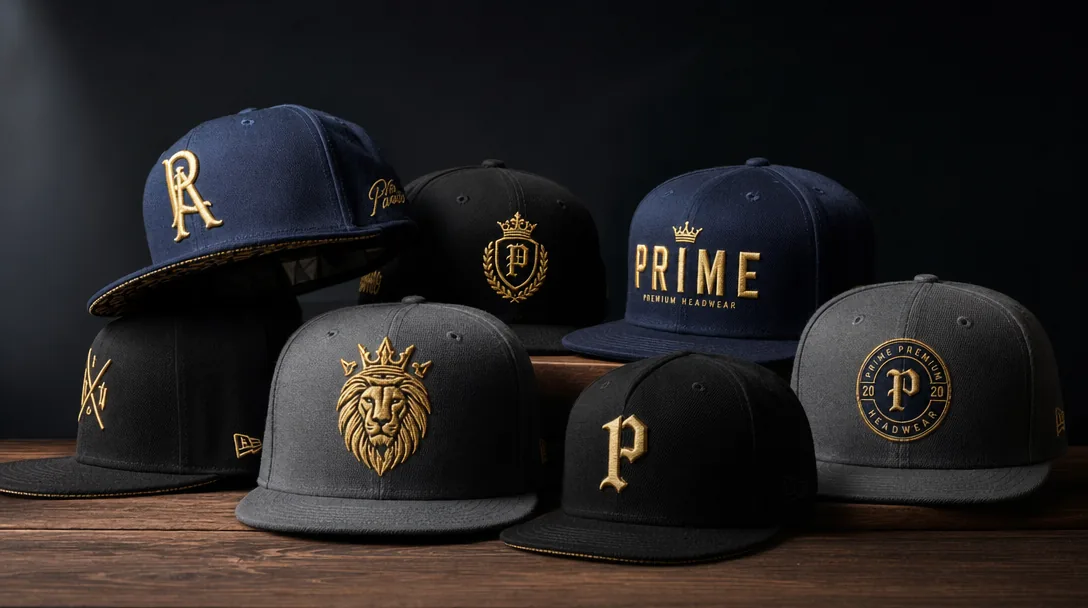
Reflective Trim Running Cap Bulk: A 2026 B2B Sourcing Guide
Read article →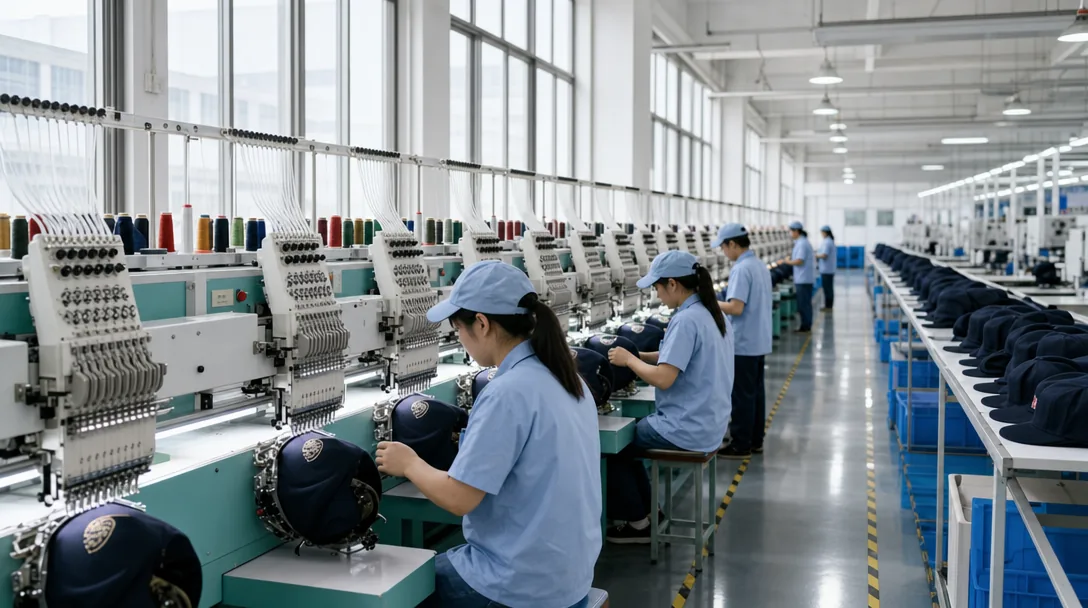
Bulk Trucker Hats Reorder Planning Guide for Custom Hat Buyers
Read article →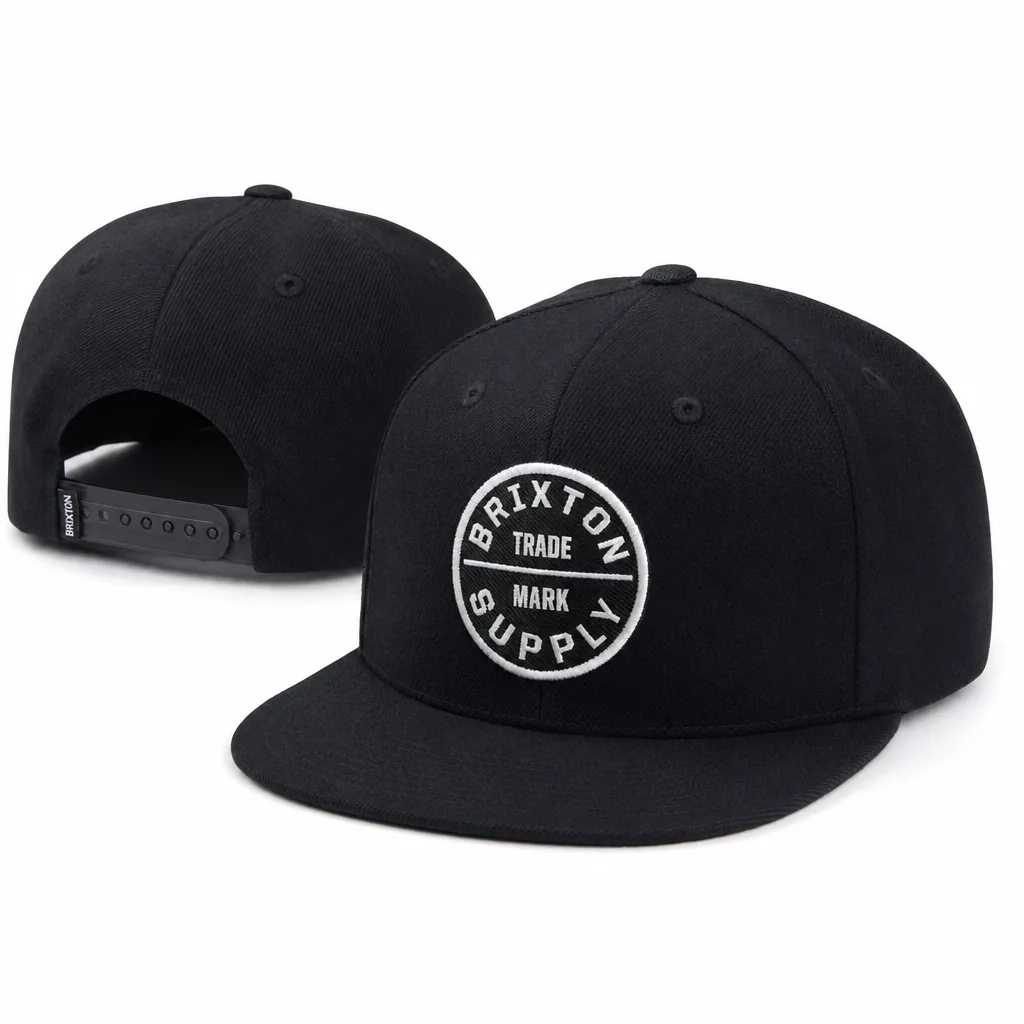
Baseball Hats For Men Export Shipping Checklist for Custom Hat Buyers
Read article →We hope this guide demystifies 10 questions to ask a cap manufacturer on your first call - 2026 buyer's guide and helps you move forward with confidence. If you have questions specific to your project, our English-speaking sales engineers are one message away.