
Baseball Hats Men's: A Vertical-Specific Sourcing Guide (2026 Update)
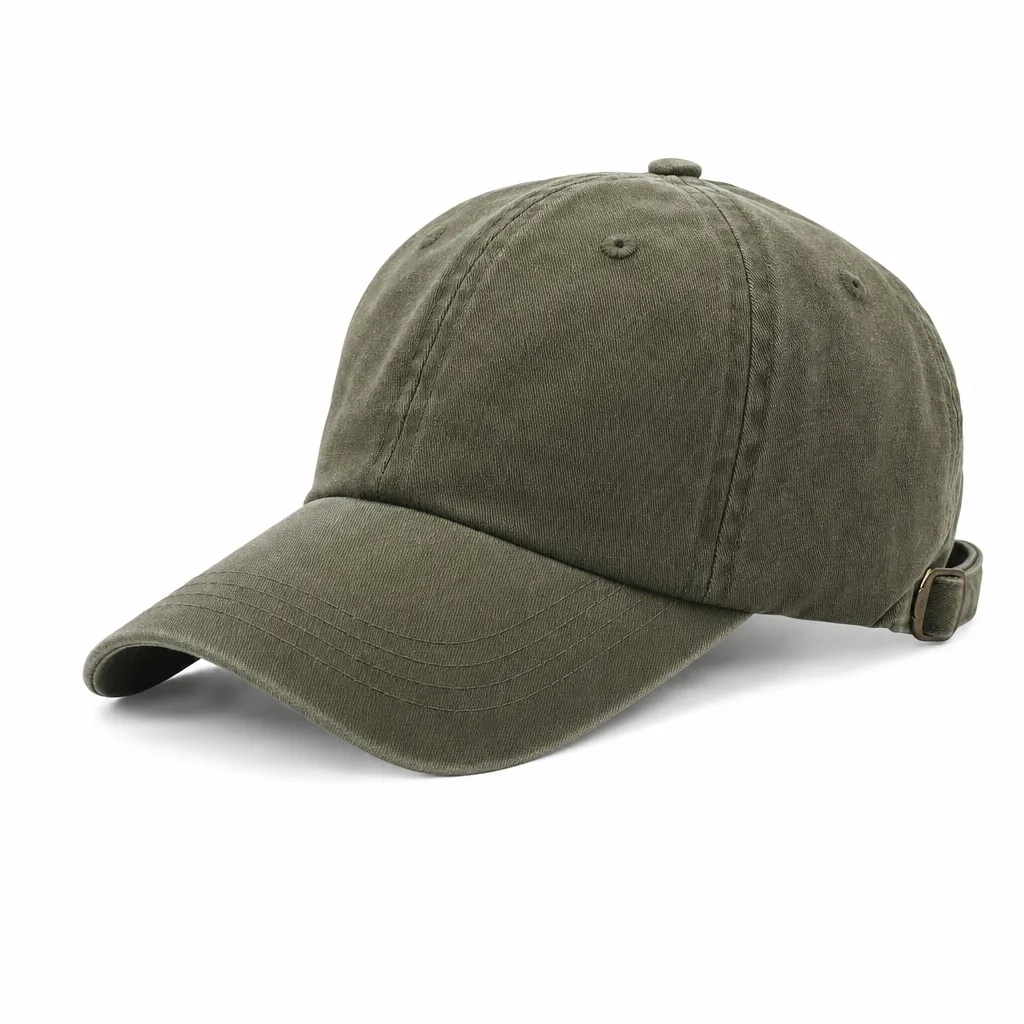
Baseball Hats Men's: A Vertical-Specific Sourcing Guide (2026 Update) is one of the most-asked questions we receive from international buyers, and for good reason. With dozens of factories competing for your order and an alphabet soup of technical terms in every supplier quote, even experienced importers can feel lost. This guide consolidates what we have learned producing custom hats for clients in 40+ countries.
Baseball Hats
The costliest sourcing error with baseball hats men's programs is assuming all caps are interchangeable. They are not; silhouette is the product. Lock the build first: 5-panel foam trucker, 6-panel structured twill, or unstructured dad cap, then specify crown height, visor pre-curve radius, closure type, and front support. On the floor, the common shells are 100% cotton twill at 260-280 gsm, brushed chino at 230-250 gsm, and 150-180 gsm recycled polyester for teamwear. Structured fronts should use 0.45-0.60 mm buckram on the two face panels, while the visor insert should be PE board rather than cardboard if you expect the cap to hold shape after humidity, transit, or light washing. Sweatbands matter more than most buyers think: cotton terry reads better for casual retail, while polyester wicking tape is the safer choice for athletic sell-through. Embroidery quality is usually won or lost in setup, not machine brand. Tajima, Barudan, and ZSK heads will all run clean if the digitizing controls underlay, pull compensation, and stitch density; if density is pushed too high on a structured front, puckering shows up immediately and the logo looks cheap. A usable spec pack for baseball hats men's orders should call out fiber content, finished gsm tolerance, Pantone TCX or Pantone C references for shell, thread, and trims, eyelet style, seam tape artwork, brim stitch rows, closure hardware finish, and finished head size. Standard men's sizing is typically built around 58 cm with a tolerance of +/- 0.5 cm, but fitted runs need explicit breaks such as 7 1/8, 7 1/4, 7 3/8, 7 1/2, and 7 5/8; poor grading creates returns faster than a slightly off logo ever will. For decoration, require a sew-out, stitch count, thread brand, and a color target such as Delta-E below 1.5 for brand-sensitive retail or below 2.0 for promotional volume. At 500 pcs, a basic 6-panel cotton twill cap with flat embroidery typically lands around $2.10-$3.80 FOB China, while washed caps with metal buckle, printed taping, and applique usually run $4.20-$6.50. Inspection should be set at AQL 2.5, with attention on front-panel puckering, off-center top buttons, visor stitch spacing, exposed embroidery backing under the sweatband, and panel-to-panel shade variation; those are the defects that trigger real chargebacks, not the ones buyers complain about only in emails.
Bucket Hat Men
For bucket hat men programs, the manufacturing route is completely different from structured baseball hats men's orders, and buyers who treat them the same usually get avoidable quality problems. A bucket hat is built from a crown top, side band, and circumferential brim, then locked together with seam taping or clean overlock and finished with 6 to 10 rows of brim stitching depending on price point. The first spec I ask for is brim width—typically 5.5 to 7 cm for adult men's bucket hat fits—because it affects silhouette, packability, and stitch stability. After that, lock down fabric weight and composition: 210 gsm brushed cotton twill for casual retail, 240 to 280 gsm heavy washed cotton for streetwear, or 75D x 150D polyester taslon for outdoor quick-dry styles. If color matching matters across baseball hats women, baseball hats, and bucket silhouettes in one collection, specify Pantone TCX references and a bulk standard of Delta-E below 1.5 on the shell fabric, otherwise the black on the bucket hats will not match the caps on the shelf.
The factory RFQ should also call out crown circumference, crown height, brim angle, ventilation method, sweatband construction, logo application, and wash standard. For adult bucket hat men sizing, the most common finished circumference is 58 cm, with 60 cm for oversized fits, but tolerances should be written at plus or minus 0.5 cm after washing, not before. Embroidery placement on a soft bucket is trickier than on baseball hats fitted styles because the side wall collapses; clean results usually come from running logos before panel assembly on Tajima or Barudan heads with backing matched to fabric weight. MOQ is usually 300 to 500 pcs per colorway in stock fabric, while custom-dyed fabric or allover print pushes practical MOQ to 800 to 1,200 pcs. In Yiwu and nearby Zhejiang production, a basic cotton bucket usually lands around $2.10 to $3.20 FOB China at 500 pcs, washed heavy twill with embroidery runs $3.40 to $4.80, and reversible or waterproof taped-seam versions can reach $5.50 to $7.50 depending on fabric and trim count.
Inspection needs to focus on symmetry and stitch discipline, not just logo appearance. The recurring failures are wavy brims from uneven feed tension, brim collapse from low stitch count or soft interlining, oval crowns that miss circumference spec, and embroidery puckering because the factory used cap settings instead of flat-panel settings. I would inspect brim row count consistency, brim width at four points, seam alignment at side joins, needle damage on washed cotton, color shading between brim and crown, and finished measurement under AQL 2.5. For export buyers consolidating baseball hats men's assortments, the real sourcing decision is whether the bucket belongs in the same vendor matrix as baseball hats fitted and core caps. Our standard practice is to keep bucket hats with factories that are strong in cut-and-sew soft headwear, not just cap lines, because a supplier that is excellent at structured baseball hats can still struggle with brim drape, washed fabric recovery, and reversible construction.
Baseball Hats Women
Women’s baseball caps should share the same production floor as your men’s line, but not the same block. The common sourcing mistake is reducing only head circumference while leaving crown geometry untouched; that creates the tall, boxy profile buyers complain about. A workable women’s fit usually finishes at 56–58 cm, versus 58–60 cm on standard baseball hats men's programs, with crown depth reduced 0.8–1.2 cm and brim length trimmed 0.5–1.0 cm. On a structured 6-panel, front panel height and buckram spec matter more than most tech packs admit: 0.35 mm fused buckram often keeps shape without the oversized “promo cap” look, while heavier support can push the front rise too high above the ear. If you are developing men’s and women’s SKUs together, issue separate measurements for panel height, visor curve radius, back opening width, sweatband placement, and ponytail clearance where the back arch or elastic slot sits low. Fabric choice decides whether the women’s version looks intentional or just smaller. For brushed twill and chino builds, 100% cotton 21x21 or 16x12 constructions in the 260–320 gsm range are the safe middle ground: lighter washed cotton tends to pucker at side seams, while heavier fabrics can collapse badly after dense front embroidery on a shallow crown. If the women’s cap sits beside baseball hats men's styles on the same retail wall, lock shell color to Pantone TCX and match embroidery thread in Madeira Classic or Gunold Poly to a bulk shade tolerance of Delta-E 1.5 or tighter for licensed or display-sensitive programs. In Yiwu, stock-fabric MOQ usually lands at 144–300 pieces per colorway, but custom-dyed twill, satin lining, or branded metal sliders typically moves the workable minimum to 500–1,000 pieces. A clean women’s 6-panel with flat embroidery generally costs about $2.20–$3.50 FOB China at 300 pieces; fitted builds, pigment wash, or satin-lined low-profile interiors push that upward quickly.
Inspection is where women’s fits either protect margin or generate avoidable claims. The failures repeat across factories: visor stitch rows drifting off symmetry, top buttons set off-center, back openings twisting after sewing, sweatband joins creating pressure points, and logos digitized for larger baseball hats men's fronts that crowd a reduced panel. I would hold finished circumference to +/-0.5 cm, brim length to +/-0.3 cm, and logo placement from center front and visor edge to within 2 mm. On embroidery, smaller front panels usually need density reduced around 5–10% and underlay simplified so the crown does not tunnel or ripple after stitching, especially on shallow-profile caps run on Tajima or Barudan heads. AQL 2.5 remains the practical standard, but mixed men’s and women’s runs need one more control: carton-level verification that fit labels, size assortments, and shared trims are not cross-packed. Check buckle plating adhesion, seam puckering on washed shells, needle exposure along the sweatband seam, and visor curve consistency after packing. Our standard practice is to seal one approved sample for each fit, not just each colorway, because shared thread cards and trims can still produce visibly different silhouettes when crown depth changes. That extra discipline is what separates a coordinated collection from a shipment that looks like two unrelated factories built it.
Men's Bucket Hat
Men’s bucket hats are not a softer copy of baseball hats men's programs; the real risk sits in brim engineering and post-wash stability. Four details decide whether the hat still looks saleable after garment wash or consumer laundering: crown pattern, brim width, stitch-row accuracy, and whether the shell needs a 20-30 gsm fusible to hold shape without going boardy. Most commercial buckets use a 4-panel or 6-panel crown with a separate brim ring and 6-10 rows of visible topstitching. On 220-260 gsm cotton twill, a stitch-row drift of more than 1 mm is obvious from arm’s length and usually gets flagged as second quality. The safest core fabrics are 100% cotton twill at 220-260 gsm, washed chino around 240 gsm, and nylon taslon at 120-160 gsm for golf, outdoor, or resort accounts where faster drying matters. Reversible styles are less forgiving because every internal seam becomes customer-facing; if the tech pack does not lock seam clean finish, lining gsm, and crown-button treatment, factories tend to build bulk at the join and the hat loses the soft hand buyers expected.
A usable tech pack should freeze dimensions before the first proto: adult head circumference 58 cm, brim width 5.5 cm, crown height 8.5 cm, with circumference tolerance at ±0.5 cm and fabric tolerance within ±5% gsm. Call out shell and lining colors in Pantone TCX, specify eyelet material, sweatband composition, and require 301 lockstitch at 7-9 SPI across the brim rows. If decoration is involved, note whether embroidery runs pre-assembly on Tajima or Barudan heads; once side-panel embroidery goes past roughly 12,000 stitches, the panel can torque and pull the brim join off true. In 2026, workable MOQ is usually 300-500 pieces per colorway in standard twill, though stock-fabric programs can open at 144 pieces. FOB China is typically $2.10-$3.40 for a basic twill bucket and $3.20-$5.20 for washed or reversible versions, with another $0.20-$0.60 for woven labels, printed seam tape, sublimated lining, or custom inner branding.
Inspection needs to be tougher than many buyers assume because bucket-hat defects read immediately on shelf and in product photography. The repeat failures are wavy brims from poor feeding, topstitch rows that crowd or open near the back seam, shade variation between crown panels after wash, and off-center logos caused by cutting off grain. Measure brim width and finished circumference on at least 10 pieces per lot instead of relying on random visual review; once circumference drifts beyond ±0.5 cm, return rates climb fast in e-commerce. For washed black, navy, and olive, add crocking and colorfastness to perspiration to the approval standard, because those shades can pass lab dip yet still bleed under wear. AQL 2.5 is fine for mass retail only if the checklist isolates brim symmetry, skipped stitches, puckering at the brim join, embroidery backing show-through, and panel-to-panel shade consistency under a flat-table inspection, which catches distortion earlier than a head form does.
Baseball Hats Fitted
Fitted caps punish sloppy pattern engineering faster than any adjustable style. In baseball hats men's programs, I do not release a PP sample until the size run is locked—normally 6 7/8 to 7 5/8 in 1/8 increments, with finished head-circumference tolerance held to ±3 mm and crown height tolerance to ±2 mm. A factory that grades one base pattern across the full run will usually miss depth balance: big sizes feel shallow, small sizes bite at the sweatband join, and the front seam starts wandering off center. Each size should have its own crown block, visor checking jig, and measurement record from cutting to finishing. Fabric specs need the same discipline. “Cotton twill” means nothing on a PO; workable starting points are 100% cotton twill at 260–280 gsm, brushed cotton around 240 gsm, wool-blend serge at 300–320 gsm, or recycled polyester at 180–220 gsm with moisture-wicking treatment and colorfastness grade 4 minimum. Embroidery changes fit more than most buyers expect. A dense raised logo run on Tajima, Barudan, or ZSK heads can pull the front panels inward by 2–4 mm, enough to make a true 7 1/4 wear like a tight 7 1/8. The RFQ should specify stitch count range, underlay type, pull compensation, and whether the crown uses 0.8–1.2 mm PE buckram for a structured front or a softer non-woven backing for lower profile. Lock down visor board, brim stitching rows, sweatband width, eyelet execution, and color references before sampling starts; for branded programs I use Pantone TCX for textiles, Pantone Solid Coated for print trims, and require Delta-E under 1.5 on core colors. Compared with adjustable baseball hats men's styles, fitted caps need higher MOQs because the order must be split across sizes; 300–500 pcs per color is the practical floor, and once one size drops below about 60 pcs, cutting yield and defect risk both deteriorate.
Inspection on fitted caps should focus on fit-critical failures, not cosmetic trivia. The defects that drive returns are predictable: actual circumference outside tolerance, crown depth drift, visor asymmetry, top button off center, sweatband seam bulk creating a pressure point, and front-panel collapse from excessive embroidery tension. Inline checks are more useful than waiting for final random inspection. I want size-by-size measurements taken at sewing, after embroidery, and after finishing, because pressing and sweatband attachment can each move the spec. Our standard practice is to verify circumference, crown depth, brim width, visor left-right symmetry, and seam alignment against the sealed sample at inline, midline, and final, then run final inspection to AQL 2.5 with stricter measurement sampling than a promo cap. Cost is driven less by silhouette than by size complexity and decoration density. In China, a basic fitted style in cotton twill with standard sweatband and flat or light 3D embroidery typically lands around $2.80–$4.20 FOB at 500–1,000 pcs per color. Wool-blend serge, satin seam tape, woven size labels, contrast undervisor, and heavy front embroidery usually push the FOB to $4.80–$7.50. Add another $0.20–$0.60 if the logo needs high stitch density or if the size curve is badly imbalanced. Packing errors are expensive on fitted inventory, so carton ratio by size, barcode mapping, and inner-pack logic should be approved before mass production, not after. Baseball hats men's fitted lines make sense when the buyer has real sell-through by size curve; without that data, the style premium is legitimate, but so is the risk of dead stock in the slow sizes.
Fitted Hats Sizes
Fit problems in baseball hats men's fitted programs usually start in grading, not at the sewing line. A real fitted cap should be engineered as a full size matrix, not scaled off one approved sample. For U.S. retail, the commercial run is typically 6 3/4 to 7 5/8, stepping by 1/8 size, which equals roughly 3.2 mm in inside circumference measured on the finished sweatband. That increment has to be allocated across front and back panel width, rear arch angle, sweatband length, and visor pitch; if a pattern maker pushes all the growth into the opening, larger sizes look flatter and smaller sizes pinch at the temples. In the tech pack, lock the finished inside circumference tolerance at ±3 mm, specify whether measurement is taken pre- or post-sweatband setting, and call out crown height, visor length, visor width, and back opening width by size. If the factory only approves a size 7 showroom sample, grading drift usually shows up first on 6 7/8 and 7 1/2 during bulk.
Materials and decoration change fit more than many buyers assume. A 300 gsm cotton twill, 240 gsm brushed chino, and 380 gsm wool blend all recover differently after blocking, and the buckram spec matters just as much: 0.45 mm fused buckram holds a structured front crown far tighter than a soft unstructured build. Raised embroidery can also steal circumference. On Tajima, Barudan, or ZSK heads, a dense 3D logo with 8,000 to 12,000 stitches can pull the front panels inward by 2 to 3 mm if underlay and push-pull compensation are not digitized correctly. Lock down shell fabric, sweatband composition, visor board thickness, front-panel construction, and embroidery density before pre-production. For bulk orders, I would ask for PP samples in at least two sizes—usually 7 1/8 and 7 3/8—because those expose grading mistakes faster than a single center size. Final inspection should be tighter than on strapbacks: circumference jig checks inline, then AQL 2.5 final inspection with extra measurement points on the core selling sizes 7 1/8, 7 1/4, and 7 3/8.
Working with CrownsForge for baseball hats men's programs
The fastest way to de-risk a baseball hats men's program is to freeze development before you argue over pennies on bulk price. The clean sequence is three gates: digital mockup in 24-48 hours, counter sample in 5-7 working days, then a pre-production sample 7-10 days later once shell fabric, visor profile, closure, and artwork are fully approved. For a standard 6-panel cap in 270-320 gsm cotton twill with stock black buckram, PE visor insert, and metal tuck strap, workable MOQ is usually 144 pcs per colorway. Add dyed-to-match Pantone TCX sweatbands, custom jacquard seam tape, branded eyelets, molded rubber patches, or a private-label hangtag set, and the true economic break point moves closer to 300-500 pcs per style. At 1,000 pcs, unit cost often comes down another $0.18-$0.45 depending on trim count and decoration complexity. CrownsForge’s standard practice is to push buyers to close comments early, because one extra sample round usually costs more calendar time than a $0.10 concession ever saves.
Decoration is where factories get separated from traders. A supplier can sew a clean shell and still fail on 3D puff height, satin-column edge run, or registration across front, side, and back hits. On baseball hats men's styles in brushed cotton, wool-blend melton, or 600D polyester, digitizing parameters are fabric-specific: underlay, pull compensation, stitch density, and foam height do not transfer cleanly from one base to another. Tajima, Barudan, and ZSK heads will all produce solid results if the digitizer knows how to keep small text above about 4 mm, avoid tunneling on structured fronts, and manage push-pull distortion near center seams. Color control also needs hard limits, not verbal promises: approve lab dips and thread cards against Pantone references with a pre-agreed Delta-E tolerance, typically under 1.5 for main fabric and under 2.0 for trims. Serious buyers should also require sedex-audit-cap-supplier-guide.html">BSCI 2.0 or Sedex SMETA 4-Pillar coverage, plus REACH, CPSIA, and Proposition 65 document control when prints, metal trims, or PVC are involved. Then run the order through an approved BOM, signed sample comments, a pre-production meeting, inline inspection at 20-30% output, and final inspection to AQL 2.5 before shipment release.
Packaging mistakes delay just as many baseball hats men's orders as sewing defects, especially on retailer compliance and Amazon FBA programs. Carton size, pack ratio, barcode symbology, suffocation warning text, country-of-origin marking, and shipping marks should be locked before production passes 30%, not after goods are already in cartons. That matters on FOB Ningbo or Shanghai bookings, where missed carton specs can roll a shipment to the next vessel, and it matters even more on DDP programs, where relabeling, pallet rebuilds, and customs exceptions regularly add $300-$800 per shipment. The difference between a smooth handoff and an expensive scramble is whether approvals sit in a controlled tech pack, BOM, and inspection record instead of scattered WeChat or WhatsApp screenshots nobody can trace once bulk starts. Good factories treat order control as an operations discipline, not a sales script. Inline checks should catch crown symmetry, visor curvature, embroidery placement, closure attachment, and top-button alignment before defects multiply across packed cartons. For men’s cap programs with multiple SKUs, I also want carton weights, master-carton drop resistance, and assortment accuracy confirmed before final sealing, because a clean AQL result is meaningless if the warehouse receives the wrong ratio run. If the supplier cannot show version-controlled approvals and inspection checkpoints, the program is being managed by memory, and memory is not a system.
Frequently Asked Questions
What logo decoration techniques do you offer?
3D puff embroidery, flat embroidery, woven patch, leather patch, PVC patch, screen printing, sublimation, applique and laser etching, all in-house with no subcontracting.
Can I order a sample before bulk production?
Yes. We strongly recommend approving a pre-production sample before mass production. Samples are charged at 35 to 60 USD each plus express shipping, fully refundable against confirmed bulk orders over 500 pieces.
Do you support sustainability certifications?
Yes. We work with GOTS organic cotton, GRS-certified recycled polyester, OEKO-TEX Standard 100 fabrics, and are BSCI and Sedex audited. Certification documentation can be provided per order.
What file format should I send for my logo?
Vector files (AI, EPS, PDF) are ideal. High-resolution PNG or JPG at 300 dpi on transparent background works as a fallback. Provide Pantone color references for accurate reproduction.
Which shipping methods do you support?
We support FOB, CIF and DDP shipping. Air express for samples and small orders, sea LCL for 100 to 500 pieces, sea FCL for 5,000+ pieces. Door-to-door DDP available for US, EU, UK, Canada and Australia.
What should buyers know about kangol bucket hat?
When evaluating kangol bucket hat, the key considerations are construction quality, decoration capability, MOQ flexibility and lead time. Cover everything buyers ask about bucket hat men: how it's manufactured, what specs to request from a factory, typical MOQ and pricing, common quality issues to inspect for, and how this ties back to the broader baseball hats men's sourcing decision. Cover everything buyers ask about men's bucket hat: how it's manufactured, what specs to request from a factory, typical MOQ…
What should buyers know about corduroy hat men's?
When evaluating corduroy hat men's, the key considerations are construction quality, decoration capability, MOQ flexibility and lead time. Cover everything buyers ask about bucket hat men: how it's manufactured, what specs to request from a factory, typical MOQ and pricing, common quality issues to inspect for, and how this ties back to the broader baseball hats men's sourcing decision. Cover everything buyers ask about men's bucket hat: how it's manufactured, what specs to request from a factory, typical MOQ…
How does ordering custom fitted hats for men work?
When evaluating custom fitted hats for men, the key considerations are construction quality, decoration capability, MOQ flexibility and lead time. Cover everything buyers ask about baseball hats fitted: how it's manufactured, what specs to request from a factory, typical MOQ and pricing, common quality issues to inspect for, and how this ties back to the broader baseball hats men's sourcing decision. Cover everything buyers ask about fitted hats sizes: how it's manufactured, what specs to request from a factory,…
What should buyers know about corduroy bucket hat mens?
When evaluating corduroy bucket hat mens, the key considerations are construction quality, decoration capability, MOQ flexibility and lead time. Cover everything buyers ask about bucket hat men: how it's manufactured, what specs to request from a factory, typical MOQ and pricing, common quality issues to inspect for, and how this ties back to the broader baseball hats men's sourcing decision. Cover everything buyers ask about men's bucket hat: how it's manufactured, what specs to request from a factory, typical MOQ…
Ready to start your custom hat project?
Send us your tech-pack, sketch or even just an inspiration photo. We will respond with a detailed quotation and digital mock-up within 24 hours.
Request a free quoteRelated guides
Custom Logo Hats: When to Use It, Costs, and What to Ask Your Factory (2026 Update)
Read article →
Mesh Caps Wholesale: Trucker Cap Manufacturing Specifications and Pricing
Read article →
Country Hats For Men Fabric And Trim Spec Guide for Custom Hat Buyers
Read article →If you are ready to take the next step on baseball hats men's: a vertical-specific sourcing guide (2026 update), our team can put a tailored quotation and digital mock-up in your inbox within 24 hours. Send the inquiry form on our contact page or message us directly on WhatsApp.