
Baseball Hats For Men Export Shipping Checklist for Custom Hat Buyers - Cost & MOQ Breakdown (2026 Update)
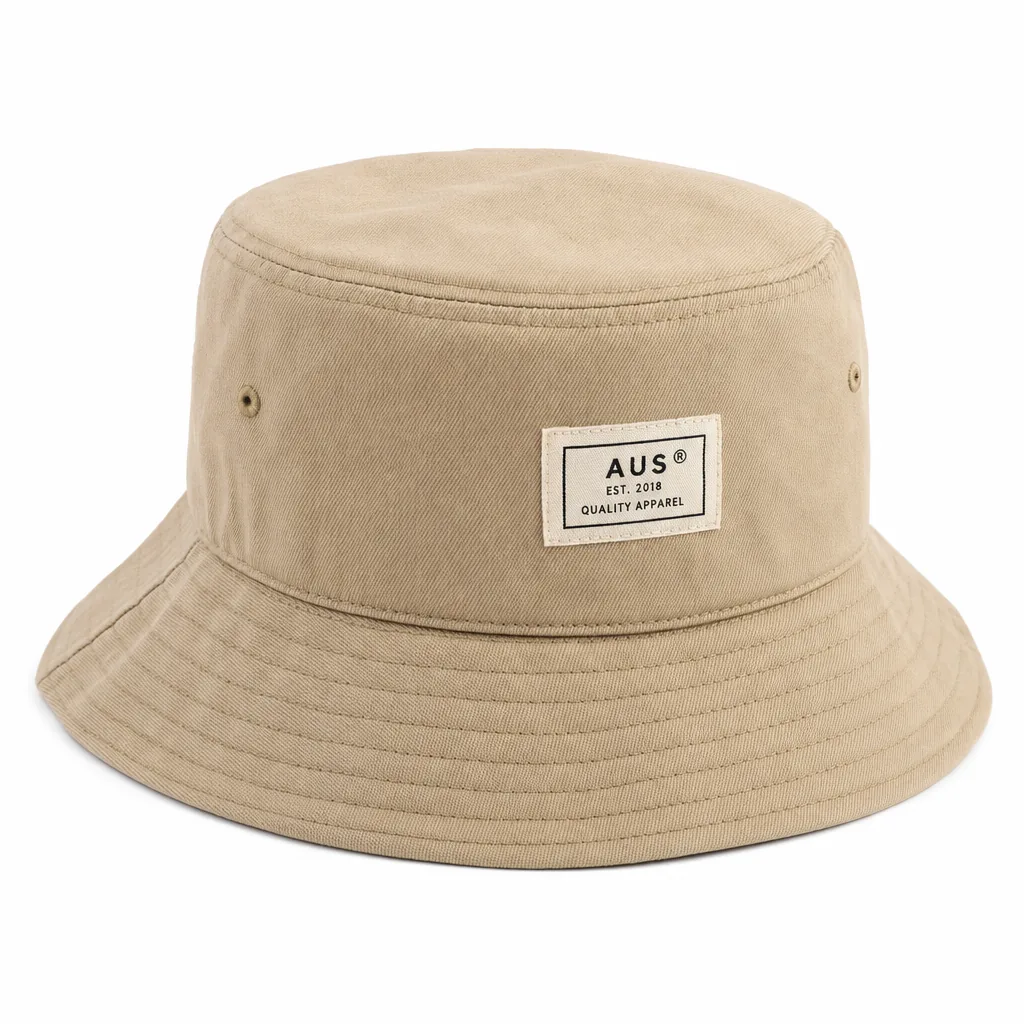
Baseball Hats For Men Export Shipping Checklist for Custom Hat Buyers - Cost & MOQ Breakdown (2026 Update) is one of the most-asked questions we receive from international buyers, and for good reason. With dozens of factories competing for your order and an alphabet soup of technical terms in every supplier quote, even experienced importers can feel lost. This guide consolidates what we have learned producing custom hats for clients in 40+ countries.
Why baseball hats for men export shipping checklist needs a separate sourcing plan
A proper baseball hats for men export shipping checklist starts at sourcing, not at booking, because cap construction changes freight cube, compliance points, and bulk defect risk long before ex-factory date. A 6-panel structured cap in 280 gsm brushed cotton twill with 0.8 mm PE buckram, a wool-blend fitted cap with raised 3D embroidery, and a 220 gsm enzyme-washed chino dad cap cannot share the same packing logic. Crown height, visor curve, front-panel stiffness, and sweatband thickness all affect compression tolerance and pcs per carton. On U.S.-bound orders, the non-negotiables are basic but costly when missed: fiber content, country-of-origin marking, suffocation warning on individual polybags, readable carton shipping marks, and shade approval locked to Pantone TCX with Delta-E kept within 1.5 under D65 light. Miss one control and the “cheap” quote disappears fast. In real shipments, ocean freight can land around USD 0.28 to 0.95 per cap depending on carton density, port pair, and whether you ship 3,000 or 30,000 pcs; DDP air often clears USD 1.40 to 2.20 per cap once fuel surcharge, customs clearance, and last-mile delivery are loaded in.
Most buyers focus on FOB cap price, but export performance is usually decided by the bill of materials and packing spec behind that number. A dense 12,000- to 18,000-stitch front logo running on Tajima or Barudan heads adds direct labor, yet the bigger exposure is crown damage if the factory overpacks cartons or skips crown protectors. A hard-buckram acrylic/wool snapback may pack at 72 to 96 pcs per export carton, while an unstructured washed cotton cap can reach 120 to 150 pcs; that difference materially changes CBM and landed cost per unit. MOQ also separates earlier than new buyers expect: stock fabrics may open at 144 pcs per color, but custom-dyed shells, woven taping, molded TPU patches, or custom metal trims usually move the workable MOQ to 500 to 1,000 pcs per colorway. The separate sourcing plan matters because inspection and paperwork must match that exact spec before bulk booking: AQL 2.5, needle policy, carton gross weight kept under 15 kg, HS code confirmation, packing list format, and any sedex-audit-cap-supplier-guide.html">BSCI 2.0 or Sedex SMETA 4-Pillar requirement. That is the real job of a baseball hats for men export shipping checklist: convert a nominal USD 3.60 cap into a verified landed-cost number instead of a factory quote with hidden failures.
Factory capability checks before quoting
A cap quote is noise until the factory proves it can run your exact style on the floor. Before you compare FOB Ningbo or DDP U.S. pricing, check decoration capability against the crown profile and front-panel shape. For embroidery, ask what they actually run: Tajima, Barudan, or ZSK cap frames, how many heads are active per line, and whether they can hold 1.8-2.2 mm letter height on a curved 6-panel front without fill-in. Request unretouched close-up production photos and a stitch-count estimate from the digitizer, not a sales mockup. A standard front logo usually lands around 8,000-15,000 stitches; poor digitizing can quietly add $0.20-$0.60 per cap through extra machine time, thread breaks, and higher reject rates. Also verify whether 3D puff, woven patch, TPU patch, merrowed patch, sublimated patch, and heat-transfer labels are done in-house or through controlled subcontractors, because outsourced decoration is where lead time slips and color mismatch usually starts.
Material and construction capability exposes weak suppliers faster than price ever will, which is why it belongs in any serious baseball hats for men export shipping checklist. Do not accept “cotton” or “polyester” as a fabric spec; you need fiber content, weight, and finish, such as 100% cotton twill 260-320 gsm, brushed chino 240-280 gsm, recycled polyester twill 180-220 gsm, or nylon taslon 110-160 gsm. Those differences affect panel distortion, buckram bonding, shrinkage after sewing, and how clean the crown holds after packing. Color control should be defined too: ask if they source to Pantone TCX and what Delta-E tolerance they can hold between shell fabric, visor sandwich, top button, eyelets, closure strap, and sweatband. For branded programs, Delta-E under 1.5 on body fabric and under 2.0 on trims is a practical factory target. Then confirm the line can really build your structure: 5-panel foam trucker, 6-panel buckram baseball cap, unstructured dad hat, or fitted sizes like 7 to 7 5/8, with real stock options for visor board, seam tape, snapback, hook-and-loop, tuck strap, or elastic sweatband.
Export capability is operational discipline, not a line on a brochure. A factory should convert a tech pack into controlled bulk production with measurable standards: pre-production sample lead time of 5-10 working days, approved swatches archived by lot, trim cards, needle-control records, broken-needle logs, inline checkpoints, and final inspection at AQL 2.5. The spec sheet should list tolerances such as crown height +/-0.5 cm, visor length +/-0.3 cm, and head opening circumference +/-0.5 cm. Compliance reports matter only when the team can explain how they apply them in production, so ask for current BSCI 2.0 or Sedex SMETA 4-Pillar audit status, plus whether they can support metal detection, moisture-barrier packing, carton drop resistance, and retailer routing requirements when needed. Any supplier worth quoting should also answer shipping details without guessing: master carton size, gross and net weight, loading quantity for 20GP and 40HQ, standard HS code, MOQ by color, run-loss assumptions, sample charges, and surcharge triggers like oversized embroidery, printed inner tape, or custom closures. Hidden cost almost always sits in those missing details, not in the first unit price.
MOQ, pricing and sample approval
MOQ is where cap costing gets honest. For a standard 6-panel men’s baseball cap in 260-280 gsm brushed cotton twill or 150D polyester performance fabric, with front flat embroidery, woven loop label, and a self-fabric strap or Velcro closure, a realistic factory range is about $3.10-$4.40 FOB Ningbo at 144 pcs, $2.45-$3.35 at 300 pcs, $2.05-$3.00 at 500 pcs, and $1.78-$2.60 at 1,000 pcs per colorway. Buyers asking for 48 or 72 custom pieces usually dislike the answer, but the math is simple: fabric utilization worsens, crown and visor cutting loss rises, embroidery tape cost gets amortized over too few units, and the sewing line loses rhythm on panel joining, top button setting, and visor matching. Structured caps with buckram, green undervisor, moisture-wicking sweatband, and higher stitch-count logos should never be benchmarked against soft unstructured promo caps; they consume more labor minutes and generate more rejection risk on shape consistency. If your baseball hats for men export shipping checklist includes truckers or bucket hats in the same booking, keep MOQ and costing separate by style because marker efficiency, panel count, mesh sourcing, and packing ratios are different.
Sample approval is where buyers either control risk or create it. Front-logo digitizing for Tajima, Barudan, or ZSK heads normally costs $25-$60 per file, while 3D puff adds another $10-$20 because pull compensation, foam height, run direction, and column width need a separate sew-out. On cotton twill, clean embroidery usually sits around 0.35-0.45 mm stitch spacing; push denser than that and tunneling starts, especially on structured front panels, while looser fills look weak at retail distance. Lock color at PPS stage against Pantone TCX for fabric and Pantone Solid Coated where brand standards require it, but be realistic: polyester shell fabric and rayon thread often drift, and holding Delta-E below 2.0 across mixed materials is not always practical without custom dye lots. Never approve from a PDF alone if crown height, visor curve, logo placement, back closure, barcode labeling, and carton spec matter. A workable timeline is 7-10 days for development sample, 3-5 days for revision, and 20-30 days bulk production for 300-1,000 pcs; before bulk starts, freeze AQL 2.5, assortment ratio, carton dimensions, and packing method so the factory is not improvising after goods are sealed.
Quality inspection and shipping risk
Most claims are baked in before the container leaves port. A workable baseball hats for men export shipping checklist starts with a written final random inspection standard, not a few QC photos on WhatsApp. For custom caps, use ANSI/ASQ Z1.4 single sampling with AQL 2.5 for major defects and 4.0 for minor, tied to an approved sealed sample and a measurement spec sheet. On structured 6-panel men’s baseball caps, I do not release cargo without checking at least 13 finished points: crown height, front panel width, visor length and width, head circumference, back opening, strap length, button centering, eyelet spacing, sweatband join position, seam alignment, underbill shape, and side-panel symmetry. Reasonable tolerances are ±0.5 cm on finished circumference, ±0.3 cm on visor dimensions, and no visible panel torque when the cap sits on a flat head block. Packing also needs discipline: once a factory pushes beyond 24 pcs per inner on brushed chino or 100% cotton twill, crown crush and brim deformation become predictable, especially in cartons stacked near container doors where compression and humidity swings are worst.
Shade and decoration failures are where margin disappears. Fabric approval should reference a Pantone TCX standard for textile shades or a signed swatch checked under D65 light; for production, keep Delta-E under 1.5 on visible body panels and under 2.0 between shell, underbill, top button, and closure tab. Anything looser is obvious on black, navy, forest, and athletic red. For dark colors shipping through humid lanes, ask for ISO 105 crocking and colorfastness results before ex-factory, because dye transfer onto white sweatbands and seam tape is a routine transit complaint. Embroidery needs stricter review than most buyers give it: registration drift above 1.0 mm, loose trims, birdnesting on Tajima or Barudan cap frames, hoop marks, thread breaks, and weak edge coverage on 3D puff are all valid rejects if the artwork has sharp borders. For heat-applied badges or TPU patches, check peel strength only after 24 hours of room conditioning; plenty of adhesives look fine straight off the press and then fail after carton aging.
Carton control is freight-risk control, not office paperwork. Export masters should show PO number, style number, color, size run, quantity, carton sequence, country of origin, GW, NW, and dimensions in cm, printed in waterproof black ink on at least two sides. For most 5-panel and 6-panel baseball caps, 60 to 72 pcs per master carton is the safe range, depending on crown profile, visor curve, buckram stiffness, and whether inserts are used. Overpacked cartons might save $0.08 to $0.15 per cap in freight, but one warped-brim claim wipes that out fast. Incoterms matter just as much: FOB Ningbo or Shanghai works when the buyer controls booking and customs clearance, while DDP is cleaner for small launches only if the quote states duty basis, HTS assumption, and delivery exclusions. Keep the reorder file exact: BOM with fabric gsm, closure spec, embroidery file revision, approved photos, carton pack-out, final inspection report, and any metal-detection or needle-policy record required under BSCI 2.0 or Sedex SMETA 4-Pillar compliance.
Buyer checklist for the next RFQ
Your quote is only as reliable as the tech pack behind it. If the RFQ says “same as last order” and includes a front-logo JPEG, most factories will pad risk into the price—typically 15% to 30%—because crown profile, buckram stiffness, visor curve, closure type, fabric weight, and decoration sequence are still undefined. A practical baseball hats for men export shipping checklist starts with five non-negotiables: exact silhouette (6-panel structured cap, unstructured dad cap, 5-panel rope cap, fitted, or bucket), vector artwork in AI/PDF/EPS, Pantone references for shell and trims (Pantone C for print, Pantone TCX for textile), quantity split by colorway and size, and Incoterms 2020 terms such as EXW, FOB Ningbo, or DDP Los Angeles. Do not combine unlike categories on one line. A baseball cap, fitted cap, and bucket hat use different patterns, sewing sequences, material consumption, and carton ratios, so mixed quoting usually distorts both MOQ and landed cost. Images should answer technical questions before the merchandiser asks them. Send front, side, back, interior taping, sweatband, closure, visor, and underbill photos, plus approved measurements in centimeters: crown height, visor length, head opening, and logo size. For premium or team programs, specify flat embroidery or 3D puff, foam thickness in millimeters, merrow border width, patch substrate, eyelet contrast, sandwich brim color, seam tape color, and closure hardware finish. On the floor, embroidery is quoted by stitch count, machine runtime, and setup on Tajima, Barudan, or ZSK heads; missing logo dimensions can move cost by $0.20 to $0.80 per cap, and multilayer applique or 3 mm puff foam pushes it higher. If color accuracy matters, write the tolerance into the RFQ—Delta-E under 1.5 for premium retail is realistic, while up to 2.0 is more common for mass programs.
Commercial and compliance data are where weak RFQs usually break down. State the destination market first because testing, labeling, and packaging are not universal. U.S. youth programs may trigger CPSIA tracking label requirements; EU buyers often ask for REACH conformity and azo-free dyes; Canada can require bilingual retail packaging review. If your vendor matrix requires BSCI 2.0, Sedex SMETA 4-Pillar, or specific needle-control and metal-detection records, put that in the first inquiry, not after pre-production sample approval. Lock pack-out before approving the quote: individual polybag yes or no, suffocation warning language, silica gel requirement, sticker placement, size assortment per inner carton, master carton weight cap at 15 kg or 18 kg, and carton dimensions if the shipment is going into Amazon FBA. GS1, UPC, or FNSKU labeling also adds handling time and should never be treated as a last-minute note. MOQ and freight assumptions need the same discipline. Stock-fabric baseball caps often quote cleanly at 144 to 300 pieces per colorway, but custom-dyed fabric, woven label sets, TPU badges, suede patches, or leather appliques usually start around 500 pieces because dye-lot minimums, trim MOQs, and spoilage have to be absorbed. Ask the supplier to show the quote basis: fabric gsm, shell composition, visor insert type, sweatband material, embroidery stitch count, packing ratio, and gross CBM. A cap packed at 0.095 CBM per 100 pieces lands very differently from one packed at 0.130 CBM, especially under FOB or DDP pricing. Our standard practice is to confirm bulk carton dimensions before deposit and lock inspection terms early, so include quote validity, sample lead time, bulk lead time, and AQL 2.5 in the first RFQ rather than negotiating them after production is booked.
Working with CrownsForge
Most export misses happen after PP approval, not during sewing, so the baseball hats for men export shipping checklist needs a hard approval sequence: tech pack, Pantone standard, decoration strike-off, packing spec, then freight booking. If those are signed in the wrong order, buyers end up reworking cartons, labels, or embroidery after bulk is already cut. A proper tech review should lock crown height, visor curve, panel structure, back closure, shell fabric weight, sweatband composition, and exact color references for shell, eyelets, seam tape, button, and thread. For men’s caps in 260-320 gsm brushed cotton twill or washed chino twill, a first prototype usually takes 5-7 calendar days; a repeat body with an approved fit block can move in 3-4 days because the pattern and sewing sequence are already proven. Embroidery approval should come from actual machine sew-outs, not digital mockups. Tajima and Barudan heads read the same digitized file differently once stitch density, underlay, pull compensation, and foam height start interacting on a structured six-panel front. On dyed lots, expecting Delta-E within 1.5-2.0 is realistic for stable fabric runs, and that tolerance matters when 500-2,000 caps are split across multiple cartons under mixed warehouse lighting.
Decoration and packing are where cost, MOQ, and claim risk move fastest. Flat embroidery remains the safest program for a standard structured baseball cap, usually adding about $0.28-$0.65 per location at 500-1,000 pieces, while 3D puff, woven patches, TPU badges, sublimated panels, and chain stitch push up setup loss, machine time, and rejection rates. Patch orders should lock merrow width, twill backing thickness, stitch path, and heat-press window before bulk, because edge lift and poor bonding are common transit failures, especially on fitted caps with higher front-panel tension. Our standard practice is AQL 2.5 final inspection with checkpoints on head circumference tolerance, visor symmetry, seam slippage, needle damage, loose thread, metal detection, barcode scan accuracy, and outer-carton compression or drop performance. Export documents also need to match the physical shipment line by line: Incoterms, HTS code, carton count, net and gross weight, country-of-origin marking, and booking cutoff should be checked before production even reaches 70%. Standard pack-outs are often 72 or 144 pieces per carton, but high-crown profiles, sandwich brims, and heavy buckram reduce safe compression. For FOB Ningbo or Shanghai, sea freight usually becomes cheaper once volume passes about 0.12-0.15 CBM; for launch-driven orders, DDP air often adds $1.80-$3.50 per cap depending on season, destination, and fuel surcharge.
Frequently Asked Questions
What is the minimum order quantity (MOQ) for custom hats?
Our standard MOQ is 100 pieces per design and color, with sampling available from 1 piece. For complex multi-color logos or premium fabric upgrades, the MOQ can be lowered with a small per-piece surcharge.
Do you support sustainability certifications?
Yes. We work with GOTS organic cotton, GRS-certified recycled polyester, OEKO-TEX Standard 100 fabrics, and are BSCI and Sedex audited. Certification documentation can be provided per order.
Which shipping methods do you support?
We support FOB, CIF and DDP shipping. Air express for samples and small orders, sea LCL for 100 to 500 pieces, sea FCL for 5,000+ pieces. Door-to-door DDP available for US, EU, UK, Canada and Australia.
What file format should I send for my logo?
Vector files (AI, EPS, PDF) are ideal. High-resolution PNG or JPG at 300 dpi on transparent background works as a fallback. Provide Pantone color references for accurate reproduction.
How long does production take?
Sampling takes 7 to 12 days. Bulk production runs 20 to 30 days depending on quantity, fabric availability and decoration complexity. Inspection and packing adds another 3 to 5 days before shipment.
How does ordering custom fitted hats for men work?
When evaluating custom fitted hats for men, the key considerations are construction quality, decoration capability, MOQ flexibility and lead time. Explain the buyer intent behind baseball hats for men export shipping checklist, when it differs from generic hat sourcing, and what decisions affect cost, lead time and compliance. Describe how CrownsForge manages baseball hats for men export shipping checklist programs with sampling, decoration, QC and export coordination.
What should buyers know about nike bucket hats for men?
When evaluating nike bucket hats for men, the key considerations are construction quality, decoration capability, MOQ flexibility and lead time. Explain the buyer intent behind baseball hats for men export shipping checklist, when it differs from generic hat sourcing, and what decisions affect cost, lead time and compliance. Describe how CrownsForge manages baseball hats for men export shipping checklist programs with sampling, decoration, QC and export coordination.
How does ordering custom embroidered baseball hats work?
When evaluating custom embroidered baseball hats, the key considerations are construction quality, decoration capability, MOQ flexibility and lead time. Explain the buyer intent behind baseball hats for men export shipping checklist, when it differs from generic hat sourcing, and what decisions affect cost, lead time and compliance. Describe how CrownsForge manages baseball hats for men export shipping checklist programs with sampling, decoration, QC and export coordination.
How does ordering custom leather patches for hats work?
When evaluating custom leather patches for hats, the key considerations are construction quality, decoration capability, MOQ flexibility and lead time. Explain the buyer intent behind baseball hats for men export shipping checklist, when it differs from generic hat sourcing, and what decisions affect cost, lead time and compliance. Describe how CrownsForge manages baseball hats for men export shipping checklist programs with sampling, decoration, QC and export coordination.
What is the best shipping method for hats?
It's always better to package the hat in a size-appropriate box and not mash it into a smaller one. In some instances, maybe you don't need a box. Instead of always using a box, you can choose to ship soft and bendable hats in a plastic shipping bag with some protective material.
Looking for a reliable hat manufacturer in China?
CrownsForge has produced custom hats for 800+ brands across 40 countries. From 100-piece launches to 100,000-piece retail programs, we deliver on time and on spec.
Get in touchRelated guides
Compliance Documentation Checklist for First Hat Import to US/EU (2026 Update)
Read article →
Cap Factory AQL Inspection Plan for Importers
Read article →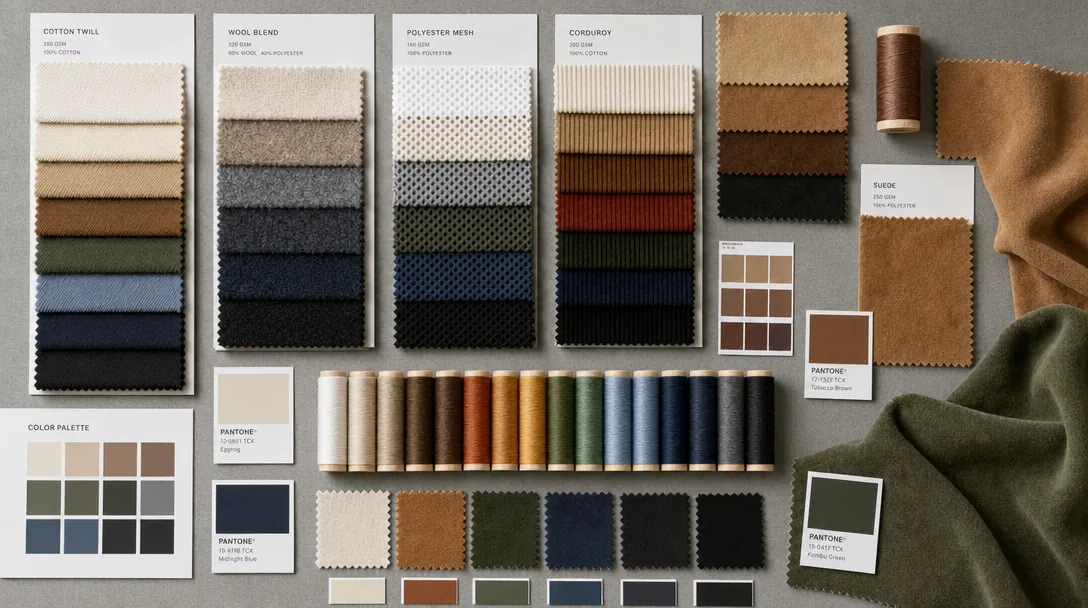
Bucket Hat Corduroy MOQ And Pricing Plan for Custom Hat Buyers
Read article →Sourcing custom hats does not have to be complicated. With the right manufacturing partner, clear specifications and a small upfront investment in sampling, you can launch a retail-quality product in 30 to 45 days.