
Baseball Hats For Men Export Shipping Checklist for Custom Hat Buyers - Cost & MOQ Breakdown - 2026 Buyer's Guide - 2026 Buyer's Guide
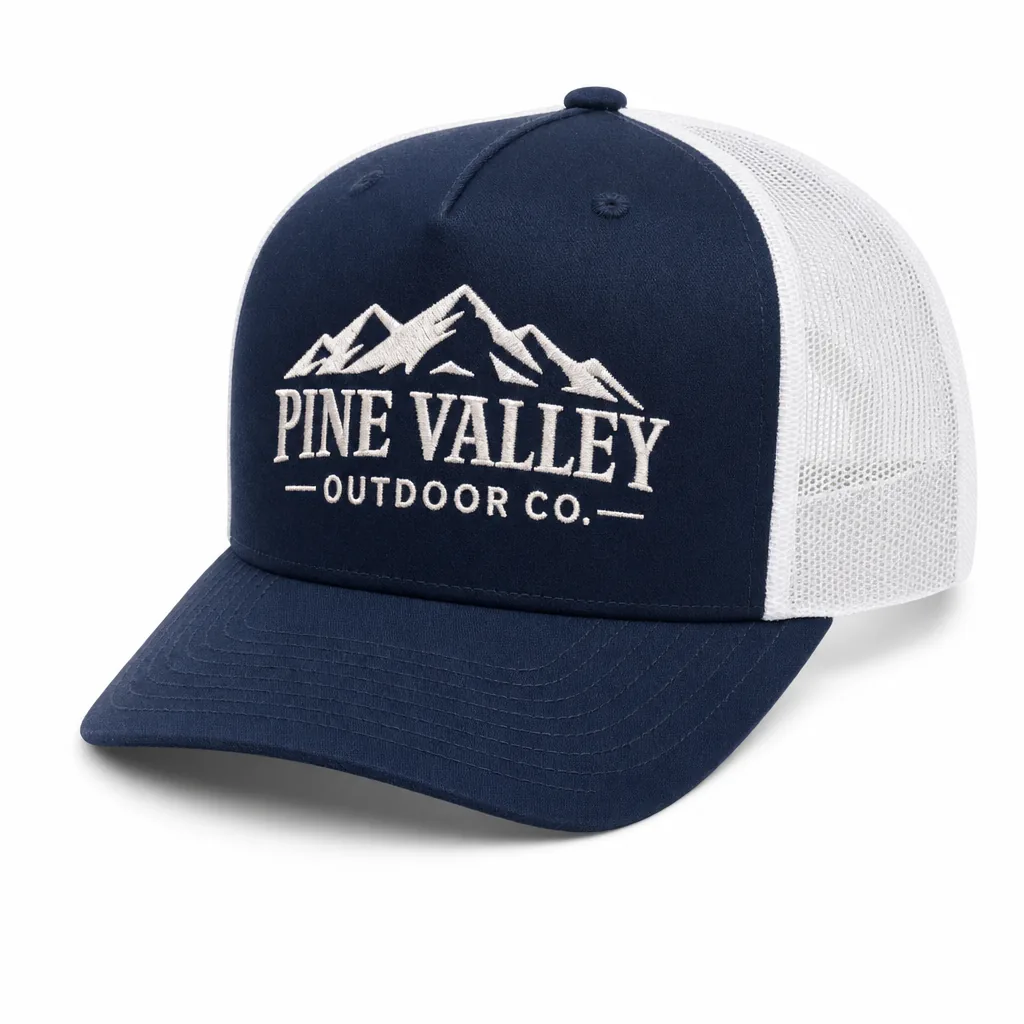
Every week, our sales team answers detailed questions about baseball hats for men export shipping checklist for custom hat buyers - cost & moq breakdown - 2026 buyer's guide - 2026 buyer's guide. We wrote this guide so that wholesalers, streetwear brands, corporate buyers and promotional resellers can compare options with full information, and avoid the traps that show up only after production has started.
Why baseball hats for men export shipping checklist needs a separate sourcing plan
A separate sourcing plan is justified because a baseball hats for men export shipping checklist is mostly about controlling repeatability, not catching obvious sewing flaws. Men’s structured caps get rejected for small tolerance drift that compounds at warehouse level: crown height variance above 3 mm, visor curve mismatch from carton to carton, center-front seam wandering off logo axis, or bulk fabric missing the approved Pantone TCX by more than Delta-E 1.5 under D65 light. On a 1,200-piece run in 270 gsm brushed cotton twill, those issues can turn a visually acceptable order into mixed inventory that retailers will not replenish. Generic cap buying rarely locks the inputs tightly enough; here you need the exact buckram stiffness, sweatband composition such as 65/35 poly-cotton versus 100% cotton, snapback resin grade, peak board thickness, and embroidery underlay strategy for a 6-panel seam on Tajima, Barudan, or ZSK heads. If the file is digitized like a flat panel logo and not compensated for seam push and crown curvature, the defect is baked into every unit before final inspection.
Export exposure is also different because men’s caps are sensitive to pack-out, shape retention, and size consistency after long transit. Fitted runs from 6 7/8 to 7 5/8 do not have closure tolerance to hide production error, so even a 2 mm circumference miss creates returns, especially for team, uniform, and licensed programs. Decoration adds separate risk layers: chenille can fray at the edge, TPU and molded silicone patches can delaminate after cold exposure below 5°C, and heavy patch borders can force needle deflection that distorts topstitch lines. Packaging decisions affect landed cost just as much as factory workmanship; poor nesting and weak carton spec can raise cubic volume by 8% to 15% and crush brim shape before arrival. A solid baseball hats for men export shipping checklist should freeze the BOM, stitch count, closure finish, size spec, carton dimensions, and inspection plan before bulk, usually with AQL 2.5 and majors on logo position, panel symmetry, sweatband join, and brim profile. Our standard practice is to tie that approval set to sedex-audit-cap-supplier-guide.html">BSCI 2.0 or Sedex SMETA 4-Pillar records and the agreed Incoterm, because a cap quoted at $4.20 FOB can land above $6.00 after relabeling, failed inspection, split shipments, or rework on crushed export cartons.
Factory capability checks before quoting
Do not request pricing until the supplier proves it can run your exact decoration on finished caps, not just on flat panels. Most failures in a baseball hats for men export shipping checklist start at quoting stage: a logo approved on screen collapses when it hits a center-front seam, a buckram-backed 6-panel crown, or a curved side panel with only 55 to 65 mm of usable height. For 3D puff, stacked twill patches, or fine text under 4 mm cap height, ask for the actual machine mix and cap capability: Tajima TFMX-IIC, Barudan BEKY, or ZSK Sprint heads with cap drivers, head count, and whether digitizing is done in-house on Wilcom or Pulse. A controlled quote should state estimated stitch count, run speed in stitches per minute, backing type, foam thickness, and sew-out approval method, not just “embroidery included.” Registration tolerance is where weak suppliers expose themselves. On cap embroidery, ±1.0 mm between logo elements is realistic in bulk; anyone promising zero deviation has not spent time on a production line. Ask to see sew-outs from the same machine family used for mass production, plus photos of the inside finish showing backing, trimming, and thread density. If digitizing is outsourced over WeChat, the file often gets optimized for appearance rather than runability, which leads to thread breaks, crown distortion, and inflated rejection rates. Our standard practice is to lock the digitized file, stitch count range, and thread brand before quoting, because changing from Madeira to Gunold, or from flat embroidery to 2 mm EVA puff, changes both cost and output stability immediately.
Material and construction capability tells you more than a low FOB number ever will. Ask for a fabric list with composition, gsm, finish, and color-control method: 270 gsm brushed cotton twill, 300 gsm chino twill, 210 gsm polyester micro-peach, 600D heather oxford, or GRS-certified RPET backed by a valid transaction certificate. Then confirm the factory can build your exact profile from the tech pack: structured 6-panel with 1.8 to 2.0 mm PE buckram, unstructured dad cap with soft front, 5-panel foam trucker with laminated front panel, or sandwich visor with contrast piping and pre-curve mold. A capable factory should be able to quote crown height in centimeters, visor length and radius, seam tape width, sweatband composition, and closure MOQ by type, whether snapback, self-fabric strap with tri-glide, hook-and-loop, fitted, or Flexfit-style elastic. Sample-room speed is another hard filter. A first proto in 3 to 5 working days is normal only if patterning, BOM control, and Pantone TCX references are handled in-house; if they need a week just to confirm visor mold or buckle stock, bulk scheduling will slip. Before approving any quote, ask for BSCI 2.0 or Sedex SMETA 4-Pillar status, needle-control policy, metal-detection flow, carton specification, and final inspection standard—normally AQL 2.5, Level II for export caps. Also verify color tolerance requirements; for branded programs, Delta-E under 1.5 on dyed cotton and under 2.0 on polyester is a reasonable benchmark. That paperwork is not clerical overhead. It tells you whether the factory can ship cleanly under FOB or DDP, or whether your “cheap” order will end in claims over carton collapse, shade variation, and failed final inspection.
MOQ, pricing and sample approval
MOQ drives unit cost more than almost any trim choice, and the biggest mistake is splitting too many colorways before the pattern is proven. For a standard men’s 6-panel baseball cap in 108x58 brushed cotton twill, most factories in Zhejiang will quote 144 to 300 pcs per colorway as an entry MOQ, but FOB efficiency usually does not show up until 500 to 1,000 pcs per style because fabric markers, visor board cutting, sweatband consumption, and embroidery setup all get cleaner. In today’s market, a structured cap with cotton twill shell, 1.8 mm HDPE visor insert, polyester sweatband, plastic snap closure, and flat front embroidery generally falls around $2.30 to $3.40 FOB Ningbo at 500 pcs. Step up to 80/20 acrylic-wool melton, fitted sizing, 3D puff plus side logo, woven loop label, printed seam tape, and retail insert, and you are typically at $4.80 to $6.80 FOB. Fitted runs cost more for a reason: size grading from 6 7/8 to 7 5/8 creates WIP imbalance, extra bundling, and lower line efficiency than OSFM snapbacks.
Sample costs should be separated from bulk pricing, especially when the baseball hats for men export shipping checklist has fixed booking dates. Cap embroidery digitizing usually runs $25 to $60 per logo for Tajima, Barudan, or ZSK cap frames; 3D puff needs a separate file because foam height, underlay density, and stitch path are different from flat embroidery. Good approval is not about chasing the lowest stitch count. On structured crowns, we usually start satin columns around 0.38 to 0.42 mm and fill spacing near 0.40 to 0.45 mm, then adjust after sew-out to avoid tunneling, panel puckering, or front crown collapse. Color approval should be under D65 light with Pantone TCX or coated references; shell fabric is commonly held to Delta-E below 1.5, while embroidery thread often gets a slightly wider visual tolerance because trilobal polyester reflects differently by angle.
PPS approval is where schedules are either protected or lost. The pre-production sample should lock crown height, visor curve, logo position tolerance, eyelet spacing, patch edge finish, inside taping artwork, care label wording, barcode placement, and packing method before bulk cutting. The signed sample package should include a measurement chart with key tolerances of +/-0.5 cm, Pantone callouts, construction notes, and a carton SOP such as 72 pcs per export carton with inner polybag thickness, assortment ratio, and carton drop test requirement. Our standard practice is to tie PPS signoff to the inspection plan, normally AQL 2.5 for final random inspection, so there is no dispute later over loose threads, shape recovery, or embroidery skew. Real lead time is usually 5 to 7 days for a counter sample, 7 to 10 days for PPS after comments, and 25 to 35 days for bulk once shell fabric, buckram, closures, and labels are in-house. For DDP EU or Canada, add roughly $0.45 to $1.20 per cap depending on carton density, HS code treatment, and destination zone, plus at least 7 extra days for booking cutoff and customs file review.
Quality inspection and shipping risk
Most claims on bulk caps come from weak lot inspection, not from the PP sample that looked fine under showroom light. For any baseball hats for men export shipping checklist, shipment should be blocked until final random inspection is completed to ANSI/ASQ Z1.4, General Inspection Level II, with at least AQL 2.5 for major defects and 4.0 for minor defects; high-visibility retail programs often tighten majors to 1.5. On structured 6-panel caps, the defects that actually trigger rework or chargebacks are uneven crown profile, visor length variance, wrong visor curvature, off-center top button, skewed front logo, twisted sweatband join, and closure mismatch. Finished-garment tolerances need to reflect the material: ±0.5 cm on crown height and visor length is realistic on cotton twill or brushed chino, while embroidery placement should stay within ±0.3 cm if the front panel has proper backing and hooping. Anything tighter after washing, steaming, and carton compression is fantasy. Our standard practice is to record measurement data from 13 pieces per style-color, not just pass/fail, because trend drift usually appears by the third repeat order, especially when different sewing lines or cap presses are used.
Color and trim failures cost more than obvious sewing defects because they are harder to argue once goods land. If the spec calls for Pantone TCX or coated Pantone, the lab dip approval should define substrate, light source, and Delta-E limit before bulk dyeing; under D65 lighting, Delta-E below 1.5 is achievable on polyester twill, but brushed cotton, washed canvas, and peach-finish chino are safer at 2.0 or below due to surface nap. Dark navy, black, and red styles should carry test reports for dry/wet crocking, perspiration fastness, and light fastness; I would not ship without at least grade 4 for crocking and grade 4 for color change on perspiration. On Tajima, Barudan, or ZSK heads, inspection needs to catch registration shift, birdnesting under satin columns, loose trims, backing exposure, and fill puckering around low-denier fabrics. Shipping risk starts at PO stage, not when the forwarder asks for a booking. Carton specs should be written into the order: 5-layer export corrugate, burst strength or edge crush target, exact carton size, units per carton, net/gross weight, and whether inner dividers are required to protect visor shape. Marks should include PO, style, color, size range, made-in-China statement, and any FNSKU or routing labels. Before loading, verify HS code, declared value basis, and Incoterm responsibility in writing. FOB from Ningbo or Shanghai works only if the buyer controls cutoff timing and SI accuracy; DDP works only when duty, VAT, customs clearance, and final-mile delivery charges are fixed before ex-factory release. A missed label spec or overweight carton is a small factory mistake that becomes a port delay, re-label fee, or Amazon appointment miss.
Buyer checklist for the next RFQ
A usable RFQ lives or dies on the specs that move cost, not on mood-board language. For a baseball hats for men export shipping checklist, state the construction exactly as the pattern room will build it: 6-panel structured A-frame with buckram, low-profile unstructured dad cap, 5-panel rope cap, true fitted, or trucker with 100% polyester mesh back. Lock fabric by fiber, weight, and finish: 265 gsm brushed cotton twill, 280 gsm chino twill, 210D nylon taslon, 150D polyester microfiber, or 600D rPET for contrast panels. Then define the BOM details buyers often skip but factories charge for: PE board vs. paper board in visor, 7-hole plastic snap vs. self-fabric strap with brass buckle, woven size tape vs. fitted tape, and standard cotton sweatband vs. moisture-wicking polyester. Decoration must include method, position, size, and technical limits. A front logo at 9,000 stitches on 3D puff, a 70 x 50 mm woven patch with 3 mm merrow border, and a 0.8 mm TPU patch all price differently, and each changes sampling risk, lead time, and MOQ. The cleanest RFQs include the files and shipping data that prevent requotes. Send vector artwork in AI, EPS, or press-quality PDF, one marked-up reference image or tech pack, exact quantity by color and size, and one approved color standard. Use Pantone Solid Coated for print inks, plastic trims, and rubber labels; use Pantone TCX for fabric and tape colors. If you do not supply a standard, expect normal lab-dip tolerance around Delta-E 1.5-2.5 under D65 lighting, not a retailer-grade dead match. For embroidery, state max logo width in millimeters and minimum text height; serif text under 4.5 mm usually needs simplification during digitizing on Tajima, Barudan, or ZSK heads. Finish with the commercial terms that actually determine landed cost: EXW, FOB Ningbo, CIF Los Angeles, or DDP to one warehouse, plus cancel date or in-hands date. On 300-1,000 piece orders, air freight commonly adds about $1.20-$3.00 per cap versus sea freight. Add AQL 2.5 final inspection, BSCI 2.0 or Sedex SMETA 4-Pillar requirement, carton cap at 12 kg, pack count such as 24 or 48 pcs, polybag instruction, carton marks, and labeling rules including fiber content, country of origin, and Canadian bilingual compliance.
Working with CrownsForge
Most export delays on men’s caps are engineered in before bulk cutting, not at the port. A practical baseball hats for men export shipping checklist has to start with the tech pack: crown profile, visor curve, front-panel structure, closure type, sweatband spec, fabric gsm, and Pantone references for shell, undervisor, seam tape, button, eyelets, and embroidery thread. For brushed cotton twill, 260-320 gsm is the workable commercial window; below roughly 240 gsm, the front panel loses recovery after compression packing, especially on structured 6-panel shapes with PE buckram. For lightweight performance caps, 105D-168D polyester generally holds color and panel geometry better through 30-45 days in a container than cheaper low-denier shells, and it shows less skew after heat and humidity swings. Strike-offs for embroidery, woven labels, TPU patches, silicone badges, and inner labels should be approved before cutting because decoration changes construction: a 3D puff front logo can shift stitch density by 10%-15%, which alters panel tension, crown height, and how the cap rebounds out of the master carton.
Decoration approval is where inexperienced buyers quietly lose 7-10 days. Our standard practice is to digitize for Tajima, Barudan, and ZSK heads, then run sew-outs on the actual shell fabric, backing, and buckram combination rather than a generic test swatch. A front logo on buckram-backed twill usually runs 8,000-14,000 stitches; add a side hit, back arch, visor sandwich embroidery, or woven flag label and you need to monitor thread trims, needle heat, and registration drift across seams. Patch programs need a separate control plan: merrow edge consistency, heat-press dwell time, adhesive type, and peel strength should be tested at around 40°C simulated container exposure, or edge lift shows up after arrival. Sampling is typically US$35-US$80 per style for a basic embroidered cap and US$90-US$180 when custom-dyed fabric, molded patches, or mixed trims are involved; most factories only credit part of that back once the order reaches 500-1,000 pieces per colorway.
Shipping gets predictable only when QC, labeling, and carton planning are locked together before booking. CrownsForge usually runs inline checks plus final random inspection to AQL 2.5 for majors and 4.0 for minors, with carton drop tests, barcode scans, needle logs, measurement verification, and packing-count reconciliation before cargo release. Reasonable cap tolerances are around ±0.5 cm on crown height and visor width, but export failures are more often documentation errors than sewing defects: PO number, HS code, fiber content, country-of-origin marking, FNSKU or retailer carton marks, and warning labels all need to match the invoice and packing list exactly. Canada is especially unforgiving on bilingual labeling. MOQ is normally 144 pcs per color for stock-fabric basics, 300-500 for custom-dyed fabric or mixed decoration, and 1,000+ when proprietary metal closures or exclusive trims are involved. For landed cost, ocean ex-Ningbo is still the cheapest on volume; for replenishment, DDP air to the U.S. or Canada usually adds about US$1.80-US$3.50 per cap depending on season, carton density, and chargeable weight.
Frequently Asked Questions
How long does production take?
Sampling takes 7 to 12 days. Bulk production runs 20 to 30 days depending on quantity, fabric availability and decoration complexity. Inspection and packing adds another 3 to 5 days before shipment.
Do you support sustainability certifications?
Yes. We work with GOTS organic cotton, GRS-certified recycled polyester, OEKO-TEX Standard 100 fabrics, and are BSCI and Sedex audited. Certification documentation can be provided per order.
What file format should I send for my logo?
Vector files (AI, EPS, PDF) are ideal. High-resolution PNG or JPG at 300 dpi on transparent background works as a fallback. Provide Pantone color references for accurate reproduction.
What is the minimum order quantity (MOQ) for custom hats?
Our standard MOQ is 100 pieces per design and color, with sampling available from 1 piece. For complex multi-color logos or premium fabric upgrades, the MOQ can be lowered with a small per-piece surcharge.
Can I order a sample before bulk production?
Yes. We strongly recommend approving a pre-production sample before mass production. Samples are charged at 35 to 60 USD each plus express shipping, fully refundable against confirmed bulk orders over 500 pieces.
How does ordering custom fitted hats for men work?
When evaluating custom fitted hats for men, the key considerations are construction quality, decoration capability, MOQ flexibility and lead time. Explain the buyer intent behind baseball hats for men export shipping checklist, when it differs from generic hat sourcing, and what decisions affect cost, lead time and compliance. Describe how CrownsForge manages baseball hats for men export shipping checklist programs with sampling, decoration, QC and export coordination.
What should buyers know about nike bucket hats for men?
When evaluating nike bucket hats for men, the key considerations are construction quality, decoration capability, MOQ flexibility and lead time. Explain the buyer intent behind baseball hats for men export shipping checklist, when it differs from generic hat sourcing, and what decisions affect cost, lead time and compliance. Describe how CrownsForge manages baseball hats for men export shipping checklist programs with sampling, decoration, QC and export coordination.
How does ordering custom embroidered baseball hats work?
When evaluating custom embroidered baseball hats, the key considerations are construction quality, decoration capability, MOQ flexibility and lead time. Explain the buyer intent behind baseball hats for men export shipping checklist, when it differs from generic hat sourcing, and what decisions affect cost, lead time and compliance. Describe how CrownsForge manages baseball hats for men export shipping checklist programs with sampling, decoration, QC and export coordination.
How does ordering custom leather patches for hats work?
When evaluating custom leather patches for hats, the key considerations are construction quality, decoration capability, MOQ flexibility and lead time. Explain the buyer intent behind baseball hats for men export shipping checklist, when it differs from generic hat sourcing, and what decisions affect cost, lead time and compliance. Describe how CrownsForge manages baseball hats for men export shipping checklist programs with sampling, decoration, QC and export coordination.
What is the best shipping method for hats?
It's always better to package the hat in a size-appropriate box and not mash it into a smaller one. In some instances, maybe you don't need a box. Instead of always using a box, you can choose to ship soft and bendable hats in a plastic shipping bag with some protective material.
Looking for a reliable hat manufacturer in China?
CrownsForge has produced custom hats for 800+ brands across 40 countries. From 100-piece launches to 100,000-piece retail programs, we deliver on time and on spec.
Get in touchRelated guides
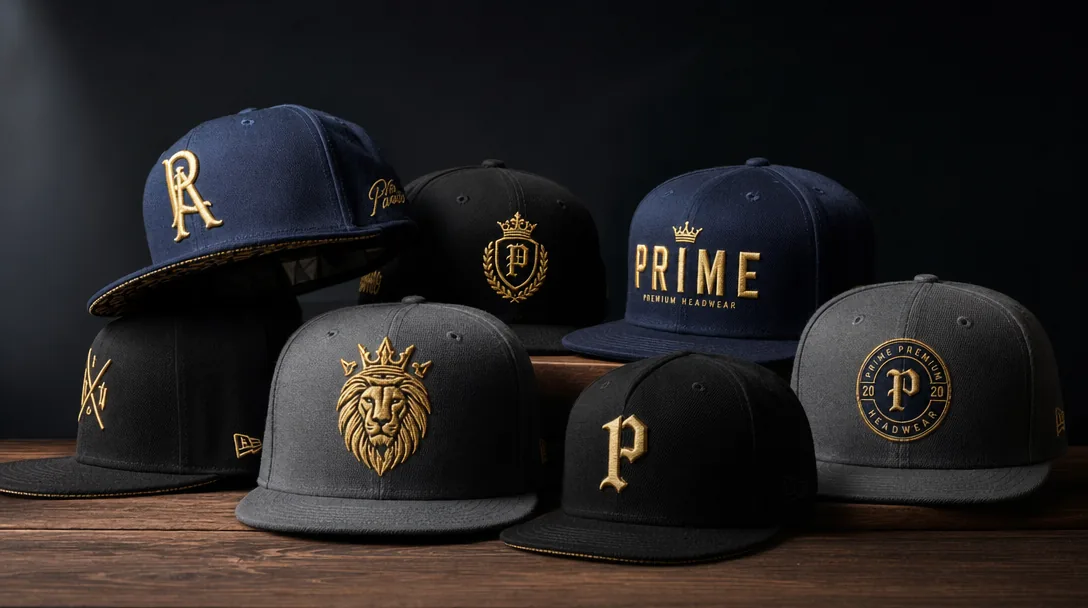
Custom Leather Patch Hat Low Minimum: A 2026 B2B Sourcing Guide
Read article →
Mens Beanies: Properties, Costs and How to Spec It Right
Read article →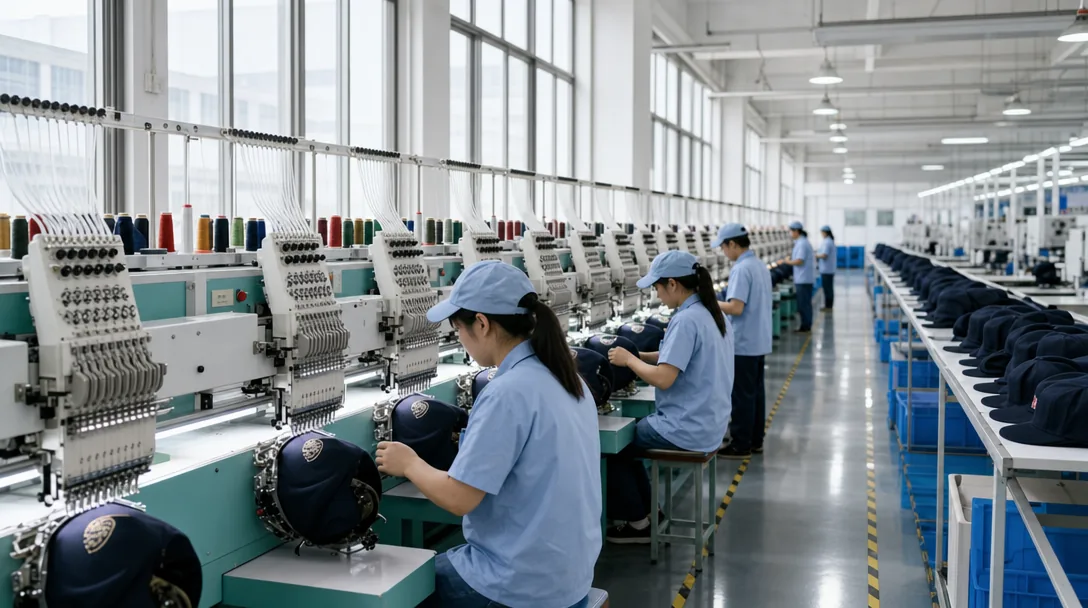
Bulk Trucker Hats Export Shipping Checklist for Custom Hat Buyers - Cost & MOQ Breakdown - Supplier Checklist
Read article →We hope this guide demystifies baseball hats for men export shipping checklist for custom hat buyers - cost & moq breakdown - 2026 buyer's guide - 2026 buyer's guide and helps you move forward with confidence. If you have questions specific to your project, our English-speaking sales engineers are one message away.