
Ball Caps for Men: A 2026 Sourcing Playbook for International Buyers - Supplier Checklist
Every week, our sales team answers detailed questions about ball caps for men: a 2026 sourcing playbook for international buyers - supplier checklist. We wrote this guide so that wholesalers, streetwear brands, corporate buyers and promotional resellers can compare options with full information, and avoid the traps that show up only after production has started.
Dad Hats for Men
Dad hats succeed or fail on soft construction control, not on the front-panel support that works for more structured ball caps for men. If the crown stands up by itself, the pattern is already wrong. The most reliable specs are still 6-panel builds in 100% cotton twill at 220-260 gsm, brushed chino at 240-280 gsm, or washed canvas around 8-10 oz, with crown depth held at 8.5-9.2 cm and a pre-curved visor at 7.0-7.5 cm finished with 4-6 rows of stitching. On the line, panel joining and eyelets are typically sewn on Juki single-needle machines, the visor is set with a PE insert, and the back closure is finished with self-fabric tuck strap, tri-glide buckle, or antique-brass clasp depending on price point. If you want a broken-in handfeel, freeze the garment-wash standard early. Pre-wash lab dips are useful, but the sealed post-wash sample is what protects you from seam torque, crown distortion, and uneven shade after bulk laundering. For repeat orders, I would not accept color drift beyond Delta-E 1.5 against the approved wash standard.
Most buyer tech packs for dad hats are still too vague to control production. Specify fiber content, finished fabric weight with ±5% tolerance, base head size at 58 cm, visor length, closure hardware finish, sweatband width and material, top button construction, and exact visor stitch count. Decoration needs the same discipline. Flat embroidery runs cleanly on Tajima or Barudan heads, but 3D puff on an unstructured dad hat usually collapses unless the front panel gets backing or hidden support, which changes the silhouette and defeats the point of the style. For washed black, khaki, and vintage olive, reference Pantone TCX before wash, then approve the final washed tone because that is the actual ship standard. In Zhejiang, stock-fabric MOQ is commonly 144-300 pieces per colorway, while custom-dyed fabric usually starts at 500-1,000 pieces. A plain washed cotton dad hat typically lands around $2.10-$3.40 FOB; embroidery, upgraded metal hardware, inside taping print, or woven labels add roughly $0.12-$0.65 per cap depending on order size.
Inspection is where weak suppliers get exposed fast. The repeat failures on dad hats are visor skew over 3 mm, rear-opening puckering, off-center embroidery, trapped thread ends under the sweatband, wash-cast variation between lots, and low-grade buckle plating that fails rub or 24-hour salt-spray testing. For blank programs, lot consistency matters more than single-sample appearance; mixed production lines often create visible differences in crown depth, fabric hand, and sweatband absorbency inside the same shipment. AQL 2.5 is the right export baseline, but for this category I would also measure visor symmetry, crown depth, rear-strap alignment, and wash shade inline instead of waiting for final random inspection. Carton compression testing matters more than many buyers realize because low-profile soft caps deform faster than rigid ball caps for men when master cartons are packed too tight. Buyers who control fit, wash character, and lot-to-lot consistency usually get a stable replenishment program; buyers who buy only on the lowest FOB price usually end up paying for returns, shade claims, and reorder delays.
Ball Caps for Women
Women’s caps should be engineered as a separate fit block, not treated like a reduced version of ball caps for men. The crown usually needs to come down to 8.5-9.5 cm from the 10-11 cm common on standard men’s blocks, with a narrower visor and a higher back opening so the strap does not press into the occipital bone. Fabric choice matters more than many buyers expect: 180-260 gsm washed cotton twill is the safe window for low-profile builds, because lighter cloth collapses after enzyme or pigment wash, while heavier twill makes the silhouette look stiff and bulky. Color control also needs to be tighter on fashion-forward women’s programs; lock Pantone TCX standards for shell, eyelets, top button, closure tape, and sweatband, then hold bulk production to Delta-E below 1.5 under D65 lighting against the approved standard. On the production side, a women’s low-profile cap often requires its own cutting marker, lighter buckram at 0.35-0.45 mm instead of the 0.50 mm frequently used in structured ball caps for men, and a separate embroidery placement template. On a shallow crown, even 3-5 mm of logo drift is obvious, so front embroidery positioning on Tajima or Barudan cap frames has to be reset rather than copied from the men’s program. A usable RFQ should specify panel construction, brim insert material, sweatband fiber content, stitch count, seam taping, closure type, and hardware finish. In Yiwu and Dongguan, practical MOQs are usually 144-300 pieces per colorway on stock fabric, while dyed-to-match programs with custom webbing or trims typically start at 500-1,000 pieces. Current FOB China pricing is about $2.10-3.40 for basic brushed twill, $2.80-4.20 for pigment-washed caps, and $4.80-7.50 for fashion builds with satin lining, custom labels, and upgraded metal hardware.
Inspection is where weak suppliers get exposed fastest. The most common failures on women’s caps are visor asymmetry beyond 3 mm, off-center front embroidery, puckering around ponytail openings or strap exits, exposed seam allowance at the sweatband join, and shade variation between shell and closure after wash. Because the crown is lower, placement tolerance should be controlled at 3 mm rather than the looser 5 mm many factories use on ball caps for men. Embroidery quality also needs closer review on shallow blocks: satin stitch fills above roughly 8,000-10,000 stitches will pucker quickly if the digitizing, underlay, or cap frame setup is wrong. ZSK, Tajima, and Barudan machines can all hit the standard, but only when the digitized file is built for the actual cap block instead of recycled from a men’s style. A practical inspection protocol is AQL 2.5 with specific checkpoints for visor curve symmetry, wash-lot color continuity, closure pull strength, top-button centering, and wear-fit on at least two female headforms rather than flat measurement alone. Our standard practice is to compare bulk goods against a sealed golden sample and verify back-opening alignment, sweatband comfort, and embroidery registration before packing approval. For buyers developing women’s styles alongside ball caps for men, this is a real capability test, not a minor fit variation. A supplier that can maintain separate fit blocks, stable color matching, and consistent branding across both programs is usually the same supplier that can hold replenishment accuracy, carton-level assortment control, and repeatable quality over multiple production runs.
Country Hats for Men
Country hats for men look familiar on the outside, but they price very differently from standard ball caps for men once you start layering trim. Set the shell first: 5-panel rope cap, 6-panel curved-brim cap, foam-front trucker, or mesh-back snapback, then cost the extras one by one. A 5 mm braided rope, contrast underbill, faux-suede visor edge, merrowed patch, or chenille-plus-chainstitch front graphic all add separate handling steps and more defect risk. For fabric, I would start with 10x10 cotton twill at 220-260 gsm, brushed chino around 230-250 gsm, or 65/35 poly-cotton canvas when the buyer wants lower shrinkage and better abrasion resistance. If body, rope, and binding must match, put Pantone TCX references in the tech pack and hold dyed-lot tolerance to Delta-E 1.5-2.0 under D65 lighting; otherwise “khaki” from three suppliers becomes three different colors in bulk. Embroidery is where country styling usually goes wrong. Script lettering, satin borders, and badge layouts can run clean on Tajima or Barudan heads, but only if the digitizing is tuned for the substrate, center seam, and front-panel backing. On brushed twill or heavier chino, an 8,000-10,000 stitch logo is still manageable; once you add thick buckram, applique, or chainstitch detail, puckering and tunneling increase fast if stitch density is not reduced. That is why buyers get burned when they benchmark these styles against basic promotional ball caps for men. Decorative trim can add $0.60-$1.80 FOB per piece on a China order, and the extra labor stations often create more rejects than the base cap construction itself.
The tech pack needs measurable tolerances, not lifestyle language. Specify crown height in mm, brim length and width, visor curve profile, PE or EVA visor board, front-panel backing, eyelet type, sweatband material, snap gauge, seam taping, stitch count, logo placement tolerance, and carton ratio by color. If the cap needs a worn-in hand, separate enzyme wash, garment wash, and pigment wash in the spec because they do not behave the same. Poor wash control can push shade variation past Delta-E 3.0, warp visor board, and create visible panel-to-panel mismatch. In practice, MOQ is usually 144-300 pieces per color for a simple embroidery cap, but rope color changes, mixed fabrics, custom inside tape, woven labels, or applique normally push efficient production closer to 500-1,000 pieces per style. Inspection is where margin gets protected. The recurring failures on country hats are rope misalignment, uneven brim curvature, thread breaks in serif lettering, bulky sweatband joins at the back closure, loose top-button wrapping, and wash shade variation between panels cut from different rolls. For mesh-back versions, test snap engagement and mesh recovery after carton compression; cheap polyester mesh can stay crushed and makes the cap look flat on arrival. A workable standard is AQL 2.5 for major defects and 4.0 for minor, with logo position within +/-2 mm and finished circumference within +/-5 mm. Our standard practice is to confirm sedex-audit-cap-supplier-guide.html">BSCI 2.0 or Sedex SMETA 4-Pillar status, verify whether embroidery runs in-house on Tajima, Barudan, or ZSK heads, and list every subcontracted process before bulk approval.
Toilet Bolt Caps
Toilet bolt caps should be deleted from a sourcing brief for ball caps for men because they push the supplier into the wrong costing model, wrong HS code assumptions, and wrong compliance workflow. On the factory floor, these are entirely separate product families. Toilet bolt caps are injection-molded PP, ABS, or HDPE components produced from single- or multi-cavity tools, where the critical variables are resin grade, shrinkage rate, wall thickness, gate position, and retention geometry. Men’s caps are cut-and-sewn items built from 10 oz cotton twill, brushed chino, 210D nylon taslon, 100% polyester microfibers, or trucker mesh, then decorated on Tajima, Barudan, or ZSK embroidery heads. If a buyer leaves bathroom hardware language inside a cap RFQ, the merchandiser often pulls the wrong supplier base, and the quote comes back distorted on MOQ, sampling fee, and lead time. For color, plastics may be controlled to Delta-E 1.5-2.0 against an approved chip, while cap programs more often rely on Pantone TCX or dyed-lab-dip approvals tied to fabric lots, not molded resin.
If the actual project is toilet bolt caps, the RFQ should call out outer diameter, overall height, snap-fit dimensions, base washer inclusion, gloss level, pack count per inner box, and whether the part must meet REACH or RoHS declaration requirements for EU or UK import. Tooling for a simple custom mold usually sits around USD 800-2,500, with MOQ commonly 3,000-10,000 pieces per color and ex-works pricing around USD 0.03-0.12 each before blister packing or custom masterbatch. QC should focus on flash, sink marks, short shots, tab brittleness, retention force, and yellowing after heat or UV exposure, typically checked under AQL 2.5 with fit tests on actual bolts. If the real requirement is ball caps for men, strip this line item out and force the brief back to cap variables that matter: 5-panel or 6-panel construction, crown height, brim curve, fabric gsm, sweatband composition, closure type, stitch density, seam tape, visor board spec, and embroidery size limits. Mixed-category briefs waste sampling rounds and almost always create avoidable errors in freight cube, duty forecasting, and final landed cost.
Embroidered Caps Wholesale
Embroidery quality is decided at digitizing, not during final inspection. In an embroidered caps wholesale program, the logo file, stitch path, and cap construction have to be engineered as one package: 3D puff on a high-profile 6-panel cap with buckram-backed front panels needs different underlay, density, and pull compensation than flat embroidery on brushed chino or 150D recycled polyester. Most reliable factories digitize in Wilcom and sample on Tajima, Barudan, or ZSK multi-head machines with 9 to 15 needles, usually embroidering front panels before crown closing so hoop tension, arc shape, and center-front alignment stay consistent. For ball caps for men, buyers should specify logo size in millimeters, stitch type, thread material and ticket size, 120D/2 rayon versus polyester, foam thickness for puff work, backing, and Pantone reference. If the design has licensed colors or retail approval standards, set a Delta-E tolerance against the approved thread card or lab dip; otherwise a 2,000-piece order can easily turn into a dispute over what “navy” or “athletic gold” was supposed to mean.
A workable spec sheet goes well beyond artwork. Lock down crown height, visor curve, closure type, sweatband composition, eyelet finish, seam tape print, fabric weight, and SPI, because embroidery tension changes how the front panel sits and recovers after packing. A realistic BOM for custom ball caps for men might call for 108x58 cotton twill at 260 gsm, PE buckram on the front panels, 8-row visor stitching, a 20 mm woven label, a 12 mm top button, and a front logo running roughly 4,000 to 8,000 stitches. MOQ is commonly 144 to 300 pieces per color for straightforward runs, but pricing gets materially better at 500 to 1,000 pieces, especially once you add side hits, back embroidery, woven labels, or printed internal tape. In Yiwu or Dongguan, a standard embroidered cap is typically around $2.20 to $4.80 FOB China; 3D puff, applique, metallic thread, or extra embroidery locations usually add $0.18 to $0.75 per cap.
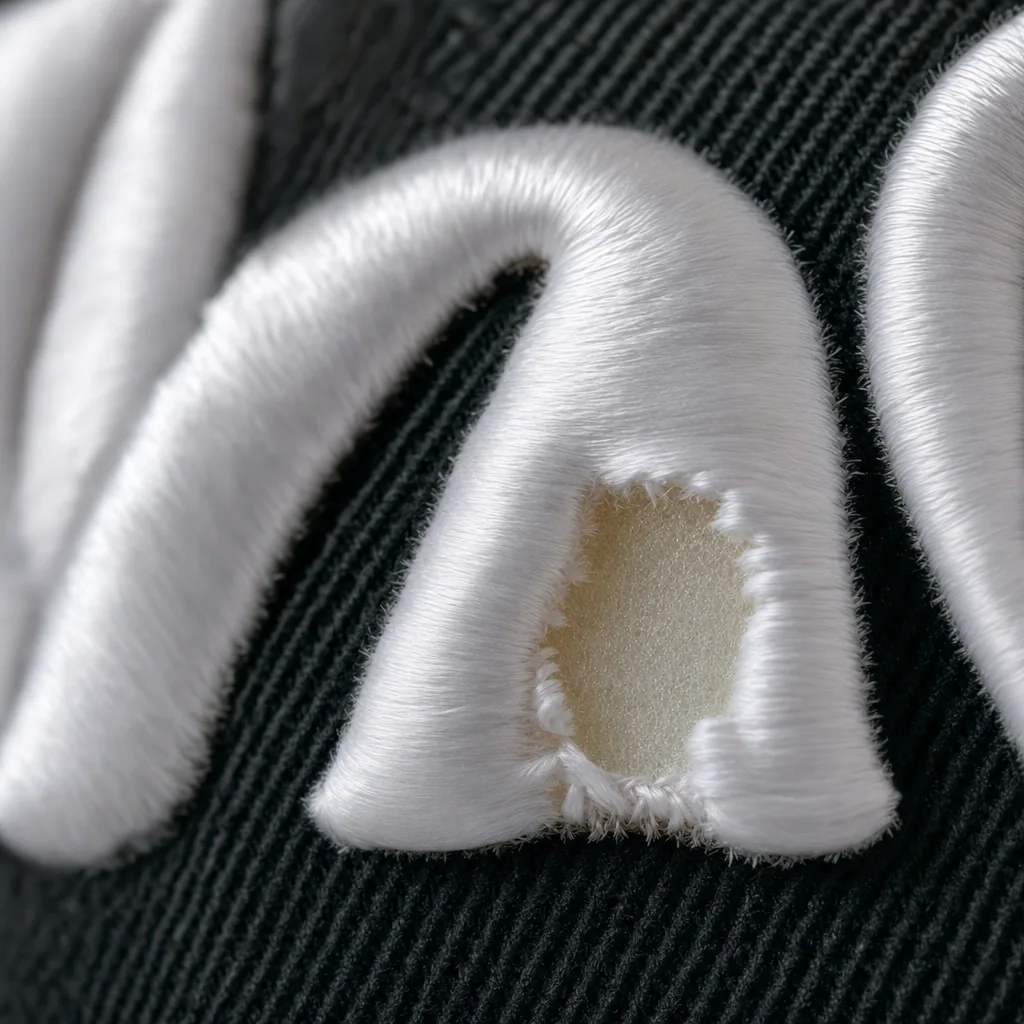
Inspection points are predictable, so put them into the PO instead of arguing after cartons are sealed. The repeat failures are off-center logos, exposed foam on puff embroidery, poor registration between fill and border stitches, puckering from excessive top-thread tension, needle cuts on lightweight polyester, loose thread tails, and crown distortion when embroidery is done after assembly. I would inspect to AQL 2.5, measure logo placement from the center-front seam and visor edge, test dark thread for crocking onto white sweatbands, and verify shade under D65 lighting. Pre-production panel approval matters even more when the same artwork is being used across low-profile, mid-profile, and high-profile silhouettes, because a file that looks balanced on one shape can look undersized, crowded, or top-heavy on another. In ball caps for men, retail buyers usually expect cleaner front presentation, tighter left-right symmetry, and fewer visible embroidery defects than they will tolerate in promotional-grade headwear.
Wholesale Embroidered Caps
Embroidery quality is decided at digitizing, not rescued at final inspection. For wholesale embroidered caps, require a sew-out on the exact shell fabric, buckram, and crown profile you will buy, because the same file behaves differently on a structured 6-panel 260 gsm cotton twill cap than on an unstructured brushed 180 gsm polyester body. A competent tech pack should lock down panel construction, crown height, visor curve, closure type, sweatband composition, logo position, finished logo size in millimeters, stitch count range, backing type, and thread standard by Pantone TCX or approved physical card. On Tajima or Barudan cap frames, serif letters under 4 mm high and satin columns below 0.8 mm routinely close up, while fills over heavy twill can pucker unless underlay, pull compensation, and density are tuned for that specific shell. Good ball caps for men are engineered around crown shape and fabric hand, not decorated like generic blanks after the fact.
Pricing only stays predictable when the spec is tight. In China, workable MOQ is usually 144 to 300 pieces per colorway on stock cotton twill or polyester caps; washed denim, 8-wale corduroy, suede-touch microfiber, and recycled RPET more often start at 300 to 500 because dye-lot control and fabric booking are less forgiving. A standard 100% cotton twill cap with flat or light 3D embroidery typically lands around FOB China USD 2.30 to 4.90, while cut-and-sew panels, sandwich brim, woven flag label, custom metal buckle, printed seam tape, or a second logo position will push many programs above USD 5.50. Ask suppliers to break out the embroidery adder separately: a clean 5,000 to 8,000-stitch front logo may add only USD 0.18 to 0.45, but dense multi-location embroidery can exceed USD 0.80 and slow line output on ZSK or Barudan heads.
Inspection is where weak cap programs lose margin. The repeat defects are off-center front logos, loose jump stitches, poor trimming, fill distortion, hoop marks, crown dents from over-tensioned framing, visor asymmetry, and thread shade drift versus the approved standard. Practical controls are straightforward: logo position tolerance within plus or minus 2 mm, thread color approval under D65 lighting, and bulk inspection to AQL 2.5 with focused checks on closure function, sweatband seam consistency, panel matching, and carton assortment accuracy. For retail-grade ball caps for men, ask whether the factory will issue pre-production photos and a top-of-production sample, whether the cap frame matches the crown height, and whether embroidery runs on Tajima, Barudan, or ZSK heads. Stitch count alone is a bad buying metric; 12,000 poorly digitized stitches look cheaper at retail than 7,500 stitches that sit cleanly on the crown.
Working with CrownsForge for ball caps for men programs
The make-or-break issue in ball caps for men programs is sample fidelity, not saving $0.18 per unit and then paying for a bad bulk run. A factory worth shortlisting should convert a tech pack into a first-pass approval sample that hits crown profile, visor angle, front-panel height, logo position, and closure spec without hand-holding. In real production, a blank fit sample usually takes 3 to 5 working days, a decorated prototype 5 to 7 days, and a fully custom development with lab-dipped shell fabric, molded TPU patch, or proprietary metal trim 10 to 14 days. MOQ also needs to be stated plainly: 144 pcs per colorway is normal for stock 100% cotton twill or brushed chino; a custom block, custom-dyed shell, or special closure generally pushes the floor to 300 to 500 pcs per style-color. The pre-production sample is the control sample for bulk, and buyers should treat it that way. Crown height should be checked to the approved spec within +/-3 mm, visor curve should match the approved forming jig, and front-panel stiffness should be tied to a defined buckram weight and handfeel, not vague language like “firm.” Before bulk cutting, sign off stitch density, eyelet spacing, top-button centering, sweatband construction, seam taping, and closure pull strength. At CrownsForge, this is where preventable defects usually surface: high-profile shapes collapsing after wash tests, under-visors torquing because panel tension was uneven, or hook-and-loop tabs losing grip after repeated open-close cycles.
Decoration is where factories either prove technical depth or start improvising. For ball caps for men, serious in-house capability should cover flat embroidery, 3D puff, felt appliqué, woven labels, heat-transfer graphics, screen print on foam fronts, sublimated sandwich brims, and patch application for TPU, PU leather, chenille, and merrowed badges. Machine platform matters: Tajima, Barudan, and ZSK multi-head embroidery lines hold registration better on cap fronts, especially when a 5 mm serif, satin border, or narrow fill outline leaves no room for drift. Thread approval should be referenced against Pantone TCX or TPG standards, with an agreed Delta-E tolerance when the embroidery sits next to dyed shell fabric. Puff embroidery on acrylic twill may run clean with 2 to 3 mm foam and reduced stitch density; the same file can pucker washed chino or brushed cotton if digitizing is not adjusted. Process discipline matters just as much as decoration. A reliable supplier should be able to show current BSCI 2.0 or Sedex SMETA 4-Pillar audit reports, needle-control logs, and support for REACH, CPSIA, azo dye, or Proposition 65 testing when the destination market requires it. Bulk control should follow a fixed path: tech pack review, digitizing approval, fabric and trim card sign-off, pre-production approval, inline inspection, and final inspection to AQL 2.5 before carton sealing. After sample approval, standard lead time is typically 25 to 35 days; programs using custom-dyed 300 to 340 gsm canvas, recycled polyester shells, or multiple patch applications often need longer. FOB Ningbo or Shanghai is usually cleaner for experienced importers, while DDP often makes more sense for smaller buyers who need tighter landed-cost control and fewer logistics handoffs.
Frequently Asked Questions
What logo decoration techniques do you offer?
3D puff embroidery, flat embroidery, woven patch, leather patch, PVC patch, screen printing, sublimation, applique and laser etching, all in-house with no subcontracting.
What file format should I send for my logo?
Vector files (AI, EPS, PDF) are ideal. High-resolution PNG or JPG at 300 dpi on transparent background works as a fallback. Provide Pantone color references for accurate reproduction.
How long does production take?
Sampling takes 7 to 12 days. Bulk production runs 20 to 30 days depending on quantity, fabric availability and decoration complexity. Inspection and packing adds another 3 to 5 days before shipment.
Do you support sustainability certifications?
Yes. We work with GOTS organic cotton, GRS-certified recycled polyester, OEKO-TEX Standard 100 fabrics, and are BSCI and Sedex audited. Certification documentation can be provided per order.
What is the minimum order quantity (MOQ) for custom hats?
Our standard MOQ is 100 pieces per design and color, with sampling available from 1 piece. For complex multi-color logos or premium fabric upgrades, the MOQ can be lowered with a small per-piece surcharge.
What's the MOQ for custom leather patch hats no minimum?
When evaluating custom leather patch hats no minimum, the key considerations are construction quality, decoration capability, MOQ flexibility and lead time. Cover everything buyers ask about dad hats for men: how it's manufactured, what specs to request from a factory, typical MOQ and pricing, common quality issues to inspect for, and how this ties back to the broader ball caps for men sourcing decision. Cover everything buyers ask about country hats for men: how it's manufactured, what specs to request from a factory, typical…
What's the MOQ for custom new era 59fifty fitted hats no minimum?
When evaluating custom new era 59fifty fitted hats no minimum, the key considerations are construction quality, decoration capability, MOQ flexibility and lead time. Cover everything buyers ask about dad hats for men: how it's manufactured, what specs to request from a factory, typical MOQ and pricing, common quality issues to inspect for, and how this ties back to the broader ball caps for men sourcing decision. Cover everything buyers ask about country hats for men: how it's manufactured, what specs to request from a factory, typical…
What should I know about custom bulk trucker hats?
When evaluating custom bulk trucker hats, the key considerations are construction quality, decoration capability, MOQ flexibility and lead time. Cover everything buyers ask about dad hats for men: how it's manufactured, what specs to request from a factory, typical MOQ and pricing, common quality issues to inspect for, and how this ties back to the broader ball caps for men sourcing decision. Cover everything buyers ask about country hats for men: how it's manufactured, what specs to request from a factory, typical…
What's the MOQ for custom embroidered trucker hats no minimum?
When evaluating custom embroidered trucker hats no minimum, the key considerations are construction quality, decoration capability, MOQ flexibility and lead time. Cover everything buyers ask about dad hats for men: how it's manufactured, what specs to request from a factory, typical MOQ and pricing, common quality issues to inspect for, and how this ties back to the broader ball caps for men sourcing decision. Cover everything buyers ask about country hats for men: how it's manufactured, what specs to request from a factory, typical…
What does a 47 on a baseball cap mean?
The '47 or 47 on hats and caps refers to the '47 Brand company. '47 refers to 1947, which is the year that the '47 Brand company was started by Italian immigrant brothers, Henry D'Angelo and Arthur D'Angelo.
What is the difference between a ball cap and a baseball cap?
Technically, baseball hats are structured ball caps designed for team uniforms. They originated with MLB players in the 1800s. Today, they have evolved into the iconic six-panel cap with a stiffer crown and bill. Today, they're used to make a fashion statement and as a functional accessory.
Ready to start your custom hat project?
Send us your tech-pack, sketch or even just an inspiration photo. We will respond with a detailed quotation and digital mock-up within 24 hours.
Request a free quoteRelated guides
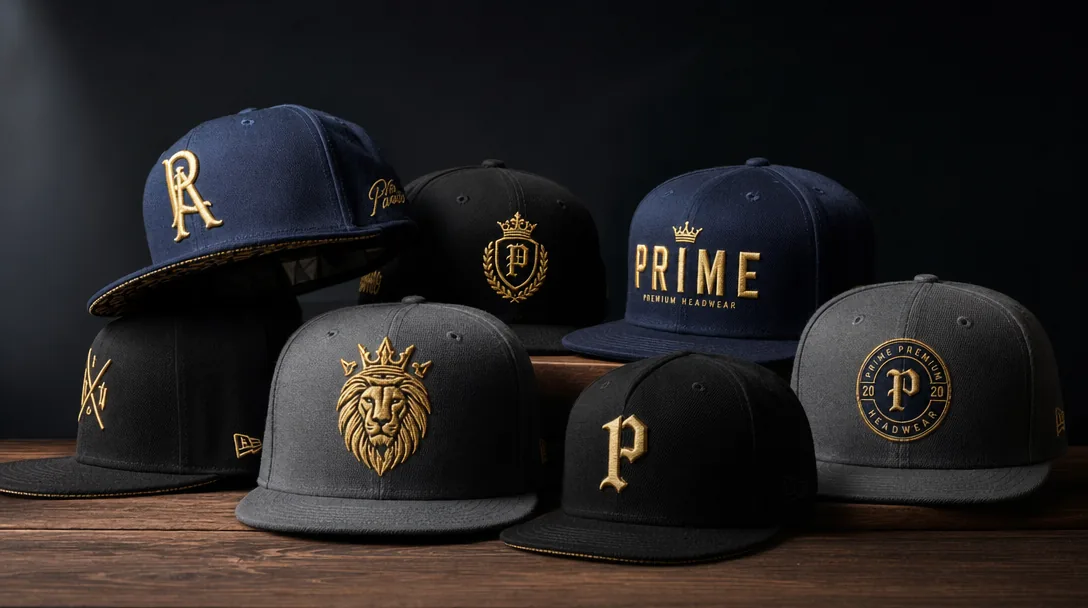
Refreshing a Hat Collection: A Repeat-Order Playbook for Established Brands - Supplier Checklist
Read article →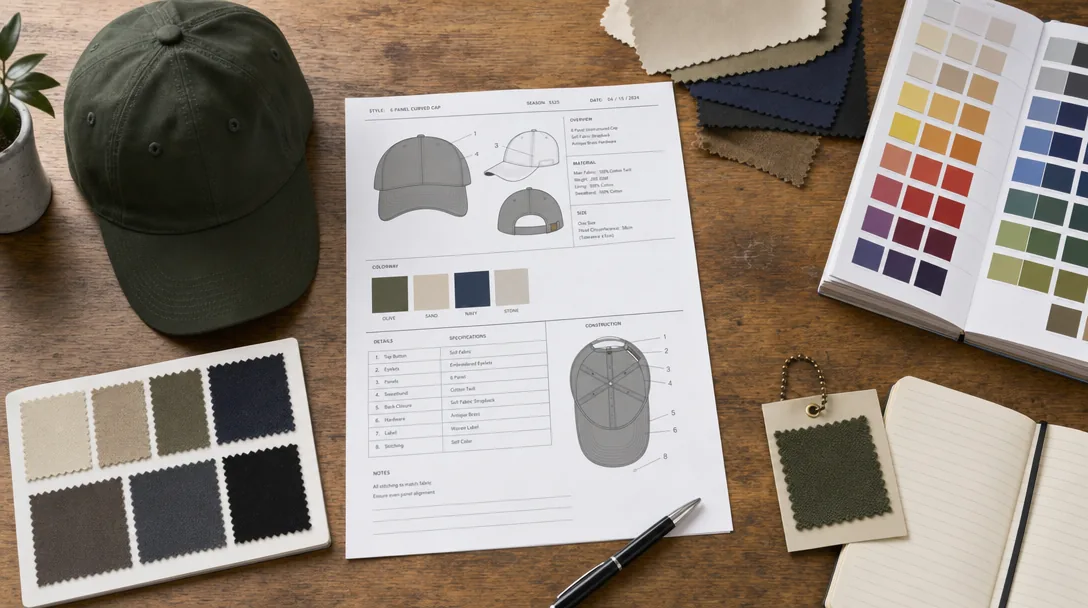
Switching Hat Manufacturers Mid-Program Without Losing Quality - Cost & MOQ Breakdown
Read article →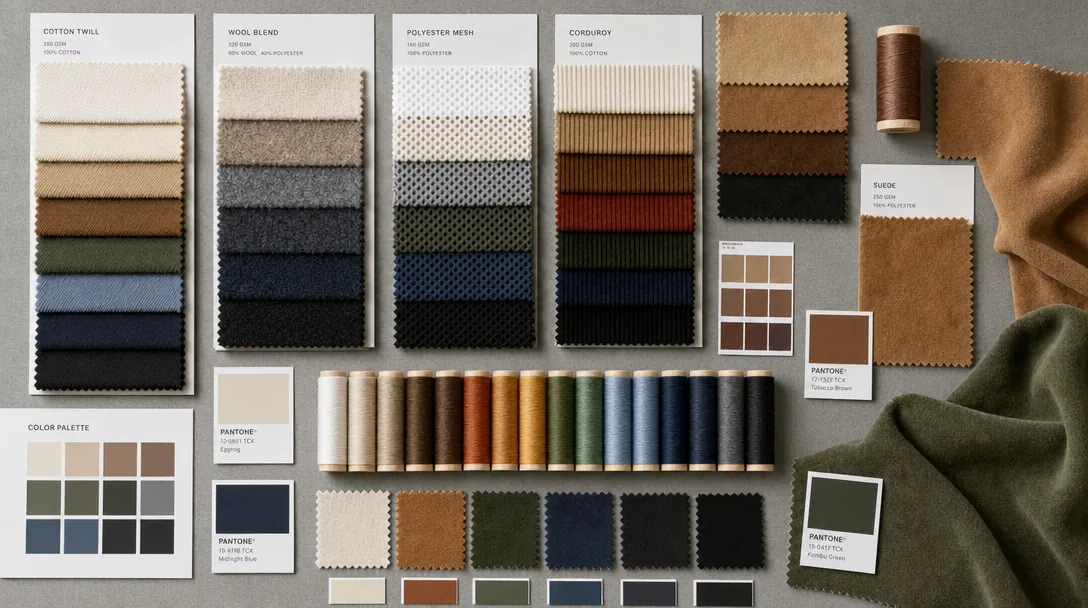
Bucket Hat Women: Properties, Costs and How to Spec It Right - Cost & MOQ Breakdown
Read article →Sourcing custom hats does not have to be complicated. With the right manufacturing partner, clear specifications and a small upfront investment in sampling, you can launch a retail-quality product in 30 to 45 days.