
Acrylic Beanie: Properties, Costs and How to Spec It Right (2026 Update)
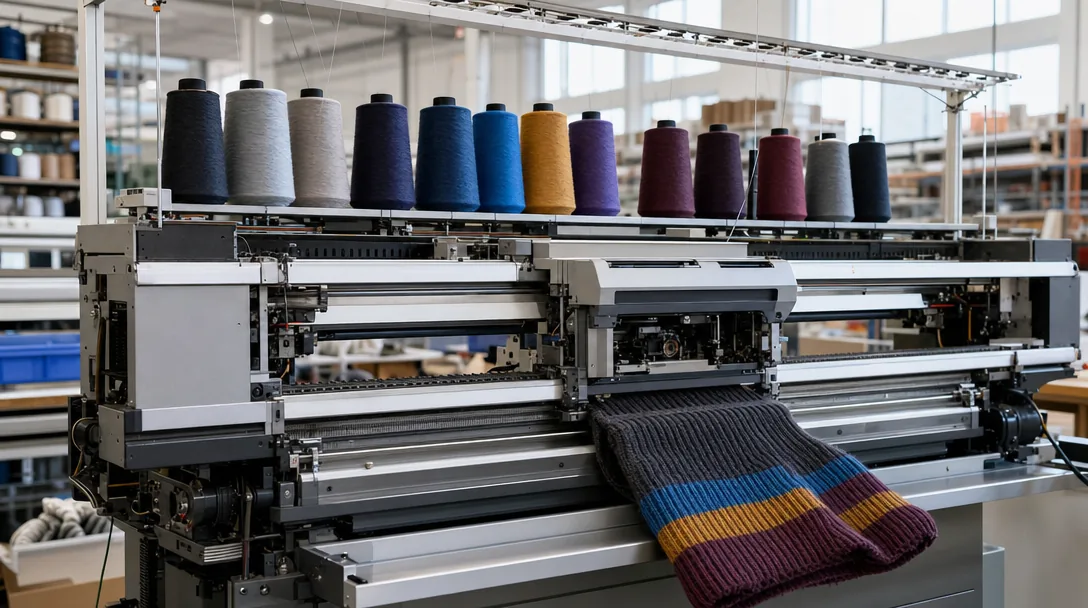
Acrylic Beanie: Properties, Costs and How to Spec It Right (2026 Update) is one of the most-asked questions we receive from international buyers, and for good reason. With dozens of factories competing for your order and an alphabet soup of technical terms in every supplier quote, even experienced importers can feel lost. This guide consolidates what we have learned producing custom hats for clients in 40+ countries.
Merino Wool Beanie
Merino wool beanies only justify their price when the fiber spec is locked down. If a tech pack just says “merino,” one supplier may quote 100% extrafine 19.5-micron, 2/48Nm yarn, while another prices a 70/30 wool-nylon blend at 23 microns that feels drier, pills faster, and dyes differently. On the production floor, those gaps show up in yarn break rate, stitch definition, lot-to-lot shade variation, and wash shrinkage. Most better merino beanies are knitted on 7GG flat machines for chunky fisherman ribs or 12GG for a cleaner retail face, then linked, washed, boarded, relaxed for 24 hours, and only then measured. Typical finished weights run 75-110 g, with body height around 21-23 cm for cuffed watch caps before turn-up and 28-30 cm for slouch fits. Against an acrylic beanie, merino has a softer hand, lower static, and better moisture buffering, but it is less forgiving in production and usually carries higher washing loss and tighter shade-control risk.
A merino beanie tech pack should specify fiber content to the percent, micron range, yarn count, ply, country of yarn origin, Pantone TCX target, and an acceptable Delta-E tolerance no looser than 1.0-1.5 for core colors. Lock the gauge, stitch structure, cuff depth, finished weight tolerance, and post-wash measurements, then add performance standards: shrinkage within +/-5% after one care-label wash, pilling at grade 3-4 minimum, and colorfastness to rubbing and perspiration at grade 3-4 under ISO or AATCC test conditions. MOQ is usually the commercial bottleneck. Stock-service yarn may work at 100-200 pieces per color, but custom-dyed merino more often starts at 300-500 because mills will not run tiny dye lots efficiently. For 2026 China sourcing, a plain merino beanie typically lands around $4.20-$7.80 FOB before trims; jacquard, intarsia, or genuine leather patches can add $0.60-$2.00 per piece quickly. Inspection should be stricter than for a basic acrylic beanie: check barre, vertical needle lines, loose crown linking, oil contamination, skew after boarding, and measurement drift after the first wash. AQL 2.5 is a sensible baseline, but bulk wash testing is what actually prevents claims.
Cotton Beanie
Cotton beanies are fully fashioned knit goods, not cut-and-sew, so yarn count and knit structure decide most of the downstream performance. In practice, commercial programs usually run on 16s, 21s, or 32s ring-spun cotton, built in 1x1 rib, 2x2 rib, single jersey, or waffle, then finished with crown linking and either a turn-up cuff or clean edge. Against an acrylic beanie, cotton has a cooler hand, better moisture regain, and much lower static, but it also rebounds poorly after repeated wear. That is why cheap carded cotton beanies start to bag at the opening and lose cuff definition fast, especially below 7-gauge or with loose stitch settings. For retail programs that need a cleaner surface and fewer pilling complaints, combed cotton or a 95/5 cotton-elastane blend is usually the safer spec than 100% low-grade carded yarn. Do not buy cotton on label language alone. If the product sits anywhere near baby, wellness, or organic positioning, the bulk lot should be backed by azo-free dye confirmation, formaldehyde compliance, and fiber-content verification, not just a hangtag claim. The main technical weakness is wash stability: cotton beanies can shrink 3% to 7% after home laundering, and poor finishing control can create torque or spirality even when the pre-production sample looked fine. Lock the approval around measurable points: finished weight, relaxed opening, stretched opening, body height, cuff height, and wash results after 1 and 3 cycles. A typical adult 2x2 rib beanie in 21s combed cotton usually finishes around 60 to 90 grams; lighter fashion styles sit closer to 45 to 55 grams, while double-layer winter builds often run above 110 grams.
Cost and QC are where buyers usually misjudge cotton versus an acrylic beanie. In China, a plain stock-color cotton beanie at 300 to 500 pieces per color typically lands around $1.20 to $2.20 FOB depending on gauge, yarn grade, and whether the cuff carries embroidery or a woven label. Once you move to custom-dyed yarn, mills generally want about 1,000 pieces per color to make the dye lot economical, and organic or GOTS-requested inputs can add roughly $0.35 to $0.90 per piece. That price premium only makes sense if the end market values cotton’s hand feel and lower static, because acrylic still wins the value-engineering argument for cold-weather volume programs. Inspection should focus on claim drivers, not harmless cosmetic noise. The recurring defects are needle lines, dropped stitches, crown linking gaps, cuff twist, uneven rib recovery, oil marks, and shade variation between dye lots. For export shipments, AQL 2.5 is a reasonable baseline, but it is not enough by itself; add inline or lab checks for wash shrinkage, pilling, and colorfastness to crocking and perspiration. If several colorways ship in one lot, define shade approval before bulk production and hold core colors to a Delta-E of about 1.0 to 1.5 under D65 light. Anything looser invites mixed-carton complaints, especially on white, black, navy, and pastel programs where buyers compare units side by side.
Black Beanie Hat
Black is where lazy specs get exposed. A black acrylic beanie looks simple, but it is one of the easiest SKUs to get wrong because shade drift, spinner-oil contamination, and knit distortion are obvious the moment the hat sits under 4000K to 6500K retail lighting. For a commercial build, 100% acrylic yarn in 2/28Nm or 2/32Nm remains the standard, typically run on 7-gauge machines for a heavier, loftier hand or 9-gauge for a smoother face that embroiders cleaner. Do not write “black” and move on. Lock the standard to Pantone Black 6 C or an approved physical swatch, require lot-to-lot shade tolerance within Delta-E 1.0 to 1.5, and note that one yarn lot can read blue-black while the next goes charcoal if dye depth, oil removal, or heat setting drifts. A usable tech pack should also call out finished weight, stitches per inch, cuff depth, stretch recovery, and whether the hat is enzyme-washed or left as-knit, because each of those shifts the final appearance on black goods. If the black acrylic beanie takes front embroidery, control the decoration before the factory hits the machine floor. On ribbed constructions, a 5,000 to 8,000 stitch logo is usually safe; push beyond that without proper underlay and the knit will tunnel or ripple on Tajima or Barudan heads, especially after vacuum packing. Specify backing or knit stabilizer, maximum logo width, thread sheen, and embroidery registration tolerance so the sample and bulk run the same way. For adult cuffed styles, a practical baseline is 21 to 23 cm body height, 19 to 21 cm width laid flat, 7 to 8 cm cuff depth, and 70 to 90 grams finished weight, with size tolerance held within +/-1 cm. In Yiwu-area sourcing, stock-black MOQ is commonly 300 to 500 pieces per color, while custom-dyed black, jacquard structures, or yarn blends often start around 1,000 pieces. A realistic 2026 FOB range is US$1.05 to US$1.85 for a plain hat at 1,000 pieces, and US$1.80 to US$3.20 once you add a woven label, standard embroidery, and individual polybag packing.
Final inspection on black hats should be stricter than the paper spec suggests, because most post-arrival claims are cosmetic and impossible to rework economically. The defects that matter are oil marks, crown needle-drop holes, cuff torque, barre across the body, crocking onto light packaging, and embroidery strike-through on the inside. I would write pilling performance at grade 3 to 4 minimum after Martindale-type abrasion testing, colorfastness to rubbing as dry 4 / wet 3-4, and no visible shade banding under both D65 and cool white light. Black acrylic yarn can also mask construction faults in dim rooms, so carton-level inspections need to happen under consistent light boxes, not warehouse fluorescents. AQL 2.5 is a sensible final standard for a mid-market acrylic beanie, but black programs usually need one extra control: carton-by-carton shade continuity and top-of-carton versus bottom-of-carton comparison before sealing. Our standard practice is to pull samples across multiple cartons, not just from one stack, because lot mixing often happens during linking, trimming, or repacking rather than knitting. If the style includes pom-poms, foldover cuffs, or heat-transfer labels, add specific checks for pom attachment strength, cuff symmetry, and label edge lifting after stretch. Those details sound minor, but on a black acrylic beanie they are exactly what makes a shipment look uniform at receipt or look like it came from three different factories.
Slouchy Beanie
A slouchy acrylic beanie lives or dies on back-drop behavior; if the tail stands up or collapses into a limp tube, buyers read it as low grade within seconds. Do not spec it like a watch cap. The silhouette comes from the combination of gauge, yarn count, stitch density, crown reduction, and boarding temperature, with body length only one variable. The most stable production setup is usually 100% anti-pilling acrylic, 2/28Nm to 2/30Nm, knitted on 7GG or 9GG flat machines in single jersey for cleaner drape, or 1x1 rib if you need stronger opening recovery. A reliable adult starting spec is 28-30 cm finished height, 24-26 cm flat width, opening circumference 46-50 cm at rest and 54-58 cm stretched, and finished weight 80-100 g. Once you drop below roughly 70 g, most slouch programs start looking transparent, twist more after wash, and lose that controlled lazy drop buyers actually want. Finishing is where most slouchy acrylic beanie approvals go wrong. Acrylic sets quickly under steam; over-boarding can steal 1.5-3.0 cm of body length and make the crown sit upright instead of falling back. Approve measurements only after a full knit-wash-board cycle, never from a fresh-off-machine panel. If hand feel is the concern, anti-pilling acrylic is usually safer than switching casually into a 50/50 acrylic-cotton blend, because cotton raises drying time, increases shrinkage spread, and creates more lot-to-lot measurement movement in home-laundry testing. For color control, specify Pantone TCX against a physical standard and hold bulk shade to Delta-E 1.0-1.5 where possible; dark melanges, charcoal, and black are where acrylic yarn lots drift more than most procurement teams expect. Our standard practice is to seal shade, dimensions, and drape from the same pre-production sample, because approving them separately is how mismatches start.
A usable tech pack for a slouchy acrylic beanie needs numbers operators and QC can inspect, not vague language like “long fit” or “soft slouch.” Call out finished flat measurements with tolerances, gauge, yarn count, stitch construction, crown type, target weight, opening recovery, label location, and logo method. Dense embroidery is usually the wrong decoration choice on this silhouette because it causes tunneling and kills drape around the artwork. If embroidery is necessary, keep stitch count low and run it on Tajima or Barudan heads with proper backing control; in many cases a woven loop label, folded clamp label, or knitted-in jacquard logo holds the shape better and costs less rework. MOQ is also design-dependent: stock acrylic yarn colors commonly land at 300-500 pcs per color, while custom-dyed yarn, engineered stripes, or full-jacquard graphics are typically more efficient from 800-1,000 pcs because of dye-lot and machine setup. Inspection should target the defects that showroom photos hide: crown spiraling, barré, needle lines, torque after wash, contamination, dropped stitches, and weak opening recovery after repeated extension. Use AQL 2.5, but define majors in the manual: measurement deviation over 1.0 cm, logo skew above 3 mm, visible oil marks, broken yarn, or shade mismatch between crown and body panels. Recovery matters more on a slouch fit than on a fisherman cuff beanie, so test the opening after 20-30 stretch cycles and run at least a 5-wash home-laundry test to check bagging, uneven shrinkage, and seam distortion. In 2026, a basic solid-color acrylic beanie in this silhouette usually prices around $1.10-$1.85 FOB China at 500 pcs; recycled acrylic, fleece-lined builds, jacquard logos, or extra trims push it closer to $2.20-$3.80 depending on yarn source, packaging spec, and inspection level.
Cotton Beanie Men
For a men’s cotton beanie program, yarn spec decides whether the order is stable or a claims problem. The workable baseline is 100% ring-spun cotton in Ne 21/1, 26/1, or 32/1; anything vaguely quoted as “cotton yarn” is where suppliers start swapping to lower-cost open-end yarn with harsher hand feel and weaker color yield. In production, 12GG to 14GG gives the cleanest retail face for a fitted skull or cuffed silhouette, while 7GG to 9GG creates a heavier winter look but increases yarn consumption, seam bulk, and cuff distortion risk. A single-layer cotton beanie usually finishes at roughly 180 to 240 gsm equivalent, and a double-layer version is more realistically 280 to 360 gsm. The tech pack should lock body height, cuff height, gauge, yarn count, finished weight, wash method, and tolerance at ±0.5 cm; if those fields are loose, factories will often shave 20 to 30 gsm or relax the shape after wash to protect margin. Color control is where cotton gets less forgiving than an acrylic beanie. Reactive dyeing should be mandatory, with Pantone TCX reference approved before bulk, and an acceptable Delta-E of 1.0 to 1.5 from lab dip to production lot. That matters most on black, navy, olive, and brick shades, where enzyme wash or aggressive finishing can shift tone and create lot banding. Our standard practice is to write shrinkage limits directly into the PO—ideally under 5% in both length and width—because cotton hats fail after laundering, not on the knitting machine. The usual process is knitting, crown linking, cuff closing, washing, flat or tumble drying, shape-setting, trimming, decoration, metal detection, and packing; most variance enters during wash and drying, then gets amplified by embroidery or patch attachment.
Decoration, inspection, and costing are where cotton beanies separate into either a controlled program or a messy one. Flat embroidery on Tajima or Barudan heads is safer than 3D puff on rib knit because foam embroidery tends to cut yarns, tunnel across ribs, and distort the panel around the logo. If the logo is a patch, the spec should call out woven, merrowed, TPU, PU, or felt construction and the attachment method—sewn edge, satin stitch, or heat press—because heat application on cotton ribs can leave shine marks and weak adhesion after washing. MOQ is typically 300 to 500 pieces per color for stock yarn shades, while custom-dyed yarn is usually closer to 1,000 pieces per color to make the dye lot economical. In Zhejiang, FOB pricing at 1,000 pieces is commonly $1.10 to $1.90 for a plain cotton beanie and $1.60 to $2.80 for a cuffed version with embroidery or a patch, depending on yarn count, trim package, and whether unit packing includes an individual polybag or header card. Inspection should target return drivers: spirality after wash, crown-linking security, body-height variance, yarn contamination, lot-to-lot shade banding, skewed labels, and shrinkage above spec. AQL 2.5 is standard, but knit hats also need measured checks for finished weight, stretch recovery, pilling, and colorfastness to crocking and perspiration. This is where the acrylic beanie comparison becomes commercial, not theoretical. A similar acrylic beanie usually lands about $0.20 to $0.60 cheaper per piece, gives more stable dark shades, and moves faster because stock acrylic yarn colors are easier to source than reactive-dyed cotton lots. Cotton still has a valid place in spring assortments and skin-contact positioning, but if the target is tighter Pantone control, lower delivered cost, and fewer post-wash surprises, an acrylic beanie is generally the easier spec to manage.
100 Acrylic Beanie
An acrylic beanie is only as good as the yarn and knit setup behind it. In Zhejiang, most workable programs use 100% spun PAN acrylic in 28/2, 32/2, or 36/2 counts, but 32/2 on a 9GG flat or circular knit machine is the most reliable commercial spec for a standard cuffed style. It gives enough cover to avoid grin-through, enough bulk for winter retail, and a cleaner surface for direct embroidery or a folded woven label. By contrast, a cheaper 7GG build with loose tension can cut yarn cost, but it usually shows the same problems on the factory floor: needle lines, weak rib recovery, fuzzing after handling, and faster pilling on the cuff edge. For adult sizing, finished weight should be stated, not implied: 75-90 g is standard, 95-110 g reads heavier winter-weight, and over 120 g often adds freight and carton cube without improving sell-through. If a supplier cannot state yarn count, gauge, stitch density, and finished gram weight, they are not really controlling the acrylic beanie program.
A usable acrylic beanie spec sheet needs measurable tolerances, not vague language like “soft hand feel” or “premium quality.” A solid baseline is 100% acrylic, 32/2 yarn, 9GG, finished weight 85 g ±5 g, body height 21-22 cm, cuff height 7 cm, and flat width at rest 20 cm ±1 cm. For color, specify Pantone TCX and require lab dips within Delta-E 1.5 for solid shades; heathers and mélange colors usually need a more realistic tolerance because fiber blending shifts visually between lots. Performance matters just as much as dimensions: ask for pilling grade 3.5-4.0 minimum after 2,000 Martindale cycles, dry and wet crocking grade 4, and dimensional stability after steaming plus 24-hour relaxation. If trims are added, define them exactly—30 mm direct embroidery, woven fold label, or PU patch—with placement tolerance held to ±3 mm. On cost, a plain acrylic beanie from a sedex-audit-cap-supplier-guide.html">BSCI 2.0 or Sedex SMETA 4-Pillar audited workshop typically lands around $1.10-$1.85 FOB Ningbo at 1,000 pieces; direct embroidery usually adds $0.18-$0.45, a synthetic leather patch $0.25-$0.60, and retail polybag with barcode sticker another $0.05-$0.12.
Inspection is where weak acrylic beanie production gets exposed, and the failures are usually incremental rather than dramatic. The common ones are lot-to-lot shade variation, off-center crown linking, uneven rib recovery, visible needle tracks, harsh hand feel from poor oil removal, and early pilling caused by low twist yarn or rushed finishing. I would inspect to AQL 2.5 with checkpoints for stitch density, cuff symmetry, seam neatness, logo placement, odor, assortment accuracy, and trim security; if the style uses a metal badge, add needle-control records and metal detection at packing. Elastane breakage is rarely the issue unless the cuff uses plated stretch yarn. More often, the red flag is poor recovery caused by unstable knitting tension or over-steaming during shaping. Our standard practice is to pull wear-test pieces from each dye lot instead of relying only on the TOP sample, because a cheap acrylic beanie can pass final visual inspection and still look flat and tired after two weeks on a retail shelf. Stable yarn sourcing and disciplined machine settings matter more than saving $0.08 per piece.
Working with CrownsForge for acrylic beanie programs
Most acrylic beanie problems are created in pre-production, not on the knitting floor. If the buyer approves color by photo, leaves yarn count open, or changes cuff height after yarn booking, the factory ends up chasing a moving target. The clean way to run it is to freeze four items before bulk: Pantone TCX or TPX reference, yarn specification, machine gauge, and trim position measured from the cuff edge. For a standard cuffed acrylic beanie in 100% acrylic 2/28Nm yarn, 7GG and 9GG are the usual starting points; 7GG gives a chunkier hand feel, while 9GG reads cleaner for logo work and tighter jacquard. At CrownsForge, a normal sample lead time is 5 to 7 business days, but custom components add time fast: allow 2 days for pom-pom approval, 3 to 5 days for woven label production, and about 5 days if a new silicone patch mold is required. MOQ also needs to match the construction. A plain rib acrylic beanie can be workable at 144 to 300 pieces per color, but yarn-dyed jacquard, engineered stripes, or custom melange are usually more realistic at 500 to 1,000 because cone minimums, yarn waste, and machine changeover start to dominate cost.
Decoration is where buyers often overspec an acrylic beanie and pay for avoidable defects. Rib knit is elastic and uneven by nature, so dense front-cuff embroidery can distort the knit, create tunneling, and leave backing that feels hard against the forehead. Once a logo pushes past roughly 7,000 to 8,000 stitches on a cuff, I would rather move to a woven patch, merrowed emblem, or low-density satin embroidery on Tajima or Barudan heads. Direct jacquard is usually the cleaner answer for repeat graphics, but only if the artwork is simplified to the knit gauge; hairlines, small type, and tight outlines that look fine on screen will break down on a 7GG beanie. Cost discipline matters just as much as artwork discipline. At 1,000 pieces, a basic cuffed acrylic beanie typically sits around $1.10 to $1.85 FOB Ningbo, while a jacquard version with custom pom, woven loop label, and patch more often lands at $2.20 to $3.40. To keep that cost repeatable at 5,000 units or more, the program should run through PP sample approval, BOM lock, inline inspection, and final inspection to AQL 2.5, with BSCI 2.0 or Sedex SMETA 4-Pillar records, needle-control logs, and azo/formaldehyde compliance already on file before shipment booking.
Frequently Asked Questions
Can I order a sample before bulk production?
Yes. We strongly recommend approving a pre-production sample before mass production. Samples are charged at 35 to 60 USD each plus express shipping, fully refundable against confirmed bulk orders over 500 pieces.
Do you support sustainability certifications?
Yes. We work with GOTS organic cotton, GRS-certified recycled polyester, OEKO-TEX Standard 100 fabrics, and are BSCI and Sedex audited. Certification documentation can be provided per order.
How long does production take?
Sampling takes 7 to 12 days. Bulk production runs 20 to 30 days depending on quantity, fabric availability and decoration complexity. Inspection and packing adds another 3 to 5 days before shipment.
What file format should I send for my logo?
Vector files (AI, EPS, PDF) are ideal. High-resolution PNG or JPG at 300 dpi on transparent background works as a fallback. Provide Pantone color references for accurate reproduction.
Which shipping methods do you support?
We support FOB, CIF and DDP shipping. Air express for samples and small orders, sea LCL for 100 to 500 pieces, sea FCL for 5,000+ pieces. Door-to-door DDP available for US, EU, UK, Canada and Australia.
What should buyers know about bucket hat men?
When evaluating bucket hat men, the key considerations are construction quality, decoration capability, MOQ flexibility and lead time. Cover everything buyers ask about black beanie hat: how it's manufactured, what specs to request from a factory, typical MOQ and pricing, common quality issues to inspect for, and how this ties back to the broader acrylic beanie sourcing decision. Cover everything buyers ask about cotton beanie men: how it's manufactured, what specs to request from a factory, typical MOQ…
What should buyers know about nike bucket hats for men?
When evaluating nike bucket hats for men, the key considerations are construction quality, decoration capability, MOQ flexibility and lead time. Cover everything buyers ask about cotton beanie men: how it's manufactured, what specs to request from a factory, typical MOQ and pricing, common quality issues to inspect for, and how this ties back to the broader acrylic beanie sourcing decision. Cover everything buyers ask about merino wool beanie: how it's manufactured, what specs to request from a factory, typical MOQ…
What should buyers know about organic cotton hat?
When evaluating organic cotton hat, the key considerations are construction quality, decoration capability, MOQ flexibility and lead time. Cover everything buyers ask about cotton beanie: how it's manufactured, what specs to request from a factory, typical MOQ and pricing, common quality issues to inspect for, and how this ties back to the broader acrylic beanie sourcing decision. Cover everything buyers ask about black beanie hat: how it's manufactured, what specs to request from a factory, typical MOQ and…
What should buyers know about cotton beanie men?
When evaluating cotton beanie men, the key considerations are construction quality, decoration capability, MOQ flexibility and lead time. Cover everything buyers ask about cotton beanie men: how it's manufactured, what specs to request from a factory, typical MOQ and pricing, common quality issues to inspect for, and how this ties back to the broader acrylic beanie sourcing decision. Cover everything buyers ask about cotton beanie: how it's manufactured, what specs to request from a factory, typical MOQ and…
Is acrylic a good material for a beanie?
Durability That Lasts: A quality acrylic beanie can last for years with regular wear. The synthetic fibers resist pilling better than many natural materials, and they don't lose their shape over time. I have acrylic beanies that I've worn for five winters straight, and they still look and feel great.
Is cotton or acrylic better for hats?
Both cotton and acrylic beanies have special properties that do not irritate your skin. However, some consumers are allergic to natural fibres like cotton. So, they can rely on acrylic headwear. Cotton made of fine and curly fibres is very lightweight.
Do 100% acrylic beanies shrink?
100% acrylic beanies: Not reliably shrinkable. You might tighten the knit a little, but high heat can permanently damage the hat.
Ready to start your custom hat project?
Send us your tech-pack, sketch or even just an inspiration photo. We will respond with a detailed quotation and digital mock-up within 24 hours.
Request a free quoteRelated guides
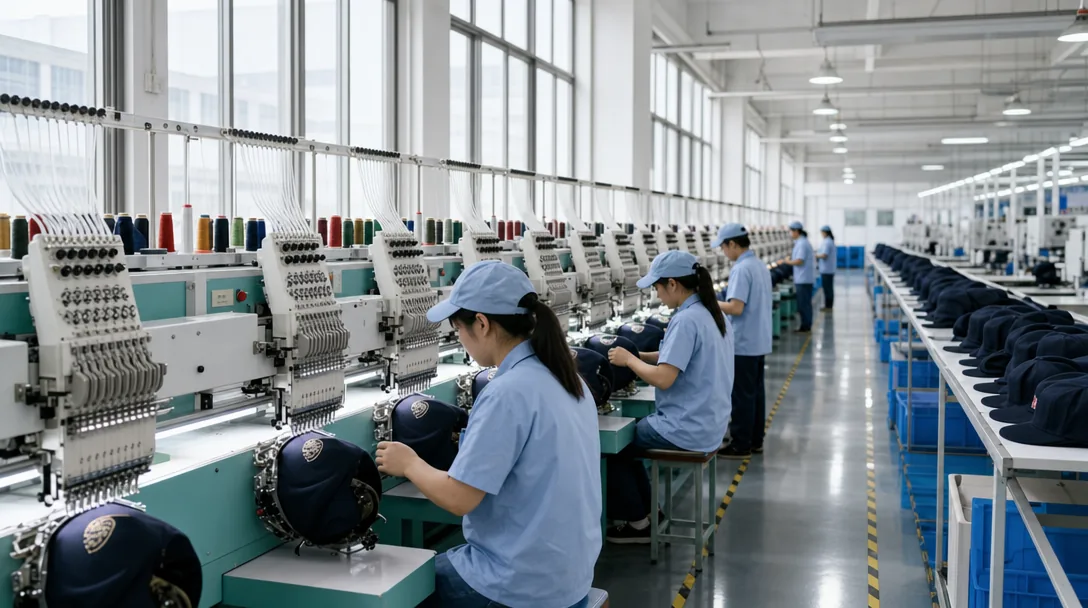
Bulk Trucker Hats Reorder Planning Guide for Custom Hat Buyers
Read article →
Custom Hats for Men: A 2026 B2B Sourcing Guide - Cost & MOQ Breakdown
Read article →
Baseball Hats For Men Export Shipping Checklist for Custom Hat Buyers
Read article →We hope this guide demystifies acrylic beanie: properties, costs and how to spec it right (2026 update) and helps you move forward with confidence. If you have questions specific to your project, our English-speaking sales engineers are one message away.