
5-panel Hat Men: A 2026 B2B Sourcing Guide - Supplier Checklist
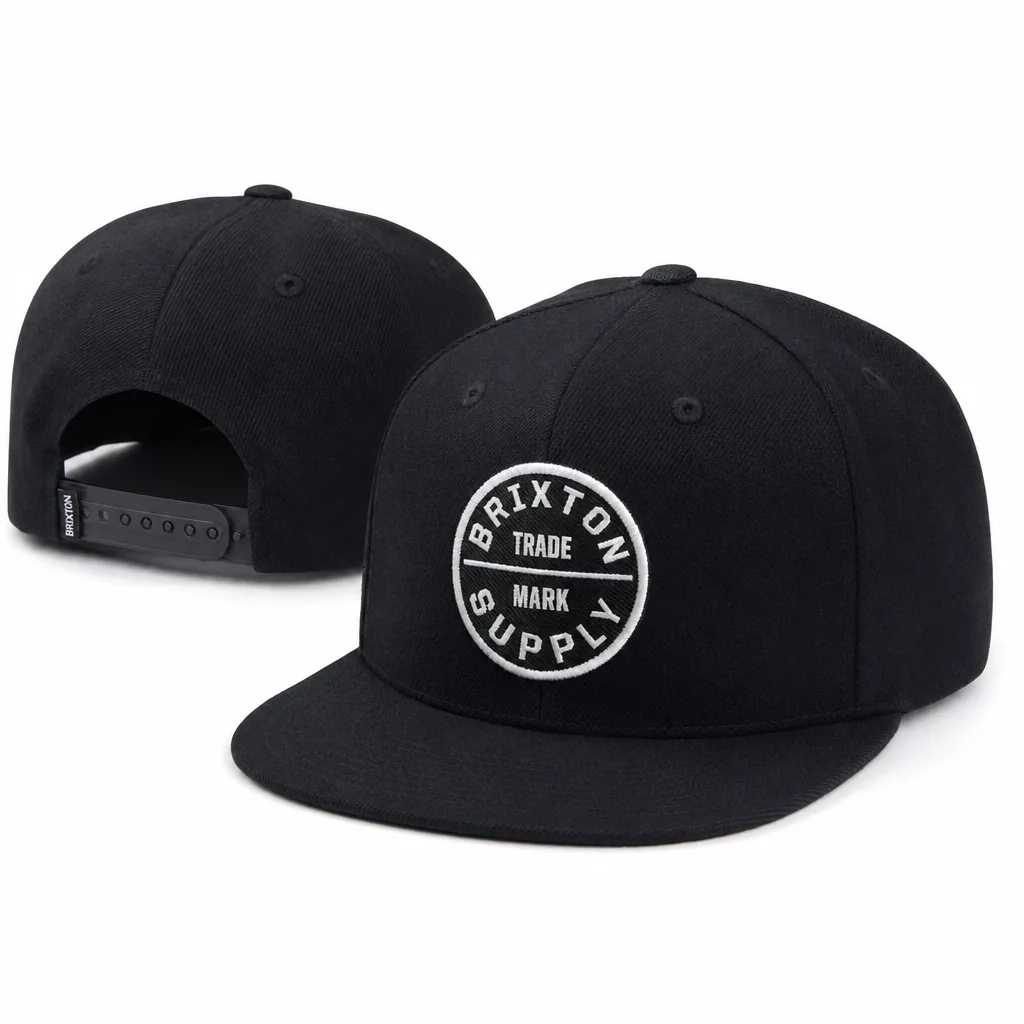
Every week, our sales team answers detailed questions about 5-panel hat men: a 2026 b2b sourcing guide - supplier checklist. We wrote this guide so that wholesalers, streetwear brands, corporate buyers and promotional resellers can compare options with full information, and avoid the traps that show up only after production has started.
6 Panel Hat Custom
The biggest mistake buyers make when they shift from a 5-panel hat men program into a six-panel cap is assuming the same front logo file will sew cleanly. It usually will not. A six-panel crown has a center-front seam, and that seam changes both artwork placement and machine behavior. On structured builds with 0.6 to 0.8 mm PE buckram behind the front panels, embroidery over the seam is prone to tunneling, flagging, and edge distortion, especially on dense fills above 0.40 mm stitch spacing. On Tajima and Barudan heads, we normally move the design up 6 to 10 mm from the seam intersection, reduce underlay in the seam zone, and avoid narrow satin columns or sharp borders that cross from left panel to right panel. If the logo has straight geometry, serif detail, or a boxed outline, woven patch, merrowless twill patch, or 0.8 mm silicone heat transfer will usually pass first sample faster than direct embroidery. The silhouette difference also affects sell-through, because a six-panel hat wears deeper and more contoured than a typical 5-panel hat men fit. Buyers should not approve from flats alone. A proper sample review needs headform photos from front, side, and 45 degrees, plus measurements for crown height, front rise, brim length, brim curve, and opening circumference at the stated closure setting. In real production, a six-panel retail cap usually runs 11 to 12 cm crown height and 7 to 7.5 cm visor length, but profile can shift noticeably if seam allowance, buckram stiffness, or top button tension changes. Our standard practice is to review strike-offs on the actual cap body, because the same logo can look balanced on a 5-panel crown and feel cramped on a six-panel front once seam pitch and curvature are introduced.
Specs matter more than panel count. A six-panel tech pack should define fabric by construction and weight, not generic labels like “cotton” or “performance.” For mainstream retail, 100% cotton twill at 260 to 320 gsm is the safe range; brushed chino usually sits at 220 to 280 gsm; nylon taslon for sport caps is commonly 120 to 160 gsm with 70D or 100D yarns; polyester microfibers often run 140 to 180 gsm when moisture management is required. Color should be referenced to Pantone TCX or TPX with an agreed Delta-E tolerance, typically under 1.5 for dyed solids under D65 lightbox review. Lock acceptable fabric weight variance to ±5%, and for washed caps specify residual shrinkage, panel torque, and shade banding tolerance before bulk cutting starts. Pricing in 2026 is still straightforward if the bill of materials is controlled. FOB China for a standard six-panel cotton twill cap at 500 pieces is usually around $2.20 to $3.70, including flat embroidery up to 8,000 stitches and a self-fabric strap or plastic snapback. Move into custom-dyed fabric, enzyme wash, imported hook-and-loop, rope brim, woven label set, or perforated laser-cut side panels, and the range climbs to roughly $4.50 to $6.90. Inspection should stay at AQL 2.5 for major defects, but add cap-specific checkpoints: logo position within ±2 mm, center seam tracking, visor symmetry within ±3 mm, eyelet puckering, sweatband join cleanliness, and closure tensile performance. If a buyer sources both six-panel and 5-panel hat men styles from one factory, these tolerances need separate approval standards because the decoration and fit risks are not the same.
6 Panel Hat Wholesale
Six-panel wholesale lives or dies on pattern control, because six seams give you six chances to drift off center. Once left-right panel symmetry moves more than 2 mm, the crown looks cheap immediately; with a 5-panel hat men silhouette, the risk is concentrated on the single front panel, but on a six-panel cap it shows up at the front arch, rear quarter joins, and visor centerline. A usable tech pack should lock crown height, visor length, curve radius, seam allowance, stitches per inch, eyelet placement, top-button diameter, and front support before you ask for pricing. For a structured retail cap, I would specify 160-220 gsm PET or cotton-blend buckram, a 1.8-2.2 mm HDPE brim insert, and sweatband composition such as 65/35 poly-cotton at 180-200 gsm. If those details stay vague, two factories can quote the same art and ship caps with completely different profile, rebound, and embroidery stability. Fabric selection matters just as much: 108x56 cotton twill, 10 oz canvas, 300D heather poly, and 70/30 chino all react differently to enzyme wash, peach finish, and heat forming, especially around shrinkage and seam puckering.
MOQ is usually set by fabric and decoration setup, not by the extra panel count. For stock brushed twill or chino in Zhejiang, 144-300 pieces per color is normal, but FOB pricing only starts to settle at 500-1,000 pieces per style because cutting yield, embroidery setup, and carton efficiency improve. A basic six-panel cap with flat embroidery is currently around $2.10-$3.40 FOB Ningbo at 300-500 units; a better build with recycled polyester, woven inside taping, sandwich visor, and metal buckle is more realistically $3.80-$6.20 FOB. Typical adders are $0.12-$0.28 for enzyme wash, $0.18-$0.45 for a woven patch application, and $0.35-$0.90 for denser embroidery on Tajima or Barudan heads, depending on stitch count, underlay, and backing. For mixed programs that also include 5-panel hat men styles, I always ask for Pantone TCX references, acceptable cap weight tolerance of plus or minus 5 percent, and carton pack ratio at quoting stage, because cubic utilization changes fast when you mix low-profile five-panels with deeper six-panel crowns.
Inspection is where six-panel margin gets eaten, because the expensive defects are subtle until the shipment lands. The failures I see most often are off-center logos, visor torque above 3 mm, seam puckering at the rear arches, exposed sweatband edges, poor top-button wrapping, and fabric lot variation above Delta-E 1.5. If embroidery crosses the front seam, the approval sample needs to freeze thread brand, density, pull compensation, underlay type, and backing spec; ZSK, Tajima, and Barudan heads can all sew it cleanly, but only if digitizing was tested on the actual crown structure. For washed dark twills, I would also run crocking and perspiration colorfastness checks before bulk packing, because bleeding into the sweatband is a common claim after humid ocean transit. Final QC should be AQL 2.5 for major defects and AQL 4.0 for minor, with hard measurements for head opening, crown height, visor length, visor symmetry, and closure pull strength. Our standard practice is to recheck left-right crown balance after steaming, since forming can shift the silhouette by 3-4 mm even when the cut panels were accurate.
Custom 6 Panel Hat
A custom 6-panel hat behaves very differently from a camp cap, so don’t let a supplier treat it as a minor variation on a 5-panel hat men program. The six-seam crown puts more stress on panel matching, front buckram consistency, and visor centering, especially on structured builds. In production, the failure points are predictable: uneven crown height between left and right panels, buckram that is too soft and collapses after packing, and visor alignment drifting more than 2-3 mm off center. Most factories cut 260-340 gsm cotton twill, washed chino, brushed canvas, 14-21 wale corduroy, nylon taslon, or 150-220 gsm polyester performance fabric, then use a 1.8-2.2 mm PE or EVA visor board with 6-8 rows of topstitching. Decoration sequence matters too. Flat embroidery is usually run on Tajima, Barudan, or ZSK machines before assembly, while woven patches, TPU badges, and appliqué are applied after crown sewing to avoid puckering across the curved front panels.
If you are buying both 6-panel caps and 5-panel hat men styles, the tech pack needs to lock down fit and construction in measurable terms. Specify crown depth in centimeters, visor length, visor curve, and the fit block used for approval; 58 cm is the standard sample head size, but deeper streetwear profiles often need a different block than low-profile retail programs. Call out buckram weight, eyelet type, top button material, sweatband composition, seam tape width, closure style, and Pantone TCX references for shell, thread, underbill, and trims. Color control should be written into the PO, not handled informally: Delta-E under 1.5 for shell fabric and under 2.0 for webbing, snap tabs, or closure tape is realistic for commercial production. On QC, inspect at AQL 2.5 and watch the defects that actually trigger claims: off-center logos, visor skew, crown asymmetry, shading between lots, and eyelets drifting off grain. In our standard practice, a cap that looks $0.30 cheaper on the costing sheet is usually more expensive once 5% rework, delayed ex-factory dates, and retailer deductions are counted properly.
7 Panel Hats Wholesale
Shape control is where 7-panel hats go wrong, and the tolerance window is tighter than on a standard 5-panel hat men block. The extra front segmentation makes any sewing drift obvious: a 2 mm mismatch at the center split seam can be seen at retail distance, and if the brim is set using a 6-panel template the visor can land 4 to 5 mm off center. For a structured build, I would freeze the engineering spec before first sample: buckram 180 to 220 gsm, PE visor insert 1.6 to 1.8 mm, crown height 11.5 to 12.5 cm, seam allowance 3 mm, and finished head opening tolerance within +/-0.5 cm. On brushed cotton twill, taslon, and cotton-nylon blends, front fusing also needs a post-press bubbling check because the heat reaction can shift between dye lots.
Decoration method matters more on a 7-panel silhouette than many buyers expect. A dense front logo in the 10,000 to 14,000 stitch range, especially with tatami fill, will often distort the segmented face if it is run on a Tajima or Barudan cap frame after crown assembly. My preference is flat embroidery on cut panels before sewing, or a woven patch when text drops below 4 mm letter height. If color consistency is critical across shell, underbill, and seam tape, specify Pantone TCX targets with Delta-E held to 1.5 to 2.0; the extra seam breaks make shade variation more visible than on 5-panel hat men or 6-panel caps. In Yiwu and Dongguan, workable MOQ is usually 300 to 500 pieces per colorway for stock twill or taslon, but custom-dyed fabric, laser perforation, rope trims, or branded sweatbands typically push MOQ to 800 to 1,200. FOB pricing at 500 pieces is commonly $2.90 to $4.80 for a clean structured cap, rising to $5.30 to $7.20 with TPU patches, moisture-wicking sweatbands, or perforated panels.
Inspection should focus on silhouette first, because a 7-panel cap can pass basic construction checks and still look wrong on shelf. At AQL 2.5, I would prioritize visor centering, left-right crown symmetry, top button alignment, stitch density at panel joins, and whether the crown holds shape after 24 hours in compression packing. The recurring failures are front split-seam puckering, grain mismatch between adjacent panels, embroidery registration drift, and mesh tearing when a 70D to 100D trucker net is overlocked with excessive tension. Our standard practice is to seal a pre-production sample against the full tech pack, including fabric composition, gsm, closure source, visor curve, logo size, carton count, and packing method, because this silhouette does not forgive improvisation on the line.
5 Panel Hat Vintage
Vintage is a finishing spec, not a fabric category, and that distinction matters when you source a 5-panel hat men program. Start with base fabrics that survive wash without barre marks or seam torque: 180-220 gsm cotton twill, 8-10 oz brushed cotton canvas, or 100% pigment-dyed cotton with low hairiness. On a five-panel build, the single front panel exposes every mistake, so structure has to be decided before artwork. For a soft, broken-in silhouette, specify no foam and either no buckram or 0.30-0.35 mm low-temp fusible; for cleaner retail presentation, use light structure and lock crown height at 8.5 cm, 9.0 cm, or 9.5 cm in the tech pack. Also freeze visor shape, 6-row versus 8-row stitching, sweatband composition, sewn eyelets versus metal eyelets, and closure hardware early. A washed crown with a glossy PP snapback or rigid PE brim insert looks fake-vintage immediately.
RFQs fail when buyers use mood boards instead of measurable specs. Ask for fiber content, finished gsm after wash, Pantone TCX reference plus an approved washed swatch, head circumference tolerance of +/-0.5 cm, visor length within +/-2 mm, crown depth, seam allowance, and closure supplier. For decoration, call out machine and technique, not just “embroidery”: Tajima or Barudan flat embroidery, chain stitch, felt applique, and low-density fills usually age better than a dense satin-heavy logo on washed cotton. If the cap is garment-washed after sewing, require a sealed PPS because enzyme or pigment wash can move shade by Delta-E 1.5-2.5 and distort panel alignment if sewing tension is uneven. In Zhejiang, a standard washed 5-panel typically lands around USD 2.40-3.20 FOB Ningbo at 144-300 pcs per colorway; add custom inside taping, antique brass adjusters, woven labels, or specialty embroidery and you are usually at USD 3.80-5.50 FOB with MOQ moving to 500 pcs.
Inspection is where vintage caps either protect margin or quietly destroy it. The repeat defects are wash inconsistency, brim twist, off-center top buttons, skipped stitches at the sweatband join, logo drift, and a front panel that leans on-head because left-right panel tension was not balanced. Approve an acceptable shade band before bulk, then inspect under D65 lighting rather than factory fluorescent tubes. AQL 2.5 is standard for export, but on a 5-panel hat men vintage order I would tighten logo placement to +/-2 mm and physically measure head opening on at least 20 pcs per lot because washed cotton can shrink unpredictably after finishing. Check dry and wet crocking, residual odor, needle cuts around embroidery, and corrosion on eyelets or metal adjusters if the lot went through aggressive enzyme or stone wash. Our standard practice is to flag oversized front embroidery early, because puckering risk rises fast when stabilizer weight, needle size, and stitch density are wrong for the fabric and wash recipe.
5 Panel Trucker Hat
The single-piece front is why buyers choose a 5-panel trucker, and it is also where bad engineering shows up first. In 5-panel hat men programs, that uninterrupted panel gives you maximum logo real estate for flat embroidery, 3D puff, silicone heat transfer, or screen print, but there is nowhere to hide crown twist, puckering, or weak buckram. A six-panel cap can disguise small inaccuracies along the center seams; a trucker cannot. Lock the geometry before sampling: front crown height, visor length, visor curve, finished circumference, mesh denier, sweatband composition, and snap closure spec. A practical baseline is 200-240 gsm cotton twill or 65/35 poly-cotton for the front, 30D-40D polyester mesh around 110-130 gsm for the back, a 58 cm finished size, and a 7-hole PVC snap with 1.8-2.0 mm pin thickness. If the factory cannot hold crown height within +/-3 mm and visor centering within +/-2 mm, the cap will look crooked on shelf even when the sewing is technically acceptable.
Decoration limits should be written into the tech pack, not argued over after the first sample. On Tajima, Barudan, and ZSK heads, an over-digitized logo will pull the front panel inward and create tunneling above the artwork, especially on foam-backed embroidery wider than 110-120 mm. For retail-grade truckers, I usually cap flat embroidery width at 120 mm and test 2 mm versus 3 mm EVA for 3D puff, because cheap foam collapses after carton compression and leaves a dead-looking logo. Structure must match the intended market: high-crown skate builds need heavier buckram, lower stitch density, and stronger carton support, while soft promo builds need lighter backing and acceptance of less-defined embroidery edges. Those are different products, not minor variations. Our standard practice is to force the buyer to specify hard-structured, semi-structured, or unstructured front panels at RFQ stage, because that one decision changes embroidery behavior, packing method, and transit risk.
The cleanest trucker RFQ is a measurable spec sheet with color and inspection standards, not a mood-board image. Include fabric composition, buckram weight, visor board material, top button finish, eyelet method, seam allowance, sweatband fiber content, label placements, and packaging method. If color matters, call out Pantone TCX for textile components and define tolerance; for retail orders, shell fabric should stay within Delta-E 1.5 to approved lab dip, with trims held within 2.0. MOQ is usually 144-300 pcs per colorway with stock twill, stock mesh, and standard snaps; once you add dyed-to-match mesh, molded TPU patches, woven loop labels, custom inside taping, or a non-standard brim curve, realistic MOQ moves to 500-1,000 pcs per style-color. In Zhejiang, FOB pricing for a basic trucker generally lands around $2.10-$3.40 at 300 pcs, while premium builds with suede brims, heavy embroidery, or custom-molded patches run closer to $3.80-$6.20. For bulk approval, I would set AQL 2.5, inspect after steaming plus 24-hour rest, and check crown symmetry, visor alignment, mesh tension, rear sweatband joining, and snap pull strength before shipment.
Working with CrownsForge for 5-panel hat men programs
If a 5-panel hat men program breaks down, it usually starts with traceability gaps, not sewing defects. The controls that matter are boring but non-negotiable: fabric roll ID, dye lot, visor insert batch, closure trim lot, embroidery file revision, wash test record, and carton number all tied to a single work order. That becomes critical when a buyer combines 5-panel and 6-panel silhouettes under one PO, because COO labels, carton marks, inner-pack ratios, and audit documents need to stay synchronized across styles. Our standard practice is to map production records to sedex-audit-cap-supplier-guide.html">BSCI 2.0 or Sedex SMETA 4-Pillar requirements, then inspect finished goods to AQL 2.5 major / 4.0 minor with measurable checkpoints: crown height tolerance within ±3 mm, front panel symmetry within ±2 mm, visor curve consistency, seam puckering, sweatband join strength, and logo placement within ±2 mm from approved artwork. The commercial file needs the same discipline as the sewing floor. For FOB Ningbo or DDP programs, one version-controlled costing sheet should carry the HTS code, ex-factory price, carton count, CBM, chargeable weight, duty assumption, and transit lead time from cutting to final delivery. I have seen too many cap programs lose weeks because sales quoted on 0.045 CBM per carton while logistics booked on 0.060, or because duty was modeled on the wrong shell composition. For 5-panel hat men orders, that mismatch hits margin fast, especially when the order mix includes washed cotton, nylon taslon, and mixed closures in the same shipment.
The quickest way to burn margin on 5-panel hat men production is uncontrolled substitution during pre-production. A proper tech pack should lock real specifications: 260 gsm brushed cotton twill, 210 gsm nylon taslon, or 8 wale corduroy at a defined wale count; 1.8 mm PE visor board instead of vague "standard" insert; 20 mm sweatband tape; and a snapback resin grade that passes repeated open-close cycles without whitening or cracking. Color also has to be fixed to a Pantone TCX reference with an agreed Delta-E limit—under 1.5 for piece-dyed fabric is realistic, while embroidery thread under Delta-E 2.0 is usually acceptable because rayon and polyester thread reflect differently under D65 light. Without those controls, factories start making quiet changes that buyers only discover at final inspection. One approved PPS, one signed spec sheet, and one accountable merchandiser from lab dip to ex-factory date prevent most of the usual shortcuts. On embroidery runs, stitch count and density should be locked against the approved digitized file, whether the logo is running on Tajima, Barudan, or ZSK heads; otherwise operators reduce density to gain speed and the logo loses edge definition on the front panel. The same discipline makes repeats efficient: panel pattern, seam allowance, needle spec, thread ticket, label artwork, polybag warning, and carton dimensions are already frozen in the production pack. That is why CrownsForge can run a 300-piece market test and then scale the same 5-panel hat men style to 20,000 pieces with consistent fit, color, and packing logic instead of rebuilding the process from scratch.
Frequently Asked Questions
How long does production take?
Sampling takes 7 to 12 days. Bulk production runs 20 to 30 days depending on quantity, fabric availability and decoration complexity. Inspection and packing adds another 3 to 5 days before shipment.
Do you support sustainability certifications?
Yes. We work with GOTS organic cotton, GRS-certified recycled polyester, OEKO-TEX Standard 100 fabrics, and are BSCI and Sedex audited. Certification documentation can be provided per order.
What file format should I send for my logo?
Vector files (AI, EPS, PDF) are ideal. High-resolution PNG or JPG at 300 dpi on transparent background works as a fallback. Provide Pantone color references for accurate reproduction.
What is the minimum order quantity (MOQ) for custom hats?
Our standard MOQ is 100 pieces per design and color, with sampling available from 1 piece. For complex multi-color logos or premium fabric upgrades, the MOQ can be lowered with a small per-piece surcharge.
Can I order a sample before bulk production?
Yes. We strongly recommend approving a pre-production sample before mass production. Samples are charged at 35 to 60 USD each plus express shipping, fully refundable against confirmed bulk orders over 500 pieces.
How does ordering custom hat trucker work?
When evaluating custom hat trucker, the key considerations are construction quality, decoration capability, MOQ flexibility and lead time. Cover everything buyers ask about 6 panel hat custom: how it's manufactured, what specs to request from a factory, typical MOQ and pricing, common quality issues to inspect for, and how this ties back to the broader 5-panel hat men sourcing decision. Cover everything buyers ask about custom 6 panel hat: how it's manufactured, what specs to request from a factory, typical…
What should I know about wholesale trucker hats?
When evaluating wholesale trucker hats, the key considerations are construction quality, decoration capability, MOQ flexibility and lead time. Cover everything buyers ask about 7 panel hats wholesale: how it's manufactured, what specs to request from a factory, typical MOQ and pricing, common quality issues to inspect for, and how this ties back to the broader 5-panel hat men sourcing decision. Cover everything buyers ask about 6 panel hat wholesale: how it's manufactured, what specs to request from a factory,…
How does ordering custom hats for men work?
When evaluating custom hats for men, the key considerations are construction quality, decoration capability, MOQ flexibility and lead time. Cover everything buyers ask about 6 panel hat custom: how it's manufactured, what specs to request from a factory, typical MOQ and pricing, common quality issues to inspect for, and how this ties back to the broader 5-panel hat men sourcing decision. Cover everything buyers ask about custom 6 panel hat: how it's manufactured, what specs to request from a factory, typical…
How does ordering custom embroidered trucker hats work?
When evaluating custom embroidered trucker hats, the key considerations are construction quality, decoration capability, MOQ flexibility and lead time. Cover everything buyers ask about 6 panel hat custom: how it's manufactured, what specs to request from a factory, typical MOQ and pricing, common quality issues to inspect for, and how this ties back to the broader 5-panel hat men sourcing decision. Cover everything buyers ask about custom 6 panel hat: how it's manufactured, what specs to request from a factory, typical…
Looking for a reliable hat manufacturer in China?
CrownsForge has produced custom hats for 800+ brands across 40 countries. From 100-piece launches to 100,000-piece retail programs, we deliver on time and on spec.
Get in touchRelated guides
Snapback vs Fitted vs Adjustable: Cap Closure Systems Compared
Read article →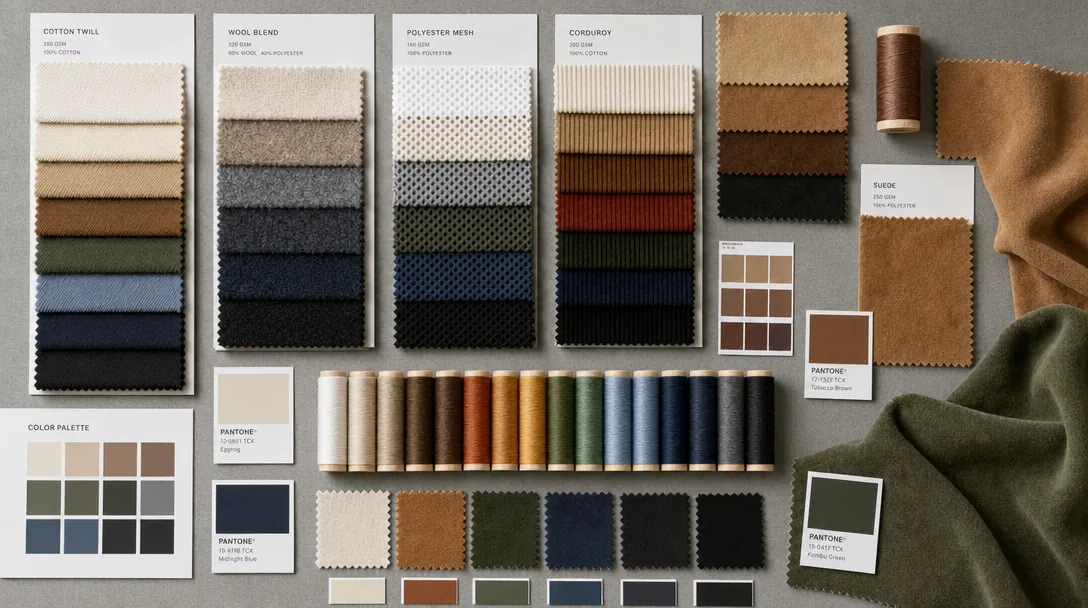
Sustainable Custom Hats: Eco-Friendly Materials, Recycled Fabrics & Certifications
Read article →
China vs Vietnam vs Bangladesh: Cap Manufacturing Countries Compared 2026 - Supplier Checklist
Read article →We hope this guide demystifies 5-panel hat men: a 2026 b2b sourcing guide - supplier checklist and helps you move forward with confidence. If you have questions specific to your project, our English-speaking sales engineers are one message away.