
China vs Vietnam vs Bangladesh: Cap Manufacturing Countries Compared 2026 - Supplier Checklist
For brand owners, wholesalers and procurement teams entering the custom headwear category, china vs vietnam vs bangladesh: cap manufacturing countries compared 2026 - supplier checklist is one of the highest-leverage decisions you will make. Get it right and your unit economics, retail story and reorder cycle all improve. Get it wrong and you carry the cost for years.
The three countries that dominate global custom hat manufacturing
China still anchors global headwear production, and any serious china vs vietnam cap manufacturing comparison starts with industrial density rather than headline labor cost. In practical terms, China likely accounts for roughly 60-70% of global custom cap output, with Vietnam around 15-20% and Bangladesh closer to 5-10%. The advantage is not abstract. In Zhejiang, Guangdong, and Fujian, most factories can source 240-280 gsm cotton twill, brushed chino, 600D polyester, RPET, PE visor board, snap closures, metal buckles, woven labels, and moisture-wicking sweatband tape inside a 200-300 km radius. That reduces trim lead time, keeps sampling cycles to 7-10 days instead of 2-3 weeks, and makes 300-1,000 piece color runs commercially viable. It also improves color consistency: when fabric, binding, labels, and closures are coordinated through the same regional supply base, mills can usually hold dyed lots within Delta-E 1.5-2.0 against Pantone TCX references, which is much harder when inputs are split across borders.
Vietnam is the strongest challenger when buyers value process discipline and audit readiness more than maximum trim flexibility. Good Vietnamese cap suppliers are especially strong on lightweight polyester performance caps, laser-perforated panels, bonded seams, and sublimated sports programs, often under sedex-audit-cap-supplier-guide.html">BSCI 2.0 or Sedex SMETA 4-Pillar systems that are cleaner on documentation than many mid-market factories elsewhere. The limitation is usually ecosystem depth, not sewing quality. Once an order mixes six-panel baseball caps, rope caps, truckers, and bucket hats with 3D puff embroidery, flat stitch, TPU patches, molded rubber badges, and chain stitch running on Tajima or Barudan heads, China generally absorbs the complexity with less schedule drift. Bangladesh is competitive on a different profile: large-volume, low-complexity orders where FOB cost matters more than development speed, typically basic brushed-cotton caps or promotional programs above 20,000 pieces. In most sourcing decisions, the split is straightforward: China for speed and customization, Vietnam for controlled audited execution, Bangladesh for cost-led basics that still need to pass AQL 2.5.
China's strengths and the Section 301 reality
China still wins on supply-chain density, and that matters more than nominal sewing wages in any honest china vs vietnam cap manufacturing comparison. A cap program pulls far more than crown fabric: 260-280 gsm brushed cotton twill, 10 oz canvas, 210D or 300D polyester, buckram, PE visor board, moisture-wicking sweatband knit, HDPE snap closures, woven labels, swing tags, and often two or three decoration processes on one PO. In Zhejiang, Jiangsu, Dongguan, and Qingdao, those inputs are typically within a one-day trucking radius, which changes the math on development speed. If a buyer rejects a body fabric for shade, the factory can re-source to the nearest Pantone TCX match, check embroidery thread against an agreed Delta-E tolerance, and recut without losing a week to cross-border trim delays. That is why 7-10 day sample turns are routine in China for custom caps, while the same promise is often fragile in Vietnam or Bangladesh once fabric, patch, and closure sourcing are split across multiple vendors. The factory-floor advantage is technical depth, not just scale. A competent China line can run structured 6-panel crowns, sandwich brims, seam taping, woven patch application, silicone heat transfer, and 3D puff on Tajima, Barudan, or ZSK heads without rebuilding the line for every style change. That matters when a single order mixes dad caps, truckers, rope caps, and licensed team styles with CPSIA tracking labels or retailer packaging rules. Audit readiness is also more mature: BSCI 2.0, Sedex SMETA 4-Pillar, WRAP, needle-control logs, metal-detection records, and corrective action plans are already standard asks, not special projects. Our standard practice is to hold bulk against AQL 2.5 and shade-band approvals before final packing, because most avoidable claims come from embroidery drift, brim shape inconsistency, and trim mismatch rather than sewing alone.
The real drag on China is not capability; it is landed cost into the US under Section 301. Many China-made headwear items under HTS 6505 still face additional duties in the 7.5% to 25% range, and that can erase a clean FOB advantage on basic caps. If a China factory quotes a cotton twill dad cap at $2.10 FOB and Vietnam lands at $2.35, the cheaper ex-factory price stops mattering once the tariff adds $0.16 to $0.53 per piece before brokerage, drayage, and domestic freight. On promo orders below 10,000 pcs, that gap is usually bigger than the sewing efficiency savings. Buyers who only compare cut-and-sew cost miss the real issue: tariff exposure punishes simple, low-margin styles far more than decoration-heavy programs where embroidery, patches, and faster sampling carry more value. That is why experienced importers split the book instead of chasing a single-country answer. China remains the safer choice for premium caps, mixed-material builds, short repeat runs, and programs that need tight color control, fast resampling, or multiple embellishments in one production window. Vietnam becomes attractive when the spec is stable—unstructured cotton bodies, commodity truckers, basic 5-panel promos—and the priority is tariff mitigation or supplier diversification. Bangladesh can still compete on labor-driven basics, but it usually trails in trim ecosystem, development speed, and multi-process execution for caps specifically. In 2026, the practical answer to china vs vietnam cap manufacturing is not ideological: China is still the benchmark for complexity, consistency, and audit readiness, just no longer the default lowest-risk option for tariff-sensitive basics.
Vietnam's strengths and limits
Vietnam’s real advantage in 2026 is landed cost, not cap craftsmanship. In a serious china vs vietnam cap manufacturing decision, the math often favors Vietnam even when FOB is $0.20 to $0.45 per cap higher, because U.S. importers may avoid or reduce the extra duty burden tied to China-origin headwear under the applicable HTS and Section 301 exposure. On commodity styles—6-panel brushed cotton twill at 260-280 gsm, pigment-washed dad caps, unstructured chino caps, or lightweight 120-140 gsm polyester runners—that duty delta can outweigh labor inefficiency on the sewing floor. Vietnam is also reliable on straightforward cut-and-sew because its workforce is built out of sportswear, backpacks, and footwear, so clean assembly, basic woven patches, flat embroidery, and standard metal buckle closures are usually manageable if the supplier controls subcontractors and runs a disciplined inline QC system.
The ceiling appears when the style needs cap-specific engineering rather than general apparel sewing. Many Vietnam suppliers are still garment factories with a headwear line, and that gap shows up on structured high-profile crowns, rope caps with tight front-panel shape retention, sandwich visors, multi-fabric patchwork, felt appliqué, and 3D puff embroidery where foam height, stitch density, and needle penetration have to stay stable across production. China still has deeper cap infrastructure: dedicated brim pressing molds, crown blocking, taping stations, and faster digitizing support on Tajima, Barudan, and ZSK heads. On the factory floor, that usually translates into tighter seam alignment, better visor symmetry, and more consistent sweatband attachment, especially when inspection is held to AQL 2.5 and shape retention is checked after master-carton compression. At CrownsForge, we treat Vietnam as the lower-risk option for tariff-sensitive simple programs, while China is still the safer choice once the build gets technically fussy.
Development speed is Vietnam’s biggest operational constraint. Even with approved artwork and spec sheets, first samples commonly take 10-14 days, while a specialized China cap plant can often turn a proto in 5-7 days if stock shell fabrics, buckram, closures, and sweatbands are already in-house. The delay is not just approvals; it is supply-chain depth. If a buyer needs 270 gsm brushed twill, recycled 75D microfiber, 600D polyester, Pantone TCX-matched webbing, or custom labels that must hold Delta-E within 1.0-1.5 under D65 lightbox review, Vietnam more often waits on imported trims or converter stock. That lag continues into bulk when shrinkage must stay under 3%, crown and visor shade continuity has to match lot-to-lot, and mixed-color runs in the 1,000-5,000 piece range need fast revisions. Vietnam is still more flexible than Bangladesh for mid-complexity cap programs, but in china vs vietnam cap manufacturing, China remains stronger when sampling speed, trim variety, and repeatability across multiple SKUs matter more than tariff relief.
Bangladesh's economics and operational profile
Bangladesh is price-competitive only when the cap is stripped back to apparel-grade construction and the order is big enough to smooth out slower line balancing. For a basic 6-panel brushed cotton twill or chino twill cap with flat embroidery, PE buckram, woven loop label, and hook-and-loop or self-fabric strap, FOB around $1.10 to $1.55 at 10,000 pieces is realistic; at 20,000-plus, buyers can sometimes push below $1.05 if the mill is already running the same 180 to 260 gsm twill for shirts or uniforms. That usually sits 15% to 30% under a coastal China quote and still below Vietnam on uncomplicated cut-and-sew. The advantage is not deep cap engineering. It comes from Bangladesh’s apparel supply chain: cotton twill, denim, poplin, brushed canvas, care labels, export cartons, and packing trims are already moving through large-volume garment programs for EU and US accounts. In a serious china vs vietnam cap manufacturing comparison, Bangladesh earns a place only when the spec is stable, repeatable, and deliberately low-complexity.
The weakness is process control once the cap stops behaving like a simple sewn garment. Bangladesh has strong sewing capacity, but far fewer factories run specialized headwear lines with the repeatability you see in dedicated cap plants. That gap shows up in stitch density and registration on Tajima or Barudan heads, front-panel stiffness after fusing, visor curvature tolerance, seam-tape centering, and crown height consistency lot to lot. Structured truckers, 75D to 150D microfiber performance caps, sandwich brims, heat-transfer labels, embossed patches, and mixed-decoration programs are where rework, second-quality rates, and packing errors start climbing. Lead time is the second tradeoff: 30 to 45 days ex-factory after PPS approval is normal, versus about 22 to 28 days from a mature China supplier holding stock twill, sweatbands, buckram, closures, and standard inserts. AQL 2.5 is achievable, but only with aggressive inline inspection on visor symmetry, embroidery registration, carton assortment, and shade control where Pantone TCX approval or Delta-E under 1.5 is contractually important. Bangladesh is a cost-down option for basic volume replenishment, not the safest country for licensed launches, technical fabrics, or calendar-critical drops.
Compliance and audit infrastructure compared
For retail-driven programs, China still has the deepest compliance bench, and that is where the china vs vietnam cap manufacturing debate stops being abstract. In Zhejiang, Guangdong, and Jiangsu, a buyer can usually pre-screen 8 to 10 cap factories and find current BSCI 2.0, Sedex SMETA 4-Pillar, WRAP, or WCA reports already on file, along with the records retailers actually inspect: needle logs, metal-detection checks, fire-drill registers, subcontractor declarations, chemical inventory sheets, and CAP closure evidence from prior audits. That shortens onboarding materially. A fresh social audit typically runs US$1,500 to US$3,000, and if the auditor raises major nonconformities, first PO approval can slide 3 to 8 weeks. On better Chinese factory floors, document control is usually tied to production controls as well: AQL 2.5 final inspection reports, carton lot traceability, in-line defect charts, and color signoff against Pantone TCX or approved lab dips with Delta-E tolerances agreed before bulk. Vietnam is credible, especially around Ho Chi Minh City, Binh Duong, and Dong Nai, but the compliance depth narrows once you get past the stronger export plants. The better factories often hold BSCI or SMETA and can manage basic retailer onboarding, yet the bottleneck is frequently upstream certification access rather than sewing quality. If the tech pack calls for GRS-certified recycled polyester, OEKO-TEX Standard 100 trims, FSC hangtags, azo-free webbing, and organic cotton with transaction certificates in the same cap program, China usually has more ready mills and trim vendors, often on 7 to 15 day material lead times versus 3 to 5 weeks in Vietnam. In plain terms, Vietnam works for straightforward compliance packages; China is easier when the brief demands certified shell fabric, certified buckram, low-MOQ trims, and uninterrupted paperwork from scope certificate to finished-carton lot code.
Bangladesh can still be cost-competitive on labor-heavy basic caps, but compliance reliability drops quickly outside the larger export groups. You can find factories with BSCI, standard PPE rules, chemical handling SOPs, and acceptable cut-and-sew controls, yet Sedex participation, CAP follow-through, and certified trim sourcing are less consistent than in China or top-tier Vietnam. That becomes expensive when a retailer asks for GRS transaction certificates, GOTS scope verification, wastewater logs, RSL management files, or chain-of-custody records from yarn spinner through finishing. The practical risk is not only failing an audit; it is losing 2 to 4 weeks chasing expired certificates, mismatched lot numbers, or upstream suppliers that cannot issue supporting documents tied to the shipment. The common sourcing mistake is treating compliance as paperwork to solve after price negotiation. It needs to be a gate at RFQ stage. A factory quoting FOB US$0.20 less per cap is not cheaper if you must fund an extra audit, repeat a lab test, or request a retailer waiver because the sweatband tape, woven label, or plastic snap lacks valid backing documents. Our standard practice is to verify audit validity dates, CAP closure status, and certified material availability before costing, because that predicts whether a supplier will pass onboarding without delays. For strict retail programs, China still clears more orders simply because audit access, certified supply, and document retrieval are faster inside one established cap-making ecosystem.
Lead time comparison from order to delivery (Yiwu vs Hanoi vs Dhaka)
Yiwu usually wins on total calendar days, not just sewing minutes. For a 3,000 to 10,000 piece cap program in 10x10 cotton twill, brushed chino, or 300D polyester, a solid China factory will normally issue a salesman sample in 5 to 7 working days, a pre-production sample in 7 to 10 days, and finish bulk in 20 to 28 days after artwork, Pantone TCX references, stitch files, and trim approvals are signed off. Ocean freight from Ningbo or Shanghai typically runs 16 to 22 days to the US West Coast, 28 to 35 days to the US East Coast, and about 30 to 38 days to Rotterdam or Hamburg. That puts a standard custom cap order at roughly 7.5 to 10 weeks from approval to port arrival, assuming booking is made before peak-season congestion and the factory is not waiting on test reports or carton confirmation. In any honest china vs vietnam cap manufacturing comparison, China’s lead comes from supply-chain compression: buckram, PE visor board, snapback closures, metal adjusters, woven labels, sweatbands, polybags, and master cartons can often be sourced within Zhejiang in 24 to 72 hours, which removes the dead gaps that slow line loading.
Vietnam is usually more consistent than buyers expect, but it is seldom faster once decoration complexity increases. Around Hanoi, Bac Ninh, and the HCMC belt, realistic timing is 8 to 12 working days for samples and 25 to 35 days for bulk, with ocean transit averaging 18 to 24 days to the US West Coast, 30 to 40 days to the US East Coast, and 28 to 36 days into major EU ports. On paper that looks close to China, but the slip normally shows up in fabric booking, imported trims from China, and outsourced embellishment when the style needs 3D puff embroidery, appliqué, heat-transfer patches, or mixed runs across Tajima or Barudan embroidery heads. Bangladesh is slower again: 12 to 18 days for sampling, 30 to 45 days for production, and 28 to 45 days on the water is a realistic planning range, so total delivery often lands at 12 to 16 weeks. The core issue is specialization. Caps are still a smaller category there than denim or knitwear, so changes to visor shape, closure hardware, stitch density, or fabric gsm are more likely to push the ex-factory date than in a mature cap cluster like Yiwu.
Honest take on country selection
China is still the safest choice when the program is cap-driven, not just labor-driven. In a real china vs vietnam cap manufacturing comparison, the question is rarely whether both factories can stitch a 6-panel crown; it is whether they can hold crown height within spec, keep visor curvature consistent after packing, center the top button, control seam pucker on heavy buckram, and register decoration within 1 to 2 mm across the whole run. China’s advantage is the supply chain density around headwear: shell fabric mills, PE visor insert suppliers, snapback and metal clasp vendors, sweatband knitters, woven-label shops, patch makers, and carton printers are often in the same sourcing belt. That is why first prototypes can realistically move in 5 to 8 days, with revisions in 3 to 5, especially when Tajima, Barudan, or ZSK cap frames are already set for 3D puff underlay, satin stitch density, and applique registration. On premium orders, matching shell fabric, seam tape, thread, and closure trims to Pantone TCX under D65 with a Delta-E target around 1.5 to 2.0 is achievable, not theoretical.
That speed matters most when the cap carries layered processes: flat embroidery plus felt applique, TPU badge plus woven loop label, or sublimated under-visor plus custom seam tape and inside taping print. China is not always the lowest FOB, but the real math is broader than a quoted unit price. Saving $0.15 to $0.30 per cap disappears quickly if the alternative requires two extra sample rounds, trim substitutions, or airfreight to recover a launch date. For licensed sports, streetwear drops, and private-label programs where artwork shifts late and shade tolerance is tight, China is usually more forgiving because the upstream vendors can react fast. CrownsForge’s standard export discipline—AQL 2.5 final inspection, needle control logs, shade-band review, visor symmetry checks, and carton drop testing—exists for a reason: buyers lose more margin on rework, returns, and chargebacks than they ever save on a few sewing minutes.
Vietnam is a strong option when the style is already locked, forecasts are real, and tariff exposure matters more than development speed. For standard brushed cotton twill dad caps, basic polyester athletic caps, and routine trucker programs, a capable Vietnam factory can sew cleanly and run stable replenishment orders. The usual limitation is not sewing skill; it is upstream flexibility. Sampling often takes 10 to 14 days, and trim consolidation is thinner when closures, patches, sweatbands, stickers, or retail packaging are sourced through separate vendors instead of one dense cap ecosystem. Bangladesh is the value lane, but mainly for straightforward promotional caps at scale—roughly 5,000 to 10,000 pieces per colorway and up—where FOB may land $0.25 to $0.60 below China depending on stitch count, fabric gsm, closure type, and packing ratio. I would not place premium programs there if they need repeated fit corrections, suede or leather patches, all-over under-visor print, or hard launch dates. The honest model is split-country sourcing: China for premium, complex, or fast-turn SKUs; Vietnam for predictable replenishment; Bangladesh for high-volume value orders. Buyers who force one country to cover every use case usually pay for that simplification later.
Frequently Asked Questions
What file format should I send for my logo?
Vector files (AI, EPS, PDF) are ideal. High-resolution PNG or JPG at 300 dpi on transparent background works as a fallback. Provide Pantone color references for accurate reproduction.
What logo decoration techniques do you offer?
3D puff embroidery, flat embroidery, woven patch, leather patch, PVC patch, screen printing, sublimation, applique and laser etching, all in-house with no subcontracting.
Which shipping methods do you support?
We support FOB, CIF and DDP shipping. Air express for samples and small orders, sea LCL for 100 to 500 pieces, sea FCL for 5,000+ pieces. Door-to-door DDP available for US, EU, UK, Canada and Australia.
How long does production take?
Sampling takes 7 to 12 days. Bulk production runs 20 to 30 days depending on quantity, fabric availability and decoration complexity. Inspection and packing adds another 3 to 5 days before shipment.
Do you support sustainability certifications?
Yes. We work with GOTS organic cotton, GRS-certified recycled polyester, OEKO-TEX Standard 100 fabrics, and are BSCI and Sedex audited. Certification documentation can be provided per order.
How does ordering baseball cap custom embroidery work?
When evaluating baseball cap custom embroidery, the key considerations are construction quality, decoration capability, MOQ flexibility and lead time. Bangladesh offers the lowest labor cost in apparel manufacturing globally. Strong knit/woven base from the larger garment industry. Limits for caps specifically: most Bangladesh factories optimize for woven shirts and T-shirts, not cap construction. Cap-specific machinery (multi-head embroidery, foam-front fusing) is less common. Lead times 30-45 days bulk vs China's 22-28.…
How does ordering custom hat embroidery machine work?
When evaluating custom hat embroidery machine, the key considerations are construction quality, decoration capability, MOQ flexibility and lead time. China produces an estimated 60-70% of global custom hats. Vietnam runs 15-20%. Bangladesh 5-10%. Indonesia, Cambodia, Pakistan and India together cover the remaining 5-15%. Each country has distinct strengths and weaknesses for B2B buyers. Bangladesh offers the lowest labor cost in apparel manufacturing globally. Strong knit/woven base from the larger garment industry.…
How do I find a reliable custom hat manufacturer usa?
When evaluating custom hat manufacturer usa, the key considerations are construction quality, decoration capability, MOQ flexibility and lead time. China produces an estimated 60-70% of global custom hats. Vietnam runs 15-20%. Bangladesh 5-10%. Indonesia, Cambodia, Pakistan and India together cover the remaining 5-15%. Each country has distinct strengths and weaknesses for B2B buyers. China has the deepest fabric supply chain, most experienced workforce, fastest sampling (7-10 days), strongest compliance audit…
What should buyers know about best baseball caps for men?
When evaluating best baseball caps for men, the key considerations are construction quality, decoration capability, MOQ flexibility and lead time. Bangladesh offers the lowest labor cost in apparel manufacturing globally. Strong knit/woven base from the larger garment industry. Limits for caps specifically: most Bangladesh factories optimize for woven shirts and T-shirts, not cap construction. Cap-specific machinery (multi-head embroidery, foam-front fusing) is less common. Lead times 30-45 days bulk vs China's 22-28.…
Is Vietnam better than China for manufacturing?
China Is Still the Right Call When… China's manufacturing ecosystem is unmatched in depth. Electronics, precision parts, complex assemblies, and technically demanding products are still best made in China. Vietnam simply doesn't have the supply chain infrastructure yet.
Which country makes the best hats?
The combination of centuries-old craftsmanship and modern-day fashion has made Italy one of the best countries for hats. From classic fedoras to straw panamas, Italian milliners produce some of the world's finest headwear.
What's the difference between shoes that's made in China and the shoes that's made in Vietnam?
I will say is a tad bit more sleek than the China pair. But both toe boxes are sleek. Nonetheless. Now one of the major differences that you'll find between these two is the midsole on the Vietnam.
Does Vietnam have good manufacturing?
Best Industries for Vietnamese Manufacturing Vietnam is a leading exporter of textiles and garments, known for its skilled labor and high production capacity. The industry benefits from established supply chains and trade agreements that enhance market access.
Need a low-MOQ test order?
We help emerging brands launch with as few as 100 pieces. Premium fabric, in-house embroidery, retail-ready packaging.
Start a small orderRelated guides
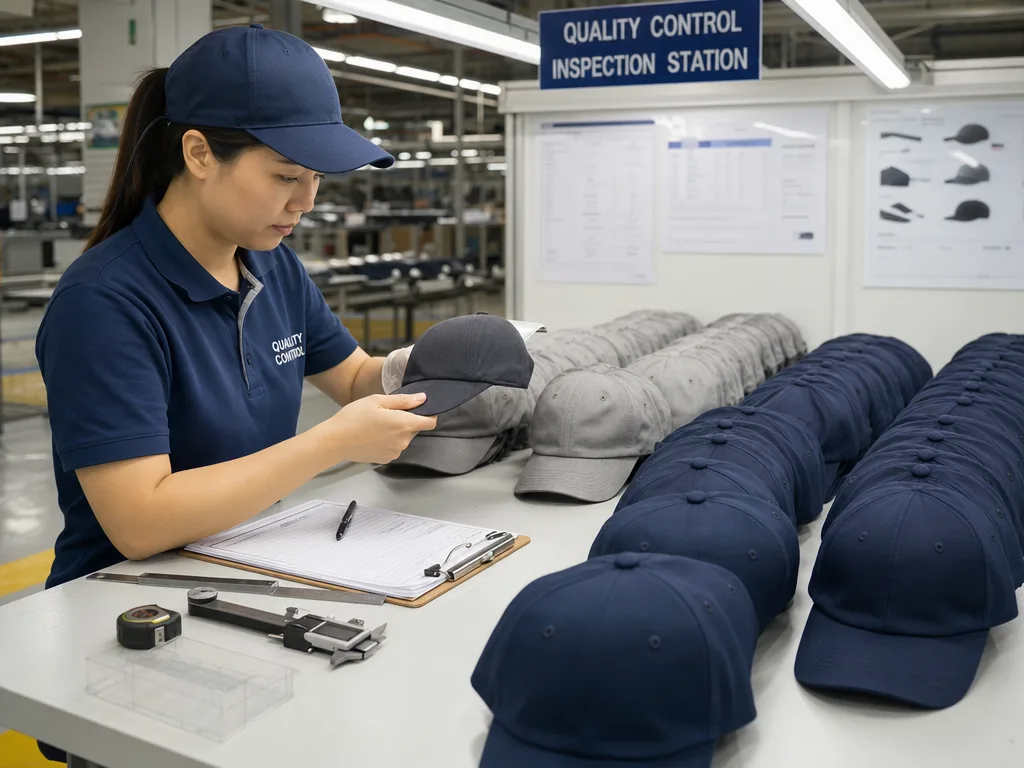
BSCI vs Sedex vs WRAP vs WCA: Compliance Audit Standards Compared (2026 Update)
Read article →
Primark Bucket Hat: A Vertical-Specific Sourcing Guide
Read article →
Custom Hat Embroidery: The 2026 Sourcing & Manufacturing Playbook - Supplier Checklist
Read article →We hope this guide demystifies china vs vietnam vs bangladesh: cap manufacturing countries compared 2026 - supplier checklist and helps you move forward with confidence. If you have questions specific to your project, our English-speaking sales engineers are one message away.