
BSCI vs Sedex vs WRAP vs WCA: Compliance Audit Standards Compared (2026 Update)
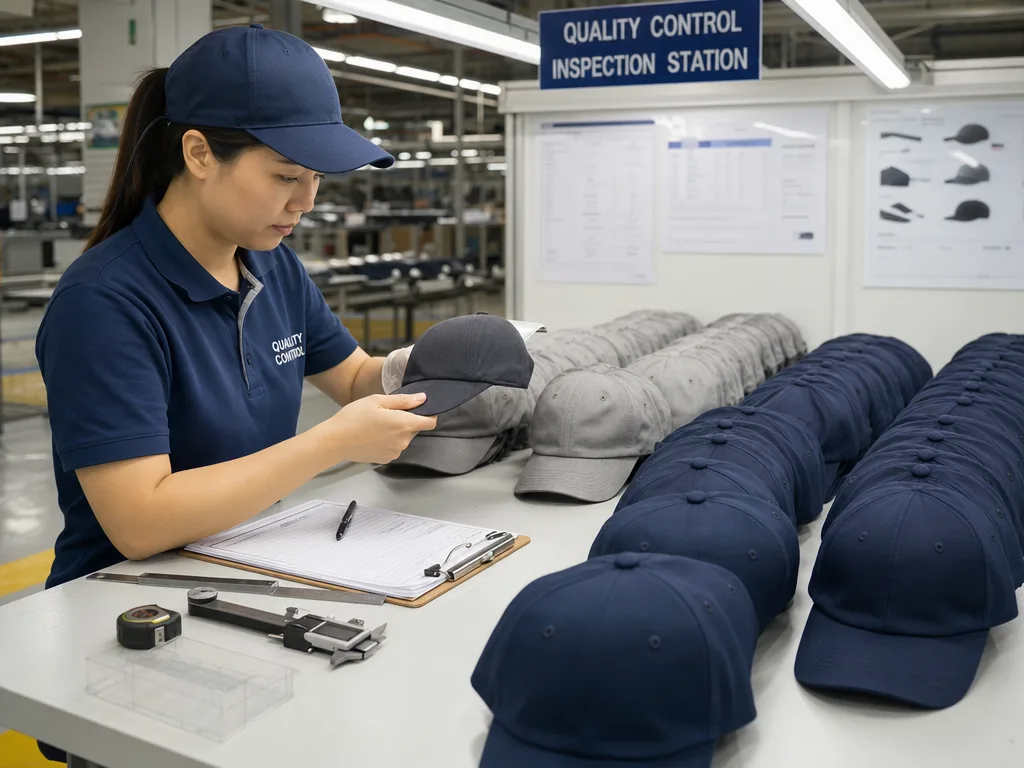
Every week, our sales team answers detailed questions about bsci vs sedex vs wrap vs wca: compliance audit standards compared (2026 update). We wrote this guide so that wholesalers, streetwear brands, corporate buyers and promotional resellers can compare options with full information, and avoid the traps that show up only after production has started.
The four audits hat factories actually hold
amfori sedex-audit-cap-supplier-guide.html">BSCI and Sedex SMETA 4-Pillar are the two audit reports buyers ask for most often, but they answer different questions. In practical BSCI vs Sedex SMETA terms, BSCI is still centered on labor-management control: legal employment, working hours, payroll accuracy, freedom of association, grievance handling, dormitory conditions, and whether disciplinary practices are documented and lawful. SMETA 4-Pillar covers the same social baseline, then pushes deeper into Environment and Business Ethics. That means auditors do not stop at payroll and age records; they also sample chemical inventories, SDS files, waste-transfer manifests, energy and water logs, anti-bribery controls, and subcontractor disclosure. On a cap floor, that difference is obvious within the first half day: BSCI spends more time reconciling attendance, overtime, and wage calculations, while SMETA typically asks for broader evidence across EHS and ethical trading controls.
The floor-level fail points are rarely subtle. Auditors will compare timecards to payroll line by line, often sampling 12 months of records and cross-checking a worker’s base wage, weekday overtime at 150%, weekend overtime at 200%, and social insurance enrollment against local law. They will check whether emergency exits are unlocked and at least 1.1 meters wide, whether extinguishers have current inspection tags, whether needle logs match actual issuance on Tajima or Barudan embroidery lines, and whether spot-removal chemicals are labeled with Chinese GHS pictograms. WRAP and WCA are used differently: WRAP is common in licensed apparel and U.S. retail because it is management-system heavy, while WCA, run under Intertek’s framework, is more score-driven and benchmarked for retailer programs. Our standard practice is to treat any of the four as a live operational audit, not a paperwork exercise; most corrective actions are expected closed in 30 to 60 days with photo evidence, revised SOPs, retraining sign-off sheets, and payroll rechecks, not a generic CAP promising improvement later.
BSCI 2.0 scope and audit process
BSCI 2.0 is designed to expose weak factory systems fast, and in a cap factory the findings are usually not abstract “policy” issues. Under the amfori BSCI Code of Conduct, auditors test 13 performance areas, but the repeat nonconformities are almost always concrete: overtime over legal limits, unsigned or backdated contracts, missing social insurance enrollment, locked exits, poor segregation of spot removers and solvent-based cleaners, and weak control on hot-melt adhesives and embroidery shop fumes. They will also check whether eyelet presses and cutting machines have guards, whether needle and blade control logs are current, whether fire drills actually happened, and whether dormitory rules match what workers say in interviews. That is the practical side of BSCI vs Sedex SMETA: both cover labor, health and safety, and ethics, but BSCI usually hits harder when payroll, attendance, and interview answers do not line up.
An amfori-approved audit firm usually needs 1.5 to 2 auditor-days for a vertically integrated hat plant with cutting, embroidery, sewing, finishing, and packing in one site; a small facility under roughly 100 workers may be done in one day if records are unusually clean. Auditors typically sample 12 months of wages, time records, leave, age documents, and contract dates, then verify them against worker interviews and a physical walkthrough of electrical panels, compressors, canteens, chemical storage, and dormitories where applicable. Report validity is generally 12 months, but major findings can trigger a follow-up much sooner. The factories that do well are not the ones with glossy binders; they are the ones that can reconcile minute-level punch data to payroll, show Chinese-language SDS sheets, keep PPE issue logs, and prove training by department. Our standard practice is to run internal pre-audits against the same sampling logic before the external visit.
The real difference in BSCI vs Sedex SMETA is audit logic, not the headline topics. BSCI 2.0 is more management-system driven: it looks for root-cause fixes, documented corrective action, and evidence that the plant can sustain compliance after the auditor leaves. SMETA 4-Pillar is often more buyer-protocol dependent, with more variation in sampling depth and interview emphasis depending on the customer. A factory can pass a light customer inspection with decent housekeeping and still fail BSCI because overtime approvals are unsigned, payroll formulas change by department, fire-risk zoning is undocumented, or subcontractor control stops at verbal promises. In hat manufacturing, the weak spots are predictable: trimming, hand labeling, rework, and peak-season embroidery, where temporary labor and off-book hours tend to show up first. For EU buyers, BSCI remains popular because it gives a standardized benchmark instead of ten different retailer checklists, but it only works when the factory has 3 to 6 months of disciplined record control, not a week of cleanup before the audit.
Sedex SMETA 4-Pillar scope and process
Sedex SMETA 4-Pillar is the audit buyers ask for when they want evidence beyond wages and fire extinguishers. The four pillars are Labor Standards, Health and Safety, Environment, and Business Ethics, but in a cap factory the audit still lives or dies on record integrity and floor discipline. Auditors typically spend the longest on payroll, time records, labor contracts, age verification, social insurance, disciplinary logs, grievance channels, and dormitory rosters where applicable. On the production side, repeat nonconformities are rarely dramatic: blocked egress between sewing and finishing, expired fire inspection tags, missing needle policy records on Tajima or Barudan embroidery heads, unlabeled spot-cleaning chemicals, and inadequate guarding on eyelet, snap, or button-setting machines. In a practical BSCI vs Sedex SMETA comparison, this is the key distinction: SMETA 4-Pillar requires the site to prove environmental control and ethical business conduct with the same level of documentation buyers expect for labor compliance.
The Environment and Business Ethics pillars are where unprepared suppliers get exposed. A competent auditor will not accept a generic “we recycle” statement; they will trace chemical inventories, SDS availability, secondary containment, waste segregation, licensed disposal receipts, and wastewater records if the factory does washing, printing, or wet stain removal. They also look at scrap streams that matter in headwear production—PE polybags, embroidery backing, adhesive containers, cartons, and fabric offcuts. Business Ethics is even less forgiving because the evidence is procedural: anti-bribery policy, whistleblower mechanism, gift and commission controls, conflict-of-interest declarations, subcontractor approval records, and proof that peak-season overflow embroidery or packing is not hidden outsourcing. Sedex-approved auditors such as SGS, Intertek, Bureau Veritas, QIMA, or TÜV Rheinland usually spend 2 to 3 onsite days at an 80- to 300-worker factory, then upload findings to the Sedex platform with CAP timelines often set at 30, 60, or 90 days by severity. That is why, in BSCI vs Sedex SMETA decisions, retailer compliance teams often favor SMETA when they need one sharable audit file across multiple accounts.
WRAP scope and process
WRAP is narrower than a full buyer-platform program, but in apparel and headwear it is often the quickest route to a recognizable factory-level certificate. The audit is built around 12 principles, and in practice the pressure points in a China cap factory are predictable: legal working age, voluntary overtime, wage calculation, fire safety, chemical control, machine guarding, dormitory management, and customs compliance. A WRAP field audit is usually 1 to 2 on-site days for a single facility, depending on headcount and dorm coverage. Auditors will sample 12 months of payroll, attendance, leave, and social insurance records; cross-check ID files for juvenile-worker controls; review SDS documentation and secondary containment in printing or washing areas; and inspect evacuation routes, alarm tests, extinguisher validity, and locked-exit risks. The common failure is not a dramatic labor abuse case but basic record inconsistency: overtime premiums that do not match raw swipe-card data, missing rest-day logs, or piece-rate earnings that fall below the local minimum wage once hours are reconstructed.
The certificate tiers have real sourcing consequences. Platinum is valid for 2 years and requires three consecutive years of certification with no major noncompliance; Gold runs 1 year; Silver is typically 6 months and signals that substantial compliance exists but corrective actions are still open. Approved monitoring firms such as Intertek, Bureau Veritas, and TÜV SÜD do more than run a document checklist. They recalculate wage formulas from source records, compare payroll totals against statutory overtime rules, test worker interviews against management statements, and verify whether resignation, leave, and disciplinary files align with local law. At CrownsForge, pre-audit preparation means reconciling a full year of payroll and attendance line by line, because one bad formula in weekday or weekend OT can downgrade the result fast.
In the practical comparison of BSCI vs Sedex SMETA, WRAP is more certificate-driven and less dependent on a shared buyer remediation ecosystem. BSCI 2.0 and Sedex SMETA 4-Pillar usually push harder on continuous improvement, management systems, and customer follow-up, while WRAP is designed to answer a narrower question: can this specific facility meet a defined compliance threshold now. That makes WRAP useful for licensed sportswear, music merch, and promotional headwear programs where legal teams want a familiar certificate and a factory-specific scope, not a broad network assessment. The real test is whether the site can survive payroll triangulation, private worker interviews, EHS inspection, and dorm checks without a major finding. If it cannot, the issue is rarely the audit brand; it is almost always weak data discipline, outdated HR controls, or safety housekeeping that should have been fixed months earlier.
WCA scope and process
WCA is not a broadly transferable badge like many suppliers assume; it is a retailer-controlled assessment tied to Walmart and Sam’s Club supply chains, with audit execution by Walmart-approved firms and disposition inside Walmart’s own platform. If you have already compared BSCI vs Sedex SMETA, the fieldwork will feel familiar at first: opening meeting, business license and labor-policy review, 12 months of payroll, attendance, and piece-rate records, site walk-through, dormitory and canteen inspection where applicable, then confidential worker interviews across shifts, departments, and labor types. The real difference is governance. Under WCA, the scoring model, risk flags, corrective-action deadlines, and approval status are not really negotiated between factory and customer; they are driven by Walmart’s compliance rules and vendor onboarding logic. For a China cap factory making licensed sports headwear, private-label truckers, or price-sensitive promotional programs, that matters immediately once production is linked to a Walmart vendor ID. A site can pass another customer’s social audit and still be blocked here over payroll integrity, undisclosed subcontracting, inconsistent time records, or slow CAP closure.
The scope is usually wider than first-time suppliers expect, and auditors do not stop at minimum wage, overtime, and signed contracts. They sample age-verification files, social insurance enrollment by local contribution base, dispatch-labor controls, fire drill records, evacuation routes, machine guarding, SDS and GHS chemical labels, grievance channels, dorm management, and unauthorized subcontracting. In cap production, they also notice process-specific risks that generic consultants miss: emergency-stop function and guarding on Tajima or Barudan embroidery heads, needle-accountability logs, compressed-air hose housekeeping around crown sewing lines, spot-cleaning solvent storage, and whether trimming, embroidery, or finishing was pushed offsite during peak season without disclosure. In Zhejiang, a 120- to 300-worker facility typically pays roughly $1,200 to $2,800 for the audit itself, but the remediation bill is often higher. Fire-door replacement, photoluminescent exit signage, locker segregation, PPE issuance, wage true-ups, and social-insurance back payments can easily run $3,000 to $15,000. The common 12-month validity window is not a buffer; after Chinese New Year rehiring, underreported insurance bases or missing temp-worker contracts show up fast on the next review.
What overlap exists and what differs
On a cap factory floor, the overlap across amfori BSCI 2.0, Sedex SMETA 2-Pillar, Sedex SMETA 4-Pillar, WRAP, and WCA is usually 75% to 85%. Auditors may use different protocols, but they interrogate the same control points: age-verification files, labor contracts, 12 months of payroll and attendance, overtime calculations against local law, social insurance enrollment, fire-drill records, extinguisher inspection tags, emergency lighting tests, machine guarding, first-aid coverage, PPE issuance, dorm hygiene, and chemical segregation with SDS in Chinese. In cap factories, they also go straight to the failure points buyers miss in PowerPoint compliance decks: needle-control logs, broken-needle reconciliation, compressor pressure-vessel inspections, panel-cutter guarding, embroidery-machine lockout, and electrical load balancing on Tajima or Barudan lines. That is why the BSCI vs Sedex SMETA debate is often overstated by sourcing teams. If a factory can reconcile timecards to payroll, prove piece-rate earnings still clear minimum wage plus overtime premiums, and show monthly drill, training, and corrective-action records with signatures, it is already covering most of the substantive ground under both systems.
Where these standards actually diverge is audit architecture, scoring logic, and how evidence travels upstream to brands and retailers. amfori BSCI 2.0 is built around the amfori Code of Conduct and rates performance areas such as fair remuneration, decent working hours, occupational health and safety, special protection for young workers, no precarious employment, ethical business behavior, and environmental protection. Sedex SMETA 4-Pillar uses the ETI Base Code, then extends into environment and business ethics, so auditors usually test deeper document consistency: wage registers, leave records, disciplinary files, grievance logs, utility invoices, wastewater or solid-waste manifests, and management interview statements all need to align. WRAP tends to push harder on lawful employment, unauthorized subcontracting, and product traceability; WCA is often more retailer-driven and less tolerant of missing payroll-cycle continuity or dorm headcount mismatches. In practice, a technically decent factory can still fail commercially because one month of attendance is missing, social insurance headcount does not match active workers, or CAPs are closed verbally instead of with dated photographic proof. A repeat audit typically runs about $900 to $2,800 and can delay vendor onboarding by 2 to 6 weeks.
What the audit doesn't tell you
A clean social audit says almost nothing about whether a factory can make the hat you approved, at the quality level you approved, on the date printed on the PO. That is the point buyers miss in most BSCI vs Sedex SMETA comparisons. BSCI 2.0, Sedex SMETA 2-Pillar or 4-Pillar, WRAP, and WCA are designed to verify labor, wages, working hours, fire safety, dorms, grievance channels, and baseline EHS controls. None of them measures process capability: whether dyed twill can hold Pantone 19-0303 TCX within Delta-E 1.0 to 1.5 across repeat lots, whether crown height stays within ±3 mm after blocking, or whether the merchandiser actually locks the BOM, trim card, and PP sample before bulk cutting. A factory can score well on social compliance and still miss ex-factory by 10 to 14 days because one sewing line is overbooked, embroidery files were not approved, or visor materials arrived with shade variation. The operational failures are usually mundane, not dramatic. I have seen audited cap suppliers run 5,000-piece repeats with embroidery registration drifting 1.5 mm panel to panel, swap buckram from 180 gsm to 150 gsm without buyer signoff, use the wrong visor sandwich piping shade, and cut top-button wraps with worn dies that fray before packing. Those defects will never appear in a SMETA or BSCI report. If you want real confidence, ask for the last 12 months of on-time delivery performance, first-pass yield, rework rate, and CAP closure records tied to production defects rather than audit nonconformities. AQL 2.5 final reports, in-line defect trend sheets, and measurement data for crown depth, visor width, and sweatband circumference tell you far more about execution than a framed audit certificate in reception.
The same blind spot applies to materials control and sustainability claims. Audit frameworks can confirm legal chemical storage, waste segregation, PPE use, and documentation, but they do not prove that a mill can supply recycled polyester with stable 75D or 150D yarn, consistent gsm, or valid GRS transaction certificates lot by lot. They do not tell you whether color continuity is managed through shade-band approvals by fabric lot, whether carton specifications can pass drop resistance without crushing the front crown, or whether the factory has a packing plan that keeps freight cost per cap under control in a 40HQ. In hats, those details decide whether bulk goods arrive saleable or arrive as markdown stock. If you are weighing BSCI vs Sedex SMETA, keep ethical compliance in one bucket and manufacturing control in another. The practical checks are not glamorous, but they predict performance: sealed sample records, documented trim-substitution approvals, metal detection logs where required, and machine-level discipline on Tajima, Barudan, or ZSK embroidery heads, including thread-break frequency, needle-change intervals, and tension settings by style. At CrownsForge, audits are treated as gatekeeping, not proof of execution. The evidence that matters is buyer references, pilot-order performance, and hard production records from cutting, embroidery, sewing, finishing, and final inspection. That stack of data is what tells you whether the factory can repeat a style cleanly at scale.
Frequently Asked Questions
Which shipping methods do you support?
We support FOB, CIF and DDP shipping. Air express for samples and small orders, sea LCL for 100 to 500 pieces, sea FCL for 5,000+ pieces. Door-to-door DDP available for US, EU, UK, Canada and Australia.
What logo decoration techniques do you offer?
3D puff embroidery, flat embroidery, woven patch, leather patch, PVC patch, screen printing, sublimation, applique and laser etching, all in-house with no subcontracting.
Do you support sustainability certifications?
Yes. We work with GOTS organic cotton, GRS-certified recycled polyester, OEKO-TEX Standard 100 fabrics, and are BSCI and Sedex audited. Certification documentation can be provided per order.
Can I order a sample before bulk production?
Yes. We strongly recommend approving a pre-production sample before mass production. Samples are charged at 35 to 60 USD each plus express shipping, fully refundable against confirmed bulk orders over 500 pieces.
What file format should I send for my logo?
Vector files (AI, EPS, PDF) are ideal. High-resolution PNG or JPG at 300 dpi on transparent background works as a fallback. Provide Pantone color references for accurate reproduction.
How does ordering custom embroidered trucker hat work?
When evaluating custom embroidered trucker hat, the key considerations are construction quality, decoration capability, MOQ flexibility and lead time. BSCI 2.0 (Business Social Compliance Initiative by amfori) — European retailer favorite. Sedex SMETA 4-Pillar (Social, Health & Safety, Environment, Business Ethics) — used by UK and increasingly global retailers. WRAP (Worldwide Responsible Accredited Production) — US retailer favorite for licensed merchandise. WCA (Walmart Conformance Audit) — required by Walmart and…
How does ordering custom bucket hat embroidery work?
When evaluating custom bucket hat embroidery, the key considerations are construction quality, decoration capability, MOQ flexibility and lead time. BSCI 2.0 (Business Social Compliance Initiative by amfori) — European retailer favorite. Sedex SMETA 4-Pillar (Social, Health & Safety, Environment, Business Ethics) — used by UK and increasingly global retailers. WRAP (Worldwide Responsible Accredited Production) — US retailer favorite for licensed merchandise. WCA (Walmart Conformance Audit) — required by Walmart and…
What should buyers know about bucket hat men nike?
When evaluating bucket hat men nike, the key considerations are construction quality, decoration capability, MOQ flexibility and lead time. BSCI 2.0 (Business Social Compliance Initiative by amfori) — European retailer favorite. Sedex SMETA 4-Pillar (Social, Health & Safety, Environment, Business Ethics) — used by UK and increasingly global retailers. WRAP (Worldwide Responsible Accredited Production) — US retailer favorite for licensed merchandise. WCA (Walmart Conformance Audit) — required by Walmart and…
How does ordering custom made hats for men work?
When evaluating custom made hats for men, the key considerations are construction quality, decoration capability, MOQ flexibility and lead time. BSCI 2.0 (Business Social Compliance Initiative by amfori) — European retailer favorite. Sedex SMETA 4-Pillar (Social, Health & Safety, Environment, Business Ethics) — used by UK and increasingly global retailers. WRAP (Worldwide Responsible Accredited Production) — US retailer favorite for licensed merchandise. WCA (Walmart Conformance Audit) — required by Walmart and…
What is the difference between BSCI and Sedex?
BSCI audits follow a fixed framework, whereas SEDEX supports multiple audit types, including BSCI itself. BSCI membership is required for suppliers, while SEDEX enables transparency by sharing audits with multiple buyers.
Is BSCI recognized globally?
The BSCI certification is recognized globally and demonstrates a company's commitment to responsible sourcing and ethical business practices. It helps companies ensure that their supply chains meet internationally recognized social standards and supports the protection of workers' rights and welfare.
Are Sedex and Smeta the same?
SMETA audits are carried out by auditors from Sedex's named independent, third-party Affiliate Audit Companies (AACs). Sedex owns and evolves the SMETA methodology, oversees its usage and drives SMETA auditing consistency through our Audit Quality Programme.
Looking for a reliable hat manufacturer in China?
CrownsForge has produced custom hats for 800+ brands across 40 countries. From 100-piece launches to 100,000-piece retail programs, we deliver on time and on spec.
Get in touchRelated guides
Custom Embroidered Hats: The 2026 Sourcing & Manufacturing Playbook
Read article →
Festival Bucket Hats Reorder Planning Guide for Custom Hat Buyers
Read article →
BSCI vs Sedex SMETA: Which Audit Does Your Cap Supplier Actually Need?
Read article →If you are ready to take the next step on bsci vs sedex vs wrap vs wca: compliance audit standards compared (2026 update), our team can put a tailored quotation and digital mock-up in your inbox within 24 hours. Send the inquiry form on our contact page or message us directly on WhatsApp.