
5-Panel Camp Cap Manufacturing: A Buyer's Specification Guide - Supplier Checklist
Every week, our sales team answers detailed questions about 5-panel camp cap manufacturing: a buyer's specification guide - supplier checklist. We wrote this guide so that wholesalers, streetwear brands, corporate buyers and promotional resellers can compare options with full information, and avoid the traps that show up only after production has started.
The 5-panel silhouette: how it differs from 6-panel baseball caps
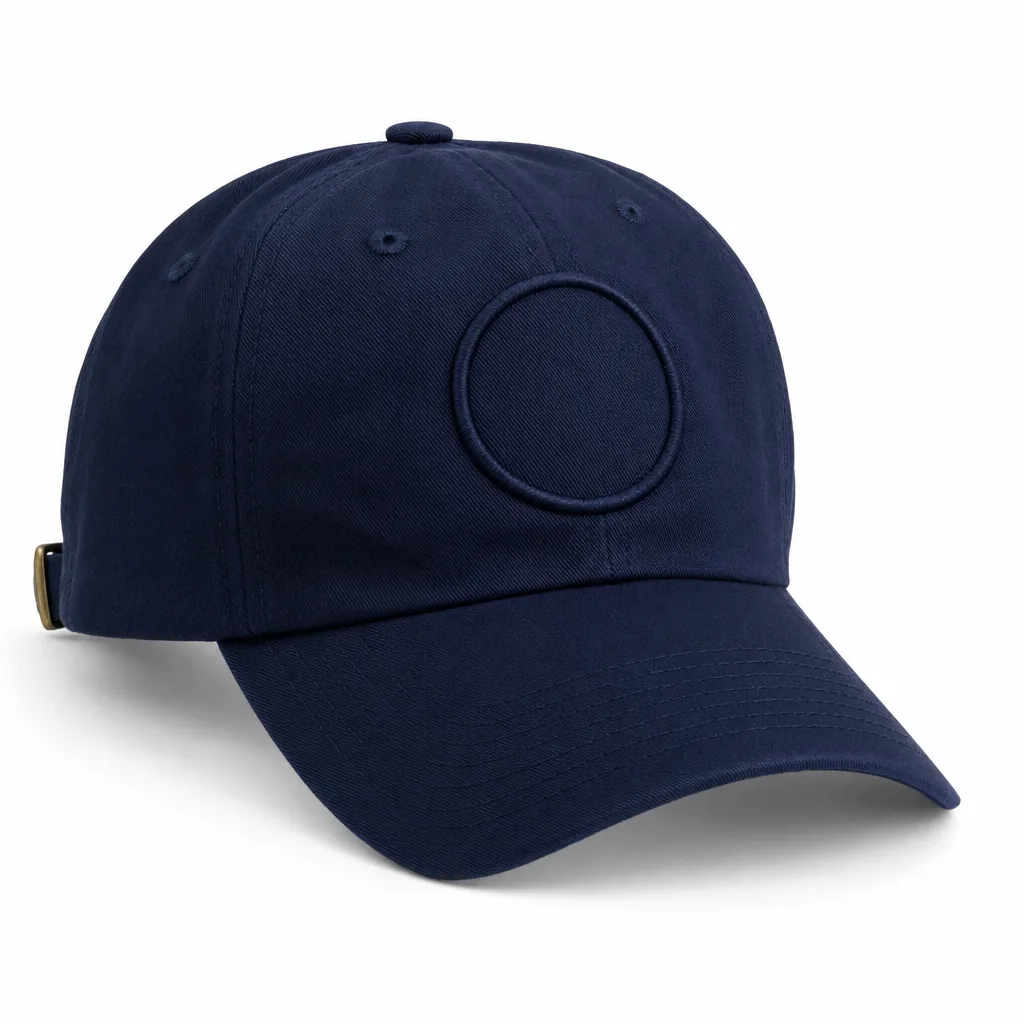
The defining construction difference is the uninterrupted front face: a 5-panel camp cap has one full front panel, while a 6-panel baseball cap splits that area with a center seam. For buyers, that changes decoration, tolerance control, and defect visibility all at once. A seam-free front gives cleaner placement for screen print, woven patches, TPU badges, and low- to medium-density embroidery, typically safer in the 6,000-8,000 stitch range on unstructured crowns. But it also makes mistakes impossible to hide. A patch placed 2 mm off center, a wavy topstitch, or slight tunneling from poor backing stands out immediately, especially on 120-160 gsm taslon nylon or 220-240 gsm cotton twill. Any capable 5 panel camp cap manufacturer should adjust hooping pressure, backing weight, and sewing tension for that softer front panel; the same Tajima or Barudan file that runs cleanly on a buckram-supported 6-panel can pucker badly on a camp cap if the digitizing was built for a structured crown rather than a low-profile silhouette.
The shape is also fundamentally different, not just visually but at pattern level. Most camp caps sit around 8.5-9.5 cm in crown height with a flatter visor pitch, compared with roughly 10.5-12 cm for a classic structured baseball cap. A 6-panel crown uses six wedges meeting at the top button, which creates a rounder dome and distributes tension more evenly. A 5-panel pattern pushes volume forward, so the front-panel width, side-panel sweep, and visor width have to match within tight tolerances; in sampling, a 3-4 mm shift at the side seam is enough to make the cap look boxy or force the brim too high on the forehead. That is why serious factories sign off from a physical PP sample, not only a tech pack. On our floor, the first checkpoints are side-seam symmetry, visor-to-crown proportion, front-panel flatness, and stitch alignment, then shade approval to Pantone TCX, pre-agreed Delta-E tolerance, and AQL 2.5 final inspection. A factory that mainly produces heavy buckram sports caps often overbuilds camp caps and ends up with a crown that is too stiff, too tall, or too curved.
Fabric choices: cotton, nylon, recycled polyester
Fabric choice is where a 5-panel program either stays stable at scale or turns into a returns problem. For most retail 5-panel silhouettes, 100% cotton twill at 210-230 gsm is still the safest base spec: it sews cleanly, holds a soft crown without collapsing, and supports front embroidery with lighter backing than brushed cotton or canvas usually requires. The better executions are typically 16x12 or 20x16 yarn-count twills with shrinkage under 3% after one home-laundry cycle, color fastness at grade 4 minimum for washing and crocking, and fabric skew and bow controlled before spreading. If Pantone alignment matters across repeat POs, do not accept vague “close match” language; approve lab dips against a sealed master and hold bulk shade within Delta-E 1.5 under D65 light. A competent 5 panel camp cap manufacturer should also check incoming rolls for shade banding, GSM tolerance, and warp distortion, because twisted panels and uneven crown height usually start in fabric inspection, not at sewing.
For outdoor, running, and summer promo caps, nylon ripstop earns its place when low weight and fast dry time matter more than a soft hand. The workable range is usually 105-140 gsm in 70D or 210D constructions, often with PU coating or a C0 DWR if the shipment is going into tighter compliance markets where fluorinated finishes create problems. Grid size matters: a coarse ripstop can make the cap look cheap, while an ultra-fine grid loses the technical look buyers are paying for. On the sewing floor, nylon is less forgiving than cotton; excessive needle heat, aggressive pressing, or poor tension control will leave shine, needle marks, and seam grin around the side panels and visor binding. Where the artwork depends on sharp print quality, woven polyester or recycled polyester at 120-160 gsm is often the smarter spec because it sublimates cleaner, dries faster, and holds color more consistently in use.
Recycled polyester only has value if the paperwork and batch control are real. Ask for a valid GRS scope certificate from the factory, transaction certificates for the actual lot, and the yarn spec itself, commonly 75D-150D filament from post-consumer PET. In production, recycled lots can show wider shade variation than virgin polyester, so bulk fabric should be checked under D65 light against the sealed swatch before cutting, not after sewing when panel mismatch is already visible. That discipline matters more than a recycled hangtag. If the program sits above entry-price promo, it is also worth discussing wool blends for fall drops: usually 20%-30% wool blended with polyester or acrylic to control pilling and dimensional movement. Pure wool reads richer, but it can add roughly $0.60-$1.20 FOB per cap and often runs slower on Tajima or Barudan embroidery heads because the surface is less uniform and underlay has to be tuned more carefully.
Construction details that matter
Underbrim specs expose weak tech packs faster than almost anything else, because a factory can downgrade underside fabric or brim insert without changing the top-view silhouette. If you want contrast underbrim on a navy shell, write it as a separate BOM line with Pantone TCX reference, fiber content, finished gsm, coating, backing, and maximum color variance. A shell in Pantone 19-3920 TCX paired with an underbrim in 16-1364 TCX should be approved from both a lab dip and an actual fused cut panel under D65 light; 8 wale cotton twill, 70D recycled nylon taslon, and brushed tricot do not hold the same shade once coating, fusing, and topstitching are done. When a supplier claims Delta-E below 1.5, ask whether that reading is taken pre-coating or after heat setting. On PU-coated underbrims, I have seen post-pressing shift push past Delta-E 2.0, which is visibly off against a clean shell match. Brim insert spec matters just as much: 1.2 to 1.5 mm PE board gives a stable streetwear curve, EVA feels softer but rebounds less consistently, and paper board is still used on cheap orders even though it warps quickly after humidity above roughly 70% RH.
Eyelets, sweatband, and closure are where comfort and claim rate get decided. On a typical 5-panel camp cap, two embroidered side eyelets are standard; four improve airflow, but on 70D to 110D lightweight nylon they need enough clearance from the seam allowance or the panel will pucker after bartacking. For stitched eyelets, hold diameter tolerance to plus or minus 0.5 mm and require mirrored placement from the center front seam; for metal grommets, specify finish, inner diameter, and at least 24 to 48 hours salt-spray performance if the goods are moving by ocean freight. A reliable 5 panel camp cap manufacturer should lock those placements at sampling stage and run them consistently on bulk, not leave them to sewing-line judgment. Sweatband is another place buyers lose quality for pennies: 80 to 100 gsm nonwoven feels cheap fast, while 180 to 220 gsm cotton twill is a solid baseline for fashion programs, and microfiber or polyester moisture-wicking bands suit running and summer promo caps if you also call out dry crocking grade 4 and wet crocking grade 3-4. Closure cost looks minor until 5,000 units arrive with peeling buckle plating or slipping webbing, so specify pull strength, stitch density, closure alignment, and final inspection to AQL 2.5.
Decoration: what works on the single front panel
The single front panel is the whole point of this silhouette: no center seam, no split artwork, and a larger usable decoration field than a standard 6-panel cap. The best methods are flat embroidery, woven patch, PVC patch, and screen print, but each has clear engineering limits that a competent 5 panel camp cap manufacturer should define before quoting. For direct embroidery, I treat 1.2 mm as the practical minimum satin column and 0.8 mm as the minimum negative gap on brushed cotton, washed twill, peach-finish nylon, and other soft shells; below that, details start closing after steaming and final shaping. On unstructured fronts, logos around 65 to 75 mm wide usually read better than oversized fills. Once you load a soft crown with 6,500 to 8,000 stitches, especially on 110 gsm taslon or 70D nylon, you start seeing tunneling, panel rippling, and hoop marks.
Woven patch is the cleanest solution for fine typography, tonal graphics, and linework under 0.8 mm that embroidery would swallow. A woven patch in the 0.4 to 0.8 mm thickness range sits flatter on a low-profile camp cap and handles carton compression better than raised decoration. PVC has its place when the brand wants weather resistance or molded depth, but the tradeoff is real: soft PVC at 0.8 to 1.2 mm is heavier, stiffer, and noticeably worse for freight efficiency once you are shipping 5,000 pieces by DDP air. On camp caps, I prefer stitched application over heat-bond-only because bonded corners often lift after hot-container exposure. Screen print is still the most forgiving option on lightweight nylon and performance shells where needle penetration leaves pinholes or turns the front panel into cardboard. On light-colored fabric, Pantone matching within Delta-E 2.0 is realistic; on dark shells, the underbase improves opacity but adds hand feel, so the print needs a 24-hour cure check, tape pull, and wash simulation before bulk approval.
3D puff only works when the front support and artwork geometry are right. Buyers routinely try to force trucker-cap decoration onto a floppy 5-panel crown, then act surprised when the logo collapses in transit. Puff embroidery needs simple shapes, 4 to 5 mm minimum stroke width, about 2 mm EVA foam, and enough top coverage to cap the foam cleanly; script fonts, fine serifs, and enclosed counters almost always split or sink after packing pressure. On polyester with laminated front support or light buckram, puff can survive export cartons and still hold definition. On soft nylon with no structure, it usually looks tired before it reaches retail. For production control, the sample is not the standard; repeatability across 1,000 to 10,000 units is. Ask for written limits on maximum logo size, minimum line width, patch attachment method, stitch-count range, and strike-off approval. Our standard practice is AQL 2.5 on front-logo placement, skew, edge lift, loose trims, and puckering, with front-panel waving over 3 mm treated as rejectable.
MOQ, lead time, pricing — 5-panel specifics
MOQ on a 5-panel order is a setup question, not a marketing number. In practice, 100 pcs per colorway only works when the spec is disciplined: one shell fabric, one visor board, one closure, one label set, and one decoration method. Once a PO starts splitting across 210 gsm cotton canvas, 228T nylon taslon, and 75D polyester ripstop, the efficient MOQ usually moves to 150-300 pcs per SKU because marker efficiency drops, trim leftovers increase, and line changeover stops being proportional. A competent 5 panel camp cap manufacturer should quote MOQ by style, color, and decoration separately. Flat embroidery on a Tajima or Barudan head can stay workable at 100 pcs with a 6,000-8,000 stitch front logo, but woven patches are commonly 200 pcs per design, and reflective heat transfers or molded silicone badges often need 300 pcs once mold amortization, spoilage, and replacement allowance are included. If the supplier cannot state whether MOQ is per style, per color, or per logo, expect the FOB to move later by roughly $0.35-$0.90 per cap.
Lead time is only believable when the approval pack is complete: tech pack, Pantone TCX references, artwork files, label copy, carton marks, and signed sample comments. A realistic pre-production sample cycle is 7-10 calendar days: 1-2 days for pattern and BOM confirmation, 2-3 days for fabric and trims allocation, then 3-4 days for cutting, sewing, decoration, finishing, and internal QC. Add 3-5 days for custom-dyed webbing, printed seam tape, or a new silicone patch mold, and longer if color approval requires lab dips within Delta-E tolerance. After sample approval and deposit, bulk production is typically 22-28 days for 300-1,000 pcs when shell fabric is in-stock and trims are standard; imported recycled nylon, PU-coated fabrics, or low-volume custom dye lots can push ex-factory timing beyond 35 days. FOB China pricing for a 5-panel camp cap usually lands at $3.40-$6.20: $3.40-$4.10 for basic cotton twill or polyester with a plastic snap and simple embroidery, $4.60-$5.40 for better shell fabrics and upgraded trims, and $5.80-$6.20 when technical fabrics, multi-position branding, or mixed decoration are involved. Our standard practice is to break costs into shell, trims, decoration minutes, labor, and packing because that exposes whether the quote is based on real consumption or padded contingency.
Who buys 5-panel camp caps?
The biggest volume buyers are outdoor and active-lifestyle brands that need a cap profile sitting between technical performance and casual retail. Patagonia- or Cotopaxi-style programs usually spec lightweight 100% nylon taslan at 110–140 gsm, or a polyester 5 panel cap shell around 120 gsm with mesh or laser-perf side ventilation, then demand color control within Delta-E 1.5 to approved Pantone TCX lab dips. These buyers care less about decorative complexity and more about repeatability: low-crown fit consistency, sweatband absorbency, buckle corrosion resistance after 24-hour salt spray, and seam strength at the front panel join. A serious 5 panel camp cap manufacturer will see these accounts ask for CPSIA tracking, REACH-compliant trims, carton drop-test results, and factory audit records like sedex-audit-cap-supplier-guide.html">BSCI 2.0 or Sedex SMETA 4-Pillar before they even discuss scaling from 1,200 pieces to 20,000-plus per color.
Skate labels, indie streetwear capsules, and festival merch crews buy for a different reason: silhouette and surface area. They want a clean front panel for 5,000 to 12,000 stitches of flat or satin embroidery, woven patch application, or high-density screen print, and they are very specific about 5 panel cap construction because one bad crown angle makes the whole drop look cheap. In practice, these buyers often choose brushed cotton twill at 200–240 gsm, cotton/nylon blends, or foam-backed fronts for a sharper face. Order quantities are usually more fragmented—144 to 600 pieces per colorway for smaller capsules, 1,000-plus for touring merch—but the SKU count is higher, so trim management matters more than unit price. For a custom 5 panel hat run, they will often trade a few cents of FOB savings to get cleaner embroidery on Tajima or Barudan heads, tighter topstitch SPI, and better label placement inside the sweatband.
Event-driven buyers—especially fishing tournaments, beer brands, music festivals, and promotional resellers buying wholesale 5 panel caps—are usually the most deadline-sensitive segment. They need dependable replenishment, freight planning, and decoration that survives rough use, not just showroom approval. Fishing programs often favor quick-dry microfiber or ripstop with UPF-oriented finishing, black underbrims to cut glare, and plastic snapbacks that will not rust on the water. Festival orders lean toward bright pigment stories, rope details, soft-structure crowns, and packable visors, but they are notorious for compressed lead times; a camp cap supplier china side typically has to lock artwork, fit sample, and bulk fabric within 7 to 10 days to hit vessel cutoff. At CrownsForge, our standard practice for these accounts is to build inspection around AQL 2.5 with special attention on visor symmetry, strap function, embroidery registration, and assort ratio accuracy because late or mismatched cartons create bigger losses than a small FOB increase.
Frequently Asked Questions
How long does production take?
Sampling takes 7 to 12 days. Bulk production runs 20 to 30 days depending on quantity, fabric availability and decoration complexity. Inspection and packing adds another 3 to 5 days before shipment.
Do you support sustainability certifications?
Yes. We work with GOTS organic cotton, GRS-certified recycled polyester, OEKO-TEX Standard 100 fabrics, and are BSCI and Sedex audited. Certification documentation can be provided per order.
What file format should I send for my logo?
Vector files (AI, EPS, PDF) are ideal. High-resolution PNG or JPG at 300 dpi on transparent background works as a fallback. Provide Pantone color references for accurate reproduction.
What is the minimum order quantity (MOQ) for custom hats?
Our standard MOQ is 100 pieces per design and color, with sampling available from 1 piece. For complex multi-color logos or premium fabric upgrades, the MOQ can be lowered with a small per-piece surcharge.
Can I order a sample before bulk production?
Yes. We strongly recommend approving a pre-production sample before mass production. Samples are charged at 35 to 60 USD each plus express shipping, fully refundable against confirmed bulk orders over 500 pieces.
How does ordering baseball cap embroidered custom work?
When evaluating baseball cap embroidered custom, the key considerations are construction quality, decoration capability, MOQ flexibility and lead time. Single front panel (no front seam), two side panels, two back panels, low-profile flat brim. Originated in 90s skate culture; now an outdoor and streetwear staple. Cotton twill 6.4 oz is standard. Lightweight nylon ripstop for technical outdoor. Recycled polyester for sustainability programs. Wool blend for cold-weather variants.
How does ordering custom embroidered trucker hat work?
When evaluating custom embroidered trucker hat, the key considerations are construction quality, decoration capability, MOQ flexibility and lead time. Single front panel (no front seam), two side panels, two back panels, low-profile flat brim. Originated in 90s skate culture; now an outdoor and streetwear staple. Cotton twill 6.4 oz is standard. Lightweight nylon ripstop for technical outdoor. Recycled polyester for sustainability programs. Wool blend for cold-weather variants.
What's the MOQ for custom embroidered baseball caps no minimum?
When evaluating custom embroidered baseball caps no minimum, the key considerations are construction quality, decoration capability, MOQ flexibility and lead time. Single front panel (no front seam), two side panels, two back panels, low-profile flat brim. Originated in 90s skate culture; now an outdoor and streetwear staple. Cotton twill 6.4 oz is standard. Lightweight nylon ripstop for technical outdoor. Recycled polyester for sustainability programs. Wool blend for cold-weather variants.
What should I know about wholesale baseball caps made in usa?
When evaluating wholesale baseball caps made in usa, the key considerations are construction quality, decoration capability, MOQ flexibility and lead time. Single front panel (no front seam), two side panels, two back panels, low-profile flat brim. Originated in 90s skate culture; now an outdoor and streetwear staple. Cotton twill 6.4 oz is standard. Lightweight nylon ripstop for technical outdoor. Recycled polyester for sustainability programs. Wool blend for cold-weather variants.
Looking for a reliable hat manufacturer in China?
CrownsForge has produced custom hats for 800+ brands across 40 countries. From 100-piece launches to 100,000-piece retail programs, we deliver on time and on spec.
Get in touchRelated guides
Snapback vs Fitted vs Adjustable: Cap Closure Systems Compared
Read article →
Sustainable Custom Hats: Eco-Friendly Materials, Recycled Fabrics & Certifications
Read article →
Switching Hat Manufacturers Mid-Program Without Losing Quality - Supplier Checklist
Read article →We hope this guide demystifies 5-panel camp cap manufacturing: a buyer's specification guide - supplier checklist and helps you move forward with confidence. If you have questions specific to your project, our English-speaking sales engineers are one message away.