
5-Panel Camp Cap Manufacturing: A Buyer's Specification Guide (2026 Update)
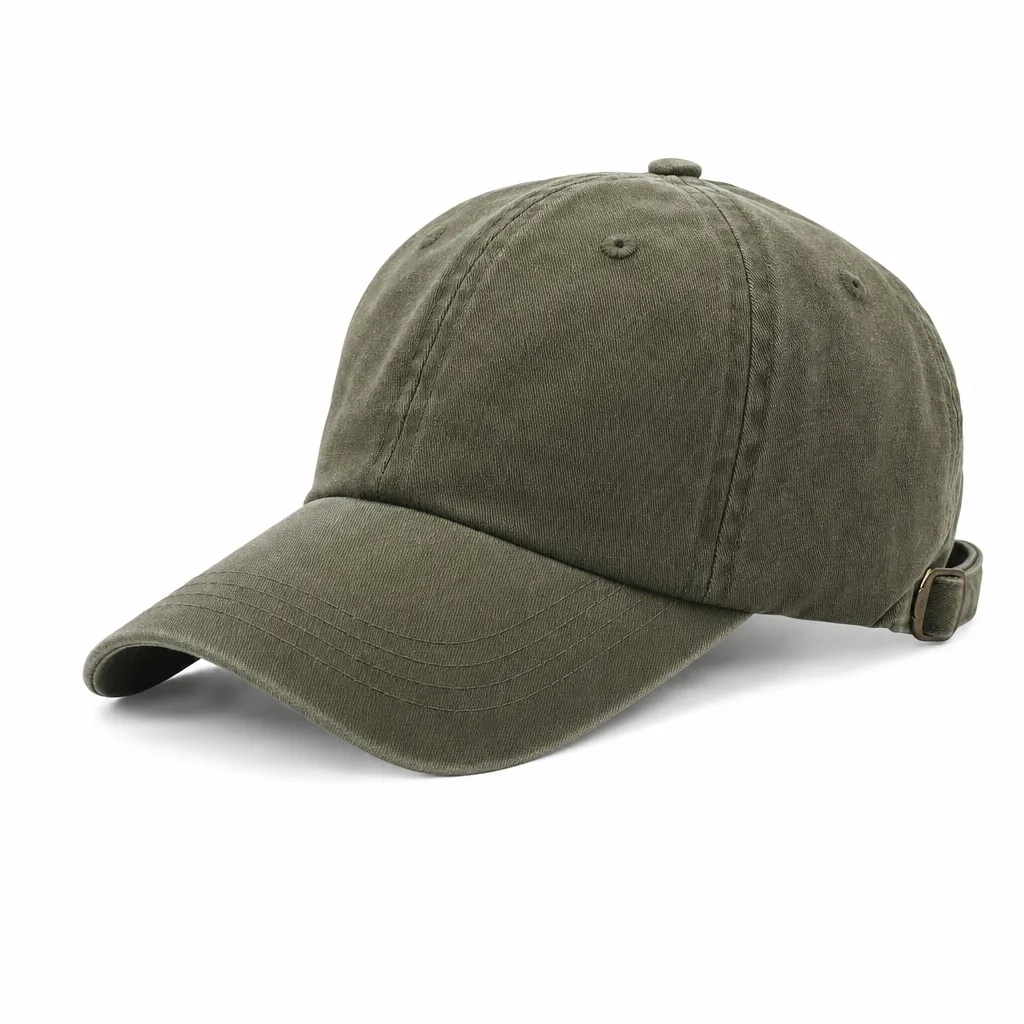
Every week, our sales team answers detailed questions about 5-panel camp cap manufacturing: a buyer's specification guide (2026 update). We wrote this guide so that wholesalers, streetwear brands, corporate buyers and promotional resellers can compare options with full information, and avoid the traps that show up only after production has started.
The 5-panel silhouette: how it differs from 6-panel baseball caps
The uninterrupted front panel is the structural difference that actually matters. A true 5-panel camp cap is built from one full-width front panel, two side panels, and two back panels, so the decoration area is free of the center-front seam that splits a standard 6-panel baseball cap. On an embroidery line, that seam is a nuisance: it changes thread lay, creates uneven foam height for 3D work, and makes wide satin columns wander once artwork pushes past about 100 mm. It also limits clean placement for woven patches, sublimated emblems, or laser-cut appliqué because the seam ridge telegraphs through the face. Most 5-panels also sit lower and flatter, typically 8.5 to 10.5 cm from sweatband to top button, versus roughly 10.5 to 12 cm on a conventional baseball cap, with a 5 to 6 cm visor instead of the usual 7 cm pre-curved sports brim. Any competent 5 panel camp cap manufacturer should lock four dimensions before quoting: finished logo width, crown depth, visor length, and front-panel angle. Those numbers determine whether the finished shape reads as skate, outdoor, or just a misshapen baseball cap.
Material choice shows immediately on a 5-panel because there are fewer seams to disguise bad structure. For streetwear programs, the most reliable specs are 220 to 270 gsm cotton twill, enzyme-washed canvas, or nylon taslan in the 120 to 160 gsm range; performance styles usually shift to 75D to 150D polyester or supplex-type nylon with perforated mesh sweatbands, low-profile snapbacks, or elastic cord closures. The front support has to be balanced carefully. Overbuilt buckram makes the crown look square and cheap, while underbuilt support lets the face cave in and exaggerates visor size. On the factory floor, we usually hold left-right front-panel symmetry within 2 mm, brim-width variance within 2 mm, and check embroidery registration on Tajima or Barudan cap frames before approving bulk. Buyers comparing suppliers should ask for side-profile photos, crown-depth measurements, visor length, fabric gsm, and AQL 2.5 inspection data. A straight-on sample shot hides the exact problems—twisted visor pitch, uneven panel collapse, and poor front shape recovery—that separate a clean camp cap from a weak one.
Fabric choices: cotton, nylon, recycled polyester
Fabric spec drives defect rate, decoration limits, and shelf feel long before artwork approval, so this is where buyers should get strict. For most 5-panel programs, 6.0-6.5 oz cotton twill—roughly 200-220 gsm—is still the lowest-risk base because it sews cleanly, holds a stable front crown, and accepts enzyme wash, flat embroidery, and plastisol print without twisting out of shape. But “100% cotton” is not a usable spec. Ask for yarn count such as 16s x 12s, a firm construction, pre-shrinkage below 3%, and colorfastness at least grade 4 dry and 3-4 wet on crocking tests. Dark reactive shades are where weak mills get exposed: if dye fixation is poor, black, navy, and forest will shift after wash and you will see panel-to-panel shading inside the same lot. A serious 5 panel camp cap manufacturer should lock lab dips to Pantone TCX, hold bulk fabric around Delta-E 1.0-1.5 against the approved swatch, and check under D65 light rather than warehouse fluorescents. Saving $0.08 on cheap twill usually costs more in rework, replacements, and rejected bulk.
Nylon is the right call when the cap needs to read technical, not vintage. A 70D or 100D nylon ripstop in the 110-160 gsm range, typically with AC coating or light PU backing and optional C0/C6 DWR, gives the crisp hand and quick-dry performance outdoor brands expect. It also exposes sloppy sewing fast. Nylon shows needle marks, hole shadow, and puckering much sooner than cotton, so factories need tighter control on needle size, stitch length, and embroidery density, especially on the front panel. On Tajima or Barudan heads, lighter underlay and disciplined stitch count matter more than brute density. If the supplier quietly swaps true nylon for polyester taslon or generic microfiber, you may save $0.20-$0.45 per cap, but the handfeel, noise level, and surface character change immediately. Recycled polyester needs even tighter paperwork than nylon because the claims risk is higher. If the cap is sold as recycled, ask for GRS or RCS transaction certificates and confirm what components are actually covered: shell only, or also sweatband, woven label, visor wrap, and closure strap. In practice, 150-200 gsm rPET works well for sublimation, woven patches, and moisture-oriented builds, but it can trap more heat than cotton and build static if the finish is wrong. Specify anti-static or moisture-management finish where needed, then inspect shade consistency and panel symmetry at final AQL 2.5. Once fabric drift enters cutting, it rarely stays a fabric problem; it turns into sewing, shaping, and claim problems all the way to delivery.
Construction details that matter
The underbrim is one of the fastest tells of whether a cap was engineered properly or just pushed through sewing. Dark underbrims in black, dark olive, or Pantone 19-4007 TCX cut glare and hide sweat salt far better than a shell-matched ecru, especially on 220 gsm cotton twill and 230-240 gsm cotton/nylon blends common in retail 5-panel programs. If you want contrast, write the shade into the PO and set a measurable tolerance: for reactive-dyed cotton, Delta-E under 1.5 is tight control, while under 2.5 is a realistic commercial limit between bulk lots. Just as important, call out the brim stack-up. Recycled paper board is low cost but tends to wave after wash tests or high-humidity storage; EVA gives better recovery on unstructured camp caps; buckram produces the sharpest edge but often feels too stiff on soft-crown builds. A reliable 5 panel camp cap manufacturer should approve underbrim fabric, brim insert, edge turn, and stitch count before bulk, because exposed insert edges, uneven topstitch spacing, and shade drift usually show up first on the brim sandwich.
Ventilation and back-end trim are where a good-looking sample often falls apart in production. Standard 5-panel camp construction usually keeps the front panel clean for flat embroidery, screen print, or woven label placement, so four side eyelets—two per side panel—remain the safest layout. On 120-160 gsm taslan nylon or lightweight polyester, embroidered eyelets are usually better than metal because metal rings can distort the panel and print through the face fabric; on 280 gsm canvas, metal eyelets are acceptable only if they pass rust and burr checks after salt-spray and laundering. Placement needs a tolerance in writing: if eyelet center is off by more than 2 mm side to side, the cap looks crooked on shelf. Finish the spec with the parts customers actually touch. A solid retail baseline is a 180-220 gsm cotton twill or brushed poly/cotton sweatband with 6-8 mm EVA or PU foam. Moisture-wicking microfiber typically adds $0.18-$0.40 per cap and is worth it for running, golf, and summer travel. For closures, self-fabric straps with brass or matte black sliders, or 15-20 mm nylon webbing with a Duraflex-style clip, suit the silhouette better than a cheap plastic snap at $0.12-$0.20. Require bartacks at the back opening and a closure pull test, because weak strap attachment is a routine AQL 2.5 failure in final inspection.
Decoration: what works on the single front panel
The front panel on a 5-panel camp cap is unforgiving because there is no center seam to hide registration drift, fabric grin, or hoop marks. Artwork has to be redigitized for a single-sheet crown; reusing a 6-panel cap file is how you get tunneling, panel dishing, and distorted circles. Flat embroidery is still the safest retail-grade choice on cotton twill, brushed canvas, and mid-weight nylon in the 120-220 gsm range, but only when stitch density is kept in check. On an unstructured shell, 8,000-10,000 total stitches is a sensible ceiling for a front logo; once you push beyond that, fill areas start fighting the fabric unless you add a 40-60 gsm fusible backing or a clean tearaway support. A competent 5 panel camp cap manufacturer should be able to show the digitizing logic, not just the sew-out: edge-run and zigzag underlay, pull compensation by fabric type, and stitch angles aligned to warp and weft. Tajima, Barudan, and ZSK heads can all deliver clean results if the file is built honestly for the shell instead of forcing heavy coverage onto a relaxed crown.
Color is usually where buyers get surprised. Polyester embroidery thread almost never lands exactly on a coated Pantone chip, so thread approval should be done against Pantone TCX or a physical lab dip under D65 lighting, with a defined Delta-E tolerance before bulk starts; for brand-critical shades, I would hold it to Delta-E 2.0 or tighter. For fine outlines, small copy, and negative space, woven patches outperform direct embroidery on most camp-cap fronts. High-density or damask woven patches at roughly 0.4-0.8 mm thickness with a laser-cut merrowless edge keep detail sharp without stiffening the panel; once the patch gets thicker, the cap loses the relaxed profile buyers expect. Stitch-down attachment works better on heavier cotton shells, while heat-applied patches are cleaner on taslon, crinkle nylon, and polyester where extra needle penetrations can leave permanent holes or wick water through a DWR finish.
3D puff gets requested constantly, but on a low-profile camp cap it is usually the wrong decoration unless the shell is firm. Foam above about 2.0 mm tends to collapse in packing or telegraph a wave across 70D-120D nylon, microfiber, and soft brushed fabrics. If puff is non-negotiable, keep the artwork blocky, use satin columns wider than 3 mm, and reject enclosed details below 1.5 mm because they close after foam compression and top stitching. For technical runner styles, screen print is often the better engineering choice than thread: dense embroidery puckers water-resistant taslon and lightweight nylon, while a well-cured print keeps the panel flat and the finished cap lighter. Plastisol gives the best opacity, water-based ink gives a softer hand, and silicone is the most durable on stretch or abrasion-prone shells, but none of them should be approved without adhesion testing on the actual DWR-coated fabric. At minimum, I would require a 3M tape pull after cure, crocking checks on dark colors, and a 20-cycle home-laundry test if the style is sold as washable. PVC patches also work well, but keep hardness around 50-60 Shore A and avoid micro text below 1.2 mm stroke width because mold detail softens after color fill and trimming.
MOQ, lead time, pricing — 5-panel specifics
MOQ on a 5-panel camp cap is set by waste, setup time, and reject risk—not by the round number printed on a sales sheet. For a straightforward build using stock 10x10 cotton twill around 240-260 gsm or 75D/228T taslon, a standard PE snap, one logo application, and one colorway, 100 pcs per color can be commercially viable. Add rope trim, woven clamp label, custom seam tape, interior branding, or mixed decoration such as 3D embroidery plus screen print, and the practical floor usually moves to 144, 200, or even 300 pcs depending on trim sourcing. The front panel is where this gets expensive on a camp cap: with no center seam to visually split the face, even a 2-3 mm logo drift, uneven buckram lamination, or poor hoop tension on a Tajima or Barudan head is obvious. Any competent 5 panel camp cap manufacturer should call that out before PPS approval and still hold bulk inspection at AQL 2.5, rather than quietly widening workmanship tolerance to save the order.
Lead time is only short when the tech pack is closed. A 7-10 day sample window is realistic only after vector artwork, Pantone TCX references, crown height, visor arc, closure spec, and label placements are all approved; otherwise the lost time is usually in revisions, not sewing. Lightweight synthetic programs in 120-160 gsm microfiber, 70D ripstop, or 75D taslon move fastest because dyeing, laser cutting, sublimation, and heat setting are predictable. Garment-washed cotton, cotton-nylon blends, contrast underbrims, or custom metal hardware typically add 3-7 days because you are now managing shrinkage, wash variance, and outsourced trim lead times. For bulk, 22-30 days is a fair factory window for 300-1,000 pcs after fabric and trims are in-house. FOB pricing usually lands around $3.40-$4.20 for basic twill or poly with one-location flat embroidery, woven size label, and plastic snap; technical builds with DWR-coated nylon, perforated panels, printed seam tape, matte metal buckle with webbing strap, and dual decoration more often sit at $4.80-$6.50 FOB. If the quote is unusually cheap, check for hidden adders: digitizing, loom minimums, PPS remake charges, individual polybagging, carton marks, or color-matching standards such as Delta-E below 2.0 under D65 lighting.
Who buys 5-panel camp caps?
Outdoor brands are the most specification-driven buyers because they treat the cap as equipment, not just merch. Patagonia- and Cotopaxi-style labels usually ask a 5 panel camp cap manufacturer for lightweight but abrasion-resistant shells like 120-160 gsm recycled nylon taslon, 75D ripstop, or a quick-dry polyester 5 panel cap body with laser-cut side vents and a moisture-wicking sweatband. They care about practical trim details that survive field use: low-profile seam taping, soft EVA bills instead of rigid PE when packability matters, and cord locks that do not crack after salt-spray or UV exposure. Color approval is also tighter than average; for seasonal assortments, buyers often require Pantone TCX lab dips within Delta-E 1.0-1.5 under D65 lighting, especially on muted earth tones where shade drift is obvious. In our standard practice, these accounts also push harder on fiber claims, asking for GRS transaction certificates and full mill traceability before purchase orders are released.
Skate labels and indie streetwear capsules buy with a completely different priority stack: silhouette first, then hand feel, then decoration limits. They usually want sharper 5 panel cap construction with a flatter front panel, shorter crown height around 8.5-9.5 cm, and fabrics that hold shape on shelf such as 10 oz cotton twill, brushed canvas, or a nylon-cotton blend with a dry hand. For these customers, a custom 5 panel hat often carries dense front embroidery on Tajima or Barudan heads, woven side tabs, contrast rope, or all-over sublimated underbrims, so panel balance and buckram choice matter more than pure technical performance. Small-batch runs are common—300 to 800 pieces per colorway—and the pain point is consistency across repeats. If the first bulk run used one mill and the second run substitutes another with even a 15-20 gsm variance, the cap can sit differently on head, which experienced buyers notice immediately.
Festival merch programs, fishing tournaments, and high-volume promotional resellers usually sit on the value end of the market, but they still split into two clear buying patterns. Festival teams lean toward bold color blocking and fast-turn stock programs, often asking a camp cap supplier China source for wholesale 5 panel caps in 210D nylon or microfiber with screen printing, woven patches, and plastic clip closures to hit landed costs around US$2.20-3.60 FOB on 2,000-5,000 pieces. Fishing events are more functional: dark underbrims to cut glare, perforated mesh side panels, floatable sandwich bills, and UPF-minded fabrics for sun exposure during all-day tournaments. Both segments care less about luxury finishing and more about defect control at volume, so acceptable quality is usually enforced through AQL 2.5 inspection with special focus on panel skew, bill symmetry, embroidery thread trims, and closure pull strength. These buyers move fast, but the good ones still ask the right factory-floor questions because one crooked brim across 10,000 units becomes a very expensive problem.
Frequently Asked Questions
How long does production take?
Sampling takes 7 to 12 days. Bulk production runs 20 to 30 days depending on quantity, fabric availability and decoration complexity. Inspection and packing adds another 3 to 5 days before shipment.
Do you support sustainability certifications?
Yes. We work with GOTS organic cotton, GRS-certified recycled polyester, OEKO-TEX Standard 100 fabrics, and are BSCI and Sedex audited. Certification documentation can be provided per order.
What file format should I send for my logo?
Vector files (AI, EPS, PDF) are ideal. High-resolution PNG or JPG at 300 dpi on transparent background works as a fallback. Provide Pantone color references for accurate reproduction.
What is the minimum order quantity (MOQ) for custom hats?
Our standard MOQ is 100 pieces per design and color, with sampling available from 1 piece. For complex multi-color logos or premium fabric upgrades, the MOQ can be lowered with a small per-piece surcharge.
Can I order a sample before bulk production?
Yes. We strongly recommend approving a pre-production sample before mass production. Samples are charged at 35 to 60 USD each plus express shipping, fully refundable against confirmed bulk orders over 500 pieces.
How does ordering baseball cap embroidered custom work?
When evaluating baseball cap embroidered custom, the key considerations are construction quality, decoration capability, MOQ flexibility and lead time. Single front panel (no front seam), two side panels, two back panels, low-profile flat brim. Originated in 90s skate culture; now an outdoor and streetwear staple. Cotton twill 6.4 oz is standard. Lightweight nylon ripstop for technical outdoor. Recycled polyester for sustainability programs. Wool blend for cold-weather variants.
How does ordering custom embroidered trucker hat work?
When evaluating custom embroidered trucker hat, the key considerations are construction quality, decoration capability, MOQ flexibility and lead time. Single front panel (no front seam), two side panels, two back panels, low-profile flat brim. Originated in 90s skate culture; now an outdoor and streetwear staple. Cotton twill 6.4 oz is standard. Lightweight nylon ripstop for technical outdoor. Recycled polyester for sustainability programs. Wool blend for cold-weather variants.
What's the MOQ for custom embroidered baseball caps no minimum?
When evaluating custom embroidered baseball caps no minimum, the key considerations are construction quality, decoration capability, MOQ flexibility and lead time. Single front panel (no front seam), two side panels, two back panels, low-profile flat brim. Originated in 90s skate culture; now an outdoor and streetwear staple. Cotton twill 6.4 oz is standard. Lightweight nylon ripstop for technical outdoor. Recycled polyester for sustainability programs. Wool blend for cold-weather variants.
What should I know about wholesale baseball caps made in usa?
When evaluating wholesale baseball caps made in usa, the key considerations are construction quality, decoration capability, MOQ flexibility and lead time. Single front panel (no front seam), two side panels, two back panels, low-profile flat brim. Originated in 90s skate culture; now an outdoor and streetwear staple. Cotton twill 6.4 oz is standard. Lightweight nylon ripstop for technical outdoor. Recycled polyester for sustainability programs. Wool blend for cold-weather variants.
Looking for a reliable hat manufacturer in China?
CrownsForge has produced custom hats for 800+ brands across 40 countries. From 100-piece launches to 100,000-piece retail programs, we deliver on time and on spec.
Get in touchRelated guides
Snapback vs Fitted vs Adjustable: Cap Closure Systems Compared
Read article →
Sustainable Custom Hats: Eco-Friendly Materials, Recycled Fabrics & Certifications
Read article →
Switching Hat Manufacturers Mid-Program Without Losing Quality - Supplier Checklist
Read article →We hope this guide demystifies 5-panel camp cap manufacturing: a buyer's specification guide (2026 update) and helps you move forward with confidence. If you have questions specific to your project, our English-speaking sales engineers are one message away.