
5-Panel Camp Cap Manufacturing: A Buyer's Specification Guide - 2026 Buyer's Guide
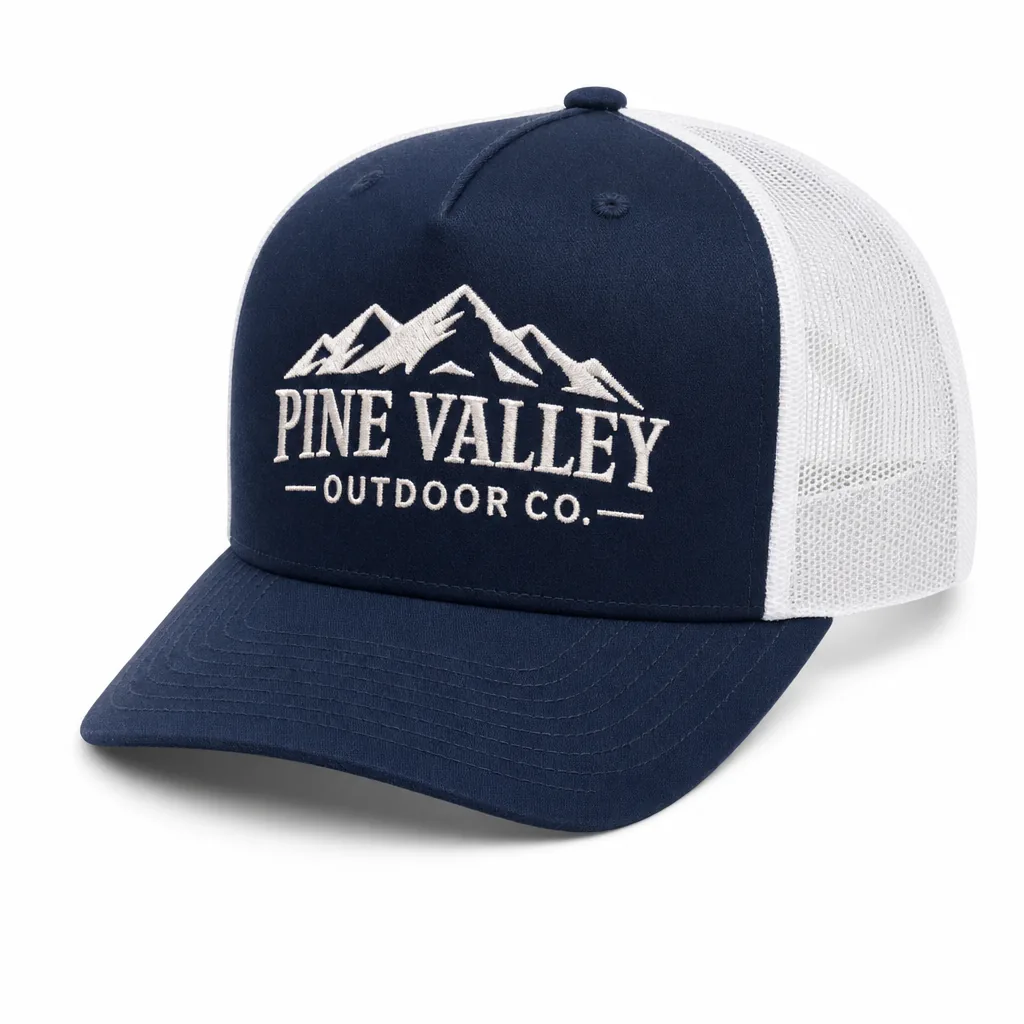
Every week, our sales team answers detailed questions about 5-panel camp cap manufacturing: a buyer's specification guide - 2026 buyer's guide. We wrote this guide so that wholesalers, streetwear brands, corporate buyers and promotional resellers can compare options with full information, and avoid the traps that show up only after production has started.
The 5-panel silhouette: how it differs from 6-panel baseball caps
A 5-panel camp cap is not a 6-panel baseball cap minus one seam; the entire geometry changes at the front crown. The defining feature is the single uninterrupted front panel, which is typically 35-50 mm wider than one center-front panel on a standard 6-panel, creating a cleaner decoration field for flat embroidery, screen print, woven labels, TPU patches, or sublimated appliqué. It also eliminates the center seam that breaks horizontal artwork and causes registration drift on wide logos. Most commercial 5-panel specs sit lower and flatter, with finished crown height around 8.5-9.5 cm and visor length around 6.5-7.0 cm, while a structured team-style 6-panel usually presents a rounder crown and more vertical front stance. That lower profile is why the style reads streetwear, outdoor, and lifestyle rather than athletic or uniform-driven. The material and support package are more exposed on a 5-panel because the front panel is broad and usually less reinforced. A 180-220 gsm brushed cotton twill gives a softer washed hand; 120-160 gsm nylon taslan or 75D-150D micro-ripstop polyester produces the lighter, technical look common in running and trail collections. Front support is the real lever: no backing yields a fully relaxed crown, light tricot fuse keeps the panel cleaner without making it stiff, and 1.5-2.0 mm foam lamination pushes the same pattern into a semi-structured retail silhouette. Any competent 5 panel camp cap manufacturer should treat fabric gsm, denier, fuse type, and brim shape as first-pass specification items, because those choices determine how the cap wears, decorates, and recovers after packing.
The biggest production mistake is assuming 6-panel methods transfer cleanly. They do not. On a 5-panel, the wider unsupported front shows distortion faster during embroidery, peak attachment, and pressing. Dense logos that run acceptably on a center-seamed baseball cap can pucker, tunnel, or push the crown forward if the digitizing is too heavy or the backing is underspecified. On Tajima or Barudan cap frames, once a front logo moves past roughly 10,000-12,000 stitches, we normally reduce fill density, soften the underlay, and rework pull compensation to keep the panel flat. Patch weight matters too: a woven patch around 0.8 mm sits cleanly, while a thick merrowed emblem can change brim balance and front-panel pitch. That is why a reliable 5 panel camp cap manufacturer should discuss measurable tolerances before quoting, not after sampling. Ask for actual pattern dimensions, front-panel backing options, brim board specification, and finished measurement tolerances. In disciplined production, crown height and visor width are usually controlled within ±0.5 cm, visor curve is checked against the sealed sample, and shade is reviewed to Delta-E 1.0-1.5 against Pantone TCX or TPG references when color accuracy matters. Inspection should also call out crown symmetry, front-panel skew, stitch tension, and decoration placement under AQL 2.5. If a supplier cannot explain those controls in practical terms, they are probably treating the style as a modified baseball cap, which is exactly where late-stage fit claims and decoration failures start.
Fabric choices: cotton, nylon, recycled polyester
Cotton still gives the safest margin for a 5-panel camp cap that has to look good at retail, because the large uninterrupted front panel exposes every weakness in the cloth. For most streetwear, licensed merch, and uniform programs, I would spec 210-260 gsm cotton twill, roughly 6.2-7.7 oz/yd2, with a 20x16 or similar warp-weft construction tight enough to prevent seam grin at the side joins. Ask for reactive-dyed, sanforized fabric with residual shrinkage below 3 percent after a standard wash test, and lock the color to an approved Pantone TCX lab dip with a Delta-E target under 1.5 from bulk to approval sample. A capable 5 panel camp cap manufacturer should state whether the fabric is piece dyed or yarn dyed, confirm finished gsm tolerance at plus or minus 5 percent, and disclose whether the front panel is supported by soft buckram, fused backing, or left unstructured. Those details matter more than marketing language, because cotton that is too light will telegraph needle tension, topstitch waviness, and panel mismatch before the cap has even been broken in.
Nylon is the right choice when the brief is lighter weight, faster drying, and weather resistance rather than a soft hand. In practice, 70D to 100D nylon ripstop or taslan at 95-140 gsm works well for camp caps, especially with a light PU back coating or a C0 or C6 DWR finish that sheds drizzle without making the crown sound like a rain jacket. The tradeoff is decoration stability: thin nylon will pucker under standard embroidery unless stitch density is opened up on Tajima, Barudan, or ZSK heads and the backing weight is matched to the shell. For performance programs like running, golf, fishing, and hiking, the fabric spec should also cover sweatband composition, eyelet or laser-perforation method, and brim insert material; PE or EVA boards hold shape far better than paperboard after repeated sweat and rain exposure.
Recycled polyester is now standard enough that buyers should treat it like any other technical input and verify it line by line. A real spec should include GRS scope documentation or transaction certificates tied to the lot, yarn count such as 150D or 300D, finished gsm tolerance, and test data for colorfastness to crocking and light. In production, recycled poly cuts cleanly, holds shade more consistently than cotton across larger dye lots, and absorbs less moisture, which helps with panel yield and rework rates on volume orders. The price premium is usually modest, around $0.18-$0.45 per cap versus conventional polyester, depending on certification chain, fabric weight, and order size. If the cap moves into brushed recycled poly or wool-poly blends for colder seasons, tighten incoming inspection to AQL 2.5 and check nap direction, roll-to-roll shade variation, and needle marking before cutting; those are the defects that turn an approval sample into a rejected bulk shipment.
Construction details that matter
Underbrim and material pairing expose weak cap engineering faster than the front logo ever will. A real 5 panel camp cap manufacturer will spec the underbrim as part of the color system, not as an afterthought: contrasting underbrims help hide sweat bloom and sharpen the face opening, but only when shade control is disciplined. On piece-dyed cotton twill, hold color to the approved Pantone TCX within Delta-E 1.5; on sublimated or coated polyester, Delta-E 2.0 is more realistic. Check crown fabric, underbrim fabric, brim binding, and seam tape together under a D65 light box, because three nominally black components can split into blue-black, brown-black, and charcoal once they are stitched on the same cap. For shell materials, the useful range is tighter than many buyers think: 180-240 gsm cotton twill for structured casual product, 110-160 gsm nylon taslan for technical outdoor styles, and 75D-150D polyester for lower-cost promo or event runs. Go lighter than that and the crown tends to wrinkle around the side seams; go heavier and the brim-to-crown balance starts looking like a shallow baseball cap instead of a true camp silhouette.
Ventilation layout matters because camp caps do not have much vertical room to hide bad placement. Most adult 5-panel programs use four side eyelets, not six, leaving the front panel clean for screen print, chain stitch, or flat embroidery and avoiding interference with the rear closure seam. On a 58 cm block, eyelets usually land 18-22 mm above the sweatband seam; below that, they fall into the sweat zone and discolor early, and above that they become decorative more than functional. Material choice decides construction method: metal eyelets work on 8-10 oz washed cotton twill, but on 75D nylon, microfiber, or lightly PU-coated polyester, stitched eyelets are safer because the panel flexes instead of cracking around a punched hole. If eyelets are embroidered on flat panels before assembly, spacing stays cleaner; if they are punched after sewing, you often see oval holes, panel drag, and puckering that fails inline QC.
Sweatband and closure details decide whether the cap feels retail or disposable within the first 30 seconds of wear. A 30-35 mm polyester tricot or moisture-wicking microfiber sweatband is the best default for most programs because it dries faster, resists salt marking, and keeps less bulk at the join than cotton twill. If the front panel uses support, call out the insert precisely: 2 mm EVA holds a low-profile shape with better recovery, while cheap laminated sponge can make a camp cap stand up like a foam trucker after packing. On the floor, the first thing I inspect is sweatband join bulk and seam overlap, because that pressure point gets noticed long before a crooked size label does. Closures should follow use case, not fashion cycle: self-fabric straps with tuck-in slots, nylon webbing with elastic shock adjusters, and metal buckles all suit the silhouette better than a standard snapback. Expect roughly $0.12-$0.18 for plastic snaps and $0.20-$0.45 for metal buckles depending on plating and engraving, and require at least 200-cycle pull testing on strap bartacks. Final inspection should check closure centering, back-opening alignment, and stitch symmetry to AQL 2.5; a skewed strap will sink perceived quality even if the front embroidery ran clean on a Tajima or Barudan head.
Decoration: what works on the single front panel
The single front panel is the reason this silhouette works for branding: no center seam means no split letterforms, no offset registration, and far fewer rejects on symmetrical logos. Flat embroidery is still the safest retail-spec decoration, but only if the digitizing is built for an unstructured crown instead of recycled from a 6-panel baseball cap file. On Tajima, Barudan, or ZSK machines, I normally run 0.38 to 0.42 mm stitch spacing on medium fills, edge-run plus light tatami underlay on 180 to 240 gsm cotton twill, and extra pull compensation on brushed canvas, Taslon, or enzyme-washed shells. A soft 5-panel front will usually tolerate 6,000 to 9,000 stitches cleanly; once you push beyond that on 120 to 160 gsm nylon, the panel starts tunneling, the needle line telegraphs through the crown, and packing crease memory gets worse after sea transit. If I am qualifying a 5 panel camp cap manufacturer, I do not ask for stitch count first; I ask for strike-offs on the actual shell fabric, backing spec, needle size, and photos taken before and after pressing.
Woven patches and PVC patches both exploit the uninterrupted panel, but they solve different problems. Woven labels are the better choice for 2 to 3 mm text, fine outlines, and logos carrying several Pantone TCX colors that embroidery will muddy at retail viewing distance. A good patch supplier can usually hold main brand colors within Delta-E 1.5 to 2.0 on polyester yarn, while direct embroidery often drifts more because thread shade options are limited. For camp caps, merrowed borders are too bulky; laser-cut with satin stitch or heat-cut edge sits flatter and looks current. Standard patch placement is 55 to 70 mm high on adult caps, usually attached by edge stitch or hidden tack-down depending on fabric weight. PVC works better on technical shells like 70D to 210D nylon, Taslon, and coated polyester because it adds weather resistance and visual depth, but it has real limitations. Mold charges typically run $80 to $150 per design, minimum thickness is usually 0.8 mm, and anything above 1.2 mm can collapse a soft crown if the base fabric is under 140 gsm. I rarely approve 3D puff on this silhouette unless the front is lightly supported with fusible; even then, I keep foam at 2 mm max and avoid narrow serifs, enclosed counters, and long satin columns. On lightweight performance shells, a one- or two-color low-cure screen print at roughly 120 to 140 mesh often outperforms both puff and dense embroidery because it preserves hand feel, reduces needle perforation risk, and holds the front shape better through carton compression.
MOQ, lead time, pricing — 5-panel specifics
MOQ on a 5-panel camp cap is driven by setup waste and trim minimums, not by whether the silhouette is “simple.” For a standard run in 230 gsm cotton twill, 7 oz washed canvas, or 210 gsm nylon taslan, the workable floor is usually 100 pcs per colorway; below that, you are spreading pattern grading, brim mold allocation, digitizing, marker loss, and custom trim over too few units. Buyers get tripped up when they hear “100 MOQ” and assume that means 100 mixed pieces across three colors. Most factories mean 100 per color, per logo version, per closure spec. Once you add contrast bills, youth and adult size splits, custom woven labels, jacquard internal taping, or separate artwork on different SKUs, the real MOQ moves to 150-300 pcs per style because dead stock on tape, sweatband, buckles, and labels becomes the cost driver. A reliable 5 panel camp cap manufacturer should quote MOQ by style, colorway, and logo revision in one line item, otherwise the buyer usually discovers the true minimum after sampling.
Lead time stays short only when the tech pack is locked before sampling starts. A clean proto sample is typically 7-10 calendar days if the buyer already approved vector artwork, Pantone TCX references, visor shape, closure type, seam construction, and logo size/placement. Add sublimated panels, laser-cut perforation, printed seam tape, reflective piping, or non-stock closures and the sample window usually stretches to 10-14 days, with another 3-5 days if a second fit revision is needed. Bulk for 100-1,000 pcs normally runs 22-28 days after sample sign-off and deposit when shell fabric and sweatband are ex-stock; custom dyeing to Pantone within Delta-E 1.5-2.0, lab dips, enzyme wash, or C0 water-repellent finishing will usually add 5-7 days. FOB China pricing for a 5-panel camp cap is commonly $3.40-$6.20 per piece, and the spread is easy to explain on the factory floor. Around $3.40-$4.10 buys an unstructured crown, standard PE visor insert, plastic snap closure, one-location flat embroidery on Tajima or Barudan heads, stock care label, and normal export packing. Around $4.80-$6.20 covers taslan or microfiber shells, woven flag labels, satin seam tape, multi-position embroidery or appliqué, metal buckle with webbing strap, and stricter inline plus final inspection to AQL 2.5. Sample charges, SGS/Intertek testing, and destination duty are usually outside FOB; carton packing, polybags, and standard final QC are usually included unless the quotation says otherwise.
Who buys 5-panel camp caps?
Outdoor and performance-fishing brands still generate the steadiest repeat business for 5-panel camp caps because the shape solves practical problems: lower crown, flatter pack profile, and better heat release than a structured snapback. Their briefs are usually fabric-led, not logo-led. Common specs are 120-160 gsm recycled nylon taslon, 75D-150D microfiber, or cotton-nylon blends with mesh sweatbands, seam-taped interiors, and 1.8-2.0 mm PE visor board that resists curl after humidity cycling. A serious 5 panel camp cap manufacturer gets asked for GRS transaction certificates, UPF 40+ or 50+ reports, colorfastness to perspiration grades, and Pantone TCX bulk lab dips held within Delta-E 1.5-2.0 across repeat runs. Opening orders are often 300-500 pieces per colorway, but once fit, wash stability, and fabric hand are approved, outdoor programs regularly move into 2,000-5,000 unit replenishment buys. Decoration stays conservative because field use exposes sloppy workmanship fast. These buyers prefer woven labels, matte silicone patches, laser-cut vents, and low-density direct embroidery that will not tunnel or distort the front panel. They also scrutinize the boring failure points that inexperienced suppliers miss: salt-spray performance on eyelets and buckle hardware, sweatband shrinkage after laundering, visor memory, and shade drift when a mill swaps lots. A sample can look perfect once; the real test is whether crown angle, panel pitch, and visor curve stay consistent across replenishment POs.
Skate labels, indie streetwear brands, and limited-drop retailers buy silhouette before they buy price. They are unusually sensitive to crown height, front-panel pitch, soft buckram versus fully unstructured builds, and whether a brim can carry 6-8 rows of stitching without turning stiff or boardy. Typical materials are 10 oz cotton twill, washed canvas, corduroy, or 220-260 gsm poly-cotton, then finished with nylon webbing straps, clip closures, woven clamp labels, and dense embroidery run on Tajima, Barudan, or ZSK heads. Their MOQs are usually lower at 144-300 pieces per style, but approval tolerance is brutal: a top button off-center by 2 mm, uneven binding, or embroidery registration drift is enough to kill the style before bulk. Event merch teams, promotional distributors, and tournament organizers are a different buyer class altogether. They buy speed, landed cost, and freight reliability, usually targeting FOB pricing around $2.80-$5.20 depending on shell fabric, closure, and decoration count. Fishing events often spec perforated polyester, dark undervisors, rope details, and quick-dry sweatbands; festival programs lean toward sublimation, pigment wash, puff print, or foam-backed fronts. For these accounts, the right supplier controls execution all the way through AQL 2.5 final inspection, carton drop testing, polybag warning compliance, and ex-factory booking, because a late cap for an event is typically unsellable inventory, not a minor quality claim.
Frequently Asked Questions
How long does production take?
Sampling takes 7 to 12 days. Bulk production runs 20 to 30 days depending on quantity, fabric availability and decoration complexity. Inspection and packing adds another 3 to 5 days before shipment.
Do you support sustainability certifications?
Yes. We work with GOTS organic cotton, GRS-certified recycled polyester, OEKO-TEX Standard 100 fabrics, and are BSCI and Sedex audited. Certification documentation can be provided per order.
What file format should I send for my logo?
Vector files (AI, EPS, PDF) are ideal. High-resolution PNG or JPG at 300 dpi on transparent background works as a fallback. Provide Pantone color references for accurate reproduction.
What is the minimum order quantity (MOQ) for custom hats?
Our standard MOQ is 100 pieces per design and color, with sampling available from 1 piece. For complex multi-color logos or premium fabric upgrades, the MOQ can be lowered with a small per-piece surcharge.
Can I order a sample before bulk production?
Yes. We strongly recommend approving a pre-production sample before mass production. Samples are charged at 35 to 60 USD each plus express shipping, fully refundable against confirmed bulk orders over 500 pieces.
How does ordering baseball cap embroidered custom work?
When evaluating baseball cap embroidered custom, the key considerations are construction quality, decoration capability, MOQ flexibility and lead time. Single front panel (no front seam), two side panels, two back panels, low-profile flat brim. Originated in 90s skate culture; now an outdoor and streetwear staple. Cotton twill 6.4 oz is standard. Lightweight nylon ripstop for technical outdoor. Recycled polyester for sustainability programs. Wool blend for cold-weather variants.
How does ordering custom embroidered trucker hat work?
When evaluating custom embroidered trucker hat, the key considerations are construction quality, decoration capability, MOQ flexibility and lead time. Single front panel (no front seam), two side panels, two back panels, low-profile flat brim. Originated in 90s skate culture; now an outdoor and streetwear staple. Cotton twill 6.4 oz is standard. Lightweight nylon ripstop for technical outdoor. Recycled polyester for sustainability programs. Wool blend for cold-weather variants.
What's the MOQ for custom embroidered baseball caps no minimum?
When evaluating custom embroidered baseball caps no minimum, the key considerations are construction quality, decoration capability, MOQ flexibility and lead time. Single front panel (no front seam), two side panels, two back panels, low-profile flat brim. Originated in 90s skate culture; now an outdoor and streetwear staple. Cotton twill 6.4 oz is standard. Lightweight nylon ripstop for technical outdoor. Recycled polyester for sustainability programs. Wool blend for cold-weather variants.
What should I know about wholesale baseball caps made in usa?
When evaluating wholesale baseball caps made in usa, the key considerations are construction quality, decoration capability, MOQ flexibility and lead time. Single front panel (no front seam), two side panels, two back panels, low-profile flat brim. Originated in 90s skate culture; now an outdoor and streetwear staple. Cotton twill 6.4 oz is standard. Lightweight nylon ripstop for technical outdoor. Recycled polyester for sustainability programs. Wool blend for cold-weather variants.
Looking for a reliable hat manufacturer in China?
CrownsForge has produced custom hats for 800+ brands across 40 countries. From 100-piece launches to 100,000-piece retail programs, we deliver on time and on spec.
Get in touchRelated guides
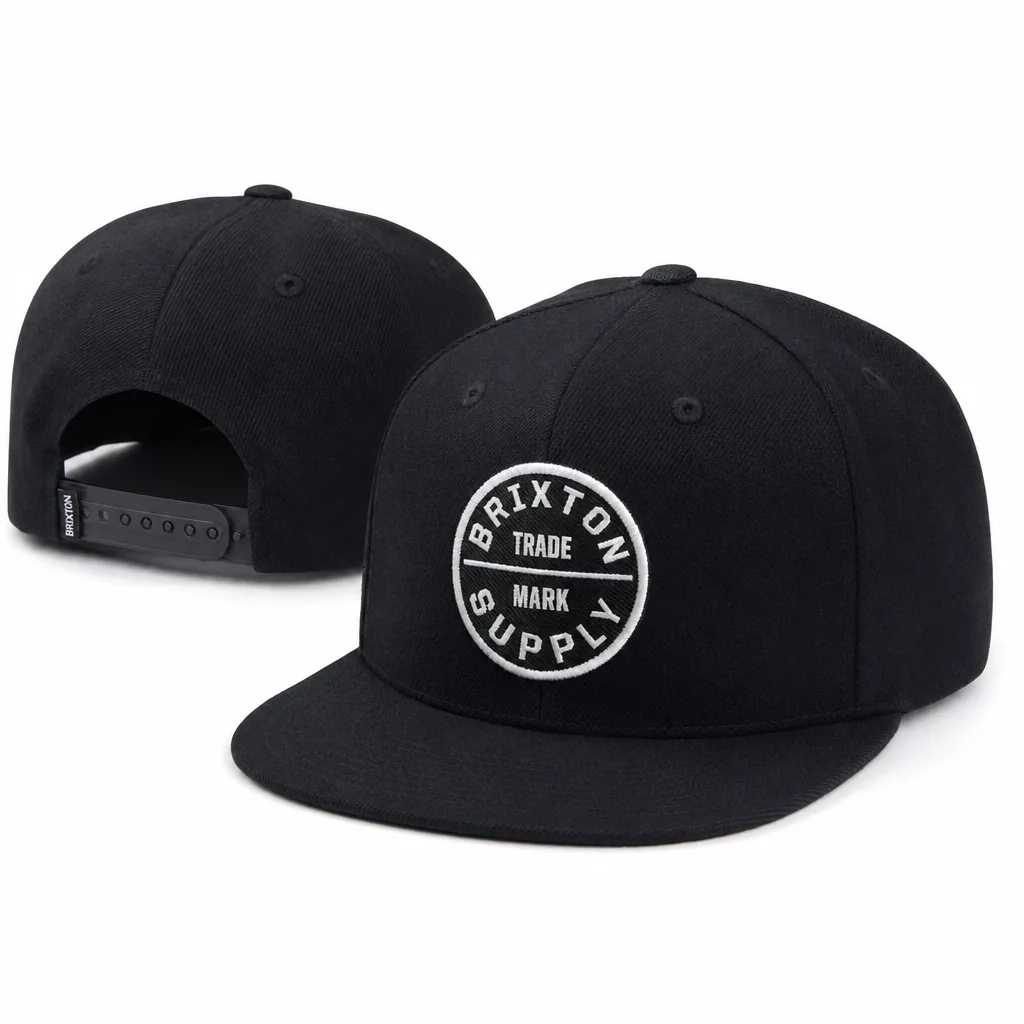
Snapback vs Fitted vs Adjustable: Cap Closure Systems Compared
Read article →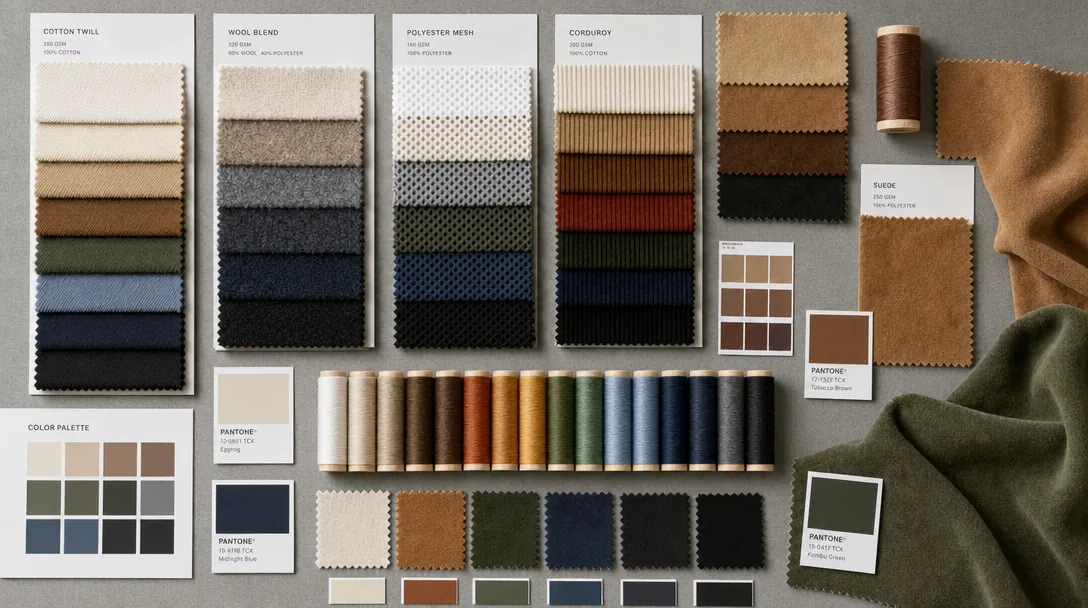
Sustainable Custom Hats: Eco-Friendly Materials, Recycled Fabrics & Certifications
Read article →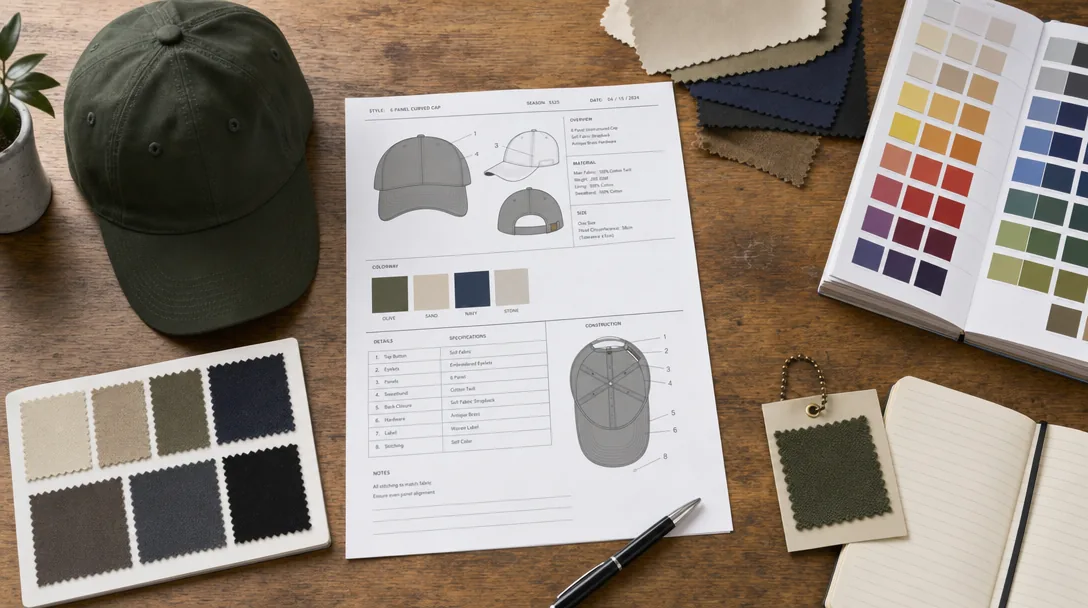
Switching Hat Manufacturers Mid-Program Without Losing Quality - Supplier Checklist
Read article →We hope this guide demystifies 5-panel camp cap manufacturing: a buyer's specification guide - 2026 buyer's guide and helps you move forward with confidence. If you have questions specific to your project, our English-speaking sales engineers are one message away.