
Wool Blend Caps: Manufacturing, Sourcing and Buyer Specifications - 2026 Buyer's Guide
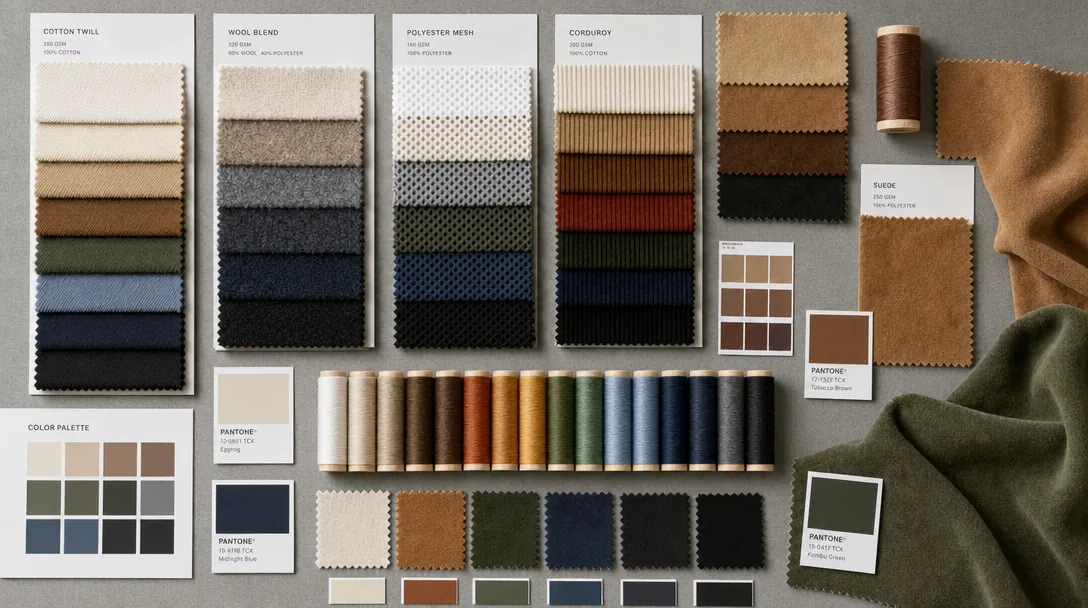
Every week, our sales team answers detailed questions about wool blend caps: manufacturing, sourcing and buyer specifications - 2026 buyer's guide. We wrote this guide so that wholesalers, streetwear brands, corporate buyers and promotional resellers can compare options with full information, and avoid the traps that show up only after production has started.
The three dominant wool-blend cap fabrics
80/20 acrylic-wool is still the commercial default because it behaves predictably in production, not because buyers are cutting corners. In Yiwu and Jiangsu sourcing, cap-grade versions usually land at 380-430 gsm for structured 6-panel snapbacks, most often in brushed twill, plain weave, or light melton with a 0.45-0.55 mm fused buckram front. It keeps the wool visual at retail but handles embroidery, blocking, and carton compression better than full wool. On Tajima and Barudan machines, this blend also tolerates dense satin columns and 3D puff more cleanly because the acrylic content reduces fiber breakage and surface fuzzing around stitch edges. Any serious wool blend cap manufacturer should test actual production logos at final stitch count, backing, and foam height; a front that looks stable at 6,000 stitches can start tunneling or edge-fraying once it is pushed past 9,000 with puff underlay.
The premium benchmark remains 100% wool melton, typically 450-550 gsm, densely woven, fulled, and sheared for a compact face and crisp edge definition. It looks better, but it is less forgiving everywhere from cutting to final steaming. Nap direction has to stay consistent across crown panels and visor pieces or the shade will read uneven even when the dye lot is within spec; in buyer terms, I would hold panel variation to Delta-E 1.5-2.0 against the approved Pantone TCX standard. Full wool also relaxes more after cutting, so fabric should condition at stable humidity for at least 24 hours before spreading, otherwise fused fronts can torque and seam lines drift after blocking. Buyers should write measurable tolerances into the spec sheet: steam-shaping shrinkage under 3%, dry crocking minimum grade 4 on dark shades, and clear seam-pucker limits around eyelets, top-button wraps, and sweatband joins, where wool shows needle damage faster than synthetic-rich blends.
70/30 wool-polyester is usually the smarter middle ground for team, outdoor, and winter programs that need heritage styling without full-wool headaches. Most shell fabrics run 320-400 gsm, recover crown shape better after FOB transit, dry faster after light rain, and resist abrasion from helmet bags, duffels, and repeated wear cycles better than 100% wool. Factories often pair this shell with 120-180 gsm microfleece lining or brushed tricot backing for cold-weather drops, but the outer fabric still needs to pass pilling at grade 3.5-4 and show acceptable seam slippage before bulk approval. The weak points are rarely dramatic defects; they are brim memory loss, slight crown asymmetry after de-cartoning, and subtle shade shift between lots. That is why I would require visor recovery checks after compression, DWR chemistry disclosure if water repellency is claimed, and final inspection at AQL 2.5 with extra focus on crown symmetry, embroidery distortion, and panel matching.
Why 80/20 acrylic-wool dominates baseball cap retail
80/20 acrylic-wool dominates baseball cap retail because it is the most forgiving commercial spec, not because buyers are sentimental about wool. In China sourcing, a standard 400-450 gsm melton, flannel, or brushed twill in 80/20 usually lands 18% to 30% below a comparable 100% wool shell; once you ask for finer wool under 23 micron or tight shade matching to Pantone TCX, the gap gets wider fast. On a structured 6-panel cap, that usually saves $0.35 to $0.80 per unit at shell-material level before embroidery, sweatband, labels, packing, and freight. For an import program retailing at $18-$40, that delta protects margin without changing the look most consumers read as "wool." A capable wool blend cap manufacturer will steer mainstream programs to 80/20 because it holds shape more predictably during fusing, blocking, and sewing, especially on high-profile crowns with a 70-100 gsm non-woven front support or 1.2-1.5 mm buckram. The factory-floor advantage is stability. Acrylic in the blend reduces panel growth and distortion during visor wrapping, seam closing, button setting, and post-sew steaming, so crown lines stay cleaner and scrap rates stay lower. Pure wool is less tolerant: more face movement on curved seams, more bloom around eyelets and front seams, and more variation lot to lot after heat and moisture. Mills in Zhejiang, Jiangsu, and Korea also keep 80/20 as a standing article, which matters more than buyers admit; matching crown fabric, self straps, covered buttons, and underbrims are usually available without opening a special yarn-dye run. In peak season, that can cut 5-7 days from raw-material procurement and avoid the MOQ friction that comes with odd ratios like 85/15 or recycled blends with unstable shade repeatability.
Retailers keep returning to 80/20 because most cap failures happen at the shelf and in fulfillment, not in fabric swatch reviews. Pure wool absorbs more moisture from handling, dries slower after perspiration exposure, and shows abrasion bloom faster on brim edges, front seams, and around the top button. A balanced 80/20 face survives carton friction and store handling better, especially after singeing and brushing, so the cap stays visually cleaner through DTC pick-pack and wholesale replenishment. On embroidery, the difference is obvious on the machine: Barudan, Tajima, and ZSK heads running 700-850 spm get less needle drag and less puckering on an 80/20 face, with cleaner satin columns and more readable text down to roughly 3.5-4.0 mm. That is why licensed sports and streetwear programs using 3D puff plus flat fill usually standardize this blend instead of gambling on 100% wool inconsistency. The blend only works as a retail default if color and surface quality are controlled tightly. Our standard practice at CrownsForge is lab-dip approval to Delta-E below 1.5 for repeat shades, then bulk inspection to AQL 2.5 with specific checkpoints for panel skew, seam grin, surface contamination, and visor symmetry. Factory yield is typically better on 80/20 as well: fewer rejected cut panels from torque or bow, less seam slippage on high-profile builds, and more consistent handfeel across repeat orders from the same mill. Buyers do not choose 80/20 because it is luxurious; they choose it because it is the safest spec that still looks correct on a classic baseball cap. It gives wool character, stable embroidery, manageable defect rates, and a supply chain that does not collapse every time a color approval or replenishment order gets tight.
Melton wool: premium retail and heritage brands
For heritage retail, 100% Melton is still the tell: buyers know immediately when the face has too much polyester glare or the nap sits flat like a school-uniform twill. Cap-grade Melton normally finishes at 380-460 gsm after milling and shearing; in mill language you will also see 20-24 oz per linear yard, but width varies, so gsm is the cleaner spec. On 6-panel strapbacks, vintage baseball silhouettes, and soft ivy hybrids, that density gives a cleaner knife cut, better seam body, and a matte embroidery sink that blended 30/70 or 50/50 shells rarely match. The cost difference is real, not cosmetic. At 1,200-3,000 pieces, full-wool Melton usually adds $1.50-$2.20 FOB per cap versus a common wool-poly shell, and custom piece-dye or stock-supported bespoke shades can add more if the mill MOQ is 300-500 meters per color. A competent wool blend cap manufacturer should be blunt here: full-wool Melton is not a simple shell substitution. It changes crown blocking, seam turn thickness, stitch density, and even sweatband matching because the shell behaves differently under steam and pressure. On structured fronts, we often reduce buckram stiffness one grade or shift to a lighter denier fusible to avoid a boardy hand. Needle penetration also needs watching; heavy Melton paired with dense 3D satin can telegraph puckering faster than buyers expect, especially on lower-profile crowns where every millimeter of distortion shows up from the side profile.
The real production risk with 100% Melton is dimensional movement and shade consistency, not whether the sewing line can physically run it. After relaxation, steaming, blocking, and final finishing, shrinkage can land at 3%-5%; on a low-profile front panel, just 2-3 mm of loss changes both fit and the break line above the visor. Good pattern makers build that allowance into the first paper pattern, then confirm it with a wear test, not just a tabletop sample. Dark navies, charcoal heathers, bottle greens, and black-watch families also need tighter lot control than wool-poly twills. Our standard practice is to approve against Pantone TCX references, keep lab dips within Delta-E 1.5, and check end-to-end and side-to-side shading before spreading; if the roll bars under warehouse light, it will look worse under retail LEDs. Embroidery needs slower, cooler settings because dense Melton heats up and glazes if the machine is run like brushed cotton. On Tajima, Barudan, or ZSK heads, we typically cut speed by 10%-20%, reduce underlay, and change SES or light ballpoint needles more frequently to prevent fiber burn and strike-through. QC should be stricter too: AQL 2.5 is standard, but premium accounts usually add specific checks for nap direction, crown symmetry, and panel shading after pressing. Lead time follows the fabric reality. A full-wool Melton program is usually 35-50 days ex-factory versus 25-35 days for standard wool-poly shells, mainly because mill approval, fabric relaxation, and rework windows are longer and more expensive.
Pilling: which blend resists best?
The blend that resists pilling best in actual cap wear is usually not the wool-rich one; it is the compact, tightly finished blend with controlled surface hair. In our production runs, a 60/40 or 65/35 acrylic-wool melton at 430-480 gsm consistently outperforms 100% wool and many 80/20 wool-poly fabrics because acrylic reduces fiber migration while still holding the dense melton face buyers want. On high-contact points—crown edge, snap overlap, sweatband seam, and visor binding—a properly sheared blend will typically reach grade 4 to 4.5 on ISO 12945-2 Martindale or random tumble pilling after 5,000 rubs. By contrast, a softer 320-360 gsm brushed wool blend with the same nominal ratio can fall to grade 3 once the face has been over-raised. I do not treat “anti-pilling” as a credible claim unless the mill states the test method, rub count, and whether the data is from finished fabric rather than greige cloth. The buying mistake is equating higher wool content with higher durability. Fine wool under 19.5 micron gives a richer hand and deeper dye uptake, but it also blooms faster if the weave is open or the nap is aggressive. I have seen 80/20 wool-poly melton look excellent at hanger stage, then fuzz within a week of retail handling because the face was lifted too much to create a cashmere-like touch. A competent wool blend cap manufacturer should lock down more than blend ratio on the tech pack: yarn count, fabric weight, weave density, finish route, and the required pilling standard. For shelf-stable retail caps, I would usually specify 60/40 acrylic-wool or a balanced 50/30/20 wool-acrylic-modal only if the mill can prove grade 4 minimum after finishing. Color matters too: heather charcoal, camel, and medium gray expose haloing and abrasion much sooner than black or navy, so they are the right development colors if you want honest pilling feedback.
Finishing shifts pilling performance by a full grade more often than fiber content does. Singeing, shearing depth, decatizing, steaming temperature, and resin choice all affect how much loose fiber remains on the face. If the mill chases softness with over-raising, the cap will shed first at the front panel fold, top button base, seam turn-ins, and visor edge. That is why I only trust post-finish data. For structured melton caps, the useful target is grade 4 minimum on ISO 12945 random tumble or equivalent after finishing, with color change held within Delta-E 1.5 to 2.0 against the approved Pantone TCX standard under D65 light after simulated wear. Anti-pilling chemistry can help stabilize the face, but it will not rescue a loose construction, low twist yarn, or an unstable wool-rich nap. Bulk approval should be based on finished caps, not fabric swatches. Flat cloth can pass lab testing and still fail once embroidery, seam compression, and closure stress are added. A 12,000-15,000 stitch front logo on a Tajima, Barudan, or ZSK head increases localized abrasion because the underlay stiffens the panel and pushes surface fibers upward around the design edge. Our standard practice is to review high-friction zones separately—back strap fold, snap overlap, embroidery perimeter, sweatband contact line, and visor edge—then run 3 to 5 simulated wear cycles before PP approval. If the cap shows seam-line fuzzing, visor bloom, or panel haloing while the body fabric still looks clean, the lot is not ready for bulk cutting. That is where an experienced wool blend cap manufacturer earns its keep: validating the finished article under realistic abuse, not hiding behind a fabric report.
Dye consistency in wool blends
Most color claims fail on wool blends because buyers approve a shade name, not a dyeing standard. On an 80/20 or 50/50 wool-acrylic melton, wool absorbs acid dyes more deeply while acrylic reflects cooler and flatter, so black, forest, burgundy, and navy often split tonally under D65 lighting. The problem gets worse on brushed 380-450 gsm melton because the nap changes how light hits the surface; two front panels cut with opposite nap direction can look like different dye lots even when they came from the same roll. A capable wool blend cap manufacturer should flag that risk before bulk, especially if the body, button, and top visor all use the same face fabric. For buyer approvals, locking color to a Pantone TCX card is only the starting point. The usable standard is a sealed fabric swatch, approved lab dip, and clear viewing conditions—typically D65 and TL84—because screen proofs tell you nothing about fiber-depth, heather effect, or nap direction.
The best correction is cross-dyeing: wool and synthetic fibers are dyed in separate stages with different chemistries so the final shade converges instead of separating. On cap-grade melton, that usually adds roughly $0.12-$0.25 per cap at 1,000-3,000 pieces, depending on shade depth, MOQ, and whether the mill is running custom yardage or recoloring a stock base. It is money well spent for licensed programs, premium retail, and any style that will be checked panel by panel under 4000K-6500K store lighting. Without cross-dyeing, you need looser approval criteria and should expect a wool-rich cast on crowns, wrapped buttons, and top visor pieces. My baseline spec is straightforward: bulk fabric within Delta-E 1.5-2.0 to the sealed standard, no dye-lot mixing inside one PO, and color review before cutting, not after sewing. If the cap also uses rib, fleece, or twill components, require substrate-specific approvals, because a lab match across material families rarely looks like a visual match once the hat is built.
Sourcing certified wool: RWS, Mulesing-free
RWS and mulesing-free are audit claims, not copywriting, and the weak link is almost always custody after spinning. A fabric mill can buy RWS-certified wool top, then lose claim eligibility the moment blending, dyeing, brushing, or finishing happens outside its certified scope. Any wool blend cap manufacturer quoting an RWS program should show four things without hesitation: a current RWS scope certificate from an approved body, transaction certificates tied to the exact shipment, invoice references matching PO and lot numbers, and internal segregation records proving certified and conventional rolls never mixed in warehousing, cutting, or bundle issue. If the roll ticket on the cutting table cannot be traced back to a transaction certificate and dye lot, the cap should not carry an RWS claim. EU and UK buyers now check this during vendor onboarding, and in claims audits they will sample backward from finished PO to roll number, then to mill lot and transaction certificate. That is where factories get exposed.
Mulesing-free needs separate evidence because it is not interchangeable with RWS. For Australian-origin wool, a generic annual declaration is weak; ask for a shipment-specific animal welfare statement from the exporter or spinner, plus supporting mill documents that tie the claim to the exact blend lot. New Zealand wool is cleaner from a claim-risk standpoint because mulesing is not practiced there, but many cap fabrics still use Australian 19.5-21.5 micron fiber because it gives a more consistent surface on melton and flannel and embroiders cleaner than coarser grades. In production, pure wool is rarely the smartest spec for structured caps: 50/50, 60/40, and 80/20 wool-poly blends control steam growth, reduce seam grin, and stabilize the crown after buckram fusing. For shell fabrics, the practical range is usually 450-650 gsm; above roughly 20 oz, six-panel sewing gets inefficient unless seam allowances, visor curve, and pressing sequence are reworked. Our standard practice is to lock bulk standards at fiber content within +/-3%, dry crocking minimum grade 4, pilling at least grade 3-4, dimensional change after steaming under 2.5%, and solids within Delta-E 1.5 to the approved lab dip, especially for black and charcoal where shade drift shows first.
Frequently Asked Questions
What file format should I send for my logo?
Vector files (AI, EPS, PDF) are ideal. High-resolution PNG or JPG at 300 dpi on transparent background works as a fallback. Provide Pantone color references for accurate reproduction.
How long does production take?
Sampling takes 7 to 12 days. Bulk production runs 20 to 30 days depending on quantity, fabric availability and decoration complexity. Inspection and packing adds another 3 to 5 days before shipment.
What logo decoration techniques do you offer?
3D puff embroidery, flat embroidery, woven patch, leather patch, PVC patch, screen printing, sublimation, applique and laser etching, all in-house with no subcontracting.
Do you support sustainability certifications?
Yes. We work with GOTS organic cotton, GRS-certified recycled polyester, OEKO-TEX Standard 100 fabrics, and are BSCI and Sedex audited. Certification documentation can be provided per order.
What is the minimum order quantity (MOQ) for custom hats?
Our standard MOQ is 100 pieces per design and color, with sampling available from 1 piece. For complex multi-color logos or premium fabric upgrades, the MOQ can be lowered with a small per-piece surcharge.
What's the MOQ for custom embroidered baseball caps no minimum?
When evaluating custom embroidered baseball caps no minimum, the key considerations are construction quality, decoration capability, MOQ flexibility and lead time. 80/20 acrylic-wool (sports/streetwear standard), 100% wool melton (premium retail), 70/30 wool-polyester (cold-climate athletic). Cheaper than pure wool, more washable, less pilling, takes embroidery cleanly. The MLB-style cap standard for decades.
How does ordering custom embroidered snapback hat work?
When evaluating custom embroidered snapback hat, the key considerations are construction quality, decoration capability, MOQ flexibility and lead time. 80/20 acrylic-wool (sports/streetwear standard), 100% wool melton (premium retail), 70/30 wool-polyester (cold-climate athletic). Cheaper than pure wool, more washable, less pilling, takes embroidery cleanly. The MLB-style cap standard for decades.
What should I know about wholesale baseball caps made in usa?
When evaluating wholesale baseball caps made in usa, the key considerations are construction quality, decoration capability, MOQ flexibility and lead time. 80/20 acrylic-wool (sports/streetwear standard), 100% wool melton (premium retail), 70/30 wool-polyester (cold-climate athletic). Cheaper than pure wool, more washable, less pilling, takes embroidery cleanly. The MLB-style cap standard for decades.
How does ordering custom flat bill hat embroidery work?
When evaluating custom flat bill hat embroidery, the key considerations are construction quality, decoration capability, MOQ flexibility and lead time. Cheaper than pure wool, more washable, less pilling, takes embroidery cleanly. The MLB-style cap standard for decades. 80/20 acrylic-wool (sports/streetwear standard), 100% wool melton (premium retail), 70/30 wool-polyester (cold-climate athletic).
Need a low-MOQ test order?
We help emerging brands launch with as few as 100 pieces. Premium fabric, in-house embroidery, retail-ready packaging.
Start a small orderRelated guides
Switching Hat Manufacturers Mid-Program Without Losing Quality - Cost & MOQ Breakdown
Read article →Bucket Hat Women: Properties, Costs and How to Spec It Right - Cost & MOQ Breakdown
Read article →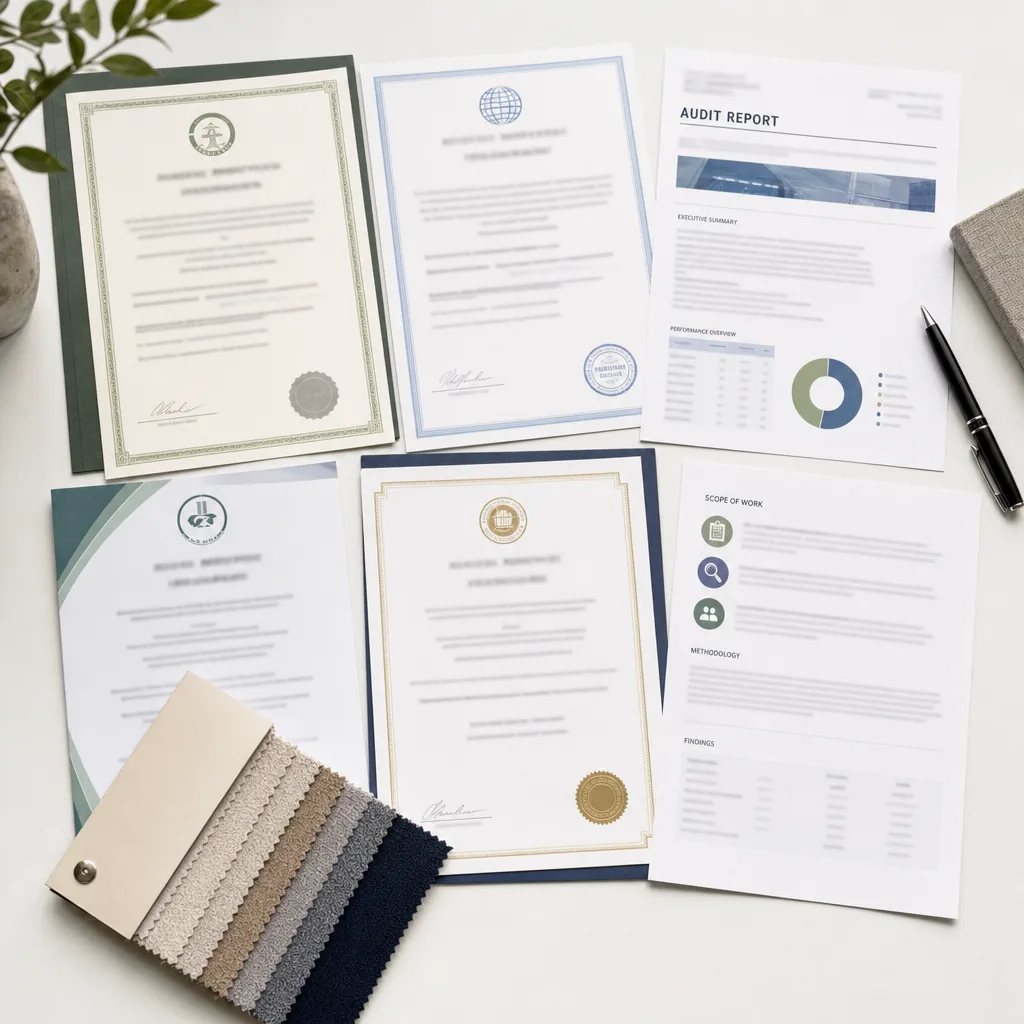
Kids' & Children's Cap Manufacturing: CPSIA Compliance and Sizing
Read article →Sourcing custom hats does not have to be complicated. With the right manufacturing partner, clear specifications and a small upfront investment in sampling, you can launch a retail-quality product in 30 to 45 days.