
Trucker Hat Mesh Panel QC: Defects Buyers Should Catch Early - Cost & MOQ Breakdown
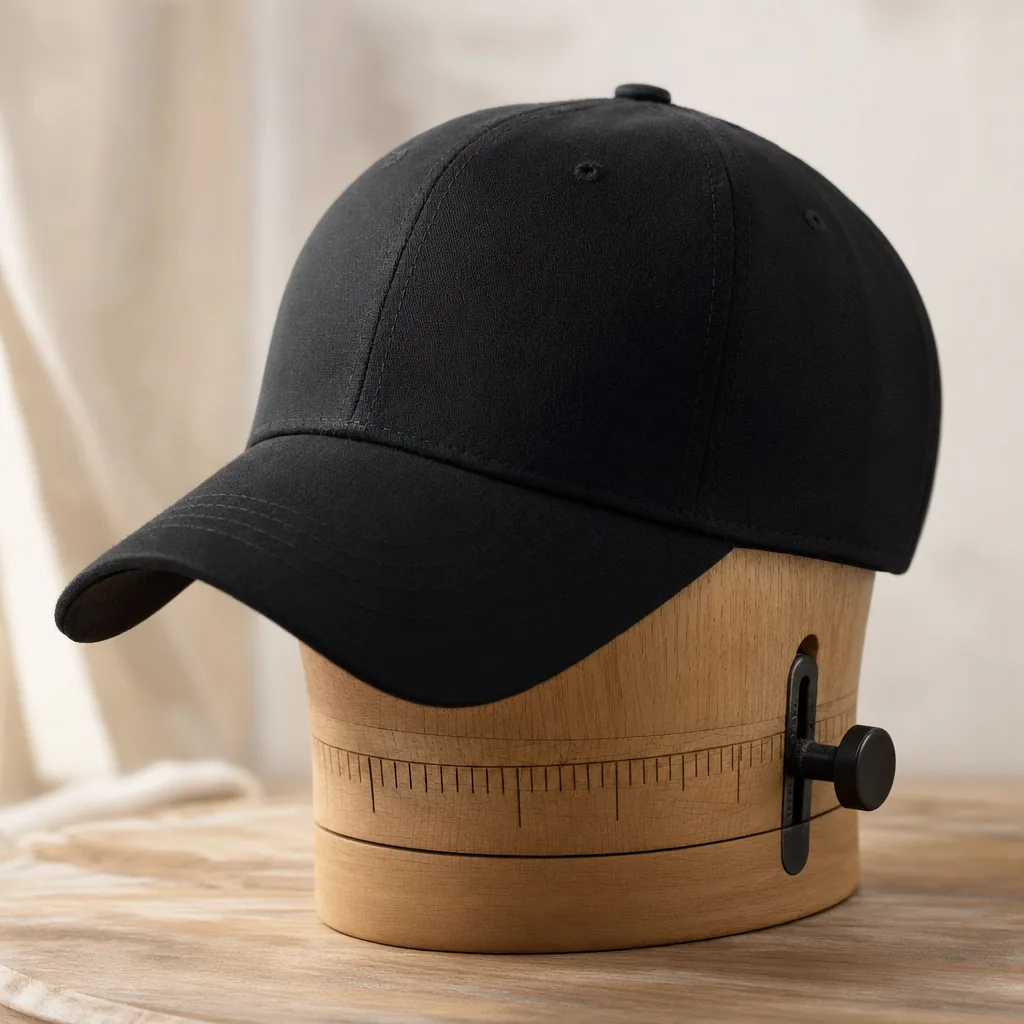
Every week, our sales team answers detailed questions about trucker hat mesh panel qc: defects buyers should catch early - cost & moq breakdown. We wrote this guide so that wholesalers, streetwear brands, corporate buyers and promotional resellers can compare options with full information, and avoid the traps that show up only after production has started.
What trucker hat mesh panel qc means in real production
Trucker hat mesh panel qc starts before the needle ever touches the cap. The buyer needs to lock the mesh construction, backing, and color tolerance against a signed spec, not a vague sample approval. On a standard foam-backed trucker, polyester mesh and nylon mesh behave differently in heat-set, stain resistance, and seam stability, so the fabric callout should include denier, mesh count, gsm, open-area percentage, and foam thickness. In production, a typical open-area range is 45 to 55 percent, with foam backing around 1.5 to 2.0 mm; once the foam gets stiffer than that, the front panel starts telegraphing wrinkles into the side seams. Pantone TCX should be checked under D65 light, and Delta-E above 1.0 is already visible on white or black mesh. CrownsForge’s standard practice is to inspect incoming rolls before cutting, because once the marker is laid and the cutter is running, a bad lot turns into scrap, not just a color complaint.
The geometry is where factories quietly lose money. Mesh used on trucker hats is usually 2-way or low-stretch, but some licensed programs call for a controlled 4-way stretch with documented recovery, so the spec needs real test data, not a supplier claim. A workable target is 10 to 15 percent elongation in the working direction with at least 90 percent recovery after 30 seconds on a 500 mm strip, and the stretch direction should be marked on the marker plan so panels are not cut off-grain. If the mesh is rotated even slightly, the crown can sit crooked, the side panels warp after one wash, and the front foam loses its shape. I have seen factories save 6 to 8 cents per cap by mixing mesh lots, then spend more than $0.30 per cap on rework and replacement once distortion shows up. That is why trucker hat mesh panel qc needs a small pre-production wash-and-recovery check, not just a showroom visual approval.
Sewing control is the last place to be casual. The mesh-to-foam join should be checked for seam gap, skipped stitches, and edge bite under magnification, because a 2 to 3 mm gap is already a real defect on a light-colored cap. On Tajima, Barudan, or ZSK embroidery heads, thread tension still matters because a tight top thread will cup the mesh while a loose bobbin will tunnel it at the side seams, especially where the crown carries stress from the sweatband and front structure. Under AQL 2.5, the lot can fail on only a few critical seam defects if the QC sheet defines them clearly. A practical control plan is 50-piece pre-production sampling, caliper checks at the seam allowance, and 100 percent inline inspection through the first 200 pieces so bad machine settings are caught before they spread. Re-sewing usually costs $0.25 to $0.40 per cap, and once the defect reaches carton audit the delay is usually 1 to 2 weeks.
Specs to request before a quote
Request the mesh spec before you ask for pricing, or you are comparing assumptions, not quotes. For trucker hat mesh panel qc, the RFQ should name the crown profile, front panel height, bill length, mesh aperture, and the exact fabric build. A low-profile trucker typically sits at 11.5 to 12.5 cm front height with a 58 to 60 cm head circumference, but those numbers only matter with tolerances: plus/minus 0.5 cm on crown height, plus/minus 0.3 cm on brim curve, and a stated limit for left-right symmetry. Specify whether the front is foam-backed, buckram-reinforced, or a two-layer cotton twill face, and tie color targets to Pantone TCX for fabric and Pantone C for thread. If a supplier answers with “standard trucker,” they are leaving the door open for rework later.
Construction details belong in the quote request, not in a sample-room memory test. Ask for shell fabric gsm, mesh denier, mesh density in holes per inch, sweatband composition, snapback material, and stitch count on the sweatband and crown seams. For private label work, require the decoration file in AI or vector PDF, embroidery size in millimeters, minimum stroke width, and sew-out approval if the logo has fine type or small serifs. Our standard practice is to run a digitized sample on Tajima, Barudan, or ZSK heads before bulk approval, because a clean mockup can still sew badly on a real cap. Lock carton pack-out, inner polybag count, master carton dimensions, gross weight limit, and whether the carton spec is double-wall ECT 44 or equivalent.
The evidence package is what separates a workable supplier from a polite quote. A competent factory should send a measured spec sheet, fabric swatches, mesh close-up photos under hard light, a pre-production sample, and a short ruler video showing crown recovery and mesh consistency after handling. For larger orders, ask for a written QC checklist that calls out seam puckering, crooked panel joins, loose thread ends, stain points, off-center labels, snapback function, and mesh snagging, plus the inspection standard used, usually AQL 2.5 for majors and 4.0 for minors. If you are buying 3,000 pieces or more, also require repeat-run color control within Delta-E 1.5 to 2.0, because that is where process control shows up. Without that packet, trucker hat mesh panel qc turns into a dispute after the cartons land.
Factory risks and quality checks
Most trucker hat mesh panel qc failures trace back to foam backing and adhesive lamination, not the mesh itself. A standard foam front panel must hold a density of 18–20 kg/m³; anything below collapses after three washes, causing permanent creases under embroidery. We reject any laminate showing visible delamination after a 5-minute heat test at 160°C—simulating summer warehouse storage. For structured truckers, the buckram insert needs a minimum 3.5mm thickness; thinner inserts warp during embroidery, creating registration errors invisible until worn. A 5-piece pre-production sample should be run, every panel dimension measured with a calibrated template, and foam density certified before bulk cutting. If your private label hat supplier skips these, you're accepting a 12–15% rework rate from day one.
The most overlooked failure in headwear factory china production is mesh-to-foam seam tolerance. Mesh should be sewn at 8–9 stitches per inch (SPI) with 402 thread, and seam allowance held between 6mm and 8mm. Tighter rips under tension; looser creates wavy edges that look cheap. We inspect mesh skew—the diamond pattern must align within 2 degrees of the center seam. A 3-degree skew is visible from 3 feet and triggers chargebacks from major licensees. During sample approval, insist on a 360-degree video of the hat rotating under fixed lighting to catch puckering at the side seam that still photos miss. A custom cap factory refusing this step hides defects. We hold sample approval until three independent inspectors sign off on mesh alignment, foam density, and snap-back tension consistency—the last varies by up to 15% across runs if not calibrated daily.
Late shipment risk starts at fabric cutting, not sewing. For a custom mesh trucker cap, the mesh roll must be cut to a 45-degree bias to prevent fraying; straight-cut mesh unravels within 100 units, requiring full re-cutting and pushing delivery by 10–14 days. We enforce a 3% AQL 2.5 on mesh defects—broken filaments, loose weaves, or UV discoloration during storage. The most common rework cause is mismatched front-panel color between foam and polyester facing; a Delta-E below 1.5 is acceptable, above 2.0 requires re-lamination. Approve a physical color chip under D65 lighting before production, not a digital photo. Finally, require a mid-production inline inspection at 30% completion, not just a final random check. By then, if trucker hat mesh panel qc fails, you've burned two weeks and the factory will rush a fix that passes inspection but fails in the field.
MOQ, lead time, and cost drivers
For trucker hat mesh panel qc, MOQ is usually 500 pieces per colorway if you stay on standard polyester mesh and a stock crown block. Once you ask for bonded mesh, recycled PET mesh, or a Pantone TCX-matched front panel with separate seam tape, 1,000 pieces is the more realistic minimum because the factory has to commit material and die-cut tooling. Lead time is normally 25 to 35 working days after artwork and lab dips are approved, and the slowest point is almost never embroidery. It is mesh handling: panel alignment, edge sealing, and seam consistency on the front-to-mesh join. On a Tajima or Barudan head, the logo is straightforward; on the sewing line, a 2 mm seam drift or uneven crown tension will show immediately in QC. At 500 pieces, FOB pricing is typically $3.10 to $3.60 per cap. At 2,000 pieces, it can fall to $2.55 to $2.90 because setup, die cutting, and color approval costs are spread thinner.
The real cost drivers are mesh spec, labor intensity, and inspection requirements. Standard 100% polyester mesh is around $0.16 to $0.22 per panel; higher-denier mesh with better body can add $0.05 to $0.10, while recycled PET or moisture-wicking mesh usually adds $0.18 to $0.30. Sewing labor for a mesh-back trucker is usually $0.30 to $0.40 per cap, but it climbs when the operator has to match stripe direction, curved seams, or a structured foam front with tighter tolerance. In trucker hat mesh panel qc, the defects buyers miss early are puckering, needle burns, loose stitch count at the seam, and color shift between the foam front and mesh under daylight. If you require AQL 2.5, plan on in-line and final checks, plus a simple colorfastness and wash test; that is usually another $0.08 to $0.15 per unit. Packaging is often understated too: a basic polybag and size sticker is $0.06 to $0.09, while a molded insert or reinforced inner carton pushes the line higher.
Freight can swing the landed cost more than buyers expect, especially if the caps are being sent DDP to the US or EU. A standard mesh trucker hat weighs roughly 78 to 92 grams depending on foam thickness and sweatband spec, so the air-freight benefit over a full twill cap is real, but it disappears fast if the cartons crush the mesh. We usually pack in double-wall master cartons with divider sheets, which adds about $0.10 to $0.18 per cap but cuts compression damage sharply during LCL or mixed-container moves. For DDP into the US, duties and brokerage commonly add $0.18 to $0.35 per cap depending on declared value and HTS classification. The sample round is the cheapest insurance: a true pre-production sample with the exact mesh, front fabric, and trim normally costs $70 to $120 and takes about 7 to 12 days. Skip it and you risk discovering mesh sag, crown skew, or color mismatch only after bulk sewing, when rework can wipe out the margin on the whole order.
How CrownsForge manages this order type
We start trucker hat mesh panel qc at the sample stage, before bulk cutting or embroidery digitizing is frozen. For a private label hat program, that means the mesh spec, foam thickness, crown height, front-panel backing, and closure type are locked before PP approval, then checked against a written sample sheet for stitch count, panel symmetry, sweatband width, visor curve, and Pantone TCX references. On a custom mesh trucker cap, the defects that matter are usually dimensional, not cosmetic in photos: mesh shrinkage after heat setting, foam rebound that changes the front panel silhouette, a 2 to 3 mm left-right panel drift, or a crown that sits 4 mm too tall once it is blocked on a 7 1/4 form. We photograph every sample, mark corrections in red, and archive a signed master reference so the next run is not dependent on memory or a Slack thread.
During bulk production, trucker hat mesh panel qc shifts to repeatability: mesh hole consistency, seam puckering, brim curve, embroidery distortion, and whether the mesh shade stays within Delta-E 2.0 to 3.0 under the same light box. AQL 2.5 is a reasonable baseline for general appearance checks, but logo-heavy programs usually need a tighter internal limit because a 1.5 mm front-panel misalignment is visible immediately on a trucker silhouette. CrownsForge also issues pre-production notes, fabric swatches, logo placement diagrams, and carton specs so the buyer, the decorator, and the sewing line are working to the same target. Inline inspection photos go out before packing, which gives procurement teams time to rework bad cartons instead of finding a pallet-level failure at destination.
Reorder control matters because most buyers do not want to re-spec the same cap every season. We keep the approved sample, panel pattern, embroidery file, closure spec, and carton configuration on file, then confirm any change in mesh denier, foam density, or snapback type before launching the next PO. That is where trucker hat mesh panel qc saves the most money: fewer shade disputes, fewer fit complaints, and fewer rejected cartons. In repeat programs, a factory that holds the same stitch density and panel geometry can usually cut one review cycle off development and keep the same bill of materials without forcing a new approval round. For bulk buyers, the real cost control comes from stable specs and fewer rework hours, not from chasing the lowest quote.
Frequently Asked Questions
How long does production take?
Sampling takes 7 to 12 days. Bulk production runs 20 to 30 days depending on quantity, fabric availability and decoration complexity. Inspection and packing adds another 3 to 5 days before shipment.
Do you support sustainability certifications?
Yes. We work with GOTS organic cotton, GRS-certified recycled polyester, OEKO-TEX Standard 100 fabrics, and are BSCI and Sedex audited. Certification documentation can be provided per order.
What file format should I send for my logo?
Vector files (AI, EPS, PDF) are ideal. High-resolution PNG or JPG at 300 dpi on transparent background works as a fallback. Provide Pantone color references for accurate reproduction.
What is the minimum order quantity (MOQ) for custom hats?
Our standard MOQ is 100 pieces per design and color, with sampling available from 1 piece. For complex multi-color logos or premium fabric upgrades, the MOQ can be lowered with a small per-piece surcharge.
Can I order a sample before bulk production?
Yes. We strongly recommend approving a pre-production sample before mass production. Samples are charged at 35 to 60 USD each plus express shipping, fully refundable against confirmed bulk orders over 500 pieces.
How does ordering custom hat trucker work?
When evaluating custom hat trucker, the key considerations are construction quality, decoration capability, MOQ flexibility and lead time. Explain trucker hat mesh panel qc in the context of a custom headwear RFQ, with the production details a buyer should verify before sampling. Cover dimensions, materials, tolerances, decoration files, carton requirements, AQL level, and the evidence a capable factory should provide.
How does ordering performance mesh running cap custom work?
When evaluating performance mesh running cap custom, the key considerations are construction quality, decoration capability, MOQ flexibility and lead time. Explain trucker hat mesh panel qc in the context of a custom headwear RFQ, with the production details a buyer should verify before sampling. Cover dimensions, materials, tolerances, decoration files, carton requirements, AQL level, and the evidence a capable factory should provide.
How does ordering foam front trucker hat custom work?
When evaluating foam front trucker hat custom, the key considerations are construction quality, decoration capability, MOQ flexibility and lead time. Explain trucker hat mesh panel qc in the context of a custom headwear RFQ, with the production details a buyer should verify before sampling. Cover dimensions, materials, tolerances, decoration files, carton requirements, AQL level, and the evidence a capable factory should provide.
How does ordering 7 panel baseball cap custom work?
When evaluating 7 panel baseball cap custom, the key considerations are construction quality, decoration capability, MOQ flexibility and lead time. Explain trucker hat mesh panel qc in the context of a custom headwear RFQ, with the production details a buyer should verify before sampling. Cover dimensions, materials, tolerances, decoration files, carton requirements, AQL level, and the evidence a capable factory should provide.
Looking for a reliable hat manufacturer in China?
CrownsForge has produced custom hats for 800+ brands across 40 countries. From 100-piece launches to 100,000-piece retail programs, we deliver on time and on spec.
Get in touchRelated guides
Custom Leather Patch Hat Low Minimum: A 2026 B2B Sourcing Guide
Read article →
Mens Beanies: Properties, Costs and How to Spec It Right
Read article →
Bulk Trucker Hats Export Shipping Checklist for Custom Hat Buyers - Cost & MOQ Breakdown - Supplier Checklist
Read article →We hope this guide demystifies trucker hat mesh panel qc: defects buyers should catch early - cost & moq breakdown and helps you move forward with confidence. If you have questions specific to your project, our English-speaking sales engineers are one message away.