
Snapback vs Fitted vs Adjustable: Cap Closure Systems Compared - Supplier Checklist
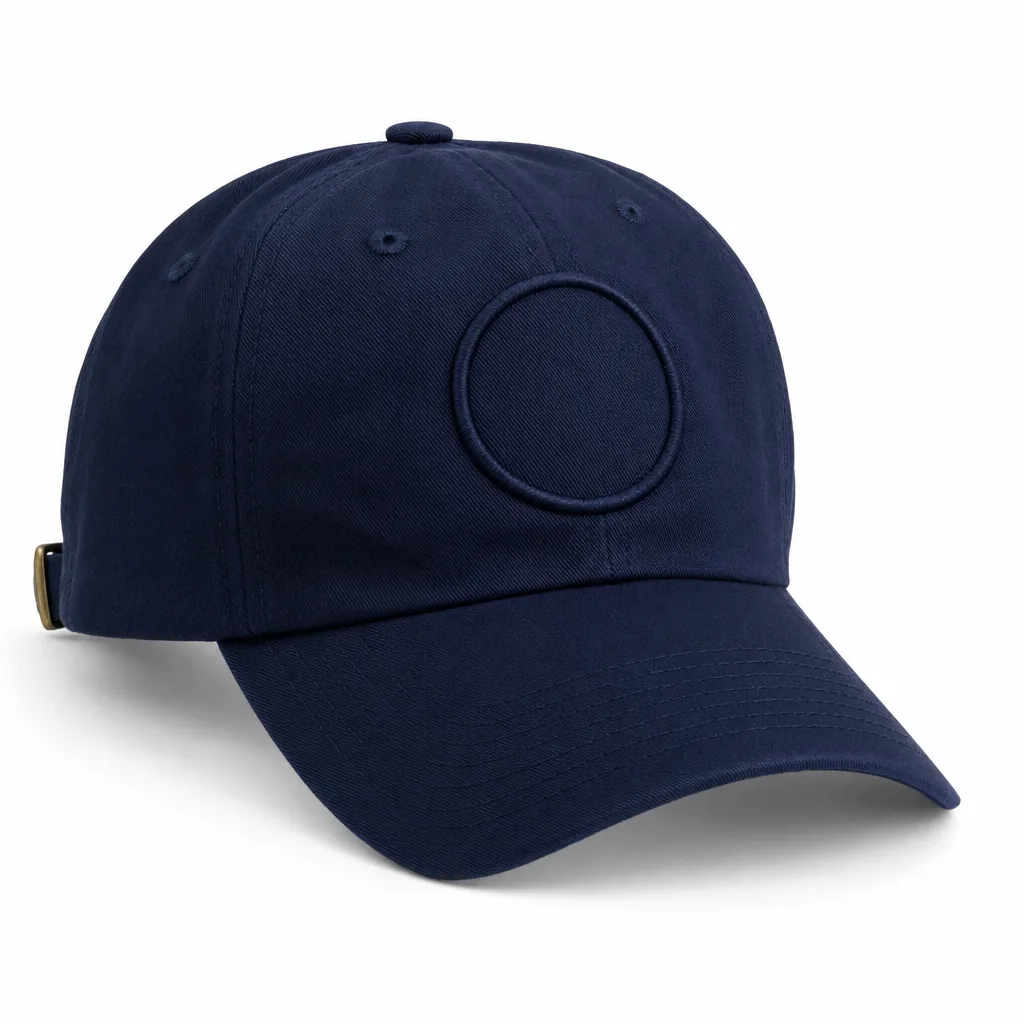
Snapback vs Fitted vs Adjustable: Cap Closure Systems Compared - Supplier Checklist is one of the most-asked questions we receive from international buyers, and for good reason. With dozens of factories competing for your order and an alphabet soup of technical terms in every supplier quote, even experienced importers can feel lost. This guide consolidates what we have learned producing custom hats for clients in 40+ countries.
The five closure systems in commercial production
The five closure systems used in commercial cap production are plastic snap, fabric strap with slide buckle, tuck-strap, hook-and-loop, and true fitted. In any snapback vs fitted decision, the cost driver is not aesthetics first; it is SKU compression versus size accuracy. A standard snapback uses an injection-molded PP or HDPE closure, usually 7-hole or 8-hole, attached to a rear opening around 20-22 mm high. One shell typically covers a usable head-size range of about 56-60 cm, which is why event merchandise, streetwear, and school programs keep specifying it. Stock black or white snap sets generally add only $0.04-$0.08 per cap FOB ex-factory, while custom color-matched closures usually run $0.11-$0.17 because small-lot molding waste and color approval against a Pantone TCX standard push cost up fast. The failure points are predictable: cracked pegs in brittle resin, offset stitching at the rear arch, and visible Delta-E drift between closure lots and crown fabric. Those defects need to be caught during inline sewing and trim approval, not left to final inspection at AQL 2.5.
Fabric strap systems sit in the middle of the market: lower inventory risk than fitted, better perceived value than plastic. Most production strapbacks use 14-20 mm cotton twill, washed canvas, microfiber suede, or 1680D nylon webbing with zinc-alloy, brass-finish, or iron slide hardware. A basic slide buckle is efficient, but the loose tail looks sloppy if the keeper width is off by even 1-2 mm or if dense back embroidery creates too much thickness for the strap to feed smoothly. Tuck-strap versions solve that by hiding the excess tail inside a self-fabric channel, which is why they are common in golf and lifestyle programs. On the line, we treat 90 N pull strength as the minimum acceptable benchmark, and plated hardware for humid markets should pass a 24-48 hour salt-spray check before approval. Hook-and-loop is the fastest adjustable option to sew and usually covers roughly 54-61 cm in one size, but it ages badly: lint loading, edge curl, and loss of holding power show up early, especially on lightweight back panels under 280 gsm. Fitted sits at the opposite end of snapback vs fitted: no rear opening, no forgiveness in grading, and no shortcut around size management. Typical runs require full size breaks from 6 7/8 to 7 5/8, often in 1/8 increments, with finished head-circumference tolerance held to plus or minus 3 mm after sweatband setting. That clean rear profile matters for on-field and licensed programs, but every size becomes a separate SKU with its own carton ratio, reorder risk, and dead-stock exposure. At CrownsForge, that is usually where buyers realize fitted is not more difficult to sew than snapback; it is more difficult to forecast correctly.
Plastic snap (snapback) economics
The real cost edge of a plastic snap is inventory compression, not the trim itself. A standard adult 7-hole snap with 8 studs typically fits roughly 54-62 cm, which lets a buyer hold one finished SKU instead of splitting demand across fitted sizes like 6 7/8, 7, 7 1/8, 7 1/4, and 7 3/8. In a snapback vs fitted program, that usually matters more than the $0.04-0.08 trim delta. A fitted cap may save a few cents in labor because there is no closure to attach, but the gain disappears once you factor in smaller cut ratios, more carton splits, and more leftover tails in slow sizes. For orders under about 5,000 pcs per color, especially trucker, promo, and mid-price streetwear caps, snapback vs fitted is mainly a working-capital decision. On the floor, fitted programs also create hidden waste that buyers rarely model correctly. If you run six sizes, you are effectively forecasting six separate demand curves, and one bad assumption leaves dead stock in 6 7/8 while 7 1/4 sells out. That imbalance drives markdowns, short shipments, and expensive partial replenishment runs. A snapback avoids most of that by pooling demand into one body, one care label, and one carton spec. At carton level, 144 pcs of one adjustable SKU pack cleaner than mixed-size assortments, and warehouse pick accuracy is materially better because the operator is not separating nearly identical hats by internal size tape. That is why the snap closure often wins even when the retail team says fitted looks cleaner.
Sourcing risk stays low only when the factory controls resin, color approval, and fatigue testing. In Zhejiang, stock snap colors are usually black, white, navy, red, royal, dark green, khaki, and heather gray, with trim lead times around 3-7 days. Custom Pantone matching is realistic from 500-1,000 pcs per color, but buyers should lock an acceptable Delta-E target—usually Delta-E under 1.5 against the approved chip under D65 light—because injection-molded PP or HDPE will not read exactly like cotton twill or poly mesh. Our standard practice is to approve both the loose molded part and the sewn strap sample, since gloss level, gate position, and sink marks can shift the visual shade once the closure is attached to the crown. Cheap snaps fail in predictable ways: brittle studs in cold weather, flash around the holes, weak retention after 200-300 open-close cycles, and strap tabs that split when the back arch is topstitched. Better factories cycle-test closures to 500 opens and closes and reject lots with cracking, deformation, or poor stud engagement. Installation is also simpler than a metal buckle strapback: less hardware variation, lower risk of rust or plating scratches, and faster inline inspection under AQL 2.5. On a sewing line, a plastic snapback closure is easier to standardize because needle clearance, fold width, and back-arch alignment are consistent across runs. In snapback vs fitted manufacturing economics, that means fewer packing claims, lower trim defect rates, and less rework at final QC.
Fabric strap with metal buckle (dad hat aesthetic)
A self-fabric strap with a metal slider is still the fastest visual cue for a true dad-hat silhouette, especially on unstructured 6-panel caps where a plastic snap reads too athletic. Most factories cut the strap at 16 to 18 mm wide from the shell fabric or a matched herringbone tape, turn the tip, and secure it with a bartack or 301 lockstitch before threading it through an antique brass, matte black, or brushed nickel slider. In production, the usable adjustment range is usually about 54 to 62 cm head circumference; push beyond that and the back opening starts to look unbalanced, with too much tail on smaller heads or not enough travel for larger ones. In a practical snapback vs fitted comparison, this closure sits in the middle: it keeps the easy size tolerance of an adjustable cap, but the hand feel and back profile are closer to premium headwear than a standard PE snap set.
The unit-cost difference looks minor on a quote sheet and very obvious in the finished cap. On a normal FOB China program, a fabric strap with plated metal slider typically runs $0.12 to $0.22 more per cap than a basic plastic snapback, depending on plating finish, whether the strap is self-fabric or cotton tape, and whether back-arch embroidery needs re-hooping around the opening on a Tajima or Barudan line. Good buyers also approve the hardware as part of the trim set, not as an afterthought: if the cap is matched to Pantone TCX standards, the slider finish should be checked visually against eyelets, any metal logo trim, and embroidery thread because warm antique brass next to bright nickel hardware looks off immediately under retail lighting. QC is simple if the spec is disciplined: check strap slippage after repeated pull cycles, hold back-opening centering within ±2 mm, inspect brushed cotton edges for fray, and reject plated parts with scratching, pinholes, or blistering at final inspection under AQL 2.5. For premium builds, I would spec a denser 108 x 56 cotton twill or 8 to 10 oz canvas strap piece; light fabric collapses inside the slider and makes the whole cap feel cheap.
Velcro (lowest cost, widest range)
Velcro is still the cheapest closure on a cap BOM, and that matters on volume programs. A 20 mm or 25 mm hook-and-loop strap usually covers about 54-63 cm head circumference without forcing a crown pattern change, which is why buyers use it on promo caps, kids' caps, cadet shapes, and basic uniform headwear. In FOB terms, standard nylon tape in black or white normally adds only $0.03-0.05 per cap, versus roughly $0.06-0.10 for a PP snap set and $0.12-0.25 for a metal buckle or tri-glide assembly. On a 3,000-piece order, that delta is large enough to change the total landed cost, especially when decoration is simple 5,000-8,000 stitch front embroidery on cotton twill. In any real snapback vs fitted comparison, Velcro is not a style-first option; it wins on fit range, low SKU count, and fast adjustment, not on silhouette or shelf appeal.
The weakness is perceived value and durability, not fit. Low-grade hook-and-loop pills quickly, grabs lint during packing, and loses holding power if the hook density is light or the loop face is too soft. I would specify woven nylon hook-and-loop, 20 mm or 25 mm width, box-X reinforcement, and a minimum sewing density around 3.5-4.0 stitches per cm; a single run stitch on the strap is where failures start after carton compression and repeated opening cycles. Buyers should also lock down strap length tolerance to +/-3 mm, require shade approval against the shell fabric if the body is matched to a Pantone TCX, and ask for a simple cycle test before bulk approval. Our standard practice is to check seam security and appearance under AQL 2.5 because a bad Velcro closure can make an otherwise clean cap look cheap. If the line is targeting premium retail, the fitted vs adjustable decision is usually easy: Velcro saves cents on hardware but often gives back dollars in downgraded brand perception.
Fitted: why some brands accept the operational cost
Fitted only makes commercial sense when the brand can monetize size precision, because in a real snapback vs fitted decision, fitted is operationally harder at every stage. There is no rear closure to hide grading drift, so each size has to hold spec on finished head opening, rear seam angle, crown depth, sweatband extension, and block shape from 6 7/8 through 8 or 8 1/4. On a true high-profile 59FIFTY-type build, a 2 to 3 mm deviation in circumference is enough for the wearer to feel the cap as either pinching or loose, especially after the sweatband relaxes with heat and wear. Good factories do not approve fitted from one golden sample; they issue size-specific spec sheets and normally review at least five sizes because a clean 7 1/4 tells you very little about how 7 5/8 will sit at the side wall, back arch, and visor balance after blocking and final pressing. The real penalty is SKU math, not sewing difficulty. A snapback can run 144 pieces per color as one SKU, while a fitted program usually breaks into six to eight SKUs, and the workable MOQ is driven by size ratio rather than total order quantity. Once you allocate 24 to 48 pieces per size to stabilize flat embroidery registration on Tajima or Barudan heads, keep visor curve consistent, and avoid mixing shell fabric or sweatband dye lots, a small fitted run quickly becomes 288 to 576 pieces. FOB China for a wool-blend fitted in 16x12 twill with 180 gsm buckram, woven size taping, and about 8,000 stitches of flat embroidery typically lands around $4.80 to $6.90 at 500 to 1,000 units total; the comparable snapback is often $0.40 to $1.20 cheaper simply because packing, replenishment, and carton assortment are easier.
Brands still take that burden when exact sizing is part of the product value, and that is where snapback vs fitted stops being a cost discussion and becomes a positioning decision. Licensed on-field product is the clearest case: consumers expect a numbered size, a closed back, and the same crown geometry they associate with authentic team issue. Retailers will tolerate the extra SKU count because fitted caps sell on collectible logic, not on one-size-fits-most convenience. Premium streetwear uses the same playbook. A fitted silhouette signals intent through cleaner rear construction, uninterrupted embroidery placement, and a more disciplined crown line than a plastic snap closure can deliver. Quality control has to match that promise. Our standard practice on fitted programs is size-by-size measurement under AQL 2.5, checking finished circumference, crown depth, visor symmetry, and sweatband recovery after steaming because the common failure is not a dramatic defect; it is size inconsistency that the customer feels immediately on head. A cap can pass visual inspection and still fail commercially if 7 3/8 wears shallow while 7 1/2 opens up after two fittings. Among closure systems, fitted is the least forgiving, but for licensed, collectible, or locker-room-grade product, brands accept the higher inventory exposure because authenticity usually converts better than convenience.
MOQ implications by closure type compared
MOQ is where the snapback vs fitted decision stops being a styling debate and becomes an inventory math problem. Adjustable closures keep the entry point low because one size can usually cover a wearable range of roughly 54-60 cm, depending on sweatband foam recovery, rear opening, and crown profile. In real factory terms, a stock-plastic snapback, metal buckle strapback, or hook-and-loop closure can often run at 100 pcs per colorway/logo, with some suppliers pushing 144 pcs to match carton pack ratios. That only works when the closure comes from stock trim, the shell fabric is mill-stock, and the color is matched from available dyes rather than custom Pantone TCX development. On a standard 6-panel cap in 80/20 acrylic-wool or 12x12 brushed cotton twill, embroidered on Tajima or Barudan machines, the factory is still building one SKU, one care label set, one barcode, and one master carton mark. That is why adjustable programs are the default for new brands, promo buyers, and test drops under 200 pcs.
Fitted caps change the MOQ structure immediately because the true minimum is driven by size breaks, not by artwork. A supplier quoting 100 pcs MOQ on fitted often means 100 pcs per size, or a practical floor of 30-50 pcs per size with a total run closer to 300-500 pcs per style. Once you offer sizes 7, 7 1/8, 7 1/4, 7 3/8, and 7 1/2, you are not buying one cap program anymore; you are managing five separate SKUs with their own stickers, carton assortments, and sell-through risk. The bigger cost problem is usually not the ex-factory unit price difference of $0.20-0.60 per cap, but dead stock in slow sizes. Production also gets less forgiving: each size grade needs its own pattern marker, sweatband length, size tape, and circumference control, and finished goods should hold about ±3 mm tolerance after sewing, steaming, and packing. If demand is unproven, start adjustable and move into fitted only after repeat orders show a stable size curve; if fitted is non-negotiable, cut the first run to three core sizes and lock a ratio such as 30/40/30 before sampling.
How to spec the right closure for your retail positioning
Retail positioning should decide the closure before you approve silhouette or decoration, because the closure changes perceived value, size risk, and inventory complexity in one move. For premium streetwear, the real choice is usually snapback vs fitted only on paper; in production, most brands actually land on snapback or strapback because they want one-size selling with a cleaner size curve and lower return exposure. A classic plastic snap on a 6-panel high-profile cap is still the fastest-turning option for hype drops, especially when the crown is 100% cotton twill at 280 to 320 gsm or wool-blend at 380 gsm. Strapback earns its place when the brand is pushing a quieter, more elevated look: self-fabric strap with antique brass buckle, tuck strap, or metal slider. It costs roughly $0.18 to $0.45 more than a standard PP snap closure, but it photographs better and avoids the mass-market feel some buyers associate with promotional caps.
If you are selling into event, giveaway, or reseller channels, fitted vs adjustable cap is not a philosophical debate; it is a margin and replenishment issue. Adjustable closures win because they collapse your cap sizing system into one SKU, cut carton fragmentation, and reduce dead stock in slow sizes. For these programs, snapback or hook-and-loop are the practical defaults. Hook-and-loop is especially useful for kids and youth because parents can adjust fast, and you avoid complaints about loose fit on smaller head circumferences in the 52 to 56 cm range. The tradeoff is image: Velcro reads inexpensive at retail unless the order is clearly promo-driven. In cap closure types compared on factory yield, hook-and-loop also has the highest tolerance for sewing variation, while plastic snaps need tighter hole alignment and back-arch symmetry to pass a clean final inspection at AQL 2.5.
Licensed sports programs are where closure mistakes become expensive. If the customer expects on-field authenticity, fitted is still the correct call, because a true pro sports consumer notices shape, sweatband hand feel, and size grading immediately. That means managing full size runs, usually 6 7/8 through 7 5/8, checking body shrinkage after embroidery, and keeping crown panel variance tight enough that adjacent sizes do not drift more than about 3 mm at the inner band. Our standard practice is to reserve fitted for hero SKUs and proven volume doors, then use snapback as the default for mixed retail programs where breadth matters more than authenticity. That same logic works when buyers ask about snapback vs strapback or even a champion snapback cap look: put adjustable closures on fashion and traffic-driving items, and keep fitted for the styles where the consumer will pay for exact fit instead of just team identity.
Frequently Asked Questions
Can I order a sample before bulk production?
Yes. We strongly recommend approving a pre-production sample before mass production. Samples are charged at 35 to 60 USD each plus express shipping, fully refundable against confirmed bulk orders over 500 pieces.
How long does production take?
Sampling takes 7 to 12 days. Bulk production runs 20 to 30 days depending on quantity, fabric availability and decoration complexity. Inspection and packing adds another 3 to 5 days before shipment.
What file format should I send for my logo?
Vector files (AI, EPS, PDF) are ideal. High-resolution PNG or JPG at 300 dpi on transparent background works as a fallback. Provide Pantone color references for accurate reproduction.
Do you support sustainability certifications?
Yes. We work with GOTS organic cotton, GRS-certified recycled polyester, OEKO-TEX Standard 100 fabrics, and are BSCI and Sedex audited. Certification documentation can be provided per order.
Which shipping methods do you support?
We support FOB, CIF and DDP shipping. Air express for samples and small orders, sea LCL for 100 to 500 pieces, sea FCL for 5,000+ pieces. Door-to-door DDP available for US, EU, UK, Canada and Australia.
What should buyers know about cotton twill baseball cap?
When evaluating cotton twill baseball cap, the key considerations are construction quality, decoration capability, MOQ flexibility and lead time. Universal sizing 54-62cm with 8 snap positions. Single SKU per design covers most adults. Adds ~$0.05 per cap for hardware. Industry-standard for retail snapback hats, trucker caps, casual baseball caps. Available in 8 stocked colors; custom Pantone-matched snaps at 500+ pieces. Plastic snap (snapback), fabric strap with metal slide buckle, fabric strap with tuck-buckle,…
What should buyers know about flat bill hats snapback?
When evaluating flat bill hats snapback, the key considerations are construction quality, decoration capability, MOQ flexibility and lead time. Universal sizing 54-62cm with 8 snap positions. Single SKU per design covers most adults. Adds ~$0.05 per cap for hardware. Industry-standard for retail snapback hats, trucker caps, casual baseball caps. Available in 8 stocked colors; custom Pantone-matched snaps at 500+ pieces. Plastic snap (snapback), fabric strap with metal slide buckle, fabric strap with tuck-buckle,…
How does ordering custom flat bill hat embroidery work?
When evaluating custom flat bill hat embroidery, the key considerations are construction quality, decoration capability, MOQ flexibility and lead time. Universal sizing 54-62cm with 8 snap positions. Single SKU per design covers most adults. Adds ~$0.05 per cap for hardware. Industry-standard for retail snapback hats, trucker caps, casual baseball caps. Available in 8 stocked colors; custom Pantone-matched snaps at 500+ pieces. Soft fabric strap (1.5-2cm wide) with antique brass slide buckle. Fits 54-63cm. Adds ~$0.15 per…
What should buyers know about baseball hats women?
When evaluating baseball hats women, the key considerations are construction quality, decoration capability, MOQ flexibility and lead time. Universal sizing 54-62cm with 8 snap positions. Single SKU per design covers most adults. Adds ~$0.05 per cap for hardware. Industry-standard for retail snapback hats, trucker caps, casual baseball caps. Available in 8 stocked colors; custom Pantone-matched snaps at 500+ pieces. Plastic snap (snapback), fabric strap with metal slide buckle, fabric strap with tuck-buckle,…
Ready to start your custom hat project?
Send us your tech-pack, sketch or even just an inspiration photo. We will respond with a detailed quotation and digital mock-up within 24 hours.
Request a free quoteRelated guides
Blank Hats Export Shipping Checklist for Custom Hat Buyers
Read article →
Corduroy Hat Men's: Properties, Costs and How to Spec It Right - Cost & MOQ Breakdown
Read article →Bulk Trucker Hats Export Shipping Checklist for Custom Hat Buyers
Read article →We hope this guide demystifies snapback vs fitted vs adjustable: cap closure systems compared - supplier checklist and helps you move forward with confidence. If you have questions specific to your project, our English-speaking sales engineers are one message away.