
Snapback vs Fitted vs Adjustable: Cap Closure Systems Compared - Supplier Checklist - 2026 Buyer's Guide
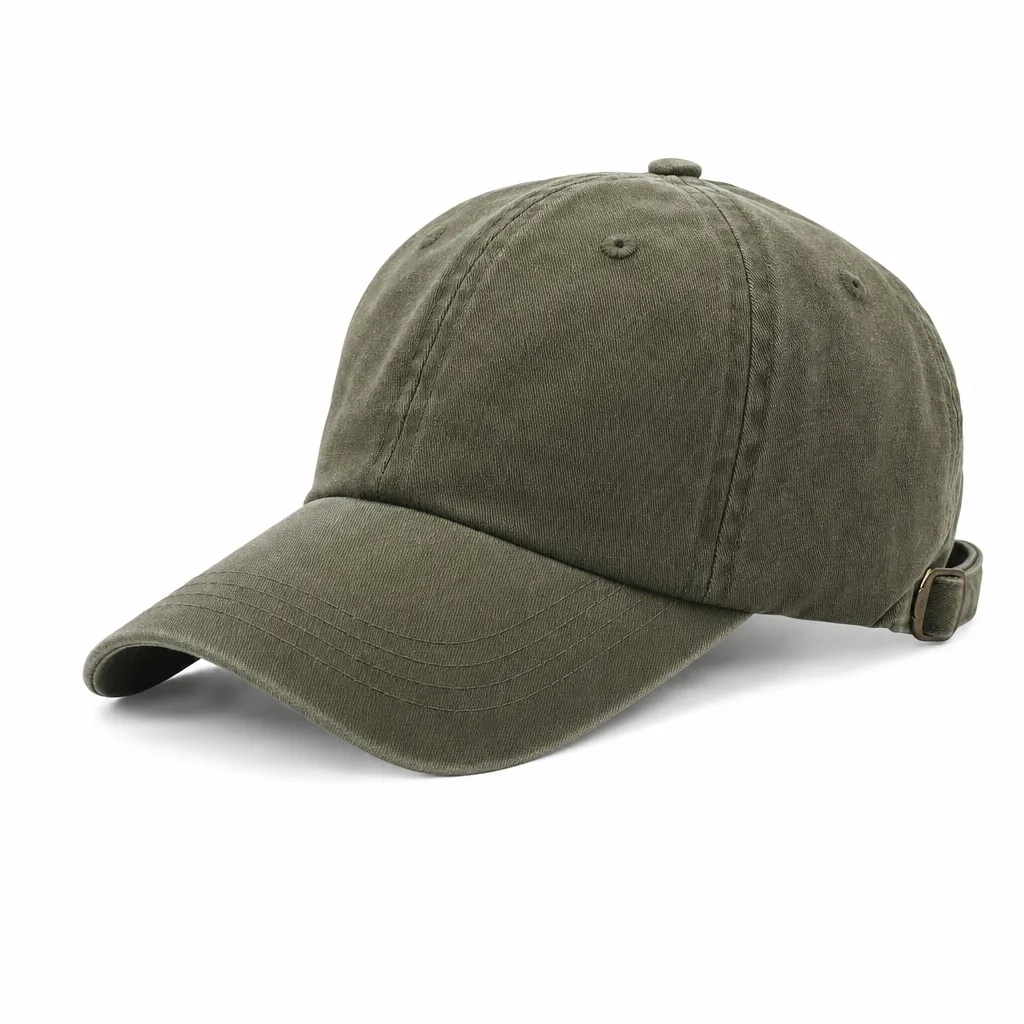
Snapback vs Fitted vs Adjustable: Cap Closure Systems Compared - Supplier Checklist - 2026 Buyer's Guide is one of the most-asked questions we receive from international buyers, and for good reason. With dozens of factories competing for your order and an alphabet soup of technical terms in every supplier quote, even experienced importers can feel lost. This guide consolidates what we have learned producing custom hats for clients in 40+ countries.
The five closure systems in commercial production
Closure choice affects inventory economics more than styling, and that is the real starting point in any snapback vs fitted decision. A plastic snap closure lets one SKU cover roughly 54–61 cm; a fitted program usually needs at least 4–6 sizes, commonly 6 7/8 through 7 5/8 in 1/8-inch increments, and licensed sports retail often pushes to 7 sizes to reduce return rates. That multiplies cutting markers, size labels, carton ratio packing, and replenishment complexity before you have sold the first unit. On trim cost alone, a standard POM or PE snapback set is usually only $0.08–0.15 per cap depending on resin grade, gloss level, and custom color matching; fitted avoids closure hardware, but dead-stock exposure on broken sizes will burn more margin than the trim ever could. On the factory floor, fitted also requires tighter circumference control, usually within +/-0.5 cm at finished measurement, because there is no adjustment range to absorb sewing variation. The five commercial systems worth comparing are plastic snap, fabric strap with metal slide buckle, fabric strap with tuck-in buckle, hook-and-loop, and fitted with no rear closure. Each changes construction. Snapback programs typically pair with a higher crown, harder front build using 2.0–2.5 mm buckram, and either a flat or pre-curved PE visor insert, which means better inner carton support is needed to prevent visor memory loss and crown crush during ocean transit. Slide-buckle strapbacks generally add $0.18–0.35 depending on buckle weight, plating, and whether the strap is self-fabric, PU, or leather; tuck-in buckle versions look cleaner at retail but need tighter sewing tolerance so the strap slides without binding inside the back tunnel. Hook-and-loop is still practical for uniforms and golf events because one size comfortably covers around 55–60 cm, but for fashion retail it is usually the first closure I cut because lint pickup, peel noise, and shear loss after repeated cycles make even a good 280 gsm cotton twill cap feel cheap.
Snapback vs strapback is mostly a durability and brand-positioning decision. On 80/20 acrylic-wool blends, 260–320 gsm brushed cotton twill, or 600D polyester promo caps, plastic snaps remain the fastest and cheapest closure to source and assemble, but low-grade resin becomes brittle in cold lanes and cracked pegs show up quickly after storage or delivery below 0°C. Metal slide buckles give better perceived value, but plating quality matters: black nickel and matte gunmetal are the first finishes to show edge wear or corrosion if the electroplating is thin. Our standard practice is to run at least a 24-hour salt-spray check on hardware for humid destinations, because weak plating can fail long before the cap fabric does. Strapbacks also open more branding options at the closure area: woven flag labels, embossed PU tabs, edge-painted leather, or laser-marked buckles. Fitted caps sit at the opposite end of the spectrum: the cleanest rear profile, no closure interference with back or wrap embroidery, and a silhouette that looks more premium when the blocking is right. But fitted is less forgiving in production. Sweatband joins at center back cannot stack bulky seam allowance, seam alignment is more exposed, and embroidery placement drift reads worse because there is no rear opening to visually break the circumference. For QC, I would inspect fitted at AQL 2.5 with extra attention on head opening measurement, visor centering, and size label accuracy by carton ratio, since a single packing error can create a dead size shortage immediately. That is why snapback vs fitted rarely comes down to trend alone: snapback wins on SKU efficiency and replenishment speed, while fitted wins on silhouette purity but demands stricter planning from cutting through final packing.
Plastic snap (snapback) economics
The cost advantage of a plastic snap is not the trim price; it is the inventory math. In a snapback vs fitted program, one adjustable adult SKU typically covers 54–61 cm head circumference with a 7-hole strap and 1 peg, and on a deeper 6-panel block you can sometimes reach 62 cm if the sweatband tension stays moderate. A fitted run usually needs at least six sizes—6 7/8, 7, 7 1/8, 7 1/4, 7 3/8, 7 1/2—and many licensed or team accounts insist on 7 5/8 as well. Every added size means separate cutting bundles, size tickets, carton assortment ratios, and replenishment forecasting. On factory P&L, that complexity is worth more than the closure itself. A standard injection-molded PP snap set in black or white normally lands at $0.035–$0.07 per cap at 10,000 pieces; custom colors, softer acetal grades, or low-volume tooling allocation push it higher. The real fitted premium is usually 3–6% more fabric consumption from size-specific markers, plus slower warehouse pick-pack and dead stock concentrated in fringe sizes instead of spread across one adjustable body.
Plastic snaps also give the sewing line more tolerance than fitted caps ever will. The back opening absorbs variation from seam take-up, front-panel fusing, sweatband stretch, and embroidery pull, so a finished circumference tolerance of about ±0.5 cm is commercially acceptable on most snapbacks. A fitted cap has no cushion: if the shell tightens after pressing or the crown loses a few millimeters from dense 3D embroidery on a Tajima or Barudan line, the unit is simply the wrong size and ends up in rework or downgrade. That is why closure QA matters before bulk output. CrownsForge typically checks prong alignment, socket engagement, and break resistance by lot, then runs a basic wear-cycle and pull test to catch brittle resin, flash, or cracked pegs before packing. Buyers often under-spec the material side: recycled PP can turn chalky and fracture in cold transit, and color-matched snaps rarely hold a perfect Pantone match against cotton twill under D65 and retail LED lighting. If you are comparing snapback vs fitted for streetwear, promo, or mixed-size retail, ask for resin type, tooth geometry, color Delta-E tolerance, and replacement hardware policy; those points drive returns more than a five-cent trim difference.
Fabric strap with metal buckle (dad hat aesthetic)
A fabric strap with a metal slide buckle belongs in the dad-hat lane, not the team-cap lane. In a snapback vs fitted comparison, this closure is really a third option: low profile, unstructured 6-panel, pre-curved visor, softer hand, and a back opening that reads clean instead of sporty. The right base fabrics are usually 180-260 gsm cotton twill, brushed chino, enzyme-washed canvas, or 8-10 oz garment-washed denim; once you move into stiff acrylic-wool blends, the buckle starts fighting the silhouette. For adult OSFM, the practical fit range is about 54-63 cm head circumference, using a 15-20 mm self-fabric strap and a 20 or 22 mm inside-width buckle. That span is wide enough for most retail programs without splitting inventory into S/M and L/XL, but only if the strap length is tested on actual wearers rather than copied from an old tech pack. Cost is modest but real: typically $0.12-0.22 per cap for stock hardware, plus roughly 25-35 seconds of added labor for strap setting, foldback, and either a tuck-in tunnel or self-fabric keeper.
Most quality failures come from the hardware and strap construction, not the pattern. Cheap die-cast buckles show center-bar flashing, inconsistent plating, and slippage after a few adjust cycles; a usable iron or zinc-alloy buckle should survive repeated pull tests around 8-10 kgf without visible strap creep. Standard finishes are antique brass, matte black, brushed nickel, and gunmetal, but mixed plating lots often fail visually before they fail mechanically, especially on washed caps where the back opening draws the eye. If the shell fabric is garment dyed or heavily washed, set a Pantone TCX target with a realistic Delta-E tolerance before bulk approval; otherwise the strap and crown panel can drift enough to look pieced together. Construction tolerances matter more than buyers assume: strap width within +/-1 mm, centered back arch, box-X reinforcement at about 9-11 SPI, and enough foldback behind the buckle so the tail cannot pull out in daily use. On inspection, AQL 2.5 only works if function is checked cap by cap on sampling: run the strap through full adjustment, check for sharp edges, twisted insertion, skipped stitches, and confirm the tail stays controlled in the tunnel or keeper after packing.
Velcro (lowest cost, widest range)
Hook-and-loop stays the lowest-cost adjustable closure on an actual cap BOM because it eliminates molded snap parts, metal hardware, and the extra folding labor of a tuck strap. On a stock 6-panel, 108 x 56 cotton twill cap, a 20 mm nylon hook-and-loop set typically adds $0.025 to $0.045 per cap at 1,000 pcs FOB, while branded Velcro can push that closer to $0.055 to $0.070 depending on color matching and country of origin. The usable adjustment range is the real commercial advantage: most adult caps can cover about 54-63 cm finished head circumference, and youth versions around 50-58 cm. That lets buyers avoid the inventory drag of fitted size breaks or dual-size programs. In a snapback vs fitted discussion, hook-and-loop is not the stylish answer, but it is often the most efficient one for school distributions, promo campaigns, and uniform replenishment where mixed sizing is unavoidable.
It works best on value-driven programs because the sewing risk is low and the closure is forgiving in wear. We still specify it for cadet caps, golf events, municipal uniforms, and contractor headwear where reorder consistency matters more than shelf appeal. On low-profile crowns, 20 mm tape usually sits cleaner than 25 mm; wider tape tends to distort the rear opening and makes the arch look bulky. If the shell fabric is dyed to Pantone TCX, buyers should ask for loop-tape shade approval within Delta-E 1.5 to 2.0 under D65 light, because mismatched black, charcoal, or navy loop tape is one of the fastest tells of a cheap cap. The weakness is perceived value and aging, not fit: generic tape can lose bite after 300-500 cycles, trap lint, and abrade the hairline, while better-grade woven nylon or blended tapes last materially longer. Once a cap is landing above roughly $4.50 to $5.00 FOB, the savings usually no longer justify the downgrade versus snap, buckle, or self-fabric strap options.
Production is simple, but this closure still deserves proper inspection because most failures come from sewing, not from the tape chemistry. The attachment should run 7-9 SPI with balanced upper and bobbin tension, plus a box-and-cross or at minimum reinforced bartacks at both tape ends. If either end is under-stitched, the closure peels after laundry, abrasion, or carton compression in transit. Rear opening symmetry should stay within 2 mm left-to-right, otherwise the cap sits visibly off-center on head. Our standard practice is to pull-test random units during inline QC and check closure alignment again at final AQL 2.5. For kids' programs or compliance-sensitive retail, ask for needle-detection logs, azo-free dye declarations, and REACH or CPSIA screening on tape, thread, and any back label near the closure. Against the broader snapback vs fitted question, hook-and-loop is the utility closure: operationally smart, cosmetically limited, and rarely the right choice for premium licensed or fashion product.
Fitted: why some brands accept the operational cost
Fitted programs cost more because every size acts like its own SKU from marker making to final carton, and that complexity shows up long before shipping. Standard adult grading usually runs 6 7/8 to 8 in 1/8 increments, but most workable assortments are five to seven sizes, not one clean MOQ. In a practical snapback vs fitted evaluation, that is the cost buyers underestimate: a 288-piece snapback order can run as one production lot, while a fitted order often becomes six micro-lots of 36 to 60 pieces each just to build a commercial size curve. The factory still has to open separate cutting bundles, attach size-specific sweatband labels, apply the right UPC or FNSKU stickers, and sort cartons by ratio. Once any size drops below efficient bundle volume, sewing throughput falls and the FOB can climb $0.35 to $0.90 per cap even before freight. The inefficiency is not abstract; it hits embroidery, sewing, finishing, and final audit. On structured 6-panel fitted caps using 280 to 320 gsm wool serge, melton blends, or high-density brushed twill with a 1.5 to 1.8 mm PE front support, operators lose time every time bundle size changes. Embroidery is even less forgiving because crown geometry shifts across sizes. A logo that sits correctly on a 7 1/4 can look high or narrow on a 6 7/8 if the digitizing is not compensated for panel width, crown angle, and stitch pull. On Tajima or Barudan heads, competent factories test the smallest and largest sizes in pre-production, checking satin column width, fill density, and centerline position before approving bulk. If that step is skipped, visual inconsistency across the size run is almost guaranteed.
Brands still accept those costs when fitted is part of the product promise, not just the closure choice. Licensed sports headwear is the obvious case: consumers expect true numeric sizing, a clean closed back, and a silhouette closer to on-field product than retail adjustable caps. Fitted also makes sense in premium fashion when the materials support the ticket price, such as 16x12 wool serge, 10x10 brushed cotton twill, or 140 to 180 denier performance poly with a full taped interior and closed-back sweatband. In snapback vs fitted decisions, fitted wins when exact fit, rear profile, and collector-grade finish matter enough to justify slower replenishment and higher dead-stock risk. The real pressure point is size control and forecasting discipline. AQL 2.5 workmanship inspection alone is not enough if finished circumference drifts; in premium channels, even a 5 to 6 mm variance can trigger returns, especially on core sizes like 7 1/4 and 7 3/8. At CrownsForge, we lock a circumference tolerance by size set before packing and measure after steaming because sweatbands with elastic yarn can rebound unevenly. Carton ratio planning matters just as much as sewing quality. If demand is 10/15/25/20/15/10/5 across seven sizes and the factory packs equal ratios, the warehouse sells out of core sizes first and sits on tails. That is why fitted programs work best for sports licensees, team dealers, and brands with replenishment history; for promo and broad DTC, adjustable closures usually deliver better inventory efficiency at a similar FOB.
MOQ implications by closure type compared
MOQ is where snapback vs fitted stops being a styling choice and starts affecting cash flow, carton planning, and SKU count. Adjustable closures—classic 7-hole PP snap, self-fabric strap with 20 mm tri-glide, hook-and-loop, or 20-25 mm nylon webbing with a side-release clip—usually keep MOQ at 96-144 pcs per colorway because one adult size range, typically 58-62 cm, covers the order. That single-size setup removes a lot of hidden friction: one hangtag, one barcode, one carton assortment, and no size imbalance sitting in a 3PL. On a structured 6-panel cap using 10x10 brushed cotton twill, 300 gsm chino twill, or 100% polyester twill, current ex-factory pricing is commonly around US$2.90-US$4.80, with FOB Ningbo or Shanghai landing closer to US$3.30-US$5.70 depending on buckram spec, eyelet finish, visor sandwich, and stitch count run on Tajima or Barudan heads.
Fitted caps are not one SKU; they are a size run pretending to be one style. A supplier may advertise a 144-pc MOQ, but in practice fitted programs usually require 288-480 pcs total split across 4-6 sizes—say 7, 7 1/8, 7 1/4, 7 3/8, 7 1/2, and 7 5/8—with minimum cuts per size to keep marker efficiency and sewing bundles workable. Add a second color and the order can move into the 576-960 pc range before you have paid freight, duty, or local delivery. Each size needs its own sweatband marking, woven size tab, carton ratio, and inspection tally under AQL 2.5, and the risk is not theoretical: misapplied size stickers, mixed sweatbands, and carton assortment errors are among the most common fitted defects we see on final audit.
The manufacturing burden is also higher than many buyers assume. On fitted styles, grading is not just circumference; crown depth, side-panel angle, back opening geometry, and sweatband join position all shift enough by size that cutting and sewing cannot treat them like a one-size adjustable body. That means more pattern management, more line changeover, and more QA checkpoints on finished circumference tolerance, usually within plus or minus 0.5 cm. Our standard practice is to push newer brands toward snapback or other adjustable programs until they have at least two replenishment cycles of reliable size-curve data by channel. Dead stock almost never piles up in 7 1/4 or 7 3/8; it sits at the edges of the curve, where forecast error is highest and markdowns erase whatever margin looked attractive at quote stage.
How to spec the right closure for your retail positioning
Closure choice should be locked at the same time as silhouette because it drives size coverage, return risk, and the retail signal from the back view. In a real snapback vs fitted decision, fitted only earns its keep when authenticity, league parity, or collector behavior is part of the sell. Otherwise, adjustable closures protect margin because one adult SKU can comfortably cover about 56 to 61 cm, depending on sweatband stretch and crown depth. For premium streetwear, I would not spec a generic 7-hole PP snap on 16-wale cotton corduroy, 12 oz brushed cotton twill, or 100% wool serge unless the brief is deliberately retro. A self-fabric tuck strap or a 20 mm zinc-alloy buckle with matte nickel or antique brass finish reads cleaner and supports a higher ticket because the closure does not break the material story. If you do use plastic, call out resin type, gloss level, and color tolerance in the tech pack; on black caps, a shell-to-snap mismatch above Delta-E 1.5 is obvious under retail lighting and makes a $20-plus cap look downgraded.
The closure also changes how the cap sews, presses, and wears. High-profile snapbacks with 1.8 to 2.2 mm PE buckram and a flatter visor can absorb a heavier rear opening, while unstructured 6-panel bodies in washed twill or nylon taslon will pucker if the strap base is not properly stabilized with fusible or hidden tape. Back-arch embroidery usually has to move 3 to 5 mm depending on whether the closure is snap, buckle, or hook-and-loop; on Tajima and Barudan lines, ignoring that spacing is how rear decoration starts fighting the closure visually. Our standard practice is to spec strap width, hardware finish, hole count, washer diameter, and bartack density directly on the tech pack instead of leaving it to sewing-line interpretation. Promotional and school programs should bias toward snap or hook-and-loop because FOB adder is usually only about $0.10 to $0.18 per cap at volume, while fitted programs need tighter circumference control, typically within plus or minus 0.5 cm by size, and they carry broken-curve risk that adjustable inventory does not. In other words, snapback vs fitted is mainly a retail-positioning call, not a styling debate.
Frequently Asked Questions
Which shipping methods do you support?
We support FOB, CIF and DDP shipping. Air express for samples and small orders, sea LCL for 100 to 500 pieces, sea FCL for 5,000+ pieces. Door-to-door DDP available for US, EU, UK, Canada and Australia.
Can I order a sample before bulk production?
Yes. We strongly recommend approving a pre-production sample before mass production. Samples are charged at 35 to 60 USD each plus express shipping, fully refundable against confirmed bulk orders over 500 pieces.
What file format should I send for my logo?
Vector files (AI, EPS, PDF) are ideal. High-resolution PNG or JPG at 300 dpi on transparent background works as a fallback. Provide Pantone color references for accurate reproduction.
How long does production take?
Sampling takes 7 to 12 days. Bulk production runs 20 to 30 days depending on quantity, fabric availability and decoration complexity. Inspection and packing adds another 3 to 5 days before shipment.
What is the minimum order quantity (MOQ) for custom hats?
Our standard MOQ is 100 pieces per design and color, with sampling available from 1 piece. For complex multi-color logos or premium fabric upgrades, the MOQ can be lowered with a small per-piece surcharge.
What should buyers know about cotton twill baseball cap?
When evaluating cotton twill baseball cap, the key considerations are construction quality, decoration capability, MOQ flexibility and lead time. Universal sizing 54-62cm with 8 snap positions. Single SKU per design covers most adults. Adds ~$0.05 per cap for hardware. Industry-standard for retail snapback hats, trucker caps, casual baseball caps. Available in 8 stocked colors; custom Pantone-matched snaps at 500+ pieces. Plastic snap (snapback), fabric strap with metal slide buckle, fabric strap with tuck-buckle,…
What should buyers know about flat bill hats snapback?
When evaluating flat bill hats snapback, the key considerations are construction quality, decoration capability, MOQ flexibility and lead time. Universal sizing 54-62cm with 8 snap positions. Single SKU per design covers most adults. Adds ~$0.05 per cap for hardware. Industry-standard for retail snapback hats, trucker caps, casual baseball caps. Available in 8 stocked colors; custom Pantone-matched snaps at 500+ pieces. Plastic snap (snapback), fabric strap with metal slide buckle, fabric strap with tuck-buckle,…
How does ordering custom flat bill hat embroidery work?
When evaluating custom flat bill hat embroidery, the key considerations are construction quality, decoration capability, MOQ flexibility and lead time. Universal sizing 54-62cm with 8 snap positions. Single SKU per design covers most adults. Adds ~$0.05 per cap for hardware. Industry-standard for retail snapback hats, trucker caps, casual baseball caps. Available in 8 stocked colors; custom Pantone-matched snaps at 500+ pieces. Soft fabric strap (1.5-2cm wide) with antique brass slide buckle. Fits 54-63cm. Adds ~$0.15 per…
What should buyers know about baseball hats women?
When evaluating baseball hats women, the key considerations are construction quality, decoration capability, MOQ flexibility and lead time. Universal sizing 54-62cm with 8 snap positions. Single SKU per design covers most adults. Adds ~$0.05 per cap for hardware. Industry-standard for retail snapback hats, trucker caps, casual baseball caps. Available in 8 stocked colors; custom Pantone-matched snaps at 500+ pieces. Plastic snap (snapback), fabric strap with metal slide buckle, fabric strap with tuck-buckle,…
Is a fitted hat a snapback?
Comparing Style and Fit Snapbacks have an adjustable snap closure, usually made from plastic, that you can use to adjust the size of the cap to fit your head perfectly. A fitted cap is just a hat, with no adjustable sizing. The snapback design is bolder, with a more structured high crown and a flat brim.
Do baseball players wear snapbacks or fitted?
The snaps are usually plastic even if the cap is made of wool, cotton, or other material. Popularized by New Era, the official hat supplier to the MLB, the snapback cap is de rigueur for Major League baseball players.
Need a low-MOQ test order?
We help emerging brands launch with as few as 100 pieces. Premium fabric, in-house embroidery, retail-ready packaging.
Start a small orderRelated guides
Cap Fabric Guide: Cotton Twill, Wool Blend, Polyester & Performance Materials
Read article →
Custom Wool Blend Ball Cap: A 2026 B2B Sourcing Guide - Supplier Checklist - 2026 Buyer's Guide
Read article →
Hat With Patch Supplier Audit Checklist for Custom Hat Buyers
Read article →Sourcing custom hats does not have to be complicated. With the right manufacturing partner, clear specifications and a small upfront investment in sampling, you can launch a retail-quality product in 30 to 45 days.