Snapback vs Fitted vs Adjustable: Cap Closure Systems Compared (2026 Update) - 2026 Buyer's Guide - Cost & MOQ Breakdown
Every week, our sales team answers detailed questions about snapback vs fitted vs adjustable: cap closure systems compared (2026 update) - 2026 buyer's guide - cost & moq breakdown. We wrote this guide so that wholesalers, streetwear brands, corporate buyers and promotional resellers can compare options with full information, and avoid the traps that show up only after production has started.
The five closure systems in commercial production
Commercial cap production really comes down to five rear constructions: plastic snap, fabric strap with metal slide, fabric strap with tuck-in buckle, hook-and-loop tape, and true fitted with no rear opening. In a snapback vs fitted buy, the key variable is not style vocabulary; it is sizing exposure. A standard 7-hole PP snap normally covers about 56–61 cm adult head circumference with one SKU, while a fitted program needs at least six sellable sizes—6 7/8, 7, 7 1/8, 7 1/4, 7 3/8, and 7 1/2—just to look credible at retail. Licensed sports and serious streetwear often run 6 3/4 through 8, turning one colorway into 10–12 inventory lines. That changes cutting tickets, bundle control, carton ratios, ERP setup, warehouse picking, and dead-stock risk. On the line, snaps are forgiving: a 2 mm shift in the rear arch is usually hidden by the closure. On a fitted cap, a 5 mm circumference error can push a 7 1/4 into returns after steam blocking, sweatband shrinkage, or carton compression.
Fabric strap closures sit between snapback and fitted in cost, risk, and perceived value. A metal slide buckle suits washed 10–12 oz cotton twill, brushed canvas, 280–320 gsm chino twill, and wool-acrylic blends, but cheap hardware causes more complaints than buyers expect. Thin zinc-alloy sliders with weak nickel or antique-brass plating can scratch during bulk packing, fail a 24–48 hour neutral salt-spray test, or lose bite on slick strap fabric. A tuck-in buckle costs more because the tail needs a clean channel, accurate topstitching, and controlled tension at the rear opening, but it gives a cleaner shelf look than an exposed slide. For a 1,000-piece 2026 order, a regular PP snap adds about $0.08–$0.15 per cap, a metal slide buckle $0.18–$0.32, and a tuck-buckle strap $0.22–$0.38, depending on strap fabric, branded woven tab, plating spec, and color matching. CrownsForge normally tests buckle grip on 0.8–1.2 mm fabric stacks; peached polyester and slick nylon creep faster than cotton under pull.
Hook-and-loop remains the practical closure for promo, golf, school, and workwear caps, but it has the worst aging profile. Low-grade hook tape starts collecting lint and losing grip after roughly 3,000–5,000 open-close cycles, and brushed acrylic, fleece lining, or terry sweatbands make contamination show sooner. It stays popular because the add-on cost is usually only $0.10–$0.20 at volume, it adjusts quickly for event distribution, and it covers a wider fit range than many strapbacks. Fitted caps are the opposite: no rear gap, cleaner crown line, uninterrupted back embroidery space, and stronger perceived value for licensed sports or premium streetwear. The trade-off is inspection discipline. We check sweatband seam join, crown ovality, blocking profile, and final circumference under AQL 2.5 because a fitted defect cannot be adjusted after packing. The practical rule is simple: snaps reduce inventory exposure, slide buckles improve presentation, tuck-buckles look cleaner, hook-and-loop maximizes utility, and fitted caps only make sense when the buyer can control SKU depth and size ratios.
Plastic snap (snapback) economics
Plastic snap is usually the cheapest risk-control tool in the snapback vs fitted decision, not because the part is expensive, but because it collapses a size run into one sellable SKU. A standard 7-hole or 8-post closure in virgin polypropylene typically fits about 54–62 cm, assuming a normal rear arch and a 10–11 cm crown depth; shallow 5-panels may feel tighter at the same setting. The component itself is minor: standard black or white PP snap sets run about $0.035–$0.07 per cap ex-factory, and attachment labor is nearly unchanged because the operator sews it during rear-opening finishing. On a 1,000-piece order, the real savings come from avoiding separate 6 7/8 through 7 5/8 inventory, size labels, UPCs, carton ratios, and replenishment guesses. Fitted caps save the plastic part, but that few cents is usually wiped out by dead stock in slow sizes.
MOQ is where snapback economics become obvious. A fitted cap program under 300–500 pieces per color is hard to balance unless the buyer has reliable historical sell-through by size; otherwise, 7 1/4 and 7 3/8 disappear while 6 7/8 or 7 5/8 sit in the warehouse. With stock fabric, a snapback can run cleanly at 144–200 pieces per style-color, especially foam truckers, cotton twill 5-panels, and acrylic-wool 6-panels. CrownsForge’s standard practice is to hold black, white, navy, red, royal, gray, khaki, and dark green snaps, which removes component lead time from basic programs. Pantone TCX-matched plastic is possible, but the economics are different: expect roughly $80–$150 for resin color matching and batching, with practical MOQs around 500 pieces. Delta-E under 1.5 is realistic only when the molder has enough resin volume, usually 1,000+ sets.
The weak point is not daily function; it is resin quality and brand perception. Virgin PP is fine for most promotional and retail caps, while POM costs about $0.01–$0.025 more per cap and gives better snap memory after repeated opening and closing. Recycled PP can look acceptable at incoming inspection but become brittle after UV exposure, especially on black and dark navy snaps; I have seen tabs crack when consumers force the strap past the last stud in cold weather. Compared with cotton, PU, or leather strapback closures, plastic is faster and cheaper: buckle straps commonly add $0.20–$0.80 per cap and create more variation around the rear arch seam. Compared with fitted caps, snapback loses the closed-back, pro-sports silhouette, but wins on fit coverage, lower return risk, easier AQL 2.5 inspection, and faster replenishment. Unless the brand specifically needs fitted authenticity, the cost math favors plastic snapbacks.
Fabric strap with metal buckle (dad hat aesthetic)
A fabric strap with a metal slide buckle is the right closure when the spec says “dad hat,” unstructured crown, and retail lifestyle—not sideline uniform. For a 6-panel low-profile cap, I usually specify a 15–20 mm self-fabric strap in washed cotton twill, chino twill, 14-wale corduroy, or 8–10 oz canvas, paired with a 0.8–1.0 mm brass or zinc-alloy slider. Common finishes are antique brass, brushed nickel, gunmetal, and matte black; for EU programs, ask for nickel-release compliance instead of assuming the plating is safe. With a correctly graded rear arch and 85–95 mm tuck-in channel, one size normally covers about 54–63 cm head circumference. In a snapback vs fitted decision, the buckle strap sits in the middle: more flexible than fitted sizing, less plastic and less “team merch” than a seven-hole snap. It also garment-washes better because the strap fades with the crown instead of looking like a separate injected part after enzyme wash or pigment dye.
The cost increase is small, but buyers should not treat the buckle as free decoration. Compared with a basic plastic snap, a stock metal-buckle strap usually adds about $0.12–$0.20 per cap FOB China, mostly from hardware cost and slower sewing around the rear opening. Custom laser engraving, matte PVD coating, nickel-free plating, or Pantone-matched polyester webbing can move the uplift to $0.28–$0.45 per piece, and the practical MOQ often jumps from 144 pieces per color to 500–1,000 because plating factories and webbing mills dislike micro-runs. Our standard practice at CrownsForge is carton-rub testing plus a 24-hour salt-spray spot check on black and gunmetal buckles, because cheap coatings can polish at the corners during ocean freight vibration. If the cap is for premium merch, golf resorts, museums, or streetwear retail, that QC is worth more than saving three cents on hardware.
The failure mode is usually poor assembly, not the metal buckle breaking. Operators must feed the strap flat, center the slider, bartack the anchor cleanly, and keep the exposed tail length consistent within about ±5 mm; otherwise the back view looks cheap even if the crown embroidery is good. Soft 180–220 gsm washed cotton can twist inside the slider unless the strap has light nonwoven backing or is replaced with denser twill tape. Under AQL 2.5 final inspection, common rejects are crooked strap tails, loose threads at the tuck slot, scuffed plating, burrs on the buckle frame, and mixed metal tones within the same carton. This closure is weaker for youth sports, school issue, and high-volume promo giveaways, where repeated resizing and fast packing favor plastic snaps. For practical snapback vs fitted sourcing, the metal-buckle strap reads mature, quiet, and retail-grade; the snapback reads sportier and easier to distribute in bulk, while fitted caps still give the cleanest silhouette but carry the highest sizing risk.
Velcro (lowest cost, widest range)
Velcro hook-and-loop is the lowest-cost adjustable closure I still specify for true volume cap programs. A standard 20 x 70 mm nylon hook-and-loop set runs about $0.025–$0.06 per cap in China, and the sewing operation is faster than a metal slider because there is no buckle feeding, strap folding, or plated end clip to align. On a basic 6-panel cotton twill cap, the finished fit range is usually 54–63 cm, which answers the same sizing problem buyers raise in snapback vs fitted comparisons, but with less trim cost and less size-planning risk. It is the right closure for school orders, race-day giveaways, staff uniforms, kids’ programs, security caps, and cadet-style silhouettes where one purchase order must fit hundreds of unknown heads. It is not the right closure when the cap is meant to sit on a premium retail wall. Above roughly $18–$22 retail, buyers usually expect plastic snapback, self-fabric strapback, woven-label strapback, or fitted sizing because Velcro reads as functional, not collectible.
The main risk with Velcro is not the initial cost; it is the quality spread between cheap hook tape and controlled hook-and-loop. Low-grade hook can lose bite after 300–500 open-close cycles, especially when the pile is thin or the resin finish is inconsistent. Better nylon or polyester hook-and-loop should still show acceptable peel strength after 1,000 cycles, but only if the tape width, pile height, and heat exposure are controlled. On the sewing line, the failures I reject most often are curled tape corners, uneven topstitching, hook edges rubbing the sweatband, and weak bartacks where the strap takes repeated pulling. Our standard practice at CrownsForge is 9–10 SPI, a 2 mm edge margin, and pull/peel checking after steam pressing because heat can change the hook engagement. For brushed cotton, washed twill, and microfiber, loose lint can clog the hook side during packing, so we inspect closure function again at AQL 2.5 final inspection. Closure placement off-center by more than 3 mm should be treated as a major defect.
Commercially, Velcro works best from 500 to 5,000 pieces, where buyers care more about unit price, broad fit, and quick replenishment than premium hand feel. Against a metal buckle strapback, it can reduce FOB cost by about $0.08–$0.18 per cap after trim, sewing time, and rework are counted. Against a molded plastic snap, the saving is smaller, usually $0.04–$0.10, because snap installation is already efficient on high-volume lines. If the cap body uses stock 260–300 gsm cotton twill, poly-cotton twill, or 150D polyester, many factories can start around 144 pieces per colorway. Custom-dyed hook-and-loop matched to Pantone TCX, logo-woven pull tabs, or special-width tape usually pushes trim MOQ to 1,000–3,000 sets. Inspection should cover centered placement, clean edge sealing, no exposed fray, no glue residue, and no hook contact with hair or the sweatband. In a snapback vs fitted program, Velcro sits lower in perceived retail value, but for promotional, youth, workwear, and utility caps, it remains the lowest-risk adjustable option.
Fitted: why some brands accept the operational cost
Fitted caps look clean because there is no plastic snap, metal buckle, hook-and-loop tab, or leather strap interrupting the back panel, but that clean look moves the risk into inventory planning. In a snapback vs fitted program, the fitted version is not one SKU; it is a size grid. A normal U.S. run covers 6 7/8, 7, 7 1/8, 7 1/4, 7 3/8, 7 1/2, 7 5/8, and sometimes 7 3/4 or 8. One black six-panel cap can become 8–9 size-level SKUs before embroidery color, visor sticker, UPC, inner carton label, or DDP carton mark is added. This is where buyers misread MOQ: a 300-piece snapback order may translate into 1,200–2,400 fitted caps if the factory needs 150–300 pieces per size to cut and sew efficiently. Even when one PO mixes sizes, cutting tickets, sweatband rolls, polybag barcodes, carton ratios, and AQL 2.5 inspection sheets must be controlled by size, not just by style number.
The main technical failure is circumference drift after cutting, panel joining, blocking, embroidery, and final steam. A 7 3/8 cap should finish close to 58.7 cm; if it lands at 59.3 cm, that is not a harmless tolerance issue for a fitted customer. I normally want finished circumference held within ±0.4 cm by size, with bulk fabric shrinkage under 3% after steam testing. Wool-acrylic serge, 280–320 gsm cotton twill, polyester performance twill, and brushed cotton all behave differently after fusing and pressing, so pre-production size sets matter more than a flat fabric test report. Sweatband selection also changes the perceived fit: a cheap elasticated band can grow after wear, while a rigid band plus high-density buckram can make a technically correct cap feel tight. Heavy front embroidery on Tajima, Barudan, or ZSK heads needs careful backing, hoop tension, and thread density control because panel pull can distort the crown and reduce usable headroom.
Brands accept fitted operational cost only when the sizing itself supports the product story. MLB-style licensees, streetwear drops, golf clubs, school teams, and higher-end uniform programs can justify the extra handling because consumers see a fitted cap as more personal and collectible. Generic promo buyers usually cannot absorb the dead stock. Compared with adjustable caps, fitted landed cost often rises $0.60–$1.40 per unit from size-level sorting, separate UPC labels, split cartons, slower inline QC, extra measurement checks, and higher leftover inventory. Our standard practice at CrownsForge is to build the buy around a real size curve, not an even split: for U.S. adult men, 7 1/4 and 7 3/8 usually carry the volume, 7 1/8 and 7 1/2 follow, and edge sizes like 6 7/8 or 8 should be conservative unless prior sell-through data proves demand. Fitted works when merchandising, production, and warehouse teams manage it as a precision size product. Without that discipline, the premium shelf look becomes a slow-moving carton problem.
MOQ implications by closure type compared
MOQ is driven by size-curve risk, not the plastic snap itself. A snapback, strapback, metal buckleback, or hook-and-loop closure normally covers about 56–60 cm on an adult crown block, so one SKU can satisfy most buyers without splitting cutting tickets, carton marks, barcode labels, or AQL 2.5 inspection lots. That is the core snapback vs fitted MOQ difference: adjustable closures let you test embroidery density, crown height, visor shape, fabric hand-feel, and sell-through with 100 pieces per color/design instead of committing to a full size curve. Hardware cost is secondary. A standard 7-hole PE snap runs about $0.08–$0.18 per cap, hook-and-loop $0.12–$0.25, and a self-fabric strap with a zinc alloy buckle $0.25–$0.55 depending on plating, prong quality, laser logo, and buckle weight. Even if the buckle costs $0.30 more than a snap, it rarely matters compared with the cash tied up in unsold fitted sizes.
Fitted caps convert one design into multiple production and inventory units. A basic retail curve usually needs 7, 7 1/8, 7 1/4, 7 3/8, and 7 1/2; North American sports, collegiate, and licensed programs often add 7 5/8 and 7 3/4. If the factory MOQ is 100 pieces per size per color, a five-size fitted cap program starts at 500 pieces before a second colorway, alternate logo, or contrast visor is added. Each size needs separate cutting control, sweatband length, woven size labels, polybag stickers, carton segregation, and warehouse receiving checks. On the line, fitted caps also demand tighter blocking and circumference control because there is no rear opening to absorb variation. Our standard practice at CrownsForge is ±0.5 cm finished circumference for fitted caps, checked after sweatband setting and again after blocking. If the crown is slightly oval, the back seam twists, or the sweatband shrinks after steam, customers feel it immediately.
For first drops, adjustable closures keep MOQ and dead-stock exposure under control. A 100-piece snapback or strapback run with mid-density front embroidery, cotton twill or poly-cotton fabric, and standard packaging might price around $4.80–$7.20 FOB Ningbo, tying up $480–$720 before freight, duty, and fulfillment materials. The same artwork in a 500-piece fitted program may price at $5.50–$8.50 FOB per cap, or $2,750–$4,250 in factory cost, plus more cartons, SKU setup, picking errors, and return handling. The biggest loss is usually not the unit price; it is being left with 7 1/2 inventory while 7 1/8 sells out. Snapback vs strapback is mostly positioning: snapback reads sport, streetwear, and promo; strapback feels cleaner and more retail. Fitted should be chosen when Shopify returns, team-store history, Faire wholesale feedback, or licensed retail reports prove the size curve. Without that data, adjustable closures are the safer MOQ decision.
How to spec the right closure for your retail positioning
Spec the closure from the sales model first, not from what looks best on the fit sample. The real snapback vs fitted choice is SKU risk: a snapback usually covers one adult size band, with a 7-hole PE or PP snap set fitting roughly 56–61 cm around a 58 cm center, while fitted caps require a size curve from 6 7/8 to 7 5/8, or about 55–61 cm. On a 1,200-piece retail drop, that is one color SKU versus 6–8 size SKUs, each needing barcode setup, carton segregation, warehouse slots, and replenishment logic. A standard plastic snap adds about US$0.08–0.18 per cap; a self-fabric strap with brass, antique nickel, gunmetal, or matte black alloy hardware typically adds US$0.22–0.45. Custom-cast sliders, debossed buckles, and branded metal clips can push that higher. Fitted construction looks cleaner on structured wool-blend, acrylic-wool, or polyester performance twill, but bad size forecasting turns a premium cap into dead inventory.
Match the closure to the silhouette customers already recognize. High-crown streetwear caps, flat-brim 5-panel and 6-panel builds, merch-table drops, and sports fan products can carry a plastic snap because the closure is part of the visual language, especially with raised embroidery from Tajima, Barudan, or ZSK heads on heavy buckram fronts. Washed dad hats, nylon taslan runners, unstructured cotton twill around 280–340 gsm, and garment-dyed lifestyle caps usually read better with a self-fabric strap, tuck-in tunnel, or low-profile metal buckle; exposed plastic often cheapens the softer hand-feel story. For promotional, school, charity-run, and staff-uniform orders, fit speed and complaint rate matter more than resale nuance, so snapback or hook-and-loop is usually the practical choice. Kids’ caps should lean hook-and-loop unless the buyer has a defined age-grade and circumference chart, because metal buckles can create pressure points and snag issues. Our standard practice at CrownsForge is to approve actual centimeter targets, not vague labels like “adult,” “youth,” or “OSFM.”
Use fitted caps only when the program can support size discipline. Pro licensees, stadium retail, golf club shops, and collector collaborations can justify closed-back construction, size stickers, and core demand around 58–60 cm because authenticity is part of the value. The MOQ math is less forgiving: with stock fabric, 144–288 pieces per size/color is usually the practical floor for efficient cutting, sewing, packing, and AQL 2.5 inspection; custom-dyed cotton, wool blend, or Pantone TCX-matched polyester can push the buy higher because dye-lot control, shade banding, and Delta-E tolerance need room to be managed. Adjustable closures reduce online return exposure because the buyer is not guessing between 7, 7 1/8, and 7 1/4; in our experience, that can trim fit-related returns by roughly 3–8 percentage points. For a balanced retail line, make snapback the volume default, strapback the lifestyle option, and fitted the hero SKU where size specificity supports the price instead of damaging sell-through.
Frequently Asked Questions
How long does production take?
Sampling takes 7 to 12 days. Bulk production runs 20 to 30 days depending on quantity, fabric availability and decoration complexity. Inspection and packing adds another 3 to 5 days before shipment.
Do you support sustainability certifications?
Yes. We work with GOTS organic cotton, GRS-certified recycled polyester, OEKO-TEX Standard 100 fabrics, and are BSCI and Sedex audited. Certification documentation can be provided per order.
What file format should I send for my logo?
Vector files (AI, EPS, PDF) are ideal. High-resolution PNG or JPG at 300 dpi on transparent background works as a fallback. Provide Pantone color references for accurate reproduction.
What is the minimum order quantity (MOQ) for custom hats?
Our standard MOQ is 100 pieces per design and color, with sampling available from 1 piece. For complex multi-color logos or premium fabric upgrades, the MOQ can be lowered with a small per-piece surcharge.
Can I order a sample before bulk production?
Yes. We strongly recommend approving a pre-production sample before mass production. Samples are charged at 35 to 60 USD each plus express shipping, fully refundable against confirmed bulk orders over 500 pieces.
What should buyers know about cotton twill baseball cap?
When evaluating cotton twill baseball cap, the key considerations are construction quality, decoration capability, MOQ flexibility and lead time. Universal sizing 54-62cm with 8 snap positions. Single SKU per design covers most adults. Adds ~$0.05 per cap for hardware. Industry-standard for retail snapback hats, trucker caps, casual baseball caps. Available in 8 stocked colors; custom Pantone-matched snaps at 500+ pieces. Plastic snap (snapback), fabric strap with metal slide buckle, fabric strap with tuck-buckle,…
What should buyers know about flat bill hats snapback?
When evaluating flat bill hats snapback, the key considerations are construction quality, decoration capability, MOQ flexibility and lead time. Universal sizing 54-62cm with 8 snap positions. Single SKU per design covers most adults. Adds ~$0.05 per cap for hardware. Industry-standard for retail snapback hats, trucker caps, casual baseball caps. Available in 8 stocked colors; custom Pantone-matched snaps at 500+ pieces. Plastic snap (snapback), fabric strap with metal slide buckle, fabric strap with tuck-buckle,…
How does ordering custom flat bill hat embroidery work?
When evaluating custom flat bill hat embroidery, the key considerations are construction quality, decoration capability, MOQ flexibility and lead time. Universal sizing 54-62cm with 8 snap positions. Single SKU per design covers most adults. Adds ~$0.05 per cap for hardware. Industry-standard for retail snapback hats, trucker caps, casual baseball caps. Available in 8 stocked colors; custom Pantone-matched snaps at 500+ pieces. Soft fabric strap (1.5-2cm wide) with antique brass slide buckle. Fits 54-63cm. Adds ~$0.15 per…
What should buyers know about baseball hats women?
When evaluating baseball hats women, the key considerations are construction quality, decoration capability, MOQ flexibility and lead time. Universal sizing 54-62cm with 8 snap positions. Single SKU per design covers most adults. Adds ~$0.05 per cap for hardware. Industry-standard for retail snapback hats, trucker caps, casual baseball caps. Available in 8 stocked colors; custom Pantone-matched snaps at 500+ pieces. Plastic snap (snapback), fabric strap with metal slide buckle, fabric strap with tuck-buckle,…
Are snapbacks better than fitted?
Fitted hats are a great choice if you know your size and want to build a collection of caps for casual wear, while snapback caps are ideal for streetwear fashion enthusiasts and make a bold statement. Both hats come in a range of colors and designs, so the right choice for you all comes down to your own personal style.
Do baseball players wear snapbacks or fitted?
The snaps are usually plastic even if the cap is made of wool, cotton, or other material. Popularized by New Era, the official hat supplier to the MLB, the snapback cap is de rigueur for Major League baseball players.
What does it mean if a hat is fitted?
Fitted hats are called “fitted” because they're designed to fit the wearer's head snugly without adjustable snaps or straps. That means these hats are sized specifically to the wearer's head, ensuring a natural fit. This modern-day baseball cap comes in 20 sizes to fit nearly any head shape or size.
Do fitted hats look better?
The seamless design without a closure in the back is much sleeker with a fitted hat. It's not that snapback hats don't look as good, but you can wear a fitted hat in nearly any setting. Because fitted hats look so sleek, they're a better choice for an elevated look.
Is a fitted hat a snapback?
Snapbacks have an adjustable snap closure, usually made from plastic, that you can use to adjust the size of the cap to fit your head perfectly. A fitted cap is just a hat, with no adjustable sizing. The snapback design is bolder, with a more structured high crown and a flat brim.
Looking for a reliable hat manufacturer in China?
CrownsForge has produced custom hats for 800+ brands across 40 countries. From 100-piece launches to 100,000-piece retail programs, we deliver on time and on spec.
Get in touchRelated guides
Custom Leather Patch Hat Low Minimum: A 2026 B2B Sourcing Guide
Read article →
Mens Beanies: Properties, Costs and How to Spec It Right
Read article →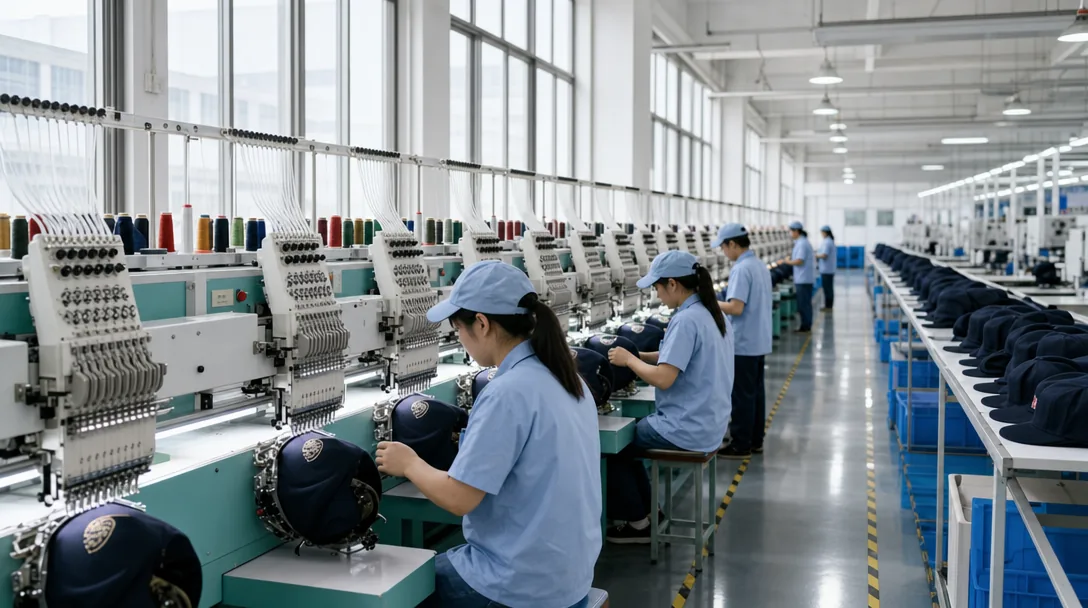
Bulk Trucker Hats Export Shipping Checklist for Custom Hat Buyers - Cost & MOQ Breakdown - Supplier Checklist
Read article →We hope this guide demystifies snapback vs fitted vs adjustable: cap closure systems compared (2026 update) - 2026 buyer's guide - cost & moq breakdown and helps you move forward with confidence. If you have questions specific to your project, our English-speaking sales engineers are one message away.