
Snapback vs Fitted vs Adjustable: Cap Closure Systems Compared - 2026 Buyer's Guide
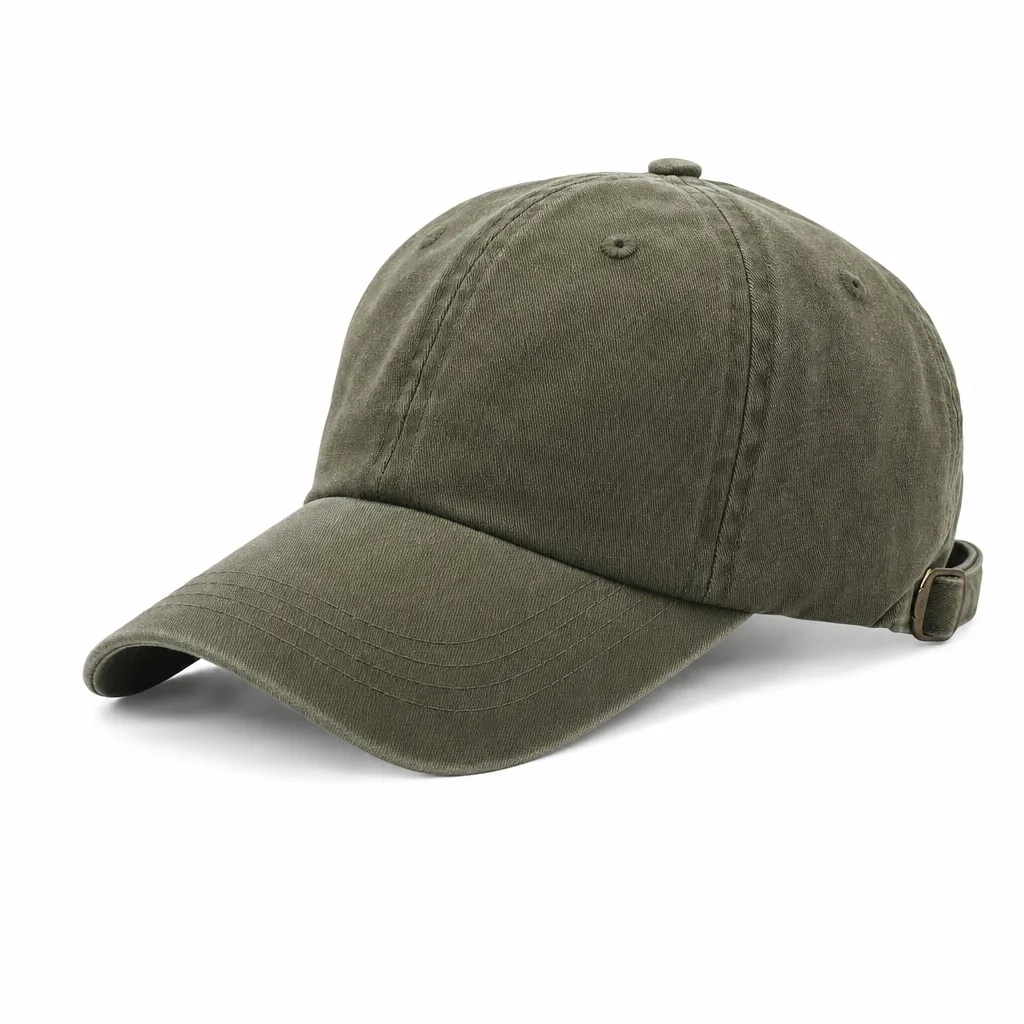
For brand owners, wholesalers and procurement teams entering the custom headwear category, snapback vs fitted vs adjustable: cap closure systems compared - 2026 buyer's guide is one of the highest-leverage decisions you will make. Get it right and your unit economics, retail story and reorder cycle all improve. Get it wrong and you carry the cost for years.
The five closure systems in commercial production
Most buyers reduce the decision to snapback vs fitted, but commercial production actually means five closure systems with very different cost and inventory logic: plastic snap, fabric strap with slide buckle, tuck-strap buckle, hook-and-loop, and true fitted sizing. Plastic snap still dominates streetwear, team goods, and trucker programs because one body can cover roughly 54–61 cm on an adult block and 53–60 cm on many youth blocks without size grading. A 7-hole PP snap set typically adds only $0.05–$0.09 FOB at volume, installs quickly, and tolerates high-profile 6-panel twill, 5-panel foam front truckers, and 80/20 acrylic-wool shells. The failure points are always visible: resin color drifting outside acceptable Delta-E against the crown fabric, sharp flash on the male pegs, brittle tabs in winter transit, and weak rivet setting that cracks after repeated flexing. Strap closures split into two separate quality tiers. A fabric strap with slide buckle usually lands at $0.18–$0.40 depending on buckle metal, plating consistency, and whether you spec brushed brass, matte nickel, or gunmetal; tuck-strap buckles cost more but eliminate the loose tail and hold a cleaner back profile on retail walls. Material behavior matters more than catalogs admit. A strap cut from 10 oz cotton twill, 230 gsm brushed chino, or 420D recycled polyester tape will feed and crease differently, and the wrong bulk-to-opening ratio makes the back arc twist during topstitching. Our standard practice is to approve closure samples only on production fabric after checking slippage, fold memory, stitch pucker, and plating rub against AQL 2.5 appearance limits.
Hook-and-loop is still the cheapest adjustable system at scale, normally $0.06–$0.12 including tape and sewing, which is why it survives in promotional, school, and event programs. It is operationally forgiving and easy for end users, but it has clear channel limits: lint loading, noisy opening, edge curl after laundering, and grip loss after repeated cycles. If the hook grade is too aggressive, it will also snag fleece and knitwear inside mixed cartons. Closure choice changes decoration too. Rear embroidery over a snapback is routine on Tajima, Barudan, or ZSK heads; over hook-and-loop or a bulky buckle zone, operators often need re-hooping, lower stitch density, and tighter backing control to prevent tunneling on brushed cotton, pigment-dyed twill, or low-structure crowns. Fitted caps run on a different manufacturing logic because hardware disappears and size grading replaces adjustability, usually in 1/8 increments from 6 3/4 to 7 5/8 for adult runs. That clean silhouette keeps fitted relevant in on-field and athletic-inspired programs, but this is where snapback vs fitted gets misread by buyers. A fitted may save the $0.05–$0.40 closure trim cost, yet total program cost rises through additional cutting markers, woven size labels, carton assortment complexity, and replenishment spread across 6–8 SKUs. The sell-through curve is predictable: 7 1/8 and 7 1/4 move first, while 6 3/4 and 7 5/8 age in stock. Unless the brand has disciplined size forecasting and can hold shade consistency and seam tolerance across every ratio, fitted usually creates more dead inventory than any adjustable cap.
Plastic snap (snapback) economics
Inventory economics, not sewing time, is why plastic snap still dominates the snapback vs fitted decision. A standard 7-hole or 8-hole polypropylene snap usually covers roughly 54-62 cm head circumference, which lets one adjustable size replace a fitted size run like 7 1/8, 7 1/4, 7 3/8, 7 1/2, and 7 5/8. On a 6,000-piece program, that collapses five SKUs into one and cuts size labels, barcode variants, carton sorting, and replenishment mistakes. The real money is downstream: fewer dead sizes, lower safety stock, and less markdown exposure. In promo, campus retail, and event merchandise, fitted caps almost always leave stranded inventory in the smallest and largest sizes because the buyer guessed the size curve wrong.
The closure itself is inexpensive, but buyers should price the whole trim-and-QC package, not just the resin. At 3,000 units and up, an injection-molded PP snap set generally costs $0.04-$0.07 per cap in China, depending on resin grade, color, and whether the pegs and sockets arrive pre-assembled. Attachment is a stable operation on most cap lines, so operator output is more consistent than fitted production, where crown circumference, sweatband joining, and final blocking need tighter control. Under AQL 2.5, the defects worth watching are cracked posts, weak lock engagement, off-center placement, and molding flash sharp enough to catch a finger. A decent factory should also flex-test the peg base for whitening and reject snaps that release under ordinary hand tension.
Color is where snapback programs stop being commodity. Zhejiang trim suppliers usually stock 8-10 standard colors for immediate use, but once you request a brand-specific molded color, lead time and cost change fast. A custom PP snap matched to a Pantone TCX reference or approved physical chip typically needs a separate molding batch, workable MOQ of 500-1,000 sets per color, and about $0.01-$0.03 extra per cap, plus 5-10 days for trim production and approval. Exact color matching is also looser on molded plastic than on dyed twill or performance polyester: Delta-E under 2.0 is possible but not typical at low cost, and many factories work closer to 2.5-3.5 because resin pigment and surface gloss shift under D65 versus store lighting. That matters in snapback vs fitted programs for licensed goods, where the shell may hit team color tightly but the rear snap reads slightly warmer or cooler.
Fabric strap with metal buckle (dad hat aesthetic)
A fabric strap with a metal slide buckle is the cleanest adjustable closure for a true dad-hat profile. If a buyer is comparing snapback vs fitted but still needs one-size flexibility, this is usually the closest adjustable option to a premium, low-profile look: less bulky than a plastic snap, less technical than a webbing buckle, and visually quieter from the back. In production, the strap is typically 16 to 20 mm wide, made in self-fabric, cotton herringbone tape, or suede-touch microfiber, with a usable adjustment span around 54 to 62 cm finished head circumference. That range only looks right when the back opening, strap extension, and crown depth are balanced together at pattern stage. Miss that relationship and the cap may still measure correctly, but the rear gap looks oversized and the buckle sits off-center. On unstructured 6-panel caps in 260 to 320 gsm washed chino twill, brushed cotton twill, or 8 oz canvas, a low-profile metal slider lies flatter after enzyme or stone wash than hook-and-loop or double D-ring hardware, which is why this closure dominates vintage retail and upscale promo programs.
The premium is small, but it is real. At bulk MOQ, a fabric strap with metal buckle usually adds about $0.12 to $0.22 per cap versus a standard plastic snap or hook-and-loop closure, depending on plating finish, strap construction, and labor rate for the extra fold-and-stitch operation. Antique brass remains the safest finish for washed heritage caps, matte black suits monochrome streetwear, and brushed nickel is the most forgiving under retail lighting because minor plating variation shows less than on bright silver. Buyers should check buckle, eyelet, and any rear metal trim under both D65 daylight and 4000K to 5000K LED, because hardware mismatch is often more obvious than fabric shade drift; a cap body can pass at Delta-E below 1.5 and still look wrong if the buckle plating shifts warm or green. The real factory risk is consistency, not function: if strap cut length or fold-under drifts even 3 to 5 mm, the back opening will look uneven across the carton. On softer enzyme-washed twill, pull-slip testing matters too, since loosely finished fabric can creep through the slider more easily than firmer 108 x 58 cotton twill.
Velcro (lowest cost, widest range)
Hook-and-loop is still the cheapest closure in cap manufacturing, and the cost gap is meaningful once you are quoting real volume. On a standard 6-panel 10x10 brushed cotton twill cap, a 20 mm nylon hook-and-loop tab usually adds around $0.03-$0.05 per piece FOB at 3,000 units; a polypropylene snap tab is more often $0.07-$0.10, while a metal buckle strapback can reach $0.12-$0.22 depending on plating, webbing width, and pack method. The bigger advantage is not just pennies, though; it is inventory control. One Velcro pattern typically covers about 54-63 cm head circumference, so a buyer avoids building fitted size curves such as 6 7/8, 7, 7 1/8, 7 1/4, and 7 3/8. In any practical snapback vs fitted discussion, that matters because hook-and-loop lets you carry one SKU instead of five or six, which cuts carton splits, replenishment errors, and dead stock risk. That single-size range also makes Velcro useful for programs where reorder speed matters more than perceived prestige. School events, charity runs, tourist souvenir caps, and mass promotions do not benefit from the complexity of fitted inventory, and they usually do not need the harder hand and cleaner back profile of a snap closure either. At factory level, it also simplifies finishing: fewer size stickers, fewer ratio checks during packing, and less chance of mixed-size assortments failing final inspection. If the order is price-led and the target retail is under about $12, hook-and-loop is usually the most rational choice.
The downside is obvious on sight: Velcro lowers perceived value, especially on caps that are otherwise trying to read premium. If you pair hook-and-loop with melton wool blends, microfiber suede underbrims, or dense 3D embroidery run on Tajima, Barudan, or ZSK heads, the closure becomes the cheapest-looking component on the body. Low-grade tape also fails in predictable ways. Weak hook engagement starts dropping after roughly 1,500-3,000 open-close cycles, the loop side pills during abrasion, and poorly heat-cut edges will fray after repeated laundering or wash testing. Those are not theoretical issues; they show up as fit complaints and high wear returns long before crown panels or sweatbands fail. Material spec matters more than many buyers realize. Nylon hook-and-loop generally performs better than polyester on caps because it feeds cleaner in sewing, holds more consistently on cotton twill and 210D ripstop, and gives fewer skipped stitches when you run a box-X attachment pattern. CrownsForge standard QA is to check closure alignment, stitch density, and tape cut consistency under AQL 2.5, because a twisted tab or weak sew-down is one of the fastest ways to turn a cheap closure into a claim. For promotions, kids' caps, cadet styles, and event orders from roughly 500 to 5,000 pieces, Velcro is sensible. For streetwear and licensed product, especially in a serious snapback vs fitted assortment, it is usually the first closure I would eliminate unless the design is intentionally utilitarian.
Fitted: why some brands accept the operational cost
Fitted only earns its keep when the cap itself carries value, not just the front logo. In a real snapback vs fitted decision, fitted wins because the silhouette stays uninterrupted from front seam to back arch: no rear opening, no plastic rail, no self-fabric strap, no buckle to break the line. That matters in licensed on-field programs, 59FIFTY-type shapes, and premium streetwear drops where buyers are selling profile as much as decoration. On the factory floor, the difference is obvious once the cap is on head. A structured 6-panel fitted in 280-320 gsm wool blend, or a firmer 240-260 gsm brushed cotton twill with hard buckram, hugs the occipital curve more cleanly and reads closer to team issue than promotional headwear. The problem is commercial, not aesthetic: one colorway is never one SKU. Core runs usually start at 6 7/8 and go to 7 1/2, with extended sizes to 7 3/4 or 8 for North American accounts, so a single style immediately turns into a size ladder that has to be forecast, packed, and replenished correctly.
That size ladder is where fitted programs either protect margin or quietly destroy it. The sewing sequence is familiar, and embroidery does not materially change because a Tajima or Barudan head runs the same digitized file across sizes. What changes is everything around it: separate woven size labels, sweatband joining by circumference, carton assortment, warehouse pick-pack, retailer replenishment, and higher returns exposure on fringe sizes. A nominal MOQ of 144 pieces per color is usually fiction for fitted; once volume is split across 5-7 live sizes and still needs sensible case-pack ratios, the real buy often lands closer to 576-1,008 pieces. Tolerance control also gets tighter. On a fitted cap, 2-3 mm internal circumference drift at the sweatband is enough to trigger claims, especially on 7 1/8 and 7 1/4 where volume concentrates. Bulk approval should be locked to physical samples at key breaks, not just a spec sheet, and final inspection should verify size-set consistency under AQL 2.5.
Brands still absorb that operational drag because fitted sells a different promise: exact sizing, cleaner shape retention, and stronger authenticity. Adjustable styles almost always beat it on inventory efficiency because one size covers most consumers and dead stock risk falls fast, but snapback vs fitted is not a neutral comparison in licensed baseball merchandise, tournament caps, and collectible retail drops. In those channels, buyers care about crown depth, back-curve fit, sweatband comfort, and the firm handfeel that comes from proper buckram, shell fabric weight, and a stable size set. A snapback can look commercial; a fitted reads like product. The premium is real but usually manageable if the brand has reliable size-curve data. FOB commonly runs about $0.60-$1.40 higher per piece than the equivalent adjustable style, driven less by machine minutes than by broken assortments, extra QC checkpoints, and slow-moving edge sizes. If 7 1/8 and 7 1/4 will absorb roughly 45-55% of the order and fringe sizes stay disciplined, fitted can work. If not, the clean silhouette becomes expensive shelf inventory.
MOQ implications by closure type compared
MOQ is where the snapback vs fitted decision stops being aesthetic and starts affecting cash flow. Adjustable closures—classic 7-hole PP snap, self-fabric strap with metal slider, or 20 mm hook-and-loop—usually let a factory quote 100 pcs per colorway because one adult size block covers about 54-60 cm head circumference. That means one crown pattern, one sweatband spec, one carton assortment, and one finished-goods SKU. In real factory terms, fewer variables lower cutting loss, simplify inline QC, and keep entry FOB around $3.20-$6.50 for stock 10x10 brushed cotton twill or 180-220 gsm polyester, assuming standard 5,000-8,000 stitch front embroidery on Tajima or Barudan heads and no custom closure mold. Buyers often focus on profile, buckram, or visor shape, but MOQ exposure is usually the bigger commercial lever.
Fitted caps change the costing logic because the minimum is built around size breaks, not just artwork. Most factories will not treat true fitted as a 100-piece program unless that is 100 pcs per size, per colorway, because each size needs its own circumference grading, sweatband join position, size tape, carton ratio, and inspection count. Even a narrow adult run of 7, 7 1/8, 7 1/4, 7 3/8, and 7 1/2 pushes the practical MOQ to 500 pcs before you add premium wool blend, performance poly, woven labels, or licensed retail packaging. That is why snapback vs fitted is really an inventory-planning decision: snapbacks let you test one graphic with one SKU, while fitted forces you to forecast the size curve in advance and absorb the risk of imbalance.
For most newer brands, fitted only makes sense once there is reliable sell-through data from DTC, team programs, or repeat wholesale accounts. The problem is not just that fitted FOB is commonly 15%-30% higher than comparable snapback construction; the bigger cost is dead stock sitting in slow sizes. On real orders, 7 1/8 and 7 1/4 often sell through first while 7 1/2 lags, and a small rejection during AQL 2.5 final inspection can break the carton ratio and hold shipment until the size run is corrected. Our standard practice is to recommend fitted only when a colorway can realistically move 300-500 units and the buyer can defend the size curve with reorder history, not guesswork. Adjustable closures are simply safer for first drops, event merch, and promotional programs because a 100-piece repeat is usually straightforward if fabric, trim, and embroidery file stay unchanged.
How to spec the right closure for your retail positioning
Retail positioning should drive closure selection before you start arguing about crown shape or embroidery count. For premium streetwear, the real decision is usually snapback vs fitted only on the mood board; on the factory floor it is more often snapback vs strapback, because both give cleaner inventory control than a full size run. A snapback in 3.8 mm PP plastic with 7-hole closure is still the safest choice for men’s streetwear because one SKU covers roughly 58-62 cm head circumference, carton packing is simpler, and return rates stay lower than fitted programs. Strapbacks, especially with a self-fabric strap and brass-effect slider or genuine cowhide tab with metal clasp, read more elevated at retail and can justify a $2-4 higher shelf price if the body fabric is also upgraded to 12 oz cotton twill or 100% wool serge. Our standard practice is to spec closure color to match the sweatband and undervisor tone so the back view does not look like an afterthought.
For promotional and event programs, adjustable wins on pure economics. If a buyer asks for fitted vs adjustable cap economics on a 5,000-piece giveaway order, the answer is blunt: fitted creates too many size splits, more picking errors, and more dead stock. A plastic snapback or nylon hook-and-loop closure usually adds only about $0.10-0.35 per cap depending on source grade, while a fitted cap often needs at least 3-4 sizes to cover demand properly, which complicates MOQ allocation and raises mis-ship risk. Velcro is not glamorous, but for youth campaigns, school programs, fun runs, and tourist merchandise it is practical because caregivers can adjust it fast and the usable size range is broad. Among cap closure types compared for mass distribution, Velcro also tolerates rough handling better than low-cost metal buckles that can rust in poor salt-spray conditions if plating quality is inconsistent.
Licensed sports programs are the one category where fitted still carries authority. If the product is tied to on-field authenticity, collectors expect a defined cap sizing system—typically 6 7/8 through 7 5/8 in 1/8 increments—and they will notice if the shape, sweatband depth, or rear silhouette feels like a compromise. That said, I rarely recommend fitted for a broad mixed retail program unless it is reserved for hero SKUs, capsule drops, or flagship team product; the replenishment math is just harsher. For mainstream retail, a snapback remains the default because it fits more heads, travels better in e-commerce returns, and protects sell-through. A champion snapback cap in licensed or inspired assortments can still feel premium if you spec a high-density woven label, 3D Tajima embroidery, and controlled color matching within Delta-E 1.5 to approved Pantone TCX references. For casual dad-hat retail, skip the plastic and use a fabric strap with buckle; it aligns better with washed chino twill, softer unstructured crowns, and a more mature consumer profile.
Frequently Asked Questions
Which shipping methods do you support?
We support FOB, CIF and DDP shipping. Air express for samples and small orders, sea LCL for 100 to 500 pieces, sea FCL for 5,000+ pieces. Door-to-door DDP available for US, EU, UK, Canada and Australia.
Do you support sustainability certifications?
Yes. We work with GOTS organic cotton, GRS-certified recycled polyester, OEKO-TEX Standard 100 fabrics, and are BSCI and Sedex audited. Certification documentation can be provided per order.
What file format should I send for my logo?
Vector files (AI, EPS, PDF) are ideal. High-resolution PNG or JPG at 300 dpi on transparent background works as a fallback. Provide Pantone color references for accurate reproduction.
How long does production take?
Sampling takes 7 to 12 days. Bulk production runs 20 to 30 days depending on quantity, fabric availability and decoration complexity. Inspection and packing adds another 3 to 5 days before shipment.
What logo decoration techniques do you offer?
3D puff embroidery, flat embroidery, woven patch, leather patch, PVC patch, screen printing, sublimation, applique and laser etching, all in-house with no subcontracting.
What should buyers know about cotton twill baseball cap?
When evaluating cotton twill baseball cap, the key considerations are construction quality, decoration capability, MOQ flexibility and lead time. Universal sizing 54-62cm with 8 snap positions. Single SKU per design covers most adults. Adds ~$0.05 per cap for hardware. Industry-standard for retail snapback hats, trucker caps, casual baseball caps. Available in 8 stocked colors; custom Pantone-matched snaps at 500+ pieces. Plastic snap (snapback), fabric strap with metal slide buckle, fabric strap with tuck-buckle,…
What should buyers know about flat bill hats snapback?
When evaluating flat bill hats snapback, the key considerations are construction quality, decoration capability, MOQ flexibility and lead time. Universal sizing 54-62cm with 8 snap positions. Single SKU per design covers most adults. Adds ~$0.05 per cap for hardware. Industry-standard for retail snapback hats, trucker caps, casual baseball caps. Available in 8 stocked colors; custom Pantone-matched snaps at 500+ pieces. Plastic snap (snapback), fabric strap with metal slide buckle, fabric strap with tuck-buckle,…
How does ordering custom flat bill hat embroidery work?
When evaluating custom flat bill hat embroidery, the key considerations are construction quality, decoration capability, MOQ flexibility and lead time. Universal sizing 54-62cm with 8 snap positions. Single SKU per design covers most adults. Adds ~$0.05 per cap for hardware. Industry-standard for retail snapback hats, trucker caps, casual baseball caps. Available in 8 stocked colors; custom Pantone-matched snaps at 500+ pieces. Soft fabric strap (1.5-2cm wide) with antique brass slide buckle. Fits 54-63cm. Adds ~$0.15 per…
What should buyers know about baseball hats women?
When evaluating baseball hats women, the key considerations are construction quality, decoration capability, MOQ flexibility and lead time. Universal sizing 54-62cm with 8 snap positions. Single SKU per design covers most adults. Adds ~$0.05 per cap for hardware. Industry-standard for retail snapback hats, trucker caps, casual baseball caps. Available in 8 stocked colors; custom Pantone-matched snaps at 500+ pieces. Plastic snap (snapback), fabric strap with metal slide buckle, fabric strap with tuck-buckle,…
Need a low-MOQ test order?
We help emerging brands launch with as few as 100 pieces. Premium fabric, in-house embroidery, retail-ready packaging.
Start a small orderRelated guides
China vs Vietnam vs Bangladesh: Cap Manufacturing Countries Compared 2026 (2026 Update)
Read article →
Cap Sample Cost Negotiation Without Losing Quality Control
Read article →
Cotton Twill Baseball Cap: Properties, Costs and How to Spec It Right
Read article →If you are ready to take the next step on snapback vs fitted vs adjustable: cap closure systems compared - 2026 buyer's guide, our team can put a tailored quotation and digital mock-up in your inbox within 24 hours. Send the inquiry form on our contact page or message us directly on WhatsApp.