
Reversible Bucket Hats: A Vertical-Specific Sourcing Guide
Reversible Bucket Hats: A Vertical-Specific Sourcing Guide is one of the most-asked questions we receive from international buyers, and for good reason. With dozens of factories competing for your order and an alphabet soup of technical terms in every supplier quote, even experienced importers can feel lost. This guide consolidates what we have learned producing custom hats for clients in 40+ countries.
Baseball Hats for Men
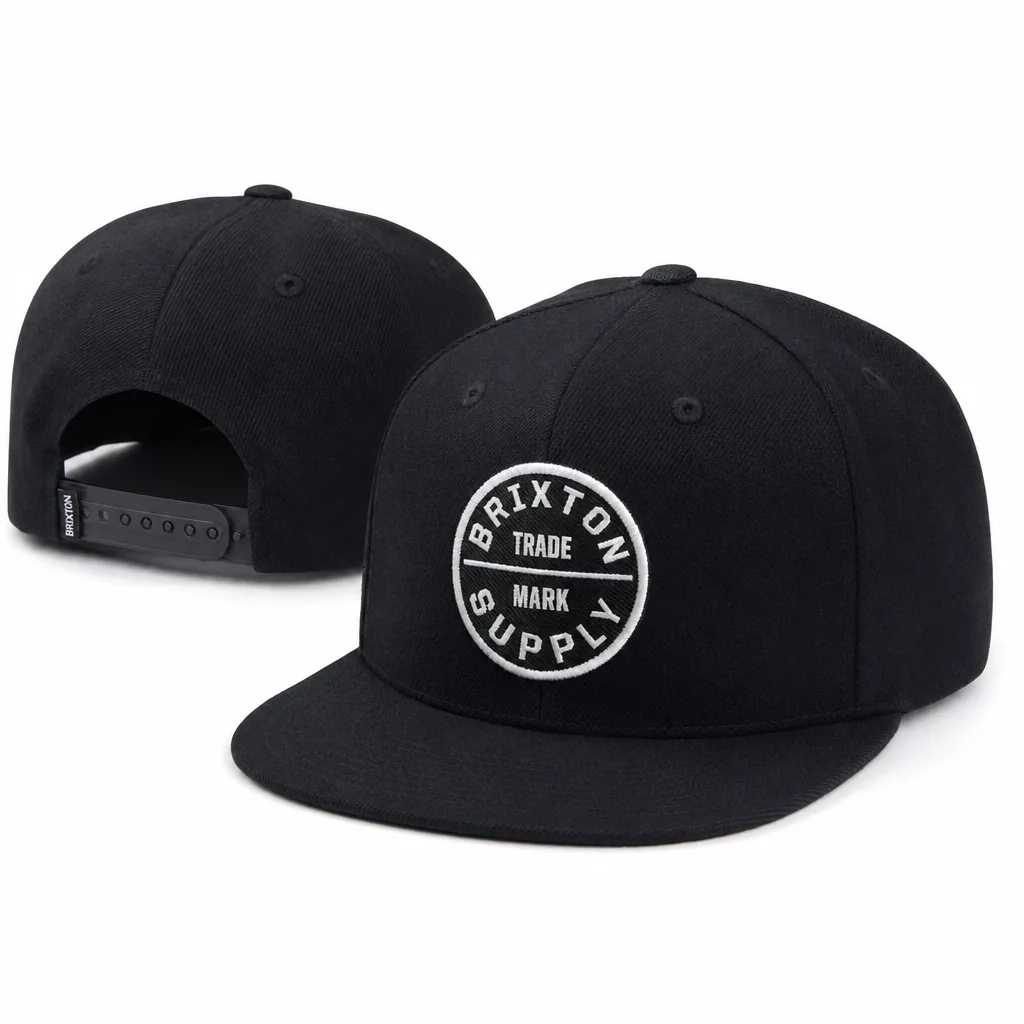
Baseball hats for men are usually built as 5-panel or 6-panel caps with a structured front, pre-curved or flat visor, cotton twill or polyester twill shell, and a sewn-in sweatband. The factory sequence is straightforward but not forgiving: fabric cutting, buckram fusing, panel stitching, visor sandwiching, embroidery or patch application on Tajima, Barudan, or ZSK heads, then final shaping with steam and pressing. For a clean spec, ask for 260-320 gsm brushed cotton twill or 100 percent polyester with colorfastness at grade 4 or better, a 55-60 mm crown height, and a closure format locked before sampling: self-fabric strap, metal buckle, Velcro, or snapback. CrownsForge typically sees FOB pricing around $2.20-$3.50 for a simple blank cap at 500 pcs, and $4.50-$8.00 once you add dense embroidery, woven labels, or custom taping.
The buying mistakes are predictable. Buyers approve a sample from one factory, then another production lot arrives with a different crown shape, visor curvature, or thread tension. Check logo placement against a hard centerline, seam symmetry at the front panels, visor board stiffness, sweatband stitching, and whether the dye lot holds under daylight and abrasion; Delta-E under 2.0 is a realistic target for brand colors. For bulk orders, a normal MOQ is 300-500 pcs per color for basic constructions, but smaller runs are possible if the decoration is simple and the fabric is stock-supported. I also tell buyers to spec needle count, stitch density, and inside seam tape because cheap caps often fail at the sweatband after a few wears, especially in hot climates and gym use where bucket hats for men and fitted hats women are competing in the same channel.
The connection to reversible bucket hats is simple: the same discipline that separates a decent baseball cap from a sloppy one also keeps a reversible style from turning into a returned item. Reversible bucket hats add more failure points because both faces need clean stitching, balanced seam allowances, and a brim that does not twist after washing. If you are buying a 90s bucket hat, a festival hat women's style, or a ladies bucket hat uk program, you should still ask the factory for the same controls you would demand in cap production: fabric shrinkage data, seam strength, color matching to Pantone TCX, and an AQL 2.5 inspection plan. The cut is different, but the sourcing logic is the same. A factory that cannot hold a visor line on baseball caps usually will not keep both sides of a reversible build aligned either, and that is where returns start.
Custom Baseball Team Hats
Custom baseball team hats are usually built as 6-panel structured caps with a buckram front, mid to high crown, and a curved or pre-curved visor, but the factory details matter more than the silhouette. Ask for the shell fabric in a measurable spec, not a vague name: 100% cotton twill at 260-320 gsm for retail, polyester-cotton for faster drying, or wool blend only if you can control shrinkage and hand feel. Embroidery should be digitized for the actual head shape, with Tajima, Barudan, or ZSK heads used for production so stitch density and pull compensation stay consistent. For team orders, I normally want Pantone TCX approvals, thread count by panel, visor board thickness, sweatband composition, and a size tolerance of +/- 0.5 cm at the inner circumference. If you are comparing bucket hats for men, fitted hats women, or a 90s bucket hat program, those measurements are what separate a clean fit from a return pile.
Typical MOQ for custom baseball team hats is 300-500 pieces per colorway if the factory is doing embroidery and woven labels only; full custom panels, private molds, or special washes push that to 1,000 pieces quickly. In China, a reasonable FOB range is about $3.20-$6.50 for simple caps and $6.80-$10.50 for heavier embroidery, 3D puff, or sandwich visors, depending on fabric and stitch count. If you are buying a festival hat women's program or a ladies bucket hat uk line alongside caps, bundling can reduce trim waste and dye minimums, but only if the crown shapes and labels are aligned. CrownsForge's standard practice is to lock samples before bulk with a sealed spec sheet, because most disputes come from unapproved changes in visor curvature, logo placement, or lining weight rather than the base fabric itself.
The usual quality failures are predictable: crooked front panels, inconsistent topstitching, puckered embroidery, sweatband twist, weak visor board, and color drift between bulk and PP sample. For baseball caps, I check the seam allowance at the front join, the stitch balance on the eyelets, and whether the closure hardware survives a 20-cycle pull test; for private-label work, AQL 2.5 is the minimum I would accept on critical defects. The same discipline applies when choosing reversible bucket hats, because buyers often focus on the reversible feature and ignore construction details like seam bulk, side label placement, and how the two layers are joined at the brim edge. If the cap program is sloppy, the reversible bucket hats program usually is too, so I treat them as one sourcing decision: same factory standards, same inspection logic, same tolerance for variance.
Baseball Hats Canada
For baseball hats Canada buyers usually want a clean, retail-ready cap, not a fashion sample that only looks good in photos. The standard build is 6-panel cotton twill or polyester-cotton at 260-320 gsm, structured front with 2.0-3.0 mm buckram, pre-curved visor with PE or cardboard board, stitched eyelets, and a moisture-wicking sweatband. If you are sourcing bucket hats for men or fitted hats women as part of the same program, keep the spec discipline the same: confirm panel symmetry, crown height, visor curve, embroidery placement, and color matching to Pantone TCX or Pantone C. Our standard practice is to lock the tech pack before sampling, because once the logo size, stitch density, and closure type are fixed, factory comparisons become real instead of cosmetic. For the Canadian market, buyers also ask for bilingual labeling, fiber content, country of origin, and carton marks that survive long-distance freight without scuffing.
Typical MOQs for a competent factory are 300-500 pcs per color for a basic cap, with FOB pricing usually landing around USD 2.20-3.80 for plain embroidery and USD 4.50-5.80 once you add applique, woven patches, sandwich brims, or metal closures. A true fitted cap costs more because the size run has to be controlled, while a 90s bucket hat or festival hat women's style can be cheaper in labor but heavier in fabric and binding. If you are comparing a baseball cap program with reversible bucket hats, the bucket construction often adds a second shell, cleaner inside seams, and tighter QA on labeling and edge binding, so the cost gap is not as wide as first-time buyers expect. For ladies bucket hat uk orders, the same factory often quotes differently on trim density, pack method, and hangtag requirements than it would for a simple promo cap.
The defects that matter are predictable: crooked center seams, off-center logos, visor board cracking after cold transit, loose thread tails, sweatband shrinkage, and dye migration on dark twill. On embroidered caps, check stitch density, backing pull, and whether the front panels collapse after steaming. On reversible bucket hats, inspect both sides for seam trapping, label placement, and whether the inside fabric shows through at stress points; those mistakes are expensive because they affect two finished faces instead of one. Ask for inline inspection against AQL 2.5, pre-production color approval, and wash testing for shrinkage and colorfastness before bulk cutting. The logic is simple: if a factory cannot hold tolerances on a basic baseball cap, it will usually struggle even more when you move into complex reversible bucket hats with two fabrics, two labels, and more visible seam work.
Fitted Hats with Patches
Fitted hats with patches are usually built on a structured crown, cut from wool-blend serge, brushed cotton twill, or polyester-wool blends, then reinforced with buckram or fuse-on interfacing before the patch goes on. The patch itself is not decoration at the end of the line; it changes the sewing order, because a clean sew-on twill patch, woven patch, or leatherette badge has to land before final topstitching on a Tajima, Barudan, or ZSK head. If the cap is truly fitted, the size set has to be blocked correctly from the start, typically 6 7/8 through 7 5/8 in 1/8-size increments, with a sweatband that stays flat and a visor board that holds its curve after steam pressing. Buyers who source reversible bucket hats often miss that fitted caps are less forgiving on symmetry and crown balance, because there is no adjustment point to hide a bad block or a crooked front panel.
For factory specs, ask for a full tech pack: crown height, panel count, fabric weight in gsm, patch dimensions, stitch density, sweatband width, brim length, and exact color callouts in Pantone TCX with a Delta-E target under 2.0. You should also specify patch backing, because sew-on, heat-seal, and embroidered patch constructions behave very differently in production and washing. Typical MOQs are 300 to 500 pcs per color per size for a custom fitted run, with sample fees around $40 to $80 and ex-works prices often landing in the $3.80 to $6.50 range depending on fabric and patch complexity; a raised chenille or 3D embroidery patch can add another $0.35 to $1.20. Our standard practice is to lock the size chart and artwork before cutting, because changing either after sampling almost always creates color drift, fit complaints, and delayed approvals under sedex-audit-cap-supplier-guide.html">BSCI 2.0 or Sedex SMETA audit workflows.
The common defects are predictable: patch edge lift, needle puckering around dense borders, asymmetric front panels, twisted sweatbands, visor warp, and size drift beyond a usable tolerance of about 1/8 inch. For retail buyers, the inspection plan should include seam slippage, patch adhesion after steam, crown height variation, and an AQL 2.5 check on both appearance and measurement, because a cap can look fine on a table and still fail on-head. This is where the decision links back to reversible bucket hats: if you are already coordinating dyed fabric, lining compatibility, and seam finish across two SKUs, the same supplier discipline should cover both products, but the fitted cap needs tighter dimensional control while a 90s bucket hat or festival hat women's style can tolerate slightly more variation. If your line also includes bucket hats for men or a ladies bucket hat uk program, keep the patch program separate from the reversible build so the factory does not compromise one construction to save labor on the other.
Festival Bucket Hat
A festival bucket hat is usually cut from two layers if the buyer wants it fully reversible, or one shell plus a printed lining if it is only meant to look reversible. The factory should quote fabric by gsm and fiber content, not just by style name: common choices are 100% cotton twill at 240 to 280 gsm, washed denim at 10 to 12 oz, nylon taslan at 70D, or polyester peach skin for a softer hand. For reversible bucket hats, ask for clean internal seam finishing, no exposed raw edges, and a bound crown seam that can survive repeated turning. On the floor, that means tighter tolerance on brim topstitch spacing, accurate panel alignment, and stable embroidery placement whether the hat is worn as a 90s bucket hat for men or as a festival hat women's piece with a more decorative print. If you need a ladies bucket hat uk fit, request a slightly narrower crown and a 58 to 59 cm head circumference rather than the standard 60 cm streetwear block.
The specs that matter are simple but easy to miss. Request a full tech pack with panel count, brim width, crown height, stitch density, thread type, sweatband material, and label placement on both sides if the hat is reversible. For print, ask for Pantone TCX targets and set a Delta-E tolerance of under 2.0 for repeat programs; for embroidery, specify stitch count and backing so the silhouette does not collapse on soft fabrics. Typical MOQs for a custom festival bucket hat are 300 to 500 pieces per colorway, although screen-printed cotton styles can sometimes start at 200 if the factory is not booking peak season. Factory prices usually land around $2.20 to $3.80 FOB for simple cotton twill, $3.60 to $5.50 for reversible bucket hats with two usable sides, and more if you add all-over print, washed treatment, or complex trims. CrownsForge's standard practice is to freeze a sealed sample before bulk so buyers do not discover fit drift after cutting.
Inspection has to focus on the failures buyers actually see on arrival. The common ones are crown asymmetry, brim waviness, skipped stitches on the turn seam, print ghosting on the reverse side, and color mismatch between the two faces. Check 10 percent of the carton lot against AQL 2.5 for major defects and make sure the factory measures head opening, brim width, and side seam symmetry with a ruler, not by eye. If the hat includes metal eyelets, test for rust after salt spray or at least a basic damp-cloth rub; if it uses foam interlining for structure, confirm it does not delaminate after steam pressing. This is where the broader reversible bucket hats decision matters: once you add a second face, the cap becomes less forgiving on labor and QC, but it also gives better retail flexibility for bucket hats for men, fitted hats women shoppers who want a softer silhouette, and mixed-gender festival assortments. Buyers who spec the construction correctly usually save more than they spend on the extra seam allowance and inspection time.
Festival Bucket Hats
Festival bucket hats are usually built as a two-layer shell, not a single-panel cap with a print slapped on top. For reversible bucket hats, the factory should quote the exact face fabric on both sides, typically 100% cotton twill at 200 to 240 gsm for a softer drape, or 100D nylon/polyester if you want faster dry time and better packability. On the floor, good factories cut with matched grain, stabilize the brim with fusible or sewn-in interfacing, then close the crown with clean topstitching on Tajima, Barudan, or ZSK embroidery heads if you need logos or patches. Our standard practice is to spec Pantone TCX targets up front, because a Delta-E under 2.0 is realistic only when the lab dip, bulk dye lot, and thread chart are locked before cutting.
Buyers usually ask for a 300 to 500 pcs MOQ per colorway for festival bucket hats, but reversible builds often push the real minimum closer to 500 to 1,000 pcs because you are cutting and sewing two finished faces. In FOB China, a plain hat might land around $2.20 to $3.80 at 500 pcs, while a reversible style with custom labels, woven patch, and full interior taping can move into the $3.60 to $6.50 range depending on fabric weight and trim. If you are sourcing bucket hats for men, fitted hats women, or a 90s bucket hat with louder contrast panels, ask for full-size samples, thread charts, and wash test reports before approving bulk. Festival hat women's buyers and the ladies bucket hat uk market usually want a softer brim and less structure, so the same spec will not work across all channels.
The failures that matter are boring but expensive: brim waviness, crown twist after washing, reverse-side seam show-through, and color bleed between the two layers. Insist on a pre-production sample, then check size tolerance within plus or minus 0.5 cm, stitch density around 8 to 10 SPI, and shrinkage under 3% after a 30 C wash. If the factory has BSCI 2.0 or Sedex SMETA 4-Pillar audit history, that helps on compliance, but it does not replace a real inline inspection and AQL 2.5 final check. The broader reversible bucket hats decision comes down to whether the second face adds selling value or just doubles your sewing risk. If the two sides are both strong merch options, reversible is worth it; if one side is only there as a novelty, a single-fabric festival bucket is usually the safer margin play.
Working with CrownsForge for reversible bucket hats programs
For reversible bucket hats, the real risk is not the brim shape; it is side-to-side consistency. One panel set can look clean while the reverse side shifts at the seam line, so we start with a tech pack review, then make a proto in 7 to 10 days if fabric is in stock. If a buyer is chasing a 90s bucket hat look, a festival hat women's colorway, or bucket hats for men with a cleaner profile, we lock the crown depth, stitch density, and binding width before cutting bulk. CrownsForge keeps low-MOQ sampling flexible for first-time buyers, which matters when you are testing a ladies bucket hat uk launch or comparing fitted hats women sizing assumptions against real wear data.
Decoration is where most reversible bucket hats programs get messy, because you cannot treat both faces like a standard single-layer cap. We usually steer clients toward embroidery on one side and woven labels, heat-transfer marks, or small patch applications on the other, depending on fabric handfeel and wash requirements. Tajima and Barudan heads handle dense logos well, but the stitch count has to stay realistic or the reverse face puckers. For polyester-cotton blends, we watch shrinkage by lot and verify thread-to-fabric contrast against Pantone TCX targets, because a Delta-E miss shows up fast on fashion drops. Our standard practice is to sample decoration and construction together, not as separate approvals.
On compliance and order control, the useful documents are not decorative. We work with BSCI and Sedex SMETA-style audit expectations, plus material declarations, carton markings, and final inspection records tied to each PO. For bulk runs, we keep AQL 2.5 as the default unless a buyer specifies tighter acceptance, and we separate trim lots so a problem in one dye batch does not spread across the whole shipment. That matters when you are scaling reversible bucket hats from a 300-piece test to a 5,000-piece reorder, because the biggest failure is usually not production capacity but document drift. The workflow is simple: approved sample, line check, in-process checks, final audit, then shipping docs matched to the packing list and commercial invoice before booking freight.
Frequently Asked Questions
What file format should I send for my logo?
Vector files (AI, EPS, PDF) are ideal. High-resolution PNG or JPG at 300 dpi on transparent background works as a fallback. Provide Pantone color references for accurate reproduction.
Which shipping methods do you support?
We support FOB, CIF and DDP shipping. Air express for samples and small orders, sea LCL for 100 to 500 pieces, sea FCL for 5,000+ pieces. Door-to-door DDP available for US, EU, UK, Canada and Australia.
Can I order a sample before bulk production?
Yes. We strongly recommend approving a pre-production sample before mass production. Samples are charged at 35 to 60 USD each plus express shipping, fully refundable against confirmed bulk orders over 500 pieces.
What logo decoration techniques do you offer?
3D puff embroidery, flat embroidery, woven patch, leather patch, PVC patch, screen printing, sublimation, applique and laser etching, all in-house with no subcontracting.
What is the minimum order quantity (MOQ) for custom hats?
Our standard MOQ is 100 pieces per design and color, with sampling available from 1 piece. For complex multi-color logos or premium fabric upgrades, the MOQ can be lowered with a small per-piece surcharge.
What should buyers know about bucket hat men?
When evaluating bucket hat men, the key considerations are construction quality, decoration capability, MOQ flexibility and lead time. Cover everything buyers ask about baseball hats for men: how it's manufactured, what specs to request from a factory, typical MOQ and pricing, common quality issues to inspect for, and how this ties back to the broader reversible bucket hats sourcing decision. Cover everything buyers ask about festival bucket hat: how it's manufactured, what specs to request from a factory,…
What should buyers know about nike bucket hats for men?
When evaluating nike bucket hats for men, the key considerations are construction quality, decoration capability, MOQ flexibility and lead time. Cover everything buyers ask about baseball hats for men: how it's manufactured, what specs to request from a factory, typical MOQ and pricing, common quality issues to inspect for, and how this ties back to the broader reversible bucket hats sourcing decision. Cover everything buyers ask about custom baseball team hats: how it's manufactured, what specs to request from a…
What should buyers know about kangol bucket hat 90s?
When evaluating kangol bucket hat 90s, the key considerations are construction quality, decoration capability, MOQ flexibility and lead time. Cover everything buyers ask about festival bucket hat: how it's manufactured, what specs to request from a factory, typical MOQ and pricing, common quality issues to inspect for, and how this ties back to the broader reversible bucket hats sourcing decision. Cover everything buyers ask about baseball hats for men: how it's manufactured, what specs to request from a factory,…
How does ordering custom fitted hats for men work?
When evaluating custom fitted hats for men, the key considerations are construction quality, decoration capability, MOQ flexibility and lead time. Cover everything buyers ask about baseball hats for men: how it's manufactured, what specs to request from a factory, typical MOQ and pricing, common quality issues to inspect for, and how this ties back to the broader reversible bucket hats sourcing decision. Cover everything buyers ask about custom baseball team hats: how it's manufactured, what specs to request from a…
Ready to start your custom hat project?
Send us your tech-pack, sketch or even just an inspiration photo. We will respond with a detailed quotation and digital mock-up within 24 hours.
Request a free quoteRelated guides
Beanie Custom: The 2026 Sourcing & Manufacturing Playbook
Read article →How to Choose a Custom Baseball Cap Manufacturer in China — 2026 Buyer's Guide
Read article →
Black Beanie Hat: Properties, Costs and How to Spec It Right
Read article →If you are ready to take the next step on reversible bucket hats: a vertical-specific sourcing guide, our team can put a tailored quotation and digital mock-up in your inbox within 24 hours. Send the inquiry form on our contact page or message us directly on WhatsApp.