
Black Beanie Hat: Properties, Costs and How to Spec It Right
For brand owners, wholesalers and procurement teams entering the custom headwear category, black beanie hat: properties, costs and how to spec it right is one of the highest-leverage decisions you will make. Get it right and your unit economics, retail story and reorder cycle all improve. Get it wrong and you carry the cost for years.
Corduroy Hat Wholesale
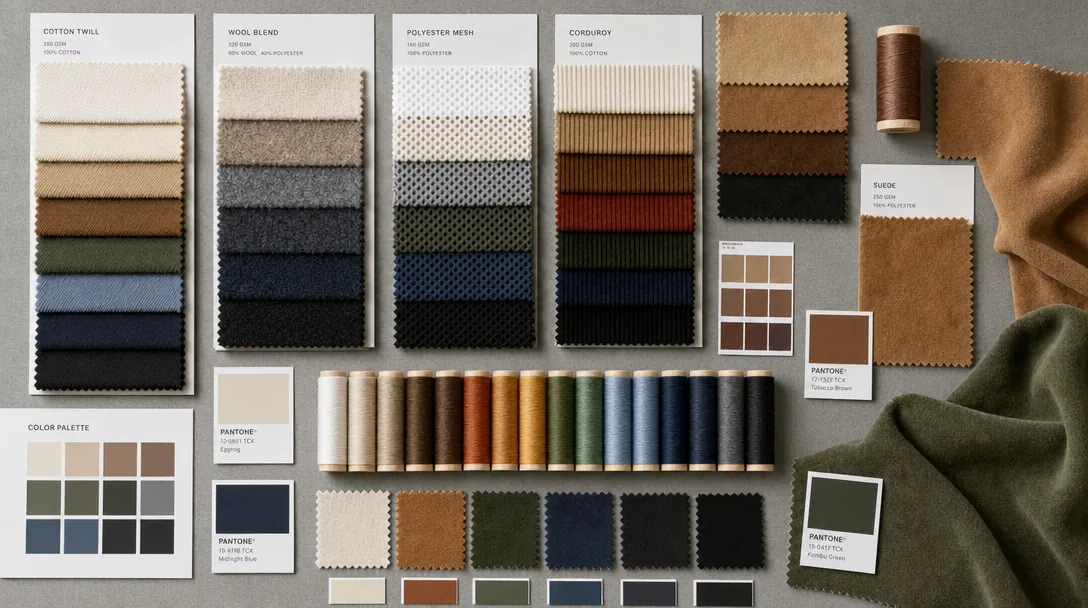
Corduroy hat wholesale starts with the fabric, not the embroidery. Most factories use 8W to 12W cotton corduroy for a corduroy cap, with the wale count and face weight doing most of the work on handfeel and structure. A 9W fabric around 280 to 320 gsm is a common middle ground: thick enough to read as premium, but not so heavy that it turns into a stiff work cap. For a corduroy hat vintage look, buyers usually ask for enzyme wash, garment dye, or a brushed finish, then lock color against a Pantone TCX reference with a Delta-E target under 2.0 on bulk lots. Our standard practice is to request a shrinkage report, yarn count, and colorfastness results before cutting, because corduroy will expose sloppy dyeing faster than a basic black beanie hat.
Factories usually quote corduroy hats by construction: 5-panel or 6-panel cap, unstructured or lightly structured crown, pre-curved or flat brim, and closure type. For a bucket hat corduroy order, the spec sheet should call out crown height, brim width, stitch density, sweatband composition, and whether the brim is fused or soft. If you want bucket hat strings, specify cord and aglets, plus the exact attachment method, because weak bar-tacks fail in shipping and retail handling. MOQ is often 300 to 500 pieces per color for a standard cap, with custom trims pushing it higher. In China, ex-factory pricing commonly lands around USD 3.20 to 6.50 for simple corduroy cap builds and USD 5.50 to 9.00 for more complex styles with lining, patches, or washed finishing, depending on fabric quality and order volume.
Quality issues are usually boring and expensive: panel mismatch, crooked topstitching, panel shrinkage after wash, bad shade banding between lots, and puckering around the brim seam. On a slouchy beanie, buyers worry about rib recovery and pilling; on corduroy, they should inspect pile direction, seam alignment, and whether the nap changes shade under light. Ask for AQL 2.5 inspection on general defects and add a size stability check after steaming, because corduroy can move more than people expect. For a buyer comparing a black beanie hat program with corduroy, the real decision is inventory risk: beanies are usually simpler and cheaper to replenish, while corduroy styles need tighter fabric control but sell better when the fashion cycle shifts toward texture and vintage workwear.
Wholesale Hat Manufacturers Usa
Wholesale hat manufacturers usa usually work in two lanes: domestic cut-and-sew plus decoration, or full-package importing with final finishing in the States. For a black beanie hat, the factory should tell you the yarn count, knit gauge, body weight, cuff height, and whether the yarn is acrylic, recycled polyester, wool blend, or merino. A true cold-weather beanie is commonly 7- to 12-gauge knit at 80 to 160 gsm finished weight, with a 2x2 rib for recovery and a 6 to 9 inch fold-over cuff if you want a cleaner retail look. Our standard practice is to ask for a pre-production sample with Pantone TCX confirmation for any dyed yarn, plus shrinkage and pilling data after wash testing. That same discipline applies whether you are buying a slouchy beanie, a corduroy cap, or even a corduroy hat vintage style, because the factory process matters more than the product category.
The spec sheet is where buyers usually lose money. Ask for yarn composition by percentage, needle count, stitch density, label placement, seam type, and packaging detail. If you need a black beanie hat for team retail, require tolerance limits on body length, cuff depth, and embroidery size, because a Tajima, Barudan, or ZSK head will expose any uneven knit tension during stitching. MOQ from a serious supplier is often 300 to 500 pieces per color for basic beanies, with price breaks starting around 1,000 units; ex-factory pricing for simple acrylic models typically lands around $1.20 to $2.80, while merino or recycled blends can push into the $3.50 to $6.50 range depending on yarn market and trim complexity. Compare that with a bucket hat corduroy program, where thicker fabric, lining, and bucket hat strings add more labor and more defect points.
The quality issues are predictable if you know where to look: twisted side seams, loose crown decreases, inconsistent cuff folding, yarn slubs, color shade drift, and embroidery puckering after steam pressing. Inspect against AQL 2.5 for general apparel, but do not stop there; check stretch recovery, seam burst at the cuff, and whether the label thread bleeds through dark yarn. If you are sourcing a black beanie hat alongside other winter or streetwear items, the decision comes down to hand feel, dimensional stability, and repeatability, not just unit price. A factory that can hold shade across a slouchy beanie run and a corduroy hat vintage order usually has better process control than one that only quotes low. For larger retail programs, ask for sedex-audit-cap-supplier-guide.html">BSCI 2.0 or Sedex SMETA 4-Pillar audit status and keep the final approval tied to golden sample approval, not verbal promises.
Slouchy Beanie
A slouchy beanie is usually a 1x1 or 2x2 rib knit built on a 7-gauge, 9-gauge, or 12-gauge circular machine, then cut and linked or fully fashioned at the crown. For a black beanie hat, the first spec I ask for is yarn content by weight, not just the marketing label: 100% acrylic for the lowest cost, 50/50 acrylic-wool for better handfeel, or recycled polyester blends if the buyer needs a sustainability claim. You also need finished measurements, not guesswork, because a slouchy silhouette can lose shape fast. A solid factory sheet should call out body length, cuff height, opening width, rib recovery after 20 stretch cycles, color standard against Pantone TCX, and wash performance. Our standard practice is to test for pilling and shade variation before bulk approval, since a black knit exposes defects faster than a corduroy cap or even a corduroy hat vintage program does.
Typical MOQ for a decent slouchy beanie is 300 to 1,000 pieces per color, with lower MOQs only if the factory is already running the same yarn count and dye lot. Ex-works pricing usually lands around $2.10 to $3.20 for basic acrylic, $3.40 to $4.80 for acrylic-wool blends, and $4.80 to $5.80 for recycled or merino-heavy versions, before labels, woven patches, or individual polybags. Sampling is usually $40 to $120 per style because knit setup and hand-linked crown work take time. If the buyer is sourcing a broader winter assortment, it helps to compare this against a bucket hat corduroy or bucket hat strings item for seasonal balance, but the beanie should be judged on knit consistency, not on accessory complexity. The real cost driver is yarn quality and labor at the crown, not the black dye itself.
The common failures are predictable: loose rib tension that makes the hat flare, uneven linking at the top, twisting seams, visible oil marks from knitting machines, and black shade drift between production lots. I also check for stitch drop at the cuff, because that is where slouchy beanie complaints usually start after two or three wears. Ask the factory for size tolerance within plus or minus 1.5 cm on length and opening, and require AQL 2.5 on visual inspection with a separate check for odor, metal contamination, and fiber fuzz. If the order is for retail, insist on a shrinkage test after washing at 30 C and a colorfastness result of at least grade 4 for rubbing. For a black beanie hat, these controls matter more than decorative features, because a clean, even black surface is what the customer notices first when comparing it to other winter accessories in the same line.
Corduroy Hat Vintage
A corduroy hat vintage look starts with the fabric, not the panel shape. For a proper corduroy cap, buyers should specify wale count first, usually 11-wale for a cleaner retro face or 8-wale for a heavier 90s look, then confirm the pile direction so all panels read the same under light. A factory should cut against a stable grain, fuse the front panel if the crown needs structure, and control shrinkage before sewing. For a black beanie hat program that also includes a corduroy style, this matters because the same buyer usually wants the same color discipline across knit and woven items: Pantone TCX reference, measured shade band, and acceptable Delta-E, not just “black.” If the design leans softer, a slouchy beanie profile can be paired with a relaxed crown and lower profile brim; if you want a corduroy hat vintage feel, a washed finish and slightly flattened brim read more authentic than a stiff new hat.
The spec sheet should call out crown height, brim curve, sweatband material, topstitch density, and closure. For a bucket hat corduroy, ask for 100% cotton corduroy at 260-320 gsm, cotton twill lining if you want shape retention, and 6-8 rows of stitching on the brim edge. If you need bucket hat strings, define cord diameter, tipping, cord lock, and stitch reinforcement at the eyelets, because cheap drawcord anchoring fails in wash and transit. Our standard practice at CrownsForge is to sample on Tajima or Barudan embroidery heads only after the final seam allowance is locked, because patch placement changes the drape and can distort the front panel. Typical MOQ is 300-500 pieces per colorway for a factory-printed or embroidered corduroy cap, with sample fees around USD 35-80 and bulk pricing in the USD 3.80-7.20 range FOB depending on lining, wash, and trim complexity.
The common defects are predictable: wavy brim edges from poor bias control, crushed wale lines from aggressive pressing, mismatch between panels because the nap runs in different directions, and color drift between body fabric and trim. Check seam slippage, puckering at the front seam, loose thread tails, and whether the sweatband stays flat after a wash test at 30 C. For a black beanie hat buyer, the sourcing lesson is the same: black hides some defects but exposes others, especially lint, sheen differences, and uneven dye uptake. A good factory should accept an AQL 2.5 inspection plan, provide bulk fabric shade bands, and document carton mix so you do not end up with a mixed lot of tonal blacks. If the corduroy hat vintage program is going into retail, insist on pre-production approval, wash fastness, and transit compression testing before you scale beyond the first 1,000 units.
Bucket Hat Corduroy
A bucket hat corduroy is usually cut from 11-wale or 21-wale cotton corduroy, then backed with fusible interfacing or a light polyester mesh so the crown keeps its shape after washing. For a cleaner retail handfeel, specify 260-320 gsm outer fabric, pre-shrunk cotton, and reactive or pigment dye matched to Pantone TCX if you need a true black finish. The factory should confirm grain direction on the panels, stitch density around 8-10 SPI, and matching topstitch thread so the ribs do not twist after blocking. If you want a corduroy cap look with a softer drape, ask for a slouchier crown and a slightly wider brim binding; if you want a more structured corduroy hat vintage profile, request stiffer buckram in the front panel and denser edge stitching. The same trim discipline matters when sourcing a black beanie hat: color consistency, shrinkage control, and wash fastness decide whether the product looks premium or cheap at delivery.
Typical MOQ for a private-label bucket hat corduroy is 300-500 pieces per color, with sampled development around $35-$80 per style and bulk FOB pricing often landing near $4.20-$7.50 depending on fabric weight, embroidery, lining, and whether you add bucket hat strings or metal eyelets. If you need the strings, specify cord diameter, stopper material, and bartack strength, because weak attachment is a common failure point in abrasion tests. The main inspection items are shade variation between panels, crooked brim stitching, skipped stitches at seam intersections, crushed ribs from poor packing, and color bleed on damp rub tests. Ask for AQL 2.5 inspection on visual defects and a shrinkage report after one wash cycle at 40 C. Compared with a black beanie hat, corduroy has more panel alignment risk and more trim parts, so buyers should budget extra time for pre-production approval and a fuller size set before mass cut.
Bucket Hat Strings
Bucket hat strings are usually cut from the same trim family as a hoodie drawcord, but the failure modes are different because they have to hold under tension, sweat, and repeated knotting. The common build is 6 to 8 mm cotton braid, polyester round cord, or flat nylon tape, then a heat-sealed or metal-tipped end. If the hat is a bucket hat corduroy style, buyers often want the string color matched to the crown or deliberately contrasted for a vintage look. For a corduroy cap or corduroy hat vintage program, the cord finish matters as much as the fabric hand feel, because a shiny polyester cord can look cheap next to a brushed wale fabric. I usually ask for fiber content, cord diameter tolerance, breaking strength, and whether the ends are aglet, bartack-folded, or knotted. If the style uses a slider, request the buckle material too, because low-grade plastic cracks in cold chain shipping and UV exposure.
For a factory quote, the spec sheet should state finished length, attachment method, knot or stopper type, cord color Pantone TCX, and whether the cord must be removable or sewn permanently into the seam. If you want a black beanie hat to match a broader cold-weather range, keep the trim spec aligned across styles so the factory is not changing materials between a slouchy beanie and a bucket hat strings program. MOQ is usually 500 to 1,000 pieces per color for a custom cord, but stock cord can drop to 200 to 300 pieces if the mill already has the diameter you need. Pricing is usually low, around $0.12 to $0.45 per set for basic polyester cord, $0.25 to $0.70 with metal tips, and more if you need custom-dyed cotton or laser-engraved hardware. CrownsForge’s standard practice is to confirm shrinkage after wash and to approve a pre-production sample before cutting bulk.
The defects to inspect are boring but expensive: inconsistent cord length, weak bartacks at the attachment point, fuzzing on cotton braid, exposed cut ends, and color drift against the main body fabric. On a black beanie hat or a dark bucket, a 1.0 to 1.5 Delta-E mismatch can still be visible under retail lighting, especially if the cord is matte and the shell is slightly sheeny. Ask for pull testing on the attachment point, a wash test at 30 C, and a simple salt-spray or sweat-rub check if the product is going into sports or promo channels. For QA, I would still hold the cord and its sewn anchor to an AQL 2.5 visual standard, then reject any batch where the knots are inconsistent or the ends fray after a few bends. That same discipline applies when you are deciding whether to use the corded bucket as a seasonal add-on or keep the black beanie hat as the core line item, because trim quality usually exposes the factory’s real process control.
Working with CrownsForge for black beanie hat programs
For a black beanie hat program, the main risk is not the knit itself, it is lockup, hand feel, and color control. Our standard practice at CrownsForge is to move from spec sheet to pre-production sample in 5 to 7 working days, then to a production gold sample after any trim or stitch corrections. For first-time buyers, we usually keep MOQ flexible at 100 to 300 pieces per color if the construction is simple, while scale-up brands can mix sizes or decoration types to reach a workable run without overbuying inventory. The right way to spec a slouchy beanie is to define yarn count, cuff height, crown depth, and wash behavior up front, then match decoration to the knit density. A tight gauge acrylic or acrylic-wool blend takes embroidery cleanly; looser ribs are better for woven labels or a silicone patch. If you are also buying a corduroy cap, corduroy hat vintage, bucket hat corduroy, or bucket hat strings in the same season, we keep the sampling logic separate so one style does not contaminate the fit target of another.
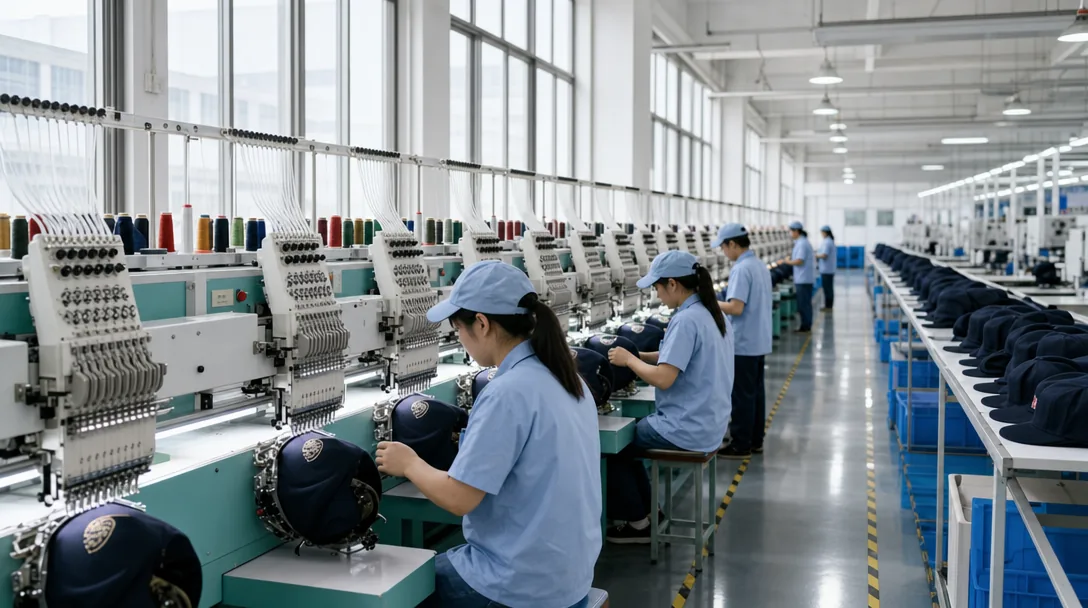
Decoration and compliance are where bad orders usually fail. We run embroidery on Tajima, Barudan, and ZSK heads, so small logos, tonal fills, and dense flat embroidery can be tested without sending work to a third party. For black knitwear, thread selection matters: matte black on black reads cleaner than glossy polyester in bright retail lighting, and a 2 mm to 3 mm satin column is usually safer than a heavy fill that distorts the rib. If the line needs private-label packaging, we can add woven neck labels, heat-transfer care marks, or clip tags without changing the main body spec. On the control side, the normal workflow is tech pack review, shade confirmation against Pantone TCX where applicable, pre-production photo approval, and carton-level packing checks against the purchase order. We also work to BSCI 2.0 and Sedex SMETA 4-Pillar expectations, so buyers get a paper trail that supports retailer onboarding and reduces surprises at inspection.
Frequently Asked Questions
What file format should I send for my logo?
Vector files (AI, EPS, PDF) are ideal. High-resolution PNG or JPG at 300 dpi on transparent background works as a fallback. Provide Pantone color references for accurate reproduction.
What logo decoration techniques do you offer?
3D puff embroidery, flat embroidery, woven patch, leather patch, PVC patch, screen printing, sublimation, applique and laser etching, all in-house with no subcontracting.
Which shipping methods do you support?
We support FOB, CIF and DDP shipping. Air express for samples and small orders, sea LCL for 100 to 500 pieces, sea FCL for 5,000+ pieces. Door-to-door DDP available for US, EU, UK, Canada and Australia.
How long does production take?
Sampling takes 7 to 12 days. Bulk production runs 20 to 30 days depending on quantity, fabric availability and decoration complexity. Inspection and packing adds another 3 to 5 days before shipment.
Do you support sustainability certifications?
Yes. We work with GOTS organic cotton, GRS-certified recycled polyester, OEKO-TEX Standard 100 fabrics, and are BSCI and Sedex audited. Certification documentation can be provided per order.
What should buyers know about corduroy bucket hat?
When evaluating corduroy bucket hat, the key considerations are construction quality, decoration capability, MOQ flexibility and lead time. Cover everything buyers ask about bucket hat corduroy: how it's manufactured, what specs to request from a factory, typical MOQ and pricing, common quality issues to inspect for, and how this ties back to the broader black beanie hat sourcing decision. Cover everything buyers ask about corduroy hat wholesale: how it's manufactured, what specs to request from a factory,…
What should buyers know about black bucket hat men?
When evaluating black bucket hat men, the key considerations are construction quality, decoration capability, MOQ flexibility and lead time. Cover everything buyers ask about bucket hat corduroy: how it's manufactured, what specs to request from a factory, typical MOQ and pricing, common quality issues to inspect for, and how this ties back to the broader black beanie hat sourcing decision. Cover everything buyers ask about bucket hat strings: how it's manufactured, what specs to request from a factory, typical…
What should buyers know about vintage bucket hat mens?
When evaluating vintage bucket hat mens, the key considerations are construction quality, decoration capability, MOQ flexibility and lead time. Cover everything buyers ask about corduroy hat vintage: how it's manufactured, what specs to request from a factory, typical MOQ and pricing, common quality issues to inspect for, and how this ties back to the broader black beanie hat sourcing decision. Cover everything buyers ask about bucket hat corduroy: how it's manufactured, what specs to request from a factory,…
What should buyers know about ralph lauren corduroy bucket hat?
When evaluating ralph lauren corduroy bucket hat, the key considerations are construction quality, decoration capability, MOQ flexibility and lead time. Cover everything buyers ask about bucket hat corduroy: how it's manufactured, what specs to request from a factory, typical MOQ and pricing, common quality issues to inspect for, and how this ties back to the broader black beanie hat sourcing decision. Cover everything buyers ask about corduroy hat wholesale: how it's manufactured, what specs to request from a factory,…
Need a low-MOQ test order?
We help emerging brands launch with as few as 100 pieces. Premium fabric, in-house embroidery, retail-ready packaging.
Start a small orderRelated guides
Ball Caps for Women: A 2026 Sourcing Playbook for International Buyers
Read article →
Mens Beanies: Properties, Costs and How to Spec It Right
Read article →
Baseball Hats Vintage: A Vertical-Specific Sourcing Guide
Read article →We hope this guide demystifies black beanie hat: properties, costs and how to spec it right and helps you move forward with confidence. If you have questions specific to your project, our English-speaking sales engineers are one message away.