
Reversible Bucket Hat Manufacturer: A 2026 B2B Sourcing Guide
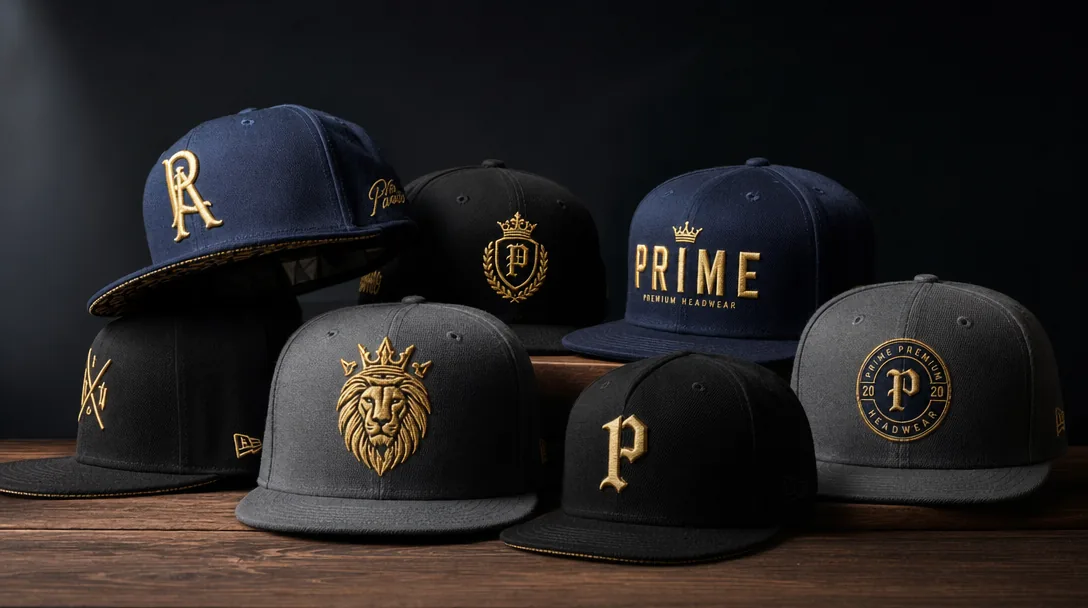
Reversible Bucket Hat Manufacturer: A 2026 B2B Sourcing Guide is one of the most-asked questions we receive from international buyers, and for good reason. With dozens of factories competing for your order and an alphabet soup of technical terms in every supplier quote, even experienced importers can feel lost. This guide consolidates what we have learned producing custom hats for clients in 40+ countries.
Unstructured Dad Hat Wholesale
Unstructured dad hats are built differently from structured caps, and that difference matters when you’re buying wholesale. The crown is usually soft 6-panel cotton twill or washed chino, with no buckram, no hard fuse, and a low-profile shape that relies on the fabric and stitching to hold form. A serious factory should tell you the panel fabric GSM, brim insert type, sweatband composition, and stitch density up front; if they can’t, they’re not set up for repeatable production. For a standard custom dad hat, I’d ask for 100% cotton 280–320 gsm, self-fabric or cotton twill sweatband, 6 rows of topstitch on the pre-curved visor, and back closure options like tri-glide metal, brass buckle, or Velcro. If you’re sourcing from a custom baseball cap manufacturer, also compare embroidery support: unstructured crowns distort under large logos more than a 7 panel baseball cap custom build or a firm 5-panel frame.
Typical wholesale MOQ is 300–500 pieces per colorway for stock fabric, but washed or garment-dyed finishes often push MOQ to 800+ because dye lots and shrinkage control get messy fast. Price-wise, basic blank unstructured dads can land around $2.10–$3.20 FOB in China at 500–1,000 pcs, while custom embroidery, woven labels, and premium closures can move that to $3.80–$5.50. The mistakes I see most are weak front panel collapse, crooked center seams, poor crown symmetry after washing, and puckering where the sweatband is sewn into the head opening. Request a pre-production sample, then inspect against AQL 2.5 for stitching defects, measurement tolerance, and color consistency; for colored fabrics, specify Pantone TCX and allow Delta-E under 2.0 if the job matters.
This sourcing logic is the same one you should apply when choosing a reversible bucket hat manufacturer or any custom bucket hat manufacturer: start with the construction method, then check whether the factory controls cut-and-sew consistency, dye lot management, and label placement at scale. Reversible builds add a second shell, double stitching, and stricter seam alignment, so a factory that only does light cap work may quote low and then fail on turning, topstitch balance, or bulkiness at the brim. If you’re evaluating one supplier for multiple programs—say a custom reversible bucket hat, a custom 5 panel hat manufacturer project, and a small-run 7 panel baseball cap custom order—look for actual production records, not just product photos. Our standard practice is to verify seam allowances, shrinkage after wash tests, and needle damage around closures before approving mass production, because those are the issues that create claims later, not the marketing samples.
Foam Front Trucker Hat Custom
Foam front trucker hat custom work starts with a different build than a normal cotton cap: a foam front panel, a mesh back, a laminated visor board, and usually a 5- or 6-panel frame with a high crown and plastic snap closure. For a factory, the critical variables are foam density, front panel thickness, mesh denier, and how the foam is bonded before stitching. I ask for 2.5–4.0 mm EVA or polyurethane foam, 100–120 gsm front fabric if it is foam-backed, and 180–220 gsm buckram-equivalent support on the visor so the brim does not warp after heat exposure. On the shop floor, the biggest process risks are needle punching through compressed foam, weak seam recovery at the front panels, and poor heat transfer if the front panel is not fully stabilized before decoration. If the cap is going to carry high-density embroidery or a TPU patch, the factory needs to confirm stitch density, backing film, and cap frame compatibility before bulk cutting.
When I audit a foam front trucker hat custom order, I want a full spec sheet, not just a logo file. Ask for crown height in centimeters, visor curve, mesh type, sweatband composition, closure style, and exact decoration method: flat embroidery, 3D puff, woven patch, screen print, or heat transfer. For a custom reversible bucket hat or a broader program that also includes a 7 panel baseball cap custom run, a custom 5 panel hat manufacturer, or a custom baseball cap manufacturer, the best suppliers are the ones that can show repeatable pattern control and consistent color matching across styles. Minimums are usually 300–500 pieces per colorway for overseas production, with pricing around USD 2.20–4.80 FOB depending on embroidery area, patch work, and whether the foam front is laminated or cut-and-sew assembled. Add USD 0.35–0.90 for private label packaging and another USD 0.20–0.50 if you need custom seam taping or internal labeling.
Quality control on these hats is mostly about shape retention and decoration stability. I inspect panel symmetry, visor curve consistency, stitch skip rate, foam compression marks, thread tension, and whether the front panel puckers after steaming. Color should be checked against Pantone TCX, with Delta-E ideally under 2.0 for core corporate colors; anything above that becomes obvious under retail lighting. For bulk inspection, AQL 2.5 is normal for major defects, but foam-front styles deserve extra checks on odor, adhesive bleed, and mesh distortion because those issues show up after packing, not at sewing. This is exactly why buyers who are sourcing a reversible bucket hat manufacturer should also evaluate whether the factory can handle a custom bucket hat manufacturer or custom baseball cap manufacturer program with the same discipline. A supplier that only quotes low on samples and cannot control foam recovery, cutting precision, and post-press deformation will usually struggle on a custom reversible bucket hat as well.
Unstructured 5 Panel Hat Bulk
Unstructured 5 panel hat bulk is one of the easiest cap programs to price wrong because buyers focus on panel count and ignore the soft parts: crown structure, seam stability, sweatband spec, and whether the factory is actually controlling shrinkage after washing. A real custom 5 panel hat manufacturer should quote the fabric by construction, not just by style name — for example, 100% cotton twill at 260-280 gsm, 108x58 or 20x16 weave, with enzyme wash if you want a broken-in handfeel. Ask for a flat pattern, panel seam allowance, visor board thickness, and whether the front panel has fusible interfacing or is truly unstructured. For bulk, MOQ usually starts around 300-500 pcs per colorway if the factory is set up for stock blanks, but once you add custom labels, woven loop labels, and pantone-matched embroidery, 1,000 pcs is a more realistic factory minimum for stable pricing.
Typical FOB pricing for a decent unstructured 5 panel in 2026 usually lands around $2.10-$3.80 depending on fabric, wash, trim, and decoration; add another $0.35-$0.90 if you want a custom inner tape, branded seam binding, or a high-density front patch. If you are comparing a custom baseball cap manufacturer against a reversible bucket hat manufacturer, ask both for the same discipline: fabric spec sheet, stitch count, needle gauge, thread type, and wash test results, not just sample photos. The common failures are uneven crown symmetry, visor curling, loose topstitching at the panel junctions, sweatband puckering, and color drift above Delta-E 2.0 between lots. For embroidery, confirm the machine line — Tajima, Barudan, or ZSK — and ask for a sew-out on the actual fabric, because lightweight cotton and washed twill will pull differently than the lab sample.
The sourcing lesson is that buyers who understand unstructured 5 panel hat bulk usually make better decisions on a custom reversible bucket hat too, because both styles expose the same factory weaknesses: inconsistent cutting, poor shrink control, and weak QC discipline. If a supplier also handles a 7 panel baseball cap custom program, that is useful only if they can show separate SOPs for structured and unstructured builds; a factory that can produce both generally has better pattern-making and inspection control than one that only pushes simple blanks. Our standard practice is to request an AQL 2.5 inspection plan, pre-production fabric approval against Pantone TCX, and wash/crock testing before mass cutting, especially when the order includes mixed SKUs like a custom bucket hat manufacturer program plus reversible styles. If the supplier cannot explain seam reversal construction, edge-binding overlap, or how they prevent print ghosting on the inside layer, they are not ready for B2B bulk work at scale.
Working with CrownsForge for reversible bucket hat manufacturer programs
For first-time buyers, the main risk in a custom reversible bucket hat program is not the sewing itself; it is locking in a spec before you have validated fit, seam balance, and decoration placement on both sides. Our standard sampling flow is 7–10 days for a plain proto, then another 5–7 days if you add embroidery or woven labels, assuming fabric is already in stock. For a reversible build, I want buyers to approve the crown height, brim stiffness, and turn-through seam bulk before we move to bulk. A decent factory should also give you an honest MOQ range: 300–500 pcs per colorway is realistic for simple cotton twill or nylon, while mixed-panel constructions or washed finishes usually need 800+ pcs to avoid ugly surcharge math. If someone claims they can do every reversible bucket hat manufacturer job at 100 pcs with no price penalty, they are usually hiding the cost in materials or QC.
Decoration is where most programs get derailed, because a reversible piece has two display faces and both sides need to survive wear and laundering. We run embroidery on Tajima, Barudan, and ZSK heads, plus heat-transfer and woven patch application when the design cannot tolerate stitch density. For a clean result, I prefer 4,000–6,500 stitches on soft twill and no more than 0.35 mm underlay shift on small logos; beyond that, puckering becomes obvious on the reverse side. If a buyer wants a custom reversible bucket hat with a streetwear feel, we usually recommend one side direct embroidery and the opposite side a low-profile woven label or silicone patch. That keeps the hat wearable without turning the brim into a stiff disc. This same logic applies when brands are also sourcing a 7 panel baseball cap custom program or a custom 5 panel hat manufacturer run: decoration must match the fabric behavior, not just the artwork.
Compliance and order control matter more than most founders expect, especially when they are scaling from a few hundred units to repeat production. Our baseline is fabric and trim testing against CPSIA, REACH, and azo-free dye requirements, plus factory social audits aligned with sedex-audit-cap-supplier-guide.html">BSCI 2.0 or Sedex SMETA 4-Pillar when the buyer needs retailer-ready paperwork. For shade control, we work to Pantone TCX targets and keep Delta-E under 2.0 on bulk lots whenever the dyehouse can hold it; otherwise I tell the customer before cutting starts. Order management is handled by a live spec sheet with revision timestamps, approved PP samples, carton marks, and inspection checkpoints at cutting, sewing, finishing, and pre-shipment AQL 2.5. The same workflow is used whether the customer is buying from a custom baseball cap manufacturer or a custom bucket hat manufacturer, because the only real way to de-risk a reversible program is to make every approval visible before production moves forward.
Frequently Asked Questions
How long does production take?
Sampling takes 7 to 12 days. Bulk production runs 20 to 30 days depending on quantity, fabric availability and decoration complexity. Inspection and packing adds another 3 to 5 days before shipment.
Do you support sustainability certifications?
Yes. We work with GOTS organic cotton, GRS-certified recycled polyester, OEKO-TEX Standard 100 fabrics, and are BSCI and Sedex audited. Certification documentation can be provided per order.
What logo decoration techniques do you offer?
3D puff embroidery, flat embroidery, woven patch, leather patch, PVC patch, screen printing, sublimation, applique and laser etching, all in-house with no subcontracting.
Can I order a sample before bulk production?
Yes. We strongly recommend approving a pre-production sample before mass production. Samples are charged at 35 to 60 USD each plus express shipping, fully refundable against confirmed bulk orders over 500 pieces.
Which shipping methods do you support?
We support FOB, CIF and DDP shipping. Air express for samples and small orders, sea LCL for 100 to 500 pieces, sea FCL for 5,000+ pieces. Door-to-door DDP available for US, EU, UK, Canada and Australia.
How does ordering baseball cap custom work?
When evaluating baseball cap custom, the key considerations are construction quality, decoration capability, MOQ flexibility and lead time. Cover everything buyers ask about foam front trucker hat custom: how it's manufactured, what specs to request from a factory, typical MOQ and pricing, common quality issues to inspect for, and how this ties back to the broader reversible bucket hat manufacturer sourcing decision. Cover everything buyers ask about unstructured dad hat wholesale: how it's manufactured, what…
How does ordering bucket hat custom work?
When evaluating bucket hat custom, the key considerations are construction quality, decoration capability, MOQ flexibility and lead time. Cover everything buyers ask about foam front trucker hat custom: how it's manufactured, what specs to request from a factory, typical MOQ and pricing, common quality issues to inspect for, and how this ties back to the broader reversible bucket hat manufacturer sourcing decision. Cover everything buyers ask about unstructured dad hat wholesale: how it's manufactured, what…
How does ordering custom bucket hat small batch work?
When evaluating custom bucket hat small batch, the key considerations are construction quality, decoration capability, MOQ flexibility and lead time. Cover everything buyers ask about foam front trucker hat custom: how it's manufactured, what specs to request from a factory, typical MOQ and pricing, common quality issues to inspect for, and how this ties back to the broader reversible bucket hat manufacturer sourcing decision. Cover everything buyers ask about unstructured dad hat wholesale: how it's manufactured, what…
How do I find a reliable custom waterproof cap manufacturer?
When evaluating custom waterproof cap manufacturer, the key considerations are construction quality, decoration capability, MOQ flexibility and lead time. Cover everything buyers ask about foam front trucker hat custom: how it's manufactured, what specs to request from a factory, typical MOQ and pricing, common quality issues to inspect for, and how this ties back to the broader reversible bucket hat manufacturer sourcing decision. Cover everything buyers ask about unstructured dad hat wholesale: how it's manufactured, what…
Looking for a reliable hat manufacturer in China?
CrownsForge has produced custom hats for 800+ brands across 40 countries. From 100-piece launches to 100,000-piece retail programs, we deliver on time and on spec.
Get in touchRelated guides
Primark Bucket Hat: A Vertical-Specific Sourcing Guide
Read article →Custom Corduroy Dad Hat Bulk: A 2026 B2B Sourcing Guide
Read article →
Kids' & Children's Cap Manufacturing: CPSIA Compliance and Sizing
Read article →We hope this guide demystifies reversible bucket hat manufacturer: a 2026 b2b sourcing guide and helps you move forward with confidence. If you have questions specific to your project, our English-speaking sales engineers are one message away.