
Building a Repeat-Order Workflow with Your Hat Factory - Cost & MOQ Breakdown
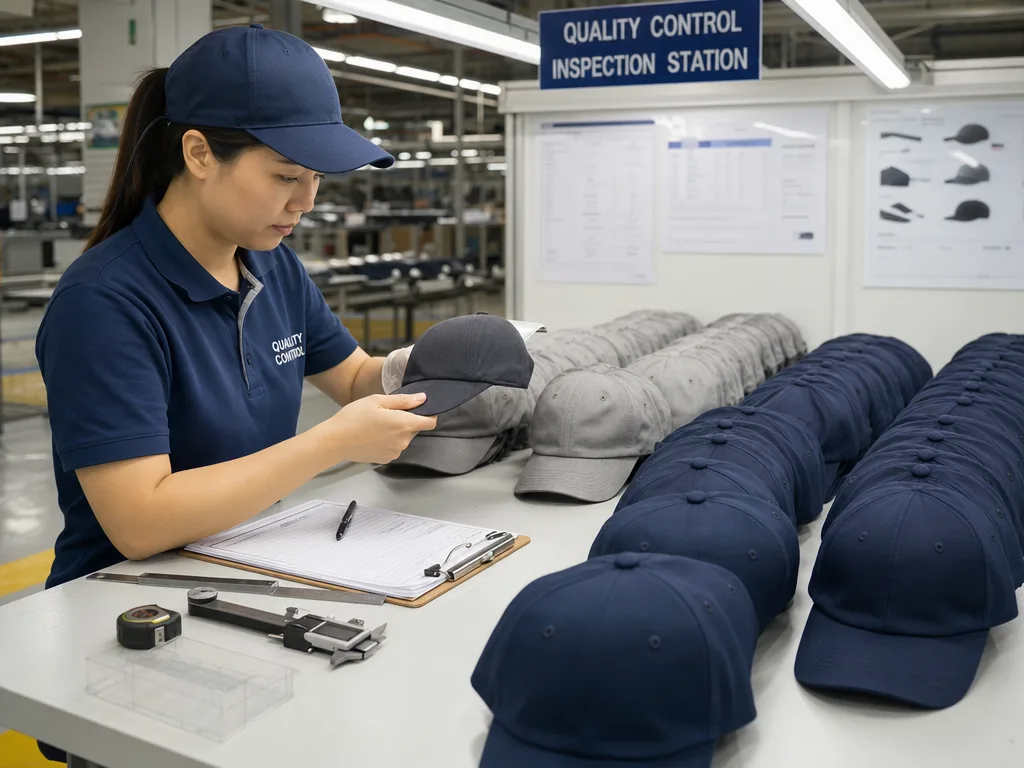
Every week, our sales team answers detailed questions about building a repeat-order workflow with your hat factory - cost & moq breakdown. We wrote this guide so that wholesalers, streetwear brands, corporate buyers and promotional resellers can compare options with full information, and avoid the traps that show up only after production has started.
Why repeat orders are cheaper than first orders
The real savings on a reorder come from setup costs that buyers rarely see broken out on the first PO. A new cap program usually carries $30-$80 for embroidery digitizing per logo, $40-$120 for Pantone TCX lab dips or fabric strike-offs per color, $30-$60 per screen-print color for film and mesh prep, and a PPS charge that often lands at $50-$120 per colorway once sewing, trimming, and courier cost are included. That first sample also burns inefficient machine time: one Tajima or Barudan head may be tied up for a 1- to 3-piece approval run, while the merchandiser checks stitch count, thread chart, logo position, visor curve, and sweatband construction against the BOM. Once a repeat order hat factory already has the approved DST file, sealed sample, print separations, measurement spec, and carton marks on file, those non-recurring costs disappear. On a 288-piece reorder, removing even $200-$350 in setup expense alone typically lowers cost by about $0.70-$1.20 per cap before any production efficiency is counted.
The bigger price drop comes from stability on the floor. First orders waste time on thread-tension adjustment, cap frame centering, buckram stiffness checks, needle sequencing, patch heat-press temperature, and backing selection—especially on styles like a 5-panel foam trucker with a structured front, braid, and curved PE visor. If the customer requires close color matching, operators may run trial sew-outs until embroidery thread sits within roughly Delta-E 2.0-2.5 of the approved Pantone reference under D65 light, and QC may tighten in-line checks before bulk release. Once the first run is proven, the factory repeats the same material spec, machine settings, and QC points with fewer stoppages and less scrap on thread, panels, patches, and sweatband tape. In practice, that usually cuts ex-factory pricing by 3% to 10%. MOQ often drops too: a first order may need 144-300 pieces per colorway to justify sourcing and AQL 2.5 inspection, while a repeat can sometimes run at 72-144 pieces if usable stock from the same dye lot—fabric, snaps, labels, or visor boards—is still available and the original BOM remains unchanged.
Locking in pricing for 12 months
Do not ask for 12-month price protection on the first PO. Lock pricing only after the second or third clean repeat, when actual data exists on fabric yield, embroidery run time, carton cube, and defect rate under AQL 2.5. That is the point where a repeat order hat factory can cost from measured consumption instead of padding for uncertainty. On stable programs, we usually fix pricing by style family, not by a loose “all caps” average: for example, FOB USD 3.20-3.38 for a 6-panel cap in 260 gsm brushed cotton twill with flat embroidery, or USD 4.60-4.85 for an 80/20 acrylic-wool snapback with 3D embroidery, woven loop label, PE snap closure, and pre-curved visor. A realistic protection band is ±2-3% across 12 months; anything tighter usually breaks the moment labor, dyeing, or trim costs move. That price lock is worthless unless the tech pack is frozen at production level, not mood-board level. The agreement should pin down shell fabric weight, composition, buckram grade, sweatband construction, visor board thickness, closure model, stitch count range, label package, carton pack-out, and Pantone TCX references. Color tolerance should be written as a measurable standard, typically Delta-E no more than 1.0-1.5 on bulk fabric and key trims under the same light source. If the buyer changes from 260 gsm twill to 320 gsm canvas, swaps a 5,000-stitch flat logo to a 9,000-stitch 3D file, or upgrades from 1 pcs/polybag to retail insert packaging, that is not a repeat order anymore; it is a new cost structure wearing an old style number.
A factory cannot hold annual pricing without a usable forecast. For custom headwear, that means a rolling 90-day or quarterly projection tied to release orders, not a vague annual volume buried in email. If the program is 12,000 units per year, quarterly releases of roughly 2,500-3,500 pieces usually give enough volume to reserve greige fabric, sweatband tape, visor board, swing tags, and standard closures, while also blocking embroidery capacity on Tajima or Barudan heads at normal rates. That is where price stability actually comes from: planned purchasing and planned machine loading, not goodwill. If releases slip below MOQ, the factory loses purchasing leverage and starts buying fabric, trims, and production time at spot cost. Write the agreement so nobody argues later about what is fixed and what floats. The FOB cap price can sit inside the ±2-3% band, while ocean freight, import duty, carton upgrades, barcode labeling, and non-standard packing stay outside it. Repricing triggers should be explicit: cotton, acrylic, or wool input costs up more than 5%; release quantity dropping below the agreed MOQ; stitch count running above the approved range; or any material substitution affecting hand feel, shrinkage, or colorfastness. If compliance matters, lock repeat production into the same audited site under sedex-audit-cap-supplier-guide.html">BSCI 2.0 or Sedex SMETA 4-Pillar. Moving a repeat style to a different workshop may save a few cents on paper, but it often changes embroidery density, panel symmetry, and finishing consistency enough to wipe out the value of fixed pricing.
Fabric reservation and dye-lot consistency
Color drift usually starts before cutting, not after sewing. If every PO is treated like a fresh buy, the mill dyes exact demand plus a normal overrun, ships bulk, then releases the balance. That is fine for a one-off drop; it is a bad habit for a replenishment program that has to match Pantone 19-4052 TCX navy across six or nine months under both D65 and TL84. A disciplined repeat order hat factory should reserve the original dye lot as soon as PO1 is approved, with the sealed bulk swatch signed by both sides and the acceptable shade band documented against that first production run. In practice, that often means holding 1,200-1,800 yards of 260 gsm cotton twill, brushed chino, or 600D RPET from the same lot for future cuts instead of gambling on a redye. Reservation matters even more on unstable constructions. Heather wool blends, pigment-dyed canvas, enzyme-washed cotton, and mélange heathers will show lot-to-lot movement faster than standard reactive-dyed twill, especially once you add washing, brushing, or heavy embroidery that changes surface reflectance. I would also want the mill and factory to keep the original lab dip record, roll map, and finishing parameters on file, because identical Pantone references do not guarantee identical bulk once resin finish, peach effect, or water-repellent coating changes. CrownsForge’s standard practice is to keep the approved bulk cutting swatch with the production file and tie any repeat booking back to that control, not to a photo on WhatsApp or a memory of the first run.
The cost side is usually misunderstood. A fabric reservation deposit is commonly 20%-30% of the fabric value only, not of the full future cap order, and on a stable core program the carry cost often lands around $0.03-$0.08 per cap. That is cheap insurance compared with a failed repeat bulk. A visible shade shift can force panel recutting, undervisor replacement, seam rip-and-rework, or thread-color retuning on Tajima or Barudan heads if the embroidery no longer sits clean against the shell. If the mismatch is obvious at final inspection, it can still fail at AQL 2.5 even when sewing quality is otherwise acceptable. Good control also goes beyond the outer fabric. Sweatband tape, top-button wrap, sandwich piping, back-strap webbing, hook-and-loop tape, woven labels, and edge binding often come from different suppliers, and any one of them can miss the standard while the crown fabric still passes. For continuity-sensitive programs, I would expect spectrophotometer readings plus visual approval in a calibrated light box, with Delta-E typically held to 1.0-1.5 against the approved standard for dark solids and a slightly wider tolerance on textured or heathered materials. If reservation is locked from the first PO, repeat orders usually move 7-15 days faster because greige allocation, dyeing, and shade approval are already out of the critical path.
Sample-on-file matching for every repeat
The sealed PPS sample is the only valid control standard on a repeat; the tech pack explains construction, but it does not replace a physical benchmark. A competent repeat order hat factory pulls that approved sample at three checkpoints: before cutting, at first-off-line, and again during final inspection. The side-by-side check should cover measurable points, not vague impressions: front panel height within ±2 mm, crown depth, visor arc, button centering, seam balance, stitch density, sweatband width, and closure placement. On a structured 6-panel cap, even a 2 mm loss in front height or a softer 0.8 mm buckram changes how the crown sits on the forehead. Our standard practice is to seal the sample with the PO number, approval date, fabric code, closure type, visor profile, and packing method, then store it where production and QC can access it without chasing old chat history or screenshots. Color and decoration also need numeric tolerances or repeat orders start drifting by cents and end in claims. Body fabric, undervisor, and sweatband should be checked under D65 light against the archived sample and approved lab dip, with Delta-E kept at 1.5 or below for solid cotton twill and brushed polyester twill; once the shift passes 2.0, most buyers will spot it. Embroidery must run from the same digitizing file and comparable machine class—Tajima, Barudan, or ZSK—then be checked for fill density, underlay, pull compensation, edge sharpness, and thread luster. The most common failures are cheap substitutions that barely move cost, like switching 300 gsm twill to 260 gsm, using softer PE visor board, or reducing satin stitch density to cut thread usage by $0.03 to $0.12 per cap. Those are small savings, but they make a reorder look like a different hat.
Sample retention matters even more on annual programs and split shipments because materials, operators, and machine settings never stay static. A new dye lot can shift a navy body by more than Delta-E 2.0, sweatband elasticity can change from one supplier batch to the next, and embroidery tension can drift between production windows. That is why the archived PPS sample should stay sealed and fully documented with Pantone TCX reference, fabric composition, visor curvature, closure hardware, thread brand, carton pack-out, and any approved deviations from the original spec. At final inspection, random units should be checked against that filed standard under AQL 2.5, not just against the latest PO comments. If the bulk cap does not match the sample on file, the shipment is already off spec. Most repeat-order failures are cumulative, not dramatic. One cap comes out with 1 mm less crown height, a slightly flatter bill, lighter twill, looser sweatband fold, and softer topstitch tension; none of those changes alone looks serious on a factory table, but together they are obvious to a buyer who sold the last run successfully. A disciplined sample-on-file system removes that subjectivity before goods leave the line. Everyone involved—the merchandiser, line leader, QC inspector, and buyer—is matching against the same physical reference instead of memory, revised PDFs, or WhatsApp photos. That is the difference between a reorder that lands seamlessly and one that turns into a preventable claim.
Replenishment cycle: how often to reorder
Cut the next PO when 60-70% of the previous shipment has sold through; waiting until inventory falls under 20% is how brands create stockouts they could have avoided. For a steady program, the practical replenishment window is usually 90-120 days door to door: 2-5 days to reconfirm artwork, carton marks, and care labels; 20-30 days for fabric booking, cutting, sewing, embroidery, finishing, and packing; then 28-40 days on water under FOB Ningbo or Shanghai, plus 3-7 days for destination drayage and warehouse check-in. The weak point is rarely sewing capacity alone. More often it is a late greige fabric lot, a trim remake on a custom metal buckle, congestion on Tajima or Barudan embroidery heads, or a random customs exam that burns an extra week. A repeat order hat factory should already have your approved tech pack, Pantone TCX references, embroidery DST file, crown height spec, visor curve standard, and packing method on file, which removes a lot of second-run guesswork. Before you release a repeat bulk order, pull the last production record instead of assuming the factory remembers every correction. Check the prior AQL 2.5 report, approved shade band, stitch count and underlay settings, top button alignment, sweatband attachment, and any claims tied to puckering, loose backstitch, or panel torque after wash. On 10x10 cotton twill around 240-280 gsm or 300D recycled performance polyester, even a small fabric lot variation can push visible shade movement past Delta-E 1.5 if the mill is not controlled tightly. Our standard practice is to freeze the approved construction points from the first run and only reopen variables like color split, closure type, or carton assortment. That is what keeps replenishment cycles predictable instead of turning every reorder into a semi-development project.
Seasonal business runs on a longer clock, and brands that treat it like an in-season refill usually pay for it in freight upgrades. If the hats support spring golf, back-to-school, holiday gifting, or licensed teamwear, book capacity 6-9 months ahead and lock firm POs 45-60 days before ex-factory at the latest. That matters because the bottleneck is upstream as much as in sewing: brushed cotton twill, 8-wale corduroy, recycled poly, sandwich bills, woven labels, and custom buckles all compete for the same mill and trim capacity before peak shipping windows. A good factory will reserve embroidery and sewing slots against a forecast, then convert that forecast by colorway, logo, and size ratio once sell-in is clear. The unit-cost benefit on a repeat run is usually modest, often just $0.12-$0.35 less per cap, so the real win is protecting launch timing. Event-driven reorders should always be planned backward from the in-hands date, not from when inventory feels low. Build in 7-10 days of buffer for customs inspection, carton relabeling, failed scan appointments, or a mode shift from ocean freight to DDP air. On a 500-piece embroidered cap order, moving by air can add about $1.80-$3.20 per unit depending on chargeable weight and destination, but that is still cheaper than missing a trade show, retail floor set, or sponsor activation. The practical rule is simple: if the goods are tied to a fixed calendar, buy schedule certainty first and chase small cost savings second. That is the difference between using a repeat order hat factory as a supply partner and using one as an emergency vendor.
Annual contract vs. spot-buy economics
Once your annual volume is a real program—roughly 2,000 to 4,000 units on one SKU family—an annual supply agreement usually beats spot buying by 8% to 12% on true FOB economics. The gain does not come from hardball price talk; it comes from fewer resets. A 500-piece spot PO for a standard 6-panel brushed cotton twill cap with flat embroidery, woven label, and metal buckle typically lands around $4.10 to $4.60 FOB Ningbo. Put that same spec into four scheduled releases over 12 months, and the effective FOB often compresses to $3.70 to $4.20 because the mill runs one dye lot, trims are bought against total demand, and setup costs—digitizing, strike-off sampling, carton engineering, and approval admin—are spread across the program. Buyers who keep jumping in with ad hoc reorders quietly pay for sub-MOQ fabric buys, repeated lab dips, extra line changeovers, and rushed confirmations that create avoidable waste on the sewing floor.
The bigger advantage is capacity protection when the market tightens. From September through November, embroidery heads, sewing lines, and packing teams get squeezed by promotional programs, sports retail, and holiday launches. A dependable repeat order hat factory will reserve production windows against a quarterly forecast, which matters more than a nominal $0.10 price cut. If your style needs 3D puff or dense flat embroidery on Tajima or Barudan heads during peak season, losing a planned slot can push ex-factory timing back 10 to 18 days and force an airfreight patch at $6 to $9 per kg instead of shipping by LCL or FCL ocean. Annual programs also hold spec integrity better: factories are more willing to lock the approved BOM, keep backup trim stock, and control color to a Pantone TCX standard with bulk shade variation inside a practical Delta-E 1.5 to 2.0. That discipline reduces the usual repeat-order drift—buckram changes, visor board substitutions, sweatband downgrades, or embroidery edge loss from switching backing or thread mid-year.
When to add a second supplier (dual-sourcing)
Add a second source when one style family reaches about 5,000 to 8,000 caps a year or any single PO starts putting your launch calendar at risk. At that level, one failed fabric booking, a Tajima embroidery bottleneck, or a customs exam can cost more than qualifying a backup line. I usually start at a 70/30 allocation and do not move to 60/40 until both factories prove three consecutive purchase orders with on-time shipment above 95%, first-pass inspection at AQL 2.5, and measurements staying inside the approved tolerance chart. The real objective is not theoretical risk coverage; it is production memory. A second factory needs enough live volume to learn your actual standard for crown profile, visor curvature, buckram stiffness, stitch density, sweatband handfeel, carton assortment, and approved Pantone TCX references. Buyers make a predictable mistake with a repeat order hat factory: they give the backup 144-piece or 300-piece “tests,” then expect it to rescue a 2,000-piece rush order later. That does not work. Small trials prove communication; they do not prove line stability, trim control, or repeatability under pressure.
Dual-sourcing only works if both factories build from one locked tech pack and one sealed counter-sample, not two workshop interpretations of the same cap. The master spec should fix fabric composition, weight in gsm, visor board thickness, closure hardware gauge, seam tape width, label placement, embroidery backing, and color tolerance; for dyed panels and trims, Delta-E 1.5 to 2.0 is a realistic control window. On embroidery-heavy programs, keep the same DST file family, thread brand, and backing weight, whether the run is on Tajima, Barudan, or ZSK heads, because changing any of those variables shifts edge clarity and fill coverage. Also watch the parts buyers do not see on a costing sheet: softer buckram, lighter PE brim board, or a different sweatband knit can still pass inspection but look off at retail. There is a commercial case as well. On a standard 6-panel cotton twill cap, the price gap between two approved factories may be only $0.12 to $0.35 per piece, but the bigger value is continuity when your primary supplier hits labor churn, pre-CNY capacity compression, or an audit remediation window under BSCI 2.0 or Sedex SMETA 4-Pillar.
Frequently Asked Questions
What logo decoration techniques do you offer?
3D puff embroidery, flat embroidery, woven patch, leather patch, PVC patch, screen printing, sublimation, applique and laser etching, all in-house with no subcontracting.
Can I order a sample before bulk production?
Yes. We strongly recommend approving a pre-production sample before mass production. Samples are charged at 35 to 60 USD each plus express shipping, fully refundable against confirmed bulk orders over 500 pieces.
What is the minimum order quantity (MOQ) for custom hats?
Our standard MOQ is 100 pieces per design and color, with sampling available from 1 piece. For complex multi-color logos or premium fabric upgrades, the MOQ can be lowered with a small per-piece surcharge.
How long does production take?
Sampling takes 7 to 12 days. Bulk production runs 20 to 30 days depending on quantity, fabric availability and decoration complexity. Inspection and packing adds another 3 to 5 days before shipment.
What file format should I send for my logo?
Vector files (AI, EPS, PDF) are ideal. High-resolution PNG or JPG at 300 dpi on transparent background works as a fallback. Provide Pantone color references for accurate reproduction.
What's the MOQ for custom bucket hat no minimum?
When evaluating custom bucket hat no minimum, the key considerations are construction quality, decoration capability, MOQ flexibility and lead time. First order absorbs digitizing setup ($30-$80), screen-print plate ($30-$60 per color), fabric color matching ($40-$100 per Pantone), sample fees ($40-$80 per colorway), and PPS approval cycle. Repeat orders amortize none of this — factory has all the files, tooling and samples on hand. Smart buyers sign 12-month pricing agreements with their factory at the second or third…
How does ordering custom hats near me work?
When evaluating custom hats near me, the key considerations are construction quality, decoration capability, MOQ flexibility and lead time. First order absorbs digitizing setup ($30-$80), screen-print plate ($30-$60 per color), fabric color matching ($40-$100 per Pantone), sample fees ($40-$80 per colorway), and PPS approval cycle. Repeat orders amortize none of this — factory has all the files, tooling and samples on hand. Smart buyers sign 12-month pricing agreements with their factory at the second or third…
How does ordering custom hat embroidery near me work?
When evaluating custom hat embroidery near me, the key considerations are construction quality, decoration capability, MOQ flexibility and lead time. First order absorbs digitizing setup ($30-$80), screen-print plate ($30-$60 per color), fabric color matching ($40-$100 per Pantone), sample fees ($40-$80 per colorway), and PPS approval cycle. Repeat orders amortize none of this — factory has all the files, tooling and samples on hand. Smart buyers sign 12-month pricing agreements with their factory at the second or third…
What's the MOQ for custom embroidered hats no minimum?
When evaluating custom embroidered hats no minimum, the key considerations are construction quality, decoration capability, MOQ flexibility and lead time. First order absorbs digitizing setup ($30-$80), screen-print plate ($30-$60 per color), fabric color matching ($40-$100 per Pantone), sample fees ($40-$80 per colorway), and PPS approval cycle. Repeat orders amortize none of this — factory has all the files, tooling and samples on hand. Smart buyers sign 12-month pricing agreements with their factory at the second or third…
What famous hat company owned the Old Mallory hat Factory when it closed in 1980?
The closing left this former hat-making capital of the world with only one such plant still in operation. The John B. Stetson Company of Philadelphia, which had owned the Mallory operation since 1946, announced the closing that affects about 125 employes.
Looking for a reliable hat manufacturer in China?
CrownsForge has produced custom hats for 800+ brands across 40 countries. From 100-piece launches to 100,000-piece retail programs, we deliver on time and on spec.
Get in touchRelated guides
Custom Camo Hats: Hunting, Outdoor and Tactical Cap Manufacturing (2026 Update)
Read article →
Festival Bucket Hats Decoration QC Checklist for Custom Hat Buyers
Read article →
Blank Trucker Cap Wholesale Bulk: A 2026 B2B Sourcing Guide
Read article →Sourcing custom hats does not have to be complicated. With the right manufacturing partner, clear specifications and a small upfront investment in sampling, you can launch a retail-quality product in 30 to 45 days.