
Recycled Polyester Cap Manufacturer Bulk: A 2026 B2B Sourcing Guide - 2026 Buyer's Guide
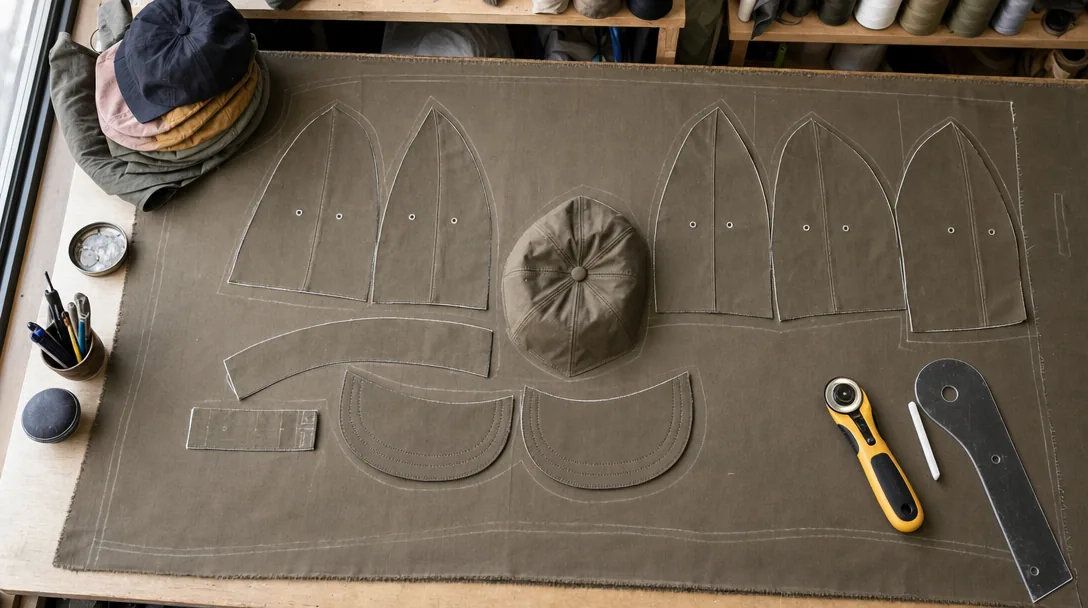
Every week, our sales team answers detailed questions about recycled polyester cap manufacturer bulk: a 2026 b2b sourcing guide - 2026 buyer's guide. We wrote this guide so that wholesalers, streetwear brands, corporate buyers and promotional resellers can compare options with full information, and avoid the traps that show up only after production has started.
Organic Cotton Cap Wholesale Custom
Organic cotton caps need certificate control before artwork approval; a hangtag claim is not supply-chain proof. For wholesale custom work, ask for GOTS or OCS transaction certificates tied to the fabric lot and purchase order, not a generic mill certificate reused across seasons. A normal six-panel unstructured organic cotton dad cap uses 260-320 gsm 16s, 20s, or 21s twill, cotton sweatband, recycled PE or paperboard visor insert, and an antique brass buckle or self-fabric strap with metal tri-glide. I want lab dips reviewed after the intended wash process because enzyme wash, pigment dye, stone wash, and garment wash can move shade by Delta-E 1.5-3.0. Pantone TCX matching at Delta-E 1.5-2.0 is a workable tolerance; pushing below Delta-E 1.0 on washed organic cotton usually creates disputes, not better caps. Compared with a recycled polyester cap manufacturer bulk program, organic cotton shows more slub, shade banding, and post-wash crown movement, so approval samples must come from the same greige lot and wash recipe planned for production.
MOQ and costing are less forgiving because organic cotton dyeing, shrinkage testing, and traceability paperwork do not scale cleanly at small quantities. If stock greige twill is available, 300-500 pieces per color can work; custom-dyed organic twill normally needs 1,000-2,000 pieces per color to justify lab dips, vat setup, wash-panel approval, and transaction certificate control. In 2026, a basic embroidered organic cotton dad cap is typically USD 3.20-5.80 FOB Ningbo, while enzyme wash, metal buckle, branded taping, and 8,000-12,000 stitches on Tajima or Barudan heads push it to USD 4.80-7.50. Add USD 0.25-0.60 per piece for OCS/GOTS document handling, FSC hangtags, recycled paper packaging, or separated carton labeling for retailer compliance. CrownsForge costs organic cotton separately from recycled polyester because dye loss, steam pressing time, wash approvals, and failed shrinkage lots hit different production cost centers.
Inspection has to treat organic cotton as a moving fabric, not a stable synthetic. Under AQL 2.5, pull washed samples from at least three cartons and measure crown height, visor length, circumference, seam twist, sweatband distortion, and front-panel puckering after steam pressing. Poor sanforizing can leave 3-5% residual shrinkage in the cap body, enough to turn a 58 cm fit spec into customer returns. Dark shades such as black, forest, chocolate, and navy need dry and wet crocking checks, because weak reactive dye fixation can stain a white sweatband, polybag, or retail shelf. Organic cotton is strong for lifestyle retail, resort merchandise, and eco-positioned brands where handfeel matters more than perfect repeatability. For large event programs, licensed team runs, and replenishment orders where shade consistency, moisture control, and delivery stability matter, recycled polyester usually performs better in bulk production.
Custom Wool Blend Ball Cap
Specify the wool blend by fiber ratio, yarn construction, and finished fabric weight, because “wool cap” is too vague for bulk sourcing. For ball caps, the workable commercial range is 40-60% wool blended with polyester, acrylic, or viscose at 280-360 gsm; below 280 gsm the crown loses the dry hand buyers expect, and above 360 gsm the cap becomes hot, expensive, and harder to block without panel distortion. Pure wool is rarely the right default for volume programs: steam forming can shrink the shell, felt the surface, and shift the crown height by 3-5 mm after pressing. A proper structured 6-panel spec should call for grain-controlled cutting, medium buckram, 20s/3 polyester sewing thread, and crown blocking before visor setting. On Tajima, Barudan, and ZSK embroidery heads, wool nap needs lower stitch density than cotton twill, especially for 3D puff and satin columns wider than 5 mm. Require Pantone TCX lab dips with Delta-E under 1.5 under D65, but do not copy tolerances from a recycled polyester cap manufacturer bulk program; wool blends and rPET twill absorb dye and reflect light differently.
Lock the cost drivers before asking for a price, or the quotation will be noise. A usable bulk spec reads like this: 6-panel mid-profile, 50% wool / 50% polyester, 320 gsm shell, fused front panels, 3.5 mm flat visor, 8 visor stitch rows, cotton twill sweatband, metal buckle closure, front 3D embroidery under 9,000 stitches, 24 pieces per inner carton, and 144 pieces per export carton. MOQ is usually 500-1,000 pieces per color because wool blend fabric is often dyed to order, unlike common black or navy polyester twill pulled from stock. Sampling normally runs USD 60-120, with bulk pricing around USD 4.20-7.80 FOB Ningbo depending on stitch count, closure hardware, backing, lining, and mill dye-lot surcharge. When comparing wool blend caps against corduroy truckers, rope hats, or ripstop tactical caps, normalize by fabric MOQ, decoration risk, reject allowance, and carton CBM instead of taking the lowest unit price at face value.
Inspection has to target wool-specific failures before the cutting room releases panels. I would use AQL 2.5 for major defects and AQL 4.0 for minor defects, plus a fabric-lot shade check in a light box under D65 and TL84; mixed fibers can look acceptable under sewing-room LED lights and fail under retail lighting. Check panel-to-panel shade, crown height, front-panel collapse after steaming, visor symmetry within 3 mm, finished circumference at +/-0.5 cm, and strap pull strength at 7-8 kg. Puckering around 3D embroidery usually comes from excessive stitch density, weak tearaway backing, or poor hoop tension, not only operator handling. Our standard practice at CrownsForge is to quote wool blend caps and recycled polyester caps as separate BOMs because GRS documentation for rPET fabric does not automatically cover wool-blend shell fabric, buckram, sweatbands, closures, or embroidery thread. For audited retail programs, keep sedex-audit-cap-supplier-guide.html">BSCI 2.0 or Sedex SMETA 4-Pillar files separate from recycled-content certificates; social compliance and material claims are different evidence trails.
Ripstop Tactical Cap Manufacturer
A reliable ripstop tactical cap program is decided at fabric booking, not after the logo file is emailed. For bulk orders, I specify 150D/150D or 300D/300D GRS recycled polyester ripstop at 120–165 gsm, with the grid spacing written as 3–5 mm; if the grid is loose or off-grain, the front seam twists and puckers after steam blocking. 210D nylon has better abrasion resistance, but it weakens the recycled polyester claim unless the buyer accepts recycled nylon under a separate certificate. If the sourcing brief says recycled polyester cap manufacturer bulk, the PO should require the mill’s GRS scope certificate and the transaction certificate for the actual fabric lot, plus composition, coating, and recycled percentage. A sales sheet saying “eco ripstop” is not enough. I also reject vague color calls like “army green”; use Pantone TCX/TPX and set Delta-E under 1.5 under D65 lighting, because coyote, ranger green, and black show panel-to-panel shading more than buyers expect.
The tech pack must lock fabric denier, gsm, ripstop grid, DWR or PU coating, visor board, sweatband, closure, eyelets, and decoration before sampling. A tactical visor normally uses 0.35–0.45 mm PE board; softer field caps can use recycled PE or EVA, but they lose the sharp radius that retail buyers expect. Sweatbands should be 180–220 gsm wicking polyester with acceptable colorfastness to perspiration, not cotton twill that yellows after one wear test. Tajima, Barudan, and ZSK embroidery heads all run cleanly if the digitizing is adjusted for ripstop, but lettering below 4 mm often breaks because the grid interrupts stitch density. For detailed artwork, woven patches, PVC patches, rubber badges, heat-transfer labels, or hook-and-loop panels are safer than dense direct embroidery. Our standard approval at CrownsForge includes PP sample checks for seam pull, dry and wet crocking, wash shrinkage, visor curve, and Velcro box-stitch strength before bulk cutting.
Realistic MOQ is 300–500 pieces per color when stock GRS ripstop is available, and 1,000–2,000 pieces per color for custom-dyed recycled polyester because the dye lot must absorb cutting loss, lab dips, and shade control. In 2026, workable FOB China pricing is usually $3.40–$5.90 for a plain six-panel ripstop cap, $4.80–$7.80 with PVC patch, loop panel, or raised embroidery, and higher for laser-cut vents, bonded seams, camouflage sublimation, IR-reflective trims, or waterproof seam tape. Inspection should run AQL 2.5 for major defects and AQL 4.0 for minor defects, with special attention to skipped stitches over grid yarns, uneven visor radius, DWR spotting, loose hook-and-loop stitching, and crown-panel shade variation. For DDP shipments to Amazon, retail DCs, or uniform distributors, add carton drop testing, barcode scans, carton weight checks, and polybag suffocation-warning verification before balance payment. On tactical ripstop, the cheapest quote usually means uncertified fabric, weak trimming, or uncontrolled shade lots.
Working with CrownsForge for recycled polyester cap manufacturer bulk programs
The first control point in a recycled polyester cap manufacturer bulk program is not the sewing line; it is freezing the BOM before the proto is approved. For stocked 190–220 gsm rPET twill, rPET bird-eye mesh, and 600D recycled polyester ripstop, a workable proto lead time is 7–10 days. Custom-dyed panels add time: expect 14–18 days for lab dips, bulk dyeing, and shade-band approval against Pantone TCX under D65 light, with Delta-E normally held at 1.5 or tighter for retail. Practical MOQs are 300 pieces per color on a basic 5-panel or 6-panel cap using warehouse fabric, 500–800 pieces for piece-dyed or yarn-dyed rPET, and 1,000+ pieces when the cap uses custom yarn color, private-mold buckles, specialty rope, TPU badges, or mixed-material construction. At CrownsForge, the safer first order is usually two colors on one proven crown block, not six untested SKUs. That reduces shade segregation errors, crown-height drift, visor-stiffness variation, and carton-level packing mistakes.
Decoration has to be proven before bulk cutting because recycled polyester does not behave like cotton or virgin poly under hoop pressure, steaming, or visor pressing. rPET twill can show needle scarring, heat shine, and front-panel puckering if the factory copies old cotton settings for backing weight, thread tension, and press temperature. On Tajima, Barudan, or ZSK multi-head machines, direct embroidery on a structured 6-panel rPET cap is usually clean at 9,000–12,000 stitches; above that range, woven patches, appliqué, TPU patches, or silicone badges often give sharper edges with less panel distortion. For 3D puff, foam height, satin column width, pull compensation, and underlay density must be checked by physical sew-out, not only a DST preview. The signed PP sample should record crown height, visor arc, sweatband width, seam allowance, logo centerline, eyelet position, closure length, rope alignment, and label placement. Trucker mesh recovery, corduroy nap direction, ripstop bartack strength, and hook-and-loop color migration are separate risk items, not trim afterthoughts.
Sustainability claims need transaction-level proof. If the buyer wants GRS, RCS, or recycled-content language on hangtags, invoices, Amazon listings, or retailer compliance files, the rPET yarn and fabric must have transaction certificates matching the purchase order quantity, fiber composition, mill name, and certified scope. Social and quality records should be just as specific: BSCI 2.0 or Sedex SMETA 4-Pillar reports, wage and working-hour files, chemical storage logs, needle-control records, fire-drill evidence, and subcontractor declarations for embroidery, washing, patch lamination, or packing. Before production starts, the factory should issue a bilingual work order, approved PP sample sheet, fabric shade band, barcode file, carton-mark layout, and AQL 2.5 final inspection checklist. Milestone reporting should cover fabric arrival, cutting, panel decoration, sewing, trimming, inline inspection, final inspection, and packing. Without that discipline, the classic recycled polyester cap manufacturer bulk failure appears late: clean showroom samples, but bulk cartons with off-tone panels, soft visors, crooked embroidery tension, mixed closures, or unsupported recycled-content claims.
Frequently Asked Questions
How long does production take?
Sampling takes 7 to 12 days. Bulk production runs 20 to 30 days depending on quantity, fabric availability and decoration complexity. Inspection and packing adds another 3 to 5 days before shipment.
Do you support sustainability certifications?
Yes. We work with GOTS organic cotton, GRS-certified recycled polyester, OEKO-TEX Standard 100 fabrics, and are BSCI and Sedex audited. Certification documentation can be provided per order.
What file format should I send for my logo?
Vector files (AI, EPS, PDF) are ideal. High-resolution PNG or JPG at 300 dpi on transparent background works as a fallback. Provide Pantone color references for accurate reproduction.
What is the minimum order quantity (MOQ) for custom hats?
Our standard MOQ is 100 pieces per design and color, with sampling available from 1 piece. For complex multi-color logos or premium fabric upgrades, the MOQ can be lowered with a small per-piece surcharge.
Can I order a sample before bulk production?
Yes. We strongly recommend approving a pre-production sample before mass production. Samples are charged at 35 to 60 USD each plus express shipping, fully refundable against confirmed bulk orders over 500 pieces.
What should I know about blank trucker cap wholesale bulk?
When evaluating blank trucker cap wholesale bulk, the key considerations are construction quality, decoration capability, MOQ flexibility and lead time. Cover everything buyers ask about organic cotton cap wholesale custom: how it's manufactured, what specs to request from a factory, typical MOQ and pricing, common quality issues to inspect for, and how this ties back to the broader recycled polyester cap manufacturer bulk sourcing decision. Cover everything buyers ask about custom wool blend ball cap: how it's…
What should I know about custom rope hat wholesale bulk?
When evaluating custom rope hat wholesale bulk, the key considerations are construction quality, decoration capability, MOQ flexibility and lead time. Cover everything buyers ask about organic cotton cap wholesale custom: how it's manufactured, what specs to request from a factory, typical MOQ and pricing, common quality issues to inspect for, and how this ties back to the broader recycled polyester cap manufacturer bulk sourcing decision. Cover everything buyers ask about custom wool blend ball cap: how it's…
What should I know about custom corduroy dad hat bulk?
When evaluating custom corduroy dad hat bulk, the key considerations are construction quality, decoration capability, MOQ flexibility and lead time. Cover everything buyers ask about organic cotton cap wholesale custom: how it's manufactured, what specs to request from a factory, typical MOQ and pricing, common quality issues to inspect for, and how this ties back to the broader recycled polyester cap manufacturer bulk sourcing decision. Cover everything buyers ask about custom wool blend ball cap: how it's…
How does ordering custom made trucker hat work?
When evaluating custom made trucker hat, the key considerations are construction quality, decoration capability, MOQ flexibility and lead time. Cover everything buyers ask about organic cotton cap wholesale custom: how it's manufactured, what specs to request from a factory, typical MOQ and pricing, common quality issues to inspect for, and how this ties back to the broader recycled polyester cap manufacturer bulk sourcing decision. Cover everything buyers ask about custom wool blend ball cap: how it's…
Looking for a reliable hat manufacturer in China?
CrownsForge has produced custom hats for 800+ brands across 40 countries. From 100-piece launches to 100,000-piece retail programs, we deliver on time and on spec.
Get in touchRelated guides
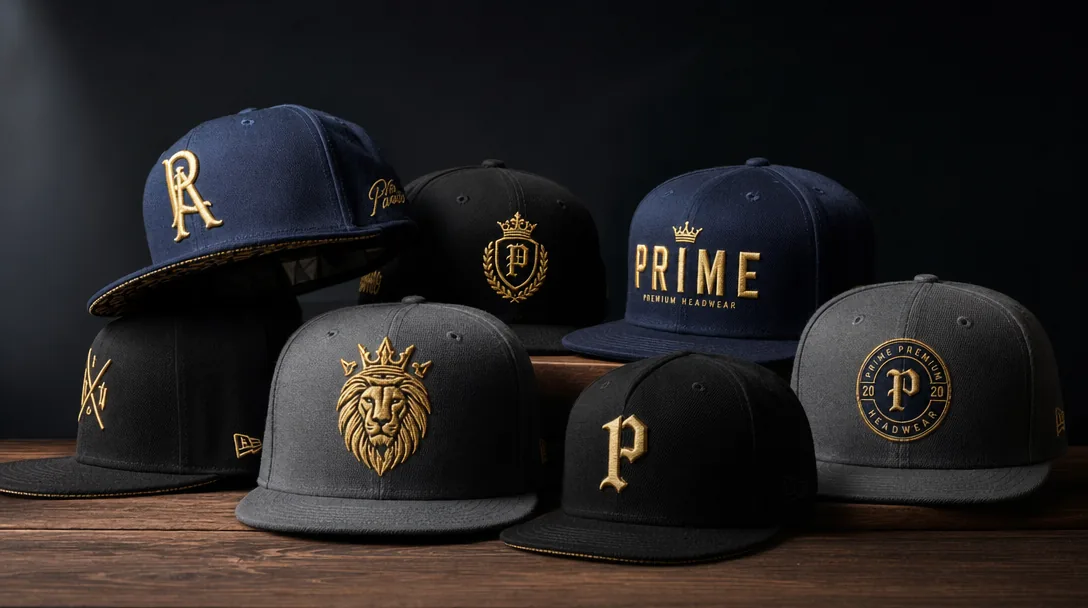
Custom Leather Patch Hat Low Minimum: A 2026 B2B Sourcing Guide
Read article →
Mens Beanies: Properties, Costs and How to Spec It Right
Read article →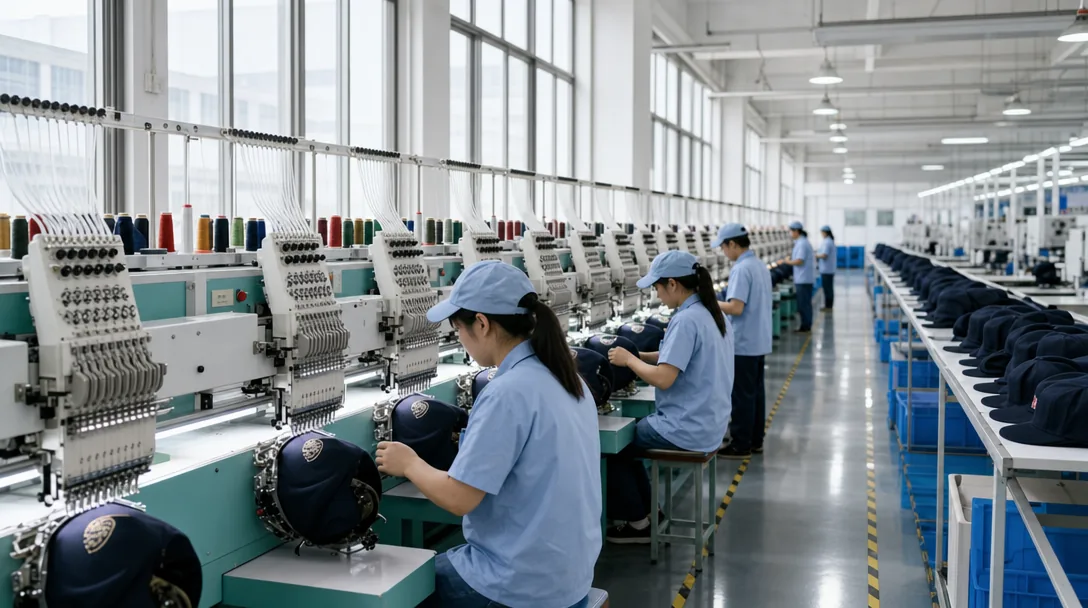
Bulk Trucker Hats Export Shipping Checklist for Custom Hat Buyers - Cost & MOQ Breakdown - Supplier Checklist
Read article →We hope this guide demystifies recycled polyester cap manufacturer bulk: a 2026 b2b sourcing guide - 2026 buyer's guide and helps you move forward with confidence. If you have questions specific to your project, our English-speaking sales engineers are one message away.