
Performance Mesh Running Cap Custom: A 2026 B2B Sourcing Guide
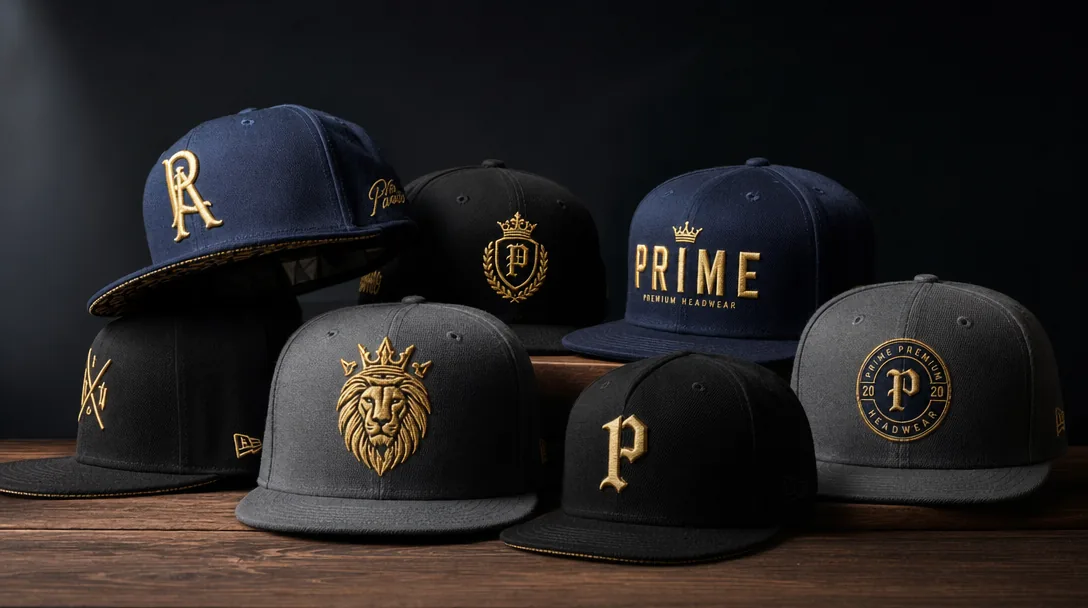
Performance Mesh Running Cap Custom: A 2026 B2B Sourcing Guide is one of the most-asked questions we receive from international buyers, and for good reason. With dozens of factories competing for your order and an alphabet soup of technical terms in every supplier quote, even experienced importers can feel lost. This guide consolidates what we have learned producing custom hats for clients in 40+ countries.
Custom Corduroy Dad Hat Bulk
Corduroy dad hats are built differently from the low-profile performance caps most buyers compare them to, and that matters when you’re trying to source in bulk. The base fabric is usually 16-wale or 21-wale cotton corduroy at about 260–320 gsm, cut with the nap running consistently front to back so the color doesn’t shift panel to panel. For a proper custom job, ask for a 6-panel unstructured crown, pre-curved visor with 6–8 rows of stitching, self-fabric strap or brass buckle closure, and embroidery digitized for the raised ridges of the fabric, not flat twill assumptions. CrownsForge’s standard practice is to confirm Pantone TCX targets for the main body, then run a 1,000-stitch test because corduroy eats detail if the density is too high. If you want a cleaner handfeel, request low-profile buckram only in the front two panels; full buckram turns the hat into a cheaper-looking shape.
MOQ is usually 300–500 pieces per colorway for corduroy, with common FOB China pricing around $4.20–$7.80 depending on fabric weight, closure, embroidery count, and whether you want garment washing or enzyme softening. Buyers comparing this to a custom mesh trucker cap wholesale program should not assume the same cost structure: corduroy takes longer in cutting, trims more lint in production, and has more visible shade variation risk. The biggest quality issues are crushed nap from bad packing, inconsistent panel matching, crooked topstitch, weak seam allowance at the crown, and logo puckering around dense embroidery. Inspect for color delta against the approved lab dip, seam slippage at the sweatband, and whether the visor curve is symmetrical left to right. If the factory also makes a performance mesh running cap custom order, ask them to separate corduroy from mesh by line, because the needle settings, thread tension, and QC checkpoints are not interchangeable.
This sourcing decision also tells you how the factory handles other headwear categories. A factory that can do a clean corduroy program without lint contamination, seam distortion, or bad buckle alignment is usually more disciplined on mixed-material orders like a custom wool blend ball cap or a ripstop tactical cap manufacturer run, where fabric memory and reinforcement matter even more. For buyers balancing a corduroy drop against a performance mesh running cap custom collection, the right question is not just price; it’s whether the supplier can hold AQL 2.5 on visual defects and carton mix-up control across very different constructions. If they can only quote cheap custom mesh trucker cap wholesale pricing but cannot show needle-density specs, wash test results, or packing SOPs, expect the same shortcuts to appear in corduroy. The better factories will give you panel templates, embroidery sew-out photos, and trim cards before bulk starts, which is the only way to avoid expensive surprises at 1,000+ pieces.
Organic Cotton Cap Wholesale Custom
Organic cotton cap wholesale custom starts with the fiber claim, not the cap shape. If a factory says “organic,” ask for GOTS or OCS documentation, the lot number on the yarn, and the mill certificate for the fabric roll before you approve bulk cutting. In practice, most decent caps use 100% organic cotton twill at 240–320 gsm for structured crowns, or washed organic cotton canvas at 280–340 gsm for softer handfeel. You should specify panel count, crown height in centimeters, visor curve, sweatband composition, and the exact closure type — brass buckle, self-fabric strap, or recycled plastic snapback. For logo work, insist on embroidery file approval with stitch count, backing type, and thread brand; on organic cotton, over-packing stitches can pucker the crown faster than on synthetic blends.
The usual MOQ for a true custom program is 300–500 pcs per colorway if the factory already has approved fabric, but 1,000 pcs is still the more realistic price break for better color consistency and trim flexibility. At ex-works Yiwu pricing, a plain organic cotton six-panel cap often lands around USD 2.10–3.80 depending on fabric weight, wash treatment, and closure; add USD 0.35–1.20 for flat embroidery, woven labels, taping, or hangtags. If you compare this to a performance mesh running cap custom order, the organic cotton version is usually heavier and less technical, but it can be better for lifestyle retail, golf, and corporate programs where handfeel matters more than sweat management. I would not mix it up with a corduroy trucker hat wholesale order or a custom wool blend ball cap unless the buyer has already accepted seasonal fabric behavior and shrinkage risk.
The biggest quality failures are predictable: shade drift between rolls, enzyme wash inconsistency, seam twisting after laundering, and poor sweatband adhesion. Check for Delta-E under 1.5 on repeat orders, shrinkage under 3% after one wash, and stitch density around 8–10 stitches per centimeter on visible seams. For inspection, push for AQL 2.5 on major defects and verify panel symmetry, visor insert shape, and label placement against a golden sample; organic cotton can still look cheap if the crown collapses or the visor edge ripples. If you are sourcing a broader mix — say a custom mesh trucker cap wholesale program, a ripstop tactical cap manufacturer, and a performance mesh running cap custom line — the decision comes down to end use: organic cotton is for comfort and brand story, mesh and ripstop are for heat, sweat, and abrasion. Our standard practice is to separate these by fit spec and fabric test sheet, because one weak spec sheet usually means three bad SKUs instead of one.
Recycled Polyester Cap Manufacturer Bulk
Recycled polyester caps are usually built from 100% rPET yarn spun from post-consumer bottles, then knitted or woven into the shell before cutting, panel stitching, and structured or unstructured finishing. For a performance mesh running cap custom order, the important part is not just “recycled” on the hangtag; you need the factory to specify fiber content, fabric construction, and certification path. Ask for GRS or RCS documentation, yarn denier, fabric gsm, mesh openness, moisture-wicking finish, and color tolerance under Pantone TCX with Delta-E ≤ 1.5 for core shades. On the line, the better factories keep sweatband foam separate from the shell spec, because a 1.5 mm difference in EVA or PU foam changes the fit more than most buyers expect. If you are comparing a custom mesh trucker cap against a recycled running style, the recycled version should still meet the same seam stability, visor rebound, and washing-performance targets; otherwise “eco” just means higher shrink risk and more claims from customers. For bulk manufacturing, realistic MOQ is usually 300 to 500 pcs per colorway for a standard recycled polyester cap, with 1,000 pcs unlocking better fabric pricing and cleaner decoration setup. In China, factory EXW pricing for a basic six-panel recycled cap often lands around $2.20 to $3.80 at 500 pcs, while more technical builds with laser-cut mesh, reflective piping, bonded seams, or laser-perforated side panels can move to $4.20 to $6.50. Embroidery is still the main variable: a small left-front logo with 8,000 to 10,000 stitches may add $0.35 to $0.90 depending on thread count and machine type, whether Tajima, Barudan, or ZSK heads are used. Buyers who only compare this against corduroy trucker hat wholesale or custom wool blend ball cap pricing usually miss that recycled polyester has tighter raw-material volatility, so you should ask for a 7- to 14-day fabric hold quote, not a vague “valid for one month.” The defects I inspect first are poor mesh recovery, twisted seam tape, color banding between dye lots, and sweatband delamination after steam setting. For a performance mesh running cap custom program, ask the factory to run AQL 2.5 on critical dimensions, needle damage checks at the front panel, and wash tests for 3 to 5 cycles at 30°C; if the crown warps or the visor edge curls, reject it. Also check whether the recycled yarn pills faster than virgin polyester, because lower-grade rPET with short staple length will show fuzziness after abrasion. A serious factory will give you a trim card, PP sample, and measurement sheet before bulk, plus packing specs for carton compression and moisture control. This is where the broader sourcing decision matters: if the same supplier can also handle a ripstop tactical cap manufacturer program, a custom mesh trucker cap wholesale run, and even a repeat corduroy trucker hat wholesale order, they usually understand pattern control and line balancing better than a generic cut-and-sew shop.
Custom Wool Blend Ball Cap
A custom wool blend ball cap is usually built on a 6-panel or 5-panel structured crown, with a wool/poly blend shell in the 70/30 to 50/50 range, typically 230 to 320 gsm depending on whether the buyer wants a cleaner fashion hand-feel or a heavier cold-weather cap. The factory sequence is straightforward but easy to mess up: fabric relaxation, panel cutting, fusible buckram or lightweight canvas reinforcement, visor board insertion, front panel shaping, then embroidery or woven patch application before final topstitching and sweatband closing. If you are comparing it with a performance mesh running cap custom program, the wool blend version is the opposite end of the spectrum — less breathability, more structure, better for lifestyle or teamwear, and far less forgiving on shrinkage if the fabric is not pre-tested for dimensional stability.
When sourcing, ask for the wool content ratio, exact yarn count if available, shrinkage after steam pressing, colorfastness to dry and wet rubbing, and whether the factory is using wool-poly twill, melton-like suiting, or brushed wool blend. For trims, specify a matching or contrast underbill, cotton twill or polyester sweatband, closure type, and stitch density; 8 to 10 stitches per inch is normal, but weak thread tension will show immediately on dark wool. Typical MOQ is 300 to 500 pieces per color for a custom wool blend ball cap, with FOB pricing often around USD 3.80 to 6.50 depending on embroidery complexity, patch type, lining, and whether the brim uses molded PE board or recycled cardboard board. By comparison, a custom mesh trucker cap wholesale order can land cheaper on labor because the crown assembly is simpler, while a corduroy trucker hat wholesale program usually costs more because the nap and panel alignment raise reject rates.
Quality problems are predictable: panel mismatch at the seams, crown puckering after steaming, visor warping, loose thread tails around embroidery, and shade variation between dye lots. On wool blends, also check pilling after abrasion, seam slippage at the front seams, and whether the underbrim or sweatband bleeds color onto a white lining under humidity. Our standard practice is AQL 2.5 for general inspection and a separate needle-check plus metal contamination scan if the cap includes patches, eyelets, or branding hardware. For buyers weighing a custom wool blend ball cap against a ripstop tactical cap manufacturer or a performance mesh running cap custom program, the decision is really about use case: wool blend for structure and premium feel, mesh for ventilation and lower weight, ripstop for abrasion resistance. If the end customer is buying for summer sports, start from the mesh spec; if they want colder-weather retail or premium streetwear, wool blend is the safer sourcing lane.
Ripstop Tactical Cap Manufacturer
A serious ripstop tactical cap manufacturer should start with the fabric, not the logo. Ask for 100% nylon ripstop or polyester ripstop with a true grid reinforcement, usually 70D to 210D, and confirm the coating if you need water resistance: PU 1,000–3,000 mm is common, while some buyers want a light DWR only. For a performance mesh running cap custom program, I still treat the front panel as a structural component and the rear as a ventilation component, so I want the factory to specify mesh denier, brim board thickness, sweatband GSM, and stitch density before sampling. On the floor, the better factories cut with laser or hot knife to control fray, use 6-panel or 5-panel construction depending on crown shape, and run embroidery on Tajima, Barudan, or ZSK heads with backing matched to the fabric weight. If the cap is supposed to feel “tactical,” request bonded seams at high-stress points, reinforced eyelets or laser vents, and a stiffener that can survive repeated compression without cracking.
Typical MOQ for a ripstop tactical cap manufacturer is 300 to 500 pieces per colorway, but factories often push 1,000 pcs if you want custom woven labels, molded patches, or special edge binding. Pricing usually lands around USD 2.80 to 5.50 FOB for simple construction, and USD 6.00 to 9.50 FOB once you add structured fronts, laminated brims, 3D embroidery, or imported webbing. That is usually higher than a custom mesh trucker cap wholesale order, but the labor is more involved and the defect tolerance is lower. Buyers should request Pantone TCX or PMS confirmation for panels and trims, Delta-E under 2.0 on bulk production, AQL 2.5 inspection for major defects, and needle detection only if the design includes metal components. The biggest quality failures I see are seam puckering on ripstop, crooked topstitching, inconsistent crown height, peeling PVC patches, and mesh tearing at the back panel where the binding is too tight.
The sourcing logic is the same whether you are buying a performance mesh running cap custom piece, a corduroy trucker hat wholesale program, or a custom wool blend ball cap: define the use case first, then force the factory to prove the construction can support it. If the cap needs sweat management and low weight for running, ripstop may be the wrong primary shell unless you pair it with a lightweight perforated mesh or laser-cut ventilation. If it is for military, outdoor, or utility retail, ripstop makes sense because abrasion resistance matters more than breathability. Our standard practice is to ask for a pre-production sample, a wash test at 30°C, a 24-hour shade continuity check, and a wear test on the closure system, because buckles and hook-and-loop fail before the fabric does. Buyers who only compare unit price usually miss the real cost difference between a custom mesh trucker cap and a tactical build: the cheaper cap may save 40 cents, but it loses shape, color, or seam integrity after one season of field use.
Working with CrownsForge for performance mesh running cap custom programs
For a performance mesh running cap custom program, the biggest mistake buyers make is treating sampling like a formality. Our standard sampling path is 7–10 days for a blank proto, 10–14 days if you need logo decoration, and 2–3 weeks if you are locking in fabric handfeel, visor curve, and sweatband spec at the same time. For first-time buyers, I push a two-step approval: first fit and construction, then decoration and color. That keeps you from approving a cap that looks right in photos but fails on head shape, crown depth, or rebound after sweat. We usually hold the initial MOQ at 300–500 pieces per colorway for a performance mesh running cap custom order, then scale pricing down on reorders once the pattern and trim package are frozen.
Decoration matters more than most buyers expect because mesh fabric punishes sloppy setup. We run flat embroidery on Tajima and Barudan heads for front panels, then use heat-transfer or silicone patches when stitch density would distort lightweight polyester mesh. For a clean custom mesh trucker cap, I prefer 40–60 mm logos with underlay reduced by 15–20% versus a cotton twill cap; otherwise the panel buckles. If the order is closer to a custom wool blend ball cap or a corduroy trucker hat wholesale program, we adjust thread tension and backing type, but the principle is the same: every fabric behaves differently. The same applies to a ripstop tactical cap manufacturer spec, where we often swap to low-profile embroidery or woven labels to avoid needle perforation around seam lines.
Compliance and order control are where bad suppliers usually fall apart. CrownsForge keeps materials tied to the fabric card and batch number, with color checks against Pantone TCX and a practical Delta-E target under 2.0 for main panels; for mesh, we care more about lot-to-lot shade consistency than absolute lab perfection because open construction changes perceived color under different light. For shipping, we build the PO around AQL 2.5 for major defects and 4.0 for minor cosmetic issues, then document carton counts, needle checks, and final packing photos before balance payment. That workflow works for a single custom mesh trucker cap launch and for larger custom mesh trucker cap wholesale replenishment programs, because the same file trail supports sedex-audit-cap-supplier-guide.html">BSCI 2.0 or Sedex SMETA 4-Pillar audit requests without rework later.
Frequently Asked Questions
How long does production take?
Sampling takes 7 to 12 days. Bulk production runs 20 to 30 days depending on quantity, fabric availability and decoration complexity. Inspection and packing adds another 3 to 5 days before shipment.
Can I order a sample before bulk production?
Yes. We strongly recommend approving a pre-production sample before mass production. Samples are charged at 35 to 60 USD each plus express shipping, fully refundable against confirmed bulk orders over 500 pieces.
What file format should I send for my logo?
Vector files (AI, EPS, PDF) are ideal. High-resolution PNG or JPG at 300 dpi on transparent background works as a fallback. Provide Pantone color references for accurate reproduction.
Do you support sustainability certifications?
Yes. We work with GOTS organic cotton, GRS-certified recycled polyester, OEKO-TEX Standard 100 fabrics, and are BSCI and Sedex audited. Certification documentation can be provided per order.
What logo decoration techniques do you offer?
3D puff embroidery, flat embroidery, woven patch, leather patch, PVC patch, screen printing, sublimation, applique and laser etching, all in-house with no subcontracting.
How does ordering custom hat trucker work?
When evaluating custom hat trucker, the key considerations are construction quality, decoration capability, MOQ flexibility and lead time. Cover everything buyers ask about custom corduroy dad hat bulk: how it's manufactured, what specs to request from a factory, typical MOQ and pricing, common quality issues to inspect for, and how this ties back to the broader performance mesh running cap custom sourcing decision. Cover everything buyers ask about organic cotton cap wholesale custom: how it's manufactured,…
What should I know about blank trucker cap wholesale bulk?
When evaluating blank trucker cap wholesale bulk, the key considerations are construction quality, decoration capability, MOQ flexibility and lead time. Cover everything buyers ask about custom corduroy dad hat bulk: how it's manufactured, what specs to request from a factory, typical MOQ and pricing, common quality issues to inspect for, and how this ties back to the broader performance mesh running cap custom sourcing decision. Cover everything buyers ask about organic cotton cap wholesale custom: how it's manufactured,…
What should I know about custom rope hat wholesale bulk?
When evaluating custom rope hat wholesale bulk, the key considerations are construction quality, decoration capability, MOQ flexibility and lead time. Cover everything buyers ask about custom corduroy dad hat bulk: how it's manufactured, what specs to request from a factory, typical MOQ and pricing, common quality issues to inspect for, and how this ties back to the broader performance mesh running cap custom sourcing decision. Cover everything buyers ask about organic cotton cap wholesale custom: how it's manufactured,…
What should I know about custom corduroy dad hat bulk?
When evaluating custom corduroy dad hat bulk, the key considerations are construction quality, decoration capability, MOQ flexibility and lead time. Cover everything buyers ask about custom corduroy dad hat bulk: how it's manufactured, what specs to request from a factory, typical MOQ and pricing, common quality issues to inspect for, and how this ties back to the broader performance mesh running cap custom sourcing decision. Cover everything buyers ask about recycled polyester cap manufacturer bulk: how it's…
Looking for a reliable hat manufacturer in China?
CrownsForge has produced custom hats for 800+ brands across 40 countries. From 100-piece launches to 100,000-piece retail programs, we deliver on time and on spec.
Get in touchRelated guides
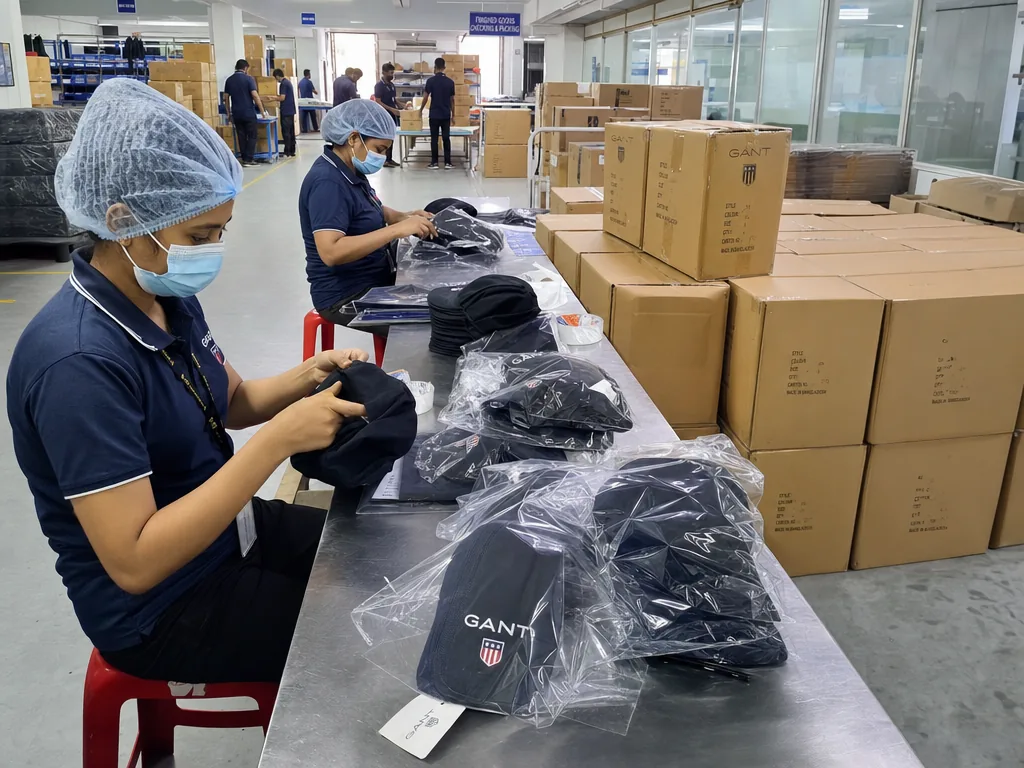
Building a Repeat-Order Workflow with Your Hat Factory
Read article →
Custom Embroidered Hats: The 2026 Sourcing & Manufacturing Playbook
Read article →
Reversible Bucket Hats: A Vertical-Specific Sourcing Guide
Read article →Sourcing custom hats does not have to be complicated. With the right manufacturing partner, clear specifications and a small upfront investment in sampling, you can launch a retail-quality product in 30 to 45 days.