
Performance & Athletic Caps: Moisture-Wicking, UPF and Buyer Specs - Cost & MOQ Breakdown (2026 Update) (2026 Update)
Performance & Athletic Caps: Moisture-Wicking, UPF and Buyer Specs - Cost & MOQ Breakdown (2026 Update) (2026 Update) is one of the most-asked questions we receive from international buyers, and for good reason. With dozens of factories competing for your order and an alphabet soup of technical terms in every supplier quote, even experienced importers can feel lost. This guide consolidates what we have learned producing custom hats for clients in 40+ countries.
What makes a cap 'performance' vs 'standard'
A cap only earns the word "performance" when the spec is built around sweat, heat, and motion; a standard cap is usually built around shelf appearance and a target FOB. Most commodity promo styles still use 180-240 gsm cotton twill, brushed chino, or heavy poly-cotton, with fused buckram in the front panels and a full PE visor board. That package holds shape, but it traps heat, absorbs sweat into the crown and sweatband, and gains noticeable weight once wet. A real athletic build typically starts with a 95-140 gsm polyester microfiber, mini-ripstop, or mechanical-stretch woven shell using 20D, 30D, or 50D filament yarns, often paired with 70-110 gsm mesh side panels. On the factory floor, the difference is obvious in a 30-minute wear test: cotton shows concentrated sweat staining at the forehead and center-front seam, while a properly finished polyester shell spreads moisture, dries faster, and avoids that cold, soaked feel after saturation.
That is why any serious performance cap manufacturer should quote measurable data, not vague claims like "sports fabric." Buyers should ask for air permeability, dry time after saturation, finished cap weight, crocking and wash colorfastness, and whether the wicking finish survives at least 10 home wash cycles. In practical sourcing terms, a standard 6-panel structured cap often lands around 95-120 g finished, while a credible running or golf silhouette should usually be below 80 g, with strong lightweight builds in the 55-70 g range. Once a supposed athletic cap weighs 90 g or more, it usually means the factory swapped the shell fabric but kept standard trims, heavy seam tape, and a thick visor insert. Our standard practice is to flag those builds early, because performance is rarely lost in the fabric alone; it is usually lost in the hidden components buyers do not specify tightly enough.
The sweatband is where fake performance caps get exposed fastest. Basic cotton terry or low-grade polyester tricot costs roughly $0.10-$0.18 per cap, but it turns clammy quickly in golf, tennis, and running use. A proper upgrade is a polyester-elastane or nylon-elastane sweatband in the 180-220 gsm range, ideally with a brushed skin side and hydrophilic finish; that usually adds $0.22-$0.45 depending on width, dyeing to Pantone TCX, and whether branded seam tape is included. The crown should also stay unstructured or lightly structured, using a slim HDPE visor insert rather than a standard thick PE board, and low-bulk closures such as micro hook-and-loop, elastic webbing, or laser-cut self straps. Those details matter more to comfort than most buyers realize, especially when the cap is worn for two to four hours continuously.
UPF is the other line between a true technical cap and a standard cap with sporty styling. Eyelets and mesh alone do not create UV protection; credible UPF 30+ or 50+ depends on weave density, yarn type, shade depth, and sometimes a UV-absorbing finish that still tests after repeated laundering. We normally want third-party lab reports showing post-wash performance, because some finishes drop off sharply after 10-20 home wash cycles. Trim selection also affects wearability more than the tech pack suggests: thick TPU logos, stiff heat-transfer films, bulky seam allowances, and poorly chosen adhesive chemistry can create hot spots and cancel out the benefit of a breathable shell. On higher-spec orders, it is worth controlling shade variation to around Delta-E 1.5-2.0 and inspecting to AQL 2.5, because inconsistency in dyed panels and sweatband lots is one of the quickest ways a "performance" cap starts looking and wearing like a cheap standard build.
UPF ratings: what's actually meaningful
UPF on caps is only meaningful when it is tied to the exact finished configuration you are buying. The useful benchmark is AATCC 183 or AS 4399 on the actual shell fabric, tested in the approved shade, after dyeing and finishing, not a generic mill sheet from a similar polyester. UPF 30 allows up to 3.3% UV transmission; UPF 50+ means below 2%. On-head protection, however, is driven just as much by geometry: a 70 to 75 mm curved visor, low front profile, and deeper side panels reduce exposure more than upgrading crown fabric from UPF 30 to 50+ on many sports styles. I have seen 110 to 140 gsm microfiber polyester and 75D woven dobby come back at UPF 20 to 35 with no chemical assist, then lose practical coverage once the style adds laser perforation, trucker mesh, or oversized airflow eyelets. A good performance cap manufacturer should be blunt about where UPF claims break down. Dark, high-cover-factor fabrics usually do the heavy lifting: 75D to 150D polyester interlock, plain weave, and mechanical-stretch woven shells often pass UPF 30 naturally in black, navy, or deep forest, while white and pastel versions of the same fabric can test materially lower. To hit a reliable UPF 50+, mills usually tighten construction or add a UV-absorbing finish, and both decisions affect handfeel, breathability, and cost. At 3,000 pieces, the realistic premium is usually $0.12 to $0.35 per cap, plus $150 to $300 per test report if the buyer wants batch-specific documentation from SGS, Intertek, or Bureau Veritas.
The spec should lock the UV claim to the finished hat BOM, not to a salesman’s fabric brochure. Ask for the test standard, mill fabric code, Pantone or dyed shade tested, and whether the result was measured before or after laundering. For athletic caps carrying moisture management, 5 to 10 home-laundry cycles is a sensible checkpoint because wicking, anti-odor, and UV finishes can interfere with one another. A common factory shortcut is to quote UPF 50+ from a dense greige base cloth, then switch to a lighter gsm panel, change the dye lot, or add side mesh that was never included in the lab sample. That is how buyer claims turn into compliance arguments later. The cleaner approach is to tie every UV statement to the approved PO and list each exposed component separately: crown panels, side mesh, perforated zones, sandwich visor, and underbill. At CrownsForge, we also flag shade control because color depth affects results; keeping bulk production within Delta-E 1.5 of the approved lab dip is a practical standard for programs where UPF is printed on packaging or hangtags. If the cap carries recycled polyester, cooling-print chemistry, or antimicrobial treatment, have the mill confirm those finishes do not materially reduce UPF after finishing and normal wash exposure. That documentation matters when a retailer’s QA team audits claims, and it matters even more if there is a product-liability dispute.
Sweatband construction for athletic use
The sweatband determines whether an athletic cap gets reordered or quietly dies after one season. Brushed cotton terry still appears in too many development samples because it feels plush in a showroom, but in actual use it holds moisture instead of moving it. Once the band has absorbed roughly 12 to 18 g of sweat, evaporation slows, skin humidity rises, and salt lines start forming at the edge. For running, golf, and team programs, the safer specification is a polyester-elastane circular knit at 180 to 220 gsm, usually 88/12 or 92/8, with a hydrophilic wicking finish rather than a standard silicone softener. In wear trials at 25°C and 50 to 55% RH, cotton bands can stay visibly wet for 20 to 30 minutes, while a properly finished synthetic band is often touch-dry in 8 to 10 minutes under the same airflow. Wearers notice that difference immediately, especially under a curved brim where airflow is limited. Fiber content alone is not enough; the band has to recover and keep stable pressure on the forehead. I want stretch recovery data at 50% extension after 10 and 20 cycles, not just a composition label. Below 85% recovery, the band starts to bag out, particularly on unstructured low-profile caps where the sweatband does more of the fit work than the crown. A competent performance cap manufacturer should also call out colorfastness to perspiration at ISO 105-E04, grade 4 minimum, because navy and black bands bleeding onto white seam tape or pale front panels is one of the most common summer claims. If the shell tests UPF 50+ but the sweatband stays wet, overheats, and transfers dye, the lab result means very little in the field.
Construction is where good material specs get wasted. Cheap moisture-wicking tape laminated to foam may pass initial fit checks, then start peeling after 20 to 30 home-laundry cycles, which is exactly when complaints show up in school athletics and corporate wellness programs. For athletic use, the more durable build is either a folded knit tube or a two-layer knit sandwich joined with flatlock or 4-needle coverstitch seams. Bulky 3-thread overlock seams create a pressure ridge across the forehead and will chafe on long runs. At CrownsForge, we keep seam bulk away from center front and tape internal seam allowances cleanly, because even a lightweight 70D microfibre shell feels abrasive if raw seam edges sit proud inside the crown. Front decoration matters too: dense embroidery on Tajima or Barudan heads can harden the lower front panel, so the sweatband attachment has to absorb that stiffness rather than add another rigid layer. The cost increase for a proper athletic sweatband is small compared with the return rate. Moving from basic cotton terry to a polyester-elastane wicking band usually adds $0.12 to $0.28 per cap at 3,000 pcs, depending on width, finish chemistry, and whether the band is stock-dyed or Pantone-matched. Adding silver-free odor control such as HeiQ Fresh or Polygiene StayFresh can push the premium to $0.30 to $0.40 on smaller runs. Custom sweatband MOQs are typically 1,000 to 1,500 pcs per color; stock black, navy, and heather gray can run lower if the factory already holds greige tape. Buyers should ask for perspiration fastness, pH-controlled dyeing records, dark-to-light migration testing, and laundering results after 25 wash cycles. Those reports tell you far more about field durability than a clean pre-production sample ever will.
Reflective trim, vented panels, and other athletic features
Reflective trim is where athletic-cap specs go vague and liability starts. Decide the construction before sampling: 0.8-1.0 mm sewn reflective piping captured in the visor seam or side-panel seam for durability, or a 10-12 mm heat-applied retroreflective transfer on the rear arch or strap garage for cleaner branding. Piping usually survives sweat, flex, and 20+ domestic wash cycles better because the reflective bead is mechanically protected; low-cost silver PU film commonly crazes after 3-5 washes and drops off fast in brightness. On a 2,000-piece order, expect FOB adders around $0.10-$0.22 for piping and $0.14-$0.30 for certified transfer material from 3M, ORAFOL, or equivalent, depending on width and logo coverage. If the pack mentions visibility, ask for ISO 20471-style retroreflection data in cd/lx/m2 before and after wash testing, not a supplier screenshot. Any serious performance cap manufacturer should also keep reflective components away from dense 6,000-10,000 stitch crown embroidery and heavy seam taping; otherwise you get seam grin, needle deflection, and puckering that will fail inline inspection at AQL 2.5.
Laser-cut venting is only stable when the shell fabric is engineered for heat and tension. The workable range is usually 95-140 gsm polyester microfiber, dobby woven, or mechanical-stretch poly with clean filament yarns; try the same perforation map on brushed cotton twill, nylon taslan with heavy coating, or high-spandex blends and you will see edge yellowing, oval holes, and distortion at the temple curve. For run and training caps, 0.8-1.2 mm perforations grouped across side and rear panels are standard, often backed with 20-40 gsm fusible tricot or lightweight mesh if tear strength is borderline. Laser settings cannot be copied across shades: black and navy absorb more energy than optic white, so hole diameter, edge seal, and panel flatness need first-off approval by color lot, not just by fabric code. MOQ is usually 500-1,000 pieces per colorway with a realistic FOB upcharge of $0.18-$0.40 per cap. Mesh inserts remain the lower-risk option for golf, tennis, and resort programs: 150D poly/spandex or recycled poly front panels paired with 120-160 gsm warp-knit birdseye or hex mesh at the sides and back. They run about $0.12-$0.28 extra FOB, but buyers should request panel-specific UPF data because open-hole mesh can test far below the solid crown fabric in exposed zones.
Color and design considerations for athletic positioning
Athletic color stories work when they read technical under mixed lighting, not when they chase fashion contrast. The safest commercial palette is still black, graphite, navy, stone, and dark olive, but the real control point is tonal separation: keep the logo roughly 0.5 to 1.0 value steps off the shell so branding stays visible without turning the cap into lifestyle headwear. On 120–160 gsm recycled polyester micro-ripstop, 75D interlock, and 90D mechanical-stretch woven, shade drift shows up quickly under D65 light boxes and looks worse under 4000K retail LEDs or direct sun. We sign off lab dips against Pantone TCX with a Delta-E target under 1.5 for crown fabric and under 2.0 for trims like closure webbing, sweatband binding, and laser-cut appliqué; looser tolerance is exactly why two “matching” navy caps can look off on the same fixture. Any capable performance cap manufacturer should catch metamerism, sublimation shift, and recycled-yarn shade instability before bulk cutting, because athletic buyers are less forgiving on consistency than fashion accounts.
Decoration has to preserve breathability and panel stability. Raised embroidery is usually the wrong tool on running and training caps: a 2.0–2.5 mm foam build adds stiffness, traps heat, and can torque lightweight front panels after wash, sweat, and UV exposure. On ultralight six-panel shells, we usually steer buyers to 0.3–0.5 mm silicone heat transfers, matte TPU weld patches, reflective silver transfers, or low-density flat embroidery run on Tajima, Barudan, or ZSK heads with bonded polyester thread rather than rayon. Stitch count should stay around 6,000 to 8,000 on lightweight crowns; beyond that, puckering starts to close up laser-perforated side panels and distort the hand feel. The most reliable athletic programs also keep the shell architecture fixed and vary branding by transfer art, seam tape print, woven loop label, or underbill graphic. That avoids fresh lab-dip approvals and new cutting markers for every team, and it keeps FOB pricing realistic: a lightweight performance cap with tonal transfer branding typically lands around $2.20 to $3.80 FOB at 500–1,000 pieces, while reflective transfers, custom seam tape, or split artwork usually add only $0.18 to $0.55 per cap instead of forcing a full redevelopment.
Pricing: performance fabric costs vs standard cotton
The fabric delta between commodity cotton and true athletic construction is modest on paper, then compounds through finishing, yield loss, and test requirements. A basic 6-panel brushed cotton twill cap in 270-300 gsm typically uses 0.18-0.22 meters of shell fabric and costs about $0.55-$0.85 in shell material at 3,000 pieces. Move that same pattern into 110-140 gsm polyester microfiber, birdseye knit, interlock, or a 75D-150D mechanical-stretch woven, and shell material usually lands at $0.95-$1.45 per cap. The premium is rarely the fiber alone. It comes from hydrophilic wicking finishes, anti-snag construction, and color control tight enough to hold Pantone TCX with a practical Delta-E tolerance under 1.5-2.0 across lots. On performance programs, mills also charge more for low-migration dyeing and finish stability after wash and perspiration testing, which is why vague specs produce misleadingly cheap quotations. Lightweight polyester costs more to manufacture into a cap because it is less forgiving on the line than cotton twill. Thin shells creep during spreading, distort under heat, and show puckering around eyelets, seam joins, and embroidery much faster, especially on unstructured crowns. A capable performance cap manufacturer will usually budget an extra 2%-4% for rejects and handling, not because the sewing is exotic, but because the tolerance window is narrower. On Tajima, Barudan, or ZSK heads, front logos often need lower stitch density, softer backing, and slower run speed to avoid tunneling or crown collapse. Perforated side panels, laser-cut vents, or bonded overlays push cost again because they add secondary operations and QC checkpoints. In real FOB terms, a commodity cotton promotional cap may still sit around $1.80-$2.60, while a properly built athletic cap in performance polyester generally lands closer to $2.70-$4.10 before premium trims or branded closures.
UPF is another area where buyers under-budget because they treat it as a label claim instead of a tested fabric system. A genuine UPF 30+ or UPF 50+ cap usually depends on dense construction, UV-absorbing chemistry, or both, adding roughly $0.20-$0.35 per unit before any retail packaging claim is made. If you want third-party verification under AATCC 183 or AS/NZS 4399, expect lab charges around $180-$450 per fabric colorway. That cost is painful at 300 pieces and almost irrelevant at 5,000. Dark shades and tighter weaves generally produce stronger UPF results, but they also reduce airflow and can increase head temperature, so there is always a tradeoff between lab performance and wear comfort. Buyers who specify both maximum breathability and certified UPF 50+ need to accept that the material shortlist gets narrower and more expensive. The sweatband is usually the cheapest upgrade with the biggest effect on field performance. Swapping a basic cotton terry band for a 140-180 gsm polyester-spandex wicking band, Coolmax-type knit, or perforated quick-dry band typically adds $0.10-$0.22 per cap. From there, costs stack fast: reflective heat transfers, laser-cut vents, welded seam tape, or seam-sealed crown panels add another $0.15-$0.50 depending on placement, tooling, and whether the cap has to pass wash and adhesion checks. At CrownsForge, we quote these caps by bill of materials, target AQL 2.5 level, and test scope, because “performance” is not a usable costing category. Two caps can both look athletic in a tech pack while being more than $1.00 apart in FOB simply because one uses commodity poly with a basic sweatband and the other carries verified UPF, controlled wicking finish, and low-distortion embroidery settings.
Frequently Asked Questions
How long does production take?
Sampling takes 7 to 12 days. Bulk production runs 20 to 30 days depending on quantity, fabric availability and decoration complexity. Inspection and packing adds another 3 to 5 days before shipment.
Do you support sustainability certifications?
Yes. We work with GOTS organic cotton, GRS-certified recycled polyester, OEKO-TEX Standard 100 fabrics, and are BSCI and Sedex audited. Certification documentation can be provided per order.
What logo decoration techniques do you offer?
3D puff embroidery, flat embroidery, woven patch, leather patch, PVC patch, screen printing, sublimation, applique and laser etching, all in-house with no subcontracting.
Can I order a sample before bulk production?
Yes. We strongly recommend approving a pre-production sample before mass production. Samples are charged at 35 to 60 USD each plus express shipping, fully refundable against confirmed bulk orders over 500 pieces.
Which shipping methods do you support?
We support FOB, CIF and DDP shipping. Air express for samples and small orders, sea LCL for 100 to 500 pieces, sea FCL for 5,000+ pieces. Door-to-door DDP available for US, EU, UK, Canada and Australia.
How does ordering baseball cap custom logo work?
When evaluating baseball cap custom logo, the key considerations are construction quality, decoration capability, MOQ flexibility and lead time. Performance polyester adds roughly $0.40-$0.80 per cap vs standard cotton. UPF treatment adds another $0.20-$0.30. Sweatband upgrade adds $0.10-$0.20. Moisture-wicking fabric (typically polyester with wicking finish), moisture-wicking sweatband (usually polyester-elastane blend), lightweight construction (under 80g), and often UPF treatment.
What should buyers know about branded bills performance hat?
When evaluating branded bills performance hat, the key considerations are construction quality, decoration capability, MOQ flexibility and lead time. UPF 30 blocks ~97% of UV. UPF 50+ blocks 98%+. Most performance polyester fabric reaches UPF 30 naturally without chemical treatment. UPF 50+ usually requires treated fabric, which adds cost. Performance polyester adds roughly $0.40-$0.80 per cap vs standard cotton. UPF treatment adds another $0.20-$0.30. Sweatband upgrade adds $0.10-$0.20.
How much does branded bills custom hat cost typically cost?
When evaluating branded bills custom hat cost, the key considerations are construction quality, decoration capability, MOQ flexibility and lead time. UPF 30 blocks ~97% of UV. UPF 50+ blocks 98%+. Most performance polyester fabric reaches UPF 30 naturally without chemical treatment. UPF 50+ usually requires treated fabric, which adds cost. Moisture-wicking fabric (typically polyester with wicking finish), moisture-wicking sweatband (usually polyester-elastane blend), lightweight construction (under 80g), and often UPF…
How does ordering custom logo bucket hat work?
When evaluating custom logo bucket hat, the key considerations are construction quality, decoration capability, MOQ flexibility and lead time. Moisture-wicking fabric (typically polyester with wicking finish), moisture-wicking sweatband (usually polyester-elastane blend), lightweight construction (under 80g), and often UPF treatment. UPF 30 blocks ~97% of UV. UPF 50+ blocks 98%+. Most performance polyester fabric reaches UPF 30 naturally without chemical treatment. UPF 50+ usually requires treated fabric, which…
Looking for a reliable hat manufacturer in China?
CrownsForge has produced custom hats for 800+ brands across 40 countries. From 100-piece launches to 100,000-piece retail programs, we deliver on time and on spec.
Get in touchRelated guides
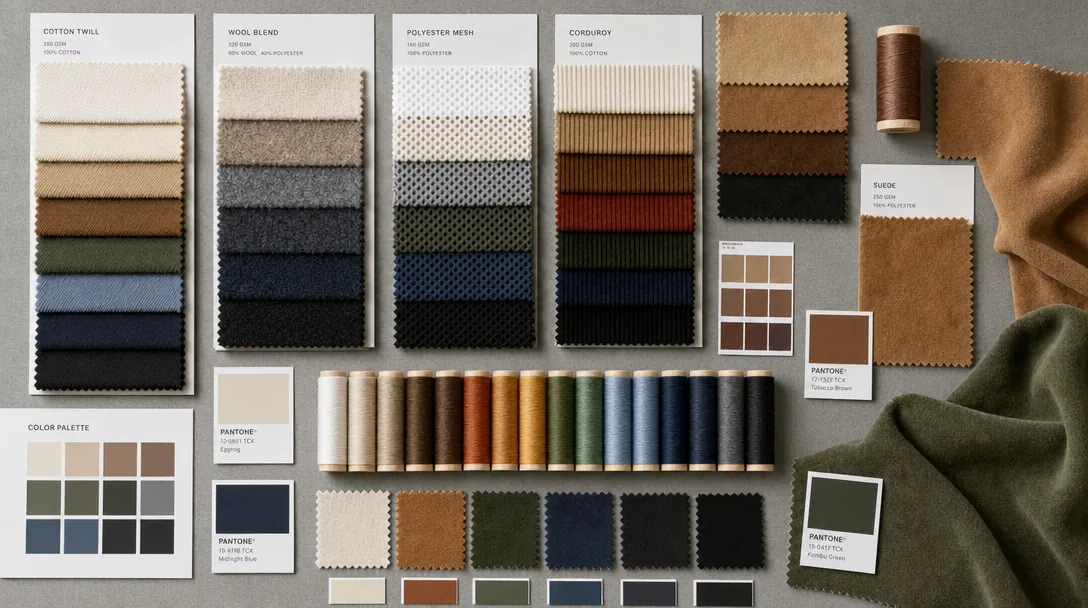
Corduroy Hat: Properties, Costs and How to Spec It Right (2026 Update)
Read article →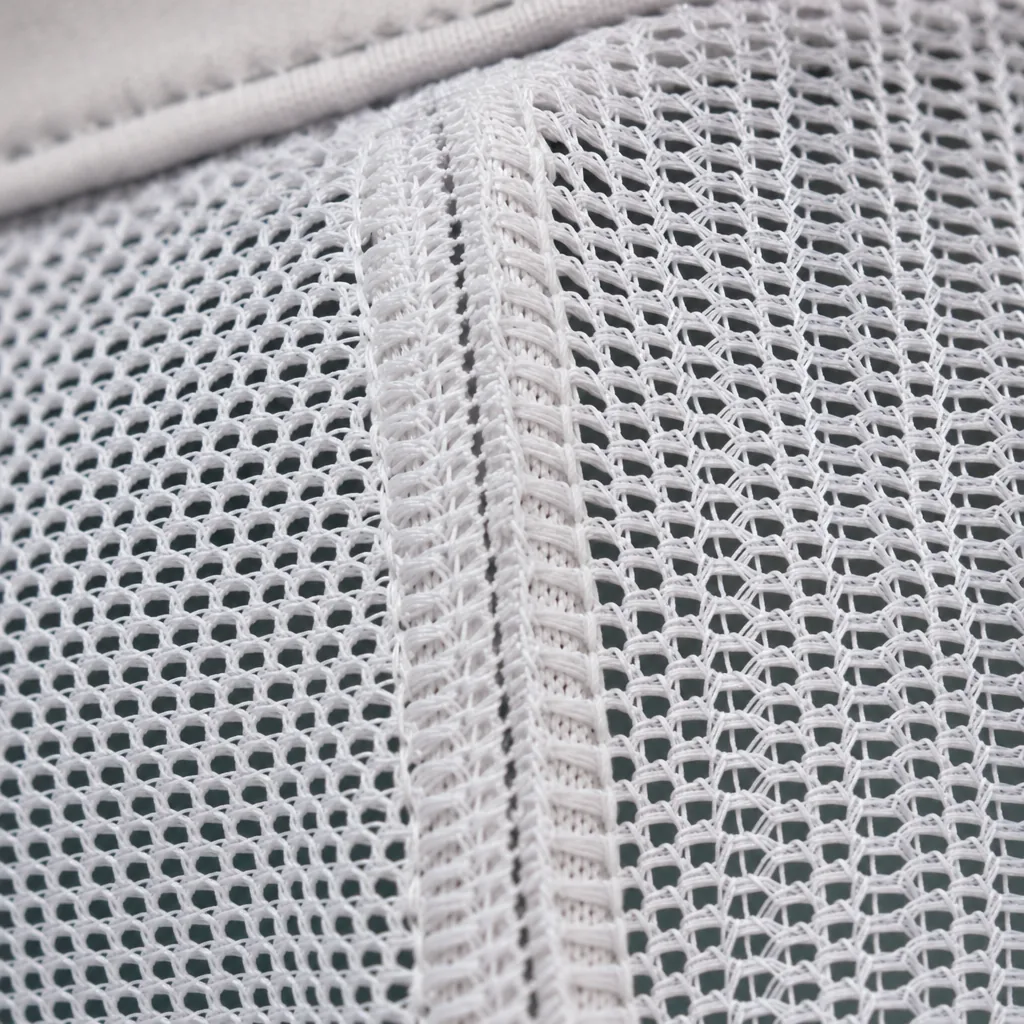
Custom Hat Trucker: The 2026 Sourcing & Manufacturing Playbook - Cost & MOQ Breakdown
Read article →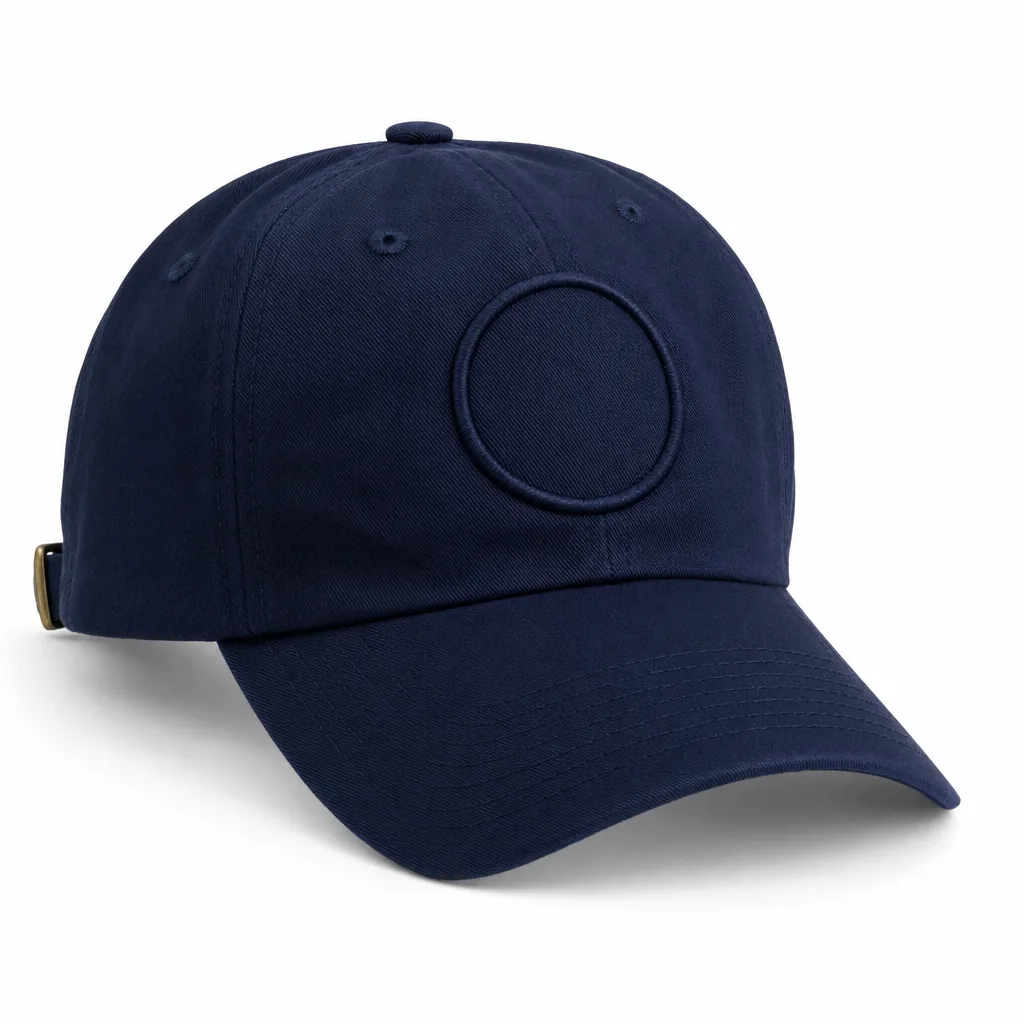
Cap Sweatband Material Selection for Custom Headwear Buyers
Read article →We hope this guide demystifies performance & athletic caps: moisture-wicking, upf and buyer specs - cost & moq breakdown (2026 update) (2026 update) and helps you move forward with confidence. If you have questions specific to your project, our English-speaking sales engineers are one message away.