
Performance & Athletic Caps: Moisture-Wicking, UPF and Buyer Specs - Cost & MOQ Breakdown (2026 Update) - 2026 Buyer's Guide
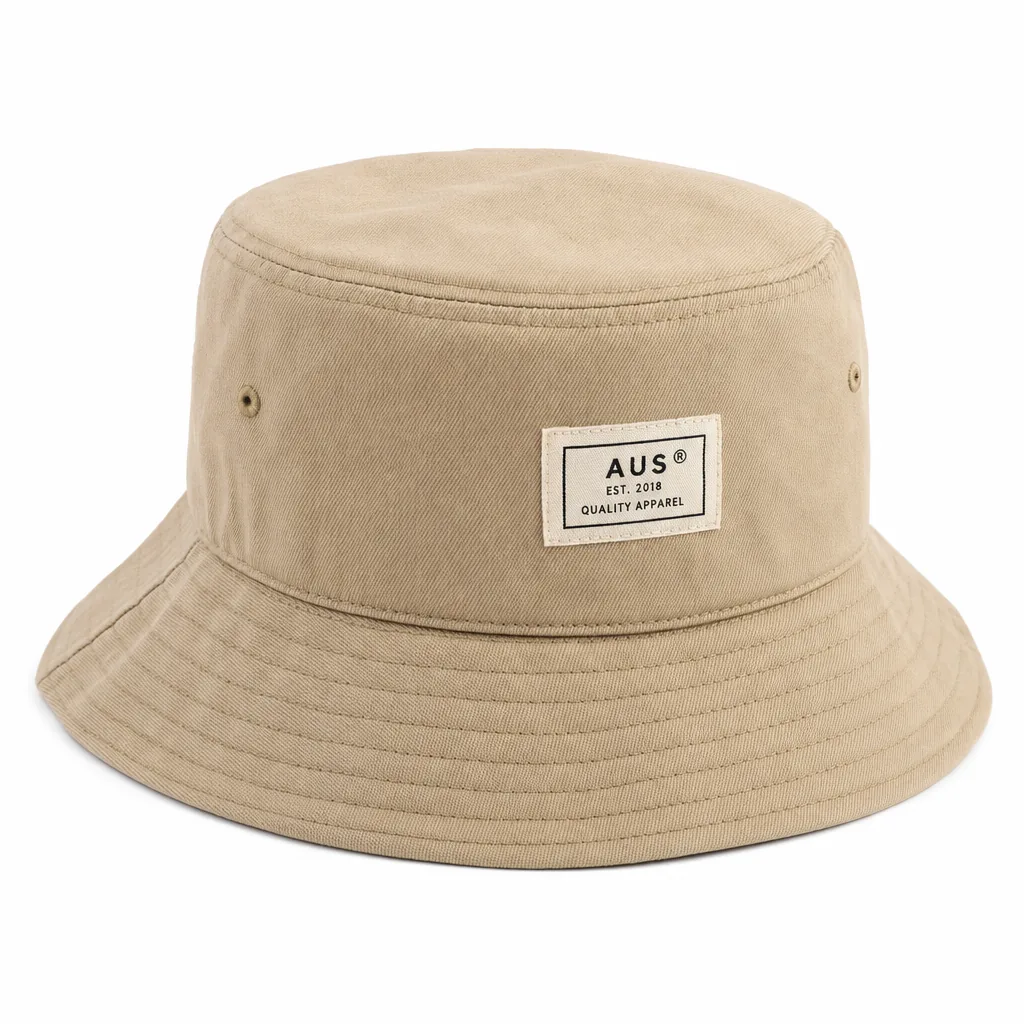
For brand owners, wholesalers and procurement teams entering the custom headwear category, performance & athletic caps: moisture-wicking, upf and buyer specs - cost & moq breakdown (2026 update) - 2026 buyer's guide is one of the highest-leverage decisions you will make. Get it right and your unit economics, retail story and reorder cycle all improve. Get it wrong and you carry the cost for years.
What makes a cap 'performance' vs 'standard'
A cap is only "performance" when the spec survives sweat, heat, and laundering without losing function; swapping cotton twill for shiny polyester does not qualify. Standard brushed cotton twill caps typically finish around 95 to 130 grams, absorb moisture into the crown, and stay wet long enough to show panel darkening, bill-edge waviness, and front-panel deformation. A real performance build is usually 55 to 75 grams in an unstructured 5-panel or 6-panel runner profile, using 75D to 150D polyester microfiber, ripstop, or mechanical-stretch woven fabric in the 110 to 160 gsm range. The useful numbers are moisture management and airflow: wicking finishes should still perform after 20 to 30 home-laundry cycles, and side mesh or laser-perforated panels should deliver measurable air permeability rather than a vague "quick-dry" claim. Any competent performance cap manufacturer should be able to quote denier, gsm, air-permeability results, and post-wash wicking retention from lab or in-house test data. The shell alone does not make the cap athletic; the sweatband, seams, visor, and closure decide whether it works for a 10K run or turns into giveaway-grade headwear. Standard cotton sweatbands trap salt and dry stiff, while a proper athletic build usually uses polyester-elastane or nylon-elastane sweatband fabric at 180 to 240 gsm with 5% to 12% spandex so it stays in contact with the forehead without creating pressure points. We also watch seam bulk, visor substrate, and closure weight closely on the factory floor: a soft EVA bill insert, narrow seam tape, and an elastic tuck strap or low-profile hook-and-loop closure can cut 10 to 18 grams versus a structured baseball cap with buckram and metal hardware. Sun protection is another dividing line. Serious programs usually call for UPF 30+ or UPF 50+ verified to AATCC 183, and that performance has to come from fabric cover factor, yarn selection, dye depth, and vent layout working together. Once a buyer is specifying UPF, controlled airflow, stretch recovery, wash durability, and shade control such as Pantone TCX within Delta-E 1.5 to 2.0, the product is no longer a standard cap with sporty styling; it is a technical build with tighter process tolerances and stricter QA.
UPF ratings: what's actually meaningful
The only UPF number that matters is the one tested on the actual production fabric, in the actual color, with the actual venting layout. A mill datasheet saying UPF 50 on a base cloth is not enough if the finished cap uses rear trucker mesh, side laser perforations, or wide seam breaks that materially reduce sun coverage. Technically, UPF 30 allows about 3.3% UV transmission and UPF 50 allows 2.0%; the numerical gap looks small, but in lightweight headwear the construction gap is not. A tight 110-140 gsm polyester interlock or high-cover microfiber plain weave may reach UPF 25-35 untreated, especially in black, navy, or other dark Pantone shades, while the same yarn count in white, ice gray, or pastel colors can fall off sharply because cover factor and dye depth both affect UV blockage. Any serious performance cap manufacturer should distinguish between fabric UPF and whole-cap sun protection instead of hiding behind a lab report for a single panel material. Where buyers get burned is specifying UPF 50+ on an ultralight summer cap without accounting for the trade-offs needed to achieve it. Mills usually move to denser 75D/72F or 50D high-density polyester, tighter pick counts, or UV-absorbing chemistry applied during dyeing and heat setting. On a 3,000-10,000 piece program, that typically adds $0.12-$0.35 FOB per cap, and more if the same style also needs bonded seams, laser-cut vents, recycled filament, or chemistry aligned with OEKO-TEX or bluesign input standards. Those changes are not performance-neutral: some finishes slow vertical wicking, some stiffen hand feel, and some push bulk shade variation beyond a Delta-E 1.0-1.5 tolerance if curing control is sloppy. Ask for AATCC 183 or AS/NZS 4399 test reports by colorway and production lot, not just on greige fabric or an old development swatch.
The biggest sourcing mistake is treating UPF as a binary claim instead of a controlled specification tied to end use. For golf, fishing, and sideline styles, you can get honest UPF 50+ performance with solid side and rear panels, a longer visor, and a tightly constructed shell fabric, often without relying heavily on topical treatment. For featherweight running caps, the equation changes fast: open pique, large-hole mesh, or 5 mm laser perforations may keep the cap cool, but they also create obvious exposure zones even when the surrounding fabric tests UPF 50+. On the factory floor, that is the difference between a garment that truly protects and one that is only technically compliant on paper. Write the spec so there is no room for interpretation. Require the approved construction code, fabric code, finish code, and color to match the lab report; define acceptable shade retention after finishing at Delta-E 1.0-1.5; and if durability matters, ask for UPF retention after 20-30 home launderings under the relevant care method. If the program carries retail or team-license risk, add AQL 2.5 final inspection language so labeling, color, and panel substitution are checked before shipment. At CrownsForge, the practical approach is to quote untreated UPF 30-35 fabrics separately from treated UPF 50+ options so procurement can decide whether the extra chemistry, lead time, and cost are justified by the actual wear environment.
Sweatband construction for athletic use
The sweatband determines whether an athletic cap feels technical or cheap. Buyers routinely debate a shell at 110 gsm versus 135 gsm polyester, then approve a 30 mm cotton terry band that turns waterlogged in one training session. For running, golf, and team-use caps, cotton is the wrong baseline: it absorbs fast, traps salt at the forehead seam, and dries poorly once ambient humidity moves past 60%. A better spec is a 150 to 180 gsm wicking knit, typically 88% to 92% polyester with 8% to 12% elastane, because it spreads moisture laterally instead of letting sweat pool at the front crown. In practice, a capable performance cap manufacturer gets more real-world comfort from that change than from upgrading the shell from standard interlock to a costlier micro-perforated polyester. Construction matters as much as fiber content. For athletic programs, I prefer a low-bulk circular-knit band at 30 to 35 mm finished width, attached with a fine 4-thread overlock or flatlock so the seam does not ridge against the temples. The weak point in production is usually attachment tension: too tight and the band tunnels; too loose and it twists after wear, especially near the side panels. A dual-surface knit performs best, with a hydrophobic inner face against skin and a more open outer face to accelerate evaporation. If a mill claims odor control, ask for the exact chemistry and wash durability; many low-cost finishes lose effectiveness after 20 home launderings, long before the cap is retired.
Swapping from a basic cotton band to a polyester-elastane wicking band is usually a small cost move with a disproportionate effect on complaint rates. At 3,000 pieces, the increase is typically $0.12 to $0.28 per cap, with the upper end tied to antimicrobial treatment, branded seam tape, or custom heather dyeing. MOQ is normally driven by the sweatband dye lot rather than the cap shell: stock black, white, and heather gray can often run at 1,000 pieces, while custom Pantone matching usually needs 2,000 to 3,000 pieces. For those custom shades, I would hold the approved lab dip to Delta-E 1.0 to 1.5, because navy and black bands show salt haze and shade drift faster than most buyers expect. Testing should be done on the finished cap, not just on a fabric data sheet. The useful checks are stretch recovery above 85% after repeated extension, seam slippage at the attachment line, crocking, perspiration staining, and dimensional stability after wash. If the band stretches out or the seam roping appears after carton compression, the cap will start rubbing at the temples even if the raw fabric passed. Our standard practice is to verify those points in pre-production and then confirm workmanship at final inspection under AQL 2.5, because summer transit and packed-carton pressure expose weaknesses that never show up in a swatch approval.
Reflective trim, vented panels, and other athletic features
Reflective trim gets specified badly more often than any other athletic detail because buyers treat it like decoration instead of a safety component. On running and cycling caps, I would not approve generic silver film without a certified retroreflectivity report, wash test, and heat-aging check. The dependable setup is 3M Scotchlite or a verified equivalent stitched into the brim edge, back arch, or closure opening, with initial brightness measured by the trim mill and bulk verified after 20 home-laundry cycles. Cheap reflective film often looks acceptable at PPS, then cracks after bill curving or starts delaminating when the shell fabric sees too much dwell time on a heat press. On 70D to 150D polyester woven shells, side-panel reflective heat transfers need tight application control—typically around 135 to 150 degrees C with short dwell—because overheating causes glazing, shrinkage, or panel warping. In FOB terms, reflective tape or transfer details usually add about $0.18 to $0.45 per cap, depending on tape length, whether it is seam-caught or top-stitched, and whether the logo is reflective ink, film, or segmented transfer.
Laser-cut ventilation is exactly where a competent performance cap manufacturer proves whether they understand production physics or just know how to sell samples. A 1.2 mm to 2.0 mm perforation pattern can ventilate a 90 to 120 gsm polyester crown very well, but if the open area is too aggressive the panel loses tension, ripples at the seam line, and collapses after washing. I prefer side and rear perforation backed with no-see-um mesh for training, running, and team issue styles, especially when the cap still needs abrasion resistance from helmets, ponytails, or repeated stuffing into gym bags. Buyers should ask for the laser file, hole pitch, and post-wash stability check, because perforated panels can distort once embroidery, silicone transfers, or seam taping are added nearby. Expect laser ventilation to add roughly $0.25 to $0.60 per cap and sometimes raise MOQ because separate cutting programs, placement jigs, and inline yield control are required.
Perforated mesh inserts are usually the safer choice for golf, resort, and warm-weather promotional programs because they give airflow without weakening the crown the way overcut laser panels can. The common build is a microfiber or mechanical-stretch woven front with 100 to 140 gsm polyester mesh inserts at the side or rear, plus a moisture-management sweatband and low-absorption seam tape inside. If the mesh has to match adjacent woven panels, do not accept “close enough”; lock color to Pantone TCX and specify a Delta-E tolerance, ideally under 1.5 for premium retail programs, because tonal mismatch shows immediately in daylight. UPF claims also need discipline here: once mesh is introduced, the protection story may apply only to the solid body fabric, not the entire finished cap. At CrownsForge, we separate mesh insert inspection from the rest of the shell and check seam slippage, burst strength, and puckering under AQL 2.5, because ugly insert seams are still one of the most common bulk failures on athletic caps.
Color and design considerations for athletic positioning
Athletic sell-through is highest when the cap looks engineered for sport, not dressed up like a promo item. The winning palette in running, golf, and training is still conservative: black, white, navy, graphite, and one or two seasonal tones controlled to a specific standard such as Pantone 19-4052 TCX. Decoration should stay quiet and functional—matte silicone, welded TPU, reflective heat transfer, or tonal embroidery—because technical buyers benchmark against premium run and golf headwear where symmetry, surface tension, and low visual noise matter. On 30D to 70D ripstop nylon, micro-perforated polyester, and other lightweight woven shells, bright contrast stitching makes every problem visible: needle deflection, seam grin, crown torque, and puckering at the front panel. A capable performance cap manufacturer selects decoration by substrate and cap construction, not by whatever the brand team put on the mood board. Material weight decides what will actually hold shape in production. Thin ripstop and laser-perforated woven fabrics usually take reflective transfer films and TPU welds more cleanly because they avoid thread drag and reduce distortion around perforation zones. By contrast, 140 to 180 gsm interlock, double-knit, or spacer fabrics can support low-profile 3D embroidery if the backing, stitch density, and crown reinforcement are balanced correctly on Tajima or Barudan heads. Push that same embroidery onto an unstructured lightweight shell and you get tunneling, edge pull, and a cap that looks cheap before it even reaches inspection. Our standard practice is to approve decoration only after wash, crocking, and adhesion testing on the actual shell fabric, because athletic consumers spot finish problems immediately.
The most efficient athletic programs separate color architecture from logo architecture early, before sampling gets out of hand. Team, event, and licensed buyers usually lock one shell, visor, sweatband, and closure package, then rotate only the small logo lockups for clubs, races, academies, or corporate wellness kits. That keeps the fit block, panel pattern, seam taping, and trim BOM unchanged, so the factory is only swapping embroidery files, transfer plates, or mold tooling. In real costing terms, a 1,200-piece order can often split into four logos at 300 pieces each with only modest setup impact when the base cap stays common; let every group demand its own body color and the same order quickly picks up extra lab dips, MOQ issues on trims, and more shade-band risk than most buyers expect. The biggest failure point in tonal athletic programs is usually trim matching, not the main shell fabric. Navy body fabric might pass, but hook-and-loop tape, elastic webbing, seam binding, sandwich piping, edge tape, and undervisor print often drift under D65 light unless the spec holds a tight Delta-E tolerance—ideally under 1.5 for premium tonal programs, and no worse than 2.0 if the price target is aggressive. Once those components miss, the cap loses the clean athletic look and starts reading like mixed inventory. The cleanest spec is disciplined: one body color, one decoration finish, one closure color, and one approved fallback decoration method if the primary application fails adhesion, crocking, or laundering tests at pre-production stage.
Pricing: performance fabric costs vs standard cotton
The fabric choice is where the cost gap opens up fastest. A basic brushed cotton twill cap body at 180 to 220 gsm is still one of the cheapest builds in the market, but once a buyer moves into performance polyester—typically 75D to 150D microfiber, mechanical stretch woven, or lightweight interlock with moisture management—the adder is usually real and unavoidable: about $0.40 to $0.80 per cap at factory level on mid-volume orders. That spread depends on whether the mill is supplying stock black, white, and navy, or matching a custom Pantone shade with lab dips and tighter Delta-E control. For a serious performance cap manufacturer, the bigger issue is not only raw fabric price but yield loss, because perforated laser-cut panels, bonded seams, and lighter denier shells tend to produce more cutting waste than standard cotton 6-panel bodies. Buyers sourcing an athletic hat custom program should expect the low end of the range on 3,000 to 5,000 units and the high end when asking for custom colors, stretch fabrics, or branded technical trims.
UPF is often quoted too casually, but the cost depends on how the rating is achieved. If the supplier is using inherently dense microfiber construction to help reach UPF 30+ or UPF 50+, the adder may sit closer to $0.20; if the mill applies a chemical UV finish and the buyer wants test documentation to AATCC 183 or AS/NZS 4399, $0.20 to $0.30 per cap is a more realistic number. On running and golf programs, I usually tell buyers to check whether they are paying for an actual certified finish or just a sales claim on a hangtag. A credible upf hat manufacturer should be able to tie the surcharge back to the mill spec, test report, and fabric lot, especially when the cap also needs wicking, quick-dry behavior, and colorfastness after wash. Our standard practice is to lock the final fabric code before bulk because changing from stock polyester to tested UV-treated cloth late in development can shift not just unit cost, but also MOQ at the mill level.
The sweatband upgrade is small in absolute dollars but high impact in wear testing. A standard cotton or poly-cotton sweatband may be included in the base price, while a moisture-wicking cap setup using Coolmax-type polyester mesh, brushed microfleece, or antimicrobial quick-dry knit usually adds about $0.10 to $0.20 per cap depending on width, density, and whether seam taping is required. On a running cap custom order, that upgrade matters more than many buyers think because poor sweatband recovery is one of the first complaints after field use, especially in hot-weather SKUs above 10,000 steps per day or 18-hole golf wear. For golf cap wholesale and team programs, the practical landed delta from standard cotton to a fully upgraded technical build often ends up around $0.70 to $1.30 per cap before decoration, assuming no exotic trims. That means a cap that might cost $1.55 to $2.10 in basic cotton can move to roughly $2.30 to $3.40 once technical shell fabric, UV treatment, and upgraded sweat management are correctly specified.
Frequently Asked Questions
Do you support sustainability certifications?
Yes. We work with GOTS organic cotton, GRS-certified recycled polyester, OEKO-TEX Standard 100 fabrics, and are BSCI and Sedex audited. Certification documentation can be provided per order.
What is the minimum order quantity (MOQ) for custom hats?
Our standard MOQ is 100 pieces per design and color, with sampling available from 1 piece. For complex multi-color logos or premium fabric upgrades, the MOQ can be lowered with a small per-piece surcharge.
How long does production take?
Sampling takes 7 to 12 days. Bulk production runs 20 to 30 days depending on quantity, fabric availability and decoration complexity. Inspection and packing adds another 3 to 5 days before shipment.
What logo decoration techniques do you offer?
3D puff embroidery, flat embroidery, woven patch, leather patch, PVC patch, screen printing, sublimation, applique and laser etching, all in-house with no subcontracting.
Can I order a sample before bulk production?
Yes. We strongly recommend approving a pre-production sample before mass production. Samples are charged at 35 to 60 USD each plus express shipping, fully refundable against confirmed bulk orders over 500 pieces.
How does ordering baseball cap custom logo work?
When evaluating baseball cap custom logo, the key considerations are construction quality, decoration capability, MOQ flexibility and lead time. Performance polyester adds roughly $0.40-$0.80 per cap vs standard cotton. UPF treatment adds another $0.20-$0.30. Sweatband upgrade adds $0.10-$0.20. Moisture-wicking fabric (typically polyester with wicking finish), moisture-wicking sweatband (usually polyester-elastane blend), lightweight construction (under 80g), and often UPF treatment.
What should buyers know about branded bills performance hat?
When evaluating branded bills performance hat, the key considerations are construction quality, decoration capability, MOQ flexibility and lead time. UPF 30 blocks ~97% of UV. UPF 50+ blocks 98%+. Most performance polyester fabric reaches UPF 30 naturally without chemical treatment. UPF 50+ usually requires treated fabric, which adds cost. Performance polyester adds roughly $0.40-$0.80 per cap vs standard cotton. UPF treatment adds another $0.20-$0.30. Sweatband upgrade adds $0.10-$0.20.
How much does branded bills custom hat cost typically cost?
When evaluating branded bills custom hat cost, the key considerations are construction quality, decoration capability, MOQ flexibility and lead time. UPF 30 blocks ~97% of UV. UPF 50+ blocks 98%+. Most performance polyester fabric reaches UPF 30 naturally without chemical treatment. UPF 50+ usually requires treated fabric, which adds cost. Moisture-wicking fabric (typically polyester with wicking finish), moisture-wicking sweatband (usually polyester-elastane blend), lightweight construction (under 80g), and often UPF…
How does ordering custom logo bucket hat work?
When evaluating custom logo bucket hat, the key considerations are construction quality, decoration capability, MOQ flexibility and lead time. Moisture-wicking fabric (typically polyester with wicking finish), moisture-wicking sweatband (usually polyester-elastane blend), lightweight construction (under 80g), and often UPF treatment. UPF 30 blocks ~97% of UV. UPF 50+ blocks 98%+. Most performance polyester fabric reaches UPF 30 naturally without chemical treatment. UPF 50+ usually requires treated fabric, which…
Ready to start your custom hat project?
Send us your tech-pack, sketch or even just an inspiration photo. We will respond with a detailed quotation and digital mock-up within 24 hours.
Request a free quoteRelated guides
Custom Made Trucker Hat: The 2026 Sourcing & Manufacturing Playbook - Supplier Checklist (2026 Update)
Read article →
Cap Packaging Options: Retail-Ready, Hangtag, Polybag & Custom Boxes (2026 Update)
Read article →
Cool Bucket Hats for Guys: A Vertical-Specific Sourcing Guide
Read article →Sourcing custom hats does not have to be complicated. With the right manufacturing partner, clear specifications and a small upfront investment in sampling, you can launch a retail-quality product in 30 to 45 days.