
Performance & Athletic Caps: Moisture-Wicking, UPF and Buyer Specs - Cost & MOQ Breakdown (2026 Update) - 2026 Buyer's Guide - 2026 Buyer's Guide
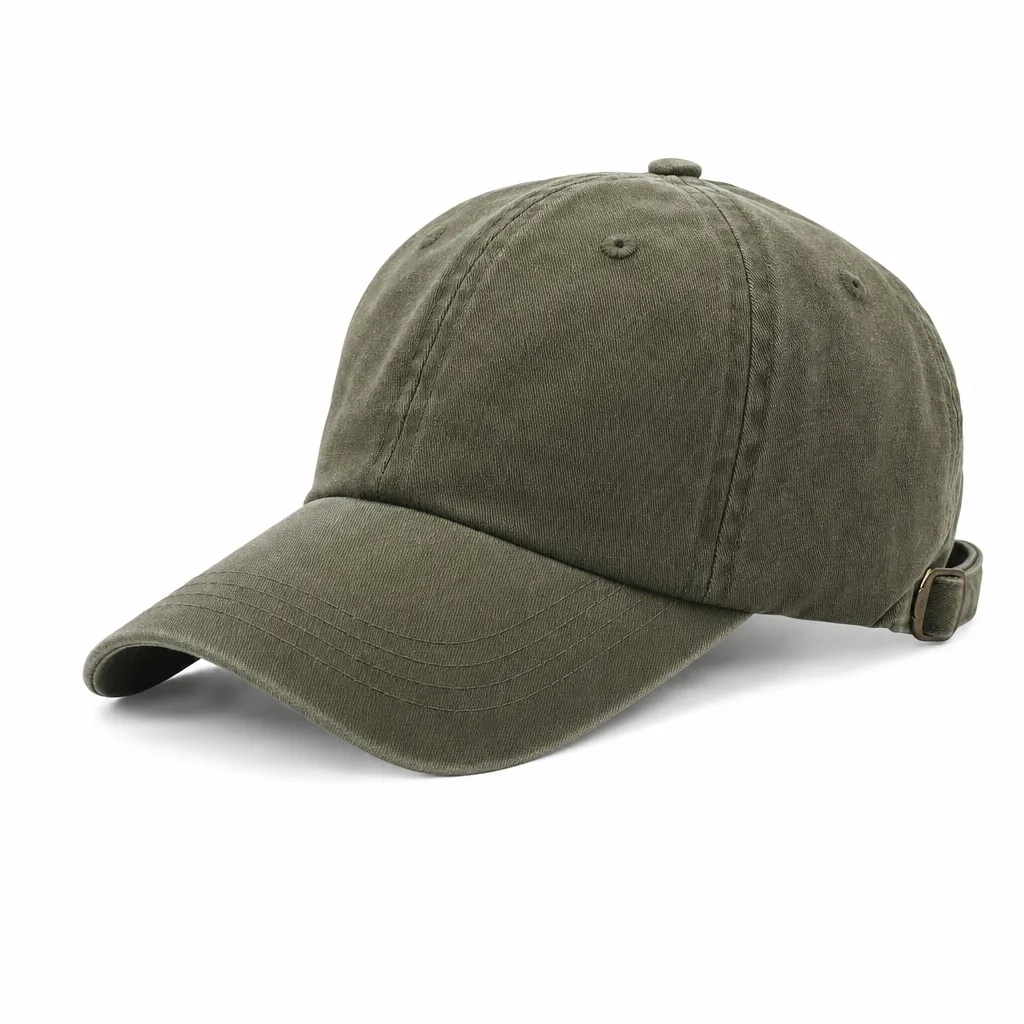
Performance & Athletic Caps: Moisture-Wicking, UPF and Buyer Specs - Cost & MOQ Breakdown (2026 Update) - 2026 Buyer's Guide - 2026 Buyer's Guide is one of the most-asked questions we receive from international buyers, and for good reason. With dozens of factories competing for your order and an alphabet soup of technical terms in every supplier quote, even experienced importers can feel lost. This guide consolidates what we have learned producing custom hats for clients in 40+ countries.
What makes a cap 'performance' vs 'standard'
A cap becomes “performance” when the fabric package, trims, and construction keep working after sweat, sun, and 30 to 50 wash cycles; a standard cap usually fails on all three. Most promotional caps are built in 200–260 gsm brushed cotton twill or chino and land around 95–120 g in a 6-panel shape. They feel substantial on day one, but cotton sweatbands can hold 20–27 percent of their weight in moisture, so the band stays wet, darkens with salt rings, and takes hours to air dry. A real performance style is usually 75–140 gsm polyester microfiber, 20D to 70D mini-ripstop, or a mechanical-stretch woven with hydrophobic yarns. Weight drops to roughly 55–80 g for a running cap and 80–95 g for a more structured golf or team silhouette. If a supplier cannot tell you fabric gsm, denier, moisture-management test method, and post-laundering shrinkage, they are selling a look, not a technical product.
The biggest separator is not the shell fabric alone; it is the full bill of materials and how the cap is engineered under load. A capable performance cap manufacturer will spec polyester or nylon sweatbands, perforated side panels, laser-cut vent holes with heat-sealed edges, and lighter brims using EVA or thin HDPE instead of heavy paperboard. Stitch count matters too: overly dense seams trap heat and create forehead pressure points, while a cleaner build with taped seam allowances and offset front-panel joins wears better over a two-hour run or 18 holes in July. On the factory floor, we usually check colorfastness to perspiration, crocking, and dimensional stability after laundering before approving bulk, because a cap that warps or bleeds after three washes is a standard cap dressed in athletic language. UV claims also need discipline: UPF 50+ generally comes from fabric density, yarn type, and finish, then should be verified to AATCC 183 or AS/NZS 4399, not printed on a hangtag without data.
UPF ratings: what's actually meaningful
A UPF claim only matters when it comes from a finished, color-approved fabric test on the exact bulk you are buying, not a recycled mill PDF from a similar style. UPF 30 allows roughly 3.3% UV transmission; UPF 50 allows 2%; UPF 50+ means the measured value exceeded 50 under the lab’s reporting protocol. On the factory floor, that difference is not academic. A dark 75D to 100D polyester microfiber plain weave or dense interlock at 110-160 gsm can often reach UPF 20-30 without added chemistry, especially in black, navy, or forest because deeper shades block more radiation. The same construction in white, ice gray, or pastel can test dramatically lower. Buyers should ask for current reports to AATCC 183, AS/NZS 4399, or EN 13758-1/-2, and the report should match fiber content, gsm, finish, colorway, and production lot. If those details do not line up, “UPF” is a sales word, not a controlled specification.
UPF 50+ is where cap sourcing gets unforgiving, particularly on lightweight running styles with venting. Mills usually get there by increasing cover factor, switching to finer-yet-denser filament yarns, applying UV absorbers, or stacking those methods together. Every one of those choices affects hand feel, CFM air permeability, moisture management, and cost. On a basic 6-panel polyester performance cap at 1,000 pieces, standard shell fabric may sit around $1.85-$2.60 FOB; a verified UPF 50+ shell typically adds $0.12-$0.35 per cap, plus about $150-$300 for fresh batch testing if the buyer wants lot-specific confirmation. The weak point is almost never the solid crown fabric alone. Laser-perforated panels, sandwich mesh, 3D spacer mesh, and ultra-light 90-100 gsm shells can pull real-world protection down fast, and some suppliers quote the rating only for uncut fabric, not the finished hat. A competent performance cap manufacturer will define the test method, target UPF, covered components, wash durability, and allowable shade variation—ideally with color approval to Pantone TCX and fabric consistency tight enough to avoid major Delta-E drift between lab sample and bulk.
Sweatband construction for athletic use
The sweatband is the first component athletes judge, because it sits on skin for hours and fails faster than the shell fabric. Cotton terry still shows up on budget caps, but for running, tennis, golf, and team training it is a poor spec: a 180–200 gsm cotton band can absorb well over 2.4x its dry weight, then stay wet against the forehead long after the crown fabric has flashed off. That is why wearers complain about brow-line chafing, salt buildup, and the dark wet ring that telegraphs through the front panel. A polyester-elastane wicking band behaves differently. In practical factory testing, an 88/12 or 92/8 brushed jersey or fine interlock at 180–220 gsm spreads moisture laterally by capillary action, holds less free liquid in the structure, and recovers shape after repeated sweat loading instead of stretching out. Any serious performance cap manufacturer should freeze this spec early, not treat it as an afterthought behind laser-cut vents or lightweight shell fabric. The most stable athletic build is usually 32–38 mm wide, with a hydrophilic finish and controlled stretch so the band seals lightly without creating pressure points. Once you push beyond 40 mm on a 5-panel running cap or other unstructured style, you usually add heat retention and slow drying without gaining meaningful comfort. Construction is where many programs quietly fail: we prefer a 4-thread overlock or flat seam, then a clean turned or bound edge so the brow contact line stays smooth under motion. On the factory floor, the real checkpoints are seam slippage after washing, spirality after heat setting, and colorfastness to perspiration under ISO 105-E04, especially black and navy bands sewn next to white polyester mesh. If the cap carries a UPF 50+ claim, confirm the sweatband finish chemistry does not interfere with post-wash testing or push shade tolerance beyond Delta-E 1.0–1.5 versus approved Pantone TCX standards.
The cost premium for upgrading the sweatband is modest enough that cotton rarely makes sense on a true athletic program. At 3,000 pieces, moving from standard cotton terry to a polyester-elastane wicking band usually adds about $0.08–$0.18 per cap, depending on gsm, knit structure, and finish source. If you add anti-odor chemistry such as silver-free antimicrobial treatment, branded jacquard elastic, or bluesign-approved finishing, the premium typically lands closer to $0.20–$0.28. Stock dyed wicking bands are usually workable from 500–1,000 pieces per color, but a custom-knit band with a specific denier mix, logo repeat, or softer brushed handfeel often needs a trim MOQ around 2,000 pieces before the mill will quote efficiently. Inspection should focus on attachment quality and recovery, not just appearance. Our standard practice at CrownsForge is to check sweatband join consistency, edge smoothness, and stitch security under AQL 2.5, then run perspiration fastness, dimensional stability, and elastic recovery checks before bulk packing. On higher-output programs we also spot-check attachment on Barudan and Tajima lines because uneven feeding at the band can distort the crown opening by several millimeters, which changes fit more than buyers expect. The field failures are predictable: curled edges, bagged-out bands, dye migration onto white mesh, or a band that turns the front panel into a saturated ring after one training session. Shell fabric can pass every moisture-wicking claim on paper and the cap will still underperform if the sweatband spec is lazy.
Reflective trim, vented panels, and other athletic features
Reflective trim is the wrong line item to squeeze if the cap is meant for road running, cycling commutes, or team drills before sunrise. The best-performing options are segmented heat-transfer films rated like 3M Scotchlite 5807/5805, reflective woven piping, or 1/4-inch sandwich-brim tape placed where motion catches headlights: brim edge, rear arch, closure strap, or crown seam. At 1,000 units, a reflective transfer logo usually adds $0.18-$0.35 per cap; sewn reflective piping or brim tape lands closer to $0.30-$0.62 depending on width, placement, and stitch count. What matters is retained performance after wear, not day-one brightness. A capable performance cap manufacturer should run adhesion and appearance checks after at least 10 wash cycles at 40°C, then inspect edge lift, cracking, silvering, and peel strength on curved panels. On dark 75D-150D polyester microfiber, we also watch for platen gloss and color shift after pressing; if the heat-transfer station is too hot or dwell time is too long, you get a visible gloss box around the logo even when the reflective film itself passes. Venting should be engineered around the fabric, not added like decoration. Laser-cut perforation consistently beats embroidered eyelets on high-output running caps, but only on shells in the right range: typically 110-140 gsm recycled polyester or nylon with enough tear strength to survive repeated flex. We keep perforation diameter around 1.0-1.8 mm with 3-5 mm pitch and hold the pattern at least 8 mm away from seam allowance, sweatband topstitch, and bartacks; any closer, and panel splitting becomes one of the first AQL 2.5 failures in wear testing. Most factories stabilize the vent zone with no-see-um mesh, warp-knit tricot, or bonded support mesh so the crown keeps shape and the holes do not distort. Laser setup usually runs $80-$150 per pattern, with a unit adder of $0.22-$0.48 depending on cut density and backing. For golf, tennis, and resort-sport programs, mesh inserts are often the safer choice: birdseye mesh, micro-hole warp knit, or light spacer mesh at 120-180 gsm handles repeated stretching better. The common buyer mistake is assuming the base fabric UPF applies to the finished cap; once you open side panels with mesh or perforation, protection can drop sharply, so finished-garment UPF testing matters more than the mill certificate.
Color and design considerations for athletic positioning
Athletic caps look premium when the color system is disciplined, not busy. The commercial baseline is still black, white, navy, graphite, and one seasonal Pantone TCX accent, with branding kept tonal through matte TPU, silicone heat transfer, or low-density 3D embroidery. That is not a style opinion; dark neutrals hide salt rings and sweat shadowing better on 100% polyester and 90/10 poly-spandex shells, and they keep a cleaner read after repeated UV exposure than sharp contrast blocking. On moisture-wicking styles, approve color under both D65 daylight and 4000K to 5000K retail LED, because a shell, patch, and transfer can all look like “navy” in the lab and still miss each other once the substrate changes. If the Delta-E between components drifts past 1.5 on tonal programs, the mismatch is usually visible at arm’s length. A competent performance cap manufacturer should catch that at lab-dip and trim approval, before anyone starts bulk cutting or booking transfer film.
Brand architecture matters more in athletic programs than in fashion drops. The cleanest execution splits the identity: master brand on seam tape, inner label, or rear closure tab, then a smaller team or event mark on the front panel. That lets one runner, golf, or training silhouette work across school athletics, corporate races, and licensed club programs without changing the pattern or tooling. For side-panel graphics, reflective transfer is usually smarter than embroidery on lightweight builds; 5 to 8 mm reflective elements preserve stretch and airflow, while dense satin stitches can lock up the panel and create puckering around laser perforation. Fabric and decoration have to be engineered together. A 140 to 160 gsm laser-perforated 92/8 polyester-elastane crown will not tolerate the same stitch density as a 180 gsm woven poly twill. If the logo lands over seam tape, perforation, or a curved vent zone, move to a welded patch, micro-injection logo, or high-definition transfer, then require wash, crocking, and adhesion testing before approval.
For UPF programs, do not assume a dark cap equals UPF 50+. Ask for AS 4399 or AATCC 183 data on the actual finished fabric and shade, because pigment concentration, knit density, and perforation pattern change the result more than the marketing copy does. In practice, a 180 gsm tightly woven polyester with a full crown lining can test at UPF 50+, while a lighter ventilated build may land in the UPF 15 to 30 range even in the same color family. That matters when buyers want one cap to cover outdoor labor, team sport, and promotional use under different compliance claims. CrownsForge’s standard practice is to lock color, decoration method, and test standard together in the spec sheet, then approve against a physical shade band and a wash panel after three to five launder cycles. Without that discipline, the bulk lot tends to drift: brim undercolors shift, reflective films dull, and what passed in the sample room no longer matches the field sample.
Pricing: performance fabric costs vs standard cotton
The price jump in an athletic cap program is usually the shell fabric, not the logo. A stock 260-280 gsm brushed cotton twill 6-panel cap typically runs about $1.05-$1.35 ex-factory at 3,000-5,000 pcs before decoration. Move the same pattern into performance polyester and the shell usually adds $0.40-$0.85, depending on spec: commodity 150D poly twill or birdseye mesh sits at the low end, while 75D microfiber, 90D mechanical-stretch woven, or laser-perforated side panels push higher. The hidden cost is yield. Technical fabric is slicker to cut, skews more at lay-up, and rejects harder on panel alignment or crown puckering, so utilization is commonly 2-4 points worse than cotton. A serious performance cap manufacturer prices that waste into the quote instead of waiting for a change-order fight later.
UPF is where quotes get muddy fast. Dense polyester can test at UPF 30+ or 40+ from weave density alone, but a documented UPF 50+ claim usually adds about $0.20-$0.35 per cap once you include finish chemistry, mill controls, and third-party testing. Ask for AATCC 183 or AS/NZS 4399 results and confirm the report is on finished fabric, not greige, because dyeing, heat setting, and repeated laundering can move the number. Light shades are the toughest case: white, stone, and pastel colors need tighter process control after finishing, and if the program also requires Pantone TCX matching, holding Delta-E within 1.5-2.0 can raise both dye-lot risk and minimum fabric commitments. That is normal, not a sign the mill is overcharging.
Sweatband upgrades look small on a cost sheet, but they are one of the first things runners and golfers feel in wear. Replacing a basic cotton band with a moisture-management option usually adds $0.10-$0.22 per cap. Common specs are polyester terry, Coolmax-type warp knit, or a laminated sandwich band with a foam core for structure. Anti-odor treatment, ultrasonic-cut edges, or printed care data instead of woven labels can push that closer to $0.25-$0.32. The manufacturing effect matters too: these knits feed less consistently than cotton, stretch under the presser foot, and can pull the crown opening out of round if operator tension is not set correctly. On a real production line, that is where low quotes turn expensive in rework and inspection loss.
The cleaner way to compare cotton and performance pricing is to quote the cap as a full system: shell, sweatband, closure, and ventilation method. A cotton twill cap with a standard sweatband and embroidered eyelets can still land under $1.50 before logo work, while a lightweight running cap with 75D shell fabric, perforated side panels, a wicking band, and hook-and-loop or elastic webbing closure usually reaches $2.10-$2.60 before decoration at the same volume. The practical gap is not just material cost; it is cutting loss, QC time, and the higher reject rate on stretch fabrics and bonded trims. Buyers who try to save $0.08 on a sweatband or closure often pay for it later in fit complaints, reorder resistance, and failed wear testing. For team, golf, and outdoor retail programs, comfort failures cost more than the fabric upgrade ever does.
Frequently Asked Questions
What is the minimum order quantity (MOQ) for custom hats?
Our standard MOQ is 100 pieces per design and color, with sampling available from 1 piece. For complex multi-color logos or premium fabric upgrades, the MOQ can be lowered with a small per-piece surcharge.
Do you support sustainability certifications?
Yes. We work with GOTS organic cotton, GRS-certified recycled polyester, OEKO-TEX Standard 100 fabrics, and are BSCI and Sedex audited. Certification documentation can be provided per order.
Which shipping methods do you support?
We support FOB, CIF and DDP shipping. Air express for samples and small orders, sea LCL for 100 to 500 pieces, sea FCL for 5,000+ pieces. Door-to-door DDP available for US, EU, UK, Canada and Australia.
What file format should I send for my logo?
Vector files (AI, EPS, PDF) are ideal. High-resolution PNG or JPG at 300 dpi on transparent background works as a fallback. Provide Pantone color references for accurate reproduction.
How long does production take?
Sampling takes 7 to 12 days. Bulk production runs 20 to 30 days depending on quantity, fabric availability and decoration complexity. Inspection and packing adds another 3 to 5 days before shipment.
How does ordering baseball cap custom logo work?
When evaluating baseball cap custom logo, the key considerations are construction quality, decoration capability, MOQ flexibility and lead time. Performance polyester adds roughly $0.40-$0.80 per cap vs standard cotton. UPF treatment adds another $0.20-$0.30. Sweatband upgrade adds $0.10-$0.20. Moisture-wicking fabric (typically polyester with wicking finish), moisture-wicking sweatband (usually polyester-elastane blend), lightweight construction (under 80g), and often UPF treatment.
What should buyers know about branded bills performance hat?
When evaluating branded bills performance hat, the key considerations are construction quality, decoration capability, MOQ flexibility and lead time. UPF 30 blocks ~97% of UV. UPF 50+ blocks 98%+. Most performance polyester fabric reaches UPF 30 naturally without chemical treatment. UPF 50+ usually requires treated fabric, which adds cost. Performance polyester adds roughly $0.40-$0.80 per cap vs standard cotton. UPF treatment adds another $0.20-$0.30. Sweatband upgrade adds $0.10-$0.20.
How much does branded bills custom hat cost typically cost?
When evaluating branded bills custom hat cost, the key considerations are construction quality, decoration capability, MOQ flexibility and lead time. UPF 30 blocks ~97% of UV. UPF 50+ blocks 98%+. Most performance polyester fabric reaches UPF 30 naturally without chemical treatment. UPF 50+ usually requires treated fabric, which adds cost. Moisture-wicking fabric (typically polyester with wicking finish), moisture-wicking sweatband (usually polyester-elastane blend), lightweight construction (under 80g), and often UPF…
How does ordering custom logo bucket hat work?
When evaluating custom logo bucket hat, the key considerations are construction quality, decoration capability, MOQ flexibility and lead time. Moisture-wicking fabric (typically polyester with wicking finish), moisture-wicking sweatband (usually polyester-elastane blend), lightweight construction (under 80g), and often UPF treatment. UPF 30 blocks ~97% of UV. UPF 50+ blocks 98%+. Most performance polyester fabric reaches UPF 30 naturally without chemical treatment. UPF 50+ usually requires treated fabric, which…
Looking for a reliable hat manufacturer in China?
CrownsForge has produced custom hats for 800+ brands across 40 countries. From 100-piece launches to 100,000-piece retail programs, we deliver on time and on spec.
Get in touchRelated guides
Compliance Documentation Checklist for First Hat Import to US/EU (2026 Update)
Read article →
Cap Factory AQL Inspection Plan for Importers
Read article →
Bucket Hat Corduroy MOQ And Pricing Plan for Custom Hat Buyers
Read article →Sourcing custom hats does not have to be complicated. With the right manufacturing partner, clear specifications and a small upfront investment in sampling, you can launch a retail-quality product in 30 to 45 days.