
Patch Hats Decoration QC Checklist for Custom Hat Buyers - Cost & MOQ Breakdown - Supplier Checklist
Patch Hats Decoration QC Checklist for Custom Hat Buyers - Cost & MOQ Breakdown - Supplier Checklist is one of the most-asked questions we receive from international buyers, and for good reason. With dozens of factories competing for your order and an alphabet soup of technical terms in every supplier quote, even experienced importers can feel lost. This guide consolidates what we have learned producing custom hats for clients in 40+ countries.
Why patch hats decoration qc checklist needs a separate sourcing plan
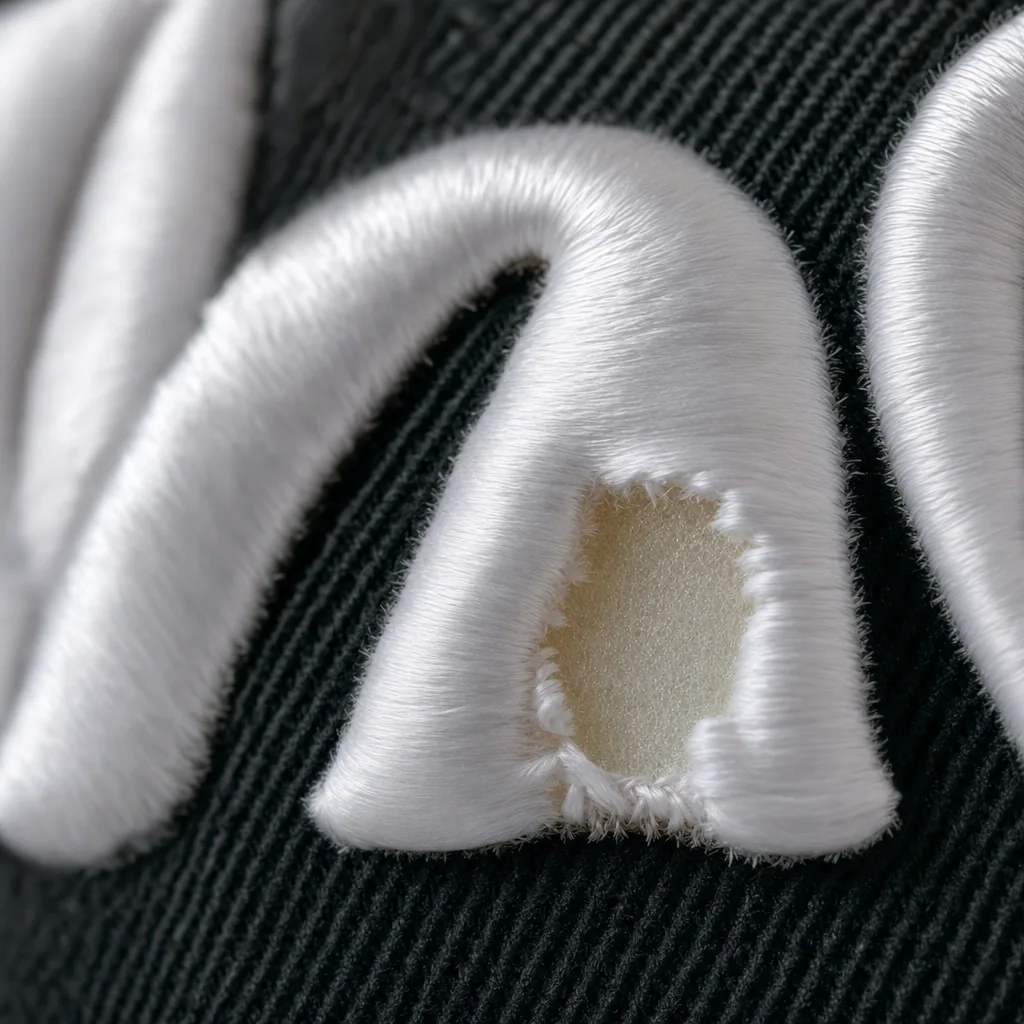
Most patch failures start before cap assembly, which is why a serious patch hats decoration qc checklist needs a separate sourcing plan for the badge itself. The cap body and the patch are two different manufacturing processes with different tolerances, materials, and defect maps. A 270 gsm brushed cotton chino 6-panel can pass crown symmetry, seam count, visor curvature, and sweatband join inspection, then still fail retail because the patch vendor used the wrong twill base, a low-melt heat-seal film, or a merrow edge that tunnels once it is sewn onto a curved front panel. Patch type changes the risk immediately: 2.0-2.5 mm PVC can distort an unstructured dad cap, laser-cut woven badges can fray at the edge after wash or abrasion, and debossed PU often shows grain cracking or color migration after carton compression at 8-10 kg stack load. Generic tech packs usually miss those interface risks, so the factory ends up arguing whether the root cause is crown construction, patch thickness, adhesive, or attachment method. Mockups do not prove compatibility; attachment trials do. The same patch that sits clean on a buckram-backed trucker front can pucker badly on a soft washed cotton crown because the panel memory, fabric gsm, and stitch support are different. Buyers who skip physical trials usually discover edge lift, adhesive ghosting, or off-center placement after 20%-30% of bulk is already attached. The practical control points are straightforward: approve the patch strike-off first, then run attachment tests on bulk shell fabric, then do a 24-hour compression and wear check with caps packed at export density. That process catches the common failures early: satin border roping, heat film show-through on light colors, placement drift beyond ±2 mm, and stitch tension marks around thick badges. At CrownsForge, patch sampling typically adds 5-7 days for embroidered or woven styles and 10-14 days for PVC, TPU, silicone, or metal badges, which needs to be built into ex-factory planning, not treated as a last-minute trim approval.
MOQ and cost usually follow the patch supplier, not the hat line. A standard cut-and-sew cap might run with a workable MOQ of 144-300 pieces per colorway, but decoration minimums can force a completely different buy strategy. Embroidered patches may start around 100-200 pieces per design, woven patches around 300, while molded PVC, TPU, or metal badges often need 500-1,000 pieces to amortize tooling. The cost swing is material: a basic stitched embroidered patch can add roughly $0.35-$0.80 per cap, while a Pantone-matched molded rubber badge is more often $0.90-$1.80, plus a mold charge in the $80-$200 range. Hidden labor matters too. If center-front placement has to hold within ±2 mm on a curved crown, manual positioning, jigs, and slower sewing speed can add another $0.08-$0.35 per piece depending on the fixture and operator skill. Compliance is the other reason the patch hats decoration qc checklist cannot be folded into a generic cap inspection sheet. Once the emblem material changes, the testing matrix changes with it. PVC badges for EU programs may need REACH phthalate screening; PU or faux leather patches should be checked for DMFu, crocking, and colorfastness; metal badges can trigger nickel release review. Color approval should be tied to Pantone TCX or Pantone Coated references with an agreed Delta-E tolerance, typically within 1.0-1.5 for branded programs, not judged from a phone screen. Incoming QC should verify patch lot traceability, dimensions, edge cleanliness, adhesive consistency, and pull strength for sewn or heat-applied badges, with final visual inspection at AQL 2.5. Pack-out rules matter as much as sewing quality: debossed PU, high-relief PVC, and metal trims can bruise or dent in transit if inner carton pressure is not controlled. If the cap factory passes sedex-audit-cap-supplier-guide.html">BSCI 2.0 or Sedex SMETA 4-Pillar but the patch vendor does not, there is still a supply-chain gap buyers need to close up front.
Factory capability checks before quoting
The fastest way to avoid a bad quote is to find out whether the supplier actually controls the patch workflow or is just brokering half of it. For patch hats, that means asking which steps are done in-house: embroidery digitizing, woven patch loom conversion, TPU or PVC molding, laser cutting for PU leatherette, sublimation transfer, heat-press bonding, and stitch-down attachment. A real factory should answer with equipment, not glossy sample photos: Tajima, Barudan, or ZSK multi-head embroidery lines for bulk runs, a single-head for sampling and rework, plus flat heat presses with platen size and temperature range. They should also specify patch edge construction—merrow, satin border, heat-cut, die-cut, or raw laser edge—because each one changes cost, MOQ, and defect risk. If the patch is outsourced, add roughly 3 to 7 calendar days and $0.18 to $0.65 per cap, and expect another failure point when patch color, edge finish, or adhesive spec does not match the cap factory’s process. A usable patch hats decoration qc checklist starts with measurable tolerances before any price comparison. Border width should stay within ±1 mm, patch placement within ±2 mm from approved centerline, satin stitch density around 0.35 to 0.45 mm, and heat-cut edges should show no fray, carbonization, or glossy melt. For printed, woven, or sublimated patches, lock the color reference first: Pantone TCX for textile faces, Pantone Coated for printed surfaces, with Delta-E under 2.0 on critical brand colors and under 3.0 on secondary shades. Attachment method is where weak factories get exposed. Hook-and-loop patches need peel strength and alignment checks; stitch-down patches need balanced top and bobbin tension with no puckering or seam grin; heat-applied TPU and faux leather patches need controlled press settings, typically 145 to 165°C for 10 to 18 seconds depending on film and shell fabric, or the front panel will scorch, warp, or show adhesive bleed-through.
Construction capability matters as much as patch quality, because the same 80 mm patch behaves completely differently on different cap bodies. A 6-panel structured brushed cotton twill cap with 1.8 to 2.2 mm buckram can carry thicker PVC, rubber, or molded TPU far better than a 5-panel foam trucker, a washed unstructured dad cap, or a 70D to 210D taslon camp cap. Before quoting, the factory should be able to state usable front-panel width, center seam impact, visor board type, sweatband spec, and closure options, because those details determine whether the patch sits flat or distorts over the crown break. Thick patches need firmer crown support and careful needle selection to avoid drag marks, skipped stitches, and visible perforation on lighter fabrics; soft woven or sublimated patches on unstructured caps need tighter placement discipline or they will ripple after packing. The sample room tells you more than the sales sheet. A capable supplier should turn digitizing, patch strike-offs, and one assembled prototype in 5 to 10 working days, while confirming realistic MOQ breaks such as 144, 300, 500, and 1,000 pieces by decoration type. Ask for current BSCI 2.0 or Sedex SMETA 4-Pillar audit status, needle control policy, and final inspection standard; AQL 2.5 is the normal baseline for caps, with major defects like off-center placement, loose borders, color mismatch, or adhesive failure clearly defined. Our standard practice at CrownsForge is to request recent bulk-production photos and rejection criteria before we trust a quote. If a supplier is vague on strike-off timing, can’t name failure limits, or sends expired compliance reports, the quotation is not the real risk—the production fallout is.
MOQ, pricing and sample approval
MOQ is dictated by the patch process before it is dictated by the cap body, and buyers get into trouble when they quote the hat first. On stock blanks, 48 to 96 pcs per colorway is workable for sewn embroidered, woven, or printed twill patches because the blank inventory absorbs most of the risk. Once you move to cut-and-sew headwear, the floor usually becomes 144 to 288 pcs per style/color due to fabric minimums, marker loss on crown panels, custom sweatbands, inside taping, care labels, and carton inefficiency. Molded or die-based trims push MOQ higher: 2.0 mm PVC, silicone, debossed leather, and chenille typically need 100 to 300 pcs just to spread setup cost. Real one-time charges in China are usually $25 to $60 for embroidery digitizing, $40 to $120 for woven conversion, $80 to $200 for a PVC mold, and $50 to $150 for a leather die. If a buyer wants private labeling, hangtags, barcode stickers, and individual polybags, that needs to be costed into the patch hats decoration qc checklist instead of treated as free add-ons.
Unit price swings more on patch construction and attachment than most buyers expect. At 300 pcs, an embroidered twill patch sewn onto a stock 6-panel cotton chino twill cap commonly adds $0.45 to $0.90 per hat; a damask woven patch with laser-cut edge and satin border is more like $0.60 to $1.10; a molded PVC badge is typically $0.85 to $1.60 depending on color count, thickness, and whether it uses a sew channel, direct stitch-down, or heat-seal backing. Leather and microfiber suede patches cost more not because the material is expensive per square foot, but because shade sorting, grain inconsistency, and reject rate are worse. In the quote, lock patch size in millimeters, edge finish, backing, stitch count, and placement tolerance from the visor seam or crown button. A dense fill running 0.40 to 0.45 mm spacing on Tajima or Barudan heads consumes more thread time and gives a stiffer hand than a lighter fashion fill, so it should not be priced or judged the same way.
PPS approval is where margin is protected; approving from a retouched phone photo is how bulk claims start. Approve a physical pre-production sample built with the final cap fabric, patch substrate, edge finish, attachment method, and Pantone reference—Pantone TCX for textile, Pantone Coated only when the patch process actually matches coated print color. For color-sensitive programs, set a measurable tolerance such as Delta-E under 1.5 to 2.0 where the material allows reading, and remember that polyester twill, brushed cotton, heather jersey, and suede will not reflect color the same under D65, TL84, and store lighting. For embroidered patches, check pull compensation, border symmetry, thread trims, small-text legibility, and whether the sample was run at normal production speed on Tajima, Barudan, or ZSK heads rather than slowed down for a hero sample. Our standard practice is to release bulk only after PPS sign-off covers patch color, stitch quality, attachment strength, and placement tolerance, then inspect finished goods to AQL 2.5 with special attention to edge lift, skipped stitches, crooked application, and carton packing that can crush raised patches in FOB or DDP transit.
Quality inspection and shipping risk
The costliest cap defects show up after decoration, when correction means stripping a patch, replacing a front panel, or scrapping a finished hat. A practical patch hats decoration qc checklist should lock final random inspection to ANSI/ASQ Z1.4, General Inspection Level II, with AQL 2.5 for major defects and 4.0 for minor. On a 1,201-3,200 piece lot, that typically means code letter K and a 125-piece sample, which is enough to catch repeat issues like skewed patch placement, wavy merrow borders, or inconsistent topstitch spacing. I treat any deviation from the sealed pre-production sample as a real defect, not a photo-approval argument. On structured 6-panel caps, use hard tolerances: crown height ±0.5 cm, brim length ±0.3 cm, head circumference ±1.0 cm, and patch placement within ±0.2 cm from approved horizontal and vertical centerlines. Decoration needs tighter criteria than “appearance OK.” For woven, chenille, PVC, and merrowed twill patches, inspect edge bonding, corner squareness, stitch density, glue strike-through, and whether the patch telegraphs or buckles the front panel. On direct embroidery around a patch, look for thread breaks, loose trims, birdnesting on the back, poor satin coverage, and registration drift between color layers; puckering usually means the backing weight is wrong or tension is off on Tajima, Barudan, or ZSK heads. If the patch ground is dyed twill or suede microfiber, require dry and wet crocking plus perspiration colorfastness at Grade 3-4 minimum. For critical logo colors, check against Pantone TCX or coated references with Delta-E under 1.5; body fabric can usually sit under 2.0 without visual complaints. Heat-pressed film and TPU-welded patches should pass a peel check after 24 hours, because failures often show up after carton heat soak, not on the packing table.
Shipping risk usually starts with bad packing data and weak cartons, not with the vessel. Every export carton should match the booking sheet and packing list exactly: PO, style code, color, size run if applicable, carton number sequence, quantity, net and gross weight, dimensions in cm, destination marks, and country of origin. One incorrect style suffix or carton count is enough to trigger a 3PL discrepancy, Amazon inbound problem, or retailer chargeback. Before shipment, verify the pack-out ratio, inner poly method, desiccant count, and carton board strength. For caps, I want a master carton that survives stacking pressure and a drop test around 76 cm on edge and corner without panel collapse, bill distortion, or sweatband creasing. Our standard practice is to log defects by panel location and defect code, which gives buyers something usable for claims and repeat-order comparison. Incoterms decide where the commercial risk moves. Under FOB Ningbo or Shanghai, the buyer controls the forwarder, routing, AMS/ISF timing, and sailing updates, but the handoff happens as soon as cargo clears export and is delivered to the nominated carrier, so packing integrity and handover documents must be clean. Under DDP, budgeting is easier, but you need the declared HS code, duty basis, and tax assumption confirmed in writing before production starts; otherwise the supplier can rebill after customs review. Keep one controlled reorder file with approved artwork, patch construction spec, thread brand and color numbers, fabric weight in gsm, backing type, bill curve, carton pack-out, inspection report, and dated golden sample. That file is what prevents quiet substitutions six months later when twill cost jumps or a supplier swaps adhesive, backing, or merrow yarn without notice.
Buyer checklist for the next RFQ
A usable RFQ for patch hats should break pricing into three lines: cap body, patch build, and patch attachment. If a supplier gives you one blended unit price, expect quote drift after the first counter-sample. Start by locking the silhouette and make it measurable: 6-panel structured trucker with buckram, 5-panel foam front with 3 mm EVA, low-profile unstructured dad cap, bucket hat, or 7-gauge acrylic beanie. Then specify shell fabric and trim by actual spec, not generic names: 260 gsm brushed cotton twill, 300D cationic polyester, 100% RPET mesh, PE visor board vs. paperboard, 100% cotton sweatband vs. poly-cotton, snapback grade, seam tape print, and crown height/visor length tolerance in mm. For fitted caps, include the full size run and grading rules; for retail programs, ask for head opening tolerance and finished measurement report. The patch side is where most RFQs get vague and where a proper patch hats decoration qc checklist starts paying for itself. State the patch type exactly: merrowed embroidery patch, laser-cut woven patch, sublimated twill patch, TPU badge, molded PVC patch, genuine leather, or suede microfiber. Add finished size in mm, border treatment, backing, thickness, and attachment method—stitch-down, satin applique, heat press film, or hook-and-loop. MOQ and setup move sharply by construction: embroidered patches can start around 100 pcs/design, woven patches often 300 pcs/design, while PVC mold or leather die charges usually add $80-$200 before bulk production. If the patch crosses a center seam, sits on foam, or lands near eyelets, say so in the RFQ; that changes backing stiffness, needle path, and reject risk immediately.
Color, placement, and artwork should be written as production tolerances, not left for sample comments. Give Pantone Solid Coated or Pantone TCX references for every visible color on the cap body, patch face, merrow, thread, and closure tab. For dyed fabric, Delta-E under 1.5 is realistic on solid programs; for printed twill or sublimation patches, under 2.0 is more practical because transfer and topcoat add shift. Dimension patch placement from fixed datum points such as center front seam, crown button, visor edge, or wearer-left seam, and assign allowed variance—typically +/-2 mm for front patch position and +/-3 mm for visor length. On a 55 x 35 mm front patch, a 1 mm drift is visible, especially on 5-panel foam caps with a flat visual field. If the patch wraps over a seam or crown break, require a pre-production photo approval because stitch tension and edge lift failure rates go up fast. Your file package should allow a technician to go straight into Tajima, Barudan, or ZSK setup without sending basic clarification emails. Supply vector art in AI, EPS, or layered PDF; use 300 dpi PNG only for visual reference. Call out minimum readable detail: woven patches can usually hold 2.0-2.5 mm letter height, while embroidery generally needs 3.5 mm+ depending on satin column width, stitch density, and twill grain. For leather, TPU, or debossed patches, specify line weight, deboss depth, grain direction, finish, and whether edge paint or stitched perimeter is required. Close the RFQ with quantity by SKU/colorway, packaging method, Incoterm, ship mode, and inspection standard. AQL 2.5 only works if the defect matrix defines patch edge lifting, off-center placement, loose merrow, glue bleed, and color variation as critical, major, or minor; otherwise the QC result is subjective and the claim dispute starts after shipment.
Working with CrownsForge
The make-or-break control point is the physical pre-production sample, not the vector file. A usable patch hats decoration qc checklist has to freeze three references before bulk cutting: the approved cap body, the approved patch strike-off, and the approved attachment method on a sewn hat with final backing, buckram, and visor shape. If a buyer signs off only a PDF, drift shows up immediately in production: merrow width changes from 2.5 mm to 3.5 mm, PVC hardness feels too soft, leather grain shifts from corrected to full-grain look, or patch placement walks 3-5 mm off center from the crown seam. Our standard practice at CrownsForge is to write placement from a fixed datum point, usually center front seam or visor stitch line, and lock Pantone TCX or Pantone Coated references directly on the tech pack. The tolerance callout should be explicit, not implied. For woven and printed patch grounds, Delta-E 1.5-2.0 is realistic; for embroidery thread, color approval is usually visual under D65 because sheen changes between Madeira Classic, Gunold Poly, and rayon threads even when nominal shades are close. A proper PPS also records patch size tolerance, commonly +/-1.0 mm on width and height, plus finished placement tolerance of +/-2.0 mm on the cap. If the patch is stitch-down, the sew file matters as much as the patch itself: stitch count, border density, and needle penetration can distort a light foam-front trucker very differently than a structured 6-panel cotton twill cap. Those details need to be frozen before line release, not argued over during final inspection.
Patch type drives defect risk, cost, and MOQ far more than most buyers expect. Embroidered patches on Tajima, Barudan, or ZSK heads need edge density, bobbin tension, and jump-stitch cleanup checked so the border stays clean after attachment on brushed twill, chino, or 600D polyester. Woven patches hold finer detail, but text under roughly 2.0 mm cap height will start to close up in production. Molded PVC needs consistent Shore A hardness, clean venting, no edge flash, and stable color matching across cavities. Leather and felt patches add another problem: moisture response during pressing. A 3.0 mm rubber badge or heavy chenille patch can collapse a 5-panel foam trucker if the front panel support is underspecified, which is why attachment QC has to be tied to the cap construction, not reviewed in isolation. Inspection frequency should be written into the order, not left to factory habit. In-line checks every 50-100 pieces are practical for patch placement, edge lift, skipped stitches, loose threads, crown deformation, and patch skew; final inspection at AQL 2.5 is a reasonable baseline for export orders. Packing is the last place good hats get damaged. Structured 6-panel caps can usually ship 25 pcs per inner and 100 pcs per master carton, but tall front-patch truckers often need lower carton density, visor interleaving, and crown support to avoid pressure marks in ocean transit from Ningbo or Shanghai. MOQ also follows decoration complexity: a simple embroidered patch on a stock body can work from 144 pcs per colorway, while woven, chenille, molded PVC, or debossed leather usually price out more cleanly at 300-500 pcs per design once tooling, setup, and normal overage are included. Sampling typically adds $35-$80 for standard patches, and more for PVC, chenille, or embossed leather where die pressure, hand feel, and edge finish must be approved physically.
Frequently Asked Questions
Can I order a sample before bulk production?
Yes. We strongly recommend approving a pre-production sample before mass production. Samples are charged at 35 to 60 USD each plus express shipping, fully refundable against confirmed bulk orders over 500 pieces.
Do you support sustainability certifications?
Yes. We work with GOTS organic cotton, GRS-certified recycled polyester, OEKO-TEX Standard 100 fabrics, and are BSCI and Sedex audited. Certification documentation can be provided per order.
How long does production take?
Sampling takes 7 to 12 days. Bulk production runs 20 to 30 days depending on quantity, fabric availability and decoration complexity. Inspection and packing adds another 3 to 5 days before shipment.
What file format should I send for my logo?
Vector files (AI, EPS, PDF) are ideal. High-resolution PNG or JPG at 300 dpi on transparent background works as a fallback. Provide Pantone color references for accurate reproduction.
Which shipping methods do you support?
We support FOB, CIF and DDP shipping. Air express for samples and small orders, sea LCL for 100 to 500 pieces, sea FCL for 5,000+ pieces. Door-to-door DDP available for US, EU, UK, Canada and Australia.
How does ordering custom hat leather patch work?
When evaluating custom hat leather patch, the key considerations are construction quality, decoration capability, MOQ flexibility and lead time. Explain the buyer intent behind patch hats decoration qc checklist, when it differs from generic hat sourcing, and what decisions affect cost, lead time and compliance. Cover embroidery, patch, fabric, panel construction, closure options, sample room capability, audit readiness and communication checks.
What's the MOQ for custom leather patch hat low minimum?
When evaluating custom leather patch hat low minimum, the key considerations are construction quality, decoration capability, MOQ flexibility and lead time. Explain the buyer intent behind patch hats decoration qc checklist, when it differs from generic hat sourcing, and what decisions affect cost, lead time and compliance. Cover embroidery, patch, fabric, panel construction, closure options, sample room capability, audit readiness and communication checks.
How does ordering custom leather patches for hats work?
When evaluating custom leather patches for hats, the key considerations are construction quality, decoration capability, MOQ flexibility and lead time. Explain the buyer intent behind patch hats decoration qc checklist, when it differs from generic hat sourcing, and what decisions affect cost, lead time and compliance. Describe how CrownsForge manages patch hats decoration qc checklist programs with sampling, decoration, QC and export coordination.
How does ordering custom patch trucker hats work?
When evaluating custom patch trucker hats, the key considerations are construction quality, decoration capability, MOQ flexibility and lead time. Explain the buyer intent behind patch hats decoration qc checklist, when it differs from generic hat sourcing, and what decisions affect cost, lead time and compliance. Describe how CrownsForge manages patch hats decoration qc checklist programs with sampling, decoration, QC and export coordination.
What do I need to put patches on hats?
So what you'll need is a post bed sewing. Machine we use a FAF. Machine i mean it's not cheap it's like $3 $4,000. For the FAF. But really you need a sewing machine that has a raised bed.
What must you inspect on the hard hat?
Check the hard hat for excessive fading in colour as this can be a sign of deterioration from UV exposure. Inspect the suspension system closely for cracks, cuts or frayed shell straps, torn headband, loss of pliability or other signs of wear. Replace the suspension if you find any damage.
Ready to start your custom hat project?
Send us your tech-pack, sketch or even just an inspiration photo. We will respond with a detailed quotation and digital mock-up within 24 hours.
Request a free quoteRelated guides
Ball Caps for Men: A 2026 Sourcing Playbook for International Buyers - Cost & MOQ Breakdown
Read article →
BSCI vs Sedex vs WRAP vs WCA: Compliance Audit Standards Compared (2026 Update) (2026 Update) (2026 Update)
Read article →
10 Questions to Ask a Cap Manufacturer on Your First Call - Supplier Checklist
Read article →We hope this guide demystifies patch hats decoration qc checklist for custom hat buyers - cost & moq breakdown - supplier checklist and helps you move forward with confidence. If you have questions specific to your project, our English-speaking sales engineers are one message away.