
Patch Hats Decoration QC Checklist for Custom Hat Buyers - Cost & MOQ Breakdown - Cost & MOQ Breakdown (2026 Update) - 2026 Buyer's Guide - 2026 Buyer's Guide
Every week, our sales team answers detailed questions about patch hats decoration qc checklist for custom hat buyers - cost & moq breakdown - cost & moq breakdown (2026 update) - 2026 buyer's guide - 2026 buyer's guide. We wrote this guide so that wholesalers, streetwear brands, corporate buyers and promotional resellers can compare options with full information, and avoid the traps that show up only after production has started.
Why patch hats decoration qc checklist needs a separate sourcing plan
A patch hats decoration qc checklist needs a separate sourcing plan because the patch is a component with its own material behavior, tolerance stack, and failure modes. A normal cap QC sheet checks crown height, visor curve, panel symmetry, sweatband stitch count, and size tolerance, usually +/-3 mm on circumference and +/-2 mm on visor length. Patch hats add substrate thickness, border type, backing stiffness, adhesive film, heat dwell, needle size, thread tension, and placement drift on a curved panel. A 75 mm PU leatherette patch that passes flat approval can pucker on a 6-panel mid-profile cap if the backing exceeds 0.8 mm or the front crown radius is tight. Woven patches fail differently: 2.5 mm letters may look acceptable in a PDF, then close up after merrow edging or sewing with 40-weight polyester thread. For licensed marks, approve the actual cap fabric, actual patch, and final attachment method before bulk cutting, not a loose patch in a sample envelope.
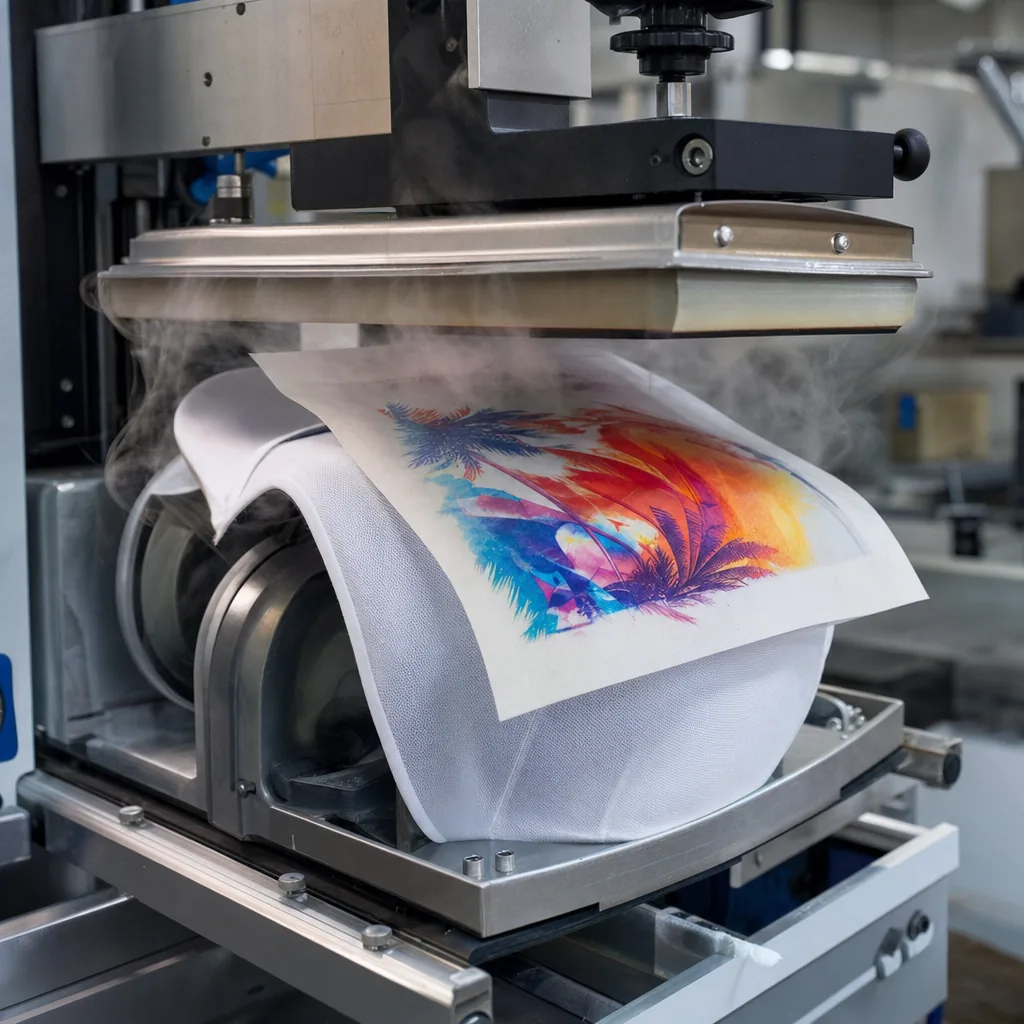
Patch type changes cost, MOQ, and line control, so one blended cap quote usually hides the risk. At 500 pieces, an embroidered patch typically adds $0.35-$0.80 per cap; a woven patch with merrowed edge runs about $0.45-$1.10 depending on yarn density, size, and die-cut shape. PU leatherette or genuine leather with debossing, laser engraving, or oil-edge finishing usually adds $1.20-$2.80. Sewn patches need Tajima, Barudan, or ZSK operators who can hold border tension without tunneling the front panel. Heat-applied patches save sewing time, but the process must be controlled, commonly 145-165 C for 12-18 seconds, followed by cool-peel checks and a 24-hour corner-lift test. Simple sewn patch orders can start at 100-144 pieces; molded PVC and silicone often need 300-500 pieces because tooling, Pantone color mixing, and setup scrap are built into the process.
Lead time and compliance split as soon as the patch comes from a different workshop than the cap body. One style can involve 260-320 gsm cotton twill, a woven-label mill, a silicone mold shop, a leather workshop, and a heat-transfer supplier before final assembly. Buyers should lock material declarations, nickel-free confirmation for metal badges or rivets, and restricted substance testing when CPSIA, REACH, or a brand RSL applies. Color approval should use Pantone TCX or TPX with a written Delta-E tolerance: under 1.5 for licensed marks and under 2.0 for general promotional work. Our standard practice at CrownsForge is to approve the pre-production sample on the real cap construction, then check placement with a fixed jig before AQL 2.5 final inspection. Skipping that step may save 5-7 calendar days, but crooked placement, heat shine, lifting corners, or adhesive bleed can add 2-3 weeks of remake time.
Factory capability checks before quoting
Factory capability must be checked before price negotiation because patch hats usually fail at decoration control, not cap sewing. A practical patch hats decoration qc checklist starts with what is actually controlled in-house: Tajima, Barudan, or ZSK embroidery heads for direct embroidery and applique; access to woven-label looms for lettering below 1.5 mm; laser or steel-rule die cutting for felt, twill, microfiber, and faux leather; merrow or satin edging; and heat presses with digital temperature, pressure, and dwell-time settings. If a supplier quotes embroidered, woven, PVC, leather, and chenille patches at the same MOQ and lead time, they are almost certainly routing work through subcontractors. For embroidered patches, the quote sheet should state stitch count, density, thread brand, backing, needle size, edge finish, and finished patch thickness. Bulk placement tolerance should be +/-2 mm at center front, +/-3 mm on side panels, and under 5 degrees rotation on curved crowns.
Base cap construction decides whether the patch sits cleanly or fights the crown. Specify the body before approving decoration: 260-320 gsm cotton twill for structured baseball caps, 180-220 gsm washed cotton for dad caps, 150D-300D polyester for performance caps, 550-650 gsm wool blend for snapbacks, and 3-5 mm EVA or PU foam for foam-front truckers. A stiff woven, PVC, or debossed leather patch on an unstructured crown can tunnel along the center seam unless the factory adjusts buckram, backing, crown block, and press pad. Ask for capability confirmation by cap type, not just decoration type: 5-panel camper, 6-panel structured cap, high-profile trucker, low-profile dad cap, seam-taped running cap, sandwich brim, and rope cap all react differently to heat, pressure, and stitch tension. Realistic China MOQs are 144-300 pieces for stock fabrics and trims, 500-1,000 pieces for dyed fabric or custom hardware, and higher when PVC molds or exclusive thread colors are needed.
Sample discipline is the best early warning of whether bulk production will repeat the approved look. A basic embroidered or woven patch sample should take 5-7 working days after artwork approval; PVC, debossed leather, metal badge, and chenille tooling usually need 10-14 days plus US$50-150 in mold or die charges, depending on size and cavity count. Before bulk cutting, require a signed pre-production sample, sealed trim card, placement photo with ruler, carton mark approval, and Pantone TCX or TPX references for every visible fabric, thread, patch, and closure color. Under a D65 lightbox, Delta-E should stay below 1.5 for solid fabrics and below 2.0 for washed, heather, or pigment-dyed materials. Our standard practice at CrownsForge is AQL 2.5 for major defects and AQL 4.0 for minor defects, with separate checks for patch centering, edge lift, skipped stitches, glue bleed, scorch marks, loose merrow threads, and crown deformation.
MOQ, pricing and sample approval
Quote MOQ as two minimums, not one: the cap body has a factory minimum, and the patch supplier has its own tooling or setup minimum. For stock 6-panel cotton twill blanks with woven, sublimated, embroidered, or faux-leather patches, 144 pcs is usually the lowest sensible order; below that, the price is sample-room labor with bulk labels attached. Genuine leather patches normally start at 300 pcs because hide grading, die cutting, edge burnishing, deboss plates, and rejected grain areas create 8-15% material waste. Molded 2D PVC also starts around 300 pcs due to mold setup and color batching, while custom shell fabric, dyed eyelets, non-stock sweatbands, branded buckles, or matched snapbacks push the real MOQ to 500 pcs or more. A proper patch hats decoration qc checklist should separate cap MOQ from patch MOQ because the loom, PVC mold shop, laser-cutting table, heat press, and sewing line are different production cells with different constraints.
At 300 pcs, a structured cotton twill cap with a woven patch should land around USD 3.20-4.80 FOB Ningbo or Shanghai, assuming stock 180-220 gsm fabric, standard sweatband, plastic snapback or metal buckle, one polybag, and no retail packaging. Add roughly USD 0.45-0.90 for genuine leather, USD 0.70-1.40 for 2D PVC, USD 0.60-1.20 for a merrowed embroidered patch, and USD 0.25-0.55 for heat-seal backing or extra edge stitching. Setup charges must be approved before sampling: woven artwork conversion and loom setup are commonly USD 35-60, embroidered patch digitizing runs USD 25-80, and a single-size PVC mold is usually USD 80-180. If direct embroidery is added around the patch, the PPS should be sewn on Tajima, Barudan, or ZSK heads and checked for underlay, pull compensation, thread breaks, puckering, and density; filled areas typically need 0.38-0.45 mm stitch spacing, while lettering under 4 mm should be simplified or converted to woven detail.
Sample approval should freeze a physical standard, not just a PDF mockup. Approve the patch strike-off first, then the cap PPS, then the finished hat with the patch attached. Check patch placement within +/-2 mm, centerline alignment, edge-stitch tension, adhesive bleed, backing stiffness, crown height, brim curve, sweatband join, closure function, hangtag copy, barcode scan, and carton marks. Use Pantone TCX for fabric and thread, Pantone C/U for printed or PVC surfaces, and Delta-E under 2.0 when a solid color match is contractually strict. For any order above USD 2,000, I would not release bulk production without one couriered PPS; DHL from Zhejiang to the U.S. or EU is usually USD 35-65 and takes 3-5 days. Normal lead time after PPS approval is 18-25 days for stock fabric with woven patches, 25-35 days for PVC or leather, and 40-55 days when custom dyeing, metal trims, retail boxes, or licensed packaging are involved. Final inspection should use AQL 2.5 major / 4.0 minor, moisture below 8%, SKU separation, and verified FOB or DDP shipping marks before release.
Quality inspection and shipping risk
A patch hats decoration qc checklist should start at final sewing, before the goods disappear into cartons, because the costly claims are usually wrong patch location, mixed colorways, loose corners, and cartons that cannot be traced back to a line. Use ANSI/ASQ Z1.4 with AQL 2.5 for major defects and AQL 4.0 for minor defects; for licensed sports, retail launch drops, or orders with strict marketplace chargebacks, I would move decoration defects to 100% inspection. Measure against the signed pre-production sample, not only the tech pack: +/-2 mm left/right, +/-3 mm up/down, and +/-3 degrees rotation is achievable for woven, PVC rubber, leatherette, chenille, sublimated, and TPU patches. Pull samples by lot size, not convenience: for 500 pieces use code level II, normally 50 pieces, not 8 pieces from the top carton. Check crown height, visor length, head circumference, sweatband seam, and back-strap length; crown height should stay within +/-5 mm. Reject puckering around the stitch line, exposed hot-melt film, lifted patch corners, needle cuts, oil stains, heat-press panel distortion, and stitch holes visible outside the patch edge. I still flex the front panel 10 times by hand, because weak adhesive and over-pressed foam fronts often fail before a lab report catches the problem.
Decoration color control needs physical standards under controlled light, because phone photos, trade-show lamps, and warehouse LEDs are not QC tools. Shell fabric should match Pantone TCX or the approved fabric swatch under D65 light; use Delta-E under 1.5 for premium retail programs and under 2.0 for normal promotional orders. Check woven patch yarn, merrow border thread, silicone fill, PVC rubber, TPU labels, PU debossing, and faux-leather grain under the same light source, especially on khaki cotton twill, black washed canvas, 600D polyester, and dark trucker mesh where red/green shift hides easily. Colorfastness should meet at least Grade 4 dry rubbing and Grade 3-4 wet rubbing under ISO 105-X12 or AATCC 8. If embroidery frames the patch, inspect skipped stitches, loose bobbin thread, thread breaks, bird-nesting, needle heat marks, and density drag. Tajima, Barudan, and ZSK heads can all run clean borders, but poor digitizing at 0.35 mm stitch spacing on a 320 gsm buckram front will pull the crown inward and make a correctly placed patch look crooked.
Shipping risk is controlled by carton discipline, not by a clean packing photo sent after loading. Our standard practice at CrownsForge is to mark every export carton with PO number, style code, color, size if applicable, quantity, gross/net weight, carton dimensions, country of origin, and sequence number such as 1/48; those fields must match the packing list and commercial invoice exactly. Inner polybags should follow the SKU structure, and mixed-color cartons need a visible assortment label so the 3PL does not split the wrong inventory during inbound receiving. FOB Ningbo or Shanghai is usually cleaner for buyers with their own forwarder; DDP can work for 200 to 1,000 pieces only when the quote states HS code, duty treatment, last-mile carrier, fuel surcharge, and remote-area fee policy. Keep the reorder file complete: tech pack, approved sample photos, patch mold file or DST embroidery file, Pantone references, carton layout, AQL report, defect photos by batch, and any sedex-audit-cap-supplier-guide.html">BSCI 2.0 or Sedex SMETA 4-Pillar documents. Reorders fail when a merchandiser copies the old invoice instead of rebuilding the order from the approved sample history.
Buyer checklist for the next RFQ
Start the RFQ with the blank cap spec, because patch performance changes sharply by fabric and crown build. A 280 gsm cotton twill front panel takes a sewn woven patch differently than 16W corduroy, nylon taslan, polyester ripstop, washed chino cotton, or a foam-front trucker panel. Name the silhouette first: 5-panel camper, 6-panel structured snapback, unstructured dad cap, rope cap, bucket, visor, or trucker. Then lock down crown height in cm, brim type, closure, sweatband material, size range, panel construction, lining, front-panel backing, and target fabric weight or yarn count. Reference photos should show front, side, back, inside taping, sweatband, closure, and crown curve with a ruler in frame. For color, do not write “navy” or “khaki” alone. Use Pantone TCX for dyed fabric, Pantone C/U for printed patch inks, and Madeira or Isacord thread codes for embroidery. Set Delta-E before lab dips: 1.5-2.0 for solid dyed fabric, 2.5-3.0 for enzyme-washed cotton, and wider only when wash variation is intentional.
Patch details decide whether the quote is clean or padded for risk. Send AI, EPS, or PDF artwork with fonts outlined, plus a PNG mockup showing placement measured from the brim edge, center seam, and side seams. Specify patch type, finished size in mm, border, backing, attachment method, stitch color, thickness, and whether it crosses a center seam or piping. A 70 x 45 mm woven label sewn flat on a 5-panel front usually adds US$0.45-0.80; a 95 mm chenille patch on a 6-panel structured crown can add US$1.20-2.40 because hooping, adhesive stabilization, needle clearance, and sewing speed all change. For embroidered merrow patches, PVC rubber, debossed leather, sublimated twill, printed canvas, felt applique, or chenille, define edge construction and minimum bend radius. Tajima, Barudan, and ZSK embroidery operators need to know whether the patch sits flat, follows the crown curve, or overlaps seams; otherwise puckering, patch lift, and crooked placement usually show up in the first sample.
Attach the patch hats decoration qc checklist to the RFQ before negotiating price, because inspection tolerance affects labor time, reject allowance, and sampling rounds. Use AQL 2.5 for major defects and AQL 4.0 for minor defects on normal wholesale orders; for licensed sports, retail-chain, or gift-with-purchase programs, set major defects at AQL 1.5. Define rejects with numbers: patch off-center over 3 mm, rotation over 2 degrees, loose thread longer than 5 mm, skipped stitches, glue bleed visible at 30 cm, color outside approved Delta-E range, warped brim, crooked sweatband, broken snap, carton short count, wrong barcode, or mixed PO labels. Ask for price breaks at 100, 300, 500, and 1,000 pieces, with digitizing, patch mold, sample fee, bulk unit price, carton dimensions, FOB Ningbo or Shanghai, and optional DDP freight separated. For retail or licensed distribution, request current BSCI 2.0 or Sedex SMETA 4-Pillar audit reports before sampling starts.
Working with CrownsForge
A patch hats decoration qc checklist should begin with one signed physical PP sample, because most decoration failures are locked in before bulk cutting or patch attachment. Our standard practice at CrownsForge is to approve the cap body, patch substrate, artwork size, border finish, attachment method, placement tolerance, hangtag, barcode, carton mark, and polybag warning on the same sample. A PDF mockup is useful for layout only; it cannot show Delta-E, thread sheen, deboss depth, PVC gloss, PU grain, leather thickness, merrow tension, or heat-press flattening under real factory light. Lock cap fabric separately from patch material: 280 gsm cotton twill, 320 gsm brushed canvas, 168D recycled polyester, nylon taslan, woven label, merrowed embroidery patch, PVC rubber, TPU, microfiber suede, chenille, embossed PU, genuine leather, or sublimated twill. Color approval should reference Pantone TCX or TPX with workable limits, usually Delta-E under 1.5 for dyed fabric and under 2.0 for rubber, TPU, or PU. Check artwork against the digitized stitch file before Tajima, Barudan, or ZSK heads run borders; letters below 4 mm and strokes under 0.8 mm often close up after embroidery, molding, or pressing.
Decoration QC needs three checkpoints: incoming patch inspection, in-line attachment control, and final AQL inspection. Incoming QC should measure patch size within +/-1 mm and check yarn shade, merrow edge density, PVC mold fill, TPU bubbles, deboss depth, leather burnishing, adhesive backing, loose threads, and backing paper release before caps reach the sewing line. During attachment, inspectors should measure from fixed references such as the visor seam, center front panel, crown peak, or side seam instead of judging by eye. For most front patch hats, I allow maximum 2 mm skew and 2 mm vertical variation; small side patches usually need a tighter 1.5 mm tolerance because misalignment is more visible. Heat-press logs must record temperature, dwell time, and pressure, often 150-160 C for 12-18 seconds on PU-backed patches, then adjusted after testing on the actual cap fabric. Final inspection should use AQL 2.5 for major defects, AQL 4.0 for minor defects, and zero acceptance for critical defects such as failed pull testing on kids, school, sports-team, or licensed resale orders.
Cost and MOQ belong in the patch hats decoration qc checklist because the patch method often drives landed cost more than the blank cap. A woven patch on a 6-panel cotton twill cap can usually start at 300 pieces, with setup around US$35-US$60 and decoration at US$0.35-US$0.80 per cap depending on size, border, backing, and stitch density. PVC and rubber patches normally need 500 pieces because mold charges run about US$80-US$180, and raised lettering below 0.8 mm may need artwork revision before tooling. Chenille, layered embroidery, leather, and embossed PU are workable at 300-500 pieces, but trimming, hand placement, edge painting, and rejected shade lots can add US$0.50-US$1.20 per cap. Buyers selling into audited retail channels should confirm BSCI 2.0 or Sedex SMETA 4-Pillar status before deposit, not during shipment booking. Close export and compliance details before final inspection: HS code, FOB Ningbo or Shanghai terms, DDP requirements, carton weight under 15 kg when possible, barcode position, CPSIA tracking labels for children’s goods, REACH-sensitive materials, nickel-free snaps, and final packing photos matched against the PO.
Frequently Asked Questions
How long does production take?
Sampling takes 7 to 12 days. Bulk production runs 20 to 30 days depending on quantity, fabric availability and decoration complexity. Inspection and packing adds another 3 to 5 days before shipment.
Do you support sustainability certifications?
Yes. We work with GOTS organic cotton, GRS-certified recycled polyester, OEKO-TEX Standard 100 fabrics, and are BSCI and Sedex audited. Certification documentation can be provided per order.
What file format should I send for my logo?
Vector files (AI, EPS, PDF) are ideal. High-resolution PNG or JPG at 300 dpi on transparent background works as a fallback. Provide Pantone color references for accurate reproduction.
What is the minimum order quantity (MOQ) for custom hats?
Our standard MOQ is 100 pieces per design and color, with sampling available from 1 piece. For complex multi-color logos or premium fabric upgrades, the MOQ can be lowered with a small per-piece surcharge.
Can I order a sample before bulk production?
Yes. We strongly recommend approving a pre-production sample before mass production. Samples are charged at 35 to 60 USD each plus express shipping, fully refundable against confirmed bulk orders over 500 pieces.
How does ordering custom hat leather patch work?
When evaluating custom hat leather patch, the key considerations are construction quality, decoration capability, MOQ flexibility and lead time. Explain the buyer intent behind patch hats decoration qc checklist, when it differs from generic hat sourcing, and what decisions affect cost, lead time and compliance. Cover embroidery, patch, fabric, panel construction, closure options, sample room capability, audit readiness and communication checks.
What's the MOQ for custom leather patch hat low minimum?
When evaluating custom leather patch hat low minimum, the key considerations are construction quality, decoration capability, MOQ flexibility and lead time. Explain the buyer intent behind patch hats decoration qc checklist, when it differs from generic hat sourcing, and what decisions affect cost, lead time and compliance. Cover embroidery, patch, fabric, panel construction, closure options, sample room capability, audit readiness and communication checks.
How does ordering custom leather patches for hats work?
When evaluating custom leather patches for hats, the key considerations are construction quality, decoration capability, MOQ flexibility and lead time. Explain the buyer intent behind patch hats decoration qc checklist, when it differs from generic hat sourcing, and what decisions affect cost, lead time and compliance. Describe how CrownsForge manages patch hats decoration qc checklist programs with sampling, decoration, QC and export coordination.
How does ordering custom patch trucker hats work?
When evaluating custom patch trucker hats, the key considerations are construction quality, decoration capability, MOQ flexibility and lead time. Explain the buyer intent behind patch hats decoration qc checklist, when it differs from generic hat sourcing, and what decisions affect cost, lead time and compliance. Describe how CrownsForge manages patch hats decoration qc checklist programs with sampling, decoration, QC and export coordination.
What do I need to put patches on hats?
So what you'll need is a post bed sewing. Machine we use a FAF. Machine i mean it's not cheap it's like $3 $4,000. For the FAF. But really you need a sewing machine that has a raised bed.
What must you inspect on the hard hat?
Check the hard hat for excessive fading in colour as this can be a sign of deterioration from UV exposure. Inspect the suspension system closely for cracks, cuts or frayed shell straps, torn headband, loss of pliability or other signs of wear. Replace the suspension if you find any damage.
What size should a patch be for a hat?
Good Sizes for Hat Patches Patches for hats need to be small enough to fit comfortably on the front panel without curving too much or looking oversized. A good size for a small logo patch is around 2 inches wide by 1 inch tall. For a slightly larger look, 2.5 inches by 1.5 inches works well.
What are the different types of hat patches?
EMBROIDERED PATCHES. The classic patch. ... WOVEN PATCHES. Woven patches are perfect for detailed designs that aren't able to be embroidered clearly. DIE CUT PATCHES. Die cut/heat cut patches are used when your patches need to keep the shape of the design. SUBLIMATED PATCHES. ... 3D PVC PATCHES. ... LEATHER PATCHES.
Looking for a reliable hat manufacturer in China?
CrownsForge has produced custom hats for 800+ brands across 40 countries. From 100-piece launches to 100,000-piece retail programs, we deliver on time and on spec.
Get in touchRelated guides
Custom Leather Patch Hat Low Minimum: A 2026 B2B Sourcing Guide
Read article →
Mens Beanies: Properties, Costs and How to Spec It Right
Read article →
Bulk Trucker Hats Export Shipping Checklist for Custom Hat Buyers - Cost & MOQ Breakdown - Supplier Checklist
Read article →We hope this guide demystifies patch hats decoration qc checklist for custom hat buyers - cost & moq breakdown - cost & moq breakdown (2026 update) - 2026 buyer's guide - 2026 buyer's guide and helps you move forward with confidence. If you have questions specific to your project, our English-speaking sales engineers are one message away.