
Negotiating with a China Hat Manufacturer: 12 Tactics That Actually Work - 2026 Buyer's Guide - Supplier Checklist
Every week, our sales team answers detailed questions about negotiating with a china hat manufacturer: 12 tactics that actually work - 2026 buyer's guide - supplier checklist. We wrote this guide so that wholesalers, streetwear brands, corporate buyers and promotional resellers can compare options with full information, and avoid the traps that show up only after production has started.
The negotiating dynamic factories actually see
The first quote from a China cap factory is rarely the floor; it is a negotiating position with margin already built in. On a 500-piece dad cap order, I would expect roughly 15-25% room if the factory is leaving space for sample revisions, digitizing, label approval, and packing labor that has not been locked down. At 3,000 pieces or more, that buffer usually falls to 8-15% because the real leverage shifts to machine uptime, thread consumption, trim standardization, carton count, and whether the line can keep the same operation sequence across the run. When you negotiate with chinese hat manufacturer teams, the useful question is not “Can you go lower?” It is “Which assumption in this quote is costing money, and is it actually fixed?” That moves the discussion from blunt price pressure to cost structure, which is where real pricing decisions are made.
MOQ pressure works the same way. If you push only on unit price, the factory usually protects margin by changing the spec: lighter buckram, fewer stitches per panel, cheaper woven labels, simpler back closure, or dropping individual polybags in favor of bulk packing. The better move is to ask for the delta on each variable: panel count, visor curve, embroidery stitch count, Pantone TCX matching, sweatband construction, packed bulk versus each piece bagged, and whether you can keep one crown block and one closure spec across SKUs. In hat production, the savings come from less changeover and less waste, not from goodwill. A buyer who knows how to negotiate with chinese hat manufacturer teams asks for pricing on each simplification, then decides where the product can be stripped down without hurting fit, hand feel, or shelf presentation.
The fastest way to test a quote is to ask for the price impact of specific changes and see whether the answer is immediate or vague. Split ship dates, fewer colorways, one embroidery location instead of three, stock twill instead of custom-dyed fabric, or reusing an existing cap mold and artwork file should all produce measurable savings if the quote is real. On a 5,000-unit order, packing simplification alone can move pricing by about $0.12 to $0.35 per cap, and reducing stitch density or trim complexity can save another $0.20 to $0.60, depending on whether the work is going through Tajima, Barudan, or ZSK heads and how much operator time it burns. If the supplier cannot explain those deltas in plain terms, the quote is padded or the merchandiser does not understand the costing sheet. That is the negotiating dynamic factories actually see: not a fight over the first number, but a check on whether your order structure fits their production math well enough to price it honestly.
Tactic 1-3: MOQ and quantity flexibility
MOQ is where most buyers give away margin, because they accept one flat price instead of forcing the factory to show the quantity curve. To negotiate with chinese hat manufacturer suppliers properly, ask for the same spec quoted at 100, 300, 500, and 1,000 pieces in one email: identical crown height, visor curve, seam tape, sweatband, closure, panel stitching, and embroidery placement. Then split the quote into blank cap cost, digitizing, stitch count, packing, carton, and export handling assumptions. On a 6-panel cotton twill dad cap, I have seen ex-factory pricing move from $2.10 at 100 pieces to $1.35 at 1,000 pieces, and most of that drop came from setup amortization and cutting efficiency, not fabric. If the factory cannot separate those lines, you are not negotiating a manufacturing quote; you are looking at a padded lump sum.
Multi-color split orders are one of the cleanest ways to get cap manufacturer discount pricing without changing construction. If the fabric run is already fixed, ask whether one production lot can be split across black, navy, and stone using the same fabric lot, same thread colors, and same trim package, then treat the split as a scheduling problem instead of three tiny orders. That usually improves marker efficiency and reduces cutting waste, especially on cotton twill and washed chino cloth, where table utilization matters more than a few cents on embroidery. Keep the base spec frozen, and ask for pricing based on combined quantity across colors while packing by SKU. That is the difference between a real quantity break and a factory inventing a mixed-order surcharge because the request was vague.
Leftover fabric lots are another practical lever in MOQ negotiation, but only when you can tolerate limited color control. Ask whether the factory has 20 to 80 meters of excess stock from a previous cut table in your target twill, brushed cotton, or poly-cotton blend, then quote it as a short-run job with the exact fabric roll code, dye lot, and shrinkage behavior documented. This can pull a small order below normal cut-and-sew cost because the factory is recovering material value rather than buying fresh yardage. It works best for promos, staff caps, sample launches, and test drops, not for core replenishment where repeat shade matching matters. The catch is obvious on the floor: leftover stock often carries slight hand-feel or Delta-E variation, and that becomes visible once you reorder against a fresh dye bath or a different finishing batch.
Tactic 4-6: Sample fee and setup cost
Sample fees are one of the easiest places to negotiate with chinese hat manufacturer teams because the money is modest and the signal is clear. For a six-panel cotton twill cap, $20 to $50 per sample is normal; for a structured dad cap with buckram front panels, sandwich visor, or high-density embroidery, $60 to $120 is more realistic. Courier is separate. The commercial ask is simple: credit the sample fee back on the first production PO once the order clears the agreed MOQ, usually 300 to 500 pieces depending on fabric stock and decoration complexity. If a supplier refuses refundable sampling on a real order, they are treating development like a revenue line instead of a conversion step, which tells you a lot about how they will behave later.
Digitizing and setup are where lazy billing usually hides. A first-round embroidery digitizing pass should normally be included when the artwork is final and the stitch count is reasonable, because Tajima, Barudan, and ZSK heads all need a clean DST or EMB file before production anyway. What should be charged is revision labor after proof approval: changing satin column width, adjusting underlay, rebuilding small text, or reworking density to reduce puckering on 40s cotton twill, brushed chino, or heavy brushed fleece. The same rule applies to heat-transfer artwork, woven-label knife files, and patch molds. In a proper price discussion, this matters more than arguing over a few cents on unit price, because a supplier that can explain pull compensation, stitch direction, and backing choice is usually less likely to create hidden scrap.
Pantone matching should be pinned down before quoting starts. Ask for one free physical color match on the first colorway, with the target defined as Pantone TCX for fabric or Pantone C for print and embroidery references, and set acceptance at Delta-E under 2.0 under standard production lighting. On yarn-dyed twill, brushed cotton, recycled polyester, and pigment-dyed fabric, the same code can read differently because the substrate changes the visual result, so extra swatches should be billable only when the base material changes or the buyer changes the target after approval. That is the clean way to negotiate with chinese hat manufacturer suppliers: one refundable sample fee above MOQ, one included digitizing pass, and one included color match. Anything beyond that should be tied to a documented change order, not buried in the unit price or called “special handling.”
Tactic 7-9: Payment terms and currency
Payment terms are where you prove you are a real buyer, not a quote collector. For a first order, 30/70 by T/T is still the normal structure at most China hat factories: 30 percent deposit, 70 percent against copy of bill of lading or before shipment. After two or three clean repeats, asking for 20/80, or net-15 to net-30 on approved accounts, is reasonable if your volume forecast is stable and the supplier has no quality or paperwork disputes. When you negotiate with chinese hat manufacturer, anchor the request to measurable behavior: on-time artwork approval, no late embroidery file changes, no debit notes, no short-packing claims, and no missed shipment windows. That is a stronger position than trying to squeeze another $0.12 off a six-panel cap while ignoring the cash-flow and release-risk value of better terms.
If currency is in play, put the quote currency and exchange logic in writing before anyone treats the number as final. For orders above $20,000, ask for a USD quote with a validity window of 7 to 14 days, and specify whether the price is fixed against a named exchange rate or re-priced only if RMB moves beyond an agreed band, usually 1 to 2 percent. A 3 to 4 percent swing can wipe out the margin on a low-value trucker cap run faster than most buyers expect, especially once bank fees and conversion spreads are added. If the supplier insists on RMB pricing, make them show the math and compare it with your landed cost after wire fees, FX spread, and destination charges. Keep that discussion separate from MOQ and freight so the commercial logic does not get muddy.
For first orders, buyer protection matters more than chasing a lower deposit. Trade Assurance, LC at sight, or at minimum a purchase order with style code, Pantone TCX colors, stitch count, brim curve, carton pack, and AQL 2.5 inspection basis gives you something enforceable when the shipment is late or the caps do not match the approved sample. A factory that handles those documents cleanly is usually easier to work with than one that treats payment as the only real topic. The practical goal is to match money release to proof of performance: deposit after sample approval, balance after inspection or bill of lading, then longer terms only after the supplier has shipped two or three clean lots. That is how you keep margin under control without turning every PO into a new negotiation.
Tactic 10-12: Long-term commitment leverage
Annual commitment is the cleanest leverage once you have approved samples and stable QC, because it lets the factory plan machine time, operators, thread, trims, cartons, and packing labor instead of pricing every PO as a fresh risk. A 12-month supply agreement with quarterly release quantities can usually support a 5% to 10% price concession if the forecast is credible and payment terms are disciplined. A promise to place 20,000 units across the year carries more weight than one aggressive order for 8,000 pieces. When you negotiate with chinese hat manufacturer partners, lock the commercial deal to a written spec sheet: crown height, panel count, visor curve, stitch density, embroidery size, Pantone TCX references, seam tape, label placement, and AQL 2.5 inspection terms. That is what stops the usual repricing game when somebody claims the “real” sample had a different build detail.
Exclusivity only works when the volume offsets the risk and the wording is narrow enough to enforce. At roughly 5,000 pieces a year or more, a China hat factory may accept a limited carve-out, such as no other U.S. streetwear brand using the exact colorway, woven label, and patch placement for 12 months. Broad exclusivity on an entire silhouette is usually too vague and too expensive to survive contact with production reality. Keep it design-specific and measurable: same body fabric, same embroidery layout, same trim stack, same colorway, same territory, same sales channel. That is one of the few cap manufacturer discount tactics that can move the number without dragging the factory into a race to the bottom, because the value is repeatability and lower changeover, not a fantasy promise of future volume.
A rolling 90-day forecast with quarterly true-ups is the cleanest compromise when demand is still moving. The structure is simple: reserve fabric and trims against the forecast, release production monthly, then reconcile at quarter end. If you over-forecast, you absorb the carry; if you under-forecast, you lose slot priority or pay a premium for expedited replenishment. In peak season, that can secure reserved dye lots, pre-booked embroidery heads on Tajima or Barudan machines, and earlier cut-and-sew time on the line. If you need to negotiate with chinese hat manufacturer suppliers without overextending cash flow, this model is practical because it gives the factory a real schedule to work from. It also gives you a credible basis to push down hat price on repeat trims and packaging, since the factory can buy thread cones, sweatbands, and back straps in larger lots instead of rebuilding the plan every time you place an order.
What NOT to negotiate
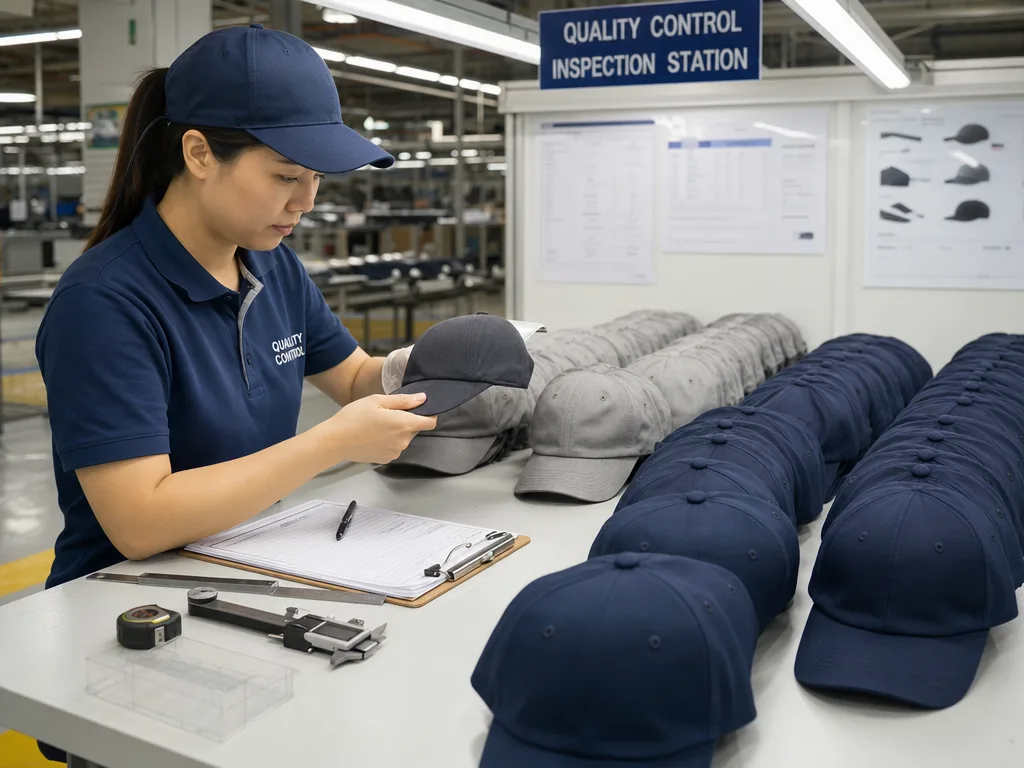
When you negotiate with chinese hat manufacturer suppliers, do not bargain down the controls that keep bad stock from shipping. AQL 2.5 is the normal acceptance baseline for apparel and headwear; pushing to AQL 4.0, or replacing inline and final inspection with a quick visual scan, is not a pricing win. Put the discussion where cost actually moves: fabric GSM, yarn count, panel count, stitch density, embroidery stitch count, woven labels, seam taping, wash effects, and packout complexity. A six-panel 100% cotton twill cap with 12,000 embroidery stitches, a woven side label, and a custom hangtag will price very differently from a 5-panel polyester foam trucker with a flat print. If a supplier tries to lower inspection standards instead of quoting the real material and labor delta, they are defending margin by weakening QC, not reducing manufacturing cost.
Third-party inspection is also not a bargaining chip. SGS, Intertek, BV, or your own QC agent on the floor are standard controls, not optional extras, and a factory that resists outside inspection is signaling that it prefers control over transparency. The same applies to compliance paperwork. sedex-audit-cap-supplier-guide.html">BSCI 2.0, Sedex SMETA 4-Pillar, and basic social audit sharing should be routine; do not accept redacted reports, delayed access, or vague promises that documents will arrive after deposit. CrownsForge’s standard practice is to treat audit access as part of the commercial setup, not as a favor. In a real sourcing file, the conversation should be about inspection windows, corrective-action deadlines, and who pays if a failed audit triggers rework or a second visit, not whether the buyer is allowed to look.
Payment terms are the last place to get clever in the wrong direction. Driving a factory from a normal 30% deposit down to 10% or zero usually buys you a worse outcome somewhere else: slower slotting, thinner fabric, cheaper thread, or surprise charges for logo plate changes, carton labels, and re-dos after sampling. For MOQ negotiation, keep your pressure on carton quantities, colorway splits, and size breakdowns, because those variables genuinely change setup cost and line efficiency. A cleaner structure is 30% deposit, 70% before shipment after passed pre-shipment inspection, tied to one approved sample and one clear PO. That keeps the factory funded, keeps the production calendar honest, and leaves you negotiating the variables that actually move the FOB price instead of forcing financing terms that come back as quality drift later.
How factories signal genuine vs. fake price drops
A real price cut has a visible cost driver attached to it. If a factory says it can lower the unit price by 8 to 12 percent, the quote should show exactly where that comes from: switching from 200 gsm brushed cotton twill to 175 gsm, dropping 3D puff embroidery to flat stitch, reducing thread colors from 6 to 3, moving from individual polybags to bulk packing, or changing the sweatband from a three-layer laminated build to a simpler single-layer insert. That is normal hat factory price negotiation. The math should be boring and traceable, because the factory is giving up labor minutes, material cost, or packing steps. In a serious quote, the spec sheet changes first and the price follows. If the number moves without a spec revision, the discount is not real.
A fake price drop sounds cooperative but leaves the paperwork untouched. The salesman agrees to your target rate, yet the BOM, artwork file, carton spec, and inspection standard never change. That is where quality drift starts: a cheaper yarn lot, thinner fusible interfacing, lower stitch density, or a quiet shift to a subcontracted line with weaker process control. When you negotiate with chinese hat manufacturer teams, insist that every concession be written into the revision history, not just repeated in chat. Otherwise the failure shows up later as panel skew, Pantone TCX mismatch above Delta-E 2.0, embroidery backing bleed after wash, or carton count errors that only appear at the warehouse.
The clean test is simple: every lower quote should name what changed in fabric, decoration, trims, packing, and what stayed locked. A legitimate MOQ concession may reduce setup burden, but it should not preserve premium components for free unless you are giving the factory something measurable back, such as a larger run, fewer colorways, longer lead time, or simpler labeling. Our standard practice is to split pricing into fabric, labor, embroidery digitizing, trims, and cartonization so the buyer can see exactly where margin moved. If a supplier refuses that breakdown, assume the discount is being paid for later through quality drift, missed AQL 2.5 targets, or an unannounced subcontractor layer that makes the first shipment look acceptable and the repeat order worse.
Frequently Asked Questions
What logo decoration techniques do you offer?
3D puff embroidery, flat embroidery, woven patch, leather patch, PVC patch, screen printing, sublimation, applique and laser etching, all in-house with no subcontracting.
Can I order a sample before bulk production?
Yes. We strongly recommend approving a pre-production sample before mass production. Samples are charged at 35 to 60 USD each plus express shipping, fully refundable against confirmed bulk orders over 500 pieces.
What is the minimum order quantity (MOQ) for custom hats?
Our standard MOQ is 100 pieces per design and color, with sampling available from 1 piece. For complex multi-color logos or premium fabric upgrades, the MOQ can be lowered with a small per-piece surcharge.
How long does production take?
Sampling takes 7 to 12 days. Bulk production runs 20 to 30 days depending on quantity, fabric availability and decoration complexity. Inspection and packing adds another 3 to 5 days before shipment.
What file format should I send for my logo?
Vector files (AI, EPS, PDF) are ideal. High-resolution PNG or JPG at 300 dpi on transparent background works as a fallback. Provide Pantone color references for accurate reproduction.
How does ordering baseball cap custom embroidery work?
When evaluating baseball cap custom embroidery, the key considerations are construction quality, decoration capability, MOQ flexibility and lead time. (4) Sample fee refundable against orders above a threshold (500 pieces typical, ask for 300). (5) Embroidery digitizing free on first design, paid only on revisions. (6) Free physical Pantone matching for first colorway, paid for additional Pantones. Factories quote with margin to absorb negotiation. First quote typically includes 15-25% margin headroom on smaller orders,…
What should buyers know about best hat embroidery machine?
When evaluating best hat embroidery machine, the key considerations are construction quality, decoration capability, MOQ flexibility and lead time. (4) Sample fee refundable against orders above a threshold (500 pieces typical, ask for 300). (5) Embroidery digitizing free on first design, paid only on revisions. (6) Free physical Pantone matching for first colorway, paid for additional Pantones. Factories quote with margin to absorb negotiation. First quote typically includes 15-25% margin headroom on smaller orders,…
How does ordering custom dad hat embroidery work?
When evaluating custom dad hat embroidery, the key considerations are construction quality, decoration capability, MOQ flexibility and lead time. (4) Sample fee refundable against orders above a threshold (500 pieces typical, ask for 300). (5) Embroidery digitizing free on first design, paid only on revisions. (6) Free physical Pantone matching for first colorway, paid for additional Pantones. Factories quote with margin to absorb negotiation. First quote typically includes 15-25% margin headroom on smaller orders,…
What should buyers know about best baseball caps for men?
When evaluating best baseball caps for men, the key considerations are construction quality, decoration capability, MOQ flexibility and lead time. Factories quote with margin to absorb negotiation. First quote typically includes 15-25% margin headroom on smaller orders, 8-15% on larger orders. Knowing this changes how you approach the conversation — you're not asking for a discount, you're testing whether the deal fits both sides. (1) Ask for tier pricing at multiple quantities (100, 300, 1000) up front; reveals real…
How to negotiate prices with a Chinese manufacturer?
Identify your ideal price range and walk-away point. Determine which terms (e.g., payment terms, lead time, or quality standards) you are willing to negotiate. Have alternative suppliers as backups in case negotiations don't go as planned.
Is it common to haggle in China?
In China, it's a tradition to ask for (and mostly give) a discount. Shopping in China requires haggling but have fun with it. If this is fun for you then it's probably fun for them too. As soon as it becomes nasty or, if you insult the vendor or their products, then you've lost and you're not going to get a deal.
How to negotiate price with Chinese suppliers?
Understand and respect Chinese business culture. Research suppliers and develop a negotiation strategy. Set clear goals and maintain flexibility. Leverage long-term commitments for better pricing. Confirm all agreements in writing and implement quality control measures.
How to negotiate price with manufacturer?
Get Multiple Quotes and Use Them Strategically. ... Negotiate Total Landed Cost, Not Just Unit Price. ... Negotiate Payment Terms That Protect Both Sides. ... Negotiate Quality Standards, Not Just Price. ... Build the Relationship and Negotiate Better Over Time.
Looking for a reliable hat manufacturer in China?
CrownsForge has produced custom hats for 800+ brands across 40 countries. From 100-piece launches to 100,000-piece retail programs, we deliver on time and on spec.
Get in touchRelated guides
BSCI vs Sedex vs WRAP vs WCA: Compliance Audit Standards Compared (2026 Update) - 2026 Buyer's Guide
Read article →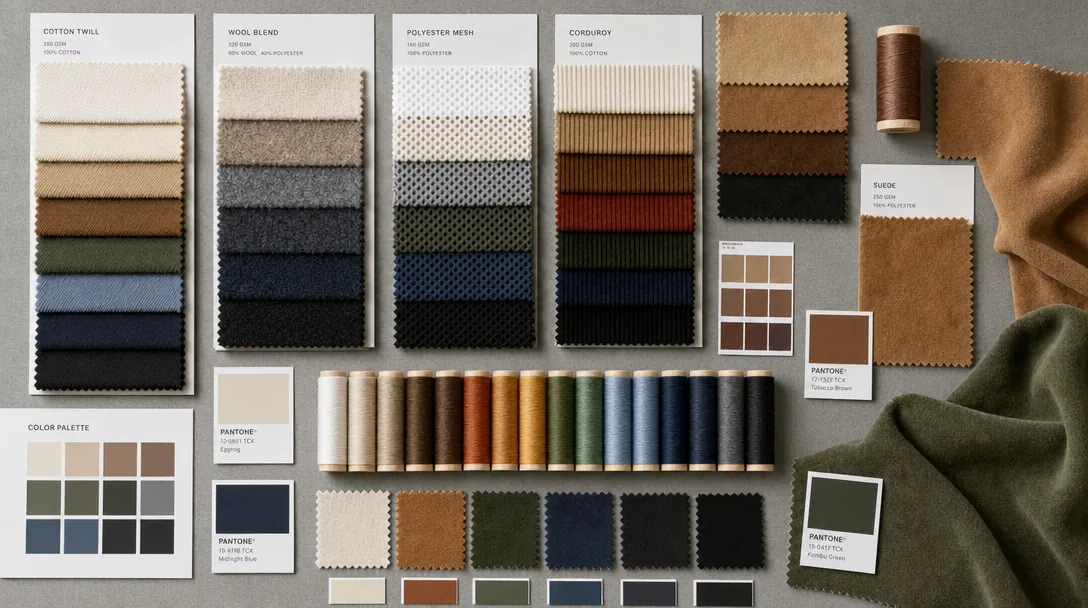
Sustainable Cap Packaging: Options, Costs and Retail-Buyer Demands - 2026 Buyer's Guide
Read article →Bucket Hat Corduroy Fabric And Trim Spec Guide for Custom Hat Buyers
Read article →Sourcing custom hats does not have to be complicated. With the right manufacturing partner, clear specifications and a small upfront investment in sampling, you can launch a retail-quality product in 30 to 45 days.