
Negotiating with a China Hat Manufacturer: 12 Tactics That Actually Work - 2026 Buyer's Guide (2026 Update)
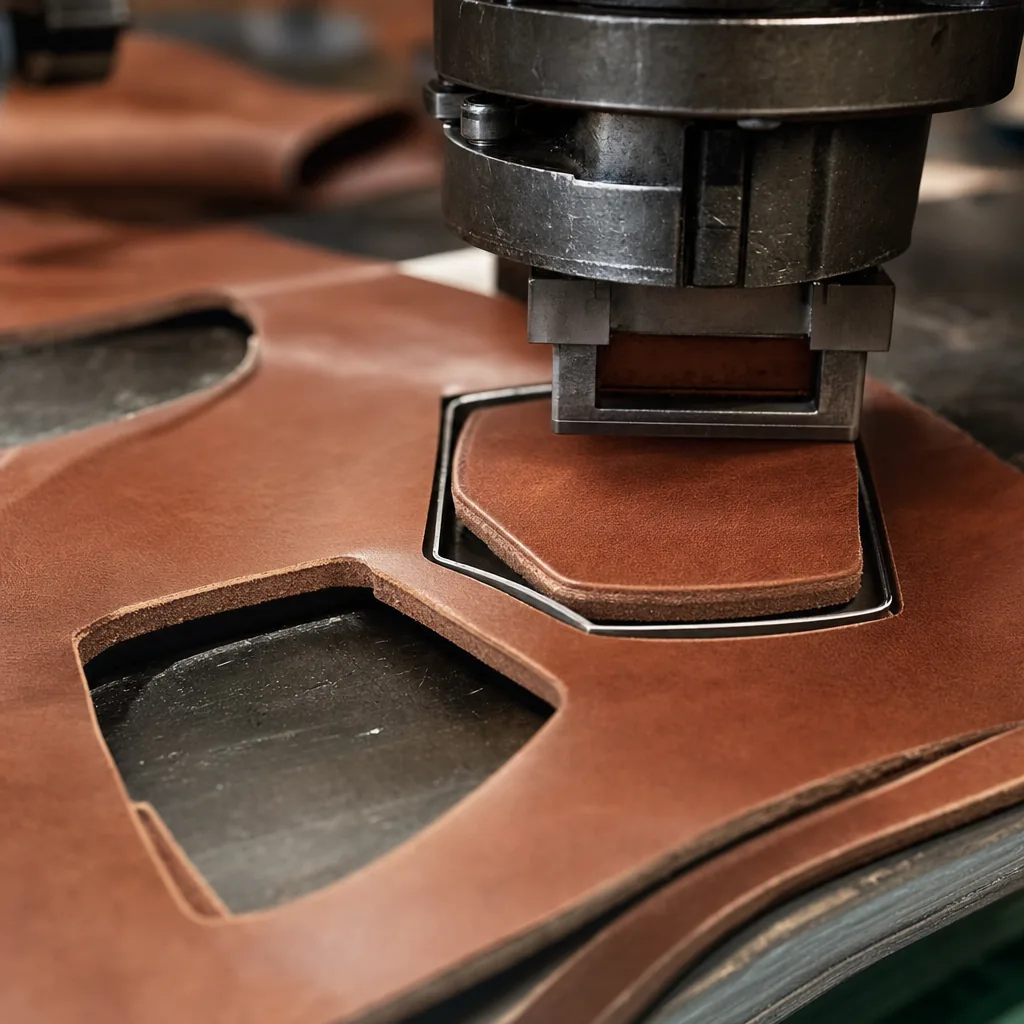
For brand owners, wholesalers and procurement teams entering the custom headwear category, negotiating with a china hat manufacturer: 12 tactics that actually work - 2026 buyer's guide (2026 update) is one of the highest-leverage decisions you will make. Get it right and your unit economics, retail story and reorder cycle all improve. Get it wrong and you carry the cost for years.
The negotiating dynamic factories actually see
The first quote from a Chinese cap factory is usually a risk-loaded number, not the floor. On a 288 to 500 piece order, it is common to see 15% to 25% padding because the merchandiser is still pricing uncertainty: extra digitizing passes, two or three sample revisions, a Pantone TCX fabric match held to Delta-E 1.5 to 2.0, or packing that quietly expands from 25 pcs per polybag into barcode labels, size stickers, and ISTA-minded export cartons. Once volume reaches 3,000 to 5,000 pieces per style, that cushion often compresses to 8% to 12% because fabric yield, trim consumption, and line efficiency are easier to predict. If you understand that before you negotiate with chinese hat manufacturer partners, the conversation gets more rational. You are not asking for a random discount; you are isolating which assumptions are genuine cost drivers and which are just protection against unknowns. Factories are protecting variance as much as margin. A standard six-panel brushed cotton twill baseball cap with flat embroidery on Tajima or Barudan heads is easy to cost within a narrow band. Add 3D puff, applique, a contrast sandwich visor, woven loop label, printed seam tape, a custom metal buckle, and retail hangtags, and the rejection risk climbs at every station from cutting to final packing. That is why serious buyers push on the build sheet, not on theatrics. Ask whether the quote assumes 8,000 stitches or 12,000, whether buckram is 0.6 mm or 0.8 mm, whether the visor insert is paperboard or HDPE, and whether the freight carton spec includes overpack for DDP air. The fastest way to move price is to remove ambiguity the factory had to price in.
The real negotiating dynamic is that the factory is judging your order quality before it judges your target price. Sales and production teams watch how you handle MOQ alignment, artwork lock, revision control, and payment terms because those signals tell them whether a 300-piece opening order can become a repeat 3,000-piece program or just a sampling-heavy, claim-prone project. A buyer demanding 18% off on day one, while still changing closure hardware and embroidery size, usually gets a token concession and tighter terms. A buyer who confirms stitch count, accepts 30% deposit with balance against B/L, approves lab dips or strike-offs within 24 hours, and offers realistic reorder visibility often gets the real factory number. On the floor, price moves when operational risk drops. Consolidating two colorways onto one 12 oz cotton twill shell, switching from custom dyed webbing to stock black, or booking outside the August to October peak can cut more real cost than hours of back-and-forth on unit price. Factories also remember who disputes finished goods without reference standards; if your QC protocol is clear from the start—AQL 2.5, shade band approval, carton drop requirements, embroidery placement tolerance in millimeters—you immediately sound like a buyer worth sharper pricing. At CrownsForge, that is usually the point where negotiation becomes practical instead of theatrical.
Tactic 1-3: MOQ and quantity flexibility
The cleanest way to negotiate with chinese hat manufacturer MOQ is to get the price curve before anyone starts talking about a “target price.” Ask for tiered FOB quotes at 100, 300, and 1,000 pieces against one locked spec: 6-panel unstructured dad cap, 16x12 brushed cotton twill at roughly 260 to 280 gsm, pre-curved PE visor, one front embroidery, self-fabric strap with metal buckle, standard sweatband, and the same carton pack. On that build, a legitimate factory in China will usually show a meaningful spread: about $4.30 to $4.90 FOB at 100 pieces, $3.30 to $3.85 at 300, and $2.55 to $3.15 at 1,000, depending on stitch count and fabric source. That gap is not negotiating theater; it reflects real fixed cost dilution across embroidery digitizing, Tajima or Barudan machine setup, thread changes, cutting loss, sewing line changeover, and finishing labor. If a supplier shows almost no movement from 300 to 1,000 pieces, either the 300-piece quote is padded or they are buying fabric and trims through traders, so the factory never captures true mill-side volume savings. Quantity flexibility only works when the order still runs like one factory program. If you need 300 units across three colorways, frame it as 100 black, 100 navy, and 100 khaki using the same twill base, identical crown pattern, same eyelets, same closure, same embroidery file, and ideally one shared Madeira or Gunold thread palette. Many mills care more about total meter consumption than SKU count; for stocked solids, factories can often cut efficiently once you reach roughly 80 to 120 meters per fabric type, while custom dyeing to a Pantone TCX standard usually needs a full dye lot and tighter MOQ discipline. That is why a mixed-color program can still hold close to the 300-piece bracket instead of collapsing into three separate 100-piece prices. Our standard practice is to check whether inside taping, woven labels, button-wrap fabric, and export carton ratios can be standardized across the run, because those small trim splits are where “flexible MOQ” deals quietly become expensive.
The most useful MOQ concession is usually dead stock or balance fabric already sitting in the warehouse, not cheaper labor. Cap factories routinely hold usable remnants from canceled POs, over-dyed lots, or prior bulk orders in lengths of 30 to 80 meters. If your spec can absorb that inventory—say 280 gsm cotton twill, 8 wale corduroy, 600D polyester, or a wool-acrylic plaid already approved on another account—you can often bypass the mill MOQ entirely. On a 200 to 500 piece order, that typically saves around $0.18 to $0.45 per cap on fabric alone, and more if the same roll can also cover the underbill, top button, or back strap. The economics are straightforward: the factory is monetizing idle inventory instead of placing a fresh yardage order and waiting for a new dye lot. The right request is technical and specific. Ask for the dead-stock list with composition, gsm, roll length, width, color reference, and whether shade variation between rolls is controlled within an acceptable Delta-E range; for visible front panels, I would not sign off on anything looser than Delta-E 1.5 to 2.0 without physical review. Then ask whether the lot passed incoming inspection for skew, slub, oil contamination, crocking, and width consistency, and whether it was rejected on the original order for quality or simply left over on consumption. If the answer is vague, ask for roll-end photos, fabric cuttings, or a cutting-table lay plan. A factory that manages small-batch MOQ professionally should be able to confirm the stock is inspection-cleared, usable for bulk, and not surplus created by a prior failure against AQL 2.5 expectations.
Tactic 4-6: Sample fee and setup cost
Sample fees are one of the easiest places to improve total project economics, because many buyers focus on unit price and ignore the $50 to $180 that gets burned before production even starts. In a typical china hat factory, a structured ask works better than a blunt demand: make the sample fee refundable against a bulk order, and tie it to a realistic threshold in the PI. Most factories will volunteer a refund at 500 pieces per style-colorway; experienced buyers push for 300 pieces if the cap uses standard 108x58 cotton twill, stock buckram, and a routine 6-panel baseball silhouette. The key is to define whether the refund applies per SKU, per PO, or cumulatively across repeat orders, because that wording changes the real value. If you want to negotiate with chinese hat manufacturer teams effectively, ask them to separate pattern/sample labor, trims, and courier on the quote so you can see what is truly refundable and what is not.
Embroidery setup cost is another line item buyers accept too quickly. A normal left-chest or front-cap digitizing file for a 5,000 to 8,000 stitch logo might be quoted at $20 to $60 depending on stitch complexity, underlay, and whether the design will run on Tajima, Barudan, or ZSK heads with clean coverage on structured fronts. The smarter position is simple: first digitizing is free if the order proceeds, but revisions triggered by artwork changes are billable. That is fair to both sides. If the factory has to rework pull compensation, satin width, density, and sequence because your team changes the AI file three times, they are spending real technician hours, not imaginary overhead. This is one of the few cap manufacturer discount tactics that does not damage the factory relationship, because it removes waste instead of just trying to lower hat price by pressure alone.
Pantone matching should be negotiated with the same discipline. For custom caps, the first physical Pantone match on the main colorway is a reasonable free concession, especially when the fabric mill is already dyeing to Pantone TCX and the tolerance target is around Delta-E 1.0 to 1.5 under D65 light. Additional Pantones, however, create real cost through lab dips, thread pulls, trim resubmission, and approval time, so it is normal for the second and third color references to be charged separately. In hat factory price negotiation, I recommend writing this into the sampling terms: first physical Pantone confirmation included, extra Pantone references charged at a fixed rate, usually $15 to $40 each depending on fabric type and whether embroidery thread, woven labels, or silicone patches also need matching. Our standard practice at CrownsForge is to confirm whether the free match covers shell fabric only or also sweatband, seam tape, and embroidery thread, because vague wording is where moq negotiation and costing disputes usually start.
Tactic 7-9: Payment terms and currency
Terms only improve when the factory sees you as low-risk credit, not because you asked aggressively. In headwear, the default is still 30% deposit and 70% before shipment, but after two or three clean repeat POs you should push the sequence, not just the price: first move to 20/80, with the 80% payable after passed final inspection at AQL 2.5, then ask for net-15 or net-30 on part of the balance after bill of lading release. On a $28,000 cap order, shifting the final 70% to net-30 leaves $19,600 on your side for another month; that usually has more value than squeezing another $0.05 per cap. When you negotiate with chinese hat manufacturer partners, anchor the request to your own operating discipline: tech packs approved on schedule, Pantone callouts locked before sampling, claim rate under 1%, and repeat ordering every 45 to 60 days. Our standard practice is to extend better terms only when the buyer consistently avoids last-minute logo resize requests, panel swaps, or embroidery file changes that disrupt material planning and line loading.
Do not ask for full open account on an early PO unless you are prepared to pay for it somewhere else. Most hat factories are funding cotton twill, recycled poly mesh, buckram, HDPE snap closures, sweatbands, inner tape, and export cartons in RMB weeks before shipment, so an unrealistic net-30 request often gets recovered through weaker inputs or a padded unit price. I have seen suppliers protect cash flow by dropping sweatband weight from 180 gsm to 140 gsm, reducing 3D puff embroidery stitch density, or swapping a 1.8 mm PE visor insert for a softer board that fails shape retention. A better structure is milestone-based: deposit to lock fabric and trims, balance after passed QC or BL copy, plus written remedies for late shipment, major defects, and rework above the agreed threshold.
Currency control matters almost as much as the payment split because most cap factories quote in USD but spend in RMB. Once your PO is above roughly $20,000, the proforma invoice should state the exact USD amount, validity window, reference exchange rate, and that no FX adjustment applies after deposit receipt; otherwise a 2% to 4% RMB move can quietly wipe out the savings from a hard negotiation. That risk usually reappears as a revised PI, a shipment hold, or pressure to substitute material after sampling. For first orders, I would still use Trade Assurance or an equivalent protected structure even if the fee is 1% to 3%, because enforceability matters more than headline price. The contract should tie the approved pre-production sample to measurable standards such as Pantone TCX reference, Delta-E tolerance, visor curve, carton spec, and shipment date, so a failed inspection turns into a credit or remake instead of a long argument.
Tactic 10-12: Long-term commitment leverage
The best leverage shows up when you stop negotiating PO by PO and give the factory a 12-month volume plan it can load into production. A credible annual commitment usually moves price 4% to 8%, not because the supplier suddenly becomes generous, but because labor, fabric buying, and embroidery capacity stop being guesswork. On a program of 12,000 to 18,000 caps a year across 6-panel cotton twill, brushed chino dad hats, and 110 truckers, that discount is often worth more than grinding for another $0.05 on the first order. If you want to negotiate with chinese hat manufacturer partners effectively, trade predictability for margin: specify a callable band such as 2,800 to 3,200 units per quarter, cap style-mix shifts at 20%, and define a raw-material adjustment trigger if cotton, acrylic, or polyester moves more than 5% to 6% from the quote basis. That level of detail changes how the factory plans real resources. Cutting tables, crown forming, visor stitching, and embroidery time on Tajima, Barudan, or ZSK heads can be reserved instead of squeezed between spot orders, which reduces line changeovers and scrap. Upstream vendors also price more cleanly when they can book buckram, hook-and-loop tape, woven labels, sweatbands, and export cartons without carrying risk stock for an uncertain buyer. Lock Pantone TCX references and acceptable Delta-E tolerances before bulk, and require pre-production approval against the golden sample so color disputes do not reopen after sewing starts. At CrownsForge, that kind of framework consistently produces lower unit pricing and better on-time delivery during the August-to-November peak than any last-minute demand for a blind concession.
Exclusivity only matters when it is narrow, measurable, and backed by volume the supplier can actually bank. A vague clause like “do not sell this cap to other U.S. brands” has almost no commercial value unless the protected business is at least 5,000 to 8,000 pieces a year, and the threshold rises fast when the construction ties up sourcing and development bandwidth. That is especially true for 600D RPET, 14-wale washed corduroy, wool-acrylic melton, or custom-milled 320 gsm brushed cotton, where sampling, shrinkage control, and dye-lot consistency cost real money before bulk even starts. Define the protected elements precisely: paper pattern, panel height, visor curve, embroidery DST file, woven-label set, colorway, and territory. Anything broader is just asking the factory to refuse other business for free. A rolling forecast with quarterly true-ups is usually worth more than a hard exclusivity clause. A 90- to 180-day forecast lets the mill reserve dyed twill lots, the visor supplier hold board stock, and the sewing line sequence production before peak season capacity disappears. Keep forecast and firm order separate, then cap the quarterly variance at plus or minus 15%; that is tight enough for planning but realistic enough for retail demand swings. Pair that structure with explicit QC and claims terms: AQL 2.5, approved golden sample, logo placement tolerance, carton drop standard, and liability if color approval misses the agreed Delta-E window. Reopening price after sampling is usually bad leverage, because by then the major cost drivers—material, digitizing, tooling, and machine time—are already locked.
What NOT to negotiate
Do not burn leverage on quality baselines, inspection rights, or audit access. When you negotiate with chinese hat manufacturer partners, `AQL 2.5` under `ANSI/ASQ Z1.4` should be treated as the minimum for a commercial cap order, not as an upgrade the factory can trade away. A supplier pushing `AQL 4.0`, carton-only checks after sealing, or “factory final only” is asking you to underwrite process drift they have not controlled. On a 5,000-piece run, that looser standard can let well over 100 visibly defective caps through: front logo embroidery wandering 3 to 5 mm off center, tension burn or thread breaks on Tajima and Barudan heads, crown puckering on 260 gsm cotton twill, visor sandwich misalignment, or sweatband join failure after compression packing. If the target price is too high, cut risk somewhere safer—move from 320 gsm brushed twill to 260 gsm chino twill, drop custom printed seam tape in favor of a standard repeat logo, or simplify closure trims—rather than weakening the only controls that stop claims after shipment. Pre-shipment inspection before balance payment belongs in the same non-negotiable bucket. SGS, Intertek, Bureau Veritas, or a buyer-appointed QC team should be allowed to inspect against approved golden samples, measurement tolerances, packing specs, and shade bands. For dyed styles, lock Pantone TCX approval with a defined Delta-E tolerance up front; for embroidery programs, approve physical sew-outs from ZSK or Tajima heads, not just digitized artwork on screen. The same goes for compliance visibility: sedex-audit-cap-supplier-guide.html">BSCI 2.0 or Sedex SMETA 4-Pillar access is standard due diligence, not a concession worth paying for. If a factory fights harder over audit records, inline photos, or an inspection window than it does over a $0.10 unit-price cut, that usually tells you where the real future cost sits: chargebacks, claim negotiations, and reorder risk.
Be careful pushing deposits far below the standard 30 percent on custom hats, because that figure maps directly to cash already committed on the factory floor. Before cutting fabric, the supplier has typically paid for shell material, buckram, sweatband tape, PE snaps or metal buckles, woven labels, care labels, polybags, hangtags, and export cartons; add custom Pantone color development, low-volume trims, or embroidery sampling on ZSK multi-head machines, and the front-loaded exposure climbs fast. On a 3,000-piece order at $4.20 per cap, a 30 percent deposit is only $3,780—often just enough to cover raw materials, sample approvals, and reserved line time. If an unfamiliar supplier immediately agrees to 10 to 20 percent with no resistance, assume they may be undercapitalized, planning to subcontract to a smaller workshop, or expecting to recover the gap later through lower fabric weight, reduced stitch count, or trim substitution. Smarter payment negotiation uses milestones instead of starving the production run. A workable structure is `30/70` with the balance released after a passed pre-shipment inspection, or `30/40/30` tied to lab-dip approval, inline confirmation, and final audit. That keeps the factory funded at the stages where errors are still correctable while preserving buyer control before the goods leave port. If you need a concession, ask for something commercial and measurable: mixed color ratios within MOQ, repeat-order price ladders, waived digitizing on 3D puff logos, or carton-pack optimization that trims DDP by $0.06 to $0.12 per cap. Easy deposit terms from an unknown factory are rarely free money; more often they are a signal that balance-sheet stress is about to show up in production discipline.
How factories signal genuine vs. fake price drops
A real price drop always traces back to a measurable spec change; anything else is theater. When you negotiate with chinese hat manufacturer teams that actually control their costing, they can name the exact lever: 320 gsm brushed cotton twill changed to 260 gsm regular twill, 100% cotton sweatband changed to 65/35 poly-cotton, virgin PE visor insert changed to standard PE, flat embroidery reduced from 12,000 stitches to 8,500, or packing simplified from individual polybags with inner cartons to bulk pack with dividers. On a structured 6-panel cap priced around $3.10 FOB Ningbo at 1,200 pieces, those moves usually save in narrow bands, not fantasy numbers: $0.18 to $0.30 on shell fabric, $0.07 to $0.15 on embroidery time and backing, and $0.05 to $0.12 on trims and packing. A credible factory will issue a revised quotation, updated BOM, and pre-production comments sheet, then tie every concession to the approval sample so the sewing floor, QC team, and buyer are all working from the same delta list.
Fake discounts show up when the unit price drops but the tech pack, BOM, and process notes do not. In cap production, that gap usually gets recovered later through silent downgrades or unapproved subcontracting: softer buckram that collapses after wear, visor board swapped from virgin PE to recycled filler mix, sweatband or seam taping changed without notice, or embroidery shifted from the approved Tajima or ZSK setup onto an older line that cannot hold the same edge definition on small satin columns. The warning signs are measurable if you ask the right questions: shade variance above Delta-E 1.5 against the approved Pantone TCX reference, seam density drifting from the agreed SPI, top-button alignment wandering off center, or carton spec dropping from 5-ply to 3-ply to claw back a few cents. Our standard practice is to force every claimed reduction into material, process, or packing, with a redlined quote and written confirmation of no subcontracting plus final inspection at AQL 2.5. If a supplier cannot allocate a 6% cut line by line, the discount is probably fictional.
Frequently Asked Questions
Can I order a sample before bulk production?
Yes. We strongly recommend approving a pre-production sample before mass production. Samples are charged at 35 to 60 USD each plus express shipping, fully refundable against confirmed bulk orders over 500 pieces.
What is the minimum order quantity (MOQ) for custom hats?
Our standard MOQ is 100 pieces per design and color, with sampling available from 1 piece. For complex multi-color logos or premium fabric upgrades, the MOQ can be lowered with a small per-piece surcharge.
How long does production take?
Sampling takes 7 to 12 days. Bulk production runs 20 to 30 days depending on quantity, fabric availability and decoration complexity. Inspection and packing adds another 3 to 5 days before shipment.
Do you support sustainability certifications?
Yes. We work with GOTS organic cotton, GRS-certified recycled polyester, OEKO-TEX Standard 100 fabrics, and are BSCI and Sedex audited. Certification documentation can be provided per order.
What file format should I send for my logo?
Vector files (AI, EPS, PDF) are ideal. High-resolution PNG or JPG at 300 dpi on transparent background works as a fallback. Provide Pantone color references for accurate reproduction.
How does ordering baseball cap custom embroidery work?
When evaluating baseball cap custom embroidery, the key considerations are construction quality, decoration capability, MOQ flexibility and lead time. (4) Sample fee refundable against orders above a threshold (500 pieces typical, ask for 300). (5) Embroidery digitizing free on first design, paid only on revisions. (6) Free physical Pantone matching for first colorway, paid for additional Pantones. Factories quote with margin to absorb negotiation. First quote typically includes 15-25% margin headroom on smaller orders,…
What should buyers know about best hat embroidery machine?
When evaluating best hat embroidery machine, the key considerations are construction quality, decoration capability, MOQ flexibility and lead time. (4) Sample fee refundable against orders above a threshold (500 pieces typical, ask for 300). (5) Embroidery digitizing free on first design, paid only on revisions. (6) Free physical Pantone matching for first colorway, paid for additional Pantones. Factories quote with margin to absorb negotiation. First quote typically includes 15-25% margin headroom on smaller orders,…
How does ordering custom dad hat embroidery work?
When evaluating custom dad hat embroidery, the key considerations are construction quality, decoration capability, MOQ flexibility and lead time. (4) Sample fee refundable against orders above a threshold (500 pieces typical, ask for 300). (5) Embroidery digitizing free on first design, paid only on revisions. (6) Free physical Pantone matching for first colorway, paid for additional Pantones. Factories quote with margin to absorb negotiation. First quote typically includes 15-25% margin headroom on smaller orders,…
What should buyers know about best baseball caps for men?
When evaluating best baseball caps for men, the key considerations are construction quality, decoration capability, MOQ flexibility and lead time. Factories quote with margin to absorb negotiation. First quote typically includes 15-25% margin headroom on smaller orders, 8-15% on larger orders. Knowing this changes how you approach the conversation — you're not asking for a discount, you're testing whether the deal fits both sides. (1) Ask for tier pricing at multiple quantities (100, 300, 1000) up front; reveals real…
How to negotiate prices with a Chinese manufacturer?
Identify your ideal price range and walk-away point. Determine which terms (e.g., payment terms, lead time, or quality standards) you are willing to negotiate. Have alternative suppliers as backups in case negotiations don't go as planned.
Is it common to haggle in China?
In China, it's a tradition to ask for (and mostly give) a discount. Shopping in China requires haggling but have fun with it. If this is fun for you then it's probably fun for them too. As soon as it becomes nasty or, if you insult the vendor or their products, then you've lost and you're not going to get a deal.
How to negotiate price with Chinese suppliers?
Understand and respect Chinese business culture. Research suppliers and develop a negotiation strategy. Set clear goals and maintain flexibility. Leverage long-term commitments for better pricing. Confirm all agreements in writing and implement quality control measures.
How to negotiate price with manufacturer?
Get Multiple Quotes and Use Them Strategically. ... Negotiate Total Landed Cost, Not Just Unit Price. ... Negotiate Payment Terms That Protect Both Sides. ... Negotiate Quality Standards, Not Just Price. ... Build the Relationship and Negotiate Better Over Time.
Looking for a reliable hat manufacturer in China?
CrownsForge has produced custom hats for 800+ brands across 40 countries. From 100-piece launches to 100,000-piece retail programs, we deliver on time and on spec.
Get in touchRelated guides
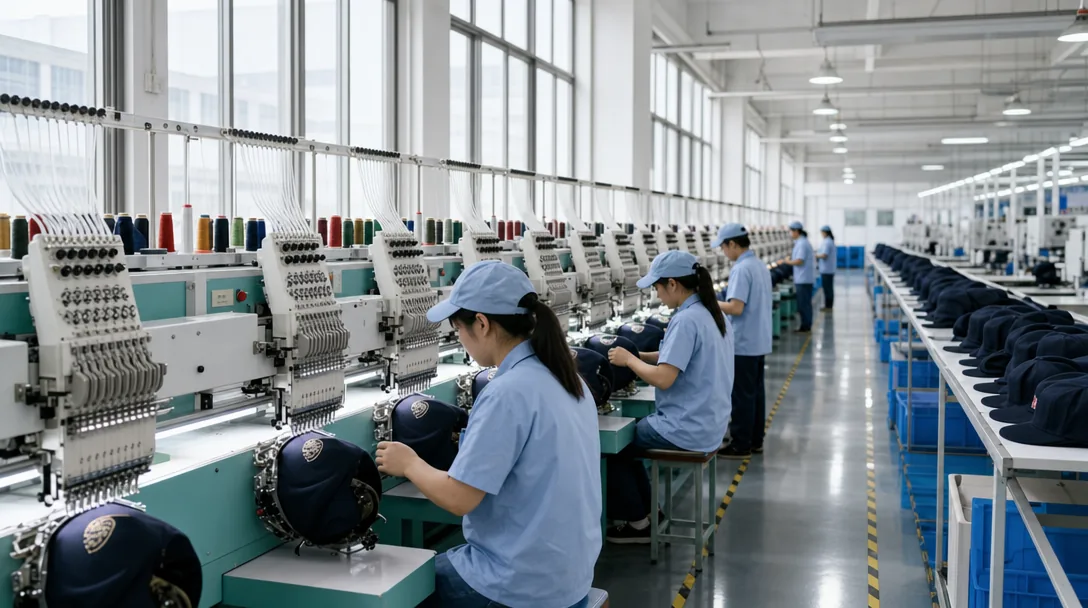
Bulk Trucker Hats Export Shipping Checklist for Custom Hat Buyers
Read article →
BSCI vs Sedex SMETA: Which Audit Does Your Cap Supplier Actually Need?
Read article →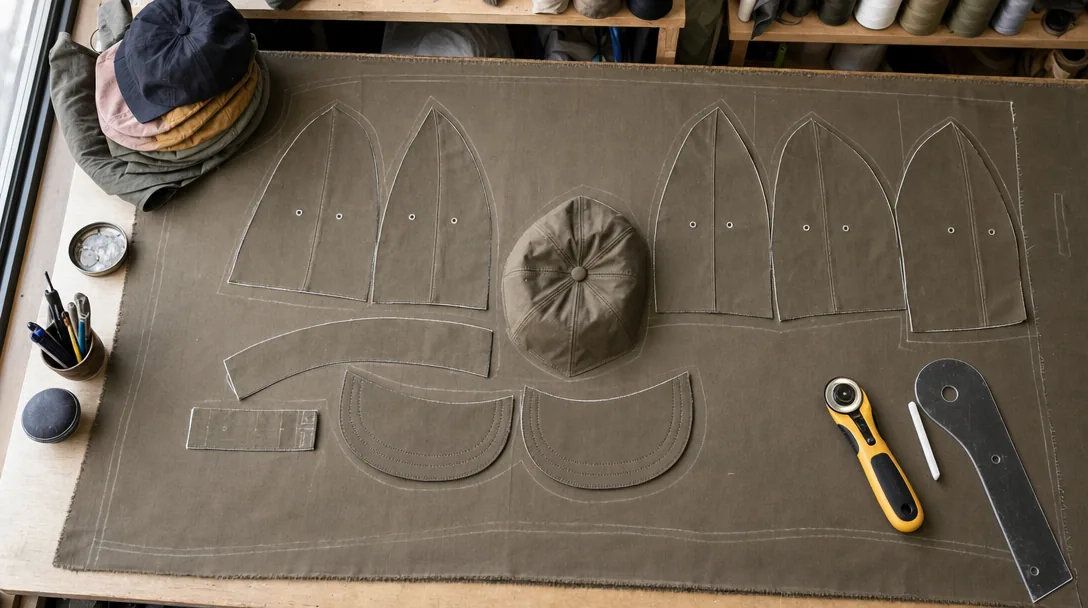
Cap Defect Catalog: 32 Production Issues to Inspect For - 2026 Buyer's Guide
Read article →We hope this guide demystifies negotiating with a china hat manufacturer: 12 tactics that actually work - 2026 buyer's guide (2026 update) and helps you move forward with confidence. If you have questions specific to your project, our English-speaking sales engineers are one message away.