
Merino Wool Beanie: Properties, Costs and How to Spec It Right (2026 Update) - Cost & MOQ Breakdown
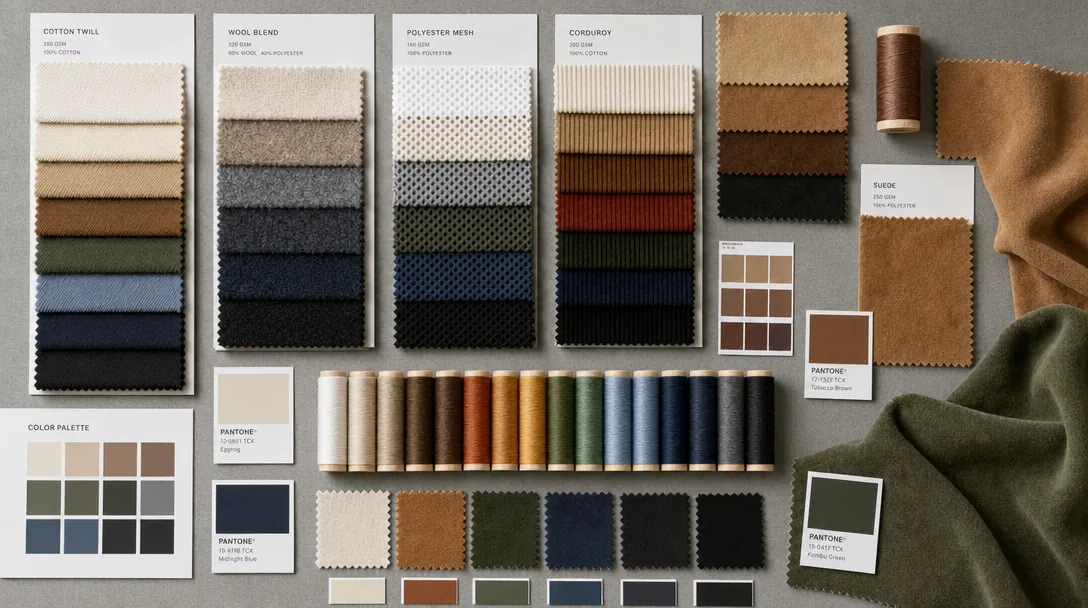
Merino Wool Beanie: Properties, Costs and How to Spec It Right (2026 Update) - Cost & MOQ Breakdown is one of the most-asked questions we receive from international buyers, and for good reason. With dozens of factories competing for your order and an alphabet soup of technical terms in every supplier quote, even experienced importers can feel lost. This guide consolidates what we have learned producing custom hats for clients in 40+ countries.
Acrylic Beanie
Acrylic beanies are the clean benchmark for cost and lead time because Zhejiang knitting mills can usually source 100% acrylic yarn in 2 to 5 days, while a merino wool beanie often depends on imported yarn bookings and tighter shade control. The workable baseline spec is not vague: 28Nm/2 or 32Nm/2 staple-spun acrylic, knitted on 7G, 9G, or 12G flat or circular machines, with a finished weight of 55 to 95 grams for a standard adult cuffed fit. The quality gap inside “acrylic” is wide. Open-end acrylic is cheap but dry in hand and pills quickly under Martindale abrasion; anti-pilling grades or acrylic/nylon blends around 85/15 to 70/30 recover better after stretch and keep a cleaner face after 5 home-laundry cycles. If the tech pack does not lock yarn count, composition, gauge, and target grams, the sample room will often substitute whatever stock lot is cheapest that week.
Acrylic needs brutally specific specs because mills will hit the silhouette while quietly downgrading yarn grade. Call out composition by percentage, yarn count, gauge, finished weight, body height, cuff height, crown construction, and whether the top must be fully linked rather than simply overlocked. For color, use Pantone TCX and set lot tolerance at Delta-E 1.5 max on core shades; acrylic dyes evenly, but cheaper package dyeing still drifts enough to make replenishment look off under D65 light. On price, a plain cuffed acrylic beanie at 1,000 pieces typically runs US$1.10 to US$1.90 FOB East China; jacquard text, intarsia, reflective yarn, or custom melange pushes realistic MOQ to 500 to 1,000 pieces and cost to US$1.80 to US$3.20. That is usually US$1 to US$3 below a comparable merino wool beanie, but the saving buys a different performance profile: weaker moisture buffering, poorer odor control, and a more synthetic hand in actual winter wear.
QC on acrylic beanies is repetitive enough that a competent inspector should find most failures in the first 15 minutes. The common defects are piece-weight drift between dye lots, twisted side seams on tubular knits, weak crown linking, needle lines, oil stains, label bleed, and premature pilling. Bulk inspection should run to AQL 2.5 with measurement checks on body height, cuff depth, opening width, and logo position; unless the retailer issues stricter standards, plus or minus 0.5 inch is a practical tolerance for knit headwear. If the style uses jacquard lettering, wash-test readability because low yarn tension can fuzz out small characters; if it uses embroidery, check forehead stiffness, especially on 12G constructions where heavy backing makes the front panel feel boardy. Our standard practice is to position acrylic honestly as entry-price winter headwear, not as a substitute dressed up to mimic a merino wool beanie, because mismatched customer expectations drive returns faster than small cost savings ever help margin.
Cotton Beanie
Cotton beanies only look interchangeable on a mood board. On the factory floor, cost and failure rate are set by construction: cut-and-sew single jersey, 1x1 rib, or tubular knit bodies linked and closed at the crown. Tubular bodies reduce seam bulk and usually wear cleaner at the side profile, but they need tighter knitting control to avoid spirality after wash. Panel-cut programs are more forgiving for low MOQs, yet side-seam grin and torque show up faster, especially below 220 gsm. For a standard cuffed cotton beanie, I would lock fiber and structure before discussing trims: 100% combed cotton for a dry hand, or 95/5 cotton-spandex when you need recovery after carton compression and retail try-ons. Typical workable specs are 21s to 32s Ne yarn, with finished weights around 180-260 gsm for single jersey and 240-320 gsm for 1x1 rib. Color control matters more than most buyers expect, particularly on black, navy, charcoal, and military olive where lot drift becomes obvious at cuff folds. Ask for Pantone TCX lab dips, then bulk approval at Delta-E 1.0-1.5 under D65; if the factory only references a paper print or phone image, you are gambling. A real cotton spec sheet should also state finished height, opening width, cuff depth, needle gauge, stitch density, seam allowance, and wash test method. I would cap shrinkage at under 5% in both length and width after 3 home-laundry cycles, with spirality under 3 degrees on striped or rib styles. Basic private-label cotton beanies in 2026 generally run about $1.10-$1.90 FOB China plain, or $1.80-$3.20 with a woven label, 8,000-12,000 stitch embroidery, and individual polybagging. That is still materially below a merino wool beanie, where yarn cost and defect tolerance push FOB up fast.
Decoration and inspection are where cotton beanie programs quietly lose margin. Lightweight jersey bodies will tunnel under direct embroidery unless the factory uses the correct cutaway or tearaway backing, retunes upper and bobbin tension, and slows the head speed on Tajima or Barudan machines. On softer 180-220 gsm bodies, a woven patch, fold label, or heat-transfer label usually gives a cleaner result than dense direct stitching. If you do embroider, specify stitch count, fill density, thread brand, and logo position from the cuff edge; “small front logo” is how you end up with inconsistent placement across a 5,000-piece run. Stock-color programs can start around 100-200 pieces per color, while dyed-to-order yarns are more realistically 300-500 pieces because knitting loss and dye minimums have to be absorbed somewhere. Inspection should be run at AQL 2.5, not by visual guesswork at packing. The recurring defects are crown seam skips, uneven cuff turns, panel shading, needle lines from over-tensioned knitting, and GSM drift large enough to make one carton feel premium and the next feel promotional. A 20 gsm swing in cotton is significant; it changes hand feel, stretch recovery, and how well the body supports embroidery. Our standard practice is to verify bulk fabric against the approved swatch before sewing, then pull samples from early, mid, and late packed cartons for at least 13 point-of-measure checks. Cotton is the easier entry program because yarn is common and reorders are forgiving, but it is not a substitute for a merino wool beanie. Cotton wins on price and simpler care; merino wool beanie programs earn their higher FOB through thermoregulation, odor resistance, and a more technical hand when the yarn and knit are specified correctly.
Black Beanie Hat
Black hides nothing in production; it magnifies every inconsistency in a merino wool beanie. The make-or-break variables are fiber micron, yarn count, machine gauge, and dye-lot discipline. Low-tier programs often use 30/70 merino-acrylic or 50/50 wool blends in 28/2 or 32/2 Nm because they hit a softer FOB target, but better retail specs move to 100% merino at 19.5-21.5 micron using 2/30 or 2/48 Nm yarn, depending on whether the buyer wants a dense winter hand or a cleaner year-round knit. Most premium beanies are produced on 9G or 12G computerized flat knitting machines and then linked panel-by-panel; circular-knit routes are faster and cheaper, but crown reduction and cuff alignment are usually less controlled. On black, that difference is obvious on shelf.
Shade control is stricter on black than most buyers assume. If the body and cuff are cut from different lots or re-knit after yarn substitution, the mismatch shows immediately under store lighting, even when it passes a casual factory check. Approval should be tied to a physical standard or Pantone-based lab dip under both D65 and TL84, with Delta-E kept below 1.0 for premium retail and below 1.5 only if the brand accepts a wider tolerance. A practical adult spec for a denser merino wool beanie is 22-24 cm body height, 7-8 cm folded cuff depth, and 85-110 g finished weight. Lock yarn composition tolerance within ±3%, set wash shrinkage under 5% after the agreed care cycle, and test opening recovery after 20 repeated stretches. If branding is required, direct embroidery on 12G merino should be sampled on Tajima or Barudan heads first; woven patches or low-profile silicone badges distort the knit less and reduce tunneling risk.
Cost is driven more by yarn source and dyeing method than by silhouette. In 2026, a stock-service acrylic black beanie may still land around US$1.10-$1.90 FOB China at 500-1,000 pieces, but a legitimate merino wool beanie in custom-dyed yarn is typically US$3.60-$6.50 FOB, with 500 pieces per color as the practical MOQ if the mill is dyeing to match. Merino blends usually sit around US$2.20-$3.80. Australian or New Zealand merino with tighter micron consistency costs more than generic wool yarn, but it materially reduces claims on hand feel, pilling, and shade variation. Black inspections also need more than a fast visual pass: oil marks, needle lines, and linking defects often appear only after steaming. AQL 2.5 major and 4.0 minor is still the sensible baseline, but the test plan should include pilling to grade 3-4 minimum, dry and wet crocking, seam recovery, and cuff-depth tolerance within ±0.5 cm. Our standard practice is to steam random audit samples before final packing because black yarn can conceal contamination until heat opens the knit structure.
Slouchy Beanie
Slouchy fit is controlled by geometry first, not by marketing language around softness. If a merino wool beanie finishes below 28 cm crown height, it wears like a standard watch cap; above 31 cm, you start seeing a limp tail after wash and compression packing unless the yarn has real loft. The spec should call out finished lay-flat measurements, not “relaxed” or “oversized”: for adult slouchy programs, use 23-25 cm width, 28-30 cm crown height, and a 0-7 cm cuff depending on whether you want a raw edge, self-start hem, or shallow turn-up. I would also lock dimensional tolerance at ±1.0 cm on crown height, because at ±1.5 cm the silhouette shift is obvious on a size 58 cm head form after boarding. Machine gauge and yarn count have to be matched. Most commercial slouchy bodies run best on 7GG or 9GG Stoll or Shima Seiki flat-knit machines; 12GG can look sharper, but only if the yarn is plump enough to avoid a flimsy hand feel. For 100% merino, 19.5-micron fiber in 2/26Nm or 2/30Nm is the practical range for keeping crown decreases neat without building hard bulk at the top. Don’t spec gsm as the primary control point here; knitted hats vary too much with stitch length and finishing. Piece weight is more honest: 70-90 g reads light fashion, 90-120 g is the everyday commercial sweet spot, and anything over 120 g starts skewing into winter-outdoor rather than streetwear.
Buyers usually underspec the yarn blend and then wonder why recovery fails after transit. If budget matters, a 50/50 or 30/70 merino-acrylic blend is generally safer than forcing cheap 100% acrylic, because compression recovery is better and pilling can be controlled more predictably in wash testing. For a true merino wool beanie program, I’d write fiber-content tolerance at ±3% on blends and require third-party composition testing when the hangtag claims RWS merino. Color also needs realistic language: specify Pantone TCX as the reference, then set lab-dip tolerance by shade family. On wool-rich yarns, Delta-E under 1.5 is achievable on dark solids, but 1.5-2.0 is a more realistic bulk-lot acceptance band across heather or mid-tone shades. Construction and MOQ drive the real FOB math. Fully linked top-closing wears cleaner and survives laundering better, while cut-and-sew jersey construction can trim roughly $0.15-$0.35 per unit FOB but brings higher risk of spirality, seam torque, and a cheaper visual at the crown. In 2026, workable MOQ is usually 300 pcs per color in stock yarn, 500-1,000 pcs for custom-dyed shades, and 1,000+ pcs once you add woven labels, FSC paper belly bands, and retail packing. Price spread is still wide: a basic acrylic slouchy beanie sits around $1.40-$2.20 FOB China, while a genuine merino wool beanie typically lands at $3.80-$6.50 depending on micron, yarn origin, dye lot size, and RWS status. Inspection should prioritize barre, recovery, and wash dimensional stability under AQL 2.5, not just visual appearance at final packing.
Cotton Beanie Men
A men’s cotton beanie is built and controlled very differently from a merino wool beanie, and buyers get into trouble when they spec both as interchangeable “knit caps.” Cotton has less natural recovery, higher water uptake, and more visible torque after washing, so the base construction has to compensate. For stable retail programs, 100% combed cotton in 32/2 or 28/2 yarn on 7G to 12G machines is the practical starting point; 1x1 rib gives the cleanest balance of stretch and cost, while a 95% cotton / 5% spandex blend is safer if you need the opening to snap back after repeated wear. Finished weight should be written into the tech pack, not guessed from samples: 220 to 260 gsm works for standard fashion or promo runs, while 280 to 320 gsm creates a denser winter hand but gets bulky fast once you add a double cuff, satin label, or embroidery backing. Color control is where cotton programs usually slip. Black, navy, olive, and other deep reactive shades can shift noticeably between yarn lots, and if the beanie is garment-washed or enzyme-washed, the visual difference gets worse. Specify Pantone TCX as the color target, then approve lab dips and bulk yarn against a Delta-E tolerance under D65 light; for dark shades, I would keep acceptance below 1.5 if the order is going into retail packs. Phone approvals are unreliable because cotton dye uptake and post-wash bloom do not read the way a merino wool beanie does. Our standard practice is to lock yarn lot approval before knitting starts and require one wash-tested size set, because a beanie that passes color today but spirals or drops 2 cm after finishing is not a passable production sample.
The tech pack should call out the numbers that actually drive consistency: finished height, cuff depth, opening circumference relaxed and stretched, gauge, yarn count, stitch density, finished gsm, wash standard, and shrinkage limit after one cycle. In 2026, MOQ for stock-yarn cotton beanies is typically 300 to 500 pieces per color; once you move to custom-dyed yarn, spinner minimums usually push that to 600 to 1,200 pieces. A plain 1x1 rib cotton beanie at 500 pieces usually lands around $1.55 to $2.40 FOB China, depending on yarn quality and gauge. Add jacquard branding, enzyme wash, tipping, woven labels, or embroidery and the real FOB range becomes $2.80 to $4.20. If you compare that against a merino wool beanie, cotton is easier to source and cheaper to replace, but it does not give the same warmth-to-weight ratio, odor resistance, or premium hand. The failure points on cotton are mostly structural, not cosmetic. The defects I see most often in final inspection are spiraling after wash, uneven crown linking, cuff depth variance beyond plus or minus 0.7 cm, needle lines, oil marks, and body torque that twists the logo off center. If you add embroidery, text under 4 mm height usually puckers unless stitch count, underlay, and backing are tuned properly on Tajima or Barudan heads; what runs clean on a firm 6-panel cap often collapses on soft rib knit. Use AQL 2.5 at final, hold logo placement within 3 mm, and test stretch-recovery after 10 pull cycles plus one full wash. If the buyer is considering cotton as a substitute for a merino wool beanie, the decision should be commercial, not aesthetic: cotton can hit a lower FOB, but it needs tighter control on recovery, wash stability, and dark-shade consistency.
100 Acrylic Beanie
A 100% acrylic beanie is the default choice when the target price is non-negotiable, but most RFQs are too vague to compare honestly. The variables that move cost are not abstract “quality levels”; they are yarn specification, machine gauge, stitch density, finished weight, cuff depth, and finishing. In east China, the common baseline is 26/2 or 28/2 bulk acrylic run on 7-gauge or 9-gauge flat knitting machines, producing about 55-75 g for a single-layer cuffed beanie and 90-120 g for a double-layer style. If you want the hand feel to resemble a lower-end merino wool beanie, say so directly and specify anti-pilling acrylic or a brushed finish, because standard bulk yarn feels drier and pills faster after repeated wear. Buyers should also call out body height and cuff height in centimeters; a 21 cm body with a 7 cm cuff prices differently from a 23 cm body with a 9 cm cuff even when the yarn is identical. Against a merino wool beanie, acrylic’s factory advantage is consistency. Stock shades are easy to source year-round, color variation is tighter, and lead time is usually 7-12 days shorter because you are not waiting on wool spinning or blend approval. In practical FOB terms, acrylic is commonly 35% to 60% cheaper than merino depending on knit structure and trim package, but the performance gap is real: acrylic holds static, breathes poorly, and lacks merino’s moisture management, odor resistance, and softer thermal balance. That matters if the beanie will be worn indoors, during commutes, or in active outdoor use rather than just as a promotional giveaway.
MOQ for stock acrylic shades is usually 300-500 pcs per color, but once you ask for custom-dyed yarn matched to Pantone TCX with a realistic Delta-E under 1.5, the spinner normally wants 1,000 pcs or more to make the lot economical. For 2026 FOB China pricing, a plain 100% acrylic cuff beanie with a woven loop label typically lands at $1.10-$1.80 at 500 pcs. Add jacquard artwork, a pom-pom, fleece lining, folded woven label, or front embroidery and the range moves to roughly $2.20-$3.40, with embroidery cost driven by stitch count, backing, and machine time. On rib knit, logos that look fine on cotton twill often tunnel or distort unless the file is re-digitized for stretch, underlay is reduced, density is opened, and a film backing is added on Tajima or Barudan heads. That is where cheap sampling usually fails. The failure points on acrylic beanies are rarely dramatic; they are cumulative and expensive in bulk. Watch for spirality after washing, cuff height inconsistency, needle lines, oil contamination, lot-to-lot shading, and pilling within the first few wear cycles. Our standard practice is to request pilling performance at Grade 3-4 minimum, colorfastness to rubbing and perspiration, and wash shrinkage results before bulk approval, then inspect finished goods at AQL 2.5. For usable tolerances, keep logo placement within ±3 mm and finished measurements within ±0.5 in. If the alternative is a merino wool beanie, acrylic only makes sense when retail pricing is aggressive, replenishment speed matters more than comfort, and the customer will accept a functional but less premium hand feel.
Working with CrownsForge for merino wool beanie programs
Most merino wool beanie problems are baked in before knitting starts. The key decision is not “100% merino” on a quote sheet; it is fiber micron, yarn count, and wash target. For commercial retail programs, 19.5 to 21.5 micron in 2/30Nm or 2/26Nm is the practical band, with finished weight usually 280 to 420 gsm depending on 1x1 rib versus 2x2 rib, needle gauge, and cuff construction. If the brief asks for lower prickle, better recovery, and reduced pilling, cost moves fast: finer micron yarn can add 12% to 25% over standard merino, and fully fashioned or enzyme-washed styles need tighter shrinkage control. A realistic post-wash spec is within ±1.0 cm on flat width and body height, but only if the mill and knitting room agree the standard before bulk booking. Color approval is where weak factories lose control of a merino wool beanie program. Lab dips are not enough; merino shade shifts after knitting, washing, and drying, so approval should be on a knit-down against Pantone TCX under D65 light. For custom shades, a Delta-E under 1.5 is achievable, but buyers should expect higher MOQ and more expensive dye lots because small pure-merino runs are less stable than wool-nylon blends. Our standard practice is to review the tech pack within 24 to 48 hours, issue knit-downs or lab dips in 5 to 7 days for stock-dyeable shades, and turn a prototype in about 7 to 10 days. Stock-yarn programs can work at 100 to 150 pieces per color; custom-dyed pure merino is usually more realistic at 300 pieces per color, with first bulk runs at 30 to 40 days after approvals.
Decoration is where a good merino wool beanie gets ruined by cap-factory thinking. Fine-gauge merino has face stretch and low surface stability, so artwork has to be re-digitized for knit tension and wash recovery, not copied from a structured snapback file. Direct embroidery on Tajima, Barudan, or ZSK heads can work, but only with lower stitch density, lighter underlay, and backing matched to knit weight; otherwise the cuff puckers, the logo tunnels, and the hand turns boardy. In practice, front logos under roughly 6,000 stitches are safer than large fill areas, and satin borders on 1x1 rib need wash testing because edge distortion often appears only after laundering. On finer 19.5-micron bodies, woven labels, merrow-edge patches, faux leather patches, or screen-printed twill patches usually hold shape better and look cleaner at retail. The workflow needs factory discipline, not just a fast quote. Serious programs should lock BOM, yarn card, knit panel approval where construction is complex, PPS sign-off, inline inspection, and final random inspection to AQL 2.5 before balance payment. Buyers should also ask for sedex-audit-cap-supplier-guide.html">BSCI 2.0 or Sedex SMETA 4-Pillar, plus REACH and California Proposition 65 compliance on trims, patch materials, and inks. Wool-content claims are worth verifying through SGS, Intertek, or Bureau Veritas because the market is still full of “merino” labels on blends that do not match the declared composition. Carton marks, barcode logic, and pack ratios should be frozen early; that sounds administrative, but it is what prevents a 300-piece trial from breaking down when the same style scales to 5,000 or 10,000 units across multiple colors and delivery windows.
Frequently Asked Questions
Can I order a sample before bulk production?
Yes. We strongly recommend approving a pre-production sample before mass production. Samples are charged at 35 to 60 USD each plus express shipping, fully refundable against confirmed bulk orders over 500 pieces.
Do you support sustainability certifications?
Yes. We work with GOTS organic cotton, GRS-certified recycled polyester, OEKO-TEX Standard 100 fabrics, and are BSCI and Sedex audited. Certification documentation can be provided per order.
How long does production take?
Sampling takes 7 to 12 days. Bulk production runs 20 to 30 days depending on quantity, fabric availability and decoration complexity. Inspection and packing adds another 3 to 5 days before shipment.
What file format should I send for my logo?
Vector files (AI, EPS, PDF) are ideal. High-resolution PNG or JPG at 300 dpi on transparent background works as a fallback. Provide Pantone color references for accurate reproduction.
Which shipping methods do you support?
We support FOB, CIF and DDP shipping. Air express for samples and small orders, sea LCL for 100 to 500 pieces, sea FCL for 5,000+ pieces. Door-to-door DDP available for US, EU, UK, Canada and Australia.
What should buyers know about black bucket hat men?
When evaluating black bucket hat men, the key considerations are construction quality, decoration capability, MOQ flexibility and lead time. Cover everything buyers ask about black beanie hat: how it's manufactured, what specs to request from a factory, typical MOQ and pricing, common quality issues to inspect for, and how this ties back to the broader merino wool beanie sourcing decision. Cover everything buyers ask about cotton beanie men: how it's manufactured, what specs to request from a factory, typical…
What should buyers know about kangol bucket hat mens?
When evaluating kangol bucket hat mens, the key considerations are construction quality, decoration capability, MOQ flexibility and lead time. Cover everything buyers ask about black beanie hat: how it's manufactured, what specs to request from a factory, typical MOQ and pricing, common quality issues to inspect for, and how this ties back to the broader merino wool beanie sourcing decision. Cover everything buyers ask about acrylic beanie: how it's manufactured, what specs to request from a factory, typical MOQ…
What should buyers know about corduroy hat womens?
When evaluating corduroy hat womens, the key considerations are construction quality, decoration capability, MOQ flexibility and lead time. Cover everything buyers ask about black beanie hat: how it's manufactured, what specs to request from a factory, typical MOQ and pricing, common quality issues to inspect for, and how this ties back to the broader merino wool beanie sourcing decision. Cover everything buyers ask about acrylic beanie: how it's manufactured, what specs to request from a factory, typical MOQ…
What should buyers know about acrylic beanie hat?
When evaluating acrylic beanie hat, the key considerations are construction quality, decoration capability, MOQ flexibility and lead time. Cover everything buyers ask about acrylic beanie: how it's manufactured, what specs to request from a factory, typical MOQ and pricing, common quality issues to inspect for, and how this ties back to the broader merino wool beanie sourcing decision. Cover everything buyers ask about black beanie hat: how it's manufactured, what specs to request from a factory, typical MOQ…
Are merino beanies worth it?
If you value sustainability, comfort, durability, and superior thermal performance, a merino wool beanie is a smart and stylish investment. Despite the higher upfront cost, the long-term benefits—including shape retention, moisture management, and odour resistance—make it a practical addition to your wardrobe.
Is merino good for a beanie?
Made for all your outdoor adventures, merino is soft on skin, easy to layer and naturally temperature regulating and odour resistant. A fitted beanie, it's perfect for wearing under hoods or helmets while out hiking, climbing, skiing or mountain biking.
Are merino wool beanies worth it?
A: Yes, Merino wool is excellent for hats because it is breathable, quick drying, and temperature-regulating, providing comfort in various weather conditions.
Is merino yarn good for beanies?
Additionally, wool has a certain level of stretch to it, making it great for beanies. However, there are different types of wool you can choose from: - Merino wool comes from merino sheep and is known to be very fine and soft. It can be used for anything from socks to hats.
Is a merino wool beanie itchy?
Merino wool is finer and softer than other kinds of wool, which makes it less itchy. Its fibers are very short in length and smaller in diameter, which makes it a whole lot softer and gentler on the skin.
Ready to start your custom hat project?
Send us your tech-pack, sketch or even just an inspiration photo. We will respond with a detailed quotation and digital mock-up within 24 hours.
Request a free quoteRelated guides
Compliance Documentation Checklist for First Hat Import to US/EU (2026 Update)
Read article →
Ball Caps for Men: A 2026 Sourcing Playbook for International Buyers - Cost & MOQ Breakdown
Read article →
10 Questions to Ask a Cap Manufacturer on Your First Call - Supplier Checklist
Read article →We hope this guide demystifies merino wool beanie: properties, costs and how to spec it right (2026 update) - cost & moq breakdown and helps you move forward with confidence. If you have questions specific to your project, our English-speaking sales engineers are one message away.