
Merino Wool Beanie: Properties, Costs and How to Spec It Right - 2026 Buyer's Guide (2026 Update)
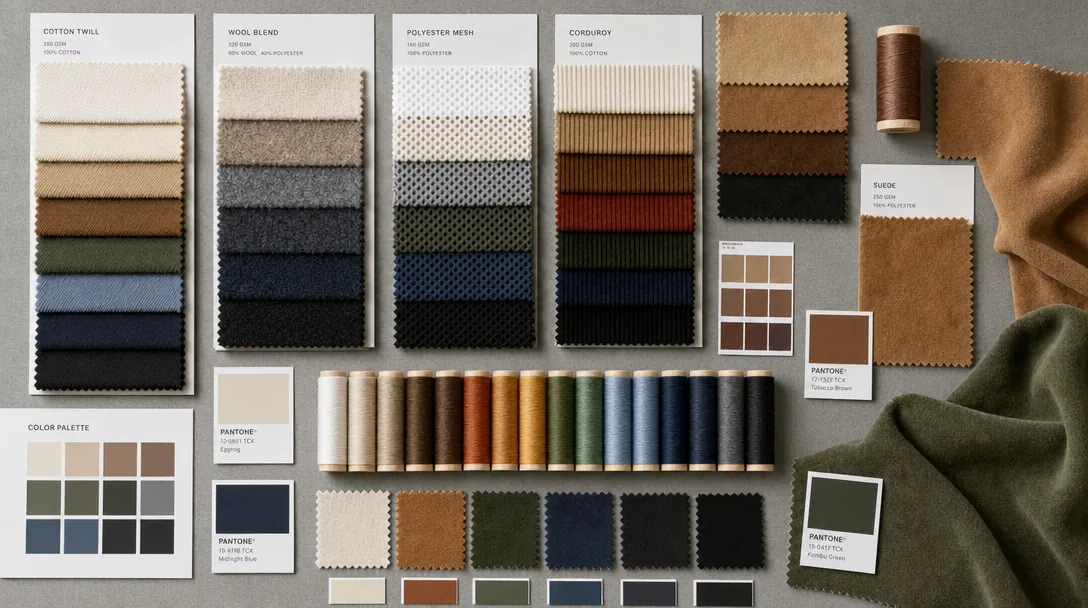
Every week, our sales team answers detailed questions about merino wool beanie: properties, costs and how to spec it right - 2026 buyer's guide (2026 update). We wrote this guide so that wholesalers, streetwear brands, corporate buyers and promotional resellers can compare options with full information, and avoid the traps that show up only after production has started.
Acrylic Beanie
Acrylic is the standard cost-down substitute when a buyer wants the look of a merino wool beanie without paying for fine animal fiber, but the substitution only works if the spec is tighter than the sales sample. Most factory programs use 28/2, 32/2, or 36/2 staple-spun acrylic on 7G, 9G, or 12G flat or circular knitting machines, with finished beanie weights usually falling around 260 to 380 gsm depending on gauge, rib density, and whether the cuff is single- or double-folded. I do not recommend “soft-hand” acrylic without an anti-pilling target, because low-twist yarn pills fast at the cuff edge and forehead contact points; a practical requirement is pilling grade 3.5 to 4.0 minimum after 2,000 rubs, plus stretch recovery checked after 24 hours under extension. A usable purchase spec should lock yarn count, machine gauge, finished weight tolerance, cuff height, body width, crown linking method, logo application method, and lab-dip approval against Pantone TCX under D65 lighting.
Construction and color control matter more on acrylic than many apparel buyers expect, especially when the product is being positioned as an alternative to a merino wool beanie. Mixed yarn lots regularly create barre in black, navy, charcoal, and heather shades, while poor heat-setting causes cuff flare, edge rolling, or body torque after a warm wash. The safest approval flow is to sign off both a pre-production knit panel and a sealed PP sample before bulk yarn booking, because acrylic that looks acceptable in a lab dip can drift once yarn lot variation, machine tension, and finishing temperature interact in production. MOQ for a basic acrylic cuff beanie is typically 300 to 500 pieces per colorway if stock yarn is available, but jacquard layouts, marl effects, reflective filament, fleece lining, or pom-pom assembly usually push practical MOQ to 800 to 1,000 pieces. In Zhejiang and Jiangsu, a plain rib-knit acrylic beanie with a woven label commonly lands around $1.10 to $1.90 FOB China at 1,000 units, while jacquard logos, embroidery, or lining move that closer to $2.20 to $3.80.
Inspection should focus on knit failures, not generic cut-and-sew checkpoints. The defects that actually cause claims are barre from mixed lots, dropped stitches, off-center top closure, skewed jacquard artwork, embroidery puckering on low-gauge ribs, and weak recovery in stretch zones after washing. I would hold final inspection at AQL 2.5, compare shade under a D65 light box, and set relaxed measurement tolerances at plus or minus 0.5 cm for cuff height and body width; for dark shades or repeat orders, add a Delta-E limit agreed from the sealed sample so color drift is measurable instead of argued over. Our standard practice is to require wash and pilling verification before shipment on any acrylic program meant to sit next to wool at retail, because customer tolerance for handfeel variation drops sharply once the beanie is merchandised as a cheaper counterpart to a merino wool beanie. Acrylic is the right material for promotions, school merch, and value retail, but it is a poor stand-in for the thermal regulation, odor resistance, and premium hand of real merino in a winter performance program.
Cotton Beanie
A cotton beanie is a knit program, not a cut-and-sew cap, and buyers should spec it that way when comparing it to a merino wool beanie. Most commercial styles are made in tubular jersey, 1x1 rib, or 2x2 rib on 12GG to 16GG knitting machines, then linked at the shoulder line equivalent, closed at the crown with a 4-point or 6-point seam, and finished with washing to stabilize size. “100% cotton” is not a usable material spec on its own. You need yarn count and fiber grade: 30s/1 to 40s/1 combed cotton is common for lighter spring/fall beanies, while tighter rib structures often run better with 3-5% spandex or elastane for recovery. In production terms, finished weight usually lands at 180-280 gsm for single-layer jersey and 260-380 gsm for heavier rib with cuff. Cotton also tolerates reactive dyeing well, so color consistency is usually easier to hold than wool, but it cannot match a merino wool beanie for warmth-to-weight, thermoregulation, or moisture buffering once the knit gets damp.
The tech pack is where cotton beanie programs either stay controlled or drift into claims. Lock the gauge, crown height, cuff height, relaxed and stretched opening, wash method, and shade reference by Pantone TCX; for bulk, I would cap color variance at Delta-E 1.5 against approved lab dip on the body panel. If handfeel matters, specify enzyme wash, silicone softener, or both, because “soft touch” means nothing to a knitting mill. MOQ is generally lower than wool: in Zhejiang or Jiangsu, 300-500 pcs per color is realistic for a plain stock-yarn cotton rib style, while custom-dyed yarn, jacquard logos, contrast tipping, or woven branding usually pushes efficient runs to 800-1,000 pcs per style-color. Current factory-side pricing for a basic combed-cotton rib beanie is typically US$1.10-1.90 FOB China; double-layer cuff construction, reactive dyeing, wash finishing, and barcode polybagging can add US$0.12-0.35. At AQL 2.5, the recurring faults are spiraling after wash, seam grin at the crown, rib irregularity, cuff torque, knitting-oil stains, and finished measurement variance beyond +/-1 cm.
Black Beanie Hat
Black is the easiest color to get wrong and the hardest color to defend after delivery, so a black merino wool beanie needs measurable specs, not adjectives. Lock the fiber first: 17.5-19.5 micron merino for premium retail, or 19.5-21.5 micron if you need a lower FOB without the scratch risk of coarser wool. Put the yarn count on the tech pack—2/48Nm and 2/60Nm are common for adult beanies—and define the construction instead of saying “medium weight.” A 1x1 rib in 7GG will land warmer and bulkier; a 10GG or 12GG knit reads cleaner, denser, and more fashion-forward but usually costs more in knitting time and yarn control. Finished weight should be fixed with tolerance, for example 78-85 g for a standard cuffed adult style, because a 68 g hat and a 92 g hat can both photograph well while performing like two different products at retail. Dimensions also need to be written like production data, not approximations. For a cuffed adult fit, body height of 21-23 cm, cuff height of 6-8 cm, opening width of 20-22 cm laid flat, and finished tolerance of +/-0.5 cm after wash are realistic controls. If you want a cleaner crown, specify fully fashioned knitting and linked closure; if you quote against cut-and-sew tubular construction, expect more visible seam expression and less consistent crown reduction on black shades. A proper black merino wool beanie tech pack should also call out anti-pilling treatment, shrinkage limit such as under 3 percent after one wash, and whether the yarn must be RWS-certified or mulesing-free, because those choices move pricing materially.
Color is where black programs drift fastest. Do not approve “black” under factory fluorescent tubes or from a phone photo; approve it against a Pantone TCX reference under D65 lighting and state lot-to-lot tolerance, ideally Delta-E <=1.5 for repeat orders. On wool, dye consistency is less forgiving than buyers assume because black can hide construction defects while still showing barré, surface streaks, and contamination under inspection lamps. If replenishment matters, require lab dips from the actual yarn lot, not just a generic black cone. Also specify colorfastness targets up front: dry crocking 4 grade minimum, wet crocking 3-4, perspiration 4, pH in acceptable range, and azo-free compliance. These details are cheaper to write into sampling than to negotiate after a failed wash or shade claim. Pricing gets cleaner when the spec is honest. In China, a stock acrylic black beanie may still quote around $1.10-$1.90 FOB at 300-500 pcs, but a genuine merino wool beanie is more typically $3.80-$7.50 FOB at similar volume depending on micron, yarn count, knit gauge, certification, and dye lot control. Inspection should reflect wool risk, not just cap-factory habit: AQL 2.5 for majors is a practical release point, but also check weight, dimensions, torque after wash, cuff match within 0.5 cm, visible linking, oil marks, and lint pickup under both cool white and warm light. Our standard practice is to verify at least 5 pcs per carton for measurement and shade consistency, because black wool failures usually surface as returns, markdowns, or reorder disputes rather than obvious first-pass rejects.
Slouchy Beanie
Drape is the first real decision on a slouchy merino wool beanie, and it comes from knit architecture more than branding. If the body is too compact, it wears like a watch cap; if the stitch is too open, the crown collapses unevenly and bags out after a few washes. The most reliable balance I see is 19.5- to 21.5-micron merino in Nm 2/48 or 2/60, usually knitted in single jersey or a light 1x1 rib on 7G to 12G flat machines, depending on target weight and handfeel. Half-cardigan looks appealing on a swatch but adds bulk quickly and usually fights the soft back-fall buyers actually want. Construction matters too: a fully fashioned crown linked on a Shima Seiki or Stoll line gives a cleaner silhouette and lower seam bulk than a tubular body cut and overlocked, but it adds labor and can raise FOB by $0.25 to $0.60 per piece. The fit spec has to be controlled like knitwear, not generic headwear, because stretch hides factory error until the consumer puts it on. For an adult slouchy style, I would approve both relaxed and extended measurements: finished height 27 to 30 cm, opening circumference 44 to 48 cm relaxed, body width consistency within plus or minus 1 cm after wash and boarding, and finished weight typically 75 to 105 grams depending on gauge and yarn count. Once you move above about 22.5 microns, the body usually pushes outward and the merino wool beanie starts feeling bulky instead of fluid. I would also lock stitch density per 5 cm, post-wash shrinkage, and pilling performance before bulk, because slouch fit is exactly where too many factories start improvising after the salesman has already promised the sample handfeel.
The spec sheet should read like a technical knit order, not a loose fashion brief. Write in fiber content tolerance, micron range, yarn count, machine gauge, stitch density per 5 cm, finished gram weight, wash method, and approved color standard. For shade control, match lab dips to Pantone TCX and put Delta-E limits directly into the PO: under 1.0 for retail-critical neutrals such as black, oatmeal, or charcoal, and under 1.5 for darker fashion colors is realistic in bulk. Branding needs the same discipline. Direct embroidery on a fine merino wool beanie often causes tunneling or puckering unless the digitizing, underlay, backing, and placement are engineered for stretch; in practice, folded side tabs, woven loop labels, or satin main labels generate fewer rejects on 9G to 12G bodies. Cost moves fast once you leave stock yarn behind. In China, a basic slouchy style usually lands around $4.20 to $7.80 FOB at 300 to 500 pieces per color using available merino shades, while RWS-certified yarn, custom mélange, hand-linking, or custom spinning can push MOQ to 800 to 1,000 pieces and add $1.00 to $2.50 per hat. Inspection should target the defects knitting lines miss when output pressure rises: spiraling, uneven crown reduction, dropped stitches, needle lines, lot-to-lot shade variation, and torque after washing. A 10-gram shortfall is not cosmetic on merino; it changes warmth, drape, and raw material cost at the same time. Our standard practice is first-off approval, post-wash measurement checks, and final inspection at AQL 2.5, especially when the factory is juggling multiple yarn lots under sedex-audit-cap-supplier-guide.html">BSCI 2.0 or Sedex SMETA 4-Pillar production controls.
Cotton Beanie Men
If you are comparing cotton against a merino wool beanie for a men’s program, the first decision is construction, not color. Most export-grade cotton beanies in Zhejiang are knitted on Stoll or Shima Seiki flat machines at 7GG, 9GG, or 12GG. In real production terms, 7GG lands around 85–110 g/pc with a chunkier retail hand, 9GG is the safest commercial spec for promo and basics, and 12GG gives a cleaner surface for private label. For 100% cotton, ring-spun yarns in Ne 21/1 to Ne 32/1 are standard; Ne 30/1 is a common sweet spot because it knits smoother and takes small logos better. The weakness is recovery: cotton does not spring back like wool or acrylic, so a plain 1x1 rib cuff will bag out unless the knitter increases take-down tension, builds a denser welt, or adds 3%–5% elastane in the cuff zone.
Most buyer tech packs are too loose for knit headwear. Fiber content should be stated to the percent, then gauge, yarn count, finished weight, body height, cuff height, head opening, wash method, and crown finish. If you want consistent shade, specify Pantone TCX and a Delta-E tolerance of 1.5 max; for black, navy, and dark heather, I would hold it under 1.0 because cuffed beanies exaggerate lot variation. Also call out top closure clearly: linked top, 4-point reduced-bulk closure, or overlock, because each changes profile, comfort, and how tightly the carton packs. On branding, direct embroidery on fine-gauge cotton often puckers unless the file is digitized for low stitch density on Tajima or Barudan heads with soft cutaway backing and proper knit-down; woven loop labels and fold labels are more reliable on 12GG programs.
Cost is where cotton still wins, but only if the spec stays disciplined. In the Yiwu knitting belt, 2026 FOB for a basic 9GG cotton beanie in stock yarn is typically $1.55–$2.20 at 300–500 pcs per color. Move to custom-dyed yarn, jacquard, enzyme wash, branded trims, or OCS-certified cotton, and you are usually in the $2.30–$3.40 range, with realistic MOQs of 800–1,200 pcs per color because cone dyeing, lab dips, and dye-lot control drive the setup cost. Inspection should go beyond measurements: check dropped stitches, needle lines, spirality, cuff skew, loose yarn tails inside the crown, label alignment, and wash shrinkage after one care cycle. Our standard practice is AQL 2.5 for final inspection, but crown closure and visible branding need tighter workmanship limits. Against a merino wool beanie, cotton is easier to wash and materially cheaper, but it cannot match merino for thermal regulation, odor management, or premium perceived value.
100 Acrylic Beanie
A 100% acrylic beanie is the usual cost-down substitute when a buyer wants the visual profile of a merino wool beanie but cannot carry wool-yarn cost, wool-care complaints, or variability from poor home laundering. In production, the useful decision is not “acrylic or not,” but yarn count, gauge, and rib structure. Most factories run 7GG, 9GG, or 12GG computerized flat machines: 7GG gives a bulkier winter hand, 9GG is the commercial middle ground, and 12GG produces a cleaner retail face for woven labels or finer jacquard. The standard promo setup is 28S/2 or 32S/2 anti-pilling acrylic, usually 220 to 320 gsm finished weight for a single-layer cuff beanie, depending on body height, cuff depth, and stitch density. That density matters more than many spec sheets admit: a heavy 2x2 rib will swallow embroidery detail, and text below roughly 5 mm cap height tends to close up unless the file is simplified and run with reduced stitch density on Tajima or Barudan heads. Color control is one of acrylic’s real commercial advantages. On solid shades, mills can typically hit approved Pantone references within Delta-E 1.5 to 2.0, which is more predictable than heather or melange wool programs and much easier to replenish across school, team, or promotional color cards. Stock-yarn availability also cuts lead time; repeat orders on core shades can move much faster than custom wool blends. The weak point is dimensional consistency. Small changes in yarn bulk, knitting tension, or finishing relaxation can shift finished width by 1 to 2 cm, enough to create fit complaints between lots if the spec only calls out appearance. Our standard practice is to lock yarn composition tolerance, gauge, finished weight, body height, cuff height, crown construction, and stretch-and-recovery range rather than approving from a salesman sample alone.
Acrylic programs fail first on performance control, not on first-look appearance. A proper spec should require pilling performance after 5,000 rubs, colorfastness to dry and wet crocking, perspiration fastness, and dimensional stability after three home-laundering cycles. Cheap acrylic usually loses recovery before it pills badly: the cuff grows, the body widens, and the beanie starts looking loose and tired even when the surface still appears acceptable under casual inspection. MOQ is usually 300 to 500 pieces per color on stock yarns, while custom-dyed shades often start closer to 1,000 pieces because dye houses do not want short runs. For 2026 buying, a plain 100% acrylic beanie at 1,000 pieces is commonly around USD 1.10 to 2.20 FOB China; add jacquard graphics, fleece lining, pom-pom assembly, or direct embroidery and the workable range is more like USD 2.60 to 3.80. Inspection is where low-cost acrylic orders typically break down. The repeat defects are needle lines, oil contamination, uneven rib tension, poor crown linking, skewed labels, and shade drift between replenishment lots. I would inspect to AQL 2.5 and add specific checks for seam security, odor from finishing oil, recoverability after extension, and color transfer onto paper tags or polybags during packed transit. If the end use is premium outdoor retail, licensed merchandise, or giftable product where hand feel and perceived value matter, a merino wool beanie still outperforms acrylic on warmth-to-weight ratio, odor management, and price integrity at retail. If the brief is aggressive unit economics, broad stock-color coverage, and easy repeat ordering, 100% acrylic remains the practical sourcing choice.
Working with CrownsForge for merino wool beanie programs
A merino wool beanie program is won or lost before knitting starts. The highest-risk variables are yarn composition, micron consistency, shade continuity, and post-wash stability; once bulk yarn is booked, you have very little room to correct them cheaply. On commercial runs, I would lock the blend first—commonly 30/70 or 50/50 merino/nylon for durability, or 100% merino only if the handfeel claim justifies the higher shrinkage and pilling exposure. Ask the mill for declared micron range, yarn count, and lot continuity, because a shift from 19.5 micron to 21.5 micron is noticeable in handfeel, and uneven lots will show up fast across dark navy, charcoal, and heather programs. If color is custom dyed to a Pantone TCX reference, budget 12 to 18 days for lab dips, trim matching, and bulk-yarn approval; stock shades can usually produce a first prototype in 7 to 10 days. The reason buyers stage approvals through a 100 to 300 piece trial lot is simple: a merino wool beanie typically lands 25% to 45% above a comparable acrylic style, often around $2.80 to $4.80 FOB versus $1.90 to $3.20, so bulk mistakes get expensive quickly.
The tech pack needs measurable controls, not soft language like “premium handfeel.” For a merino wool beanie, I would specify gauge, finished weight per piece, body height, cuff depth, recovery after stretch, and wash result tolerances in writing before pre-production. A 7-gauge cuffed style in a 50/50 blend may finish around 75 to 95 grams per piece, while a finer 12-gauge body can drop closer to 55 to 75 grams and reacts very differently to wash testing, patch load, and embroidery tension. Shade approval should be tied to an approved lab dip with a practical tolerance such as Delta-E under 1.5 to 2.0 for core colors, then confirmed again after washing because merino blends can shift once relaxed. Our standard practice is to check dimensional stability after one wash cycle and reject any bulk setup that cannot hold the agreed tolerance, typically within plus or minus 3% on height and width. Decoration also needs realism: dense fills that run fine on cotton twill can distort a fine-gauge merino body, so lighter woven labels, folded-edge labels, suede patches, or low-profile silicone badges usually outperform heavy embroidery on 9- to 12-gauge constructions.
Good replenishment control comes from gated approvals and hard QC checkpoints, not from a clean salesman sample. Buyers who scale without claims usually approve in sequence: artwork, trim strike-off, knit panel or first body, pre-production sample, then inline and final inspection. For retail programs, I would require colorfastness, fiber-content verification, and final inspection at AQL 2.5 before carton close, with extra checks if the program includes metal badges, magnetic gift boxes, or mixed-fiber labeling claims. A beanie sold as “100% merino,” “extra-fine merino,” or “merino blend” carries different labeling and testing exposure, so that language should be locked before packaging is printed. On decorated styles, machine setup matters as much as artwork; Tajima or Barudan heads can run merino cleanly, but only with reduced thread tension, lighter backing, lower stitch density, and disciplined hooping, otherwise you can see a 6% to 8% repair rate from cuff dimpling and needle distortion. CrownsForge runs merino programs through yarn booking, lab-dip approval, pre-production signoff, inline inspection, final inspection, and shipment release because that is the only reliable way to hold gauge tolerance, carton accuracy, and ex-factory dates across repeat orders.
Frequently Asked Questions
How long does production take?
Sampling takes 7 to 12 days. Bulk production runs 20 to 30 days depending on quantity, fabric availability and decoration complexity. Inspection and packing adds another 3 to 5 days before shipment.
Do you support sustainability certifications?
Yes. We work with GOTS organic cotton, GRS-certified recycled polyester, OEKO-TEX Standard 100 fabrics, and are BSCI and Sedex audited. Certification documentation can be provided per order.
What is the minimum order quantity (MOQ) for custom hats?
Our standard MOQ is 100 pieces per design and color, with sampling available from 1 piece. For complex multi-color logos or premium fabric upgrades, the MOQ can be lowered with a small per-piece surcharge.
What logo decoration techniques do you offer?
3D puff embroidery, flat embroidery, woven patch, leather patch, PVC patch, screen printing, sublimation, applique and laser etching, all in-house with no subcontracting.
Can I order a sample before bulk production?
Yes. We strongly recommend approving a pre-production sample before mass production. Samples are charged at 35 to 60 USD each plus express shipping, fully refundable against confirmed bulk orders over 500 pieces.
What should buyers know about black bucket hat men?
When evaluating black bucket hat men, the key considerations are construction quality, decoration capability, MOQ flexibility and lead time. Cover everything buyers ask about black beanie hat: how it's manufactured, what specs to request from a factory, typical MOQ and pricing, common quality issues to inspect for, and how this ties back to the broader merino wool beanie sourcing decision. Cover everything buyers ask about cotton beanie men: how it's manufactured, what specs to request from a factory, typical…
What should buyers know about kangol bucket hat mens?
When evaluating kangol bucket hat mens, the key considerations are construction quality, decoration capability, MOQ flexibility and lead time. Cover everything buyers ask about black beanie hat: how it's manufactured, what specs to request from a factory, typical MOQ and pricing, common quality issues to inspect for, and how this ties back to the broader merino wool beanie sourcing decision. Cover everything buyers ask about acrylic beanie: how it's manufactured, what specs to request from a factory, typical MOQ…
What should buyers know about corduroy hat womens?
When evaluating corduroy hat womens, the key considerations are construction quality, decoration capability, MOQ flexibility and lead time. Cover everything buyers ask about black beanie hat: how it's manufactured, what specs to request from a factory, typical MOQ and pricing, common quality issues to inspect for, and how this ties back to the broader merino wool beanie sourcing decision. Cover everything buyers ask about acrylic beanie: how it's manufactured, what specs to request from a factory, typical MOQ…
What should buyers know about acrylic beanie hat?
When evaluating acrylic beanie hat, the key considerations are construction quality, decoration capability, MOQ flexibility and lead time. Cover everything buyers ask about acrylic beanie: how it's manufactured, what specs to request from a factory, typical MOQ and pricing, common quality issues to inspect for, and how this ties back to the broader merino wool beanie sourcing decision. Cover everything buyers ask about black beanie hat: how it's manufactured, what specs to request from a factory, typical MOQ…
Are merino beanies worth it?
If you value sustainability, comfort, durability, and superior thermal performance, a merino wool beanie is a smart and stylish investment. Despite the higher upfront cost, the long-term benefits—including shape retention, moisture management, and odour resistance—make it a practical addition to your wardrobe.
Is merino good for a beanie?
Made for all your outdoor adventures, merino is soft on skin, easy to layer and naturally temperature regulating and odour resistant. A fitted beanie, it's perfect for wearing under hoods or helmets while out hiking, climbing, skiing or mountain biking.
Are merino wool beanies worth it?
A: Yes, Merino wool is excellent for hats because it is breathable, quick drying, and temperature-regulating, providing comfort in various weather conditions.
Is merino yarn good for beanies?
Additionally, wool has a certain level of stretch to it, making it great for beanies. However, there are different types of wool you can choose from: - Merino wool comes from merino sheep and is known to be very fine and soft. It can be used for anything from socks to hats.
Is a merino wool beanie itchy?
Merino wool is finer and softer than other kinds of wool, which makes it less itchy. Its fibers are very short in length and smaller in diameter, which makes it a whole lot softer and gentler on the skin.
Ready to start your custom hat project?
Send us your tech-pack, sketch or even just an inspiration photo. We will respond with a detailed quotation and digital mock-up within 24 hours.
Request a free quoteRelated guides
Custom Leather Patch Hat Low Minimum: A 2026 B2B Sourcing Guide
Read article →
Mens Beanies: Properties, Costs and How to Spec It Right
Read article →
Custom Rope Hats: Manufacturing, Materials and Bulk Pricing (2026 Update)
Read article →Sourcing custom hats does not have to be complicated. With the right manufacturing partner, clear specifications and a small upfront investment in sampling, you can launch a retail-quality product in 30 to 45 days.