
Merino Wool Beanie: Properties, Costs and How to Spec It Right - 2026 Buyer's Guide - 2026 Buyer's Guide
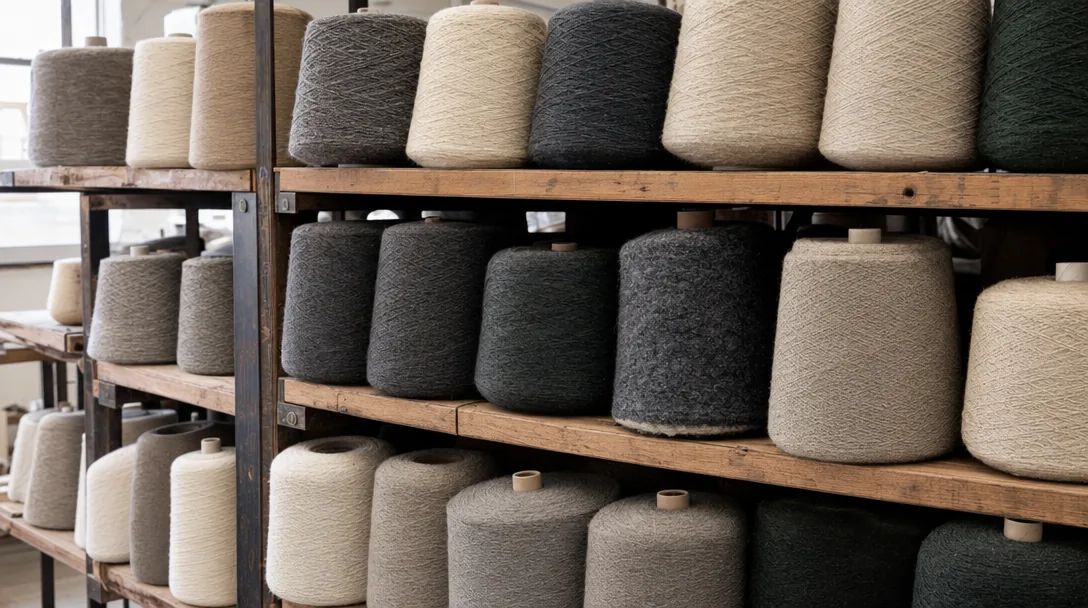
Every week, our sales team answers detailed questions about merino wool beanie: properties, costs and how to spec it right - 2026 buyer's guide - 2026 buyer's guide. We wrote this guide so that wholesalers, streetwear brands, corporate buyers and promotional resellers can compare options with full information, and avoid the traps that show up only after production has started.
Acrylic Beanie
Acrylic beanies are usually built from 100% acrylic staple yarn such as 28Nm/2 or 32Nm/2 on 7G, 9G, or 12G flat knitting machines, and that single choice changes both cost and retail outcome more than most buyers expect. A chunky 7G cuff beanie at 110 to 125 grams can consume 25% to 35% more yarn than a tighter 12G retail silhouette at 80 to 95 grams, even when the sketch looks nearly identical. If you are benchmarking acrylic against a merino wool beanie, vague quote language is where mistakes start. Lock the spec before asking for pricing: gauge, finished weight, body height, cuff height, composition tolerance, stitch density, stretch recovery target, Pantone TCX reference, and decoration method. Anti-pilling acrylic or acrylic-nylon blends improve abrasion resistance at the cuff and crown, but they still do not match merino for moisture buffering, odor control, or thermal regulation. On the production floor, under-specified acrylic programs usually fail first through weak shape retention, excessive fuzzing, or embroidery distortion rather than an obvious knitting defect.
MOQ and FOB on acrylic beanies are driven less by the knit body than by yarn source, dye-lot economics, and trim complexity. For stock-color acrylic with a folded cuff, a workable China MOQ is usually 144 to 300 pieces per color; for custom-dyed yarn, most spinners want 500 to 1,000 pieces per shade to justify the lot. In 2026, a basic cuff beanie with a woven loop label typically lands around FOB China $1.10 to $1.85 at 1,000 pieces. Add jacquard branding, a pom, fleece lining, or a woven patch, and the number moves quickly into the $2.20 to $3.40 range. If the style must sit beside a merino wool beanie in the same winter collection, shade consistency needs to be tighter than many factories assume; once navy, charcoal, or black drifts beyond roughly Delta-E 1.5 to 2.0 between lots, the mismatch becomes visible under cool LED retail lighting.
Quality risk on acrylic is predictable and should be inspected that way. The repeat defects are stitch density variation, seam torque after wash, cuff-edge roll memory, yarn hairiness, patch skew, and shade banding between dye lots. AQL 2.5 final inspection should cover circumference and body-height tolerances, cuff symmetry, label pull strength, colorfastness to crocking, odor, and a simple recovery check over 20 to 30 stretch cycles. Decoration is where many suppliers get exposed: dense 3D embroidery on a light acrylic face will pucker unless backing weight, hoop tension, and stitch count are controlled properly on Tajima, Barudan, or ZSK heads. That is the practical divide versus a merino wool beanie. Acrylic usually wins on upfront FOB, bright color range, and consumer wash tolerance, but merino holds its value better over a full season because it pills less aggressively, manages odor better, and feels more premium after repeated wear.
Cotton Beanie
A cotton beanie is controlled by yarn and knit geometry, not by the word "cotton" in the BOM. For bulk production, the usable range is usually 21s to 32s combed ring-spun cotton, often blended with 3% to 8% elastane or polyester to improve rebound, then knitted on 12-gauge to 16-gauge machines in 1x1 or 2x2 rib. If the brief is loose, two factories can quote the same style and ship completely different stretch, cover, and wash behavior. The spec needs hard numbers: fiber content, yarn count, gauge, stitch density, finished weight, body height, cuff depth, crown construction, wash standard, and color tolerance. A workable line might read 95% combed cotton / 5% elastane, 2x2 rib, 90 to 105 gsm equivalent piece weight, 21 to 22 cm body height, 6 to 7 cm cuff, 4-point crown seam, reactive dye, and Delta-E under 1.5 against the approved lab dip or Pantone TCX reference. That matters most when a buyer is comparing it with a merino wool beanie. Cotton gives a familiar hand and decent moisture absorption, but once it gets damp its insulation drops fast and the rib loses memory sooner. A merino wool beanie made in 17.5 to 19.5 micron yarn will usually deliver better warmth-to-weight, odor resistance, and shape recovery, especially for winter retail, ski programs, and licensed outdoor merchandise. Cotton still works for transitional weather, spring fashion drops, and lower-ticket promo programs, but the trade-off is real: more torque after washing, lower loft, and a less premium hand unless the yarn is truly combed and the finishing is clean. Buyers who want cotton pricing with merino-level performance usually end up disappointed on the first wear test.
Commercially, cotton beanies stop being cheap the moment customization gets technical. A plain rib-knit style with a woven loop label or 5,000 to 8,000 stitch cuff embroidery is often workable at 300 to 500 pieces per color, but yarn-dyed striping, jacquard logos, engineered cuff proportions, or tight shade matching can push MOQ to 800 to 1,200 pieces because knitting setup, dye-lot control, and rework risk all increase. In Zhejiang knitting clusters, a standard mid-volume cotton beanie generally lands around $1.45 to $2.60 FOB China. Move to better combed yarn, enzyme or silicone wash, branded trims, or more demanding embroidery placement on Tajima or Barudan heads, and the number usually climbs to $3.00 to $4.00. Even then, it remains materially below a merino wool beanie, which is commonly 40% to 90% higher once you specify finer micron wool, anti-pilling finish, and tighter dimensional stability. Most claim costs come from inspection failures, not from yarn price. The repeat defects are crown seam grin, needle lines, spiraling after wash, uneven rib recovery, cuff embroidery drifting off-center, and lot shading on black, navy, and forest tones. I would hold shipment to AQL 2.5, then add a wash test on at least 5 pieces per colorway to check shrinkage, torque, and rebound after one domestic cycle. Ask for colorfastness to crocking and perspiration, pH, azo, and dimensional stability results before balance payment. At CrownsForge, the control point we seal first is head opening and cuff depth tolerance, because even 1 cm variance changes fit enough to make a beanie feel either retail-clean or obviously sloppy next to a merino wool beanie on the shelf.
Black Beanie Hat
Black is the hardest color to control in knit headwear because any shade drift shows immediately under 3500K-4000K retail LEDs, especially when a merino wool beanie sits next to reactive-dyed fleece, black jerseys, or coated outerwear. Do not approve “black” as a verbal color standard. Write a Pantone TPX or TCX reference into the PO, require shade approval under D65 and TL84, and cap bulk tolerance at Delta-E 1.0-1.5 against the sealed standard. On wool, that only works if the fiber and yarn are locked first: for a premium spec, 100% merino at 19.5-21.5 micron in 2/48 Nm or 2/60 Nm yarn-dyed black gives a cleaner hand and better thermal regulation; for lower claim risk, a 50/50 or 70/30 merino-acrylic blend resists abrasion, bagging, and consumer misuse better. Most factories knit black beanies on 7-gauge machines for a heavier 2x2 rib or 12-gauge for a tighter, cleaner face, then link the crown, steam-set, wash, de-fuzz, and inspect in a calibrated light box before packing. A usable spec sheet needs dimensions, structure, and performance targets; “one size” is not a specification. For an adult retail fit, I would write 21-23 cm flat width, 26-28 cm body height, 7-8 cm cuff height, and 78-95 g finished weight depending on gauge and blend ratio. Add stretch recovery after repeated extension, wash shrinkage within +/-5%, colorfastness to rubbing and perspiration, and pilling at minimum grade 3.5-4.0. Black yarn also needs contamination control because white fly fiber, poly lint, and loose sewing thread show up immediately on the finished beanie. If you are adding branding, test it separately first: dense embroidery on a ribbed merino wool beanie can torque the wale lines, pucker the crown area, and leave a stiff patch on the forehead. Our standard practice is to sample embroidery on the final gauge and rib structure, not on a flat swatch, because distortion risk changes once the hat is fully knitted and cuffed.
Cost is driven less by knitting time than by micron range, blend ratio, yarn source, and whether black yarn is stock-supported or dyed to order. In current 2026 buying conditions, a plain 50/50 merino-acrylic black beanie is typically $2.80-$4.20 FOB China at 300-500 pieces, assuming standard rib construction and stock black yarn. A 100% merino wool beanie with 19.5-21.5 micron fiber, fully fashioned crown, anti-pilling wash, and custom trims is more realistically $4.80-$7.50 FOB at 500-1000 pieces. Budget separately for add-ons: woven labels usually add $0.18-$0.40, embroidery $0.25-$0.90 depending on stitch count and backing, and RWS documentation, FSC paper wrap, barcode stickers, or biodegradable polybags all add measurable cost at packing stage. Buyers often focus on yarn price and miss that re-dyeing one failed black lot costs more than the original savings. Inspection should target the defects that actually create returns, not cosmetic trivia. On black knit hats, that means carton-to-carton shade variation, rib tension inconsistency, crown seam grin, needle oil marks, over-dried handfeel, and spiraling or measurement drift after washing. I would hold bulk to AQL 2.5 major and 4.0 minor, but that is only useful if lot retainers are wash-tested instead of judged straight off the steamer, because steam can temporarily mask shrinkage and torque. If the program may reorder across different dye lots or different knitting windows, write that continuity requirement directly into the PO and sealing comments. Black is unforgiving enough that informal “close enough” approvals usually come back later as retailer claims, especially when replenishment stock lands months apart and gets merchandised side by side.
Slouchy Beanie
A slouchy beanie succeeds or fails on recovery, drape, and crown shaping; simply adding 3-4 cm to a standard cuff cap usually produces a tube that bags out after a few wears. For adult retail, I would spec a finished height of 28-30 cm, flat width of 24-26 cm, and finished weight of 85-110 g, with a 9- to 12-gauge program selected around yarn count rather than aesthetics alone. In merino, 19.5-21.5 micron is the practical window for a slouch silhouette: soft enough for bare-skin wear, but still resilient if the yarn spinner maintains decent twist consistency and low unevenness. A `merino wool beanie` at 2/48Nm usually gives more body and slower collapse than 2/60Nm, while a 90/10 merino-nylon blend often outperforms 100% merino in rebound if the style is meant for heavy repeat wear. Machine choice matters more than many buyers realize. A computerized flat machine gives cleaner crown reductions and better control of the slouch profile, while circular beanie production is usually cheaper but less exact at the top, especially on solid-color fashion programs where crown symmetry is obvious on-head. The tech pack should lock down micron range, composition, ply, gauge, needle count, crown-closing method, and wash standard, not vague language like "luxury handfeel." If color consistency matters, require lab-dip approval under D65 lighting and hold shade tolerance to Delta-E 1.0-1.5; on a plain slouch style with no distracting pattern, even minor lot-to-lot drift reads immediately at retail.
Branding and finishing are where margin disappears on a slouchy merino style. Over-steaming, aggressive linking, or pressing too hot can flatten loft, reduce elastic recovery, and make the crown look tired straight out of the carton. Direct embroidery is possible, but dense fills on 11-gauge merino often cause yarn grin and fabric pinching unless the digitizer compensates for knit stretch, underlay, and pull. Even on good Tajima or Barudan heads, a small woven label or fine-gauge patch is often cleaner than heavy stitch coverage. For QC, I would hold tolerance at +/-1.0 cm on finished height and +/-0.5-1.0 cm on flat width, then wash-test at least 5 pieces per colorway before bulk approval to check torque, shrinkage, and recovery. Cost and MOQ depend more on yarn sourcing than on knitting time. If the mill is running stock shades, 300-500 pieces per color is common; once you move to custom-dyed merino, real minimums usually jump to 800-1,000 pieces because dye-lot and spinning thresholds drive the program. A realistic 2026 China FOB for a plain `merino wool beanie` in this category is about $4.80-$7.50 per piece, with RWS-certified yarn, lower micron fiber, and tighter shade control pushing it upward. Final inspection at AQL 2.5 is adequate only if the defect list is specific: spiraled seams, uneven crown reduction, needle lines, yarn contamination, pilling, odor from poor scouring, and shade barre between lots. Our standard practice is to treat prickliness, color inconsistency, and collapsed drape after finishing as the three failures most likely to trigger claims.
Cotton Beanie Men
For buyers comparing a cotton beanie men program against a merino wool beanie, the first thing to understand is that cotton knit caps are built around yarn engineering, not just fiber content. Most factories run them on 7-gauge or 12-gauge flat knitting machines using 100% combed cotton, cotton-spandex blends, or cotton-acrylic mixes in the 21s to 32s yarn count range, then link the crown and attach a self-fabric cuff or a folded rib cuff depending on silhouette. A true 100% cotton beanie feels breathable and skin-friendly, but it is heavier when wet, slower to recover after stretching, and less thermally efficient than 17.5 to 19.5 micron merino. That matters if you are building a winter line rather than a promo program. If the hand feel target is soft but cost-sensitive, many buyers shift to a 60/40 cotton-acrylic construction, which lands closer to an acrylic beanie price while keeping a more natural touch. Cotton also takes reactive dye well, so matching Pantone TCX is usually easier than on heathered wool yarns, provided the factory controls shade lot variation to Delta-E below 1.5.
The spec sheet needs to be tighter than most importers think. Request gauge, finished weight, yarn composition tolerance, cuff height, body height, head circumference tolerance, stitch density, wash standard, and whether the top is fully fashioned or cut-and-sew from knit panels. For decoration, specify embroidery location, maximum stitch count, backing type, and whether the factory will run on Tajima or Barudan heads, because puckering on lightweight cotton ribs is common if underlay is too aggressive. A decent baseline for adult cotton beanie men is 80 to 110 grams per piece, 2x2 rib or single jersey with fold cuff, circumference tolerance of plus or minus 1 centimeter, and colorfastness to washing of grade 4 minimum. MOQ is usually 300 to 500 pieces per color for stock yarn, but custom-dyed cotton can push the dye lot minimum to 80 to 120 kilograms, which effectively raises the order. In Zhejiang, a plain cotton beanie typically lands around $1.20 to $2.40 FOB China at 500 to 1,000 pieces, while embroidery, woven labels, custom packaging, or enzyme wash finishes add cost fast. At CrownsForge, our standard practice is to lock pre-production approvals on hand feel, size, and wash shrinkage before bulk because cotton caps can move more than buyers expect after first wash.
Inspection is where cotton beanie programs either stay profitable or become claims-heavy. The most common defects are spiraling ribs, uneven crown take-down, seam grin at the top join, yarn contamination, oil stains from linking, embroidery distortion, and cuff height inconsistency across size runs. Use AQL 2.5 for appearance and measurement, and test wash shrinkage after at least one home-laundering cycle; anything over 5% on body height should be flagged if the fit is meant to stay close to the head. Also ask for needle detection if the factory has any manual rework stations. Compared with a corduroy hat, corduroy hat men's program, bucket hat women style, or camouflage bucket hat, a cotton beanie has fewer cut-and-sew operations but more risk in yarn lot consistency and post-wash shape retention. That is exactly why the broader merino wool beanie sourcing decision should start with end use: if you need breathable, lower-cost casual headwear with simple branding, cotton works well; if you need better warmth-to-weight, odor control, and premium retail positioning, merino usually justifies its higher yarn cost and lower margin for knitting errors.
100 Acrylic Beanie
A 100% acrylic beanie is the real price-floor benchmark when a buyer is deciding whether a merino wool beanie is worth the premium, but the comparison is useless if the acrylic spec is vague. I would never release bulk on handfeel comments like “soft” or “retail quality.” The purchase order should lock machine gauge, yarn count, ply, knit structure, finished weight, cuff height, body width, and stretch recovery after repeated extension. In production, a “standard black acrylic beanie” can come out anywhere from 68 g to 95 g and still pass a loose factory interpretation unless you state a target such as 78 g plus or minus 3 g. Common constructions are 7-gauge or 9-gauge ribs for a heavier promo silhouette and 12-gauge for a cleaner store-shelf hand, usually with 28/2, 32/2, or 36/2 acrylic yarns. Acrylic is typically package-dyed or solution-dyed, and heather programs are where shade drift shows up first under LED retail lighting, so color-critical orders should use Pantone TCX references, approved lab dips, and a Delta-E tolerance of 1.5 or tighter.
Cost and quality move fast once you add real production variables. A basic 75 to 85 g cuff beanie in stock acrylic yarn is usually knitted as a tube or panel, crown-linked, steamed, shaped, trimmed, and packed, with embroidery, woven labels, jacquard logos, or special folding adding separate labor and measurable rejection risk. For 2026 buying, plain acrylic programs at mid-volume typically land around $1.10 to $1.90 FOB China, while heavier custom builds with jacquard, cuff embroidery, and strict shade control are more often $2.20 to $3.40. Inspection is where weak programs get exposed: dropped stitches at the crown, spiraling on tubular knits, loose linking, oil marks, yarn contamination, and early pilling are the repeat offenders. I would set AQL 2.5, hold finished measurements to plus or minus 1 cm, and require pilling results plus colorfastness to rubbing, perspiration, and washing. That is also where the performance gap versus a merino wool beanie becomes practical, not theoretical: acrylic can hit promo or school-spirit price points at MOQs of 300 to 500 pieces per color in stock yarns, but it traps heat, manages moisture poorly, and feels clammy faster in mixed indoor-outdoor wear. A merino wool beanie costs more, but the thermal regulation and premium hand are materially better, especially when the retail customer will notice the difference within the first hour of use.
Working with CrownsForge for merino wool beanie programs
Yarn control decides whether a merino wool beanie program runs cleanly or turns into a claims file. The first lock point is fiber spec: 17.5 to 19.5 micron merino for premium hand feel and next-to-skin wear, 21.5 micron when the retail target cannot absorb superfine yarn cost. That choice affects far more than softness; it changes pilling behavior, recovery, and wash shrinkage. Before sampling, the tech pack should fix gauge, ply, blend ratio, finished weight, cuff height, and whether the body is fully fashioned or cut from tubular knit. A 100% merino beanie and a 70/30 merino-nylon blend do not behave the same after wash or steaming, so treating them as interchangeable is sloppy buying. Our standard practice is to review the pack within 24 hours, then book yarn only after confirming the spinner, origin, and shade route. First proto is typically 5 to 7 working days with stock yarn, while custom color usually needs lab dips to a Pantone TCX target with Delta-E held at 1.5 or tighter under D65 light, plus an approved knit-down because color can shift once the yarn is looped at 7-gauge or 12-gauge.
MOQ on a merino wool beanie should follow dye-lot and knitting economics, not arbitrary sales talking points. Once you ask for dyed-to-match yarn, a custom crown profile, branded fold label, and retail packaging, efficiency usually starts around 300 to 500 pieces per colorway; below that, the dye minimum and setup waste push FOB cost up fast. For a straightforward rib knit in stock shades, buyers should expect roughly $4.80 to $8.50 FOB China depending on micron, blend, gauge, and decoration, where a comparable acrylic style often lands below $2.00. The bigger risk is not headline price but undefined tolerances. Shrinkage should be written into the PO at 3% to 5% after agreed wash conditions, with measurement points sealed on the pre-production sample so there is no argument later about cuff height loss or body narrowing.
Decoration and order control are where importers usually lose both margin and calendar. Merino has less structural forgiveness than acrylic, so dense embroidery, oversized twill patches, or the wrong backing can torque the cuff, crush rib definition, and create needle breaks on Tajima or Barudan heads. The safer trim route is usually a woven fold label, a light merrowed patch, or a faux leather patch with controlled stitch count; silicone badges need heat-pressure trials first because too much dwell can glaze the yarn surface. If direct embroidery is non-negotiable, stitch density, underlay, needle size, and backing gsm need to be tested on the actual knit, not guessed from a cap program. Buyers should also hold the order to the same control standard as cut-and-sew headwear: sealed shade band, hand-feel swatch, pre-production sample, current sedex-audit-cap-supplier-guide.html">BSCI 2.0 or Sedex SMETA 4-Pillar audit records, and final inspection at AQL 2.5 covering measurements, color consistency, yarn contamination, seam grin, label position, and carton integrity.
Frequently Asked Questions
What logo decoration techniques do you offer?
3D puff embroidery, flat embroidery, woven patch, leather patch, PVC patch, screen printing, sublimation, applique and laser etching, all in-house with no subcontracting.
Can I order a sample before bulk production?
Yes. We strongly recommend approving a pre-production sample before mass production. Samples are charged at 35 to 60 USD each plus express shipping, fully refundable against confirmed bulk orders over 500 pieces.
What is the minimum order quantity (MOQ) for custom hats?
Our standard MOQ is 100 pieces per design and color, with sampling available from 1 piece. For complex multi-color logos or premium fabric upgrades, the MOQ can be lowered with a small per-piece surcharge.
How long does production take?
Sampling takes 7 to 12 days. Bulk production runs 20 to 30 days depending on quantity, fabric availability and decoration complexity. Inspection and packing adds another 3 to 5 days before shipment.
What file format should I send for my logo?
Vector files (AI, EPS, PDF) are ideal. High-resolution PNG or JPG at 300 dpi on transparent background works as a fallback. Provide Pantone color references for accurate reproduction.
What should buyers know about black bucket hat men?
When evaluating black bucket hat men, the key considerations are construction quality, decoration capability, MOQ flexibility and lead time. Cover everything buyers ask about black beanie hat: how it's manufactured, what specs to request from a factory, typical MOQ and pricing, common quality issues to inspect for, and how this ties back to the broader merino wool beanie sourcing decision. Cover everything buyers ask about cotton beanie men: how it's manufactured, what specs to request from a factory, typical…
What should buyers know about kangol bucket hat mens?
When evaluating kangol bucket hat mens, the key considerations are construction quality, decoration capability, MOQ flexibility and lead time. Cover everything buyers ask about black beanie hat: how it's manufactured, what specs to request from a factory, typical MOQ and pricing, common quality issues to inspect for, and how this ties back to the broader merino wool beanie sourcing decision. Cover everything buyers ask about acrylic beanie: how it's manufactured, what specs to request from a factory, typical MOQ…
What should buyers know about corduroy hat womens?
When evaluating corduroy hat womens, the key considerations are construction quality, decoration capability, MOQ flexibility and lead time. Cover everything buyers ask about black beanie hat: how it's manufactured, what specs to request from a factory, typical MOQ and pricing, common quality issues to inspect for, and how this ties back to the broader merino wool beanie sourcing decision. Cover everything buyers ask about acrylic beanie: how it's manufactured, what specs to request from a factory, typical MOQ…
What should buyers know about acrylic beanie hat?
When evaluating acrylic beanie hat, the key considerations are construction quality, decoration capability, MOQ flexibility and lead time. Cover everything buyers ask about acrylic beanie: how it's manufactured, what specs to request from a factory, typical MOQ and pricing, common quality issues to inspect for, and how this ties back to the broader merino wool beanie sourcing decision. Cover everything buyers ask about black beanie hat: how it's manufactured, what specs to request from a factory, typical MOQ…
Are merino beanies worth it?
If you value sustainability, comfort, durability, and superior thermal performance, a merino wool beanie is a smart and stylish investment. Despite the higher upfront cost, the long-term benefits—including shape retention, moisture management, and odour resistance—make it a practical addition to your wardrobe.
Is merino good for a beanie?
Made for all your outdoor adventures, merino is soft on skin, easy to layer and naturally temperature regulating and odour resistant. A fitted beanie, it's perfect for wearing under hoods or helmets while out hiking, climbing, skiing or mountain biking.
Are merino wool beanies worth it?
A: Yes, Merino wool is excellent for hats because it is breathable, quick drying, and temperature-regulating, providing comfort in various weather conditions.
Is merino yarn good for beanies?
Additionally, wool has a certain level of stretch to it, making it great for beanies. However, there are different types of wool you can choose from: - Merino wool comes from merino sheep and is known to be very fine and soft. It can be used for anything from socks to hats.
Is a merino wool beanie itchy?
Merino wool is finer and softer than other kinds of wool, which makes it less itchy. Its fibers are very short in length and smaller in diameter, which makes it a whole lot softer and gentler on the skin.
Looking for a reliable hat manufacturer in China?
CrownsForge has produced custom hats for 800+ brands across 40 countries. From 100-piece launches to 100,000-piece retail programs, we deliver on time and on spec.
Get in touchRelated guides
Custom Made Trucker Hat: The 2026 Sourcing & Manufacturing Playbook (2026 Update) - 2026 Buyer's Guide
Read article →
Sustainable Cap Packaging: Options, Costs and Retail-Buyer Demands - 2026 Buyer's Guide
Read article →Bucket Hat Corduroy Fabric And Trim Spec Guide for Custom Hat Buyers
Read article →Sourcing custom hats does not have to be complicated. With the right manufacturing partner, clear specifications and a small upfront investment in sampling, you can launch a retail-quality product in 30 to 45 days.